What do you think?
Rate this book


496 pages, Mass Market Paperback
First published August 4, 2003
”A Holborn judge … refused to hear any more from the unit’s witnesses until Bryant could assure him that they were all technically alive and in human form.”John May had codebreaking training and this is his first day on the job; he’s the diplomat who keeps a rein on Bryant’s more excessive imaginings. Detective Sergeant Gladys Forthright (one of the first female ones thanks to the war) is engaged to Sergeant Harris Longbright; she’s also part time with the WVS. Dr. Runcorn is their ancient forensics pathologist; Dr. Finch is the new guy. Police Constables Crowhurst and Atherton are the rest of the staff. “Nasty-Basket” Carfax is the disapproving desk sergeant who’s married to Davenport’s sister.
”Real stars make you believe in them because they believe in themselves.”The Three Hundred International Banks is…
It really was a hell of a blast. The explosion occurred at daybreak on the second Tuesday morning of September, its shock waves rippling through the beer-stained streets of Mornington Crescent. It detonated car alarms, hurled house bricks across the street, blew a chimney stack forty feet into the sky, ruptured the eardrums of several tramps, denuded over two dozen pigeons, catapulted a surprised ginger tom through the window of a kebab shop and fired several roofing tiles into the forehead of the Pope, who was featured on a poster for condoms opposite the tube station.It's certainly a brilliant opening. A bomb in modern London kills Arthur Bryant, the octogenarian senior partner in the detective team of Bryant and May (yes, like the English matches), bringing to an end their six-decade association in the Peculiar Crimes Unit. And this takes the surviving partner, John May, back to their first case together, a series of grisly murders in London’s Palace Theatre during the worst year of the Blitz. Unusually for the first book in a long series, author Christopher Fowler sets out to solve the first crime—and the last.
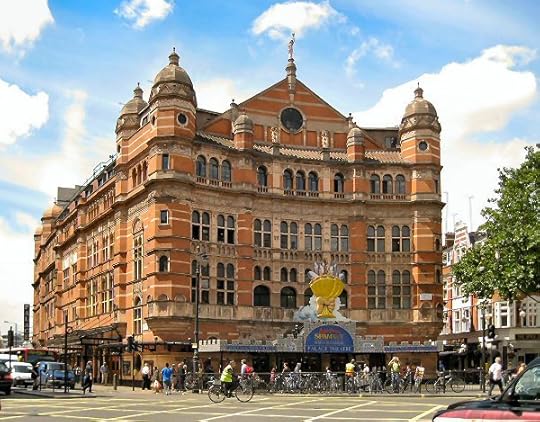
Helena Parole had a handshake like a pair of mole grips and a smile so false she could have stood for Parliament. 'Thank you so much for taking the time to come down and see us,' she told May, as though she had requested his attendance for an audition. Her vocal cords had been gymnastically regraded to dramatize her speech, so that her every remark emerged as a declaration. May felt the hairs on the back of his neck bristle with resentment.However, I came to realize that my professional knowledge made me less, not more, suited as a reader. There was too much that was not quite right. Like so many detective writers, Fowler seems engaged in building up a cast of colorful characters, and treats the inbred nature of the theater world as license to take this even farther, creating types rather than working professionals, regular human beings. And when the story began to hint at elements of the supernatural, in the manner of Phantom of the Opera, or international conspiracies in the manner of Dan Brown, I felt Fowler was losing his best quality, the ability to keep his feet on solid ground. A little over halfway through, I suddenly asked myself, "Do I care to know who has committed these murders, or what happens to all these people?" And the answer was that I didn’t, so I stopped.