

What do you think?

The Fiery Trial: Abraham Lincoln and American Slavery
“A masterwork [by] the preeminent historian of the Civil War era.”― Boston Globe Selected as a Notable Book of the Year by the New York Times Book Review , this landmark work gives us a definitive account of Lincoln's lifelong engagement with the nation's critical issue: American slavery. A master historian, Eric Foner draws Lincoln and the broader history of the period into perfect balance. We see Lincoln, a pragmatic politician grounded in principle, deftly navigating the dynamic politics of antislavery, secession, and civil war. Lincoln's greatness emerges from his capacity for moral and political growth. 16 pages of black-and-white illustrations; 3 maps
448 pages, Paperback
First published September 29, 2010
About the author
Eric Foner
178 books691 followersEric Foner is DeWitt Clinton Professor of History at Columbia University, where he earned his B.A. and Ph.D. In his teaching and scholarship, Foner focuses on the Civil War and Reconstruction, slavery, and nineteenth-century America. His Reconstruction: America’s Unfinished Revolution, 1863–1877, won the Bancroft, Parkman, and Los Angeles Times Book prizes and remains the standard history of the period. His latest book published in 2010 is The Fiery Trial: Abraham Lincoln and American Slavery.
In 2006 Foner received the Presidential Award for Outstanding Teaching at Columbia University. He has served as president of the Organization of American Historians, the American Historical Association, and the Society of American Historians.
In 2006 Foner received the Presidential Award for Outstanding Teaching at Columbia University. He has served as president of the Organization of American Historians, the American Historical Association, and the Society of American Historians.
Ratings & Reviews
Friends & Following
Create a free account to discover what your friends think of this book!
Community Reviews
Displaying 1 - 30 of 436 reviews

February 21, 2011
This book is a study of American slavery and the political events that shaped Lincoln's attitude toward it. Conventional wisdom would indicate that Abraham Lincoln, known as the Great Emancipator, would also be an advocate of equal rights and racial integration. It turns out that the historical reality is a bit more complicated than that. The journey from the antebellum years, through the Civil War and into the Reconstruction era witnessed a long slow shift of public opinion in the midst of a wide spectrum of extremes in public sentiment on issues related to slavery, race relations and civil rights. The greatness of Lincoln becomes apparent in his ability to perform the almost impossible task of steering a moderate course through this treacherous time, doing his best to keep the extremes at the table in an environment where it appeared that almost nobody was happy with his reluctance to support their extreme. Along the way it is apparent that Lincoln learned from his experiences and that his views changed as the world around him changed.
Most people in the early 19th Century considered the abolitionists to be the radial fringe. The antebellum northern states were surprisingly racist when viewed from today's standards. Northern sentiment was mostly anti-slavery, but also anti-negro. They distinguished between natural rights, social rights, and legal rights. The consensus seemed to be that freed Negroes deserved natural rights which meant they should benefit from the fruits of their labor. But they didn't believe that freed blacks should have social rights to live among whites, nor should they have the right to vote. Examples that illustrate this attitude include an Illinois law the required any freed black to post a $1,000 bond before they were allowed to live in the state. Another example is the Federal Government refusing to issue passports to freed blacks on the basis that Negroes weren't citizens. Also, as late as the end of the Civil War, only six of the northern states allowed freed blacks to vote.
Abraham Lincoln grew up in southern Illinois and, as can be expected of a man from this community, picked up many of the commonly held stereotypes of African Americans. Lincoln probably never had an extended conversation with a black person before he became President. He repeatedly said he hated slavery, but neither he nor most Americans of the time had any idea of how to go about ending the "peculiar" institution. Almost everyone agreed that it would take at least an generation (or perhaps a 100 years) to bring it to an end. Many northerners, including Lincoln, believed that formers slaves would need to return to a tropical climate since obviously they couldn't stay in a white man's country. The irony here is that few American negroes were interested in these colonization schemes. A higher percentage of American slaves were native born than the white population. Freed slaves were less likely to wish for a return to Africa than whites were willing to return to Europe. Nevertheless, Lincoln continued to be interested in various colonization plans even after members of his cabinet explained that it was logistically impossible.
The following quotation from the book describes a meeting between Lincoln and a group of African Americans during the Civil War where some of the things Lincoln said turned out to be somewhat prophetic of the direction history would actually take for the next 150 years:
" "You and we are different races," Lincoln told them. Because of white prejudice, "even when you cease to be slaves, you are yet far removed from being placed on an equality with the white race . . . It is better for us both, therefore, to be separated." Lincoln offered a powerful indictment of slavery: "Your race are suffering in my judgment, the greatest wrong inflicted on any people." But he refused to issue a similar condemnation of racism, although he also declined to associate himself with it. Blacks, he said, could never "be placed on a equality with the white race" in the United States; whether this "is right or wrong I need not discuss." "
If the Union army had been able to defeat the Confederacy within the first year of the war, slavery would have probably been allowed to continue in the south with the stipulation that slavery was not be allowed to spread into the new territories. But things did not go well for the north in the first couple years of the war. So it became apparent the it would be a "hard war" -- war not simply of army against army but of society against society. It became a war of attrition. The North became desperate for more troops so it finally began to allow freed slaves and freedmen to serve in the army. Attitudes changed dramatically in the North when it became apparent that they were making significant contributions to the fighting of the war. By the end of the Civil War about 10 percent of the Northern army was black.
It can be argued that if Sherman's army had not been able to occupy Atlanta before the date of the presidential election that Lincoln would not have been reelected. The North's attitude toward the war changed completely with the fall of Atlanta which was a major rail hub. The South had been cut it two, and it was clear that the Confederacy had lost its means to supply its armies.
This book explains that Lincoln's plans for reconstruction were not finalized by the time of his death, so it is not possible to predict what he would have done had he not been assassinated. However, the author says he is positive that Lincoln would not have become as estranged and alienated from Congress as his successor Andrew Johnson was. He says that Lincoln was probably the most skilled politician of all time, and was succeeded by the least skilled (i.e. worst) President in American history.
The following is taken from the NY Times review:
"Lincoln once declared that he couldn’t control events; they controlled him. More cogently than any previous historian, Foner examines the political events that shaped Lincoln and ultimately brought out his true greatness."
Perhaps events did indeed have an impact on Lincoln's actions. However, in my opinion, if ever there is a case where one individual influenced the direction of the future, it is Lincoln and the skill with which he responded to events.
The following is a review of this book from PageADay's Book Lover's Calendar for February 11 & 12, 2012:
LIVING HISTORY
The Fiery Trial, the definitive account of emancipation from a celebrated history professor at Columbia, also embodies a thrilling and wholly new approach. Eric Foner teases out the tangled knot of race and politics in 19th-century America to illustrate how Lincoln calibrated his politics to achieve his goal: the freedom of four million slaves and their recognition as American citizens. Foner was awarded the Presidential Award for Outstanding Teaching in 2006. His 2002 book, Reconstruction, won the Los Angeles Times, Bancroft, and Francis Parkman book prizes.
THE FIERY TRIAL: ABRAHAM LINCOLN AND AMERICAN SLAVERY, by Eric Foner (W. W. Norton, 2010)
Most people in the early 19th Century considered the abolitionists to be the radial fringe. The antebellum northern states were surprisingly racist when viewed from today's standards. Northern sentiment was mostly anti-slavery, but also anti-negro. They distinguished between natural rights, social rights, and legal rights. The consensus seemed to be that freed Negroes deserved natural rights which meant they should benefit from the fruits of their labor. But they didn't believe that freed blacks should have social rights to live among whites, nor should they have the right to vote. Examples that illustrate this attitude include an Illinois law the required any freed black to post a $1,000 bond before they were allowed to live in the state. Another example is the Federal Government refusing to issue passports to freed blacks on the basis that Negroes weren't citizens. Also, as late as the end of the Civil War, only six of the northern states allowed freed blacks to vote.
Abraham Lincoln grew up in southern Illinois and, as can be expected of a man from this community, picked up many of the commonly held stereotypes of African Americans. Lincoln probably never had an extended conversation with a black person before he became President. He repeatedly said he hated slavery, but neither he nor most Americans of the time had any idea of how to go about ending the "peculiar" institution. Almost everyone agreed that it would take at least an generation (or perhaps a 100 years) to bring it to an end. Many northerners, including Lincoln, believed that formers slaves would need to return to a tropical climate since obviously they couldn't stay in a white man's country. The irony here is that few American negroes were interested in these colonization schemes. A higher percentage of American slaves were native born than the white population. Freed slaves were less likely to wish for a return to Africa than whites were willing to return to Europe. Nevertheless, Lincoln continued to be interested in various colonization plans even after members of his cabinet explained that it was logistically impossible.
The following quotation from the book describes a meeting between Lincoln and a group of African Americans during the Civil War where some of the things Lincoln said turned out to be somewhat prophetic of the direction history would actually take for the next 150 years:
" "You and we are different races," Lincoln told them. Because of white prejudice, "even when you cease to be slaves, you are yet far removed from being placed on an equality with the white race . . . It is better for us both, therefore, to be separated." Lincoln offered a powerful indictment of slavery: "Your race are suffering in my judgment, the greatest wrong inflicted on any people." But he refused to issue a similar condemnation of racism, although he also declined to associate himself with it. Blacks, he said, could never "be placed on a equality with the white race" in the United States; whether this "is right or wrong I need not discuss." "
If the Union army had been able to defeat the Confederacy within the first year of the war, slavery would have probably been allowed to continue in the south with the stipulation that slavery was not be allowed to spread into the new territories. But things did not go well for the north in the first couple years of the war. So it became apparent the it would be a "hard war" -- war not simply of army against army but of society against society. It became a war of attrition. The North became desperate for more troops so it finally began to allow freed slaves and freedmen to serve in the army. Attitudes changed dramatically in the North when it became apparent that they were making significant contributions to the fighting of the war. By the end of the Civil War about 10 percent of the Northern army was black.
It can be argued that if Sherman's army had not been able to occupy Atlanta before the date of the presidential election that Lincoln would not have been reelected. The North's attitude toward the war changed completely with the fall of Atlanta which was a major rail hub. The South had been cut it two, and it was clear that the Confederacy had lost its means to supply its armies.
This book explains that Lincoln's plans for reconstruction were not finalized by the time of his death, so it is not possible to predict what he would have done had he not been assassinated. However, the author says he is positive that Lincoln would not have become as estranged and alienated from Congress as his successor Andrew Johnson was. He says that Lincoln was probably the most skilled politician of all time, and was succeeded by the least skilled (i.e. worst) President in American history.
The following is taken from the NY Times review:
"Lincoln once declared that he couldn’t control events; they controlled him. More cogently than any previous historian, Foner examines the political events that shaped Lincoln and ultimately brought out his true greatness."
Perhaps events did indeed have an impact on Lincoln's actions. However, in my opinion, if ever there is a case where one individual influenced the direction of the future, it is Lincoln and the skill with which he responded to events.
The following is a review of this book from PageADay's Book Lover's Calendar for February 11 & 12, 2012:
LIVING HISTORY
The Fiery Trial, the definitive account of emancipation from a celebrated history professor at Columbia, also embodies a thrilling and wholly new approach. Eric Foner teases out the tangled knot of race and politics in 19th-century America to illustrate how Lincoln calibrated his politics to achieve his goal: the freedom of four million slaves and their recognition as American citizens. Foner was awarded the Presidential Award for Outstanding Teaching in 2006. His 2002 book, Reconstruction, won the Los Angeles Times, Bancroft, and Francis Parkman book prizes.
THE FIERY TRIAL: ABRAHAM LINCOLN AND AMERICAN SLAVERY, by Eric Foner (W. W. Norton, 2010)

June 10, 2020
This is a Pulitzer Prize winning book specifically about Abraham Lincoln and his evolution about slavery and racism. This is an extensive, almost comprehensive, analysis of these matters. It would serve as a text for an upper level course on such topics. It is written with a master historian's balance and objectivity, revealing more about Lincoln than I had realized after reading quite a bit about him. He comes through as a real person, real politician and not the "saint" of whom he is popularly portrayed.
Given current events it gave me goose bumps to read some of what is recorded in this book. We are still living, struggling, suffering with the issues which resulted in the horrors of the civil war and all of the injustice which has transpired since. It is very sad and discouraging that ignorance, hate and injustice persist so dreadfully.
Given current events it gave me goose bumps to read some of what is recorded in this book. We are still living, struggling, suffering with the issues which resulted in the horrors of the civil war and all of the injustice which has transpired since. It is very sad and discouraging that ignorance, hate and injustice persist so dreadfully.

March 14, 2020
After reading Ron Chernow's Grant, Doris Goodwin's Team of Rivals: The Political Genius of Abraham Lincoln and David Herbert Donald's Lincoln, Foner's book about Lincoln and slavery, The Fiery Trial: Abraham Lincoln and American Slavery was a little disappointing. I did appreciate the details in how Lincoln's thoughts on slavery changed over time and some of the dynamics behind the scenes during his administration, but found the writing somewhat repetitive and less engaging than the other three books I mentioned. What did stand out for me, and which was true of Grant as well, is that despite coming around to being totally against slavery, Lincoln had a giant blind spot when it came to the other oppressed population in the land he governed - that of the American Indians. They were unfortunately considered savages and collateral damage to the westward expansion mandated by Manifest Destiny. I am not suggesting that I have viable alternatives because I have wracked my brain a bit about this, but nonetheless, Lincoln was dismissive of the rights of Amerindians to their ways of life and their land.

October 5, 2010
Antebellum America has a certain dystopian fascination. Colorblind civic nationality and a multiracial citizenry weren’t unfulfilled promises—they weren’t even promised. With his characteristic command of the era’s ideological texture, Foner transports readers of The Fiery Trial back to the 1850s, where some senators think the Declaration of Independence a subversive document. The Chief Justice of the Supreme Court declares that blacks have no rights a white man is bound to respect. Northerners dislike blacks as much as they dislike slavery, in fact associate master and slave in an undiscriminating abhorrence. Outside of New England, the “free” states bar blacks from voting, from testifying in court, from attending public school, from entering the professions. Illinois and Indiana earnestly (though ineffectually) prohibit black settlement. The unowned, the masterless black is an anathema nationwide.
In the conclaves and conventions of the emerging antislavery party, the Republicans, it’s “nigger this” and “nigger that” amid excited planning of the post-emancipation deportations. Only the most radical abolitionists advocate black citizenship and in response most laugh and ask them: “But would you let your daughter marry one?” (A formula fallen into disuse only recently.) And the future Emancipator is no lodestar, beams faint hope to twenty-first century citizen. He seems a mere politician of the White Republic—“a man of his time”—a man of minor conscience:
But the twenty-first century citizen does not matter. Not at all. I intrude from an America yet unborn. For Lincoln and his colleagues the pressing issues are the infant party’s unity and electoral success, its consolidation of antislavery sentiment into a political movement capable of blocking the national expansion of slaveholding and contesting with the southern planters for the “rod of empire” (Du Bois, florid as usual). To unite and advance his party, savvy Lincoln sought the “lowest common denominator of antislavery opinion.” In 1860 the lowest common denominator was opposition to slavery in the Western territories and disgust at the Supreme Court’s perceived attack, in the Dred Scott ruling, on northern states’ bans on slaveholding within their borders. Against these the bumpkin Negrophobe and radical Bostonian could unite. Lincoln owed his nomination in 1860 to his appeal to both wings and almost everyone between. He was the second choice of all factions. Conservatives and moderates said Amen when he emphasized blocking expansion and pledged non-interference with slavery where it already existed (most believed that to confine slavery to the south was to put it on the road to extinction), avoiding talk of civil rights and frankly scoffing at social equality; while the radicals liked that he condemned slavery morally, as a human wrong, in a style he would further refine into the graven, consecratory eloquence we used to memorize in school:
With Lincoln’s election, and secession, and war, the middle ground became much harder to occupy. The lowest common denominator of antislavery opinion was becoming radical—though in fits and starts, and on sometimes unknowable levels. Lincoln said that far from controlling events, events controlled him. A very suggestive evocation of the conflict’s first 15 months. War was weakening slavery—more and more slaves escaped to encroaching Union lines, to what one Virginia runaway called “the Lincoln Army”—but the administration had no coherent slavery policy, pursued equivocal and often conflicting measures. Foner shows Lincoln at times far ahead of public opinion, coaxing it cleverly; at times merely marching in step with, or even hastening to catch up to, the Congress and the northern public in their tortuous debates and shifts of mind, at the end of which lay the realization that since slavery caused the rebellion, supported the rebellion—was in fact the Confederacy’s raison d'État—then slavery must be destroyed. Lincoln spoke of resorting to “the Emancipation lever” when he saw the Confederates determined to resist; when he saw that a short, limited war of chastening and restoration had become a fight to the finish, a conquest, a revolutionary remaking, a crusade to break the “Slave Power” that had dominated the nation, and now peevishly sought its dissolution, with black soldiers—thus black citizens—to help in the breaking. The Great Emancipator is a creature, an offshoot, of the hardcore nationalist ready to throw down in a total war, using all indispensable means. Better than any other speech or writing Foner quotes, Lincoln’s 1864 letter to a Kentucky editor reveals this mixed, ambiguous, humanitarian-warlord who, like his impassive enforcer Grant, observed a distinction between his public duty to the nation and his private dislike of slavery, and who became a crusader of immediate abolition only when slavery threatened the nation outright—when, in Whitman’s words, “secession slavery, the archenemy personified…unmistakably show’d his face”:
So, by 1863 the mysterious middle of northern opinion supported the war aim of emancipation, and warily accepted—after the stout showing of the 54th Massachusetts, grudgingly admired—black troops. But unity around emancipation and unconditional surrender did not end the wrangling and controversy. Postwar reconstruction loomed. In the words of Lincoln’s postmaster general, they had yet to tackle “the negro question as contradistinguished from the slave question.” Conservatives opposed black suffrage, or at least wanted eligibility left up to the states, which amounted to the same thing. Radicals thought freedom worthless without suffrage, and wanted it Federally guaranteed. And Lincoln was again in his place as mediator. Even as he mulled emancipation Lincoln had found it hard to imagine a black citizenship. He had clung to the hope that if freed, blacks would submit to “colonization” in Haiti or a tract of Colombia his agents had scouted. As late as a month before issuing the Emancipation Proclamation, he told a delegation of free blacks that
James M. McPherson calls this meeting the lowest point of Lincoln’s presidency. Certainly President Lincoln is never farther from contemporary norms. But I'm not surprised or disgusted that Lincoln couldn’t quite imagine blacks in the “political nation” (culturally, and sexually, the nation was nothing if not “amalgamated”). The shrewdest of politicians and a depressive writerly type, he cast a cold eye in appraisal. He knew his people. And he knew himself; as a Whig operative in the 1830s he had helped smear Democratic candidates as pro-black. He must have suspected how long whites would resist—must have feared how divisive and disruptive anti-black “wedge issues,” as we call them, would be to the politics of the patched-up Union. If he had had a crystal ball, would he have been surprised by one of his party’s lowest points, when in 1980 Ronald Reagan told a crowd in Philadelphia, Mississippi (where Schwerner, Chaney and Goodman were murdered sixteen years earlier) “I believe in states’ rights”? Would he have been shocked that open negrophobia was in time subtilized into dog whistles like "welfare queens"? I doubt it.
Lincoln never publicly mentioned colonization after the Proclamation took effect. He understood that the blacks who joined the fight did so for freedom in their homeland, not freedom followed by banishment.
At this historical juncture, it was of immense importance that Lincoln was an unbigoted, morally impressionable man. His appreciation of the nation-saving contribution of black troops helped him imagine their citizenship, despite his continuing melancholic dwelling, through 1863, on the viciousness of white racism (of the Draft Riots he sighed privately, “It would be far better to separate the races than to have such scenes as those in New York the other day, where negroes were hanged to lampposts”). Of equal importance, Foner argues, were his meetings with black leaders. Frederick Douglass and the Episcopal pastor Alexander Crummell (later a mentor to Du Bois), among others, disclosed to Lincoln an educated, politically prominent class whose formation American law and custom had done much to discourage, and of which he, like most whites, was ignorant or incredulous. Massed behind Douglass, a self-taught, low-born orator like himself (to Grant he would later describe Douglass as “one of the most meritorious men in America”), Lincoln saw patriots eager for a country, citizens hungry to join the “political nation.” Douglass was for his part impressed by Lincoln’s “entire freedom from popular prejudice against the colored race,” by his willingness to receive an ex-slave “just as you have seen one gentleman receive another.” In his view Lincoln was “one of the very few Americans, who could entertain a Negro and converse with him without in anywise reminding him of the unpopularity of his color.” Lincoln delivered his so-called “last speech” on April 11, 1865, from the balcony of the White House. Addressing Reconstruction, he acknowledged black claims to political rights and announced his support for limited suffrage (veterans, and an unspecified elect he called “the very intelligent”). The speech struck even moderates as tepid and waffling but one member of the audience, John Wilkes Booth, got the message. “That means nigger citizenship!” he fumed.
Foner’s strength is his reanimation of the era’s debates, its political communication. He is not a dramatic historian. He is indifferent to the literary climaxes Lincoln’s presidency suggests. He never mentions Lincoln and Grant’s June 1864 visit to Hinks’ black division in the Petersburg lines. After the review soldiers broke ranks and mobbed the president, stroking his horse, kissing his hands—a scene that left Lincoln choked up and speechless. And Foner passes quickly over Lincoln’s entrance into fallen Richmond. The late rebel capital’s black population thronged the streets, forming a jubilation of shouting and praying around the president and his small bodyguard of Marines as they walked to the Confederate White House (where Lincoln, showing the same the homely flair as Grant, sat at the desk of the fugitive Davis and coolly drank a glass of water, leaving it to the flamboyantly tacky General and Mrs. Custer to spend the night in Davis’ bed). That day a freedwoman of Richmond was heard to shout, “I know I am free, for I have seen Father Abraham and felt him.” Another cried: “He’s been in my heart four long years. Come to free his children from bondage.” Frederick Douglass expressly repudiated this paternity at the 1876 dedication of an emancipation monument in Washington DC. He told the mostly white crowd, “you are the children of Abraham Lincoln. We are at best only his step-children.” The jubilant hyperbole of the newly freed is beautiful—but Douglass is right. Or at least he offers a “vista for the imagination,” as Santayana would say, whose irony and ambiguity I find more compelling even than the poetic resonances—“Father Abraham”—the ex-slaves summoned from their one book. In Douglass’ vista Lincoln is a politician of the White Republic before he is a straightforward savior; an embattled president, pragmatic and deal-making, before he “belongs to the ages.” A transition, a gateway, a mediator between what was before the war and what came after, between the nation he was from and the nation he promised.
In the conclaves and conventions of the emerging antislavery party, the Republicans, it’s “nigger this” and “nigger that” amid excited planning of the post-emancipation deportations. Only the most radical abolitionists advocate black citizenship and in response most laugh and ask them: “But would you let your daughter marry one?” (A formula fallen into disuse only recently.) And the future Emancipator is no lodestar, beams faint hope to twenty-first century citizen. He seems a mere politician of the White Republic—“a man of his time”—a man of minor conscience:
Lincoln’s thought [in the late 1850s] seemed suspended between a civic conception of American nationality, based on the universal principle of equality (and thus open to immigrants with no historic roots in this country and, in principle, to blacks), and a racial nationalism that saw blacks as in some ways not truly American. He found it impossible to imagine the United States as a biracial society. When he spoke of returning blacks to Africa, their “own native land,” Lincoln revealed that he did not consider them an intrinsic part of American society.
But the twenty-first century citizen does not matter. Not at all. I intrude from an America yet unborn. For Lincoln and his colleagues the pressing issues are the infant party’s unity and electoral success, its consolidation of antislavery sentiment into a political movement capable of blocking the national expansion of slaveholding and contesting with the southern planters for the “rod of empire” (Du Bois, florid as usual). To unite and advance his party, savvy Lincoln sought the “lowest common denominator of antislavery opinion.” In 1860 the lowest common denominator was opposition to slavery in the Western territories and disgust at the Supreme Court’s perceived attack, in the Dred Scott ruling, on northern states’ bans on slaveholding within their borders. Against these the bumpkin Negrophobe and radical Bostonian could unite. Lincoln owed his nomination in 1860 to his appeal to both wings and almost everyone between. He was the second choice of all factions. Conservatives and moderates said Amen when he emphasized blocking expansion and pledged non-interference with slavery where it already existed (most believed that to confine slavery to the south was to put it on the road to extinction), avoiding talk of civil rights and frankly scoffing at social equality; while the radicals liked that he condemned slavery morally, as a human wrong, in a style he would further refine into the graven, consecratory eloquence we used to memorize in school:
Our republican robe is soiled, and trailed in the dust. Let us repurify it. Let us turn and wash it white, in the spirit, if not the blood, of the Revolution. Let us turn slavery from its claims of "moral right," back upon its existing legal rights, and its arguments of "necessity." Let us return it to the position our fathers gave it; and there let it rest in peace. Let us re-adopt the Declaration of Independence, and with it, the practices, and policy, which harmonize with it. Let north and south—let all Americans—let all lovers of liberty everywhere—join in the great and good work. If we do this, we shall not only have saved the Union; but we shall have so saved it, as to make, and to keep it, forever worthy of the saving.(Speech at Peoria, Ill. 1854)
With Lincoln’s election, and secession, and war, the middle ground became much harder to occupy. The lowest common denominator of antislavery opinion was becoming radical—though in fits and starts, and on sometimes unknowable levels. Lincoln said that far from controlling events, events controlled him. A very suggestive evocation of the conflict’s first 15 months. War was weakening slavery—more and more slaves escaped to encroaching Union lines, to what one Virginia runaway called “the Lincoln Army”—but the administration had no coherent slavery policy, pursued equivocal and often conflicting measures. Foner shows Lincoln at times far ahead of public opinion, coaxing it cleverly; at times merely marching in step with, or even hastening to catch up to, the Congress and the northern public in their tortuous debates and shifts of mind, at the end of which lay the realization that since slavery caused the rebellion, supported the rebellion—was in fact the Confederacy’s raison d'État—then slavery must be destroyed. Lincoln spoke of resorting to “the Emancipation lever” when he saw the Confederates determined to resist; when he saw that a short, limited war of chastening and restoration had become a fight to the finish, a conquest, a revolutionary remaking, a crusade to break the “Slave Power” that had dominated the nation, and now peevishly sought its dissolution, with black soldiers—thus black citizens—to help in the breaking. The Great Emancipator is a creature, an offshoot, of the hardcore nationalist ready to throw down in a total war, using all indispensable means. Better than any other speech or writing Foner quotes, Lincoln’s 1864 letter to a Kentucky editor reveals this mixed, ambiguous, humanitarian-warlord who, like his impassive enforcer Grant, observed a distinction between his public duty to the nation and his private dislike of slavery, and who became a crusader of immediate abolition only when slavery threatened the nation outright—when, in Whitman’s words, “secession slavery, the archenemy personified…unmistakably show’d his face”:
I am naturally anti-slavery. If slavery is not wrong, nothing is wrong. I can not remember when I did not so think, and feel. And yet I have never understood that the Presidency conferred upon me an unrestricted right to act officially upon this judgment and feeling. It was in the oath I took that I would, to the best of my ability, preserve, protect, and defend the Constitution of the United States. I could not take the office without taking the oath. Nor was it my view that I might take an oath to get power, and break the oath in using the power. I understood, too, that in ordinary civil administration this oath even forbade me to practically indulge my primary abstract judgment on the moral question of slavery…I did understand however, that my oath to preserve the constitution to the best of my ability, imposed upon me the duty of preserving, by every indispensable means, that government -- that nation -- of which that constitution was the organic law. Was it possible to lose the nation, and yet preserve the constitution? I felt that measures, otherwise unconstitutional, might become lawful, by becoming indispensable to the preservation of the constitution, through the preservation of the nation. Right or wrong, I assumed this ground, and now avow it…When, in March, and May, and July 1862 I made earnest, and successive appeals to the border states to favor compensated emancipation, I believed the indispensable necessity for military emancipation, and arming the blacks would come, unless averted by that measure. They declined the proposition; and I was, in my best judgment, driven to the alternative of either surrendering the Union, and with it, the Constitution, or of laying strong hand upon the colored element. I chose the latter. In choosing it, I hoped for greater gain than loss; but of this, I was not entirely confident. More than a year of trial now shows no loss by it in our foreign relations, none in our home popular sentiment, none in our white military force, -- no loss by it any how or any where. On the contrary, it shows a gain of quite a hundred and thirty thousand soldiers, seamen, and laborers. These are palpable facts, about which, as facts, there can be no cavilling. We have the men; and we could not have had them without the measure.
So, by 1863 the mysterious middle of northern opinion supported the war aim of emancipation, and warily accepted—after the stout showing of the 54th Massachusetts, grudgingly admired—black troops. But unity around emancipation and unconditional surrender did not end the wrangling and controversy. Postwar reconstruction loomed. In the words of Lincoln’s postmaster general, they had yet to tackle “the negro question as contradistinguished from the slave question.” Conservatives opposed black suffrage, or at least wanted eligibility left up to the states, which amounted to the same thing. Radicals thought freedom worthless without suffrage, and wanted it Federally guaranteed. And Lincoln was again in his place as mediator. Even as he mulled emancipation Lincoln had found it hard to imagine a black citizenship. He had clung to the hope that if freed, blacks would submit to “colonization” in Haiti or a tract of Colombia his agents had scouted. As late as a month before issuing the Emancipation Proclamation, he told a delegation of free blacks that
there is an unwillingness on the part of our people, harsh as it may be, for you free colored people to remain with us…I do not propose to discuss this, but to propose it as a fact with which we have to deal…It is better, therefore, to be separated.
James M. McPherson calls this meeting the lowest point of Lincoln’s presidency. Certainly President Lincoln is never farther from contemporary norms. But I'm not surprised or disgusted that Lincoln couldn’t quite imagine blacks in the “political nation” (culturally, and sexually, the nation was nothing if not “amalgamated”). The shrewdest of politicians and a depressive writerly type, he cast a cold eye in appraisal. He knew his people. And he knew himself; as a Whig operative in the 1830s he had helped smear Democratic candidates as pro-black. He must have suspected how long whites would resist—must have feared how divisive and disruptive anti-black “wedge issues,” as we call them, would be to the politics of the patched-up Union. If he had had a crystal ball, would he have been surprised by one of his party’s lowest points, when in 1980 Ronald Reagan told a crowd in Philadelphia, Mississippi (where Schwerner, Chaney and Goodman were murdered sixteen years earlier) “I believe in states’ rights”? Would he have been shocked that open negrophobia was in time subtilized into dog whistles like "welfare queens"? I doubt it.
Lincoln never publicly mentioned colonization after the Proclamation took effect. He understood that the blacks who joined the fight did so for freedom in their homeland, not freedom followed by banishment.
There are getting to be many black troops. There is one very good regiment here, as black as tar; they go around, have the regular uniform—they submit to no nonsense. Others are constantly forming. It is getting to be a common sight. (Whitman, letter to his mother, 30 June 1863)
At this historical juncture, it was of immense importance that Lincoln was an unbigoted, morally impressionable man. His appreciation of the nation-saving contribution of black troops helped him imagine their citizenship, despite his continuing melancholic dwelling, through 1863, on the viciousness of white racism (of the Draft Riots he sighed privately, “It would be far better to separate the races than to have such scenes as those in New York the other day, where negroes were hanged to lampposts”). Of equal importance, Foner argues, were his meetings with black leaders. Frederick Douglass and the Episcopal pastor Alexander Crummell (later a mentor to Du Bois), among others, disclosed to Lincoln an educated, politically prominent class whose formation American law and custom had done much to discourage, and of which he, like most whites, was ignorant or incredulous. Massed behind Douglass, a self-taught, low-born orator like himself (to Grant he would later describe Douglass as “one of the most meritorious men in America”), Lincoln saw patriots eager for a country, citizens hungry to join the “political nation.” Douglass was for his part impressed by Lincoln’s “entire freedom from popular prejudice against the colored race,” by his willingness to receive an ex-slave “just as you have seen one gentleman receive another.” In his view Lincoln was “one of the very few Americans, who could entertain a Negro and converse with him without in anywise reminding him of the unpopularity of his color.” Lincoln delivered his so-called “last speech” on April 11, 1865, from the balcony of the White House. Addressing Reconstruction, he acknowledged black claims to political rights and announced his support for limited suffrage (veterans, and an unspecified elect he called “the very intelligent”). The speech struck even moderates as tepid and waffling but one member of the audience, John Wilkes Booth, got the message. “That means nigger citizenship!” he fumed.
Foner’s strength is his reanimation of the era’s debates, its political communication. He is not a dramatic historian. He is indifferent to the literary climaxes Lincoln’s presidency suggests. He never mentions Lincoln and Grant’s June 1864 visit to Hinks’ black division in the Petersburg lines. After the review soldiers broke ranks and mobbed the president, stroking his horse, kissing his hands—a scene that left Lincoln choked up and speechless. And Foner passes quickly over Lincoln’s entrance into fallen Richmond. The late rebel capital’s black population thronged the streets, forming a jubilation of shouting and praying around the president and his small bodyguard of Marines as they walked to the Confederate White House (where Lincoln, showing the same the homely flair as Grant, sat at the desk of the fugitive Davis and coolly drank a glass of water, leaving it to the flamboyantly tacky General and Mrs. Custer to spend the night in Davis’ bed). That day a freedwoman of Richmond was heard to shout, “I know I am free, for I have seen Father Abraham and felt him.” Another cried: “He’s been in my heart four long years. Come to free his children from bondage.” Frederick Douglass expressly repudiated this paternity at the 1876 dedication of an emancipation monument in Washington DC. He told the mostly white crowd, “you are the children of Abraham Lincoln. We are at best only his step-children.” The jubilant hyperbole of the newly freed is beautiful—but Douglass is right. Or at least he offers a “vista for the imagination,” as Santayana would say, whose irony and ambiguity I find more compelling even than the poetic resonances—“Father Abraham”—the ex-slaves summoned from their one book. In Douglass’ vista Lincoln is a politician of the White Republic before he is a straightforward savior; an embattled president, pragmatic and deal-making, before he “belongs to the ages.” A transition, a gateway, a mediator between what was before the war and what came after, between the nation he was from and the nation he promised.

November 9, 2017
I love Foner and this book did not disappoint. It is not another biography of Lincoln, but a story about his changing views on slavery. It's so well written and so informative. I've read a lot of reconstruction narratives and Lincoln stories and even Foner's own work, but this information was so well put together and vivid and new.
Also, this quote struck me as relevant in the ongoing debates on the left about voting:
"'Republicans,' Frederick Douglass wrote in disgust in October, seemed 'ashamed of the Negro." But, along with nearly all abolitionists, Douglass ended up supporting Lincoln's reelection. He would have preferred a candidate "of more decided anti-slavery convictions," Douglass wrote, but since the choice had come down to Lincoln and McClellan, "all hesitation ought to cease."
Also, this quote struck me as relevant in the ongoing debates on the left about voting:
"'Republicans,' Frederick Douglass wrote in disgust in October, seemed 'ashamed of the Negro." But, along with nearly all abolitionists, Douglass ended up supporting Lincoln's reelection. He would have preferred a candidate "of more decided anti-slavery convictions," Douglass wrote, but since the choice had come down to Lincoln and McClellan, "all hesitation ought to cease."

April 15, 2023
― “The problem is that we tend too often to read Lincoln's growth backward, as an unproblematic trajectory toward a predetermined end. This enables scholars to ignore or downplay aspects of Lincoln's beliefs with which they are uncomfortable.”
― Eric Foner, The Fiery Trial: Abraham Lincoln and American Slavery
The title for Eric Foner’s Book The Fiery Trial: Abraham Lincoln and American Slavery is drawn from the closing paragraph of Lincoln’s message to Congress, December 1, 1862: “The fiery trial through which we pass, will light us down, in honor or dishonor, to the latest generation.” The Fiery Trial was published in 2010 and received the 2011 Pulitzer Prize for history. It was also awarded both the Bancroft Prize and the Lincoln Prize. Potential readers of The Fiery Trial need not worry that this is yet another biography of Lincoln. In fact, it is not a biography at all. In the preface, Foner himself writes that it is “both less and more than another biography.” Earlier this year, I finished reading Jon Meacham’s excellent Lincoln biography And There was Light: Abraham Lincoln and the American Struggle, which focuses on Lincoln’s moral evolution on the issue of slavery, paying close attention to the many influences on his ideas and values. While that is its focus, it is still a biography.
Foner’s work is exclusively about Lincoln’s thinking on slavery and race at different points in his life and career. Although he was a visionary progressive on the issue of slavery, Lincoln demonstrated some racist attitudes at times; occasionally, he even used the “n” word. While Lincoln clearly detested slavery, he also rejected political and social equality for blacks. His own views about social equality were, frankly, not that progressive.
― “‘I am naturally anti-slavery. If slavery is not wrong, nothing is wrong. I cannot remember when I did not so think, and feel.’”
― Eric Foner, The Fiery Trial: Abraham Lincoln and American Slavery
Although Lincoln’s opposition to slavery never varied, his views on Blacks appeared to evolve over time. He thought slavery was “a violation of basic principles of self-determination and equality.” In his mind, he hated the injustice of a system of enforced labor in which an individual could not enjoy the fruits of their own labor. Oddly enough, in his speeches, he seldom talked about the cruelty of slavery such as the breaking up of families and the institutionalized sexual abuses common in slavery.
― “…as an abstraction, a violation of basic principles of self-determination and equality, not as a living institution that rested on day-to-day violence.”
― Eric Foner, The Fiery Trial: Abraham Lincoln and American Slavery
Perhaps the most interesting sections of the book address the issue of what to do with the slaves after they are emancipated. It was here, as Lincoln was exposed to evolving public opinion and to new circles of people, his thinking on emancipation and Black Americans changed. Initially, Lincoln favored colonization. Lincoln initially favored voluntary colonization of emancipated slaves. This is an interesting discussion because few Lincoln biographies address this subject. But Lincoln’s racial views seemed to change, in large part as a result of black military service during the Civil War, but also because of exposure to changing public opinion and to new circles of people. As Foner puts it, Lincoln became exposed to “talented, politically active black men and women” once he was in the White House. Black recruitment also played a significant role in changing Lincoln’s mind about the place of Black Americans in society and entitlement to civil rights. Eventually, Lincoln dropped the idea of colonization.
Foner also addresses Lincoln’s thinking on other important issues related to emancipation. Should emancipation be gradual? Should emancipated blacks be granted citizenship? What about black suffrage? And black rights? These were all important issues that Lincoln had to think through. It makes for interesting reading.
Foner’s The Fiery Trial: Abraham Lincoln and American Slavery will certainly appeal to readers interested in the history of slavery, but it should also interest anyone interested in race issues or in Lincoln’s views on slavery. The Fiery Trial is an excellent, appealingly complex, look at Lincoln’s ideas on race and his struggle with slavery. While Lincoln’s thinking on Black Americans might not always have been exemplary, he maintained an open mind throughout.
― Eric Foner, The Fiery Trial: Abraham Lincoln and American Slavery
The title for Eric Foner’s Book The Fiery Trial: Abraham Lincoln and American Slavery is drawn from the closing paragraph of Lincoln’s message to Congress, December 1, 1862: “The fiery trial through which we pass, will light us down, in honor or dishonor, to the latest generation.” The Fiery Trial was published in 2010 and received the 2011 Pulitzer Prize for history. It was also awarded both the Bancroft Prize and the Lincoln Prize. Potential readers of The Fiery Trial need not worry that this is yet another biography of Lincoln. In fact, it is not a biography at all. In the preface, Foner himself writes that it is “both less and more than another biography.” Earlier this year, I finished reading Jon Meacham’s excellent Lincoln biography And There was Light: Abraham Lincoln and the American Struggle, which focuses on Lincoln’s moral evolution on the issue of slavery, paying close attention to the many influences on his ideas and values. While that is its focus, it is still a biography.
Foner’s work is exclusively about Lincoln’s thinking on slavery and race at different points in his life and career. Although he was a visionary progressive on the issue of slavery, Lincoln demonstrated some racist attitudes at times; occasionally, he even used the “n” word. While Lincoln clearly detested slavery, he also rejected political and social equality for blacks. His own views about social equality were, frankly, not that progressive.
― “‘I am naturally anti-slavery. If slavery is not wrong, nothing is wrong. I cannot remember when I did not so think, and feel.’”
― Eric Foner, The Fiery Trial: Abraham Lincoln and American Slavery
Although Lincoln’s opposition to slavery never varied, his views on Blacks appeared to evolve over time. He thought slavery was “a violation of basic principles of self-determination and equality.” In his mind, he hated the injustice of a system of enforced labor in which an individual could not enjoy the fruits of their own labor. Oddly enough, in his speeches, he seldom talked about the cruelty of slavery such as the breaking up of families and the institutionalized sexual abuses common in slavery.
― “…as an abstraction, a violation of basic principles of self-determination and equality, not as a living institution that rested on day-to-day violence.”
― Eric Foner, The Fiery Trial: Abraham Lincoln and American Slavery
Perhaps the most interesting sections of the book address the issue of what to do with the slaves after they are emancipated. It was here, as Lincoln was exposed to evolving public opinion and to new circles of people, his thinking on emancipation and Black Americans changed. Initially, Lincoln favored colonization. Lincoln initially favored voluntary colonization of emancipated slaves. This is an interesting discussion because few Lincoln biographies address this subject. But Lincoln’s racial views seemed to change, in large part as a result of black military service during the Civil War, but also because of exposure to changing public opinion and to new circles of people. As Foner puts it, Lincoln became exposed to “talented, politically active black men and women” once he was in the White House. Black recruitment also played a significant role in changing Lincoln’s mind about the place of Black Americans in society and entitlement to civil rights. Eventually, Lincoln dropped the idea of colonization.
Foner also addresses Lincoln’s thinking on other important issues related to emancipation. Should emancipation be gradual? Should emancipated blacks be granted citizenship? What about black suffrage? And black rights? These were all important issues that Lincoln had to think through. It makes for interesting reading.
Foner’s The Fiery Trial: Abraham Lincoln and American Slavery will certainly appeal to readers interested in the history of slavery, but it should also interest anyone interested in race issues or in Lincoln’s views on slavery. The Fiery Trial is an excellent, appealingly complex, look at Lincoln’s ideas on race and his struggle with slavery. While Lincoln’s thinking on Black Americans might not always have been exemplary, he maintained an open mind throughout.

June 9, 2022
Was it me or was it the book? I specifically sought out this book because, one, I hadn’t read anything by Eric Foner yet and figured I ought to if I’m aiming to become well-read on all things LIncoln. And two, this is a Pulitzer-, Bancroft-, Lincoln Prize-winning book, so surely it’s got to be great.
But as I read, I found it wasn’t really resonating with me. And I started to wonder whether I had finally OD'd on Lincoln, where every story and insight started seeming repetitive and familiar, and nothing really wowed me anymore.
Then I came to the conclusion that it wasn’t just me - it was the book.
Far be it from little ol’ me to presume to know better than Foner or the Pulitzer, Bancroft and Lincoln Prize committees. But I wasn’t convinced by Foner’s argument centering on Lincoln’s “growth” and “evolving” views on race and slavery throughout his life and his presidency. Foner’s Lincoln, to me, seemed too malleable, too reactive to public opinion, too lacking in clear convictions. And at least a few times in arguing his case, Foner made statements that appeared flat-out wrong, only to modify them later on, leading me to wonder whether he was correcting or contradicting himself.
But I’ll start with the good stuff. The very first chapter does a great job setting up the emergence of the colonization and the abolition movements, and the conflict between the two antislavery strategies. From there, Foner thoroughly traces Lincoln's pursuit and eventual abandonment of compensated emancipation and the colonization of freed Blacks as his own preferred strategies to help end slavery, before he ultimately settled on the Emancipation Proclamation and the 13th Amendment.
And everything that happened in between the Proclamation and the 13th Amendment is very well-covered. Foner traces the various state-by-state legislative abolition efforts, and considers the question asked at the time of what exactly should follow the end of slavery? In the process, he gives a good lengthy treatment to the recruitment of Black soldiers - an often-overlooked part of the Proclamation, which he says "put the question of postwar rights squarely on the national agenda."
The narrative focuses on Lincoln and slavery almost exclusively, with an appropriate focus on Congressional action as well. The war happens almost entirely offstage, which allows Foner to keep his attention on the political questions and not the battlefield action.
But there were some weird red flags that jumped out to me from the start. "No one before the war anticipated its outbreak," Foner asserts in his introduction. Only later does he acknowledge that no lesser than John Quincy Adams predicted decades in advance that slavery would ultimately imperil the Union and only civil war could resolve the conflict. Later, Foner portrays the Emancipation Proclamation as a unilateral effort on Lincoln’s part to “abolish property in slaves 'by proclamation' in the absence of legislative authority,” and only later discusses the Second Confiscation Act, which was in fact the very “legislative authority” underpinning the Proclamation. And on the book’s very last page, Foner declares that "Lincoln did not enter the White House expecting to preside over the destruction of slavery," when one could argue that’s exactly what his goal was and what he was elected to do.
Instead, Foner attempts to show in his book how Lincoln “grew,” how his ideas and opinions changed over time, when in many ways, his antislavery convictions were clear very early on, and it was his strategies and tactics that actually changed. While Lincoln was always morally opposed to slavery, the Kansas-Nebraska Act forced him to refine his arguments. The Dred Scott decision turned what was a moral objection to the spread of slavery to a stronger opposition to its potential nationalization. And the outbreak of war is what turned a desire to contain slavery into a determination that it could now be eradicated. I don’t know that this was “growth” so much as it was adapting to circumstances and meeting the moment.
But Foner focuses less on Lincoln’s convictions and more on a Lincoln who seemed to hold his finger to the wind and allow himself to be led by public opinion. He seems at times to selectively quote abolitionists and other opponents of slavery, to give the impression that their words and efforts to influence public opinion and Lincoln himself is what prompted Lincoln's "growth." He also doesn't outright say, but strongly insinuates, that negative public reaction to Lincoln's squashing of the Frémont Emancipation is what got Lincoln thinking that perhaps an Emancipation Proclamation of his own might be a good idea. Foner bases this in part on the arguments expressed in a letter, among many sent to the White House, that Lincoln "probably saw" that "must have arrested his attention."
Foner also leaves out some rather pertinent details at times. When discussing lame-duck President Buchanan’s actions, he notes that "Buchanan refused to recognize the legality of secession" (without mentioning that he also said he could do nothing to stop it) and says "Buchanan approved an attempt to resupply federal troops stationed at Fort Sumter" (without mentioning that he dithered about it for months, did nothing after the resupply effort failed and ended up leaving it all for Lincoln to figure out while supplies ran dangerously low).
Some details are missing even when they would have supported Foner’s own arguments. In discussing Lincoln’s letter to Horace Greeley in which he wrote, "If I could save the Union without freeing any slave I would do it, and if I could save it by freeing all the slaves I would do it; and if I could save it by freeing some and leaving others alone I would also do that,” Foner argues that Lincoln did not literally mean he would be fine if slavery continued. Yet, in quoting from the letter, Foner eliminates the key "freeing some and leaving others alone” line, skipping straight ahead to the next sentence with no ellipsis. I assume this was an editing oversight, but it weakened Foner’s own argument, since that specific phrase in the letter signaled Lincoln’s preferred option, which is exactly what he ended up doing.
So, parts of this book are strong, particularly after the Emancipation Proclamation is issued roughly ⅔ of the way into the narrative. But the earlier focus on Lincoln’s “growth” seems almost retrograde in its arguments, as it puts too much focus on how Lincoln allegedly changed his beliefs to match evolving public opinion, as opposed to changing his strategies on how to apply his own long-held convictions. Lincoln scholarship is always evolving, though, so for a book that won prestigious prizes a dozen years ago and positive reviews from people smarter than me, perhaps its time has simply passed.
But as I read, I found it wasn’t really resonating with me. And I started to wonder whether I had finally OD'd on Lincoln, where every story and insight started seeming repetitive and familiar, and nothing really wowed me anymore.
Then I came to the conclusion that it wasn’t just me - it was the book.
Far be it from little ol’ me to presume to know better than Foner or the Pulitzer, Bancroft and Lincoln Prize committees. But I wasn’t convinced by Foner’s argument centering on Lincoln’s “growth” and “evolving” views on race and slavery throughout his life and his presidency. Foner’s Lincoln, to me, seemed too malleable, too reactive to public opinion, too lacking in clear convictions. And at least a few times in arguing his case, Foner made statements that appeared flat-out wrong, only to modify them later on, leading me to wonder whether he was correcting or contradicting himself.
But I’ll start with the good stuff. The very first chapter does a great job setting up the emergence of the colonization and the abolition movements, and the conflict between the two antislavery strategies. From there, Foner thoroughly traces Lincoln's pursuit and eventual abandonment of compensated emancipation and the colonization of freed Blacks as his own preferred strategies to help end slavery, before he ultimately settled on the Emancipation Proclamation and the 13th Amendment.
And everything that happened in between the Proclamation and the 13th Amendment is very well-covered. Foner traces the various state-by-state legislative abolition efforts, and considers the question asked at the time of what exactly should follow the end of slavery? In the process, he gives a good lengthy treatment to the recruitment of Black soldiers - an often-overlooked part of the Proclamation, which he says "put the question of postwar rights squarely on the national agenda."
The narrative focuses on Lincoln and slavery almost exclusively, with an appropriate focus on Congressional action as well. The war happens almost entirely offstage, which allows Foner to keep his attention on the political questions and not the battlefield action.
But there were some weird red flags that jumped out to me from the start. "No one before the war anticipated its outbreak," Foner asserts in his introduction. Only later does he acknowledge that no lesser than John Quincy Adams predicted decades in advance that slavery would ultimately imperil the Union and only civil war could resolve the conflict. Later, Foner portrays the Emancipation Proclamation as a unilateral effort on Lincoln’s part to “abolish property in slaves 'by proclamation' in the absence of legislative authority,” and only later discusses the Second Confiscation Act, which was in fact the very “legislative authority” underpinning the Proclamation. And on the book’s very last page, Foner declares that "Lincoln did not enter the White House expecting to preside over the destruction of slavery," when one could argue that’s exactly what his goal was and what he was elected to do.
Instead, Foner attempts to show in his book how Lincoln “grew,” how his ideas and opinions changed over time, when in many ways, his antislavery convictions were clear very early on, and it was his strategies and tactics that actually changed. While Lincoln was always morally opposed to slavery, the Kansas-Nebraska Act forced him to refine his arguments. The Dred Scott decision turned what was a moral objection to the spread of slavery to a stronger opposition to its potential nationalization. And the outbreak of war is what turned a desire to contain slavery into a determination that it could now be eradicated. I don’t know that this was “growth” so much as it was adapting to circumstances and meeting the moment.
But Foner focuses less on Lincoln’s convictions and more on a Lincoln who seemed to hold his finger to the wind and allow himself to be led by public opinion. He seems at times to selectively quote abolitionists and other opponents of slavery, to give the impression that their words and efforts to influence public opinion and Lincoln himself is what prompted Lincoln's "growth." He also doesn't outright say, but strongly insinuates, that negative public reaction to Lincoln's squashing of the Frémont Emancipation is what got Lincoln thinking that perhaps an Emancipation Proclamation of his own might be a good idea. Foner bases this in part on the arguments expressed in a letter, among many sent to the White House, that Lincoln "probably saw" that "must have arrested his attention."
Foner also leaves out some rather pertinent details at times. When discussing lame-duck President Buchanan’s actions, he notes that "Buchanan refused to recognize the legality of secession" (without mentioning that he also said he could do nothing to stop it) and says "Buchanan approved an attempt to resupply federal troops stationed at Fort Sumter" (without mentioning that he dithered about it for months, did nothing after the resupply effort failed and ended up leaving it all for Lincoln to figure out while supplies ran dangerously low).
Some details are missing even when they would have supported Foner’s own arguments. In discussing Lincoln’s letter to Horace Greeley in which he wrote, "If I could save the Union without freeing any slave I would do it, and if I could save it by freeing all the slaves I would do it; and if I could save it by freeing some and leaving others alone I would also do that,” Foner argues that Lincoln did not literally mean he would be fine if slavery continued. Yet, in quoting from the letter, Foner eliminates the key "freeing some and leaving others alone” line, skipping straight ahead to the next sentence with no ellipsis. I assume this was an editing oversight, but it weakened Foner’s own argument, since that specific phrase in the letter signaled Lincoln’s preferred option, which is exactly what he ended up doing.
So, parts of this book are strong, particularly after the Emancipation Proclamation is issued roughly ⅔ of the way into the narrative. But the earlier focus on Lincoln’s “growth” seems almost retrograde in its arguments, as it puts too much focus on how Lincoln allegedly changed his beliefs to match evolving public opinion, as opposed to changing his strategies on how to apply his own long-held convictions. Lincoln scholarship is always evolving, though, so for a book that won prestigious prizes a dozen years ago and positive reviews from people smarter than me, perhaps its time has simply passed.

November 10, 2010
When you've read 20 Lincoln biographies one has to ask why read another, but this book actually has a unifying principle different from the rest. Foner looks only at Lincoln's statements and evolving beliefs about slavery. While I've read many of the primary documents before, it is nice to have these particular ones gathered together so you can see the development of Lincoln's abolitionism--but more than that, his understanding of African Americans as "citizens" of this nation who deserved not only NOT to be resettled in another country, but their political rights. Foner recounts that Lincoln actually had very little contact with black slaves or freemen before his presidency. It was as much a result of his conversations with black churchmen, teachers, abolitionists and those former slaves who enlisted in the Union army than any change in his political thought that Lincoln grew in his understanding of African Americans as full and equal citizens.

October 20, 2018
Title pretty much explains it all. It was a very well done book, and I learned a lot.
ETA: I wrote this review when I was in Mexico speaking Spanish most of the time, and apparently when I speak predominately in one language I forget English. I sillily forgot the word "well" in this review originally so I came here to fix that.
ETA: I wrote this review when I was in Mexico speaking Spanish most of the time, and apparently when I speak predominately in one language I forget English. I sillily forgot the word "well" in this review originally so I came here to fix that.

January 9, 2014
http://bestpresidentialbios.com/2014/...
Eric Foner’s “The Fiery Trial: Abraham Lincoln and American Slavery” was published in 2010 and received the 2011 Pulitzer Prize for history. It was also awarded both the Bancroft Prize and the Lincoln Prize. Foner is a respected historian of the Civil War and Reconstruction era, a prolific author and is the DeWitt Clinton Professor of History at Columbia University.
In its preface, Foner states that the book is intended to be “both less and more than another biography.” Indeed, potential readers of “The Fiery Trial” need not worry that this will prove to be “yet another biography” of our sixteenth president. Although consistently focused on Lincoln (paying little attention to even his closest advisors) this is a meticulous examination only of his views on slavery. Other aspects of Lincoln’s life are included only as necessary to provide context.
Consequently, a reader seeking to gain a comprehensive understanding of Lincoln’s life from this book while simultaneously absorbing as much as can be learned about his views of slavery will be disappointed on the first point and quite possibly delighted with the latter.
In addition to thoroughly analyzing every significant mention of slavery by Lincoln during his life, a central thesis of this book revolves around Lincoln’s suggested intellectual and moral “growth” as evidenced by his “evolving” attitude toward slavery. What remains elusive, though, is convincing evidence that Lincoln’s fundamental views toward slavery actually changed significantly during the course of his life.
Never really addressed is the possibility that his articulated view of slavery – as observed through his political actions, his speeches and his letters – was always carefully calibrated based on political pragmatism, and that throughout his adult life Lincoln had a keen sense for how far he could push his anti-slavery position without imperiling his longer-term objectives.
Unfortunately, the first one-hundred pages of the book are slow, tedious and relatively uninteresting. Only once Lincoln is elected president does the book become more engaging. But even at its best, “The Fiery Trial” is a granular, academic and sometimes exhausting study. While many of Foner’s observations are brilliant and enlightening, some of the discussion seems like semantic hair-splitting…or simply unnecessary detail.
Lacking at the book’s end is a grand conclusion or a series of sweeping thoughts by the author summarizing the “big picture.” It is quite possible for a reader to look back and wonder what was achieved other than gaining a more detailed and nuanced understanding of Lincoln’s point of view on slavery and the context of his era. For some readers that is likely sufficient.
But one might imagine that a fact-heavy and well-researched book dedicated to examining Lincoln’s attitude toward slavery would be constructed around a more organized series of grand, illuminating, or unexpected truths. Reading this widely-acclaimed book reminded me of reading a comprehensive and articulate PhD thesis…but which lacked any moments of blissful epiphany.
Overall, Eric Foner’s “The Fiery Trial” may well be the definitive examination of Lincoln’s perspectives on slavery, but it is not well-suited for readers seeking basic coverage of his entire life. Not really a biography of Lincoln at all, “The Fiery Trial” will fascinate readers with an interest in the history of slavery (and Lincoln’s actions in its opposition) but others are likely to find it less interesting and possibly tedious.
Overall 3 1/2 stars
Eric Foner’s “The Fiery Trial: Abraham Lincoln and American Slavery” was published in 2010 and received the 2011 Pulitzer Prize for history. It was also awarded both the Bancroft Prize and the Lincoln Prize. Foner is a respected historian of the Civil War and Reconstruction era, a prolific author and is the DeWitt Clinton Professor of History at Columbia University.
In its preface, Foner states that the book is intended to be “both less and more than another biography.” Indeed, potential readers of “The Fiery Trial” need not worry that this will prove to be “yet another biography” of our sixteenth president. Although consistently focused on Lincoln (paying little attention to even his closest advisors) this is a meticulous examination only of his views on slavery. Other aspects of Lincoln’s life are included only as necessary to provide context.
Consequently, a reader seeking to gain a comprehensive understanding of Lincoln’s life from this book while simultaneously absorbing as much as can be learned about his views of slavery will be disappointed on the first point and quite possibly delighted with the latter.
In addition to thoroughly analyzing every significant mention of slavery by Lincoln during his life, a central thesis of this book revolves around Lincoln’s suggested intellectual and moral “growth” as evidenced by his “evolving” attitude toward slavery. What remains elusive, though, is convincing evidence that Lincoln’s fundamental views toward slavery actually changed significantly during the course of his life.
Never really addressed is the possibility that his articulated view of slavery – as observed through his political actions, his speeches and his letters – was always carefully calibrated based on political pragmatism, and that throughout his adult life Lincoln had a keen sense for how far he could push his anti-slavery position without imperiling his longer-term objectives.
Unfortunately, the first one-hundred pages of the book are slow, tedious and relatively uninteresting. Only once Lincoln is elected president does the book become more engaging. But even at its best, “The Fiery Trial” is a granular, academic and sometimes exhausting study. While many of Foner’s observations are brilliant and enlightening, some of the discussion seems like semantic hair-splitting…or simply unnecessary detail.
Lacking at the book’s end is a grand conclusion or a series of sweeping thoughts by the author summarizing the “big picture.” It is quite possible for a reader to look back and wonder what was achieved other than gaining a more detailed and nuanced understanding of Lincoln’s point of view on slavery and the context of his era. For some readers that is likely sufficient.
But one might imagine that a fact-heavy and well-researched book dedicated to examining Lincoln’s attitude toward slavery would be constructed around a more organized series of grand, illuminating, or unexpected truths. Reading this widely-acclaimed book reminded me of reading a comprehensive and articulate PhD thesis…but which lacked any moments of blissful epiphany.
Overall, Eric Foner’s “The Fiery Trial” may well be the definitive examination of Lincoln’s perspectives on slavery, but it is not well-suited for readers seeking basic coverage of his entire life. Not really a biography of Lincoln at all, “The Fiery Trial” will fascinate readers with an interest in the history of slavery (and Lincoln’s actions in its opposition) but others are likely to find it less interesting and possibly tedious.
Overall 3 1/2 stars

August 23, 2021
THE NEGATIVE: The book could be quite dry at times. It was a real struggle to read through it when it got lost in its own factual based presentation. I am not saying it needed to be filled with BS, tons of fluff or only the author’s take on things; but I do think it needed more of a break here and there to keep the reader engaged. There were far too many nights I fell asleep while reading and that is never a good sign.
THE POSITIVE: The book made me think a lot about Lincoln as a person and how open his mind was to change. Most of the people I have encountered in life are pretty set in their beliefs and won’t budge an inch when introduced to a new idea that is different from their own way of thinking. I cannot imagine the emotional and mental struggles he had the entire time he worked through it all. It takes a special person to be open like that. It was interesting, very interesting.
OFF-THE-WALL THINKING: While reading this book I was also watching various things on Ted Bundy. One random thought led to another and before I knew it I was comparing the two people. I know what you are thinking, what in the world could I possibly be going on about and did it occur in relation to drug use? I assure you that no drugs were used in the making of this rabbit hole. It was a thing that entered my mind one night as I turned off the nightstand lamp, and it did not flutter away after a visit to dream land. Both names are well known at this point in history. One person devoted his life to pursuing things that positively impacted society, while the other devoted his life to pursuing his own desires that negatively impacted society.
What strange paths the mind can meander down.
THE POSITIVE: The book made me think a lot about Lincoln as a person and how open his mind was to change. Most of the people I have encountered in life are pretty set in their beliefs and won’t budge an inch when introduced to a new idea that is different from their own way of thinking. I cannot imagine the emotional and mental struggles he had the entire time he worked through it all. It takes a special person to be open like that. It was interesting, very interesting.
OFF-THE-WALL THINKING: While reading this book I was also watching various things on Ted Bundy. One random thought led to another and before I knew it I was comparing the two people. I know what you are thinking, what in the world could I possibly be going on about and did it occur in relation to drug use? I assure you that no drugs were used in the making of this rabbit hole. It was a thing that entered my mind one night as I turned off the nightstand lamp, and it did not flutter away after a visit to dream land. Both names are well known at this point in history. One person devoted his life to pursuing things that positively impacted society, while the other devoted his life to pursuing his own desires that negatively impacted society.
What strange paths the mind can meander down.

October 22, 2014
“The Fiery Trial”, historian Eric Foner’s Pulitzer Prize winning biography of Abraham Lincoln, is a lucid, well written exploration of a man compelled by circumstances and his own natural inclinations to grow. In exploring Lincoln Foner adopts a minimalist approach that limits his narrative arc to the tight confines of Lincoln’s thinking on the issue of slavery and how this thinking evolved over his lifetime. Lincoln, whose life in Foner’s hands is stripped of all but it’s most essential elements, emerges as an enigmatic yet nonetheless appealing figure possessed of intelligence, wit, determination and that rarest combination of human qualities, the ability to doubt, to challenge and then, to change.
“The Fiery Trial” is my first Lincoln biography. Honestly, given the patina of sainthood that inevitably surrounds Lincoln, I’ve avoided him…..the world is run by flawed and haplessly wicked human beings and I had no time for saints. What emerged from Foner’s book, however, was not the portrait of a saint, but rather, of a good man who evolved into greatness. Lincoln began his journey endowed with the racism of his time and while he was no fan of slavery he began his Presidency prepared to countenance it if it meant holding the Union together. Step by flawed human step, however, Lincoln came to recognize slavery as an evil whose eradication was worthy of the sacrifice the nation made in blood to end it.
Interestingly, as I read Foner’s work I was reminded of Manning Marable’s “Malcom X: A Life of Reinvention” – Like the intellectually curious, keenly intelligent and scrupulously introspective Lincoln, Malcolm X evolved throughout his lifetime, and like Lincoln, Malcolm’s life was brought to an abrupt and cruel end before the journey was complete. Both Foner and Marable inevitably lead one to speculate…..or maybe, daydream…..about what further evolution was in store for the fascinating objects of their respective biographies, and what we all lost because that evolution was cut off mid-stride by men with guns.
“The Fiery Trial” is my first Lincoln biography. Honestly, given the patina of sainthood that inevitably surrounds Lincoln, I’ve avoided him…..the world is run by flawed and haplessly wicked human beings and I had no time for saints. What emerged from Foner’s book, however, was not the portrait of a saint, but rather, of a good man who evolved into greatness. Lincoln began his journey endowed with the racism of his time and while he was no fan of slavery he began his Presidency prepared to countenance it if it meant holding the Union together. Step by flawed human step, however, Lincoln came to recognize slavery as an evil whose eradication was worthy of the sacrifice the nation made in blood to end it.
Interestingly, as I read Foner’s work I was reminded of Manning Marable’s “Malcom X: A Life of Reinvention” – Like the intellectually curious, keenly intelligent and scrupulously introspective Lincoln, Malcolm X evolved throughout his lifetime, and like Lincoln, Malcolm’s life was brought to an abrupt and cruel end before the journey was complete. Both Foner and Marable inevitably lead one to speculate…..or maybe, daydream…..about what further evolution was in store for the fascinating objects of their respective biographies, and what we all lost because that evolution was cut off mid-stride by men with guns.

May 7, 2012
Much like before starting and loving Garry Wills's "Lincoln at Gettysburg," I stated before that I had permanently sworn off all future Lincoln books. Yet once again I couldn't resist, and again I was more than pleasantly surprised. I keep thinking there couldn't be anymore to say on the topic, and then someone goes and proves me wrong.
This book may seem even more redundant on first glance, because what else has defined Lincoln more than his battle against slavery? Strangely enough, though, no one else has built a whole book around this obvious topic, and Foner uses this expansive view to show Lincoln's myriad nuances on the issue in a new light.
The first part of the book gives important background on the world of slavery in Lincoln's Indiana and Illinois, both of which were nominally free states. Yet the right to move slaves through the states often translated into retaining them for extended periods while there. As late as 1840, the census counted at least 331 slaves in Illinois. Antislavery forces had to battle a change in the constitution to make slavery completely legal in the state. They won, barely, but by 1853 Illinois had succeeded in banning all free blacks from even entering Illinois. Foner shows that the "free" states where Lincoln strove against slavery were at best only half-free, and that, if anything, they were becoming more slavery-dominated as time went on.
The most important part of the book, however, is Foner's demonstration of slavery's impact on Lincoln's conduct of the Civil War. Even people who know a fair amount about slavery and the war may have heard only about the Emancipation Proclamation and the Thirteenth Amendment, but Foner shows the debate over slavery was constant. From liberating slaves in the territories, to enacting compensated emancipation in DC in 1862, to freeing the wives of former slave soldiers in 1865, every year brought fresh battles over how to bring about gradual or total emancipation. Foner shows Lincoln's hand in all of this, as well as his surprising and continuing belief in colonization (as late as 1863 he tried to buy a Carribean island for emancipated slaves, and also discusses plans for colonizing Panama with all of them).
So there is much surprising here even for well-read fans of Lincoln and for students of the Civil War. This book's Pulitzer and Bancroft prizes prove that the topic is far from being exhausted.

March 1, 2019
I'm not a big Eric Foner fan. The last book I read by him I struggled to finish. This book was a different story. I really enjoyed it.
One of the problems that I have with most biographies of Lincoln is that they start with the affect of his presidency and work backwards. In other words, looking at the Lincoln presidency in hindsight we know that he was one of the most important presidents ever. Lincoln lead the country through the Civil War and ended up freeing the slaves. He is generally ranked as one of the top 5 all-time presidents---usually number 2 behind Washington.
And most history books approach his biography from this perspective.
Foner did not. Foner's book is limited in scope---it focuses almost exclusively on the issue of slavery and by extension black america. Lincoln during his developmental days was not the champion of black rights that he is remembered for. Some of the things he said/did were racist to the extreme.
But Foner traces the evolution of Lincoln's views and his backsliding on some of them through the Lincoln-Douglas debates and his Presidency.
While it was narrow in scope, the fact that Foner does not treat Lincoln as an idol is a refreshing stance.
If you are looking for a solid book that challenges the pristine reputation that many Lincoln biographers present, without becoming a hit piece, then this is the book for you.
I debated giving this book 5 stars, but I try to reserve that for books that I feel are absolute must reads. This book is good, but it's not quite there.
One of the problems that I have with most biographies of Lincoln is that they start with the affect of his presidency and work backwards. In other words, looking at the Lincoln presidency in hindsight we know that he was one of the most important presidents ever. Lincoln lead the country through the Civil War and ended up freeing the slaves. He is generally ranked as one of the top 5 all-time presidents---usually number 2 behind Washington.
And most history books approach his biography from this perspective.
Foner did not. Foner's book is limited in scope---it focuses almost exclusively on the issue of slavery and by extension black america. Lincoln during his developmental days was not the champion of black rights that he is remembered for. Some of the things he said/did were racist to the extreme.
But Foner traces the evolution of Lincoln's views and his backsliding on some of them through the Lincoln-Douglas debates and his Presidency.
While it was narrow in scope, the fact that Foner does not treat Lincoln as an idol is a refreshing stance.
If you are looking for a solid book that challenges the pristine reputation that many Lincoln biographers present, without becoming a hit piece, then this is the book for you.
I debated giving this book 5 stars, but I try to reserve that for books that I feel are absolute must reads. This book is good, but it's not quite there.

March 14, 2023
DNF, not because it is bad but because I am a lazy grad student.

December 30, 2020
This book fills a massive need in Lincoln scholarship and answers the question: how precisely progressive or racist was Lincoln?
In recent years, there has been a pushback in Lincoln studies and discussions about Lincoln being far less pure and saintly as previously thought. Most of this discussion has revolved around his endorsement and promulgation of recolonization, the idea that African American slaves would best be served by shipment back to Africa. Many scholars, including African American scholars, have seen this as a sign that Lincoln, while perhaps not as virulently racist as say a Southern plantation owner, was certainly not a beacon of racial equality.
As Foner proves here in a deep dive study of the evolution of Lincoln's thought on race and slavery throughout his public life, a book that deservedly won a Pulitzer Prize for its elucidation of a critical matter in American history, the truth is far more complicated, subjective, evolutionary, and surprising than previous thought.
Yes, a book on Lincoln that will surprise you.
Lincoln occasionally used the N word. Not in malice, but in the casual parlance of colloquial speak. While that alone would garner calls of racism today, it was quite common back then. The anecdotal evidence we have is that the word was usually used in relating jokes. It doesn't make it okay, but it doesn't make it pervasively racist in the sense that it clouded his judgement on the slaves. He was a normal white man of the time, particularly in using folksy and popular language in interpersonal communication. In the 1860s, this didn't make somebody necessarily racist.
The most important central through line in this book reveals, through primary sources mainly from before Lincoln's death, that...to use Obama's term: he evolved. He wasn't born railing against slavery, nor was he overtly racist. He sympathized with the plight of slaves, and he believed the institution was wrong. But he placed country first and did not call for the abolition of slavery. In fact, he didn't see how it was possible in his early career. In his emerging years through half of his presidency, Lincoln still clung to the hope that slavery would be abolished gradually with financial remuneration for lost property. He admitted that he felt slaves were not equal to whites in physical attributes, but he also didn't believe they deserved slavery. In fact, Lincoln cleverly used political philosophy to argue that slavery, as opposed to "free labor", violated the Declaration of Independence, and that the "peculiar institution" violated the right to life, liberty, and the pursuit of happiness. Slaves had no liberty, and they certainly had no pursuit of happiness, which Lincoln linked back to John Locke's original formulation of "right to pursue property" instead of happiness. Lincoln tied that happiness directly into the middle class dream of owning land and bettering one's self upon it. This formulation during the Lincoln Douglas Debates was still prominent in the Reconstruction plans he was building in the weeks before his death. Lincoln and Republicans realized that it wasn't enough to free the slaves. They would still be financially dependent upon their old masters for income, and, he rightly foresaw, indentured servitude, little better than slavery, would ensue. He also feared that whites would prey upon free blacks if they remained in America without protection, which, though it sounds as paternalistic as slave owners justifying their institution, would actually be proven right with the birth of the KKK after the war.
Despite Southern claims, he was a moderate, frustratingly so to Radical Republicans, the name given to far left progressives like Charles Sumner who called for abolition, suffrage, and complete equality. Lincoln evolved bit by bit, taking opportunities where he could. Even as late as 1863, Lincoln still believed in gradual emancipation, state sovereignty in how to achieve it, and possible recolonization to Africa or perhaps the West Indies. As Foner notes, his views became more progressive after Gettysburg, so that by the time of the famous address, his words triumphantly yet obliquely referred to a "new birth of freedom" that transformed the War into a war against slavery as well as for the Union. Indeed, the Radical Republicans agitated for the 13th Amendment before Lincoln did. Only with the end of the war in sight did Lincoln endorse that Amendment and actively become a standard bearer in pushing it through Congress.
But instead of diminishing Lincoln, Foner's book, one of the all time greats on Lincoln, expands our knowledge and respect for Lincoln. He was a normal human being, a politician, a canny one at that, who took the opportunity to end slavery. This book, more than any other, has proven to me that the Civil War HAD to happen, that slavery would never have ended without it. In fact, the South used to claim that Lincoln's election (and perceived abolitionism) caused the Civil War. No. The Civil War caused abolition, and would not have occurred without it. Of all the changes that it caused, none were more important than the internal change that gave Lincoln the courage to end slavery.
In fact, the evils that Lincoln feared did occur after his death. Reconstruction, due to the failure of courage that Lincoln displayed, ultimately collapsed, and the lack of government intervention in the South led to Jim Crow, the KKK, suppression of voting rights, segregation, and the evils of Southern economic suppression of black lives until the outburst of the Civil Rights movement in the 1960s. Only in death did Lincoln fail. In life, human like us all, he came around to ending the most pernicious evil that this country has ever produced. Only the Civil War, and the massive stakes of that conflict, caused Lincoln and the North to see that slavery MUST end as a result of the effusion of blood. In 1865, the North saw that black lives do indeed matter, and courageously corrected the error.
Essentially reading for anybody studying the era - and probably required reading at the college level on the same.
In recent years, there has been a pushback in Lincoln studies and discussions about Lincoln being far less pure and saintly as previously thought. Most of this discussion has revolved around his endorsement and promulgation of recolonization, the idea that African American slaves would best be served by shipment back to Africa. Many scholars, including African American scholars, have seen this as a sign that Lincoln, while perhaps not as virulently racist as say a Southern plantation owner, was certainly not a beacon of racial equality.
As Foner proves here in a deep dive study of the evolution of Lincoln's thought on race and slavery throughout his public life, a book that deservedly won a Pulitzer Prize for its elucidation of a critical matter in American history, the truth is far more complicated, subjective, evolutionary, and surprising than previous thought.
Yes, a book on Lincoln that will surprise you.
Lincoln occasionally used the N word. Not in malice, but in the casual parlance of colloquial speak. While that alone would garner calls of racism today, it was quite common back then. The anecdotal evidence we have is that the word was usually used in relating jokes. It doesn't make it okay, but it doesn't make it pervasively racist in the sense that it clouded his judgement on the slaves. He was a normal white man of the time, particularly in using folksy and popular language in interpersonal communication. In the 1860s, this didn't make somebody necessarily racist.
The most important central through line in this book reveals, through primary sources mainly from before Lincoln's death, that...to use Obama's term: he evolved. He wasn't born railing against slavery, nor was he overtly racist. He sympathized with the plight of slaves, and he believed the institution was wrong. But he placed country first and did not call for the abolition of slavery. In fact, he didn't see how it was possible in his early career. In his emerging years through half of his presidency, Lincoln still clung to the hope that slavery would be abolished gradually with financial remuneration for lost property. He admitted that he felt slaves were not equal to whites in physical attributes, but he also didn't believe they deserved slavery. In fact, Lincoln cleverly used political philosophy to argue that slavery, as opposed to "free labor", violated the Declaration of Independence, and that the "peculiar institution" violated the right to life, liberty, and the pursuit of happiness. Slaves had no liberty, and they certainly had no pursuit of happiness, which Lincoln linked back to John Locke's original formulation of "right to pursue property" instead of happiness. Lincoln tied that happiness directly into the middle class dream of owning land and bettering one's self upon it. This formulation during the Lincoln Douglas Debates was still prominent in the Reconstruction plans he was building in the weeks before his death. Lincoln and Republicans realized that it wasn't enough to free the slaves. They would still be financially dependent upon their old masters for income, and, he rightly foresaw, indentured servitude, little better than slavery, would ensue. He also feared that whites would prey upon free blacks if they remained in America without protection, which, though it sounds as paternalistic as slave owners justifying their institution, would actually be proven right with the birth of the KKK after the war.
Despite Southern claims, he was a moderate, frustratingly so to Radical Republicans, the name given to far left progressives like Charles Sumner who called for abolition, suffrage, and complete equality. Lincoln evolved bit by bit, taking opportunities where he could. Even as late as 1863, Lincoln still believed in gradual emancipation, state sovereignty in how to achieve it, and possible recolonization to Africa or perhaps the West Indies. As Foner notes, his views became more progressive after Gettysburg, so that by the time of the famous address, his words triumphantly yet obliquely referred to a "new birth of freedom" that transformed the War into a war against slavery as well as for the Union. Indeed, the Radical Republicans agitated for the 13th Amendment before Lincoln did. Only with the end of the war in sight did Lincoln endorse that Amendment and actively become a standard bearer in pushing it through Congress.
But instead of diminishing Lincoln, Foner's book, one of the all time greats on Lincoln, expands our knowledge and respect for Lincoln. He was a normal human being, a politician, a canny one at that, who took the opportunity to end slavery. This book, more than any other, has proven to me that the Civil War HAD to happen, that slavery would never have ended without it. In fact, the South used to claim that Lincoln's election (and perceived abolitionism) caused the Civil War. No. The Civil War caused abolition, and would not have occurred without it. Of all the changes that it caused, none were more important than the internal change that gave Lincoln the courage to end slavery.
In fact, the evils that Lincoln feared did occur after his death. Reconstruction, due to the failure of courage that Lincoln displayed, ultimately collapsed, and the lack of government intervention in the South led to Jim Crow, the KKK, suppression of voting rights, segregation, and the evils of Southern economic suppression of black lives until the outburst of the Civil Rights movement in the 1960s. Only in death did Lincoln fail. In life, human like us all, he came around to ending the most pernicious evil that this country has ever produced. Only the Civil War, and the massive stakes of that conflict, caused Lincoln and the North to see that slavery MUST end as a result of the effusion of blood. In 1865, the North saw that black lives do indeed matter, and courageously corrected the error.
Essentially reading for anybody studying the era - and probably required reading at the college level on the same.

May 31, 2022
5 stars - English ebook
As an admirer of Lincoln and his contribution to the American History I wanted to read this book. Most books I have read on the subject tend to make the entire issue of slavery and the Civil War far more "black and white".
The almost limitless and constantly mutating variations between abolitionist and slaveholding racist are precisely depicted, making the story so vividly real. Almost creapy.
Equally compelling is the author's treatment of Lincoln as he grappled with the profound racial-political complexities that so gradually transformed his thinking; issues that were seemingly irreconcilable at the time I think. In so doing, the author succeeds in achieving what the best historical storytelling can, making a granite-like American icon human despite his greatness.
I would recommend this as a highly readable and eminently enlightening record of one of the most challenging periods in our history. It is book that is transparant about what happend. Also for Dutch people. We also have a slave history.
As an admirer of Lincoln and his contribution to the American History I wanted to read this book. Most books I have read on the subject tend to make the entire issue of slavery and the Civil War far more "black and white".
The almost limitless and constantly mutating variations between abolitionist and slaveholding racist are precisely depicted, making the story so vividly real. Almost creapy.
Equally compelling is the author's treatment of Lincoln as he grappled with the profound racial-political complexities that so gradually transformed his thinking; issues that were seemingly irreconcilable at the time I think. In so doing, the author succeeds in achieving what the best historical storytelling can, making a granite-like American icon human despite his greatness.
I would recommend this as a highly readable and eminently enlightening record of one of the most challenging periods in our history. It is book that is transparant about what happend. Also for Dutch people. We also have a slave history.

March 29, 2021
An incredible work. What will never stop fascinating me about history is how much I think I know of it versus how little I actually know of it. This book was definitely as eye opener.
What I knew of Lincoln was that he was a messiah of the African Americans in the US – freed and enslaved alike (Hereinafter referred to as 'Blacks', as was done in the book. At the time, Blacks were not considered American citizens). The 'Great Emancipator' is what we popularly know him to be. One then fills in the blanks – to free the slaves, he must have been a radical abolitionist right? And to free them would imply that he believes that Blacks are in no part lesser than their White brethren, and therefore should be considered equals?
All wrong. It was never that simple.
Lincoln believed that no person deserved to be enslaved by another by virtue of the colour of their skin. He believed that Blacks should be granted the pursuit of happiness, as the Declaration of Independence envisioned, in reaping the fruits of their own labour and not being treated as someone's chattel. His own views on this subject pretty much ended there. True equality was never the sequitur of abolishing slavery for Lincoln.
Lincoln the lawyer was a strict Constitutionalist. Lincoln the politician believed that the Fugitive Slave Clause in the American Constitution recognised implicitly the practice of slavery. Due to this, he believed that abolition without compensation was not an option – the slave owners must be compensated for every slave freed by them. He also believed that being such an institution, gradual emancipation should be the way forward. Despite everything – including the Emancipation Proclamation of 1 Jan 1863, Lincoln believed the "gradual" and compensated emancipation all the way up to December 1864, even while campaigning for the general elections.
Apart from this, one deeply troubling aspect of Lincoln's outlook was 'colonisation'. He believed that the enslaved Black population of the US, post freedom, should be sent off to Haiti or Liberia and live there, since in his view, Blacks and Whites in the US could not exist as co-equals. The colonisation idea he actively pursued all the way up to late 1863.
What was remarkable about Lincoln, however, was his ability to adapt and grow. Lincoln was a Party man, earlier of the Whigs and then of the Republicans. He was forever in the pursuit of the moderate policy that would be acceptable to all, even if it meant adjusting his own strident views on the subject. Lincoln was never a radical abolitionist, not even close, at least until he took up the Presidency in 1861. The events in the years of 1861-1865 had a profound effect on him. His own views underwent such a beautiful evolution. But it took a man like Lincoln to be able to pull of what he did. Ever attuned to public sentiment of ALL factions, he tried to take everyone together as much as he could.
What is interesting is that Lincoln took his decisions in response to a sentiment, either within the party or the public in general. He was accused many times by radical abolitionists of being slow, dragging his feet on the slavery question. This is evident from the fact that Lincoln used to deny that the war was over the question of slavery! For a couple of years, Lincoln would argue that the South's secession was a Constitutional crises, of States breaking away from the Union, even though the genesis of this breakaway had everything to do with the changing outlook of the Union towards the slavery question. It took some years of war for Lincoln to accept publicly that the war was squarely over the question of slavery.
On my reading, what ultimately prevailed over Lincoln was the South's insistence on preserving slavery, and their inflexibility on the question. This disgusted him inside. He was willing to compromise on 'equality', but not on the question of slavery itself. Lincoln got around to the question of Black suffrage by 1865, through the experience of war and seeing how valiantly the Black's fought on the side of the Union.
What struck me was how militarily driven Emancipation was. The genesis of liberating slaves was in the Union military's response to slaves who crossed over from the Confederacy across the Union lines. It was individual military commanders treated them as slaves or not. Gradually, Black's were used in military labour and later as soldiers. This was central to Lincoln's own perception of the Blacks. Seeing them perform as they did, Lincoln revisited his initial prejudices and evolved his own thinking on suffrage and civil rights. This happened too belatedly though.
Most of all, Lincoln's writing. It is INCREDIBLE. I aspire to write like he did. His letters, speeches, discussions – each work he used was pregnant with meaning. He would be brief but cover the entirety of the subject. The Gettysburg address is an excellent example. His addresses to Congress make for a great reading too. But of course, one needs to be familiar with the subject of his address to appreciate his approach. The author in this book has done well to establish that.
My takeaway from this book is Lincoln's outlook. He had his own set of beliefs, but the extent to which he could evolve them is just awe inspiring. I wish we could all be more like Lincoln in this aspect. As also his exceptional brevity, which this review is a bad example of!
What I knew of Lincoln was that he was a messiah of the African Americans in the US – freed and enslaved alike (Hereinafter referred to as 'Blacks', as was done in the book. At the time, Blacks were not considered American citizens). The 'Great Emancipator' is what we popularly know him to be. One then fills in the blanks – to free the slaves, he must have been a radical abolitionist right? And to free them would imply that he believes that Blacks are in no part lesser than their White brethren, and therefore should be considered equals?
All wrong. It was never that simple.
Lincoln believed that no person deserved to be enslaved by another by virtue of the colour of their skin. He believed that Blacks should be granted the pursuit of happiness, as the Declaration of Independence envisioned, in reaping the fruits of their own labour and not being treated as someone's chattel. His own views on this subject pretty much ended there. True equality was never the sequitur of abolishing slavery for Lincoln.
Lincoln the lawyer was a strict Constitutionalist. Lincoln the politician believed that the Fugitive Slave Clause in the American Constitution recognised implicitly the practice of slavery. Due to this, he believed that abolition without compensation was not an option – the slave owners must be compensated for every slave freed by them. He also believed that being such an institution, gradual emancipation should be the way forward. Despite everything – including the Emancipation Proclamation of 1 Jan 1863, Lincoln believed the "gradual" and compensated emancipation all the way up to December 1864, even while campaigning for the general elections.
Apart from this, one deeply troubling aspect of Lincoln's outlook was 'colonisation'. He believed that the enslaved Black population of the US, post freedom, should be sent off to Haiti or Liberia and live there, since in his view, Blacks and Whites in the US could not exist as co-equals. The colonisation idea he actively pursued all the way up to late 1863.
What was remarkable about Lincoln, however, was his ability to adapt and grow. Lincoln was a Party man, earlier of the Whigs and then of the Republicans. He was forever in the pursuit of the moderate policy that would be acceptable to all, even if it meant adjusting his own strident views on the subject. Lincoln was never a radical abolitionist, not even close, at least until he took up the Presidency in 1861. The events in the years of 1861-1865 had a profound effect on him. His own views underwent such a beautiful evolution. But it took a man like Lincoln to be able to pull of what he did. Ever attuned to public sentiment of ALL factions, he tried to take everyone together as much as he could.
What is interesting is that Lincoln took his decisions in response to a sentiment, either within the party or the public in general. He was accused many times by radical abolitionists of being slow, dragging his feet on the slavery question. This is evident from the fact that Lincoln used to deny that the war was over the question of slavery! For a couple of years, Lincoln would argue that the South's secession was a Constitutional crises, of States breaking away from the Union, even though the genesis of this breakaway had everything to do with the changing outlook of the Union towards the slavery question. It took some years of war for Lincoln to accept publicly that the war was squarely over the question of slavery.
On my reading, what ultimately prevailed over Lincoln was the South's insistence on preserving slavery, and their inflexibility on the question. This disgusted him inside. He was willing to compromise on 'equality', but not on the question of slavery itself. Lincoln got around to the question of Black suffrage by 1865, through the experience of war and seeing how valiantly the Black's fought on the side of the Union.
What struck me was how militarily driven Emancipation was. The genesis of liberating slaves was in the Union military's response to slaves who crossed over from the Confederacy across the Union lines. It was individual military commanders treated them as slaves or not. Gradually, Black's were used in military labour and later as soldiers. This was central to Lincoln's own perception of the Blacks. Seeing them perform as they did, Lincoln revisited his initial prejudices and evolved his own thinking on suffrage and civil rights. This happened too belatedly though.
Most of all, Lincoln's writing. It is INCREDIBLE. I aspire to write like he did. His letters, speeches, discussions – each work he used was pregnant with meaning. He would be brief but cover the entirety of the subject. The Gettysburg address is an excellent example. His addresses to Congress make for a great reading too. But of course, one needs to be familiar with the subject of his address to appreciate his approach. The author in this book has done well to establish that.
My takeaway from this book is Lincoln's outlook. He had his own set of beliefs, but the extent to which he could evolve them is just awe inspiring. I wish we could all be more like Lincoln in this aspect. As also his exceptional brevity, which this review is a bad example of!

November 16, 2017
An excellent study from a great historian. I learned a ton about something I already knew a decent bit about. The major theme of this book is growth. If you ask the question "What did Abe Lincoln think about slavery?" you should always follow it with "at what point?" He was always anti-slavery to some extent. However, he was not an abolitionist. He believed for most of his life in gradual, compensated emancipation and the containment of slavery to its existing borders. He eventually embraced the freedom national doctrine in which the federal government recognized the rights of the southern states to own slaves but did nothing to aid slavery beyond its existing borders and worked to roll it back anywhere under federal jurisdiction. He long, even into the Civil War, entertained the notion of "colonization," or helping freed slaves relocate to Africa in order to solve the awkward question of whether they would be citizens or not. This book presents Lincoln as a politician for whom anti-slavery views could often be a political hazard in the virulently racist state politics of Illinois, which was populated in large part by relocated Kentuckians. He certainly held some denigrating views of blacks, although Foner shows that in personal interactions Lincoln was usually gracious, kind, and not-condescending to African-Americans.
The account of how Lincoln came to abolish slavery during the Civil War is fascinating and incredibly detailed in this book. Lincoln's early anti-slavery position stemmed largely from his free labor ideology. He believed that at the core of American republicanism was the idea that a man should work for his own keep, and that any man who earns his bread by the unfree toil of another has become a sort of mini-monarch who corrodes republican virtues and makes a mockery of the idea of the US as a free nation. He argued that the expansion of slavery would ruin the chance for free-laboring whites to settle the ample Western lands by making them compete with slave labor. Lincoln did see slavery as a moral wrong that was unfair to the slave, but his the main political thrust of his anti-slavery position was that it conflicted with who we should be as a nation and how we will develop in the future. During the war, Lincoln came to see slavery in a few ways, not all of which cohered easily: 1. The purpose of the war for Lincoln was to reunite the country, but he soon came to see that destroying slavery would facilitate that goal, get rid of the major cause of the war, and help the United States redefine itself as a free, republican nation and preserve democracy on a global scale 2. On the flip side, moving too fast on slavery might alienate the slave-holding border states and Democrats around the country, possibly jeopardizing the entire war effort. This helps explain why Lincoln moved slowly on slavery during the war (that and he didn't always think he had the constitutional power to do away with property rights by fiat)
Foner explains how Lincoln fit into state (Illinois, mostly) and national debates on slavery. The debate that lay under this question was race. Foner wisely notes that race is our obsession, not Lincoln's. Only a small number of white imagined blacks as potential citizens before the war, while most, even in the North, believed that they were inherently different and inferior. Lincoln's belief in colonization wasn't just about political convenience but his inability to imagine black equality. However, once again, he evolved over the course of his life to think that blacks could be good soldiers, independent and responsible free labors, intellectual equals to whites (to an extent, some of them), and by the end of his life, voting citizens. It isn't unreasonable to think that Lincoln would have kept growing in his views on race and the place of African-Americans in the United States. While this is an objective account, one can't help but see Lincoln's positive traits reflected in this moral and political evolution, including his kindness, wisdom, self-deprecation, pragmatism, and ultimately his far-seeing vision for what the nation's core principles are and how they someday might be achieved.
I recommend this book for fans of biography who want to branch out and learn a more about important contextual factors too. It is dense at times but well-written and inspirational.
The account of how Lincoln came to abolish slavery during the Civil War is fascinating and incredibly detailed in this book. Lincoln's early anti-slavery position stemmed largely from his free labor ideology. He believed that at the core of American republicanism was the idea that a man should work for his own keep, and that any man who earns his bread by the unfree toil of another has become a sort of mini-monarch who corrodes republican virtues and makes a mockery of the idea of the US as a free nation. He argued that the expansion of slavery would ruin the chance for free-laboring whites to settle the ample Western lands by making them compete with slave labor. Lincoln did see slavery as a moral wrong that was unfair to the slave, but his the main political thrust of his anti-slavery position was that it conflicted with who we should be as a nation and how we will develop in the future. During the war, Lincoln came to see slavery in a few ways, not all of which cohered easily: 1. The purpose of the war for Lincoln was to reunite the country, but he soon came to see that destroying slavery would facilitate that goal, get rid of the major cause of the war, and help the United States redefine itself as a free, republican nation and preserve democracy on a global scale 2. On the flip side, moving too fast on slavery might alienate the slave-holding border states and Democrats around the country, possibly jeopardizing the entire war effort. This helps explain why Lincoln moved slowly on slavery during the war (that and he didn't always think he had the constitutional power to do away with property rights by fiat)
Foner explains how Lincoln fit into state (Illinois, mostly) and national debates on slavery. The debate that lay under this question was race. Foner wisely notes that race is our obsession, not Lincoln's. Only a small number of white imagined blacks as potential citizens before the war, while most, even in the North, believed that they were inherently different and inferior. Lincoln's belief in colonization wasn't just about political convenience but his inability to imagine black equality. However, once again, he evolved over the course of his life to think that blacks could be good soldiers, independent and responsible free labors, intellectual equals to whites (to an extent, some of them), and by the end of his life, voting citizens. It isn't unreasonable to think that Lincoln would have kept growing in his views on race and the place of African-Americans in the United States. While this is an objective account, one can't help but see Lincoln's positive traits reflected in this moral and political evolution, including his kindness, wisdom, self-deprecation, pragmatism, and ultimately his far-seeing vision for what the nation's core principles are and how they someday might be achieved.
I recommend this book for fans of biography who want to branch out and learn a more about important contextual factors too. It is dense at times but well-written and inspirational.

February 16, 2013
In this helpful and informative volume, Foner does a great job dismantling many of the myths that make up Lincoln’s image as “The Great Emancipator.” His presentation is clear and straightforward.
As his views evolved regarding slavery (and perhaps race), Lincoln's actions revealed that he was indeed, as he once said, changed by events more than he changed them himself. At the same time, while Foner shows us that Abe was indeed no radical, in hindsight we see that his wartime decisions set the nation on a long, hard-fought revolutionary path toward justice and equality.
What's perhaps most interesting about Foner's Lincoln is a complex mix of conservatism and radicalism that made Lincoln what he actually was - a moderate. But as Lincoln’s ignorance confronted new realities, as his world expanded and he came to know African-Americans, Lincoln's faith in reason and relative open-mindedness forced him to change significantly. Ever the pragmatist and shrewd political operator, Lincoln said, "You cannot be blind to the signs of the times." Notwithstanding his moderate, at times conservative nature - rested deep inside a man who came of age inside of slavery's borderlands - Lincoln indeed practiced what he preached. Despite his shortcomings, political bungling, racism, and, at times, obtuseness, Lincoln acted radically and decisively as commander-in-chief during the throes of domestic rebellion and war. And even when things looked bleak for the Union, given his convictions on what he would deem "the American promise," Lincoln doubled down and displayed extraordinary courage and character in the face of extreme adversity.
This is a complex, multifaceted story, mainly a story of ideas and views, many of which are understood only by closely focusing on the details. Foner does an excellent job in tracing the arc of Lincoln's progress but, at least in my view, disappoints in failing to place clear signposts along the road. The critical amendments to the Constitution, the Thirteenth and Fourteenth, are dealt with in a highly cursory and sometimes confusing fashion. The role of John Calhoun of South Carolina, perhaps the most articulate defender of the institution of slavery, and Henry Clay, the earliest national figure who questioned the legitimacy of slavery, are only marginally discussed. It was from this argument that Lincoln developed his earliest thoughts on the subject, so I felt like it needed some more coverage. A more complete discussion of the political situation in the country, with the Republican party winning its first national election only with the election of Lincoln in 1860, would also have been useful to see how the more extreme wings of the Republican and Democratic parties affected the debate.
In all, a great book. See also the more recent work Freedom National: The Destruction of Slavery in the United States, 1861-1865 for a masterful treatment of the same subject.
As his views evolved regarding slavery (and perhaps race), Lincoln's actions revealed that he was indeed, as he once said, changed by events more than he changed them himself. At the same time, while Foner shows us that Abe was indeed no radical, in hindsight we see that his wartime decisions set the nation on a long, hard-fought revolutionary path toward justice and equality.
What's perhaps most interesting about Foner's Lincoln is a complex mix of conservatism and radicalism that made Lincoln what he actually was - a moderate. But as Lincoln’s ignorance confronted new realities, as his world expanded and he came to know African-Americans, Lincoln's faith in reason and relative open-mindedness forced him to change significantly. Ever the pragmatist and shrewd political operator, Lincoln said, "You cannot be blind to the signs of the times." Notwithstanding his moderate, at times conservative nature - rested deep inside a man who came of age inside of slavery's borderlands - Lincoln indeed practiced what he preached. Despite his shortcomings, political bungling, racism, and, at times, obtuseness, Lincoln acted radically and decisively as commander-in-chief during the throes of domestic rebellion and war. And even when things looked bleak for the Union, given his convictions on what he would deem "the American promise," Lincoln doubled down and displayed extraordinary courage and character in the face of extreme adversity.
This is a complex, multifaceted story, mainly a story of ideas and views, many of which are understood only by closely focusing on the details. Foner does an excellent job in tracing the arc of Lincoln's progress but, at least in my view, disappoints in failing to place clear signposts along the road. The critical amendments to the Constitution, the Thirteenth and Fourteenth, are dealt with in a highly cursory and sometimes confusing fashion. The role of John Calhoun of South Carolina, perhaps the most articulate defender of the institution of slavery, and Henry Clay, the earliest national figure who questioned the legitimacy of slavery, are only marginally discussed. It was from this argument that Lincoln developed his earliest thoughts on the subject, so I felt like it needed some more coverage. A more complete discussion of the political situation in the country, with the Republican party winning its first national election only with the election of Lincoln in 1860, would also have been useful to see how the more extreme wings of the Republican and Democratic parties affected the debate.
In all, a great book. See also the more recent work Freedom National: The Destruction of Slavery in the United States, 1861-1865 for a masterful treatment of the same subject.
March 8, 2011
For some time I have been interested in attitudes towards slavery in the United States in the antebellum period. I've read about Southerners like Robert E. Lee, wondering how they could own slaves, not to mention fight for the right. Northerners, I thought, were either Democrats, who favored the South, or abolitionists, neither of which seemed that interesting. It hadn't occurred to me that Lincoln's attitudes towards slavery were not only of great importance, but also extremely interesting until I discovered this book. Foner beautifully and thoroughly describes both how Lincoln's attitudes evolved as well as remained consistent. He also shows how they reflected the attitudes he found around him and were influenced by his determination to hold the union together. I had long wondered why he didn't fight the war from the beginning as a war to free the slaves. This book helped me understand that question. I can't imagine a better book about Lincoln and the meaning of the Civil War.

February 28, 2025
Wow. This was a seriously dense but wholly engaging work of history that absolutely deserved the critical acclaim it received. Though I've read about and engaged with the American Civil War a lot, I can confidently say that no other book furthered my understanding of not only the war but American society for decades leading up to it more than this one has. It is a genuinely outstanding and remarkable work of history. Select chapters were assigned as part of a graduate-level history course but I just had to read the entire thing and I am so glad I did.
Foner's approach is so much easier said than done. Rather than thinking about Abraham Lincoln's relationship with American slavery from a modern perspective - where we know how it ended and therefore read everything with that terminus in mind - he works from the beginning forward, allowing the context of each moment to be fully informed by the numerous possible futures. Addressing Lincoln in this way - by seeing the ways he thought, tried, reevaluated, reformulated, articulated, and grew over his lifetime is genuinely remarkable. It adds so many layers of nuance that most historians and biographers could only dream of.
Foner succeeds in meaningfully contextualizing Lincoln in his historical and geographic settings. Both his early chapters on Kentucky and Illinois as well as his later chapters on various visions of Reconstruction consider all the ways the social, political, and economic changes in the country informed Lincoln's thinking. And importantly, these themes aren't "Here all all the ways Lincoln was influenced to support emancipation," but rather, "Here all the ways Lincoln was influenced regarding a broad swath of ideas, including emancipation." Lincoln and 19th-century America at large is of course defined by slavery (as he/it should be), but not restricted to it. Attitudes about free labor, westward expansion, colonization, political equality, definitions of citizenship, and concerns about international trade all play meaningful roles in the narrative without minimizing the centrality of slavery.
Foner's ability to read history forward means that the breadth of opinion in 19th-century America is better represented than in almost anything I've ever read. Despite its clear and necessary emphasis on Lincoln and his inner circle, Foner ensures readers become familiar with dozens of major thinkers and actors (as in, affectors) of the period. Frederick Douglass, Charles Sumner, and Wendell Phillips all appear in meaningful ways, as does Stephen Douglass (of course), Alexander Stephens, and Andrew Johnson. A huge number of other thinkers appear less frequently but still with respect and attention; I was especially excited to see Lydia Maria Child quoted regularly. Again, because of the approach, you're able to experience these people as politicians, writers, leaders, speakers, etc. with their own goals, ideas, and limitations - not just as building blocks toward some deified Lincoln.
In fact, I think the best part of the book is the ways in which Foner doesn't shy away from Lincoln's contradictions and change over time. Lincoln, more than ever, seems human. His successes are all the more remarkable because you've journeyed with him and seen how his vision for the future has shifted intensely, and his failures are all the more frustrating because you can see the essence of humanity in him, moreso than in either pseudo-historical smear campaigns or politically-expedient hagiographies. Lincoln's slow, sometimes excruciating realization that colonization would never work, is a feature I've never seen discussed besides a tangential paragraph. His racist jokes and language at the same time that he is advancing abolition and hosting Black visitors at the White House challenge our understanding of him and remind us that advancing racial equality with one hand does not mean you can't also denigrate and racialize with the other. His naivete in assuming white Unionists would somehow "come to their senses" and suddenly hop on the train of Black liberty - much less Black equality - is frustrating and tragic. His ability to represent a party driving forward truly revolutionary changes, and the relationships you watch him build with Radical Republicans and War Democrats alike, is completely amazing. Perhaps the singular exception to this is the issue of military conflict against American Indian communities in the western territories, which receive some attention but could have made for a longer discussion. Even still, what is present in the book is informative, difficult, and honest.
All of this depth is drawn and explained in ways that I didn't anticipate being so thrilling. For as dense and specific as the book is, I couldn't put it down when I read it at night. Sections about the fertility of soil in Colombia (now Panama), which don't sound particularly engaging, were riveting. Though you never forget how the story ends, Foner somehow managed to make that conclusion foggy, and the branches of history which for one reason or another were cut from the tree suddenly seem to grow on their own, reaching out to some version of our own past we never saw. It is truly some of the best historical writing I've ever read.
Though the book is brilliant, I wouldn't recommend it to everyone. I think it's more impactful if you have a workable understanding of the war itself and the early years of Reconstruction. However, once you have a fine grasp on the period, I would definitely recommend it. My friend Carter has got to read this book - I think he would find it inspiring and exasperating. It's the strongest recommendation I think I've ever had for him. I would also recommend it to my friend Emma, my grandfather, and a number of the students I worked with at the Civil War Institute. I can't wait to re-read this in a few years and find even more things I missed in my initial reading. My mind is blown.
Foner's approach is so much easier said than done. Rather than thinking about Abraham Lincoln's relationship with American slavery from a modern perspective - where we know how it ended and therefore read everything with that terminus in mind - he works from the beginning forward, allowing the context of each moment to be fully informed by the numerous possible futures. Addressing Lincoln in this way - by seeing the ways he thought, tried, reevaluated, reformulated, articulated, and grew over his lifetime is genuinely remarkable. It adds so many layers of nuance that most historians and biographers could only dream of.
Foner succeeds in meaningfully contextualizing Lincoln in his historical and geographic settings. Both his early chapters on Kentucky and Illinois as well as his later chapters on various visions of Reconstruction consider all the ways the social, political, and economic changes in the country informed Lincoln's thinking. And importantly, these themes aren't "Here all all the ways Lincoln was influenced to support emancipation," but rather, "Here all the ways Lincoln was influenced regarding a broad swath of ideas, including emancipation." Lincoln and 19th-century America at large is of course defined by slavery (as he/it should be), but not restricted to it. Attitudes about free labor, westward expansion, colonization, political equality, definitions of citizenship, and concerns about international trade all play meaningful roles in the narrative without minimizing the centrality of slavery.
Foner's ability to read history forward means that the breadth of opinion in 19th-century America is better represented than in almost anything I've ever read. Despite its clear and necessary emphasis on Lincoln and his inner circle, Foner ensures readers become familiar with dozens of major thinkers and actors (as in, affectors) of the period. Frederick Douglass, Charles Sumner, and Wendell Phillips all appear in meaningful ways, as does Stephen Douglass (of course), Alexander Stephens, and Andrew Johnson. A huge number of other thinkers appear less frequently but still with respect and attention; I was especially excited to see Lydia Maria Child quoted regularly. Again, because of the approach, you're able to experience these people as politicians, writers, leaders, speakers, etc. with their own goals, ideas, and limitations - not just as building blocks toward some deified Lincoln.
In fact, I think the best part of the book is the ways in which Foner doesn't shy away from Lincoln's contradictions and change over time. Lincoln, more than ever, seems human. His successes are all the more remarkable because you've journeyed with him and seen how his vision for the future has shifted intensely, and his failures are all the more frustrating because you can see the essence of humanity in him, moreso than in either pseudo-historical smear campaigns or politically-expedient hagiographies. Lincoln's slow, sometimes excruciating realization that colonization would never work, is a feature I've never seen discussed besides a tangential paragraph. His racist jokes and language at the same time that he is advancing abolition and hosting Black visitors at the White House challenge our understanding of him and remind us that advancing racial equality with one hand does not mean you can't also denigrate and racialize with the other. His naivete in assuming white Unionists would somehow "come to their senses" and suddenly hop on the train of Black liberty - much less Black equality - is frustrating and tragic. His ability to represent a party driving forward truly revolutionary changes, and the relationships you watch him build with Radical Republicans and War Democrats alike, is completely amazing. Perhaps the singular exception to this is the issue of military conflict against American Indian communities in the western territories, which receive some attention but could have made for a longer discussion. Even still, what is present in the book is informative, difficult, and honest.
All of this depth is drawn and explained in ways that I didn't anticipate being so thrilling. For as dense and specific as the book is, I couldn't put it down when I read it at night. Sections about the fertility of soil in Colombia (now Panama), which don't sound particularly engaging, were riveting. Though you never forget how the story ends, Foner somehow managed to make that conclusion foggy, and the branches of history which for one reason or another were cut from the tree suddenly seem to grow on their own, reaching out to some version of our own past we never saw. It is truly some of the best historical writing I've ever read.
Though the book is brilliant, I wouldn't recommend it to everyone. I think it's more impactful if you have a workable understanding of the war itself and the early years of Reconstruction. However, once you have a fine grasp on the period, I would definitely recommend it. My friend Carter has got to read this book - I think he would find it inspiring and exasperating. It's the strongest recommendation I think I've ever had for him. I would also recommend it to my friend Emma, my grandfather, and a number of the students I worked with at the Civil War Institute. I can't wait to re-read this in a few years and find even more things I missed in my initial reading. My mind is blown.

March 2, 2021
As Foner is considered the historian of Reconstruction par excellence, I was very excited to read this book, especially as it focused narrowly on Lincoln’s evolving view of slavery as an institution and black people as fellow human beings rather than a military survey of the Civil War.
I’m going to stipulate that many will find this book a five star read. Although it’s not fair to Foner, I preceded this book with both The Emancipator and The Zealot by H. W. Brands (about Lincoln’s views and actions vs. John Brown’s) and James McPherson’s magisterial The Battle Cry of Freedom. This simply means that by the time I began Foner’s book, I was aware of his central argument that Lincoln’s views toward slavery and black people in general evolved dramatically over the course of his life, the Civil War acting as a catalyst for this evolution.
However, Foner does an excellent job setting up the various camps which influenced Lincoln’s thinking, from the Abolitionists to the radical Republicans, to intransigent southern Democrats.
One thing I want to point out that I’m still struck by no matter how many times I read about it, is the way HISTORY TELLING evolves, while the events it describes stay finished.
At our particular moment in American history, Lincoln’s curiosity, humanity, ambivalence, and willingness to change are the fulcrum upon which we understand him. But this wasn’t always the case. During my own lifetime, Lincoln was THE EMANCIPATOR, part of the “great white man” series who moved history and GAVE freedom to American blacks. During his own time, Abolitionists, most notably William Lloyd Garrison (influenced by the much earlier writings of Thomas Paine and Oglethorpe) and Frederick Douglass often viewed Lincoln as a dithering half-stepper, particularly given Lincoln’s pervasive assertions that blacks and whites may be equal under law and God but not sociology. And Lincoln’s insistence that the solution to the free black question was colonization—many places were considered including Liberia and Haiti.
It’s easy—and dangerous—to view the choices of the past as inevitable because of what we already know they wrought. As Foner points out, “The problem is that we tend too often to read Lincoln’s growth backward, as an unproblematic trajectory toward a predetermined end. This enables scholars to ignore or downplay aspects of Lincoln’s beliefs with which they are uncomfortable—his long association with the idea of colonization, for example—while fastening on that which is most admirable at each stage of his career.” Thus, many today manage to continue the hagiography of Lincoln by arguing something like “Listen, what he did was amazing. He was a man of his time. What do you want from him? Had he listened to the extremists on either side, things would have been so much worse!”
Maybe. But we don’t KNOW that. Tom Paine, Garrison and the thousands of other abolitionists were ALSO men—and women—of their time, and THEY managed to advocate the immediate manumission of slaves and the abolition of slavery in full PRIOR to the the Civil War. Were these people foolhardy and unrealistic? We DON’T KNOW because we never travelled that fork in the road.
What we DO know—and Foner covers this well—is that at the time of Lincoln’s assassination, Reconstruction was a mess. Sherman just independently decided to give his black fighters 40 acres and a mule, about which Lincoln said nothing. Lincoln feared generalized anarchy in the South.
There existed no clear roadmap to a post slavery America, which makes sense given Lincoln’s ambivalence. The day to day institution of slavery was inexpressibly cruel to any humanitarian; but the “what next?” question depended upon examining to whom one’s humanitarianism extended.
All of this is not to besmirch Lincoln’s legacy—rather—to my mind, it is to enhance it because we now see him as a man in full.
Lincoln was wrestling with an impossible contradiction cemented in the foundations of America—never before had a nation founded itself proudly, loudly, and squarely upon Enlightenment ideology. Period. And slavery, the institution that made POSSIBLE that very founding and economic power stood in direct contradiction to its raison d’être! Again, Foner is eloquent here: “There is value in tracing Lincoln’s growth ...forward...with sideways and even backward steps...and with the future always unknown. Much of Lincoln’s career can be seen as...an attempt to identify a viable mode of anti slavery action in a political and constitutional system that erected seemingly impregnable barriers...toward abolition. For most of his career, Lincoln had no real idea how to rid the United States of slavery.”
Lincoln believed that the founders put off making a decision about this obvious problem in favor of immediate political and military need. Lincoln grappled with it much more directly, successfully, and courageously, but he too, left slavery’s fundamental sociological rationale intact.
We still sway uneasily upon the country’s scarred foundation. Because to repave would mean to dig up, would mean to rearrange, would mean some serious cognitive dissonance.
How appropriate then—and tragic—is it that the “Black Lives Matter” call is AS fundamental today as it would have been in Lincoln’s time, during Reconstruction, during the 1960s, the 1980s...
I’m going to stipulate that many will find this book a five star read. Although it’s not fair to Foner, I preceded this book with both The Emancipator and The Zealot by H. W. Brands (about Lincoln’s views and actions vs. John Brown’s) and James McPherson’s magisterial The Battle Cry of Freedom. This simply means that by the time I began Foner’s book, I was aware of his central argument that Lincoln’s views toward slavery and black people in general evolved dramatically over the course of his life, the Civil War acting as a catalyst for this evolution.
However, Foner does an excellent job setting up the various camps which influenced Lincoln’s thinking, from the Abolitionists to the radical Republicans, to intransigent southern Democrats.
One thing I want to point out that I’m still struck by no matter how many times I read about it, is the way HISTORY TELLING evolves, while the events it describes stay finished.
At our particular moment in American history, Lincoln’s curiosity, humanity, ambivalence, and willingness to change are the fulcrum upon which we understand him. But this wasn’t always the case. During my own lifetime, Lincoln was THE EMANCIPATOR, part of the “great white man” series who moved history and GAVE freedom to American blacks. During his own time, Abolitionists, most notably William Lloyd Garrison (influenced by the much earlier writings of Thomas Paine and Oglethorpe) and Frederick Douglass often viewed Lincoln as a dithering half-stepper, particularly given Lincoln’s pervasive assertions that blacks and whites may be equal under law and God but not sociology. And Lincoln’s insistence that the solution to the free black question was colonization—many places were considered including Liberia and Haiti.
It’s easy—and dangerous—to view the choices of the past as inevitable because of what we already know they wrought. As Foner points out, “The problem is that we tend too often to read Lincoln’s growth backward, as an unproblematic trajectory toward a predetermined end. This enables scholars to ignore or downplay aspects of Lincoln’s beliefs with which they are uncomfortable—his long association with the idea of colonization, for example—while fastening on that which is most admirable at each stage of his career.” Thus, many today manage to continue the hagiography of Lincoln by arguing something like “Listen, what he did was amazing. He was a man of his time. What do you want from him? Had he listened to the extremists on either side, things would have been so much worse!”
Maybe. But we don’t KNOW that. Tom Paine, Garrison and the thousands of other abolitionists were ALSO men—and women—of their time, and THEY managed to advocate the immediate manumission of slaves and the abolition of slavery in full PRIOR to the the Civil War. Were these people foolhardy and unrealistic? We DON’T KNOW because we never travelled that fork in the road.
What we DO know—and Foner covers this well—is that at the time of Lincoln’s assassination, Reconstruction was a mess. Sherman just independently decided to give his black fighters 40 acres and a mule, about which Lincoln said nothing. Lincoln feared generalized anarchy in the South.
There existed no clear roadmap to a post slavery America, which makes sense given Lincoln’s ambivalence. The day to day institution of slavery was inexpressibly cruel to any humanitarian; but the “what next?” question depended upon examining to whom one’s humanitarianism extended.
All of this is not to besmirch Lincoln’s legacy—rather—to my mind, it is to enhance it because we now see him as a man in full.
Lincoln was wrestling with an impossible contradiction cemented in the foundations of America—never before had a nation founded itself proudly, loudly, and squarely upon Enlightenment ideology. Period. And slavery, the institution that made POSSIBLE that very founding and economic power stood in direct contradiction to its raison d’être! Again, Foner is eloquent here: “There is value in tracing Lincoln’s growth ...forward...with sideways and even backward steps...and with the future always unknown. Much of Lincoln’s career can be seen as...an attempt to identify a viable mode of anti slavery action in a political and constitutional system that erected seemingly impregnable barriers...toward abolition. For most of his career, Lincoln had no real idea how to rid the United States of slavery.”
Lincoln believed that the founders put off making a decision about this obvious problem in favor of immediate political and military need. Lincoln grappled with it much more directly, successfully, and courageously, but he too, left slavery’s fundamental sociological rationale intact.
We still sway uneasily upon the country’s scarred foundation. Because to repave would mean to dig up, would mean to rearrange, would mean some serious cognitive dissonance.
How appropriate then—and tragic—is it that the “Black Lives Matter” call is AS fundamental today as it would have been in Lincoln’s time, during Reconstruction, during the 1960s, the 1980s...

October 18, 2023
Reading Uncle Tom's Cabin in conjunction with this book had me (once again) considering how historians utilize the Overton Window for analyzing the actions of politicians and activists alike.
In Team of Rivals, Doris Kearns Goodwin presents Lincoln as a secret radical abolitionist who adroitly moves the Window with a near psychic understanding of the public and of the political requirements for policy action.
Foner's Lincoln conversely is dragged nearly kicking and screaming bouncing off the bottom of the Window pane as events and public sentiment pull along the cause of immediate and uncompensated, rather than gradual and compensated abolition (let alone suffrage).
Today, the idea that slaveholders rather than the slaves deserve compensation is intellectually dizzying, but I got a public school education that drew those lines for me using the time-bound norms. White folks are often currently Garrisonians in fevered imaginations of a theoretically historical presence since they place themselves in the context of current, and not past Windows thinking of themselves as authentic individuals with free will, unconstrained by cultural constructions of the moment.
In contrast to the Lincoln of The Fiery Trial, Harriet Beecher Stowe seems like a political sophisticate a 1/3rd of the way into UTC and I can't help but think Stowe's embrace of black tropes as used with almost surgical calculation for targeting the moderates of the time in an effort to play a role in moving abolition into the Overton Window of practical politics, but I'm projecting no doubt.
I am left wondering though who is the more talented politician of the two - likely an unknown as much as Lincoln kept his own counsel. Either Foner or Goodwin's Lincoln is possible, but since Goodwin's is the current standard barrier, I appreciate Foner as one of the barbarians at that gate as they are ascending.
The historical Lincoln of 2060 once we've torn down all the statues can be a vacillating and indecisive slavery apologist for a time until we have the next round of revision.
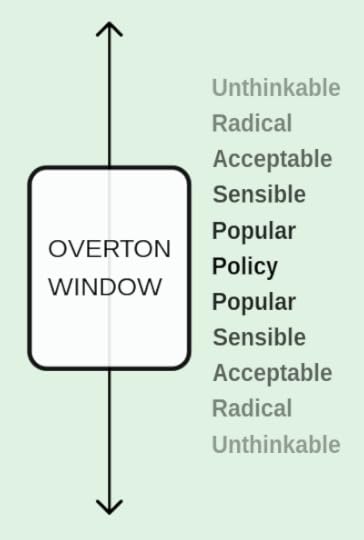
WTR - 607
Putting my plan to get through all my history books through 2032 on hold for the next 6 months to focus on work and school *cry*
In Team of Rivals, Doris Kearns Goodwin presents Lincoln as a secret radical abolitionist who adroitly moves the Window with a near psychic understanding of the public and of the political requirements for policy action.
Foner's Lincoln conversely is dragged nearly kicking and screaming bouncing off the bottom of the Window pane as events and public sentiment pull along the cause of immediate and uncompensated, rather than gradual and compensated abolition (let alone suffrage).
Today, the idea that slaveholders rather than the slaves deserve compensation is intellectually dizzying, but I got a public school education that drew those lines for me using the time-bound norms. White folks are often currently Garrisonians in fevered imaginations of a theoretically historical presence since they place themselves in the context of current, and not past Windows thinking of themselves as authentic individuals with free will, unconstrained by cultural constructions of the moment.
In contrast to the Lincoln of The Fiery Trial, Harriet Beecher Stowe seems like a political sophisticate a 1/3rd of the way into UTC and I can't help but think Stowe's embrace of black tropes as used with almost surgical calculation for targeting the moderates of the time in an effort to play a role in moving abolition into the Overton Window of practical politics, but I'm projecting no doubt.
I am left wondering though who is the more talented politician of the two - likely an unknown as much as Lincoln kept his own counsel. Either Foner or Goodwin's Lincoln is possible, but since Goodwin's is the current standard barrier, I appreciate Foner as one of the barbarians at that gate as they are ascending.
The historical Lincoln of 2060 once we've torn down all the statues can be a vacillating and indecisive slavery apologist for a time until we have the next round of revision.
WTR - 607
Putting my plan to get through all my history books through 2032 on hold for the next 6 months to focus on work and school *cry*

November 4, 2020
Remember a time when a person could think one thing as a young person and then grow up, have life experiences, explore the world, and as a result change their beliefs through their newly found maturity and wisdom gained over the passage of time. Well it is a good thing that Abraham Lincoln was not around now or everyone's favorite president would definitely have been cancelled due to his implicit (maybe explicit) condonation of slavery.
The book does a great job of tracking Lincoln’s life and his exposure to slavery before and during his presidency. The book presents a man, a human being, as opposed to a mythical presidential figure. Lincoln was a product of his time. The book does not shy away from the fact that Lincoln did grow up in a time when slavery was less abhorrent to much of the population as we see it today. And as a politician, Lincoln did make concessions that we may not want to focus when thinking about his legacy.
Ultimately the inspiring part of this book is that it follows a person who was willing to listen and do the right thing, even when many around him were telling him to do the easy thing.
My oh my remember a time when a person could admire a president.
The book does a great job of tracking Lincoln’s life and his exposure to slavery before and during his presidency. The book presents a man, a human being, as opposed to a mythical presidential figure. Lincoln was a product of his time. The book does not shy away from the fact that Lincoln did grow up in a time when slavery was less abhorrent to much of the population as we see it today. And as a politician, Lincoln did make concessions that we may not want to focus when thinking about his legacy.
Ultimately the inspiring part of this book is that it follows a person who was willing to listen and do the right thing, even when many around him were telling him to do the easy thing.
My oh my remember a time when a person could admire a president.

April 15, 2021
"Labor is prior to, and independent of, capital. Capital is only the fruit of labor, and could never have existed if Labor had not first existed. Labor is superior to capital, and deserves much the higher consideration." -- Abraham Lincoln.

December 31, 2019
There are many biographies of Lincoln to choose from. But I can't imagine that any of them does a better job than this book of answering the question most likely to arise for today's reader: what did Lincoln do about slavery?
We know of course that he did the Emancipation Proclamation and the Thirteenth Amendment. Foner puts those achievements in context of Lincoln's actions and his beliefs from early on.
In the world of action, Lincoln did so much more than just end slavery on the national level in two famous actions, one executive and one legislative. From before he took office until the day he was killed, Lincoln tried one plan after another to end slavery while saving the Union. These included many proposals for gradual and compensated emancipation at the state or territorial level.
Some of these plans were accomplished, as when slavery was excluded from territories out West or ended in the District of Columbia. And some plans never came to be, such Lincoln's proposal for Delaware to gradually free its slaves over a period of decades while paying compensation to slaveowners.
Early on, Lincoln's plans often also included or implied colonization, a controversial aspect today that was widely accepted in his own time. Later, as his thinking evolved, Lincoln dropped any expectation that recently freed slaves should be encouraged to leave the country for Liberia or Latin America and instead, started to envision blacks as valuable American citizens.
Going back to his early days as a frontier lawyer and politician from central Illinois, Lincoln was always an anti-slavery man. But Foner also shows how Lincoln's beliefs evolved over time, especially during the Civil War, which speeded things up for everybody including the president.
There's no evidence that Lincoln embraced the full social equality demanded by abolitionists like Frederick Douglass and William Lloyd Garrison, an equality taken for granted by Americans today after the achievements of MLK and the Civil Rights Movement of the mid-20th century. But within the context of the mid-19th century, Lincoln made huge mental strides, growing from a supporter of emancipation but with colonization/segregation to a supporter of equal rights and full citizenship.
Finally, Foner gives us Lincoln the practical politician.
The centrist who had to balance the demands of abolitionists and Radicals for immediate emancipation and equal rights on the left with conservatives who wanted to preserve and restore the Union with few or any any reforms -- or even with slavery left in place.
The commander in chief who, early in the war, was willing to look the other way when Union generals in the field illegally freed slaves in their local area or recruited them into the army, as long as it could be done quietly and without any sort of proclamation or official policy.
And the inspiring communicator known best today for the Gettysburg Address but justly celebrated at the time for the Second Inaugural as well as key statements in the debates with Douglas, in the Cooper Institute address and in open letters to well known critics that Lincoln found to be the most effective means to explain his management of the war and emancipation.
The historical takeaway is how lucky Civil War America was to have Lincoln just when we needed him -- and how unlucky it was that Booth's bullet deprived Reconstruction America of the learning, growing, listening and compassionate leader the country most needed.
The takeaway for current events is to wonder what it would take to get more leaders like Lincoln today. Barring a war or other national cataclysm, is there even an opportunity for such leaders to emerge in Washington? And if that's true, then maybe today's Lincolns will appear in other places than national politics, perhaps in state or local government or in activist groups or even among artists and writers.
I'm inspired by Foner's book to look for the Lincoln inside us all -- the leader who balances firm adherence to worthwhile ideals to flexible thinking and practical judgment.
We know of course that he did the Emancipation Proclamation and the Thirteenth Amendment. Foner puts those achievements in context of Lincoln's actions and his beliefs from early on.
In the world of action, Lincoln did so much more than just end slavery on the national level in two famous actions, one executive and one legislative. From before he took office until the day he was killed, Lincoln tried one plan after another to end slavery while saving the Union. These included many proposals for gradual and compensated emancipation at the state or territorial level.
Some of these plans were accomplished, as when slavery was excluded from territories out West or ended in the District of Columbia. And some plans never came to be, such Lincoln's proposal for Delaware to gradually free its slaves over a period of decades while paying compensation to slaveowners.
Early on, Lincoln's plans often also included or implied colonization, a controversial aspect today that was widely accepted in his own time. Later, as his thinking evolved, Lincoln dropped any expectation that recently freed slaves should be encouraged to leave the country for Liberia or Latin America and instead, started to envision blacks as valuable American citizens.
Going back to his early days as a frontier lawyer and politician from central Illinois, Lincoln was always an anti-slavery man. But Foner also shows how Lincoln's beliefs evolved over time, especially during the Civil War, which speeded things up for everybody including the president.
There's no evidence that Lincoln embraced the full social equality demanded by abolitionists like Frederick Douglass and William Lloyd Garrison, an equality taken for granted by Americans today after the achievements of MLK and the Civil Rights Movement of the mid-20th century. But within the context of the mid-19th century, Lincoln made huge mental strides, growing from a supporter of emancipation but with colonization/segregation to a supporter of equal rights and full citizenship.
Finally, Foner gives us Lincoln the practical politician.
The centrist who had to balance the demands of abolitionists and Radicals for immediate emancipation and equal rights on the left with conservatives who wanted to preserve and restore the Union with few or any any reforms -- or even with slavery left in place.
The commander in chief who, early in the war, was willing to look the other way when Union generals in the field illegally freed slaves in their local area or recruited them into the army, as long as it could be done quietly and without any sort of proclamation or official policy.
And the inspiring communicator known best today for the Gettysburg Address but justly celebrated at the time for the Second Inaugural as well as key statements in the debates with Douglas, in the Cooper Institute address and in open letters to well known critics that Lincoln found to be the most effective means to explain his management of the war and emancipation.
The historical takeaway is how lucky Civil War America was to have Lincoln just when we needed him -- and how unlucky it was that Booth's bullet deprived Reconstruction America of the learning, growing, listening and compassionate leader the country most needed.
The takeaway for current events is to wonder what it would take to get more leaders like Lincoln today. Barring a war or other national cataclysm, is there even an opportunity for such leaders to emerge in Washington? And if that's true, then maybe today's Lincolns will appear in other places than national politics, perhaps in state or local government or in activist groups or even among artists and writers.
I'm inspired by Foner's book to look for the Lincoln inside us all -- the leader who balances firm adherence to worthwhile ideals to flexible thinking and practical judgment.

July 12, 2011
Of all the great historical figures in American history, few (if any) have had as much ink spilled analyzing their accomplishments as Abraham Lincoln. He has been psychologically cross-examined, his every political decision has been scrutinized, and his personal relationships have been discussed ad nauseum in an attempt to understand Lincoln and the choices he made as President of the United States during the Civil War. With so much scholarship to contend with it is puzzling that acclaimed Civil War historic an Eric Foner would attempt a Lincoln biography. Foner, perhaps better than any one else, is familiar with the exhaustive literature on Lincoln and how the force of his personality shaped the Civil War and its cause: black slavery. However, Foner's Lincoln is both an attempt to rediscover the central importance of slavery in Lincoln's thought and also to employ the force of the "Lincoln legacy" in the cause of moderate politics in America today, a sphere increasingly fractious as the recent economic downturn has heightened the stakes of every political decision.
Above all, Foner's Lincoln was a moderate. Borne from the legacy of compromise handed down from his "beau ideal of a statesman" Henry Clay, at every stage of his political career from Springfield to Washington Lincoln sought to build bridges between warring political factions. His early career as a Whig from Illinois was defined by attempts to unite a state split between Northern abolitionist radicalism and Southern pro-slavery traditionalists. As his political influence expanded nationally, Lincoln sought a series of half-measures to assuage Northern abolitionists and pro-slavery Southerners alike such as ending the expansion of slavery into the territories, but allowing it to continue where it was already law and offering to recolonize free blacks outside of the United States. Lincoln's attempts at reconciliation between the North and South ultimately failed and led to a protracted Civil War where Lincoln used his powers as President to push forth the Emancipation Proclamation and establish the Freedman's Bureau to support freed slaves after the Union victory. However, even as Lincoln invoked the powers of the President to free the slaves in the South, Foner is at pains to show that Lincoln attempted every other avenue to carve a via media between Northern and Souther aims regarding slavery. He also credits Lincoln's moderation during the Civil War with keeping slave-holding Union states like Maryland and Kentucky from joining the Confederacy and dooming the Union cause.
Clearly, Foner's primary aim in "The Fiery Trial" is to show the importance of moderate politics during the Sturm und Drang of political crises. His Lincoln is incredibly similar to Barack Obama in both political path and Weltanschauung. Both Lincoln and Obama came from outside Illinois to successfully pursue state political office before moving to Washington and eventually the Presidency. Both were (or is in the case of Obama) gifted orators and masters of political rhetoric. Finally, both men were political moderates eschewing the political radicalism of their times in an attempt to affect meaningful policy change. It is certainly far too early to assess Obama's political career (as James Kloppenberg should have known before writing "Reading Obama"), but "The Fiery Trial" shows how Lincoln's successful path on a single political issue could be duplicated by future leaders. Though another Lincoln book was probably superfluous, Foner's Lincoln is fascinating because of what it says about our current political climate and how strong leadership (but not arrogance) can help a nation weather even the most devastating political turmoil.
Above all, Foner's Lincoln was a moderate. Borne from the legacy of compromise handed down from his "beau ideal of a statesman" Henry Clay, at every stage of his political career from Springfield to Washington Lincoln sought to build bridges between warring political factions. His early career as a Whig from Illinois was defined by attempts to unite a state split between Northern abolitionist radicalism and Southern pro-slavery traditionalists. As his political influence expanded nationally, Lincoln sought a series of half-measures to assuage Northern abolitionists and pro-slavery Southerners alike such as ending the expansion of slavery into the territories, but allowing it to continue where it was already law and offering to recolonize free blacks outside of the United States. Lincoln's attempts at reconciliation between the North and South ultimately failed and led to a protracted Civil War where Lincoln used his powers as President to push forth the Emancipation Proclamation and establish the Freedman's Bureau to support freed slaves after the Union victory. However, even as Lincoln invoked the powers of the President to free the slaves in the South, Foner is at pains to show that Lincoln attempted every other avenue to carve a via media between Northern and Souther aims regarding slavery. He also credits Lincoln's moderation during the Civil War with keeping slave-holding Union states like Maryland and Kentucky from joining the Confederacy and dooming the Union cause.
Clearly, Foner's primary aim in "The Fiery Trial" is to show the importance of moderate politics during the Sturm und Drang of political crises. His Lincoln is incredibly similar to Barack Obama in both political path and Weltanschauung. Both Lincoln and Obama came from outside Illinois to successfully pursue state political office before moving to Washington and eventually the Presidency. Both were (or is in the case of Obama) gifted orators and masters of political rhetoric. Finally, both men were political moderates eschewing the political radicalism of their times in an attempt to affect meaningful policy change. It is certainly far too early to assess Obama's political career (as James Kloppenberg should have known before writing "Reading Obama"), but "The Fiery Trial" shows how Lincoln's successful path on a single political issue could be duplicated by future leaders. Though another Lincoln book was probably superfluous, Foner's Lincoln is fascinating because of what it says about our current political climate and how strong leadership (but not arrogance) can help a nation weather even the most devastating political turmoil.
September 7, 2025
This 2010 book won a Pulitzer, a Lincoln Prize, a Bancroft Prize, & a Notable NYT Book of the Year and deservedly so. It is not a bio but an in-depth look at Lincoln’s evolving relationship with slavery during his life.
The highlight for me was the consistent theme that decisions concerning slavery from 1820 to 1865 were a complex confrontation of conflicting choices.
The immediate emancipation viewpoint of the Abolitionists carried moral weight but was fraught with political, social, & practical problems. The southern states would secede, refuse to live or treat free blacks as social equals, and would not tolerate the massive loss of wealth emancipation would create for slaveholders.
The more moderate anti slavery supporters advocated gradual emancipation but this approach too had issues: how gradual should freedom be obtained? Should slaveholders be compensated? If compensation provided, Lincoln said this meant the Constitution recognized ‘property in men’ and the 5th amendment then required just compensation for federal appropriation of property.
During his 1858 debates with Stephen Douglas, Lincoln was forced to recognize the political reality of public sentiment adverse to racial equality: “I am not …in favor of social or political equality of white and black races nor am I in favor of black voters, jurors, nor intermarriage with white people”. We might consider this pretty harsh language today for the ‘Great Emancipator’, but Lincoln was doing what all successful politicians do and manage the expectations of different constituents. (ie. ‘He was reading the room”). After all, it might make one feel good to be morally right but if you can’t get elected, you can’t do anything about an issue.
The author does an excellent job discussing Lincoln’s advocacy for colonization. Since there was widespread resistance to allowing free blacks to live in many northern states, the concept of moving them out of the country gained ground and Lincoln seized on that as a way to gain support for abolishing slavery. Of course, that proved impractical and was abandoned as Lincoln took the initial step of slavery extinction with his Emancipation Proclamation. Of note is that Lincoln made the proclamation apply only to Confederate occupied territory since the Constitution did not give the President power to abolish slavery. Lincoln used his Constitutional war power as Commander in Chief to justify it.
If there is a weakness in this book it might be that in probing these issues in depth, the author’s writing became dense at times and a bit of a slog. On balance, I think it is an acceptable consequence and does not detract from the delicate tightrope Lincoln brilliantly (in retrospect) walked as his beliefs went from non expansion of slavery into the territories to complete, uncompensated, immediate abolition and the use of black soldiers in the Union army.
The highlight for me was the consistent theme that decisions concerning slavery from 1820 to 1865 were a complex confrontation of conflicting choices.
The immediate emancipation viewpoint of the Abolitionists carried moral weight but was fraught with political, social, & practical problems. The southern states would secede, refuse to live or treat free blacks as social equals, and would not tolerate the massive loss of wealth emancipation would create for slaveholders.
The more moderate anti slavery supporters advocated gradual emancipation but this approach too had issues: how gradual should freedom be obtained? Should slaveholders be compensated? If compensation provided, Lincoln said this meant the Constitution recognized ‘property in men’ and the 5th amendment then required just compensation for federal appropriation of property.
During his 1858 debates with Stephen Douglas, Lincoln was forced to recognize the political reality of public sentiment adverse to racial equality: “I am not …in favor of social or political equality of white and black races nor am I in favor of black voters, jurors, nor intermarriage with white people”. We might consider this pretty harsh language today for the ‘Great Emancipator’, but Lincoln was doing what all successful politicians do and manage the expectations of different constituents. (ie. ‘He was reading the room”). After all, it might make one feel good to be morally right but if you can’t get elected, you can’t do anything about an issue.
The author does an excellent job discussing Lincoln’s advocacy for colonization. Since there was widespread resistance to allowing free blacks to live in many northern states, the concept of moving them out of the country gained ground and Lincoln seized on that as a way to gain support for abolishing slavery. Of course, that proved impractical and was abandoned as Lincoln took the initial step of slavery extinction with his Emancipation Proclamation. Of note is that Lincoln made the proclamation apply only to Confederate occupied territory since the Constitution did not give the President power to abolish slavery. Lincoln used his Constitutional war power as Commander in Chief to justify it.
If there is a weakness in this book it might be that in probing these issues in depth, the author’s writing became dense at times and a bit of a slog. On balance, I think it is an acceptable consequence and does not detract from the delicate tightrope Lincoln brilliantly (in retrospect) walked as his beliefs went from non expansion of slavery into the territories to complete, uncompensated, immediate abolition and the use of black soldiers in the Union army.
February 2, 2021
Abraham Lincoln's definitive role in the Civil War and emancipation have given him a central place in the American imagination and turned him into an almost mythological figure in United States history. This book, which gives a (mostly) chronological account of Lincoln's view on slavery and race doesn't seek to dispel his myth or lessen his stature. While it does recount numerous missteps and wrong-headed policies that Lincoln supported over the course of his career, it does so with the purpose of giving us a greater insight into what the true source of his greatness was. The goal is to show Lincoln as a man with the internal strength and humility to evolve his views and change his mind, and on that account I believe it succeeds wildly. It helps to humanize a man that many of his contemporaries found to be unknowable and in doing so, helps us understand more about the changing world he lived in.
The book starts with Lincoln as a young lawyer who was generally opposed to the institution of slavery, but who had little personal exposure to slaves or slavery. It then tells of the founding of a Republican party formed not with the goal of abolition, but as the landing place for a number of political factions that had tussled with the pro-slavery Democrats and had the rug pulled out from under them. In this party of radicals and conservatives, Lincoln's appeal was his position right in the middle which won him the nomination and ultimately the presidency. The book covers a number of his stances on black issues from the bizarre (an obsession with re-colonization of blacks to Africa or South America) to the obscene (that blacks had no political standing in the United States and could never be equal citizens). Throughout, his critics are given a voice, with many people of his time deeply unsure of the man and his stances. Over time we come to see how and why his views changed, almost always for the better. Lincoln is not presented as the father of his views, rather the book shows up how he was influenced and by popular sentiment, criticism from contemporaries such as Frederick Douglass and Wendell Phillips, and the hard nature of the war itself. Nonetheless, it still gives Lincoln his due as the most important single person in effecting policy during the war and as a true disciple of social change later in his life.
All in all, I thought this was a very good book. However, while it explains the basic context behind the timing of various decisions and policies, it will be very helpful to the reader if they have a working understanding of the antebellum period as well as the Civil War period. While the book does spend a lot of time describing the mood and sentiments of both Northern and Southern actors with regards to the issue of slavery, it is not within the scope of the book to give a detailed account of the major events that helped define them. As a biography of Lincoln, while it doesn't cover every aspect of his life, the book is a great and detailed look at its most important chapters and the issues that dominated them.
The book starts with Lincoln as a young lawyer who was generally opposed to the institution of slavery, but who had little personal exposure to slaves or slavery. It then tells of the founding of a Republican party formed not with the goal of abolition, but as the landing place for a number of political factions that had tussled with the pro-slavery Democrats and had the rug pulled out from under them. In this party of radicals and conservatives, Lincoln's appeal was his position right in the middle which won him the nomination and ultimately the presidency. The book covers a number of his stances on black issues from the bizarre (an obsession with re-colonization of blacks to Africa or South America) to the obscene (that blacks had no political standing in the United States and could never be equal citizens). Throughout, his critics are given a voice, with many people of his time deeply unsure of the man and his stances. Over time we come to see how and why his views changed, almost always for the better. Lincoln is not presented as the father of his views, rather the book shows up how he was influenced and by popular sentiment, criticism from contemporaries such as Frederick Douglass and Wendell Phillips, and the hard nature of the war itself. Nonetheless, it still gives Lincoln his due as the most important single person in effecting policy during the war and as a true disciple of social change later in his life.
All in all, I thought this was a very good book. However, while it explains the basic context behind the timing of various decisions and policies, it will be very helpful to the reader if they have a working understanding of the antebellum period as well as the Civil War period. While the book does spend a lot of time describing the mood and sentiments of both Northern and Southern actors with regards to the issue of slavery, it is not within the scope of the book to give a detailed account of the major events that helped define them. As a biography of Lincoln, while it doesn't cover every aspect of his life, the book is a great and detailed look at its most important chapters and the issues that dominated them.
Displaying 1 - 30 of 436 reviews