Jump to ratings and reviews
Rate this book

Custer's Last Campaign: Mitch Boyer and the Little Bighorn Reconstructed

Rate this book
"Easily the most significant book yet published on the Battle of the Little Bighorn."-Paul L. Hedren, Western Historical Quarterly "[Gray] has applied rigorous analysis as no previous historian has done to these oft-analyzed events. His detailed time-motion study of the movements of the various participants frankly boggles the mind of this reviewer. No one will be able to write of this battle again without reckoning with Gray"-Thomas W. Dunlay, Journal of American History "Gray challenges many time~honored beliefs about the battle. Perhaps most significantly, he brings in as much as possible the testimony of the Indian witnesses, especially that of the young scout Curley, which generations of historians have dismissed for contradictions that Gray convincingly demonstrates were caused not by Curley but by the assumptions made by his questioners . . . The contrasts in [this] book. . . restate the basic components of what still attracts the imagination to the Little Bighorn."-Los Angeles Times Book Review "Gray's analysis, by and large, is impressively drawn; it is an immensely logical reconstruction that should stand the test of time. As a contribution to Custer and Indian wars literature, it is indeed masterful."-Jerome A. Greene, New Mexico Historical Review John S. Gray was a distinguished historian whose books included the acclaimed Centennial The Sioux War of 1876. Custer's Last Campaign is the winner of the Western Writers of American Spur award and the Little Bighorn Associates John M. Carroll Literary Award.

446 pages, Paperback

First published January 1, 1991

44 people want to read

About the author

Ratings & Reviews

What do you think?
Rate this book

Friends & Following

Create a free account to discover what your friends think of this book!

Community Reviews

5 stars
20 (48%)
4 stars
12 (29%)
3 stars
6 (14%)
2 stars
2 (4%)
1 star
1 (2%)
Displaying 1 - 9 of 9 reviews
Profile Image for Matt.
1,053 reviews31.1k followers
April 27, 2016
I bought this book after my most recent trip to the Little Big Horn National Battlefield. Fresh off an invigorating walking tour of the Reno/Benteen defenses, I went into the gift shop and gladly purchased this book for a ridiculous mark-up.

I'd heard of John Gray's work before, as it's mentioned in just about every recent piece of scholarship on Custer's Last Battle. He's always mentioned in hushed, awed tones, as though he was some kind of prophet blessed with divine knowledge of the battle.

I was so excited with the purchase that as soon as I hopped in my car, I asked my then-girlfriend, now-wife to read a little bit to me. She started reading, and after fifteen minutes and one page, gave up. "I can't do this...he doesn't use adjectives."

What I'm trying to say is that this is a hard book to read. That isn't meant to detract from its importance, but the reader should be warned.

You often hear the phrase "not for the general reader" bandied about. I've used the phrase myself. It's a warning that the subject of a book is going to get in pretty deep, and those looking for a casual discussion might search elsewhere.

I consider myself more than a "general reader" when it comes to Custer. Now, I haven't quit my job to prove the existence of the South Skirmish line, and I don't have a papier-mache Last Stand Hill in my basement, but I don't think that shows a lack of seriousness. I'm a lawyer, I've read turgid cases from the 1800s, and I've even tried to make sense of Bush v. Gore, so I figured I could get through this book with no problems.

What I discovered is that it's one thing to get into minutiate (I love the little details), and it's another thing to be able to present the minutiate cogently. It is at this latter task where Gray, a retired doctor, fails.

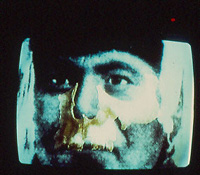
The first half of the book is devoted to Mitch Boyer (we are treated to a long discussion on the spelling of Boyer, which I'm sure was satisfying to...someone). Today, Boyer is best known for his skull, which was discovered by archaeologists and treated to a facial restoration technique that allowed us to discover the skull's identity. Gray goes to great lengths to tell us Boyer's story, filling in the gaps of his life with prodigious research. Unfortunately, Gray's storytelling technique can be paraphrased thusly:

Boyer went to Moose Butt Creek and camped. Then he went to Racoon Hump River and trapped for two days. Then he went to Fort Liberty and traded his pelts. Then he went to Ox Ball bend and played cards. Then he went to Corn Lick Creek to sip water...


(Just to be clear, I made that up).

It's not a narrative so much as a list. Gray has a dessicated style that seems intent on making history as pedantic, dull, and inaccessbile as possible. I can imagine Ben Stein doing the audio book version, if he wasn't too busy schilling for shady credit-check companies.

The second half of the book is just as plodding; however, it at least has the benefit of being about Custer and the Little Big Horn.

Gray's contribution to the literature is the use time-motion analysis. That is, he takes witness testimony ("We got to the lone tepee at 10 a.m.") and cross-checks that with the land-speed of horsemen, to give an approximate time-table for Custer's advance into the Valley of the Little Big Horn. It is an understatement to say this chronology is detailed; rather, it feels almost step-by-step. By doing this, you get clearer idea of what might have been going on in Custer's head. Instead of the caricatured Custer of old, using genocide to springboard to the White House, you get an intelligent, aggressive leader. You see a Custer who stayed on the offense even after his subordinate Reno utterly failed to carry out his orders (and perhaps by doing this, Custer saved Reno) and who's demise came about because he was on poor ground to switch from offense to defense.

As a student of the battle, I appreciated what this book has to offer. You won't find a more complete telling of how Custer got from Point A to Point Dead. With his compendium of sources, numerous graphs, and painstaking analysis, Gray has given us the roadmap of the Little Big Horn.

As a person who appreciates a good story, well told, I'd say this book should be approached with caution and patience. It is as lifeless as it is thorough. And because Gray has tethered himself to time-motion, his story ends before the final battle itself. He gives a brief scenario of what might have happened, but a reader looking for a bit of blood-and-thunder will have to keep looking elsewhere.
Profile Image for Katherine Addison.
Author 18 books3,680 followers
August 30, 2016
"Anything that actually happened had to be possible." --p. 222

Part of this book is fascinating, but "part," unfortunately, does not equal "all." Gray's writing style is clear and competent (it has to be, because I was able to follow his reconstruction of Custer's campaign), but not engaging, and he makes the mistake that so many nonfiction writers do of putting the explicit articulation of his argument at the end of his book instead of at the beginning. I would have found the biography of Mitch Boyer much more interesting if I'd known what I was reading it for.

So. Gray's purpose in writing this book is to do a time-motion study of Custer's 1876 campaign, especially the battle(s) at Reno Hill and what is now the Little Bighorn Battlefield National Monument. His theses are:

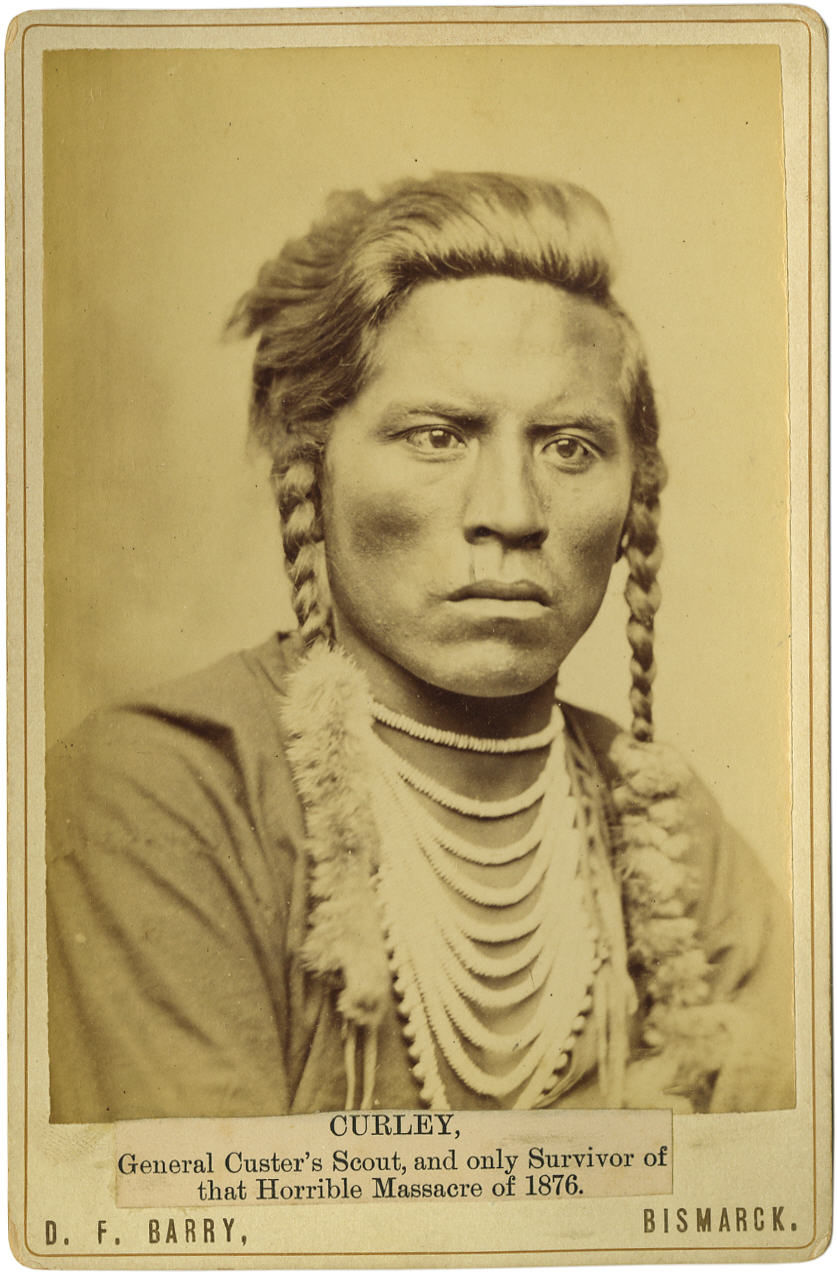
(1) a defense, in general, of the accuracy and reliability of Native American witnesses to the battle, especially the Crow scout Curley who was the last person in Custer's company to leave the Little Bighorn alive, and a repudiation in particular of the accounts of the battle and campaign that make Curley out to be a liar and/or a coward.

(2) a defense, a eulogy, and a championing of Mitch Boyer, the half-Sioux half-French scout. (Mitch is an Anglicization of Mich', being short for Michel, and Boyer is only one of many possible spellings of his surname. I'm sticking with Boyer because that's how Gray spells it, but if you want to learn more about him, Bouyer will get you the Mitch you're looking for from Google.) Gray is especially concerned (he reveals at the end) to refute the rumors and speculation that Boyer betrayed Custer to the Sioux.

(3) a refutation of the persistent rumor that there were 20 to 40 bodies lost. He does patient, careful math and proves that, no, the Seventh Cavalry can all be accounted for, alive or dead. His margin of error is +/- 1, not +/-20.

He also along the way demonstrates that the unreliable witnesses to the Little Bighorn are the commissioned officers of the Seventh Cavalry, especially Major Marcus Reno and MOST ESPECIALLY Captain Frederick Benteen, and that most of the confusion is caused by officers lying outright or lying by omission in order to save their own faces (Benteen and Reno) or to save the faces of their fellow officers (almost all the other commissioned officers, including a steamboat captain who quietly "loses" a day of his chronology in order to avoid having to report an idiotic mistake made by the captain of the boat guard).

Gray's time-motion study is brilliant, and he provided me with all sorts of fascinating and helpful details, such as that the cavalry's "working trot" is 6 mph and that an ox-drawn wagon train can make 15 miles a day, while a mule train can make 20. The way he correlates and cross-checks his witness testimony is seriously beautiful to watch.

I wish he'd made a bigger deal of the part, buried at the absolute end of the book, where the archaeologists excavating the battlefield proved that Mitch Boyer died at the Little Bighorn by taking the pieces of skull they had and superimposing them on the only known photograph of Mitch Boyer. (In my guilty weakness for true crime shows, I've watched several cases of identity proven by this method, including Bun Chee Nyhuis [it's a weird photo of her, because she's making a face at the camera, but look at the way the skull fits her face].)

I don't know why I'm so fascinated by the Battle of the Little Bighorn, since I hate everything about it. I hate that the US Army was out there because President Grant and his Cabinet decided deliberately and with malice aforethought that they preferred breaking their word to the Sioux and Cheyenne over forcing American citizens to obey the law. For that matter, I hate every single one of the American citizens who decided that the possibility of gold was a good enough reason to ignore the fact that the Black Hills were off-limits, a good enough reason to trample all over the rights and beliefs of other human beings. (Do not talk to me about "pioneer spirit." You will not like what I have to say.) I hate the foreknowledge of the Sioux' defeat (Wounded Knee is only fourteen years in the future); I hate knowing that the Native American peoples who chose to honor their agreements and treaties with the American government (especially the Crow and Arikara, who were out there with the Army, scouting and dying for these entitled assholes) are going to get screwed over every bit as badly as the "hostile" peoples. And at the same time, I hate watching the catastrophe befalling the Seventh Cavalry; I hate knowing that Custer is leading his men to a terrible death (and as much as I loathe and despise what those men are out in Montana doing, most of them are not to blame, are merely men trying to do their duty as best they can); I hate--and yet am mesmerized by--watching the process of that catastrophe unfold.

Gray is bitterly lucid about the betrayal of the Native American peoples by the American government and its citizens. He is absolutely forthright about the lies and mistakes he catches the officers of the Seventh Cavalry in, and he is fierce in his championing of Mitch Boyer and Curley.

This is not a good place to start with the Battle of the Little Bighorn, but if you are already interested, Gray's time-motion analysis is fascinating.
Author 49 books17 followers
April 2, 2024
This book is an example of the drivel written about the battle that does nothing but mislead people who are interested in what happened 148 years ago.

I purchased the book for a discount after reading comments praising its version of events. I think I paid a couple of dollars for it on Amazon, and that was way too much. The book numbers four-hundred and fourteen pages. I didn’t start reading until page 333 and after reading the last 50 pages concerning the battle, I was glad for it.

The book was written in 1991, a full four years after the publishing of the first ground breaking work by Scott and Fox on the archaeology of the battle. It is clear that the author wasn’t ignorant of the revision of the battle events brought about by that work which relied on hard evidence dug from the ground. He cites bits and pieces of Scott et al’s work when it conveniently supports his hair brained notion of events and cited finds on he battlefield in earlier years. He gives the older finds which have no context, the same credence as those from the well documented finds from the 1985 and later digs. Again its purely out of convenience in order to support his version of events.

The author provides “timeline” charts dwelling on the minutiae of a time analysis purporting to show where the participants were on the battlefield at specific places and times. It is pure pipe dream stuff. I’ve never understood why anyone would spend that much time and effort providing such specious content, unless it is to provide a cloak of pseudo science around meaningless arm waving. None of this “analysis” can be proven, so it is just another opinion. I’ve seen stuff like this before, stuff that only misleads the uniformed, i.e. folks whose BS filter is set on low gain.

On the other hand, artifacts dug from the ground provides hard evidence of where the Warriors and the Cavalry actually were. It matters little when, since the battle on the Custer field was short lived.

It DOES matter if one wants to build a fictitious version of events. It might fool some, again those who aren’t well versed on the battle, or those who don’t understand the science, statistics and meaning of the archaeological surveys.

The book is the worst kind of Custer apologist drek. According to the author, Custer and the cavalry in general, performed flawlessly during and after the battle.

The author claims that when Custer’s battalion hit the Medicine Tail Coulee, it was nearly intact, only Yates left wing of one company, had split off, and they all reunited at the southwest tip of Calhoun Ridge (aka Finley Finkel Ridge) and conducted a fighting retreat up the ridge to Calhoun Hill, where they conducted a “stand.” Of course this flies in the face of the current interpretation, that the markers of the Dead Cavalry along the ridge and in Calhoun Coulee below it, were from a failed attempt to drive off the encroaching Warriors.

One might excuse the author on some counts, as the forensics analysis, of the cartridges identifying specific weapons and where they moved as they were fired was not published until two years after this book was published.

Fox and Scott had published another book I 1989, The Archaeological Perspective of the Battle of the Little Big Horn, which I am sure provided a lot of contrary evidence, that the author of this laughter chose to ignore.

So we have all five battalions on or in the vicinity of Calhoun Hill. There is no mention by the Author of the proven fact that Indians occupied positions on three sides of the Keogh battalion. There were no right or left wings, only a single unified command. With pressure mounting from the south, the author has the cavalry moving north along battle ridge.

There is a pause in the action here in his narrative and he goes to great lengths to inform the reader about Indian Scout Curley’s escape. Why? Because this man is the lynchpin of his entire silly story.

He hangs his hat on Curley’s account which many of the Indian participants found less that truthful and a bit self-serving.

Starting at Page 383 things get really funny.

I can come to no other conclusions but to think that the author:

1) Didn’t really understand nor care to understand the science behind the archaeology surveys.

Why? For numerous reasons. After spouting something about the importance of the where the artifacts were found (page 384) he dredges up the nonsense about the field being stripped of artifacts by souvenir hunters, by Indian reloaders desperate for empty copper casings to reload and other patently nonsensical excuses why the archaeological conclusions are hopelessly skewed.

That assertion is a red flag, demonstrating the he and those who agree with him don’t understand the science, sampling and statistics behind the archaeological surveys. They think they were an all or nothing endeavor and that shows their ignorance. Read Scott and Fox’s book, I mean really read them and you’ll understand what I mean. If I had to make a guess, probably more than 50% of the so-called experts on the battle have actually read the books and understood them. They are a dry read, an academic read, like reading a text book. The authors were not interested in depicting an account with flags flying and gun smoke in the air, or perpetuating the cherished mythical nonsense so many people hold dear. They wanted to present a clear scientific analysis based on hard data. Many people like the author of the book in question let the facts run off their backs like water off a duck’s.

The author claims the archaeologists “scoured” the battlefield for artifacts and “found few cartridges.” That is blatantly false. He then states he won’t be dealing with the Cavalry and Indian artifact concentrations, because the results hadn’t yet been published. False. A very detailed accounting of the artifacts and their placement was published in Archaeological Perspectives (1989). This book wasn’t published until 1991.

There were hundreds of artifacts if not thousands found, left behind by all the artifact collectors of the late 1870s, 1880s, 1890s, and 80 odd years that followed. How did the souvenir hunters miss the horse shoes and saddle parts and zero in on the spent cartridge cases? Remember that of all the artifacts found in the survey, they only represent around 30-35% of the artifacts and THAT was by design. The archaeologists didn’t “scour” anything. They didn’t have the money or the time to survey every inch of the field. The survey spacing only covered 30-35% and Fox and Scott knew that. They go to great pains to spell that out in EACH of their books.

The bottom line thesis of the book is that Custer and his five companies remained intact, and pursued a counter clockwise traverse of the battlefield. Up along “Calhoun ridge” to Calhoun Hill, then down the length of Battle or Custer ridge, to Last Stand Hill, then down the topographic rise between Cemetery Ravine and Deep Ravine, and them presumably south along the east side of the river. He even presents questionable maps that illustrate it basis of marker placement. The 14 markers strewn from Deep Ravine to the base of Calhoun Ridge (Finley Finkle ridge) purports to show those who fell along the “West Perimeter.”


2) Then he goes into an “analysis” of the grave markers and their number. He purports to show that there were never any missing bodies (those in Deep Ravine) and makes the ridiculous assertion that the reburial details and the subsequent remarking details did an admirable and flawless job in identifying where all the men fell. No question. He brushes aside he discrepancy of the spurious markers but then relies on the markers to form his analysis. Human nature being what it is, we try to find patterns in things, like how we see horses and other things in the clouds in the sky or stars in the heavens. Astrology is pretty much based on that particular tendency of ours.

So fifty odd extra markers has to skew any analysis based on mark position and numbers.

As to the number of markers, the Park Administrators by admission, don’t know how many markers are on the field or where they are, and how many of them actually mark where a body was buried.

That is another long story.

3) This one relates to the previous one above. The author sees a pattern in the markers that represents a four sided defense perimeter. Totally ludicrous. He mentions the necessary spacing between soldiers necessary to cover the linear distance of such a perimeter, but discusses it seriously anyway. There were 210 men minus the previous casualties, on Calhoun ridge, and the 25% needed to hold the horses. So the ideal is ridiculous on its face. The author has no idea about the distances and topography of the battlefield he pretends to know so much about.

4) The next bonehead assertion is even worse than the others. It is clear that the author of the book either never set foot on the battlefield, can’t read a topographic map or an aerial photograph or all three.

Why? Because he states on Page 389: “That the markers are so confined to the ridges is not surprising, as there are tactical advantages in avoiding ravines and fighting from high ground.”

Yes, particularly if you learned your tactics from the Hollywood school of military tactics.

That statement is a blatant a bald face lie; and is mind boggling. I guess he was so blinded by his own retarded version of events and so desperate to prove it that he ignored topo maps and aerial photos in order to fallaciously present the Keogh sector markers as being on the top of Battle Ridge, and not in a ravine on the east side of the ridge.

He wants us to believe that the cavalrymen were arrayed along the crests of the ridges like so many latter-day Alamo defenders. Even at the Alamo there were too few men to defend the place and he wants us to believe that 210 men defended a perimeter that was probably five or six times as great as the Alamo compound.

I want some of whatever the author was smoking.

I’m pretty old, approaching 70, and am sensitive to ageism, but you know you need to take care of old people, not subject them to embarrassment. The author was born in 1910 and the book was published in 1991. You do the math.

John S. Gray the author was a medical doctor and professor of physiology who became interested in American frontier history as a respite from university administrative duties. Ah, that explains a lot.

There is no one, after the battle or now, that can see any kind of coherent defensive deployment through the Keogh sector east of Battle ridge. Even Benteen couldn’t see it or others in the burial details.

So in fact, the author deliberately misled whoever purchased and read this book.

It makes you wonder if the author knew anything about the battle at all, and my god, what kind of editor, or reviewers did he have?
Profile Image for M Christopher.
580 reviews
November 10, 2021
Like most White Male U.S. residents of my generation, I was a big Custer fan as a child. The mythos was sold to us pretty hard. I'm pretty sure I saw the TV series, "The Legend of Custer" during our sojourn in England and glommed on to it as I did with most things that came to the UK from the US. But I think I also saw the movie, "The Court-Martial of George Armstrong Custer" as a teen and that began my reassessment. At any rate, it's been some time since I was a Custer "fan."

I actually ordered this book as part of my genealogical research. The "Mitch Boyer" mentioned in the title was not one of my ancestors but was probably a distant cousin, descended from the same French antecedents as I -- Frenchmen who came first to Canada as hunter/trappers, then moved into trade with the First Nations. My branch of the family came south into the part of Greater France that is now Indiana, Illinois, and Missouri, while the branch from which "Mitch" (probably christened Michel) descended continued as trapper/traders in southern Canada and Minnesota/Dakotas.

Gray's work is a thorough and thoughtful compilation of the work of several other scholars. After a shorter part one, in which he traces the history of my "cousin," he turns to a painstaking recreation of the fatal Custer campaign. To a real Custer aficionado, it looks to be incredibly important. I'm afraid I found it rather boring and skimmed large sections. But I did learn a great deal about Mitch Boyer and am glad to have done so. He was a talented, resourceful and brave man, dying with the Seventh Cavalry after having been offered and even ordered to withdraw to save his own life. I think he was loyal to the wrong cause, but his loyalty is admirable.
Profile Image for Scottloar.
18 reviews
November 18, 2013
An excellent historiography explaining the Northern Plains through the life of the "meti" Mitch Boyer and analyzing Custer's command during the 1876 campaign against the Lakota, using time-motion studies detailing events in sequence to reconstruct the Battle of the Little Big Horn. Detailed and well-written this study is more than competent, it is definitive and a good read, recommended not only to those interested in the plains warfare but especially to those who appreciate historiography.

Custer, a highly regarded cavalry officer well-experienced in warfare against the plains tribes, acted on orders which obliged him to pursue, surround and prevent the escape of those Sioux bands not yet on reservation without delay; he failed to appreciate the Sioux were not dispersing but gathering, further increased by summer-roamers (his scouts plains scouts surely understood the numbers), was hurried into action, and after splitting his command in an attempt to encircle the Sioux encampment led the majority into terrain riven with gullies that favored Sioux tactics and numbers, where they were arrested before even effectively deploying a defensive line, then destroyed to a man.
Profile Image for Fredrick Danysh.
6,844 reviews196 followers
December 17, 2013
There is still controversy among historians regarding Custer's battle at the Little Bighorn. In this version, chief scout itch Boyer's role is also examined. A must read for the Custer collector.
Profile Image for Donnacha.
141 reviews2 followers
May 22, 2016
One of the first books I've read on the topic. Very insightful and interesting.
Displaying 1 - 9 of 9 reviews

Can't find what you're looking for?

Get help and learn more about the design.