

What do you think?

Offshore
On the Battersea Reach of the Thames, a mixed bag of the slightly disreputable, the temporarily lost, and the patently eccentric live on houseboats, rising and falling with the great river’s tides. Belonging to neither land nor sea, they cling to one another in a motley yet kindly society. There is Maurice, by occupation a male prostitute, by happenstance a receiver of stolen goods. And Richard, a buttoned-up ex-navy man whose boat dominates the Reach. Then there is Nenna, a faithful but abandoned wife, the diffident mother of two young girls running wild on the waterfront streets.
It is Nenna’s domestic predicament that, as it deepens, draws the relations among this scrubby community together into ever more complex and comic patterns.
An alternative cover edition for this ISBN can be found here
It is Nenna’s domestic predicament that, as it deepens, draws the relations among this scrubby community together into ever more complex and comic patterns.
An alternative cover edition for this ISBN can be found here
140 pages, Paperback
First published January 1, 1979
About the author
Penelope Fitzgerald
44 books835 followersPenelope Mary Fitzgerald was a Booker Prize-winning novelist, poet, essayist and biographer from Lincoln, England. In 2008 The Times listed her among "the 50 greatest British writers since 1945". The Observer in 2012 placed her final novel, The Blue Flower, among "the ten best historical novels". A.S. Byatt called her, "Jane Austen’s nearest heir for precision and invention."
Ratings & Reviews
Friends & Following
Create a free account to discover what your friends think of this book!
Community Reviews
Displaying 1 - 30 of 1,105 reviews

August 8, 2014
An exquisite little novel in which not much happens until the end, and yet, due to storms of all kinds, the whole world of each protagonist changes irrevocably.
Flux, Transition, Contrast, Stagnation
"Reality seemed to have lost its accustomed hold, just as the day wavered uncertainly between night and morning."
Everyone lives between land and water, but each is also caught in some other dichotomy: childhood or adulthood; togetherness or separation; comfort or poverty; in or out of love; life or death; artistry or manual labour; dreams or cold reality.
"Decision is torment for anyone with imagination... [because] you multiply the things you might have done and now never can".
But that can lead to paralysis.
Parallels in my Life
I don't relate to the specific circumstances, and it’s set before I was born, but the paralysis of indecision, when torn between two thoughts or situations is something I often struggle with. Sometimes it leads to an impulsive decision (which I may or may not regret), other times I try to pass the decision to someone else, or just avoid making it altogether. I feel I should be able to learn from this beautiful book, but it suggests diagnosis (which I'd already worked out), but no prescription. And that's fine.
Setting and Atmosphere
It is set in "the Reach", a small community of barge-dwellers in London, around 1962. The houseboats are permanently moored; their movement is limited to bobbing up and down on the tide.
The residents are very much a community, and yet they have almost nothing in common, other than the fact they are all adrift (even the cat), living in a never-world between land and water - literally, and in a more profound, psychological sense.
"The barge-dwellers, creatures neither of firm land nor water would have liked to be more respectable than they were... but a certain failure, distressing to themselves, to be like other people, caused them to sink back, with so much else that drifted or was washed up."
It vividly conjures the vicissitudes of the sights and sounds of the water and weather, aided by a splattering of boaty jargon.
"The river's most elusive hours, when darkness lifts off darkness, and from one minute to another the shadows declare themselves as houses or craft at anchor."
Characters
"Was there not, on the whole of Battersea Reach, a couple, married or unmarried, living together in the ordinary way?"
All the characters are Characters. As are the five boats. In fact, tradition dictates that owners are addressed by the name of their boat, though that doesn't happen all the time, and one owner thwarts it by changing the name of his boat to match his own name.
The main characters are Nenna (only 32, but with daughters Martha, 12, and Tilda, 6); Maurice, a young gay man making ends meet as a prostitute; Willis, an old marine painter, whose boat is in need of sprucing up; boat-proud Woodrow (Woodie); and Richard, a natural leader, ex-navy, now working in insurance, with the biggest, smartest boat.
All have troubles of some sort, though Nenna's are most evident. She's depressed and has other vague mental health issues. When she's alone, her thoughts "took the form of a kind of perpetual magistrates' hearing", perpetually having to defend her action and inaction regarding her marriage. Meanwhile, she is over-reliant on her daughters, who no longer attend school. Her "character was faulty, but she had an instinct to see what made other people unhappy".
Tilda is perhaps the least convincing character, which is a shame, as it could be fixed by making her 10, rather than 6. Growing up in the Reach, she is understandably fascinated by and knowledgeable about the river. She "had the air of something aquatic, a demon from the depths", and "respected the water and knew that one could die within sight of the Embankment". But her language and insight don't always sound right: "Do you think Ma's mind is weakening?" and "It's not the kind who inherit the earth... They get kicked in the teeth".
In contrast, Martha is
"armed at all points against the possible disappointments of her life, conscious of the responsibilities of protecting her mother and sister, worried a the gaps in her education... she had forgotten for some time the necessity for personal happiness."
Plot Summary
Then it ends! I like untidy, open endings, but this was SO open, I was aghast.
Quotes
* "That crucial moment when children realise that their parents are younger than they are."
* The advantages of youth, "Tilda cared nothing for the future, and had, as a result, a great capacity for happiness." Also, "Her heart didn't rule her memory... she was spared that inconvenience."
* A petty criminal "had no expression, as though expressions were surplus to requirements."
* "Tenderly responsive to the self-deception of others, he was unfortunately too well able to understand his own."
* "Martha bruised so easily. A princess, unknown to all about her, she awaited the moment when these bruises would reveal her heritage."
* "Many enterprises in Chelsea which survived entirely by selling antiques to each other."
* A man, propositioning a woman on a street, "smelled of loneliness".
* "The kind of man who has two clean handkerchiefs on him at half past three in the morning."
* "She would go with him to the end of the world if his outboard motor was always going to start like that." ;)
* A young German (ex) aristocrat had "an upbringing designed to carry him through changes of regime and frontier, possible loss of every worldly possession... had made him totally self-contained and able with the sunny smile and formal handshake of the gymnast to set almost anybody at their ease."
* "The ship's cat was in every way appropriate for the Reach. She habitually moved in a kind of nautical crawl... Through years of attempting to lick herself clean, for she had never quite lost her self-respect, Stripey had become as thickly coated with mud inside as out. She was in a perpetual process of readjustment... to tides and seasons... The resulting uncertainty as to whether she was coming or going had made her, to some extent, mentally unstable."
More Fitzgerald?
Given how much I loved this, I was excited to pick up The Blue Flower (see my review HERE). It couldn't have been more different. I had to force myself to finish it. Nevertheless, this was so good, I will give Fitzgerald another chance. One day.
And there is a growing tide of support among my GR friends for The Bookshop, which - apart from its bookish appeal - sounds much closer to this.
Flux, Transition, Contrast, Stagnation
"Reality seemed to have lost its accustomed hold, just as the day wavered uncertainly between night and morning."
Everyone lives between land and water, but each is also caught in some other dichotomy: childhood or adulthood; togetherness or separation; comfort or poverty; in or out of love; life or death; artistry or manual labour; dreams or cold reality.
"Decision is torment for anyone with imagination... [because] you multiply the things you might have done and now never can".
But that can lead to paralysis.
Parallels in my Life
I don't relate to the specific circumstances, and it’s set before I was born, but the paralysis of indecision, when torn between two thoughts or situations is something I often struggle with. Sometimes it leads to an impulsive decision (which I may or may not regret), other times I try to pass the decision to someone else, or just avoid making it altogether. I feel I should be able to learn from this beautiful book, but it suggests diagnosis (which I'd already worked out), but no prescription. And that's fine.
Setting and Atmosphere
It is set in "the Reach", a small community of barge-dwellers in London, around 1962. The houseboats are permanently moored; their movement is limited to bobbing up and down on the tide.
The residents are very much a community, and yet they have almost nothing in common, other than the fact they are all adrift (even the cat), living in a never-world between land and water - literally, and in a more profound, psychological sense.
"The barge-dwellers, creatures neither of firm land nor water would have liked to be more respectable than they were... but a certain failure, distressing to themselves, to be like other people, caused them to sink back, with so much else that drifted or was washed up."
It vividly conjures the vicissitudes of the sights and sounds of the water and weather, aided by a splattering of boaty jargon.
"The river's most elusive hours, when darkness lifts off darkness, and from one minute to another the shadows declare themselves as houses or craft at anchor."
Characters
"Was there not, on the whole of Battersea Reach, a couple, married or unmarried, living together in the ordinary way?"
All the characters are Characters. As are the five boats. In fact, tradition dictates that owners are addressed by the name of their boat, though that doesn't happen all the time, and one owner thwarts it by changing the name of his boat to match his own name.
The main characters are Nenna (only 32, but with daughters Martha, 12, and Tilda, 6); Maurice, a young gay man making ends meet as a prostitute; Willis, an old marine painter, whose boat is in need of sprucing up; boat-proud Woodrow (Woodie); and Richard, a natural leader, ex-navy, now working in insurance, with the biggest, smartest boat.
All have troubles of some sort, though Nenna's are most evident. She's depressed and has other vague mental health issues. When she's alone, her thoughts "took the form of a kind of perpetual magistrates' hearing", perpetually having to defend her action and inaction regarding her marriage. Meanwhile, she is over-reliant on her daughters, who no longer attend school. Her "character was faulty, but she had an instinct to see what made other people unhappy".
Tilda is perhaps the least convincing character, which is a shame, as it could be fixed by making her 10, rather than 6. Growing up in the Reach, she is understandably fascinated by and knowledgeable about the river. She "had the air of something aquatic, a demon from the depths", and "respected the water and knew that one could die within sight of the Embankment". But her language and insight don't always sound right: "Do you think Ma's mind is weakening?" and "It's not the kind who inherit the earth... They get kicked in the teeth".
In contrast, Martha is
"armed at all points against the possible disappointments of her life, conscious of the responsibilities of protecting her mother and sister, worried a the gaps in her education... she had forgotten for some time the necessity for personal happiness."
Plot Summary
Then it ends! I like untidy, open endings, but this was SO open, I was aghast.
Quotes
* "That crucial moment when children realise that their parents are younger than they are."
* The advantages of youth, "Tilda cared nothing for the future, and had, as a result, a great capacity for happiness." Also, "Her heart didn't rule her memory... she was spared that inconvenience."
* A petty criminal "had no expression, as though expressions were surplus to requirements."
* "Tenderly responsive to the self-deception of others, he was unfortunately too well able to understand his own."
* "Martha bruised so easily. A princess, unknown to all about her, she awaited the moment when these bruises would reveal her heritage."
* "Many enterprises in Chelsea which survived entirely by selling antiques to each other."
* A man, propositioning a woman on a street, "smelled of loneliness".
* "The kind of man who has two clean handkerchiefs on him at half past three in the morning."
* "She would go with him to the end of the world if his outboard motor was always going to start like that." ;)
* A young German (ex) aristocrat had "an upbringing designed to carry him through changes of regime and frontier, possible loss of every worldly possession... had made him totally self-contained and able with the sunny smile and formal handshake of the gymnast to set almost anybody at their ease."
* "The ship's cat was in every way appropriate for the Reach. She habitually moved in a kind of nautical crawl... Through years of attempting to lick herself clean, for she had never quite lost her self-respect, Stripey had become as thickly coated with mud inside as out. She was in a perpetual process of readjustment... to tides and seasons... The resulting uncertainty as to whether she was coming or going had made her, to some extent, mentally unstable."
More Fitzgerald?
Given how much I loved this, I was excited to pick up The Blue Flower (see my review HERE). It couldn't have been more different. I had to force myself to finish it. Nevertheless, this was so good, I will give Fitzgerald another chance. One day.
And there is a growing tide of support among my GR friends for The Bookshop, which - apart from its bookish appeal - sounds much closer to this.

Read
January 28, 2021As I read Offshore, and stumbled over the baggage of Penelope Fitzgerald's crew of barge-dwelling characters, I was thrown off-balance many times. There was nothing experimental about the writing yet I experienced it initially as if there had been, as if the narrative had been spliced up into separate chunks with no connecting ropes between them.
However, by the time I finally stepped away from the little Thames community, I could see that it all linked in its own way and there were few loose ends. But still, there was something off-kilter even then because although I'd spent time with the barge-dwellers in the course of the book, I knew little about any of them when I finished it.
Yet, odd as it may sound, I enjoyed this book a lot. While it caught me off-guard at first, it was all just right, just perfectly in order, because why should I expect to 'know' Nenna—or her offspring, Tilda and Martha, or indeed Edward or Maurice or Richard or Willis—in the short time I spent with them? Why shouldn't this neat little book, where no episode, no character and no character's thoughts take up much room, make for a perfectly acceptable narrative, as economical in its own way as the inside of a barge dweller's home? Indeed the character who gets the most space is the smallest; the very bright six-year old Tilda shines like the brasses on her mother's barge, and is one of the anchors of this unusual narrative.
I had the further thought that this book is a little like Goodreads. It's in the way we float in and out of each other's spaces, wafting airs of unknowable lives and unimaginable baggage, and leaving us with momentarily vivid yet inevitably vague images of the other. Some of us turn up in each other's feed only briefly, others hang out for longer, maybe chat over coffee or a drink. But then the tide turns, and some float away on it while others remain behind.
Perhaps Penelope Fitzgerald was really talking about life.
However, by the time I finally stepped away from the little Thames community, I could see that it all linked in its own way and there were few loose ends. But still, there was something off-kilter even then because although I'd spent time with the barge-dwellers in the course of the book, I knew little about any of them when I finished it.
Yet, odd as it may sound, I enjoyed this book a lot. While it caught me off-guard at first, it was all just right, just perfectly in order, because why should I expect to 'know' Nenna—or her offspring, Tilda and Martha, or indeed Edward or Maurice or Richard or Willis—in the short time I spent with them? Why shouldn't this neat little book, where no episode, no character and no character's thoughts take up much room, make for a perfectly acceptable narrative, as economical in its own way as the inside of a barge dweller's home? Indeed the character who gets the most space is the smallest; the very bright six-year old Tilda shines like the brasses on her mother's barge, and is one of the anchors of this unusual narrative.
I had the further thought that this book is a little like Goodreads. It's in the way we float in and out of each other's spaces, wafting airs of unknowable lives and unimaginable baggage, and leaving us with momentarily vivid yet inevitably vague images of the other. Some of us turn up in each other's feed only briefly, others hang out for longer, maybe chat over coffee or a drink. But then the tide turns, and some float away on it while others remain behind.
Perhaps Penelope Fitzgerald was really talking about life.

February 2, 2018
I can't rate a book so beautifully written with just one star, so two. But if I was rating it on the interesting plot, the fascinating characters I wanted to know more about, the unusual setting of houseboats on the Thames or just sheer enjoyment of passing a few hours in another world, I would have given it 1 star which equals boring book about people (apart from the children, I liked them, wild little things that they were) I couldn't care less about.
I have read about three other of Penelope Fitzgerald's books. Apart from The Bookshop, I didn't like the others much and hated At Freddie's so much it only did get one star (I didn't even like the writing). I read this because it was a present. A friend asked me if I'd like a book or chocolates. I said that I was on a diet (another one) so a book please. I chose wrong. What's a bit of extra flesh compared to sending so many brain cells into an ennui-induced coma? (Besides I snack a lot when I'm bored).
I have read about three other of Penelope Fitzgerald's books. Apart from The Bookshop, I didn't like the others much and hated At Freddie's so much it only did get one star (I didn't even like the writing). I read this because it was a present. A friend asked me if I'd like a book or chocolates. I said that I was on a diet (another one) so a book please. I chose wrong. What's a bit of extra flesh compared to sending so many brain cells into an ennui-induced coma? (Besides I snack a lot when I'm bored).

April 26, 2019
A houseboat is perhaps the perfect setting to dramatise in a low key how precarious is our every effort at constructing a secure foothold in life. I had a friend who lived on a houseboat on Battersea Reach and I remember how every creak and lurch was both a call to adventure and a reminder of one's vulnerability. You might say the world is constantly moving beneath all of us but only those who live on boats are fully aware of it.
In an interview Penelope Fitzgerald said she was drawn to "people who seem to have been born defeated or even profoundly lost; people who are ready to assume the conditions the world imposes on them, but don't manage to submit to them." All the characters in this novel possess the restlessness of flotsam on a rising tide. They are adrift. But adrift in a community. Life on shore is depicted as something they've all failed at in different ways. Life on a boat as an inevitably doomed form of escape. There's a generous tenderness about the way Fitzgerald writes about her characters and especially their shortcomings which reminded me of Katherine Mansfield. It's probably the most charming novel I've read since A Gentleman in Moscow. Not that it's without substance.
This was my first Fitzgerald and I've already bought another. 4+ stars.
In an interview Penelope Fitzgerald said she was drawn to "people who seem to have been born defeated or even profoundly lost; people who are ready to assume the conditions the world imposes on them, but don't manage to submit to them." All the characters in this novel possess the restlessness of flotsam on a rising tide. They are adrift. But adrift in a community. Life on shore is depicted as something they've all failed at in different ways. Life on a boat as an inevitably doomed form of escape. There's a generous tenderness about the way Fitzgerald writes about her characters and especially their shortcomings which reminded me of Katherine Mansfield. It's probably the most charming novel I've read since A Gentleman in Moscow. Not that it's without substance.
This was my first Fitzgerald and I've already bought another. 4+ stars.

April 17, 2020
Dear Miss Fitzgerald
Firstly, I am informed that you died in 2000 at the age of 83, but I feel this should not mean that I am unable to write to you, although I do realise an answer may not be forthcoming as soon as I might wish.
I recently finished your novel Offshore. It was a pleasant contrast to the previous novel I read, which was Crime and Punishment. From lengthy Russian existential horror to slight English whimsy! Like lying down in a sunlit meadow after being involved in the Texas Chainsaw Massacre.
But I do have a complaint to make, hence this letter. Your novel is set in 1962, there are dates and ages of characters provided to establish that, plus Martha the 12 year old girl loves Elvis and Cliff Richard. So that’s clear. But then on p137 a teenage boy from Austria pipes up and says
I am very much looking forward to seeing Swinging London
Miss Fitzgerald, he could not have said that in 1962 as London had not started swinging yet. You might say the swinging began around 1964/5 with the advent of the Mods but as far as I know the term was first used by Time Magazine in April 1966. So this appears to be an anachronism in your novel.
The error is continued and compounded when Martha and this Austrian lad visit boutiques which are described just like they would have been in 1967:
Heinrich and Martha went in and out of one boutique after another, Dressing Down, Wearwithal, Wearabouts, Virtuous Heroin, Legs, Rags, Bags, A paradise for children, a riot of misrule, the queer looking shops reversed every fixed idea in the venerable history of commerce. Sellers, dressed in brilliant colours, outshone the purchasers, and instead of welcoming them, either ignored them or were so rude that they could only have hoped to drive them away.
What a glittering description of the Kings Road boutiques five years after your novel was set! I was wondering if this was some deliberate alienation device or if you just had some kind of major brain fade when you wrote this, and no one, agents, editors, reviewers, nobody noticed.
Or if they did they did not think it worth mentioning.
But I did.
Otherwise, Offshore was the perfect antidote to Dostoyevsky, who, in turn, is the perfect antidote to novels like Offshore.
Hoping you are having a reasonable time in the afterlife,
Yours sincerely
P Bryant
Firstly, I am informed that you died in 2000 at the age of 83, but I feel this should not mean that I am unable to write to you, although I do realise an answer may not be forthcoming as soon as I might wish.
I recently finished your novel Offshore. It was a pleasant contrast to the previous novel I read, which was Crime and Punishment. From lengthy Russian existential horror to slight English whimsy! Like lying down in a sunlit meadow after being involved in the Texas Chainsaw Massacre.
But I do have a complaint to make, hence this letter. Your novel is set in 1962, there are dates and ages of characters provided to establish that, plus Martha the 12 year old girl loves Elvis and Cliff Richard. So that’s clear. But then on p137 a teenage boy from Austria pipes up and says
I am very much looking forward to seeing Swinging London
Miss Fitzgerald, he could not have said that in 1962 as London had not started swinging yet. You might say the swinging began around 1964/5 with the advent of the Mods but as far as I know the term was first used by Time Magazine in April 1966. So this appears to be an anachronism in your novel.
The error is continued and compounded when Martha and this Austrian lad visit boutiques which are described just like they would have been in 1967:
Heinrich and Martha went in and out of one boutique after another, Dressing Down, Wearwithal, Wearabouts, Virtuous Heroin, Legs, Rags, Bags, A paradise for children, a riot of misrule, the queer looking shops reversed every fixed idea in the venerable history of commerce. Sellers, dressed in brilliant colours, outshone the purchasers, and instead of welcoming them, either ignored them or were so rude that they could only have hoped to drive them away.
What a glittering description of the Kings Road boutiques five years after your novel was set! I was wondering if this was some deliberate alienation device or if you just had some kind of major brain fade when you wrote this, and no one, agents, editors, reviewers, nobody noticed.
Or if they did they did not think it worth mentioning.
But I did.
Otherwise, Offshore was the perfect antidote to Dostoyevsky, who, in turn, is the perfect antidote to novels like Offshore.
Hoping you are having a reasonable time in the afterlife,
Yours sincerely
P Bryant

April 6, 2019
4.5 stars.
Offshore is a melancholy book about a bunch of misfits living out their miserable existences on houseboats on a stretch of the river Thames. The strength of the book - and here Fitzgerald excels - is in portraying a world with all its idiosyncracies and peculiarities. This is the swinging 60s, but there is not much swinging taking place here; instead, we get to know a few truly memorable characters who try to make the best they can despite the odds being stacked against them.
We meet Nenna and her two children, Tilda and Martha; their friend Maurice, a male prostitute; Harry, a petty thief who uses Maurice's boat to store stolen stuff; Willis, a hard-up, older painter; Richard, whose seemingly irrational wish to live on a houseboat is a constant source of frustration for his wife, Laura. Later on in the book, we also meet Woodie who lives on one of the boats in the summer; Edward, Nenna's estranged husband; Nenna's sister from Canada, who's come to take Nenna back home; and finally, Heinrich, a young man who spends a day with Martha before he heads home in Venna. We also meet Stripey, the cat, who deserves a mention in her own right.
This is not a book you read for the plot, even though for me it was a page turner. Fitzgerald has this enormous gift, to invite you into the world of her characters and get you to stay there, even though not very much is happening. Through most of the book Nenna tries to decide whether to go and find her husband who has separate lodgings somewhere in Stoke Newington (ah, if only she knew the gentrification 50 years later...). She really wants to get together with Edward, who, after spending 18 months in South America supposedly to save up, comes back to find Nenna and the children aboard Grace and freaks out. But if Edward does not want to live on Grace, why doesn't Nenna sell up and go to live with him instead? We don't know. It's never quite clear why any of the characters do the things that they do. Richard, perhaps the only successful person among them, insists on living on Lord Jim even though he could afford to move on land. None of the characters have to do what they are doing; Willis could well do the repairs necessitated by the condition of his boat. But he doesn't believe in repairs and would rather let the boat rot. Could Maurice have been something other than a male prostitute? Could he have kicked Harry out? Maybe. We never get to know. What we do know is that these people are afflicted by a stange inertia, an inability to take control of their lives, do the 'sensible' thing. Twelve-year-old Martha is more sensible than many of the adults in the book.
And yet, despite their lethargy, they're all rather adorable, especially Maurice, who spends time with Nenna, talking, laughing, being supportive, being a rock. Richard is a rock too, even though he doesn't know how to talk about feelings, and would rather not talk about feelings at all. Willis takes Tilda to Tate Britain to show her the oil paintings. Heinrich is a young gentleman who enjoys the time he spends with Martha.
Why doesn't life turn out well for these people? Sometimes it's lack of money, but more often than not it's something else. Why can't they be more energetic, more decisive, more resourceful? Tilda and Martha are; they look for tiles to sell at a local antique shop; they refuse to go to school when the nuns set out a plan of praying every day for the return of their father. But on the whole, life ebbs away like the tide that pushes he boats up and then down again.
I was totally drawn into the atmosphere of the book, and the characters will stay with me for a long time. Overall, Offshore is a book I'd unreservedly recommend, but not if you go for fast, complex plot. My thanks to Cecily for recommending this wonderful book to me!
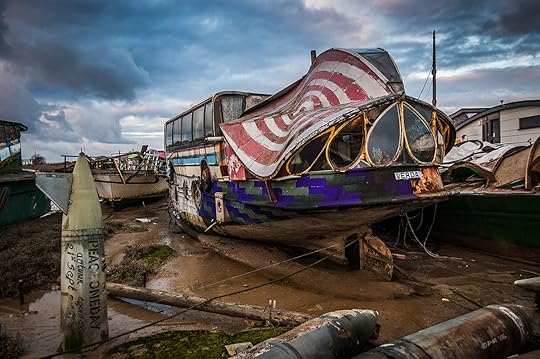
Shoreham houseboats
Offshore is a melancholy book about a bunch of misfits living out their miserable existences on houseboats on a stretch of the river Thames. The strength of the book - and here Fitzgerald excels - is in portraying a world with all its idiosyncracies and peculiarities. This is the swinging 60s, but there is not much swinging taking place here; instead, we get to know a few truly memorable characters who try to make the best they can despite the odds being stacked against them.
We meet Nenna and her two children, Tilda and Martha; their friend Maurice, a male prostitute; Harry, a petty thief who uses Maurice's boat to store stolen stuff; Willis, a hard-up, older painter; Richard, whose seemingly irrational wish to live on a houseboat is a constant source of frustration for his wife, Laura. Later on in the book, we also meet Woodie who lives on one of the boats in the summer; Edward, Nenna's estranged husband; Nenna's sister from Canada, who's come to take Nenna back home; and finally, Heinrich, a young man who spends a day with Martha before he heads home in Venna. We also meet Stripey, the cat, who deserves a mention in her own right.
This is not a book you read for the plot, even though for me it was a page turner. Fitzgerald has this enormous gift, to invite you into the world of her characters and get you to stay there, even though not very much is happening. Through most of the book Nenna tries to decide whether to go and find her husband who has separate lodgings somewhere in Stoke Newington (ah, if only she knew the gentrification 50 years later...). She really wants to get together with Edward, who, after spending 18 months in South America supposedly to save up, comes back to find Nenna and the children aboard Grace and freaks out. But if Edward does not want to live on Grace, why doesn't Nenna sell up and go to live with him instead? We don't know. It's never quite clear why any of the characters do the things that they do. Richard, perhaps the only successful person among them, insists on living on Lord Jim even though he could afford to move on land. None of the characters have to do what they are doing; Willis could well do the repairs necessitated by the condition of his boat. But he doesn't believe in repairs and would rather let the boat rot. Could Maurice have been something other than a male prostitute? Could he have kicked Harry out? Maybe. We never get to know. What we do know is that these people are afflicted by a stange inertia, an inability to take control of their lives, do the 'sensible' thing. Twelve-year-old Martha is more sensible than many of the adults in the book.
And yet, despite their lethargy, they're all rather adorable, especially Maurice, who spends time with Nenna, talking, laughing, being supportive, being a rock. Richard is a rock too, even though he doesn't know how to talk about feelings, and would rather not talk about feelings at all. Willis takes Tilda to Tate Britain to show her the oil paintings. Heinrich is a young gentleman who enjoys the time he spends with Martha.
Why doesn't life turn out well for these people? Sometimes it's lack of money, but more often than not it's something else. Why can't they be more energetic, more decisive, more resourceful? Tilda and Martha are; they look for tiles to sell at a local antique shop; they refuse to go to school when the nuns set out a plan of praying every day for the return of their father. But on the whole, life ebbs away like the tide that pushes he boats up and then down again.
I was totally drawn into the atmosphere of the book, and the characters will stay with me for a long time. Overall, Offshore is a book I'd unreservedly recommend, but not if you go for fast, complex plot. My thanks to Cecily for recommending this wonderful book to me!
Shoreham houseboats

November 1, 2017
This was one of those books that slowly crept up on me, caught hold and didn't let go. I grew to care about these people--and, silly me, even about their boats. Everyone and everything in this story is living on the edge--of a relationship, of the land or the water, of reality, of childhood or adulthood, of wealth or abject poverty, of physical destruction. A book that's hard to describe...I'm very glad I read it.
I came to read this book because it was selected as the Constant Readers classic choice for November. It has been on my list for quite a long time actually so I was glad to pick it up. A group of people living on boats on the Battersea Reach of the Thames in London...brings up various pictures in the mind, none of which really equal what this book is. This is a series of vignettes involving a somewhat close-knit "community" of boat-dwellers and various of their land-living relations/friends/contacts. Some of the people appear rather normal to high functioning in this 1960s world (Richard) while others appear to be near drowning as they try to find a way to survive (Nenna, Maurice, Willis) while Nenna's daughters Tilda and Martha are caught somewhere in between.
The book is the struggle--the pull of the river vs the cry of others on the land to move away from the water; giving up the dream (or dreaming) for the adult world (reality perhaps). It wasn't clear to me until later in the book that this book was likely set in the late 1960s, which also made the seeming squalor on the river all the more real. Britain was so badly damaged by the war and that war is still referred to here. Now there was the fairytale of the flower children going on:
In this, its heyday, the King's Road fluttered like a gypsy
encampment, with hastily-dyed finery, while stage folk emerged
from their beds, at a given hour, to patrol the long pavements
between Sloane Square and the Town Hall... A paradise for
children, a riot of misrule, the queer looking shops reversed
every fixed idea in the venerable history of commerce.
(p 116)
Unreality is everywhere....but there are those voices of "reason" trying to sort it out, to sort out the lives of those in the boats, who come to be known by the name of their boats, adding another layer of confusion to the story at times.
There are many parts I found just so well written:
A storm always seems a strange thing in a great city,
where there are so many immoveables. In front of the tall
rigid buildings the flying riff-raff of leaves and paper
seemed ominous, as though they were escaping in good
time. (p 133)
...rat-ridden and neglected, it was a wharf still. The
river's edge, where Virgil's ghosts held out their arms in
longing for the farther shore, and Dante, as a living man, was
refused passage by the ferryman, the few planks that mark
the meeting point of land and water, there, surely, is a
place to stop and reflect... (p 21-22)
Martha left them, and went down the companion. Armed
at all points against the possible disappointments of her
life, conscious of the responsibilities of protecting her
mother and sister, worried at the gaps in her education,
anxious about nuns and antique dealers, she had forgotten
for some time the necessity for personal happiness. (p110)
Well Offshore was a surprise for me. It began slowly and occasionally confused me. Then I began to care about the girls and Nenna and slowly to care about others and their boats too. Fitzgerald actually caused me to develop feelings for these people, as lost and misbegotten as some were. And I was surprised because I didn't see it coming until I felt it. I'm wondering now if that might mean that my rating should be a 5. Fitzgerald's writing had such an effect on me. I suppose that she met the author's task--she fully engaged this reader and pulled me into the story. So yes, I am going to make it 5*
I came to read this book because it was selected as the Constant Readers classic choice for November. It has been on my list for quite a long time actually so I was glad to pick it up. A group of people living on boats on the Battersea Reach of the Thames in London...brings up various pictures in the mind, none of which really equal what this book is. This is a series of vignettes involving a somewhat close-knit "community" of boat-dwellers and various of their land-living relations/friends/contacts. Some of the people appear rather normal to high functioning in this 1960s world (Richard) while others appear to be near drowning as they try to find a way to survive (Nenna, Maurice, Willis) while Nenna's daughters Tilda and Martha are caught somewhere in between.
The book is the struggle--the pull of the river vs the cry of others on the land to move away from the water; giving up the dream (or dreaming) for the adult world (reality perhaps). It wasn't clear to me until later in the book that this book was likely set in the late 1960s, which also made the seeming squalor on the river all the more real. Britain was so badly damaged by the war and that war is still referred to here. Now there was the fairytale of the flower children going on:
In this, its heyday, the King's Road fluttered like a gypsy
encampment, with hastily-dyed finery, while stage folk emerged
from their beds, at a given hour, to patrol the long pavements
between Sloane Square and the Town Hall... A paradise for
children, a riot of misrule, the queer looking shops reversed
every fixed idea in the venerable history of commerce.
(p 116)
Unreality is everywhere....but there are those voices of "reason" trying to sort it out, to sort out the lives of those in the boats, who come to be known by the name of their boats, adding another layer of confusion to the story at times.
There are many parts I found just so well written:
A storm always seems a strange thing in a great city,
where there are so many immoveables. In front of the tall
rigid buildings the flying riff-raff of leaves and paper
seemed ominous, as though they were escaping in good
time. (p 133)
...rat-ridden and neglected, it was a wharf still. The
river's edge, where Virgil's ghosts held out their arms in
longing for the farther shore, and Dante, as a living man, was
refused passage by the ferryman, the few planks that mark
the meeting point of land and water, there, surely, is a
place to stop and reflect... (p 21-22)
Martha left them, and went down the companion. Armed
at all points against the possible disappointments of her
life, conscious of the responsibilities of protecting her
mother and sister, worried at the gaps in her education,
anxious about nuns and antique dealers, she had forgotten
for some time the necessity for personal happiness. (p110)
Well Offshore was a surprise for me. It began slowly and occasionally confused me. Then I began to care about the girls and Nenna and slowly to care about others and their boats too. Fitzgerald actually caused me to develop feelings for these people, as lost and misbegotten as some were. And I was surprised because I didn't see it coming until I felt it. I'm wondering now if that might mean that my rating should be a 5. Fitzgerald's writing had such an effect on me. I suppose that she met the author's task--she fully engaged this reader and pulled me into the story. So yes, I am going to make it 5*

April 5, 2021
"Biologically they could be said, as most tideline creatures are, to be 'successful'. They were not easily dislodged. But to sell your craft, to leave the Reach, was felt to be a desperate step, like those of the amphibians when in earlier stages of the world's history, they took ground. Many of these species perished in the attempt."
Maurice, Richard, Willis, Nenna and her children Martha and Tilda, and even Stripy the cat - all offshore, living on barges anchored on the Thames at the Battersea Reach. Living on those dilapidated houseboats, neither out at sea nor on the land but stuck between, these resilient personalities are not to be pitied. They may be living unconventionally, but in many ways they are to be envied. This community of nonconformists is interesting, amusing and extremely likable.
Offshore, the 1997 Booker Prize winner, is set in the 60's, the perfect time period for these water dwellers who are quietly defying conventional life off the shore of the hip area of Chelsea. Their circumstances may not be all they desire, but there is an acceptance of life as it is. There is a shared desire for the danger and the unconventional. Together they face whatever comes their way. They are as interconnected as their decrepit boats. These quirky characters may be down-and-out, but their humanity is what resonates.
Fitzgerald has an uncanny ability to beautifully portray her characters and their situations. There is a sadness to this book, but I never felt sad. The author's wry humor and the attitude of the boat dwellers lifts the spirit. Even at the end of this short novel, like the water of an approaching storm, these lovable people of the water are unsettled. Life will be changing, but they are survivors and they will endure.
This is not a book for those who enjoy plot-driven novels. It is all about the characters and life's sometimes sad possibilities. Fitzgerald's mastery of these elements has made me a devoted fan.
Maurice, Richard, Willis, Nenna and her children Martha and Tilda, and even Stripy the cat - all offshore, living on barges anchored on the Thames at the Battersea Reach. Living on those dilapidated houseboats, neither out at sea nor on the land but stuck between, these resilient personalities are not to be pitied. They may be living unconventionally, but in many ways they are to be envied. This community of nonconformists is interesting, amusing and extremely likable.
Offshore, the 1997 Booker Prize winner, is set in the 60's, the perfect time period for these water dwellers who are quietly defying conventional life off the shore of the hip area of Chelsea. Their circumstances may not be all they desire, but there is an acceptance of life as it is. There is a shared desire for the danger and the unconventional. Together they face whatever comes their way. They are as interconnected as their decrepit boats. These quirky characters may be down-and-out, but their humanity is what resonates.
Fitzgerald has an uncanny ability to beautifully portray her characters and their situations. There is a sadness to this book, but I never felt sad. The author's wry humor and the attitude of the boat dwellers lifts the spirit. Even at the end of this short novel, like the water of an approaching storm, these lovable people of the water are unsettled. Life will be changing, but they are survivors and they will endure.
This is not a book for those who enjoy plot-driven novels. It is all about the characters and life's sometimes sad possibilities. Fitzgerald's mastery of these elements has made me a devoted fan.

April 17, 2025
5★
“Furthermore, although he had been pretty well openly accused of dishonesty at the meeting, his moral standards were much the same as Richard’s, only he did not feel he was well enough off to apply them as often, and in such a wide range of conditions, as the Skipper.”
Willis isn't well off. He's an old artist who has made his living painting seafaring scenes, some of which are commissioned by clients, but demand is dwindling. He lives on a leaky barge ‘Dreadnought’ that he is anxious to sell, and at a meeting of the neighbouring barge owners, he has asked that none of them mention the leak to anyone.
He says he isn’t asking them to tell an outright lie, just avoid the subject if possible. Richard, whom they call the Skipper, is a reasonably wealthy barge-dweller who seems to be the reluctant, defacto chair of these small community meetings. He has a pretty narrow, strong sense of right and wrong, and as Willis noted above, Richard can afford to obey his rules.
“Richard would be one of the last men on earth or water to want to impose it. Yet someone must. Duty is what no-one else will do at the moment. Fortunately he did not have to define duty. War service in the RNVR, and his whole temperament before and since, had done that for him.
Richard did not even want to preside. He would have been happier with a committee, but the owners, of whom several rented rather than owned their boats, were not of the substance from which committees are formed.”
Everybody understands Richard’s temperament and Willis’s anxiety about selling. This is like a community of people living in a boarding house. It is hard to keep secrets when everyone hears someone stumble home from the pub are bid goodnight to a late visitor.
The barges are permanently moored alongside the riverbank, end to end, in such a way that to get to some of them, owners and their visitors may need to cross someone else’s – something like having the window seat on public transport. Hence these neighbours live more in each other’s pockets than most.
They are not quite on land and certainly not at sea, tethered as they are to the embankment. They are just a little outside the regular community.
I loved Fitzgerald’s people. Nenna is a deserted (possibly) young wife with two little girls, who are lively, funny, precocious and entertaining. Six-year-old Tilda has picked up adult language and likes to hang around with Willis as an 'apprentice painter'. He takes her now and then to the Tate Gallery, only a couple of miles down the embankment.
As they study and discuss the Turners and the Whistlers, the attendant watches these “river dwellers” from whom the general public seems to try to distance themselves.
The warmth and humour are subtle.
“Willis praised these with the mingled pride and humility of an inheritor, however distant. To Tilda, however, the fine pictures were only extensions of her life on board. It struck her as odd, for example, that Turner, if he spent so much time on Chelsea Reach, shouldn’t have known that a seagull always alights on the highest point. Well aware that she was in a public place, she tried to modify her voice; only then Willis didn’t always hear, and she had to try again a good deal louder.
‘Did Whistler do that one?’
The attendant watched her, hoping that she would get a little closer to the picture, so that he could relieve the boredom of his long day by telling her to stand back.
‘What did he put those two red lights up there for? They’re for obstruction not completely covered by water, aren’t they? What are they doing there among the riding lights?’
‘They don’t miss much, do they?’ the attendant said to Willis. ‘I mean, your little granddaughter there.’
The misunderstanding delighted Tilda, ‘Dear grandfather, are you sure you are not weary? Let us return to our ship. Take my arm, for though I am young, I am strong.’
Willis dealt with her admirably by taking almost no notice of what she said.”
I could just see the two of them, and it made me laugh.
There is an excellent, thoughtful introduction by Alan Hollinghurst that filled in a lot of blanks for me.
“Fitzgerald, who was married at twenty-five, had three children, and lived on the Thames for two years in her mid-forties, reused her own life as freely and selectively as she liked.”
She was sixty-three when Offshore won the 1979 Booker Prize, and I’m glad the judges compromised on it, (apparently breaking a tie, as everyone's second choice) or I might never have been prompted to read it. It is short and wonderful.
“Furthermore, although he had been pretty well openly accused of dishonesty at the meeting, his moral standards were much the same as Richard’s, only he did not feel he was well enough off to apply them as often, and in such a wide range of conditions, as the Skipper.”
Willis isn't well off. He's an old artist who has made his living painting seafaring scenes, some of which are commissioned by clients, but demand is dwindling. He lives on a leaky barge ‘Dreadnought’ that he is anxious to sell, and at a meeting of the neighbouring barge owners, he has asked that none of them mention the leak to anyone.
He says he isn’t asking them to tell an outright lie, just avoid the subject if possible. Richard, whom they call the Skipper, is a reasonably wealthy barge-dweller who seems to be the reluctant, defacto chair of these small community meetings. He has a pretty narrow, strong sense of right and wrong, and as Willis noted above, Richard can afford to obey his rules.
“Richard would be one of the last men on earth or water to want to impose it. Yet someone must. Duty is what no-one else will do at the moment. Fortunately he did not have to define duty. War service in the RNVR, and his whole temperament before and since, had done that for him.
Richard did not even want to preside. He would have been happier with a committee, but the owners, of whom several rented rather than owned their boats, were not of the substance from which committees are formed.”
Everybody understands Richard’s temperament and Willis’s anxiety about selling. This is like a community of people living in a boarding house. It is hard to keep secrets when everyone hears someone stumble home from the pub are bid goodnight to a late visitor.
The barges are permanently moored alongside the riverbank, end to end, in such a way that to get to some of them, owners and their visitors may need to cross someone else’s – something like having the window seat on public transport. Hence these neighbours live more in each other’s pockets than most.
They are not quite on land and certainly not at sea, tethered as they are to the embankment. They are just a little outside the regular community.
I loved Fitzgerald’s people. Nenna is a deserted (possibly) young wife with two little girls, who are lively, funny, precocious and entertaining. Six-year-old Tilda has picked up adult language and likes to hang around with Willis as an 'apprentice painter'. He takes her now and then to the Tate Gallery, only a couple of miles down the embankment.
As they study and discuss the Turners and the Whistlers, the attendant watches these “river dwellers” from whom the general public seems to try to distance themselves.
The warmth and humour are subtle.
“Willis praised these with the mingled pride and humility of an inheritor, however distant. To Tilda, however, the fine pictures were only extensions of her life on board. It struck her as odd, for example, that Turner, if he spent so much time on Chelsea Reach, shouldn’t have known that a seagull always alights on the highest point. Well aware that she was in a public place, she tried to modify her voice; only then Willis didn’t always hear, and she had to try again a good deal louder.
‘Did Whistler do that one?’
The attendant watched her, hoping that she would get a little closer to the picture, so that he could relieve the boredom of his long day by telling her to stand back.
‘What did he put those two red lights up there for? They’re for obstruction not completely covered by water, aren’t they? What are they doing there among the riding lights?’
‘They don’t miss much, do they?’ the attendant said to Willis. ‘I mean, your little granddaughter there.’
The misunderstanding delighted Tilda, ‘Dear grandfather, are you sure you are not weary? Let us return to our ship. Take my arm, for though I am young, I am strong.’
Willis dealt with her admirably by taking almost no notice of what she said.”
I could just see the two of them, and it made me laugh.
There is an excellent, thoughtful introduction by Alan Hollinghurst that filled in a lot of blanks for me.
“Fitzgerald, who was married at twenty-five, had three children, and lived on the Thames for two years in her mid-forties, reused her own life as freely and selectively as she liked.”
She was sixty-three when Offshore won the 1979 Booker Prize, and I’m glad the judges compromised on it, (apparently breaking a tie, as everyone's second choice) or I might never have been prompted to read it. It is short and wonderful.

July 16, 2021
Offshore is a very short book, only 141 pages, and the story it tells is almost ordinary, if you can consider people living on the Thames in moored boats ordinary in any way. The main narrative revolves around Nenna, a mother of two, living separated from her husband, Eddie, who simply refuses to live on the dilapidated barge she has purchased.
There is one character who made this book work for me, and it is Nenna’s 6-year old daughter, Tilda. She isn’t meant to be the main character, but for me the only parts of the book that had life were the ones she was central to. She sparkled, and I conjured a specific mental image of her every time she appeared on the page.
I am a quote marker, and I found that I had read this book and marked only two passages, and neither of them was striking. I compared that with the Elizabeth Taylor novel I had just read, in which I had marked passages on every few pages and had quotes of stunning elegance and wisdom to revisit when I had finished.
Here’s the best one from Offshore. I could relate to the idea that physical distance is irrelevant if emotional distances exist.
After all, she thought, if she did go away, how much difference would it make? In a sense, Halifax was no further away than 42b Milvain Street, Stoke Newington. All distances are the same to those who don’t meet.
There is nothing to dislike about his novel. Fitzgerald tells the story seamlessly, there is flow and character to the writing, but having won the Booker, I expected something more.The boats, vessels that are meant to move, are all moored at Battersea, and all the people in the novel seem to be stuck in their lives, not moving forward nor, of course, able to move backward; caught between the land and the water. Frequently during the course of the novel, characters are literally hanging above the river on precarious little boards that cross from one boat to the next. That theme and image is pervasive, and each of the characters is clearly at a crossroads in life and almost willfully choosing not to make the decisions necessary to begin their next chapter.
I wanted to be in love with this novel, but I could never make the commitment. Perhaps I had that in common with the motley crew who live in the barges and boats on the Battersea Reach. A lack of commitment would be understood by them all.
There is one character who made this book work for me, and it is Nenna’s 6-year old daughter, Tilda. She isn’t meant to be the main character, but for me the only parts of the book that had life were the ones she was central to. She sparkled, and I conjured a specific mental image of her every time she appeared on the page.
I am a quote marker, and I found that I had read this book and marked only two passages, and neither of them was striking. I compared that with the Elizabeth Taylor novel I had just read, in which I had marked passages on every few pages and had quotes of stunning elegance and wisdom to revisit when I had finished.
Here’s the best one from Offshore. I could relate to the idea that physical distance is irrelevant if emotional distances exist.
After all, she thought, if she did go away, how much difference would it make? In a sense, Halifax was no further away than 42b Milvain Street, Stoke Newington. All distances are the same to those who don’t meet.
There is nothing to dislike about his novel. Fitzgerald tells the story seamlessly, there is flow and character to the writing, but having won the Booker, I expected something more.The boats, vessels that are meant to move, are all moored at Battersea, and all the people in the novel seem to be stuck in their lives, not moving forward nor, of course, able to move backward; caught between the land and the water. Frequently during the course of the novel, characters are literally hanging above the river on precarious little boards that cross from one boat to the next. That theme and image is pervasive, and each of the characters is clearly at a crossroads in life and almost willfully choosing not to make the decisions necessary to begin their next chapter.
I wanted to be in love with this novel, but I could never make the commitment. Perhaps I had that in common with the motley crew who live in the barges and boats on the Battersea Reach. A lack of commitment would be understood by them all.

December 27, 2018
[4.5] This was lovely, and I think it suffers, poor thing, from miscategorised expectations. A lot of 21st century readers approach it as A Booker Winner, but seen that way, by readers who are seeking out old Booker winners, it may seem inconsequential - to quote a friend's review of Fitzgerald's The Bookshop, "teetering on the edge of tweeness". However, if it were placed alongside the likes of Persephone Books, it would fit perfectly among their collection of escapist, elegantly written realist works by mid-20th century British women writers, "neither too literary nor too commercial", or "quality middlebrow": comfort reading from a lower-tech, slower world. But more down-at-heel than the typical upper-middle-class setting of Persephones. This was something I'd been looking for anyway - reaching for a description a couple of months ago I'd said "like Barbara Pym but grittier"… Offshore is also more eccentric.
It's a world with characters like this:
"Richard was the kind of man who has two clean handkerchiefs on him at half past three in the morning."
But it also undercuts some of the pretensions of the conventional world of well-off land-dwellers:
"The waiter invited them to choose between coq au vin and navarin of lamb, either of which, in other circumstances, would have been called stew."
and the bohemians themselves:
"Like many marine painters he had never been to sea."
and has awareness of the ways people may feel about their circumstances:
‘There is nothing to be ashamed of in being poor,’ said Heinrich. ‘Yes, there is,’ Martha replied, with a firmness which she could hardly have inherited either from her father or her mother, ‘but there’s no reason why we shouldn’t go and look at things.
It even has the occasional inadvertantly amusing double-entendre that adds entertainment value to many vintage books.
Offshore has the comforting feeling of "a children's book for adults", set in the romantic but grubby world of Thames houseboats, in which everyone is escaping in one way or another from conventional lifestyle, and has "the curious acquired characteristics of the river dwellers, which made them scarcely at home in London’s streets". Its shabby-genteel 1960s setting, which could have been any non-wartime decade from the 20s to the 80s, felt like the world of many books I read as a child and teenager. And as in all those stories found in kids' books, of children having adventures unsupervised by parents (a few of which actually happen in Offshore as well), there are among these grown-ups the scattier people and the sensible ones who look after them. This houseboat world is one which appealed to me when I was younger, before I realised that living in small cramped spaces with things sliding about on surfaces, wouldn't be idyllic, even if I stopped being a martyr to motion sickness. No matter how much I badgered for a barge holiday as a child, we never went on one: quite right, as I would have spent the week literally puking and whining, and it would have been a stressful waste of money and time off. However, it was a joy to experience houseboat life second-hand via Fitzgerald's characters. She had lived on a barge herself and uses many technical terms for parts of the boats; she manages to make boat life picturesque (and picaresque) to read about, whilst not concealing the inconveniences, making it, rightly, something many would want to hear about, whilst showing why plenty of people wouldn't want to live it themselves:
"All these old boats leak like sieves. Just as all these period houses are as rotten as old cheese. Everyone knows that. But age has its value.’"
I loved the way that, near the beginning, a guided tour is overheard describing the boats as an "artist's colony" - although in fact only one resident is an artist, as is so very much the way with real-life bohemias I've encountered. Among the others are two financially secure chaps with, or retired from, office jobs who just prefer barge living to houses. There's a rent boy named Maurice, no doubt after the E.M. Forster novel published a few years before Offshore. (As I'd only got round to watching A Very English Scandal - considered one of the best TV programmes of 2018 - a few days before reading this, I kept hearing Maurice as a more grounded version of Ben Whishaw's Norman Scott). Nenna is a quondam classical musician, sweet but generally hopeless at life skills - in a way an attractive middle class woman could still just about carry off back then - separated from her equally incompetent and disorganised husband; her two daughters are exactly the sort of clever children that fans of books like this one would have wanted to be friends with when *they* were kids themselves - though to older eyes, one has taken on rather a lot of codependent / young carer characteristics.
Alan Hollinghurst's introduction explains that the book is set in the early 1960s, although when characters venture out to the King's Road, it becomes a blended, dreamlike version of the whole 60s in which preteens are excited to buy cheap Woolworths cover versions Cliff Richard records, while hippie boutiques waft incense. There are little details about the era otherwise rarely heard, like the late opening times of the fashionable shops:
‘I should like to visit a boutique,’ said Heinrich. ‘Well, that will be best about five or six, when everybody leaves work. A lot of them don’t open till then.’
How the market for a marine painter has dwindled since the 1920s and 30s: "After the war the number of readers who would laugh at pictures of seasick passengers, or bosuns getting the better of the second mate, diminished rapidly."
I had thought a fashion for interest in the 18th century was an 00s thing, but perhaps the revival started earlier: "The brewers to whom it belonged, having ideas, like all brewers in the 1960s, of reviving the supposed jollity of the eighteenth century"
London has changed so much in certain ways:
‘42b Milvain Street, Stoke Newington.’ ‘In Christ’s name, who’s ever heard of such a place?’ (Did that already sound comical in the late 70s?)
and so has Britain:
‘You don’t have to stay there! There’s plenty of jobs! Anyone can get a job anywhere!’
These were common types of shop on the Kingsland Road, which wouldn't be seeing gentrification for another 45 years or so: "Radio shop, bicycle shop, family planning shop, funeral parlour, bicycles, radio spare parts, television hire, herbalist, family planning, a florist" … was this the early-60s equivalent of listing vape shops, nail bars, those places that sell mobile phone covers and suitcases, charity shops and bookies - or something more local and specific?
Commuting from Northampton was already going on, although not for cash-strapped young professionals desperate for a toehold on the property ladder, and who can only dream of these hours:
Oh, a gentleman’s county,’ Pinkie replied, wallowing through his barrier of ice, ‘Say Northamptonshire. You can drive up every morning easily, be in the office by ten, down in the evening by half past six.
Fitzgerald has a good understanding of Catholic schools and the ideas learnt there:
"It came to her that it was wrong to pray for anything simply because you felt you needed it personally. Prayer should be beyond self, and so Nenna repeated a Hail Mary for everyone in the world who was lost in Kingsland Road without their bus fares."
It wasn't difficult to believe (as some schools did far worse) that praying publicly for certain pupils and their families happened then. Martha's instinctive affront at this, a sense of strong boundaries she has developed despite, or somehow in response to, her muddled family life, made me think again about something - indignation about knowing one is being prayed for - that I'd seen as a feature of the New Atheist movement.
In a conversation between a sixth-form age boy and an eleven-year-old developing a crush on him (the one part of the book which would be frowned on today), Fitzgerald's 1995 historical novel The Blue Flower is prefigured: "you are like the blonde mistress of Heine, the poet Heine, wenig Fleisch, sehr viel Gemüt, little body, but so much spirit’. He leaned forward and kissed her cheek"
If I'd read Offshore in my teens I suspect it would have stayed with me as a favourite in a rosy glow, alongside similar books like Rumer Godden's The Greengage Summer, with the perfect balance of cosy and slightly but discreetly unsuitable, books I probably wouldn't dare re-read now in case they weren't as good as I remembered. It was still lovely to read now, although not such an event, and shows a bohemiana akin to that which overwhelmed me with nostalgia in Peter Ackroyd's Chatterton (1987), one almost gone now, apart from a few ageing survivors, due to astronomical property prices and the need to spruce everything up for social media. For a while I thought I was going to be disappointed by the ending, though it seems to have worked out reasonably well - however Offshore does suffer a little from the idea that it's more 'literary' to have a partly inconclusive ending. These days it would seem braver, with growing respect for genre in the literary world, to go ahead and write a neater ending in a story like this one, which would suit it - unless planning a sequel (which if this were a recent film, it would surely get) - but that wasn't how things worked 40 years ago.
It's a world with characters like this:
"Richard was the kind of man who has two clean handkerchiefs on him at half past three in the morning."
But it also undercuts some of the pretensions of the conventional world of well-off land-dwellers:
"The waiter invited them to choose between coq au vin and navarin of lamb, either of which, in other circumstances, would have been called stew."
and the bohemians themselves:
"Like many marine painters he had never been to sea."
and has awareness of the ways people may feel about their circumstances:
‘There is nothing to be ashamed of in being poor,’ said Heinrich. ‘Yes, there is,’ Martha replied, with a firmness which she could hardly have inherited either from her father or her mother, ‘but there’s no reason why we shouldn’t go and look at things.
It even has the occasional inadvertantly amusing double-entendre that adds entertainment value to many vintage books.
Offshore has the comforting feeling of "a children's book for adults", set in the romantic but grubby world of Thames houseboats, in which everyone is escaping in one way or another from conventional lifestyle, and has "the curious acquired characteristics of the river dwellers, which made them scarcely at home in London’s streets". Its shabby-genteel 1960s setting, which could have been any non-wartime decade from the 20s to the 80s, felt like the world of many books I read as a child and teenager. And as in all those stories found in kids' books, of children having adventures unsupervised by parents (a few of which actually happen in Offshore as well), there are among these grown-ups the scattier people and the sensible ones who look after them. This houseboat world is one which appealed to me when I was younger, before I realised that living in small cramped spaces with things sliding about on surfaces, wouldn't be idyllic, even if I stopped being a martyr to motion sickness. No matter how much I badgered for a barge holiday as a child, we never went on one: quite right, as I would have spent the week literally puking and whining, and it would have been a stressful waste of money and time off. However, it was a joy to experience houseboat life second-hand via Fitzgerald's characters. She had lived on a barge herself and uses many technical terms for parts of the boats; she manages to make boat life picturesque (and picaresque) to read about, whilst not concealing the inconveniences, making it, rightly, something many would want to hear about, whilst showing why plenty of people wouldn't want to live it themselves:
"All these old boats leak like sieves. Just as all these period houses are as rotten as old cheese. Everyone knows that. But age has its value.’"
I loved the way that, near the beginning, a guided tour is overheard describing the boats as an "artist's colony" - although in fact only one resident is an artist, as is so very much the way with real-life bohemias I've encountered. Among the others are two financially secure chaps with, or retired from, office jobs who just prefer barge living to houses. There's a rent boy named Maurice, no doubt after the E.M. Forster novel published a few years before Offshore. (As I'd only got round to watching A Very English Scandal - considered one of the best TV programmes of 2018 - a few days before reading this, I kept hearing Maurice as a more grounded version of Ben Whishaw's Norman Scott). Nenna is a quondam classical musician, sweet but generally hopeless at life skills - in a way an attractive middle class woman could still just about carry off back then - separated from her equally incompetent and disorganised husband; her two daughters are exactly the sort of clever children that fans of books like this one would have wanted to be friends with when *they* were kids themselves - though to older eyes, one has taken on rather a lot of codependent / young carer characteristics.
Alan Hollinghurst's introduction explains that the book is set in the early 1960s, although when characters venture out to the King's Road, it becomes a blended, dreamlike version of the whole 60s in which preteens are excited to buy cheap Woolworths cover versions Cliff Richard records, while hippie boutiques waft incense. There are little details about the era otherwise rarely heard, like the late opening times of the fashionable shops:
‘I should like to visit a boutique,’ said Heinrich. ‘Well, that will be best about five or six, when everybody leaves work. A lot of them don’t open till then.’
How the market for a marine painter has dwindled since the 1920s and 30s: "After the war the number of readers who would laugh at pictures of seasick passengers, or bosuns getting the better of the second mate, diminished rapidly."
I had thought a fashion for interest in the 18th century was an 00s thing, but perhaps the revival started earlier: "The brewers to whom it belonged, having ideas, like all brewers in the 1960s, of reviving the supposed jollity of the eighteenth century"
London has changed so much in certain ways:
‘42b Milvain Street, Stoke Newington.’ ‘In Christ’s name, who’s ever heard of such a place?’ (Did that already sound comical in the late 70s?)
and so has Britain:
‘You don’t have to stay there! There’s plenty of jobs! Anyone can get a job anywhere!’
These were common types of shop on the Kingsland Road, which wouldn't be seeing gentrification for another 45 years or so: "Radio shop, bicycle shop, family planning shop, funeral parlour, bicycles, radio spare parts, television hire, herbalist, family planning, a florist" … was this the early-60s equivalent of listing vape shops, nail bars, those places that sell mobile phone covers and suitcases, charity shops and bookies - or something more local and specific?
Commuting from Northampton was already going on, although not for cash-strapped young professionals desperate for a toehold on the property ladder, and who can only dream of these hours:
Oh, a gentleman’s county,’ Pinkie replied, wallowing through his barrier of ice, ‘Say Northamptonshire. You can drive up every morning easily, be in the office by ten, down in the evening by half past six.
Fitzgerald has a good understanding of Catholic schools and the ideas learnt there:
"It came to her that it was wrong to pray for anything simply because you felt you needed it personally. Prayer should be beyond self, and so Nenna repeated a Hail Mary for everyone in the world who was lost in Kingsland Road without their bus fares."
It wasn't difficult to believe (as some schools did far worse) that praying publicly for certain pupils and their families happened then. Martha's instinctive affront at this, a sense of strong boundaries she has developed despite, or somehow in response to, her muddled family life, made me think again about something - indignation about knowing one is being prayed for - that I'd seen as a feature of the New Atheist movement.
In a conversation between a sixth-form age boy and an eleven-year-old developing a crush on him (the one part of the book which would be frowned on today), Fitzgerald's 1995 historical novel The Blue Flower is prefigured: "you are like the blonde mistress of Heine, the poet Heine, wenig Fleisch, sehr viel Gemüt, little body, but so much spirit’. He leaned forward and kissed her cheek"
If I'd read Offshore in my teens I suspect it would have stayed with me as a favourite in a rosy glow, alongside similar books like Rumer Godden's The Greengage Summer, with the perfect balance of cosy and slightly but discreetly unsuitable, books I probably wouldn't dare re-read now in case they weren't as good as I remembered. It was still lovely to read now, although not such an event, and shows a bohemiana akin to that which overwhelmed me with nostalgia in Peter Ackroyd's Chatterton (1987), one almost gone now, apart from a few ageing survivors, due to astronomical property prices and the need to spruce everything up for social media. For a while I thought I was going to be disappointed by the ending, though it seems to have worked out reasonably well - however Offshore does suffer a little from the idea that it's more 'literary' to have a partly inconclusive ending. These days it would seem braver, with growing respect for genre in the literary world, to go ahead and write a neater ending in a story like this one, which would suit it - unless planning a sequel (which if this were a recent film, it would surely get) - but that wasn't how things worked 40 years ago.

January 26, 2017
Once, I embarked on a project to read all the Man Booker Prize winners, and didn't get very far. I started at the beginning and started making assumptions, like all Booker Prize winners are about the empire. It is books like this (winner, 1979) and Hotel du Lac (winner, 1984) that prove me wrong. And since I've read them closely together I can see some similarities - a cast of characters in a specific place that dictates (or allows for) some of the behavior.
I liked it very much, but was distracted with family stress when I read it, and probably won't say more about it until I get a chance to read it again.
ETA: I'm reading from a forthcoming work by Edmund White, and he says this:
I liked it very much, but was distracted with family stress when I read it, and probably won't say more about it until I get a chance to read it again.
ETA: I'm reading from a forthcoming work by Edmund White, and he says this:
"[Fitzgerald] may have been born in grandeur, but her husband was an alcoholic who drank up every penny, was convicted for stealing checks, and lost his job. Eventually she lived with him and their three children on a houseboat on the Thames in a chic part of London; the boat sank twice, and her family was homeless for a while, then given public housing."I just had no idea this novel was so autobiographical. That adds a bit of richness to it, doesn't it? Cool. 4/18/18

June 4, 2018
While this is similar in style and elegiac tone to The Bookshop, I preferred the latter. Perhaps if I’d read this first, my preference would be switched. I read it twice in a matter of days which indicates a 5-star read, but I’m rating it a 4.75 to show my preference for the other.
During my first read, I missed some things in relation to the character of Maurice (in my defense, I was very tired). I tried to force a possible comparison of this novella with the much longer Our Mutual Friend as there’s an allusion to those who’d robbed drowned bodies in the Thames; as well as the two children finding treasures in the shoreline mud a la the dust heaps in the Dickens. The main theme, though, is of those who seem to belong nowhere definite, not being of the land or the sea; of those who are uncomfortable with ‘normal’ life, who can’t adapt. Ultimately, it comes down to survival, or not.
During my first read, I missed some things in relation to the character of Maurice (in my defense, I was very tired). I tried to force a possible comparison of this novella with the much longer Our Mutual Friend as there’s an allusion to those who’d robbed drowned bodies in the Thames; as well as the two children finding treasures in the shoreline mud a la the dust heaps in the Dickens. The main theme, though, is of those who seem to belong nowhere definite, not being of the land or the sea; of those who are uncomfortable with ‘normal’ life, who can’t adapt. Ultimately, it comes down to survival, or not.

November 6, 2018
"Offshore" sounds glamorous, like shady bank accounts, but it’s not glamorous when Penelope Fitzgerald gets her hands on it. Her characters are - well, they're living in old rotting barges stuck in the mud by the side of the Thames, is what they’re doing. About the best you can say is that they're often mostly floating. They're neither on shore nor completely away, this ramshackle group of liminal misfits, and Fitzgerald captures them in her Booker-winning 1979 novella stuck between worlds. "It's right for us to live where we do," says Maurice, "between land and water."
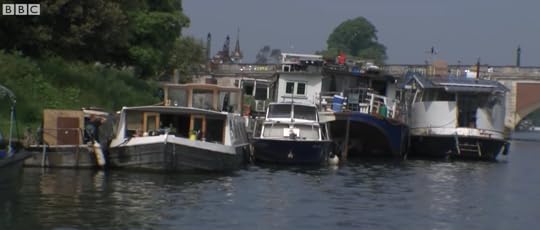
The Thames floating slums are still a thing
So they subsist at the margins, in limbo. Nenna can't bring herself to admit that she's left her husband. Her daughters are growing up like seagulls. When painter Sam tries to take a step towards a more anchored life, his boat sinks right under him. They're Carson McCullersian outcasts who can't admit it. Maurice is a rent boy at the best of times, metamorphosing into a common criminal. They're held together, for as long as they can be, by Richard, a fussy and relatively competent old Navy guy who imagines that all of this can be fixed.
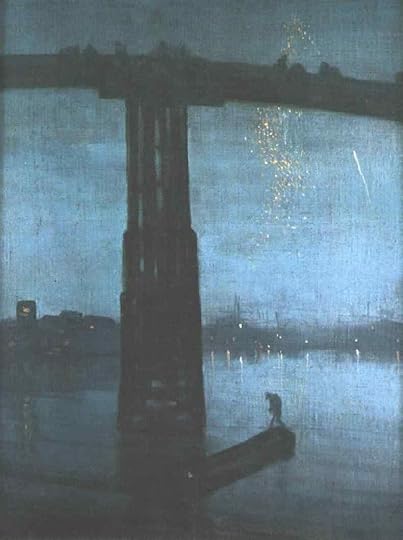
"Nocturne: Blue and Gold, Old Battersea Bridge" by Whistler, 1870s
Penelope Fitzgerald drew on her own experience living on an old Thames barge that sank right out from under herself - twice. She had a lot of wild experiences to draw on; she was one of those late starters, producing most of her cultish novels as an aging widow. Her late husband, like Nenna's, was not a success.
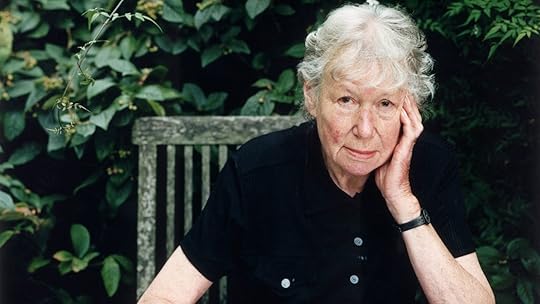
I found out about her from a total stranger on Twitter who showed up on my feed saying,

and I was like, yes? Idk who am I to argue with this dude. I very much like people who have found it impossible to stop being themselves. Fitzgerald’s teetering outcasts find it impossible despite their best efforts; they're constantly making half-assed plans to rejoin society, but they've ended up here for a reason. They're guilty of "a certain failure, distressing to themselves, to be like other people." It's the Thames standing in for the River Lethe, whose waters wiped the pasts of ancient Greek souls before they wandered beyond it into the Limbo of Asphodel.
Parts of Offshore are very funny, but you never shake the dread feeling that Richard is wrong, it can't be sustained or called to order, none of this will work. The thing about wild outlaw freedom is that it’s just another term for desperate poverty. It's a brilliant setting for a book about outcasts, isn't it? There's a fairly obvious problem with living on the water on a boat with holes in it. You're free to be you, but you are going to sink.
The Thames floating slums are still a thing
So they subsist at the margins, in limbo. Nenna can't bring herself to admit that she's left her husband. Her daughters are growing up like seagulls. When painter Sam tries to take a step towards a more anchored life, his boat sinks right under him. They're Carson McCullersian outcasts who can't admit it. Maurice is a rent boy at the best of times, metamorphosing into a common criminal. They're held together, for as long as they can be, by Richard, a fussy and relatively competent old Navy guy who imagines that all of this can be fixed.
"Nocturne: Blue and Gold, Old Battersea Bridge" by Whistler, 1870s
Penelope Fitzgerald drew on her own experience living on an old Thames barge that sank right out from under herself - twice. She had a lot of wild experiences to draw on; she was one of those late starters, producing most of her cultish novels as an aging widow. Her late husband, like Nenna's, was not a success.
I found out about her from a total stranger on Twitter who showed up on my feed saying,
and I was like, yes? Idk who am I to argue with this dude. I very much like people who have found it impossible to stop being themselves. Fitzgerald’s teetering outcasts find it impossible despite their best efforts; they're constantly making half-assed plans to rejoin society, but they've ended up here for a reason. They're guilty of "a certain failure, distressing to themselves, to be like other people." It's the Thames standing in for the River Lethe, whose waters wiped the pasts of ancient Greek souls before they wandered beyond it into the Limbo of Asphodel.
Parts of Offshore are very funny, but you never shake the dread feeling that Richard is wrong, it can't be sustained or called to order, none of this will work. The thing about wild outlaw freedom is that it’s just another term for desperate poverty. It's a brilliant setting for a book about outcasts, isn't it? There's a fairly obvious problem with living on the water on a boat with holes in it. You're free to be you, but you are going to sink.

December 19, 2013
When I was a child, I occasionally watched a TV show, familiar to most British people of my generation, about two puppets who lived on a canal barge called Ragdoll, which seemed homely, safe and jolly. Most people only set foot on a boat for the purpose of pleasure and so imagine life on a barge to be sheer, uninterrupted delight. I have always been drawn to water, and even lived at sea for a while (I was not happy for other reasons, but I was happy to be at sea) But, hopelessly addicted to warmth and cleanliness, knowing the filthy Thames, the muggy, tepid London weather at its most unpleasantly moist, I must imagine being utterly miserable on a river barge once the novelty wore off. I can only assume Nenna and Richard feel a stronger inexplicable affinity with the watery element than I.
Of course, the book is short enough to maintain the feeling of novelty and I am able to remain dry while reading it, so Fitzgerald has to make it sound as squalid and uncomfortable as possible to prevent me feeling envious of her vividly sketched cast. The exactness and offhandedness of her de-romanticising portrait of the river life reflect her own stint on a Thames barge, and this autobiographical realism affords the story unsettling and soggy emotional depths under its crisp, witty surface.
After Angela Carter's glorious romp Nights at the Circus, for example, this book feels so calm, so sure-footed, with all its adverbs absolutely to purpose and, as on Richard's boat Lord Jim, everything in its place. But while Richard complains of not being able to get his feelings across easily, Fitzgerald is a virtuoso of economical expression, somehow finding time for six-year-old Tilda's second-hand daydreams and a plethora of colourful minor characters who briefly enter or impinge upon the rather isolated river community. Most charming of these is the aristocratic German teenager Heinrich, who captivates the grounded, hilariously and tragically mature Martha, Nenna's elder daughter. Nenna herself, as foolish and helpless as I myself feel, though entirely sympathetic, reminds me of Bridget Jones, or even better a character from one of Wes Anderson's films, which this book decidedly evokes for me. Indeed, a cross between classic chick-lit and Andersonian whimsy might read just like this, if it were written by a genius who had experienced actual poverty.
Here the chick-lit trope of the gay male friend is embodied by Maurice, a lovingly drawn character whom Fitzgerald based on a real friend of hers. While the trope can be desexualising (and the role, I suppose, exploitative and othering) and oriented to diffuse heteronormative anxieties, at least it grants some degree of visibility, which in the seventies was probably still worth having in itself. In this case, Maurice, a sex-worker, is no stereotype and is Nenna's closest friend. The book's ending feels like a tribute to him. However, both Nenna and Maurice possess the ability to express their feelings, which Richard says he lacks. This vital ability may be the feminine counterpart to Nenna's claimed deficiencies-of-gender, such as being unable to fold a map. This crude surmise of mine makes Maurice feminine. In any case, Richard's behaviour and skills are always tidily attributed to 'training', a word encompassing both military and social conditioning. The socialisation of women into caring, empathic, expressive skills is less visible, indeed, in this book it is never mentioned.
The story, despite its female centre on Nenna and her daughters, is rather oriented towards men. The river community's life has wealthy, efficient, upper class, generous, decent, chivalrous Richard at its hub, and Nenna is so focussed on her broken marriage that she can barely care for her daughters, who fortunately are more than capable of picking up the slack. Even the girls have male preoccupations (Elvis, for example) yet, Fitzgerald finally refuses to let men dominate.
The contrast between Nenna's London and the one I live in today is most evident in the gentrification of Chelsea, especially the King's Road, which is now lined with high-end chain stores, designer outlets, expensive cafes and the Saatchi Gallery, but which in Offshore appears as a kind of bohemian paradise vaguely reminiscent of present day Camden High Street, only more enchanting. Stoke Newington has also, more recently, become a fashionable address. I cannot tell, though, whether cab drivers have become less kind.
Of course, the book is short enough to maintain the feeling of novelty and I am able to remain dry while reading it, so Fitzgerald has to make it sound as squalid and uncomfortable as possible to prevent me feeling envious of her vividly sketched cast. The exactness and offhandedness of her de-romanticising portrait of the river life reflect her own stint on a Thames barge, and this autobiographical realism affords the story unsettling and soggy emotional depths under its crisp, witty surface.
After Angela Carter's glorious romp Nights at the Circus, for example, this book feels so calm, so sure-footed, with all its adverbs absolutely to purpose and, as on Richard's boat Lord Jim, everything in its place. But while Richard complains of not being able to get his feelings across easily, Fitzgerald is a virtuoso of economical expression, somehow finding time for six-year-old Tilda's second-hand daydreams and a plethora of colourful minor characters who briefly enter or impinge upon the rather isolated river community. Most charming of these is the aristocratic German teenager Heinrich, who captivates the grounded, hilariously and tragically mature Martha, Nenna's elder daughter. Nenna herself, as foolish and helpless as I myself feel, though entirely sympathetic, reminds me of Bridget Jones, or even better a character from one of Wes Anderson's films, which this book decidedly evokes for me. Indeed, a cross between classic chick-lit and Andersonian whimsy might read just like this, if it were written by a genius who had experienced actual poverty.
Here the chick-lit trope of the gay male friend is embodied by Maurice, a lovingly drawn character whom Fitzgerald based on a real friend of hers. While the trope can be desexualising (and the role, I suppose, exploitative and othering) and oriented to diffuse heteronormative anxieties, at least it grants some degree of visibility, which in the seventies was probably still worth having in itself. In this case, Maurice, a sex-worker, is no stereotype and is Nenna's closest friend. The book's ending feels like a tribute to him. However, both Nenna and Maurice possess the ability to express their feelings, which Richard says he lacks. This vital ability may be the feminine counterpart to Nenna's claimed deficiencies-of-gender, such as being unable to fold a map. This crude surmise of mine makes Maurice feminine. In any case, Richard's behaviour and skills are always tidily attributed to 'training', a word encompassing both military and social conditioning. The socialisation of women into caring, empathic, expressive skills is less visible, indeed, in this book it is never mentioned.
The story, despite its female centre on Nenna and her daughters, is rather oriented towards men. The river community's life has wealthy, efficient, upper class, generous, decent, chivalrous Richard at its hub, and Nenna is so focussed on her broken marriage that she can barely care for her daughters, who fortunately are more than capable of picking up the slack. Even the girls have male preoccupations (Elvis, for example) yet, Fitzgerald finally refuses to let men dominate.
The contrast between Nenna's London and the one I live in today is most evident in the gentrification of Chelsea, especially the King's Road, which is now lined with high-end chain stores, designer outlets, expensive cafes and the Saatchi Gallery, but which in Offshore appears as a kind of bohemian paradise vaguely reminiscent of present day Camden High Street, only more enchanting. Stoke Newington has also, more recently, become a fashionable address. I cannot tell, though, whether cab drivers have become less kind.

May 13, 2019
I enjoyed this: light and breezy but packing a powerful punch. I suppose what really tickled was the dynamics between Nenna, the main character and her two potentials. She is passionate about Edward, her drifting husband, who does not want to live with her; but succumbs to a one-night stand with Richard whom she considers, may be the perfect man - he knows how to fold maps - effortlessly.
It was that portrayal of Richard - the man who cannot express his feelings - at all, that really blew this book out of the water for me and Nenna herself who cannot connect her need to be - in-love, with the right someone - someone who might actually appreciate her and reciprocate those powerful feelings.
Fitzgerald's character delineation - drawn in with swift, neat observations and hilarious exchanges really tackles the fundamental differences between male and female.
Of course Fitgerald is bashing the whole concept of "the right someone" along with a slew of other conventions on: child rearing, marriage, status living, material acquisition, gender delineation, ageism, homophobia, Catholic dogma - quite a lot for a slim volume of only 141 pages, which I read in just two sittings.
Here is an extract from the make or break conversation with her absentee husband, Edward:
They were quarelling, but at first they were not much better at it than Gordon was at Chopin.
'I want you Eddie, that's the one and only thing I came about. I want you every moment of the day and night and every time I try to fold a map.'
'You're raving Nenna.'
'Please give.'
'Give you what? You're always saying that. I don't know what meaning you attach to it.'
'Give anything.'
She didn't know why she wanted this so much, either. Not presents, not for themselves, it was the sensation of being given to, she was homesick for that.'
And then later the same evening - to my eye, and possibly to any reader's eye she has almost, an identical conversation with Richard, the Skipper, the wealthy, conventional owner of Lord Jim.
'Do you talk a great deal to Maurice?' Richard asked.
'All day and half the night, sometimes.'
'What on earth do you talk about?'
'Sex, jealousy, friendships and music, and about the boats sometimes, the right way to prime the pump, and things like that.'
'What kind of pump have you got?'
'I don't know but it's the same as Maurice's'
'I could show you how to prime it any time you like.' But he was not satisfied...'
Believe it or not the whole above is conducted without the other aware of any double entendre although it's clearly intentional - on the part of our author. The conversation continues with Richard confessing that he can't see the point of so much talk, and bluntly admits he finds it difficult to define or discuss His Feelings!
Ultimately the reader, can see quite clearly that neither candidate is remotely compatible with the loopy, combustible, and defiant Nenna.
In spite of the doomed Romances all round: Laura leaves Richard, Louise whisks her sister back to Canada, Heinrich and Martha, enjoy a tender burgeoning of teenage love for a single day - there is so much more to this bubbling, fantastic, witty, wee book - than mere romance.
All the minor characters, especially Tilda provide a vehicle from which Fitzgerald, condemns, or chastises, or upturns boring middle-class attitudes - it's what Offshore is all about. Who would want to be stolidly planted on terra firma ever again after reading this?
It was that portrayal of Richard - the man who cannot express his feelings - at all, that really blew this book out of the water for me and Nenna herself who cannot connect her need to be - in-love, with the right someone - someone who might actually appreciate her and reciprocate those powerful feelings.
Fitzgerald's character delineation - drawn in with swift, neat observations and hilarious exchanges really tackles the fundamental differences between male and female.
Of course Fitgerald is bashing the whole concept of "the right someone" along with a slew of other conventions on: child rearing, marriage, status living, material acquisition, gender delineation, ageism, homophobia, Catholic dogma - quite a lot for a slim volume of only 141 pages, which I read in just two sittings.
Here is an extract from the make or break conversation with her absentee husband, Edward:
They were quarelling, but at first they were not much better at it than Gordon was at Chopin.
'I want you Eddie, that's the one and only thing I came about. I want you every moment of the day and night and every time I try to fold a map.'
'You're raving Nenna.'
'Please give.'
'Give you what? You're always saying that. I don't know what meaning you attach to it.'
'Give anything.'
She didn't know why she wanted this so much, either. Not presents, not for themselves, it was the sensation of being given to, she was homesick for that.'
And then later the same evening - to my eye, and possibly to any reader's eye she has almost, an identical conversation with Richard, the Skipper, the wealthy, conventional owner of Lord Jim.
'Do you talk a great deal to Maurice?' Richard asked.
'All day and half the night, sometimes.'
'What on earth do you talk about?'
'Sex, jealousy, friendships and music, and about the boats sometimes, the right way to prime the pump, and things like that.'
'What kind of pump have you got?'
'I don't know but it's the same as Maurice's'
'I could show you how to prime it any time you like.' But he was not satisfied...'
Believe it or not the whole above is conducted without the other aware of any double entendre although it's clearly intentional - on the part of our author. The conversation continues with Richard confessing that he can't see the point of so much talk, and bluntly admits he finds it difficult to define or discuss His Feelings!
Ultimately the reader, can see quite clearly that neither candidate is remotely compatible with the loopy, combustible, and defiant Nenna.
In spite of the doomed Romances all round: Laura leaves Richard, Louise whisks her sister back to Canada, Heinrich and Martha, enjoy a tender burgeoning of teenage love for a single day - there is so much more to this bubbling, fantastic, witty, wee book - than mere romance.
All the minor characters, especially Tilda provide a vehicle from which Fitzgerald, condemns, or chastises, or upturns boring middle-class attitudes - it's what Offshore is all about. Who would want to be stolidly planted on terra firma ever again after reading this?

July 12, 2021
The ensemble cast of this novel live on barges on the Battersea Reach of the Thames. It could have been a boarding-house, but here, at the mercy of tides, there is always the danger of being un-moored. Rather obvious, perhaps, yet the reader feels the swaying, movements not seen on fully dry land.
It was odd to see the clouds move when the water was so still.
Some, maybe all of the characters were fragmentary, but the focus is on Nenna and her two daughters. They are spectacular.
I'm unqualified to say this is a feminist novel. But Nenna, without filter, does explain some things.
'I can't do things that women can't do,' she said. 'I can't turn over the The Times so the pages lie flat, I can't fold up a map in the right creases, I can't draw corks, I can't drive nails straight, I can't go into a bar and order a drink without wondering what everyone's thinking about it, and I can't strike matches towards myself. I'm well-educated and I've got two children and I can manage pretty well, there's a number of much more essential things I know how to do, but I can't do those ones, and when they come up I feel like weeping myself sick.'
It is like a shared thought then - shared with the reader - when she explains her relationship with a man to another character by saying the man was going to show her how to fold a map properly.
Nenna imagines a court scene, a divorce proceeding, which creatively portrayed her marriage:
'On this proceeding you lost your temper, and threw a solid object at Mr James?'
It had only been her bank book, and Edward had been quite right to say that it was not worth reading.
Reading this, I had to check my anchor.
It was odd to see the clouds move when the water was so still.
Some, maybe all of the characters were fragmentary, but the focus is on Nenna and her two daughters. They are spectacular.
I'm unqualified to say this is a feminist novel. But Nenna, without filter, does explain some things.
'I can't do things that women can't do,' she said. 'I can't turn over the The Times so the pages lie flat, I can't fold up a map in the right creases, I can't draw corks, I can't drive nails straight, I can't go into a bar and order a drink without wondering what everyone's thinking about it, and I can't strike matches towards myself. I'm well-educated and I've got two children and I can manage pretty well, there's a number of much more essential things I know how to do, but I can't do those ones, and when they come up I feel like weeping myself sick.'
It is like a shared thought then - shared with the reader - when she explains her relationship with a man to another character by saying the man was going to show her how to fold a map properly.
Nenna imagines a court scene, a divorce proceeding, which creatively portrayed her marriage:
'On this proceeding you lost your temper, and threw a solid object at Mr James?'
It had only been her bank book, and Edward had been quite right to say that it was not worth reading.
Reading this, I had to check my anchor.

June 8, 2015
Oh, I loved reading this . . . for the 3rd time! Because I've read this before, I was caught up in the details as much as the story itself. Also, a buddy read with someone much younger than me, made me see that having lived in the era (if not the location) this was set in helped me relate that much more. This story had so much to do with the Swinging Sixties, where old ways were dissolving and new ways were being experimented with! Hairstyles, clothes, music, mannerisms. I didn't have a clear picture of where this was set, so I looked it up and found this illuminating blog post on Chelsea Reach that focused on the setting of Offshore and includes plenty of photos. It made me realize that a favorite current tv show, The Chelsea Detective, is set in this very place, but in current times.
Why I'm rereading this: I can't believe I've already read this twice! I'm marching through Fitzgerald's works. This time is a buddy read with GR friend Tatevik, also with IRL friend Diane. (I see I've read in print and audio - this time I'm doing print.)
I had a really hard time getting into this book. I didn't understand some of the language used to describe things and I didn't "get" what it was about. Then I saw in another review that Fitzgerald intended that this was a novel about "liminality". What, you say?!! I saw that it was a stage in a situation where old forms have dissolved, but new forms have not yet taken shape. From Wikipedia:
During the liminal stage, normally accepted differences between the participants, such as social class, are often de-emphasized or ignored. A social structure of communitas forms: one based on common humanity and quality rather than recognized hierarchy. '"Communitas"...has positive values associated with it; good fellowship, spontaneity, warm contact...unhierarchised, undifferentiated social relations'.
Seeing this made me really appreciate this very slim novel of the people living on 5 mostly rickety barges, moored on Battersea Reach during the heyday of Swinging London. The people are from various walks of life and social classes, and the commonality this odd assortment has is day-to-day life, trials, tribulations and hoped for triumphs of living neither here nor there, neither on land nor sea, neither in the old societal structure or the new. It seems like this community might go on indefinitely or be short lived - which will it be? Fitzgerald won the Booker Prize for this novella; some have called it the "perfect novel".
I ended up enjoying these peoples' stories, especially that of Nenna who emerges somewhat as the main character, and her free-range children Martha and Tilda. We learn about the others mainly through their eyes. This book and Nenna are in part autobiographical for Fitzgerald who lived on a barge in Battersea Reach for a couple of years. Coincidentally, this is the second partly autobiographical novella I read this past week in succession, the other being A Month in the Country by J.L. Carr. Interestingly, that book was shortlisted for the Booker Prize the year after Offshore. In the forward to Offshore, it was noted how much Fitzgerald admired Carr. I think they were both one-of-a-kind authors, sort of fringe players who were critically well-received, but never very popular with the general populace.
I am eager to read more of Fitgerald starting with The Bookshop and to learn more about her in the recent biography Penelope Fitzgerald: A Life.
Why I'm rereading this: I can't believe I've already read this twice! I'm marching through Fitzgerald's works. This time is a buddy read with GR friend Tatevik, also with IRL friend Diane. (I see I've read in print and audio - this time I'm doing print.)
I had a really hard time getting into this book. I didn't understand some of the language used to describe things and I didn't "get" what it was about. Then I saw in another review that Fitzgerald intended that this was a novel about "liminality". What, you say?!! I saw that it was a stage in a situation where old forms have dissolved, but new forms have not yet taken shape. From Wikipedia:
During the liminal stage, normally accepted differences between the participants, such as social class, are often de-emphasized or ignored. A social structure of communitas forms: one based on common humanity and quality rather than recognized hierarchy. '"Communitas"...has positive values associated with it; good fellowship, spontaneity, warm contact...unhierarchised, undifferentiated social relations'.
Seeing this made me really appreciate this very slim novel of the people living on 5 mostly rickety barges, moored on Battersea Reach during the heyday of Swinging London. The people are from various walks of life and social classes, and the commonality this odd assortment has is day-to-day life, trials, tribulations and hoped for triumphs of living neither here nor there, neither on land nor sea, neither in the old societal structure or the new. It seems like this community might go on indefinitely or be short lived - which will it be? Fitzgerald won the Booker Prize for this novella; some have called it the "perfect novel".
I ended up enjoying these peoples' stories, especially that of Nenna who emerges somewhat as the main character, and her free-range children Martha and Tilda. We learn about the others mainly through their eyes. This book and Nenna are in part autobiographical for Fitzgerald who lived on a barge in Battersea Reach for a couple of years. Coincidentally, this is the second partly autobiographical novella I read this past week in succession, the other being A Month in the Country by J.L. Carr. Interestingly, that book was shortlisted for the Booker Prize the year after Offshore. In the forward to Offshore, it was noted how much Fitzgerald admired Carr. I think they were both one-of-a-kind authors, sort of fringe players who were critically well-received, but never very popular with the general populace.
I am eager to read more of Fitgerald starting with The Bookshop and to learn more about her in the recent biography Penelope Fitzgerald: A Life.

June 13, 2017
In Offshore, Penelope Fitzgerald (1916 – 2000) draws from experiences in her own life. In the 1960s, she and her husband were homeless. She lived four months in a homeless center. She also lived on a houseboat in Battersea, on a barge floating on the Thames, on a barge that sunk not once but twice. The book may be classified as a novel, but it is what it is as a result of the author’s own experiences. It offers a glimpse into the lives of boat-dwellers. It describes their lives with insight, with compassion and without criticism.
On closing the book, I compared where we had started to where we ended. Basically, we had been treading water. Treading water, you feel the pull of the river, its flow and its eddies. You step in, you step out and if the current isn’t too strong you are in approximately the same place. That is how it is to read this novel. The book is short, and yet it fails to deliver a punch.
The ending is inconclusive. Each reader is free to imagine what will follow next. This was not a problem for me.
I like the book’s subtle humor.
I like the way Penelope Fitzgerald draws people, as well as the kind of people she has chosen to draw—outsiders, those who are down and out. But something is lacking. That lacking is my connection to the characters. There are too many characters for such a short book. We look at the inhabitants of five neighboring boats and several individuals not living on the boats but closely tied to the boat inhabitants. The characters range from six to sixty-five years old. Their circumstances, economic standing and predilections vary too. In describing a group of people rather than zooming in on just a few individuals the story loses its impact. I think this is what has bothered me most.
The audiobook has three narrators—Stephanie Racine, Allan Hollinghurst and Jot Davies—the last being the one who reads Fitzgerald’s story and thus the most important. Stephanie Racine, the advisory editor, narrates a very short preface written by biographer Hermione Lee, she being the author of Penelope Fitzgerald: A Life. Stephanie Racine speaks too swiftly. The preface is followed by a very interesting introduction—which I took the time to listen to twice! It is written and read by Allan Hollinghurst. It is informative and expertly read. Unfortunately, this is only the introduction. Finally, we get to the story read by Jot Davies. He dramatizes, but he dramatizes well. His intonations mirror the characters’ respective personalities. What I dislike about Davies’ narration is that he chants; the lines are read with a rhythmic beat that I find unnatural. I have given his performance three stars.
On closing the book, I compared where we had started to where we ended. Basically, we had been treading water. Treading water, you feel the pull of the river, its flow and its eddies. You step in, you step out and if the current isn’t too strong you are in approximately the same place. That is how it is to read this novel. The book is short, and yet it fails to deliver a punch.
The ending is inconclusive. Each reader is free to imagine what will follow next. This was not a problem for me.
I like the book’s subtle humor.
I like the way Penelope Fitzgerald draws people, as well as the kind of people she has chosen to draw—outsiders, those who are down and out. But something is lacking. That lacking is my connection to the characters. There are too many characters for such a short book. We look at the inhabitants of five neighboring boats and several individuals not living on the boats but closely tied to the boat inhabitants. The characters range from six to sixty-five years old. Their circumstances, economic standing and predilections vary too. In describing a group of people rather than zooming in on just a few individuals the story loses its impact. I think this is what has bothered me most.
The audiobook has three narrators—Stephanie Racine, Allan Hollinghurst and Jot Davies—the last being the one who reads Fitzgerald’s story and thus the most important. Stephanie Racine, the advisory editor, narrates a very short preface written by biographer Hermione Lee, she being the author of Penelope Fitzgerald: A Life. Stephanie Racine speaks too swiftly. The preface is followed by a very interesting introduction—which I took the time to listen to twice! It is written and read by Allan Hollinghurst. It is informative and expertly read. Unfortunately, this is only the introduction. Finally, we get to the story read by Jot Davies. He dramatizes, but he dramatizes well. His intonations mirror the characters’ respective personalities. What I dislike about Davies’ narration is that he chants; the lines are read with a rhythmic beat that I find unnatural. I have given his performance three stars.

December 29, 2010
A blink and you’ll miss it novella published in 1979 which won Fitzgerald the Booker Prize. It is based on the time when Fitzgerald lived on a barge moored on the Thames at Battersea Reach. It is set in the early 1960s and involves a community of disparate people living on boats/barges moored on the Thames at Battersea Reach. The epigraph is from Dante’s Inferno:
"whom the wind drives, and whom the rain beats, and those who clash with such bitter tongues"
It’s a fairly sparse novel populated by a group of fairly run down eccentrics and despite its brevity moves at a gentle pace. Everyone (including the barges) is trying to keep themselves afloat. Everything seems to be in a slow decline or in transition. Fitzgerald has always been pretty keen on irresolution and this is no different.
“The barge-dwellers, creatures neither of firm land nor water, would have liked to be more respectable than they were. They aspired towards the Chelsea shore, where, in the early 1960s, many thousands lived with sensible occupations and adequate amounts of money. But a certain failure, distressing to themselves, to be like other people, caused them to sink back, with so much else that drifted or was washed up, into the mud moorings of the great tideway.”
The two children in the novel (girls aged twelve and six) avoid school and do pretty much as they please:
“Nenna would have felt better pleased with herself if she had resembled her elder daughter. But Martha, small and thin, with dark eyes which already showed an acceptance of the world’s shortcomings, was not like her mother and even less like her father. The crucial moment when children realise that their parents are younger than they are had long since been passed by Martha.”
There is a certain whimsicality to it all, but then the mix of people leads to that: a male prostitute, a single mother of two feral children, a failed painter, a dodgy businessman, a rather withdrawn veteran and his unhappy wife. It’s well written and reflective:
“During the small hours, tipsy Maurice became an oracle, ambiguous, wayward, but impressive. Even his voice changed a little. He told the sombre truths of the light-hearted, betraying in a casual hour what was never intended to be shown. If the tide was low the two of them watched the gleams on the foreshore, at half tide they heard the water chuckling, waiting to lift the boats, at flood tide they saw the river as a powerful god, bearded with the white foam of detergents, calling home the twenty-seven lost rivers of London, sighing as the night declined.”
Enjoyable and insubstantial might sum this up, but it did beat A Bend in the River to the Booker!
"whom the wind drives, and whom the rain beats, and those who clash with such bitter tongues"
It’s a fairly sparse novel populated by a group of fairly run down eccentrics and despite its brevity moves at a gentle pace. Everyone (including the barges) is trying to keep themselves afloat. Everything seems to be in a slow decline or in transition. Fitzgerald has always been pretty keen on irresolution and this is no different.
“The barge-dwellers, creatures neither of firm land nor water, would have liked to be more respectable than they were. They aspired towards the Chelsea shore, where, in the early 1960s, many thousands lived with sensible occupations and adequate amounts of money. But a certain failure, distressing to themselves, to be like other people, caused them to sink back, with so much else that drifted or was washed up, into the mud moorings of the great tideway.”
The two children in the novel (girls aged twelve and six) avoid school and do pretty much as they please:
“Nenna would have felt better pleased with herself if she had resembled her elder daughter. But Martha, small and thin, with dark eyes which already showed an acceptance of the world’s shortcomings, was not like her mother and even less like her father. The crucial moment when children realise that their parents are younger than they are had long since been passed by Martha.”
There is a certain whimsicality to it all, but then the mix of people leads to that: a male prostitute, a single mother of two feral children, a failed painter, a dodgy businessman, a rather withdrawn veteran and his unhappy wife. It’s well written and reflective:
“During the small hours, tipsy Maurice became an oracle, ambiguous, wayward, but impressive. Even his voice changed a little. He told the sombre truths of the light-hearted, betraying in a casual hour what was never intended to be shown. If the tide was low the two of them watched the gleams on the foreshore, at half tide they heard the water chuckling, waiting to lift the boats, at flood tide they saw the river as a powerful god, bearded with the white foam of detergents, calling home the twenty-seven lost rivers of London, sighing as the night declined.”
Enjoyable and insubstantial might sum this up, but it did beat A Bend in the River to the Booker!

January 3, 2015
Penelope Fitzgerald spent several years living on a barge on Battersea Reach of the Thames River when her family had financial difficulties. Those experiences--including the sinking of their boat--served as the inspiration for Offshore: A Novel, a short spare novel that won the Booker Prize in 1979.
The book has wonderful characterizations of a group of misfits living on the houseboats. "The barge-dwellers, creatures neither of firm land nor water, would have liked to be more respectable than they were....But a certain failure, distressing to themselves, to be like other people, caused them to sink back, with so much else that drifted or was washed into the mud moorings of the great tideway."
The book centers on Nenna, a woman whose husband refuses to live on the barge with her and their two daughters. The girls are precocious and run wild, skipping school and exploring Battersea Reach. Their neighbor, marine painter Willis, is trying to sell his boat before it sinks. Another boat is owned by the responsible Richard, married to Laura who wants to move to solid ground. Maurice, a good listener with a heart of gold, also lives in the group of barges.
Fitzgerald writes beautifully with touches of dry British wit. There is such a sense of place in this story that I felt like I had actually spent some time at Battersea Reach by the end of the book. There is minimal plot as Nenna tries to reconcile with her husband, and Willis attempts to sell his boat. This is a character-based book with the river itself acting as an important character. Offshore: A Novel was a delightful small book.
The book has wonderful characterizations of a group of misfits living on the houseboats. "The barge-dwellers, creatures neither of firm land nor water, would have liked to be more respectable than they were....But a certain failure, distressing to themselves, to be like other people, caused them to sink back, with so much else that drifted or was washed into the mud moorings of the great tideway."
The book centers on Nenna, a woman whose husband refuses to live on the barge with her and their two daughters. The girls are precocious and run wild, skipping school and exploring Battersea Reach. Their neighbor, marine painter Willis, is trying to sell his boat before it sinks. Another boat is owned by the responsible Richard, married to Laura who wants to move to solid ground. Maurice, a good listener with a heart of gold, also lives in the group of barges.
Fitzgerald writes beautifully with touches of dry British wit. There is such a sense of place in this story that I felt like I had actually spent some time at Battersea Reach by the end of the book. There is minimal plot as Nenna tries to reconcile with her husband, and Willis attempts to sell his boat. This is a character-based book with the river itself acting as an important character. Offshore: A Novel was a delightful small book.

July 13, 2018
Es una novela corta pero exquisita, cargada de mucha vida, drama, y miseria, contando la vida de un grupo de personas en los años 60, que debido a la falta de acceso a una vivienda tiene que residir en barcos en el muelle de Battersa, una zona industrial en Londres devastada por la guerra , contaminada, y que al principio parece todo muy romántico pero, los habitantes de dichos barcos que se conocen entre ellos por el nombre de los barcos, así tenemos a Lord Jim, Grace, Dreadnought un barco que hace aguas literalmente y Maurice, son todo lo contrario a la imagen que dan desde el muelle, con dramas, matrimonios fingidos y contrabandos, carencias y necesidades, un grupo de inadaptados pero formando una comunidad que no tienen nada pero se tienen entre ellos ayudando y cuidándose mutuamente.
La novela, escrita en tercera persona con un narrador omnipresente, se centra en la vida de las habitantes del barco “Grace” Nenna, una joven mujer casada pero que su marido no acepta la idea romántica de vivir en un barco y se marcha, y sus dos hijas Martha y Tilda, que a veces son más responsables que su madre, cuidando incluso de ella.
Me gusta mucho como Penélope Fitzgerald retrata a las personas sin juzgarlas, con una gran sensibilidad, como narra la vida más dramática, de una manera sencilla y serena, en una época en la sociedad londinense en la que era imposible incluso acceder a una vivienda de alquiler, utiliza las mareas del rio para compararlas con la propia vida de los protagonistas de la novela, según sube y baja la marea del rio, cambia la propia vida de sus habitantes de los barcos, se siente como sus vidas están, nunca mejor dicho, a la deriva.
Con esta novela, Penelope Fitzgerald obtuvo el Premio Booker de 1979 con un fuerte componente autobiográfico.
La novela, escrita en tercera persona con un narrador omnipresente, se centra en la vida de las habitantes del barco “Grace” Nenna, una joven mujer casada pero que su marido no acepta la idea romántica de vivir en un barco y se marcha, y sus dos hijas Martha y Tilda, que a veces son más responsables que su madre, cuidando incluso de ella.
Me gusta mucho como Penélope Fitzgerald retrata a las personas sin juzgarlas, con una gran sensibilidad, como narra la vida más dramática, de una manera sencilla y serena, en una época en la sociedad londinense en la que era imposible incluso acceder a una vivienda de alquiler, utiliza las mareas del rio para compararlas con la propia vida de los protagonistas de la novela, según sube y baja la marea del rio, cambia la propia vida de sus habitantes de los barcos, se siente como sus vidas están, nunca mejor dicho, a la deriva.
Con esta novela, Penelope Fitzgerald obtuvo el Premio Booker de 1979 con un fuerte componente autobiográfico.

Read
May 4, 2019
“che mena il vento, e che batte la pioggia/ e che s’incontran con sì aspre lingue”
“whom the wind drives, or whom the rain beats, or who clash with such bitter tongues”
A boat, by almost any definition, surely, is a vessel that travels. Whether to transport goods or people, for business or for pleasure, it has to move. So what is a boat that doesn't? Here the various vessels serve as homes. Inadequate in both regards, neither a comfortable home nor a functioning mode of transport, neither the symbol of adventure and new horizons, nor the place of yearning that everyone longs to return to. And just as every denizen of Battersea Reach is battling the leaks just to stay afloat, so too they constantly struggle not to be overwhelmed by life and love and the vagaries of the postal service.
I love Fitzgerald for her warm humanity, her wonderfully observant children, her bubbling wit (The two girls sat on the wall of Old Battersea churchyard to eat their sandwiches. These contained a substance called Spread, and, indeed, that was all you could do with it.). I love this one in particular for the wild, ambiguous ending. I love how she allows you room to fill with your own conclusions. And most of all I love her spareness. For who else would get so much into just 181 pages, making it the ideal companion to a trip where every gramme of weight counted since I was carrying the necessary over hill and dale myself? All the more so since I knew that she alone would suffice no matter: for if I finished before the end of the trip, to go back and start again would be a treat.
“whom the wind drives, or whom the rain beats, or who clash with such bitter tongues”
A boat, by almost any definition, surely, is a vessel that travels. Whether to transport goods or people, for business or for pleasure, it has to move. So what is a boat that doesn't? Here the various vessels serve as homes. Inadequate in both regards, neither a comfortable home nor a functioning mode of transport, neither the symbol of adventure and new horizons, nor the place of yearning that everyone longs to return to. And just as every denizen of Battersea Reach is battling the leaks just to stay afloat, so too they constantly struggle not to be overwhelmed by life and love and the vagaries of the postal service.
I love Fitzgerald for her warm humanity, her wonderfully observant children, her bubbling wit (The two girls sat on the wall of Old Battersea churchyard to eat their sandwiches. These contained a substance called Spread, and, indeed, that was all you could do with it.). I love this one in particular for the wild, ambiguous ending. I love how she allows you room to fill with your own conclusions. And most of all I love her spareness. For who else would get so much into just 181 pages, making it the ideal companion to a trip where every gramme of weight counted since I was carrying the necessary over hill and dale myself? All the more so since I knew that she alone would suffice no matter: for if I finished before the end of the trip, to go back and start again would be a treat.

December 28, 2010
I felt like I was on a bus ride eavesdropping on multiple conversations, each interesting and incomplete. You may not know what will happen to these people – the precocious daughters, their mother who’s emotionally compromised, the responsible man, the intuitive man, and the romantically clueless man – but you’ve had a glimpse of what they’re about, their eccentricities. Despite its short length, you don’t end up feeling short-changed. Part of the appeal for me is the setting. I knew the streets and bridges in Chelsea where some of the action took place. I can think of a few Goodreads friends who would like it for that reason, too, though these same friends are apt to like it for more than just that.
It takes a certain kind of person to live on a houseboat on the Thames, and with the help of Fitzgerald’s rich prose, it’s a pretty engrossing kind, too.
It takes a certain kind of person to live on a houseboat on the Thames, and with the help of Fitzgerald’s rich prose, it’s a pretty engrossing kind, too.

October 18, 2021
One fourth of my way into this novella I was ready to abandon it to my tossed aside shelf - too many vague characters to keep track of, for one thing. I persisted, however, and about the time I was halfway through, I was more interested. Over the last forty pages, I was thoroughly caught up.
Moving from the uncertainties of a kind of chaos
to the invitation of civilization
but to what end... ?
I knew that I'd never want to live on a boat. Now I'm even more certain of that.
Moving from the uncertainties of a kind of chaos
to the invitation of civilization
but to what end... ?
I knew that I'd never want to live on a boat. Now I'm even more certain of that.

December 20, 2021
Four and a half stars
It’s good to have people to rely on. We need people. I thought this as I wondered what to write in a review of this book. I only thought of reading Penelope Fitzgerald after coming to rely on the reviews of friends on GR and their friends. This is a kind of collective, a non-commercial cooperative approach to ensuring that good books are kept for coming generations of readers. After all, a modern-day blurb on the cover of a book should probably be treated with suspicion, mostly because it goes against the communal approach to recommending a book (by serious readers). I feel more and more that the experience of reading a book is easily spoiled by endless gush and floral accolades. The more superlatives, the lower the denominator. If only there was a review system for blurbs. But it would be used inverse to its score. The higher, meaning the better artfulness of the review, the less likely the book is readable. The worse the blurb may mean its author was trying to tell us something about the actual book.
This little community living on barges and houseboats at the Chelsea Reach in the 1960s hardly sounds inspiring at first glance. It starts somewhere on the bobbling water, too, which is a little disorienting at first until you get your “Fitzgerald land legs”. I think its author as some impish waif organising ideas and scenes to slightly unsettle us, not in a disturbing way, but she keeps us buoyed by her prose. There is an ensemble cast, some appear a little odd and some live their life as though they are against their own interests. Perhaps my favourite is little Tilda who is only six. She is described as indigenous to water, having grown up on a house boat. This is a funny idea, really, but it explains an early description of her as understanding the tides because she spent much of her life observing them. How much of her life is a lot, I wondered. She’s only six. While we start to sympathise with her mother and sister who haven’t seen the father in years, we move onto someone else, wondering if we’ll come back to hear the rest of her mother’s story of her life with Edward, and her future plans for the relationship.
This community is less concerned about property, which I enjoyed. It’s not a socialist haven, it’s more a community in which each member had a need that couldn’t be fulfilled on land. House boats seem kind of inexpensive to get and offer their owner a life freed from land-based social rules and norms. The Thames tide becomes a law every boat owner must come to terms with. Storms and the dedication of the owner to the task of maintenance also play a part in the rules of living on these boats. Not everyone follows those rules, either. The tide is important in another way. We move in and out of people’s lives regularly in this book, too.
I wonder if Fitzgerald’s books are classics to pass on. It takes a collective on here to pronounce her worth reading. So she’s close. I’ll give a classic five stars usually because I think my review is part of a collective approach, not just an individual opinion. There’s too many of those around. But I can’t quite yet. And it’s my third Fitzgerald. I also read the Gate of Angels and Golden Child. I thought the same of them. Near classics. Which doesn’t diminish them. But she writes so well, clear, crisp prose, deft little actions. She even tries a drunken scene with two men, a storm scene and a fight scene on a boat. Each done well and unexpected. At times the narration was a little like a camera panning across a landscape capturing what it saw and letting the scene speak. Fitzgerald has numerous little techniques in her narrations. You’re never quite on solid ground but only confused if you refuse to pay attention to them. Characterisations and dialogue usually done with great skill and brevity.
You, my dear, you’re half in love with your husband, then there’s Martha who is half a girl and half a child, Richard who can’t give up being half in the navy, Willis whose half an artist and half a longshoreman, a cat whose half alive and half dead…
My view of the book’s place in the world is like this, half a classic, worth reading because nothing else is quite like it and it takes a village to raise a book and perhaps, too, give hope to those writers who want to write well even if they won’t make money or get accolades in blurbs. Perhaps they need encouragement from us. Or else there won't be another.
It’s good to have people to rely on. We need people. I thought this as I wondered what to write in a review of this book. I only thought of reading Penelope Fitzgerald after coming to rely on the reviews of friends on GR and their friends. This is a kind of collective, a non-commercial cooperative approach to ensuring that good books are kept for coming generations of readers. After all, a modern-day blurb on the cover of a book should probably be treated with suspicion, mostly because it goes against the communal approach to recommending a book (by serious readers). I feel more and more that the experience of reading a book is easily spoiled by endless gush and floral accolades. The more superlatives, the lower the denominator. If only there was a review system for blurbs. But it would be used inverse to its score. The higher, meaning the better artfulness of the review, the less likely the book is readable. The worse the blurb may mean its author was trying to tell us something about the actual book.
This little community living on barges and houseboats at the Chelsea Reach in the 1960s hardly sounds inspiring at first glance. It starts somewhere on the bobbling water, too, which is a little disorienting at first until you get your “Fitzgerald land legs”. I think its author as some impish waif organising ideas and scenes to slightly unsettle us, not in a disturbing way, but she keeps us buoyed by her prose. There is an ensemble cast, some appear a little odd and some live their life as though they are against their own interests. Perhaps my favourite is little Tilda who is only six. She is described as indigenous to water, having grown up on a house boat. This is a funny idea, really, but it explains an early description of her as understanding the tides because she spent much of her life observing them. How much of her life is a lot, I wondered. She’s only six. While we start to sympathise with her mother and sister who haven’t seen the father in years, we move onto someone else, wondering if we’ll come back to hear the rest of her mother’s story of her life with Edward, and her future plans for the relationship.
This community is less concerned about property, which I enjoyed. It’s not a socialist haven, it’s more a community in which each member had a need that couldn’t be fulfilled on land. House boats seem kind of inexpensive to get and offer their owner a life freed from land-based social rules and norms. The Thames tide becomes a law every boat owner must come to terms with. Storms and the dedication of the owner to the task of maintenance also play a part in the rules of living on these boats. Not everyone follows those rules, either. The tide is important in another way. We move in and out of people’s lives regularly in this book, too.
I wonder if Fitzgerald’s books are classics to pass on. It takes a collective on here to pronounce her worth reading. So she’s close. I’ll give a classic five stars usually because I think my review is part of a collective approach, not just an individual opinion. There’s too many of those around. But I can’t quite yet. And it’s my third Fitzgerald. I also read the Gate of Angels and Golden Child. I thought the same of them. Near classics. Which doesn’t diminish them. But she writes so well, clear, crisp prose, deft little actions. She even tries a drunken scene with two men, a storm scene and a fight scene on a boat. Each done well and unexpected. At times the narration was a little like a camera panning across a landscape capturing what it saw and letting the scene speak. Fitzgerald has numerous little techniques in her narrations. You’re never quite on solid ground but only confused if you refuse to pay attention to them. Characterisations and dialogue usually done with great skill and brevity.
You, my dear, you’re half in love with your husband, then there’s Martha who is half a girl and half a child, Richard who can’t give up being half in the navy, Willis whose half an artist and half a longshoreman, a cat whose half alive and half dead…
My view of the book’s place in the world is like this, half a classic, worth reading because nothing else is quite like it and it takes a village to raise a book and perhaps, too, give hope to those writers who want to write well even if they won’t make money or get accolades in blurbs. Perhaps they need encouragement from us. Or else there won't be another.

May 25, 2012
As some of you may know, a few years ago I set myself the challenge of reading all the books that had ever won the booker prize. I had at that point already read several of them, and so it seemed a fairly achievable list – although I admit there are a few on the list that I don’t fancy much. There was no reason for my doing this – I don’t believe that books that win big prizes are necessarily any more worthy than any others. I do however find it fascinating each year when the Booker long list and short list are announced - what has made it on, how are these things chosen? Why do so many great books get left off? The Prize began in 1969 – twice there have been 2 joint winners – so there is 45 books on the list (so much shorter than some of those other reading lists) I have 9 left to read – 3 of these I have TBR. Overall there have been far more that I have liked than not.
So then, Offshore by Penelope Fitzgerald which won in 1979 was my latest Booker read. This is only the fourth Penelope Fitzgerald novel that I have read, and I have to say straight off – I enjoyed it enormously. A very busy weekend has forced me to read it slowly – which I am glad of as I have been able to savour it. It is after all a pretty short book.
A quote on the back cover of this edition caught my eye – so I must share it.
“Reading a Penelope Fitzgerald novel is like being taken for a ride in a peculiar kind of car. Everything is of top quality – the engine, the coachwork and the interior all fill you with confidence. Then after a mile or so, someone throws the steering-wheel out of the window”
Sebastian Faulkes.
A mixed group of people live on houseboats on the Thames at Battersea Reach in the early 1960’s. They are each temporarily lost, often eccentric and have come to belong and rely on one another. Willis, a naval artist who has never been to sea, is hoping to sell his boat The Dreadnought before she inevitably sinks. Richard an ex-navy man dominates the Reach as does his much larger boat, while his wife Laura hates the boats and frequently returns to her upper-middle class family. Richard and Laura are the only inhabitants of the Reach with any money. Maurice, a male prostitute, and receiver of stolen goods has become particularly good friends with Nenna, who abandoned by her husband is living on the boat Grace with her two daughters Martha and Tilda.
“During the small hours, tipsy Maurice became an oracle, ambiguous, wayward, but impressive. Evan his voice changed a little. He told the sombre truths of the light-hearted, betraying in a casual hour what was never intended to be shown. If the tide was low the two of them watched the gleams on the foreshore, at half tide they heard the water chuckling, waiting to lift the boats, at flood tide they saw the river as a powerful god, bearded with the white foam of detergents, calling home the twenty-seven lost rivers of London, sighing as the night declined.”
The two girls forage along the foreshore – and don’t always attend school. They explore Battersea and Chelsea, but are more at home on the river. Six year old Tilda wonderfully old for her years is a spiky breath of fresh air.
“Tilda knew very well that the river could be dangerous. Although she had become a native of the boats, and pitied the tideless and ratless life of the Chelsea inhabitants, she respected the water and knew that one could die within sight of the Embankment.”
The characters relationships are altered by the changes in their circumstances, the world of this disparate little community is under threat. The reader senses this fragility of a way of life, from the very start. Fitzgerald perfectly pitches this beautiful little novel. The tidal flow of the river, the rise and fall of the boats, the mud along the river bank – the interactions of her characters come together to create a wonderful sense of time and place.
I have added these quotes from the book because I loved the Fitzgerald’s writing. The descriptions of the river are particularly good I think. This book is a real little gem.

January 11, 2017
Fitzgerald’s Booker Prize winning novel and written very much in her trademark style. Her she draws (like in her other early books) on her own experience, in this case a period she spent living on a riverside barge in London to sketch a society and the people that live in it, in this case an eclectic group living on Thames houseboats at Battersea ridge.
The key characters include: Richard, an ex-Naval officer, de facto leader of the group, who he refers to by the names of their boats, his wife Laura unhappy at living on a converted minesweeper when they could be in a comfortable house; Neena, whose husband worked abroad but refused to move back with her when he returned to find she had bought a boat, and who has two children – Martha and the even more feral Tilda, precocious beyond their years and entirely settled into their waterbound life; Maurice, a male prostitute whose boat is used by a store by a receiver of stolen goods; Willis an artist of boats who has decided reluctantly to sell his boat hoping to conceal its leaks and flaws.
The plot is limited – more of a snapshot of the lives of the group at a point in time: Willis’s boat sinks, Laura leaves Richard, Neena goes in search of her husband but is rejected by him and ends up sleeping with Richard, Richard is nearly killed after challenging Maurice’s criminal friend, Laura decides she and the girls should make a fresh start with her sister in Canada, the book ends with Laura’s husband visiting the boats in a fierce storm when all the boats other than Maurice’s are abandoned and the two of them are cast off into the storm.
A key theme to the book, and one that explicitly lies behind the title is of a community that is slightly drifting between land and water. In the first meeting when they are introduced to the reader we read that:
Later Maurice says to Neena
One of Fitzgerald’s great strengths is her ability in only a short sentence to characterise an individual or a group, often ones incidental to the main plot.
Of a museum attendant
While of an antique shop that it was
Like The Gate of Angels the story does drift in the second half, while it has an ending part way between the damp squib of The Bookshop and the open-ended conclusion of The Gate of Angels.
Overall though like all of Fitzgerald’s books I have read this year, it is a beautiful vignette of a novel.
While it is fashionable to say that this book was a classic case of the Booker’s “right author, wrong book” syndrome I would put it equal with the others I have read.
The key characters include: Richard, an ex-Naval officer, de facto leader of the group, who he refers to by the names of their boats, his wife Laura unhappy at living on a converted minesweeper when they could be in a comfortable house; Neena, whose husband worked abroad but refused to move back with her when he returned to find she had bought a boat, and who has two children – Martha and the even more feral Tilda, precocious beyond their years and entirely settled into their waterbound life; Maurice, a male prostitute whose boat is used by a store by a receiver of stolen goods; Willis an artist of boats who has decided reluctantly to sell his boat hoping to conceal its leaks and flaws.
The plot is limited – more of a snapshot of the lives of the group at a point in time: Willis’s boat sinks, Laura leaves Richard, Neena goes in search of her husband but is rejected by him and ends up sleeping with Richard, Richard is nearly killed after challenging Maurice’s criminal friend, Laura decides she and the girls should make a fresh start with her sister in Canada, the book ends with Laura’s husband visiting the boats in a fierce storm when all the boats other than Maurice’s are abandoned and the two of them are cast off into the storm.
A key theme to the book, and one that explicitly lies behind the title is of a community that is slightly drifting between land and water. In the first meeting when they are introduced to the reader we read that:
The barge dwellers, creatures of neither firm land nor water, would have liked to be more respectable than they were …… They aspired to the Chelsea shore … But a certain failure, distressing to themselves, to be like other people, caused them to sink back, with so much else that drifted or was washed up, into the mud moorings of the great tideway.
Later Maurice says to Neena
Its right for us to live where we do, between land and water. You [Neena] my dear you’re half in love with your husband, then there’s Martha who’s half a child and half a girl. Richard who can’t give up being half in the Navy ,Willis who’s half an artist and half a longshoreman, a cat who’s half alive and half dead.
One of Fitzgerald’s great strengths is her ability in only a short sentence to characterise an individual or a group, often ones incidental to the main plot.
Of a museum attendant
The attendant watched her, hoping that she would get a little closer to the picture, so he could relieve the boredom of his long day by telling her to stand back
While of an antique shop that it was
… one of many enterprises in Chelsea which survived entirely by selling antiques to each other.
Like The Gate of Angels the story does drift in the second half, while it has an ending part way between the damp squib of The Bookshop and the open-ended conclusion of The Gate of Angels.
Overall though like all of Fitzgerald’s books I have read this year, it is a beautiful vignette of a novel.
While it is fashionable to say that this book was a classic case of the Booker’s “right author, wrong book” syndrome I would put it equal with the others I have read.

August 3, 2011
This is a book of ambivalence, indecision, grayness and beauty, ebb and flow, of living in between. “That liminal uncertainty seeps through the whole book”, says her biographer Hermione Lee. The more you look, the more you find these examples of the liminal zones. They lived neither on land nor water. Nessa was neither Canadian nor English. To decide or not, for ”when you decide, you multiply the things you might have done and now never can.” Nessa is half in love with her husband, the daughter Martha is half child, half woman. At the beginning of an outing in a dinghy with Richard, Nenna thinks “…reality seemed to have lost its accustomed hold, just as the day wavered uncertainly between night and morning.” Later, “their sense of control wavered, ebbed, and changed places.”
Hermione Lee’s recent biography Penelope Fitzgerald: A Life provides a wealth of background and insight into the book. Reading that chapter right after I finished this book greatly enhanced my appreciation and understanding of it.
Fitzgerald herself, back in the early 60’s, lived for two years on a houseboat called Grace (the subject of the Dedication: “For Grace / and all who sailed in her”), in the same place as the boats in the story, on Chelsea Reach. And like the houseboats in that story, the crafts of her neighbours (which also included a former minesweeper) were linked by a rickety and unsafe series of gangplanks. One of her neighbours was a young male model who was the basis for the character Maurice. On seeing Fitzgerald being ‘down in the dumps’, he took her out for a day of fun and frivolity; only a few days later, he walked into the sea and drowned himself. When she put him in her book, she couldn’t bear to let him commit suicide though. It “would have meant that he had failed in life, whereas, really, his kindness made him the very symbol of success in my eyes.”
The everyday life of Fitzgerald with her husband and children on Grace sounds remarkably similar to that of their fictional counterparts, Nenna and her children. Many of the characters are based on family and friends of Fitzgerald’s. Her marriage was fragile, and her husband was an alcoholic lawyer who was disbarred for forgery, while they were living on the houseboat. Like Edward in the book, he regarded the lowly job he eventually took as “only clerical”. Their boat sank in the same way as the Dreadnought in the story, but the Fitzgeralds were rendered homeless, forced to live in homeless shelters for months, living on welfare assistance.
The book is positively sunny compared with the bleak life of the author on which it is based. That such dire circumstances can beget such art is a marvel.
Hermione Lee’s recent biography Penelope Fitzgerald: A Life provides a wealth of background and insight into the book. Reading that chapter right after I finished this book greatly enhanced my appreciation and understanding of it.
Fitzgerald herself, back in the early 60’s, lived for two years on a houseboat called Grace (the subject of the Dedication: “For Grace / and all who sailed in her”), in the same place as the boats in the story, on Chelsea Reach. And like the houseboats in that story, the crafts of her neighbours (which also included a former minesweeper) were linked by a rickety and unsafe series of gangplanks. One of her neighbours was a young male model who was the basis for the character Maurice. On seeing Fitzgerald being ‘down in the dumps’, he took her out for a day of fun and frivolity; only a few days later, he walked into the sea and drowned himself. When she put him in her book, she couldn’t bear to let him commit suicide though. It “would have meant that he had failed in life, whereas, really, his kindness made him the very symbol of success in my eyes.”
The everyday life of Fitzgerald with her husband and children on Grace sounds remarkably similar to that of their fictional counterparts, Nenna and her children. Many of the characters are based on family and friends of Fitzgerald’s. Her marriage was fragile, and her husband was an alcoholic lawyer who was disbarred for forgery, while they were living on the houseboat. Like Edward in the book, he regarded the lowly job he eventually took as “only clerical”. Their boat sank in the same way as the Dreadnought in the story, but the Fitzgeralds were rendered homeless, forced to live in homeless shelters for months, living on welfare assistance.
The book is positively sunny compared with the bleak life of the author on which it is based. That such dire circumstances can beget such art is a marvel.

April 11, 2020
In Fitzgerald’s off-beat mosaic novel about London life by boat in the Thames, she asks this rhetorical question:
"Was there not, on the whole of Battersea Reach, a couple, married or unmarried, living together in the ordinary way?"
Even though rhetorical, her answer is clearly, “No!”
People often refer to each other by the name of their boat, in this manner: “…he scrupulously collected opinions. ‘Rochester? Grace? Bluebird? Maurice? Hours of Ease? Dunkirk? Relentless?’ Richard owns Lord Jim and they are discussing Dreadnaught. These boats and those who make their home on them comprise the characters of Offshore.
"‘I suppose people have got used to bringing me their queries, to some extent,’ said Richard, going into their cabin to take off his black shoes and put on a pair of red leather slippers, which, like all his other clothes, never seemed to wear out." Richard is the boat owner with enough money to do what he pleases. This is the main reason why the others defer to him. A chunk of the narrative is devoted to the others seeking his leadership and support.
A lot of the book is also given to Nenna and her daughters, Tilda and Martha. I found a lot to enjoy about the daughters: their energy, their interests, their naivete. Their explorations were some of the most interesting parts. Yet, the author kept emphasizing how much of the London that she was describing was transitory and no longer there. Here is an example: "Heinrich and Martha walked through this world, which was fated to last only a few years before the spell was broken, like a prince and princess."
As clever and as thorough as Fitzgerald is in creating this world and making it accurate, I was disappointed that there were few characters for which I had much empathy. This “crew” was almost entirely “needy” and struggling----something that could have “played on my heartstrings.” But, it didn’t. The whole wasn’t greater than the sum of the parts. Disappointing. Was that my shortcoming or the author’s?
"Was there not, on the whole of Battersea Reach, a couple, married or unmarried, living together in the ordinary way?"
Even though rhetorical, her answer is clearly, “No!”
People often refer to each other by the name of their boat, in this manner: “…he scrupulously collected opinions. ‘Rochester? Grace? Bluebird? Maurice? Hours of Ease? Dunkirk? Relentless?’ Richard owns Lord Jim and they are discussing Dreadnaught. These boats and those who make their home on them comprise the characters of Offshore.
"‘I suppose people have got used to bringing me their queries, to some extent,’ said Richard, going into their cabin to take off his black shoes and put on a pair of red leather slippers, which, like all his other clothes, never seemed to wear out." Richard is the boat owner with enough money to do what he pleases. This is the main reason why the others defer to him. A chunk of the narrative is devoted to the others seeking his leadership and support.
A lot of the book is also given to Nenna and her daughters, Tilda and Martha. I found a lot to enjoy about the daughters: their energy, their interests, their naivete. Their explorations were some of the most interesting parts. Yet, the author kept emphasizing how much of the London that she was describing was transitory and no longer there. Here is an example: "Heinrich and Martha walked through this world, which was fated to last only a few years before the spell was broken, like a prince and princess."
As clever and as thorough as Fitzgerald is in creating this world and making it accurate, I was disappointed that there were few characters for which I had much empathy. This “crew” was almost entirely “needy” and struggling----something that could have “played on my heartstrings.” But, it didn’t. The whole wasn’t greater than the sum of the parts. Disappointing. Was that my shortcoming or the author’s?
Displaying 1 - 30 of 1,105 reviews