

What do you think?

Too Far
"To be free... means always leaving, or returning to the place where leaves never fall."
On the outskirts of Fairbanks, six-year-old Robbie meets a mesmerizing girl his own age, and together they explore the mysterious woodland surrounding their homes. The world they discover is built from their fantasies, and inhabited by creatures born from their dreams.
But while Robbie and Fristeen grow inseparable, Robbie's par-ents are drifting apart, and Fristeen's mother is coming undone. As their homes become increasingly unstable, the children travel deeper and farther into their private world. The forest - and the gods who inhabit it - becomes their refuge until, at summer's end, they are forced to choose between the crushing prospects of the real world, and the lethal demands of their ideal one.
Told as a parable, and vividly observed, Too Far is an exhilarating and heart-breaking story of an end to innocence that captures the triumphs and follies of the child's imagination as it struggles to remain boundless and free.
On the outskirts of Fairbanks, six-year-old Robbie meets a mesmerizing girl his own age, and together they explore the mysterious woodland surrounding their homes. The world they discover is built from their fantasies, and inhabited by creatures born from their dreams.
But while Robbie and Fristeen grow inseparable, Robbie's par-ents are drifting apart, and Fristeen's mother is coming undone. As their homes become increasingly unstable, the children travel deeper and farther into their private world. The forest - and the gods who inhabit it - becomes their refuge until, at summer's end, they are forced to choose between the crushing prospects of the real world, and the lethal demands of their ideal one.
Told as a parable, and vividly observed, Too Far is an exhilarating and heart-breaking story of an end to innocence that captures the triumphs and follies of the child's imagination as it struggles to remain boundless and free.
244 pages, Paperback
First published January 1, 2010
About the author
Rich Shapero
16 books310 followersRich Shapero’s novels dare readers with giant metaphors, magnificent obsessions and potent ideas. His casts of idealistic lovers, laboring miners, and rebellious artists all rate ideas as paramount, more important than life itself. They traverse wild landscapes and visionary realms, imagining gods who in turn imagine them. Like the seekers themselves, readers grapple with revealing truths about human potential. All of his titles—Dead but Not Ready, Xiphactinus, The Hornet's Spell, Hibiscus Mask, Beneath Caaqi's Wings, Dissolve, Island Fruit Remedy, Balcony of Fog, Rin, Tongue and Dorner, Arms from the Sea, The Hope We Seek, Too Far and Wild Animus—are available in hardcover and as ebooks. They also combine music, visual art, animation and video in the TooFar Media app. Shapero spins provocative stories for the eyes, ears, and imagination.
Ratings & Reviews
Friends & Following
Create a free account to discover what your friends think of this book!
Community Reviews
Displaying 1 - 30 of 328 reviews

February 25, 2012
My daughter came home for a college break with this novel, which she was given for free on campus. She passed it on to me, saying it was a “gorgeous read,” and that she had hoped to write a review but didn't have the time. Which is where Mom comes in …
Just finished it, and, well -- like daughter like mother! What an entrancing book. It’s the kind that seems simple, like it’s written for children, but its simplicity is a deception; beneath the storybook facade is something deeper, wiser … the stuff of good literary fiction. It’s a quick read, too. I finished it in just two sittings.
I’m wary of trying new authors, especially ones that haven’t been very well-reviewed, but regardless of some of the vitriol I’ve read online (honestly, where does that come from?), I would highly recommend this book.
I hope I’m not giving anything away when I say that there’s an unexpected twist to the plot, which is otherwise a fairly simple one. It’s about two best friends who are six, a boy and a girl, who essentially fall in love, as only six-year-olds can. (Very nostalgic for me; my best childhood friend, who was of the opposite sex, and I were inseparable and considered ourselves “married”). The kids’ parents are either constantly fighting or taking drugs and behaving erratically, and the kids are often left to their own devices, Lord of the Flies-style.
They create a fantasy world in the forest behind their homes, and that world is much richer than the lives of their parents. So much richer, in fact, that they’re tempted to leave the world of suffering that their parents represent and join their dream god and goddess in theirs, which promises an endless summer where they would be together, in love, forever. But that world comes at a cost. I’ll say no more …
There’s a lot to admire here. The kids, though some will say they’re overly precocious for six-year-olds, are nicely fleshed out, and your heart will most definitely go out to them. Their fantasy world, born of their dreams – which are born, in turn, of their struggles at home – includes clever characters who often talk in verse. Some are imaginative idealizations of their parents -- who the kids really want their parents to be. Their perambulations through the forest (it’s set on the outskirts of Fairbanks, AK) are often spell-binding, for the kids and the reader. It’s heart-rending when they have to head back home again.
There are also some problems: The natural descriptions are often beautiful, but Shapero sometimes doesn’t know when to stop. And sometimes the words he chooses to evoke the natural landscape are such big ones that they produce the opposite effect. My favorite English professor at Yale once told me that when writing anything, there’s no point using a $10 word when a 10-cent one will do (many years have elapsed since then, so you’ll need to adjust for inflation). This is especially true for Too Far, where the forest is seen and experienced through the eyes of six-year-old children. Words like “sphagnum,” “fritillaries,” and “cinquefoil” have no place in a book like this (except to show off the author’s knowledge of the local flora), and I wish the author had more consistently adopted the kids’ point of view in the telling of the story.
Overall though, I was very moved by this book, taken with its ideas, and surprised by its ending. When I looked at the author's website, I noticed that he is a fan of William Blake. Funny, because as I was reading Too Far, this well-known Blake quote came to mind:
"If the doors of perception were cleansed every thing would appear to man as it is, Infinite. For man has closed himself up, till he sees all things thro' narrow chinks of his cavern."
Six-year-old kids, though they aren’t always well-scrubbed, have the cleanest doors of perception around, which is why Shapero’s protagonists are able to grasp, if only for a moment, the Infinite.
I look forward to reading more by Rich Shapero. As I write, he has just one other book out, Wild Animus. I’ve put it on my list …
Just finished it, and, well -- like daughter like mother! What an entrancing book. It’s the kind that seems simple, like it’s written for children, but its simplicity is a deception; beneath the storybook facade is something deeper, wiser … the stuff of good literary fiction. It’s a quick read, too. I finished it in just two sittings.
I’m wary of trying new authors, especially ones that haven’t been very well-reviewed, but regardless of some of the vitriol I’ve read online (honestly, where does that come from?), I would highly recommend this book.
I hope I’m not giving anything away when I say that there’s an unexpected twist to the plot, which is otherwise a fairly simple one. It’s about two best friends who are six, a boy and a girl, who essentially fall in love, as only six-year-olds can. (Very nostalgic for me; my best childhood friend, who was of the opposite sex, and I were inseparable and considered ourselves “married”). The kids’ parents are either constantly fighting or taking drugs and behaving erratically, and the kids are often left to their own devices, Lord of the Flies-style.
They create a fantasy world in the forest behind their homes, and that world is much richer than the lives of their parents. So much richer, in fact, that they’re tempted to leave the world of suffering that their parents represent and join their dream god and goddess in theirs, which promises an endless summer where they would be together, in love, forever. But that world comes at a cost. I’ll say no more …
There’s a lot to admire here. The kids, though some will say they’re overly precocious for six-year-olds, are nicely fleshed out, and your heart will most definitely go out to them. Their fantasy world, born of their dreams – which are born, in turn, of their struggles at home – includes clever characters who often talk in verse. Some are imaginative idealizations of their parents -- who the kids really want their parents to be. Their perambulations through the forest (it’s set on the outskirts of Fairbanks, AK) are often spell-binding, for the kids and the reader. It’s heart-rending when they have to head back home again.
There are also some problems: The natural descriptions are often beautiful, but Shapero sometimes doesn’t know when to stop. And sometimes the words he chooses to evoke the natural landscape are such big ones that they produce the opposite effect. My favorite English professor at Yale once told me that when writing anything, there’s no point using a $10 word when a 10-cent one will do (many years have elapsed since then, so you’ll need to adjust for inflation). This is especially true for Too Far, where the forest is seen and experienced through the eyes of six-year-old children. Words like “sphagnum,” “fritillaries,” and “cinquefoil” have no place in a book like this (except to show off the author’s knowledge of the local flora), and I wish the author had more consistently adopted the kids’ point of view in the telling of the story.
Overall though, I was very moved by this book, taken with its ideas, and surprised by its ending. When I looked at the author's website, I noticed that he is a fan of William Blake. Funny, because as I was reading Too Far, this well-known Blake quote came to mind:
"If the doors of perception were cleansed every thing would appear to man as it is, Infinite. For man has closed himself up, till he sees all things thro' narrow chinks of his cavern."
Six-year-old kids, though they aren’t always well-scrubbed, have the cleanest doors of perception around, which is why Shapero’s protagonists are able to grasp, if only for a moment, the Infinite.
I look forward to reading more by Rich Shapero. As I write, he has just one other book out, Wild Animus. I’ve put it on my list …

October 28, 2014
If I had not paid £2.50 for this in Barter books, I would have given up after a few pages.
However since I spent money on it I felt obliged to battle on through it.
The book features two 6 year olds who venture into the forest and have imaginary adventures together. Bridge to Terabithia, I hear you cry! No, this is Bridge to Terabithia's wannabe drug addled cousin. The sentences skip around different topics and you can never be sure what they are on about as there's imaginary people in this, but also trees which have names and talk?
I think the author must have taken some substance in order to write such utter...tosh, is the polite way of putting it.
The language used is far too advanced for a 6 year old. It reads more like the author has taken all the words he wanted to use, looked them up in the thesaurus and picked the most difficult to understand.
The parts about the family backgrounds was interesting but was few and far between. By the end of this book I was skipping massive chunks of the book just to get back to the decent bits.
This has got to be one of the most boring and pointless reads I have endured for a long time.
It would score maybe 0.5 stars if it wasn't for the jazzy cover art, which attracted me to the book in the first place. Cover pulls it up to its meagre 1/5.
A one to avoid unless you revel in the pointless.
However since I spent money on it I felt obliged to battle on through it.
The book features two 6 year olds who venture into the forest and have imaginary adventures together. Bridge to Terabithia, I hear you cry! No, this is Bridge to Terabithia's wannabe drug addled cousin. The sentences skip around different topics and you can never be sure what they are on about as there's imaginary people in this, but also trees which have names and talk?
I think the author must have taken some substance in order to write such utter...tosh, is the polite way of putting it.
The language used is far too advanced for a 6 year old. It reads more like the author has taken all the words he wanted to use, looked them up in the thesaurus and picked the most difficult to understand.
The parts about the family backgrounds was interesting but was few and far between. By the end of this book I was skipping massive chunks of the book just to get back to the decent bits.
This has got to be one of the most boring and pointless reads I have endured for a long time.
It would score maybe 0.5 stars if it wasn't for the jazzy cover art, which attracted me to the book in the first place. Cover pulls it up to its meagre 1/5.
A one to avoid unless you revel in the pointless.

June 22, 2018
What the flying fuck was this book?
October 15, 2018
Truly the worst book I have ever read. I found the book in an alley and that's definitely where it belonged.
It's one thing to have a terrible plot line - characters have little to no development, everything is so disjointed that entire pages could be removed without any loss in continuity. A good author could do that and make it interesting, not this guy. It's another thing to have all of that just written so poorly. From floating moose heads and naked six year olds playing with each other for no apparent reason (?!), to visualizations that are so far out that I can't even begin to imagine what the author was on when he wrote this, this book is amazingly awful.
I stuck this out because I had a glimmer of hope in me. A hope that the last pages would provide something redeeming to make me feel as if I hadn't wasted my time. Don't fall into this trap. If there's one thing this author does better than others it's having a knack at making the book get worse when you think that's not possible. You went too far Rich.
It's one thing to have a terrible plot line - characters have little to no development, everything is so disjointed that entire pages could be removed without any loss in continuity. A good author could do that and make it interesting, not this guy. It's another thing to have all of that just written so poorly. From floating moose heads and naked six year olds playing with each other for no apparent reason (?!), to visualizations that are so far out that I can't even begin to imagine what the author was on when he wrote this, this book is amazingly awful.
I stuck this out because I had a glimmer of hope in me. A hope that the last pages would provide something redeeming to make me feel as if I hadn't wasted my time. Don't fall into this trap. If there's one thing this author does better than others it's having a knack at making the book get worse when you think that's not possible. You went too far Rich.
June 14, 2012
*Bridge To Terabithia on drugs*
I (like many others, it seems) got this book for free on campus at my university. It had a CD strapped to it which I have yet to listen to, but which apparently is supposed to match certain scenes of the book...
To me, the whole thing seemed like a rather twisted, drug-addled adaptation of Bridge To Terabithia. While it was somewhat interesting in terms of emotion, childlike wonder, and imagery, it was also hard to follow at times and seemed to have much more fluff than significant storyline. What storyline did exist was often alarming and unsettling. Furthermore, I was left feeling largely unsatisfied at the end - Like the ending used was necessary and yet incomplete. All things considered it wasn't exactly bad, but I think the chances of me re-reading it are incredibly slim. I'd say it's a good read for when you're lying on the couch loopy from cold medicine, but I'm not sure whether that would improve it or make it even more strange.
I (like many others, it seems) got this book for free on campus at my university. It had a CD strapped to it which I have yet to listen to, but which apparently is supposed to match certain scenes of the book...
To me, the whole thing seemed like a rather twisted, drug-addled adaptation of Bridge To Terabithia. While it was somewhat interesting in terms of emotion, childlike wonder, and imagery, it was also hard to follow at times and seemed to have much more fluff than significant storyline. What storyline did exist was often alarming and unsettling. Furthermore, I was left feeling largely unsatisfied at the end - Like the ending used was necessary and yet incomplete. All things considered it wasn't exactly bad, but I think the chances of me re-reading it are incredibly slim. I'd say it's a good read for when you're lying on the couch loopy from cold medicine, but I'm not sure whether that would improve it or make it even more strange.

September 2, 2011
This book is a long way from my usual fayre being more fairy-tale than a real story, the story line is a bit thin to put it mildly, but that said I found it rather pleasurable escapism just like that for the two children.
The story for what it is is about two 6 year-old children escaping the crumbling relationships of their parents into their imaginations and the wild Alaskan landscape around their homes. At times you can see the author's musical background in his descriptions which are almost lyrical but at times this did seem a little overdone and almost felt contrived. Some of the sexual references I certainly felt were overdone,considering it is supposed to be from the viewpoint of such young children.
I felt that the ending when it came was a little rushed and felt a little confused as to how Grace and Robbie's Dad happened to be at the cabin together to rescue them and did the cabin burn down or not. I mean were they really having an affair? But that said I loved the open ended nature of the ending, the idea that there is a place somewhere where we can all escape the pressures of everyday life even for a short time is to a certain extent up-lifting and is surely why we all read anyway. My one real gripe is that I would have preferred the two kids to be older, as some of the imagery and language just did not feel right for two such innocents.
This was one of the better self-published books I have read. Would I read another Rich Shapero book? I probably would not go out and buy one but if one were to cross my path then maybe.
The story for what it is is about two 6 year-old children escaping the crumbling relationships of their parents into their imaginations and the wild Alaskan landscape around their homes. At times you can see the author's musical background in his descriptions which are almost lyrical but at times this did seem a little overdone and almost felt contrived. Some of the sexual references I certainly felt were overdone,considering it is supposed to be from the viewpoint of such young children.
I felt that the ending when it came was a little rushed and felt a little confused as to how Grace and Robbie's Dad happened to be at the cabin together to rescue them and did the cabin burn down or not. I mean were they really having an affair? But that said I loved the open ended nature of the ending, the idea that there is a place somewhere where we can all escape the pressures of everyday life even for a short time is to a certain extent up-lifting and is surely why we all read anyway. My one real gripe is that I would have preferred the two kids to be older, as some of the imagery and language just did not feel right for two such innocents.
This was one of the better self-published books I have read. Would I read another Rich Shapero book? I probably would not go out and buy one but if one were to cross my path then maybe.

June 20, 2011
Why only 2 stars?
1. I didn't like the abrupt and unfitting ending. It seemed like Shapero didn't know how to end it but had a deadline to meet so he quickly typed a couple pages and stuck them on the end of his manuscript.
2. The two main characters are six years old. The way they think and speak are unrealistic.
3. The writing is sometimes too long and descriptive while at other times it feels abrupt and forced.
4. A map is included AFTER the ending of the story. It would have been more logical (and helpful) to have placed the map near the front of the book for a point of reference.
I loved the creativity and imagination in this story. I spent my whole childhood exploring the woods behind our house and forests have always seemed magical and mysterious to me. So I loved following the two children through the woods as they explore them and name specific areas. I just didn't like the plot in general.
1. I didn't like the abrupt and unfitting ending. It seemed like Shapero didn't know how to end it but had a deadline to meet so he quickly typed a couple pages and stuck them on the end of his manuscript.
2. The two main characters are six years old. The way they think and speak are unrealistic.
3. The writing is sometimes too long and descriptive while at other times it feels abrupt and forced.
4. A map is included AFTER the ending of the story. It would have been more logical (and helpful) to have placed the map near the front of the book for a point of reference.
I loved the creativity and imagination in this story. I spent my whole childhood exploring the woods behind our house and forests have always seemed magical and mysterious to me. So I loved following the two children through the woods as they explore them and name specific areas. I just didn't like the plot in general.
April 28, 2013
I received this book from some people who were handing it out on campus. It sat on my shelf for a good year before I got around to picking it up. Having done so, I regret that I even brought it home.
I am keeping it as an example of truly terrible writing.
It's a great example of how overusing metaphors can make your writing confusing. I was shocked that anyone would actually publish such garbage, until I learned that it was Shapero's own publishing company.
If you're considering buying this book - don't. Just about anything you can think of would be a better use of your time.
I am keeping it as an example of truly terrible writing.
It's a great example of how overusing metaphors can make your writing confusing. I was shocked that anyone would actually publish such garbage, until I learned that it was Shapero's own publishing company.
If you're considering buying this book - don't. Just about anything you can think of would be a better use of your time.
February 29, 2012
So my buddy tells me about this iPad app that’s a novel combined with music and art, and sucker that I am for all three “arts,” I downloaded it. First bonus: It’s new, and I think they’re testing it out, so it’s free, at least for now. Free = nothing to lose.
Turns out an order of magnitude above that: “Too Far” App = everything to gain. Sweet, on various levels.
(Warning: This review is way longer than my other ones, given that this whole iPad app multimedia concept has me kind of ganked.)
I'll start with the format: I think this kind of story-telling is the proverbial Next Thing. The technology is here, so when you tell your story, you don’t need to limit yourself to just words anymore. As an aspiring writer who also plays music and likes to make art, I was duly inspired.
The execution is amazing: You can take in each part separately, or listen and look as you read the book, and there’s an illustrated map with a spotlight feature so you can see exactly where the characters wander. And there’s some interesting bonus stuff about the author, Rich Shapero (who I’ve never heard of before, but he sounds like a pretty thoughtful, intense guy, and an outdoors freak, like me). This is apparently his second effort. He’s published another story in the same app format. I’ve downloaded that one, too, but haven’t read-listened-looked-(swooned?) yet. There’s tons about this guy online - some bad, some good. His official website is, predictably, http://www.richshapero.com/
There’s also bonus material about the music, composed by Shapero (who also plays guitar and organ) and featuring stellar vocals by Maria Taylor, and about the artist, Eugene Von Brunchenhein. More on these later. For now I’ll just say hats off to the author or publisher or whoever for being smart enough to jump into this space early.
When you start reading, you’ll notice the bright colors and simple language and the fact that the protagonists are kids, and you might write the whole thing off as a kids’ thing. It isn’t. Promise.
The story centers on two six-year-olds who explore the forest behind their houses in Alaska. And I mean really explore it: Shapero’s passion for the natural world is clear and his knowledge of it is impressive, which really appeals to the nature addict in me. You really get the sense that this guy, in his time, has spent some quality time in the woods. He knows his trees and plants and has looked into them, deeply. Respect.
As I said, the kids are six, but they’re way smarter than your average six-year-old, which is kind of a relief because let’s face it: the average six-year-old can be kind of boring. (Is that six-ist? Sorry, couldn’t resist.) They have an Extreme fantasy life, with mystical gods and oracles and paranormal villains and similar, which enables them to get very close to each other and also away from their parents – a good thing, because the parents are pretty absentee, or at war with each other, or drugged out, or some combination thereof. But the kids’ fantasy life also leads them into a pretty dangerous situation…
Beyond the nature and the fantasy stuff, I got pretty caught up in this book emotionally, routing for these two little hardcore idealists, even as they idealized themselves into an impossible corner. The ending was a mind-f***. I’ll admit I wanted it to end differently, so at first I was disappointed, but when I thought about it, I realized that it really couldn’t end any other way. Was that a spoiler? Mea culpa.
The only real gripe I had is that Shapero’s secondary characters can be two-dimensional, especially the boy’s mother. She feels almost like an automaton who maybe once had a rich inner life but is now just a cipher espousing “the rules” above all else and pathetically trying to rekindle the dying flame of her marriage. The author’s sympathy seems to lie with the boy’s father, but when you look at his actions, he’s even more unlikeable. No wonder their kid spends every moment he can in the forest with his friend. But Shapero makes it hard to empathize with the boy’s parents (I had more empathy for the girl’s drugged out mom), and the story suffers a little bit because of that. Fortunately, this is mostly the kids’ story, and they’re as colorfully painted as the accompanying artwork of Von Brunchenhein.
Said artwork is super trippy, with bright splashes of color and weird quasi-natural-but-other-worldly environments that capture the more psychedelic aspects of the kids’ fantasies. Von B is, or was, a visionary artist along the lines of Henry Darger or Joe Coleman, and similarly bat-*** crazy, from the sounds of it, which may be a prerequisite for the creation of truly mind-blowing art.
I mentioned there’s music featuring Maria Taylor. This was serendipitous; her album, “LadyLuck,” is in my regular rotation. Her voice is as velvety and gorgeous as ever, but the music’s different: more ambient, few words, very chill. Nice accompaniment to the story, oozing with nostalgia (Taylor plays a goddess, “Dawn,” who the kids create, and the album is called “Dawn Remembers” because she kind of looks back on all the stuff that happens to them in the story).
I think this is available for iPad only. If you have one, you can get it for free at the App Store. If you don’t, you might consider getting one ☺ In other words, highly recommended.
Turns out an order of magnitude above that: “Too Far” App = everything to gain. Sweet, on various levels.
(Warning: This review is way longer than my other ones, given that this whole iPad app multimedia concept has me kind of ganked.)
I'll start with the format: I think this kind of story-telling is the proverbial Next Thing. The technology is here, so when you tell your story, you don’t need to limit yourself to just words anymore. As an aspiring writer who also plays music and likes to make art, I was duly inspired.
The execution is amazing: You can take in each part separately, or listen and look as you read the book, and there’s an illustrated map with a spotlight feature so you can see exactly where the characters wander. And there’s some interesting bonus stuff about the author, Rich Shapero (who I’ve never heard of before, but he sounds like a pretty thoughtful, intense guy, and an outdoors freak, like me). This is apparently his second effort. He’s published another story in the same app format. I’ve downloaded that one, too, but haven’t read-listened-looked-(swooned?) yet. There’s tons about this guy online - some bad, some good. His official website is, predictably, http://www.richshapero.com/
There’s also bonus material about the music, composed by Shapero (who also plays guitar and organ) and featuring stellar vocals by Maria Taylor, and about the artist, Eugene Von Brunchenhein. More on these later. For now I’ll just say hats off to the author or publisher or whoever for being smart enough to jump into this space early.
When you start reading, you’ll notice the bright colors and simple language and the fact that the protagonists are kids, and you might write the whole thing off as a kids’ thing. It isn’t. Promise.
The story centers on two six-year-olds who explore the forest behind their houses in Alaska. And I mean really explore it: Shapero’s passion for the natural world is clear and his knowledge of it is impressive, which really appeals to the nature addict in me. You really get the sense that this guy, in his time, has spent some quality time in the woods. He knows his trees and plants and has looked into them, deeply. Respect.
As I said, the kids are six, but they’re way smarter than your average six-year-old, which is kind of a relief because let’s face it: the average six-year-old can be kind of boring. (Is that six-ist? Sorry, couldn’t resist.) They have an Extreme fantasy life, with mystical gods and oracles and paranormal villains and similar, which enables them to get very close to each other and also away from their parents – a good thing, because the parents are pretty absentee, or at war with each other, or drugged out, or some combination thereof. But the kids’ fantasy life also leads them into a pretty dangerous situation…
Beyond the nature and the fantasy stuff, I got pretty caught up in this book emotionally, routing for these two little hardcore idealists, even as they idealized themselves into an impossible corner. The ending was a mind-f***. I’ll admit I wanted it to end differently, so at first I was disappointed, but when I thought about it, I realized that it really couldn’t end any other way. Was that a spoiler? Mea culpa.
The only real gripe I had is that Shapero’s secondary characters can be two-dimensional, especially the boy’s mother. She feels almost like an automaton who maybe once had a rich inner life but is now just a cipher espousing “the rules” above all else and pathetically trying to rekindle the dying flame of her marriage. The author’s sympathy seems to lie with the boy’s father, but when you look at his actions, he’s even more unlikeable. No wonder their kid spends every moment he can in the forest with his friend. But Shapero makes it hard to empathize with the boy’s parents (I had more empathy for the girl’s drugged out mom), and the story suffers a little bit because of that. Fortunately, this is mostly the kids’ story, and they’re as colorfully painted as the accompanying artwork of Von Brunchenhein.
Said artwork is super trippy, with bright splashes of color and weird quasi-natural-but-other-worldly environments that capture the more psychedelic aspects of the kids’ fantasies. Von B is, or was, a visionary artist along the lines of Henry Darger or Joe Coleman, and similarly bat-*** crazy, from the sounds of it, which may be a prerequisite for the creation of truly mind-blowing art.
I mentioned there’s music featuring Maria Taylor. This was serendipitous; her album, “LadyLuck,” is in my regular rotation. Her voice is as velvety and gorgeous as ever, but the music’s different: more ambient, few words, very chill. Nice accompaniment to the story, oozing with nostalgia (Taylor plays a goddess, “Dawn,” who the kids create, and the album is called “Dawn Remembers” because she kind of looks back on all the stuff that happens to them in the story).
I think this is available for iPad only. If you have one, you can get it for free at the App Store. If you don’t, you might consider getting one ☺ In other words, highly recommended.

March 26, 2011
My boyfriend came home and then as an after thought (being that I am a reading junkie) remembered he received a book today. I was interested, "School book?" I asked, to which he replied "No some guy with a box full of them was just giving them away". With that he just laid it down and started talking about other things... but I immediately snatched it up for examination and off I went.
I just finished the book a few minutes ago and I'm I'mpressed. So impressed that I'm thinking of trying to write the author who judging by his site seems like a neat guy. It was magical, and like the theme, a private kind of magic. To people who have lost that innocence of being a child or the imagination it takes to believe anything is possible, it will feel like reading a book in code - you won't understand.
I am grateful to have been able to have read this... I even like to think my boyfriend and his chance gift ended up being just the book I needed to remind me there are still others who see the world the way I am trying to hold onto. As far as the boyfriend reading it... haha well, he is still childish in a special way (and a good way, I swear honey!) and while he won't ever probably read it, I think he'd get it.
I recommend this very much to artsy/dreamy types. I guess I'm "dreamy", and I think artsy people will like trying to analyze and interpret the layers of seeming simplicity but heavy symbolic undertones in the book.
I just finished the book a few minutes ago and I'm I'mpressed. So impressed that I'm thinking of trying to write the author who judging by his site seems like a neat guy. It was magical, and like the theme, a private kind of magic. To people who have lost that innocence of being a child or the imagination it takes to believe anything is possible, it will feel like reading a book in code - you won't understand.
I am grateful to have been able to have read this... I even like to think my boyfriend and his chance gift ended up being just the book I needed to remind me there are still others who see the world the way I am trying to hold onto. As far as the boyfriend reading it... haha well, he is still childish in a special way (and a good way, I swear honey!) and while he won't ever probably read it, I think he'd get it.
I recommend this very much to artsy/dreamy types. I guess I'm "dreamy", and I think artsy people will like trying to analyze and interpret the layers of seeming simplicity but heavy symbolic undertones in the book.
July 18, 2012
I understood what the premise of the story was - two six years use their imaginations and nature to get past the bad things that were happening in their households. And I suppose the imagery was supposed to be beautiful and engrossing, but instead I found it very tedious to read. Also, there wasn't a sure distinction as to whether this book was fantasy or literally just the imagination of the characters. From my understanding it seemed to be more about the make-believe of the children and therefore made it even more difficult to read.
At the end, I didn't really see the point of it. It was just a summer that was remembered. It didn't seem to be life changing in the sense of the nature I guess. At the end, I was left thinking, "what was the point?"
At the end, I didn't really see the point of it. It was just a summer that was remembered. It didn't seem to be life changing in the sense of the nature I guess. At the end, I was left thinking, "what was the point?"

October 28, 2012
Too Far by Rich Shapero was strange..About two six-year olds that go out into the forest and create their own world. Sounds a bit like Terabithia, except Shapero has the six-year olds marry each other, fly on a moose head, and other…stuff. What I will credit Shapero with is imaginative writings. There are some creative parts that are just too cool. Bad writing, some quotation marks missing (almost all over the place), it’s a book you could add at the bottom of your reading list.
p/s: I was one of those college students that got the book for free with the soundtrack. The soundtrack was relaxing to read to, but it sucked major balls. I was ashamed to have it on my iPod. And I have Justin Bieber, Spice Girls, and Nicki Minaj on my iPod.
p/s: I was one of those college students that got the book for free with the soundtrack. The soundtrack was relaxing to read to, but it sucked major balls. I was ashamed to have it on my iPod. And I have Justin Bieber, Spice Girls, and Nicki Minaj on my iPod.
This entire review has been hidden because of spoilers.

June 9, 2020
Although certainly well written, Rich Shapero's tale of two six year olds forming a friendship around an imaginary world away from their own dysfunctional families misses the spot for me, as Shapero is unable to convey children's 'voices' say like Emma Donoghue does so well in Room. Interestingly this book is actually partnered with musical and art compositions by Shapero. 4 out of 12.
July 28, 2020
I don't know about this book.
It had all the ingredients for a really good YA mystery-coming-of-age-horror novel but doesn't quite go anywhere.
And I HAVE QUESTIONS, damnit!!
Warning! Contains spoilers!
First, the setting. Near Fairbanks, Alaska. Why, of all places in the world? Within the context of the story, I feel it should have been set in rural Ireland. Alaska literally plays no part whatsoever except for the weather. The central players, including the invisible ones, have nothing to do with Alaskan mythology, history, local indigenous peoples or goings on in Fairbanks. Perhaps Mr Shapero once lived in or visited Alaska and really liked it but beyond that I can't understand why it was set there. The environment itself, which is central to the story, could have been anywhere in a hilly-mountainous rural area. Why Alaska?? Baffling!
Then there's the characters:
Both Robbie and neighbor Fristeen are 6-year-olds. Why are they six? Why not 7 or 8? They don't act or think or talk like any 6 yr olds I ever knew, including myself when I was that age. Sure, there's some sexual exploration going on (which is normal for young kids) and nudity, which is actually an essential part of this story and ties everything together, but perhaps being six implies innocence and naïveté and writing about their innocence doesn't tip toe into paedophilia territory (?!!?).
And yea, the grown-ups! What do they actually DO??
Robbie's mom works 3 days a week outside the home and is able to take 2 week vacations. Robbie's father works in a lab on some university campus going after a Ph.D. and is interested in how the brain functions. He always carries a backpack and is looking at notes. Then there's Fristeen's mother Grace who gets high or drugged out, neglects her daughter, and is involved with some menacing ex-con biker-supplier with critters in his jacket, but it never once states anywhere what these folks do for a living! How do they support themselves? Where does Grace get the money for drugs and groceries? What career does Robbie's mom has? What is his dad's primary focus on in brain studies? ...Could it possibly be how hallucinogens affect the mind??
Which brings me to all the kids' whirling and twirling and psychedelic visions, which compose a great part of this book. Could it be that Robbie's dad, the mad neuroscientist, is secretly spiking the wells of both homes? How else could Fristeen have the same exact visions at the same exact time Robbie does? And maybe he slips wifey an antidote to prevent her from having any fun which is why she's angry and disappointed all the time, BUT she's the sole bread winner so has to be the straight guy. After all, hubby's on a grant and not bringing home the bucks!!
Finally, there's this wild Pagan aspect (the nudity plus other things) that comes out at the very end of the book that sort of ties everything together but is not explained or explored in any way --which would have been better understood-- if the novel had been set in rural Ireland instead of the outskirts of Fairbanks, Alaska, of all places, as I mentioned.
Anyways, it was a quick quirky read, kind of interesting with all the acid tripping or whatever was happening, however it raised a lot of questions for me. Reading others' reviews, it also raised a lot of questions for them, too. A real humdinger mystery for sure and could've been so much better.
Two stars.
It had all the ingredients for a really good YA mystery-coming-of-age-horror novel but doesn't quite go anywhere.
And I HAVE QUESTIONS, damnit!!
Warning! Contains spoilers!
First, the setting. Near Fairbanks, Alaska. Why, of all places in the world? Within the context of the story, I feel it should have been set in rural Ireland. Alaska literally plays no part whatsoever except for the weather. The central players, including the invisible ones, have nothing to do with Alaskan mythology, history, local indigenous peoples or goings on in Fairbanks. Perhaps Mr Shapero once lived in or visited Alaska and really liked it but beyond that I can't understand why it was set there. The environment itself, which is central to the story, could have been anywhere in a hilly-mountainous rural area. Why Alaska?? Baffling!
Then there's the characters:
Both Robbie and neighbor Fristeen are 6-year-olds. Why are they six? Why not 7 or 8? They don't act or think or talk like any 6 yr olds I ever knew, including myself when I was that age. Sure, there's some sexual exploration going on (which is normal for young kids) and nudity, which is actually an essential part of this story and ties everything together, but perhaps being six implies innocence and naïveté and writing about their innocence doesn't tip toe into paedophilia territory (?!!?).
And yea, the grown-ups! What do they actually DO??
Robbie's mom works 3 days a week outside the home and is able to take 2 week vacations. Robbie's father works in a lab on some university campus going after a Ph.D. and is interested in how the brain functions. He always carries a backpack and is looking at notes. Then there's Fristeen's mother Grace who gets high or drugged out, neglects her daughter, and is involved with some menacing ex-con biker-supplier with critters in his jacket, but it never once states anywhere what these folks do for a living! How do they support themselves? Where does Grace get the money for drugs and groceries? What career does Robbie's mom has? What is his dad's primary focus on in brain studies? ...Could it possibly be how hallucinogens affect the mind??
Which brings me to all the kids' whirling and twirling and psychedelic visions, which compose a great part of this book. Could it be that Robbie's dad, the mad neuroscientist, is secretly spiking the wells of both homes? How else could Fristeen have the same exact visions at the same exact time Robbie does? And maybe he slips wifey an antidote to prevent her from having any fun which is why she's angry and disappointed all the time, BUT she's the sole bread winner so has to be the straight guy. After all, hubby's on a grant and not bringing home the bucks!!
Finally, there's this wild Pagan aspect (the nudity plus other things) that comes out at the very end of the book that sort of ties everything together but is not explained or explored in any way --which would have been better understood-- if the novel had been set in rural Ireland instead of the outskirts of Fairbanks, Alaska, of all places, as I mentioned.
Anyways, it was a quick quirky read, kind of interesting with all the acid tripping or whatever was happening, however it raised a lot of questions for me. Reading others' reviews, it also raised a lot of questions for them, too. A real humdinger mystery for sure and could've been so much better.
Two stars.

January 11, 2012
My son gave me this book they were giving them away on his university campus as a promo . I must say it was a fascinating read.On the outskirts of Fairbanks Robbie a six year old boy meet a mesmerizing girl his own age. Together they explore the the mysterious woodland surrending their homes. The world they discover is built from their own fantasies, and inhabited by creatures born from their dreams. But while Robbie and Fristeen grow inseparable, Robbies parents are drifting apart,and Fristeens mother is coming undone. As their hoomes become increasling unstable, the children travel deeper and farther into their own private world. The forest- and the gods who inhabit it- it becomes their refuge until at summers end, they are forced to choose between the crushing prospects of the real world, and the lethal demands of their ideal one. This is a heartbreaking - yet exhilarating story of an end to innocence that captures the truimps and follies of the childs imagination as it struggles to remain free.

November 11, 2017
I stopped reading at 80% and spent the last 20% either skimming or skipping to the last page just to see what happened. Honestly, this would've been DNF'd if it wasn't the only book I brought along with me today and I had a loooooooot of breaks between classes, meetings, and work.
Okay but honestly. What was this? When I read the summary on the back of the book I thought it would have a lot of potential. Now I'm just so very highly confused. The world-building wasn't there. At all. I understand this is supposed to be about the imagination of two children but some description would've been nice. Capitalizing random Words to make Them seem Important isn't World-Building.
The constant repetition of the the paths these children took was annoying and I found myself glossing over those parts without missing anything important. Honestly, at some points all I read was the dialogue and I still understood what was going on. Paragraphs upon paragraphs had no importance to the story.
Dialogue tags. "She nodded" is not a dialogue tag but the amount of times it was used as one was astounding. "So-and-so laughed" and "so-and-so sighed" aren't tags either. Speaking of laughing, take a shot every time you come across "so-and-so laughed." You'll be blacked out after the first ten pages.
The dialogue could've been a lot better. Some of the streams made absolutely no sense.
I think the aspect that pissed me off the most is how Robbie and Fristeen acted. They're SIX and yet I felt like I was reading about two adults. Robbie felt funny feelings whenever he looked at Fristeen? Her eyes were all he thought about? SHE was all he thought about (and vice versa)? Wanting to get married (which I get is an average gimmick with six year olds but it reads differently in this book)? I was deeply disturbed by some of the descriptions. At some points I swear to God the two children were thinking of fucking each other.
Obviously I have many complaints, but I think the thing Shapero achieved the best was the imaginations of the children. I remember quite clearly giving names to anything when I was six and always wanting to explore. There were plenty of times where my front yard was a rain forest and my backyard was a desert. But even then I wish the children were more creative. The names they gave things were kind of pitiful. For example, Too Far was given that name because, you guessed it, it was "too far" for their comfort (at least when they first set eyes upon it). The bent tree area is just called Bendies. A place where the children had to put their arms in something is called Put-Your-Arm-In. Considering the children were six, I wasn't expecting anything super original. But because they were six, I was expecting a lot more creativity. "Bendies" and "Put-Your-Arm-In" is like a three year old naming a bear "Beary" to me or how my neighbor's three year old named the dog "Dee Oh Gee". Six year olds are a lot more creative than this.
To make a long story short, I'm glad I didn't spend a penny on this book.
Okay but honestly. What was this? When I read the summary on the back of the book I thought it would have a lot of potential. Now I'm just so very highly confused. The world-building wasn't there. At all. I understand this is supposed to be about the imagination of two children but some description would've been nice. Capitalizing random Words to make Them seem Important isn't World-Building.
The constant repetition of the the paths these children took was annoying and I found myself glossing over those parts without missing anything important. Honestly, at some points all I read was the dialogue and I still understood what was going on. Paragraphs upon paragraphs had no importance to the story.
Dialogue tags. "She nodded" is not a dialogue tag but the amount of times it was used as one was astounding. "So-and-so laughed" and "so-and-so sighed" aren't tags either. Speaking of laughing, take a shot every time you come across "so-and-so laughed." You'll be blacked out after the first ten pages.
The dialogue could've been a lot better. Some of the streams made absolutely no sense.
I think the aspect that pissed me off the most is how Robbie and Fristeen acted. They're SIX and yet I felt like I was reading about two adults. Robbie felt funny feelings whenever he looked at Fristeen? Her eyes were all he thought about? SHE was all he thought about (and vice versa)? Wanting to get married (which I get is an average gimmick with six year olds but it reads differently in this book)? I was deeply disturbed by some of the descriptions. At some points I swear to God the two children were thinking of fucking each other.
Obviously I have many complaints, but I think the thing Shapero achieved the best was the imaginations of the children. I remember quite clearly giving names to anything when I was six and always wanting to explore. There were plenty of times where my front yard was a rain forest and my backyard was a desert. But even then I wish the children were more creative. The names they gave things were kind of pitiful. For example, Too Far was given that name because, you guessed it, it was "too far" for their comfort (at least when they first set eyes upon it). The bent tree area is just called Bendies. A place where the children had to put their arms in something is called Put-Your-Arm-In. Considering the children were six, I wasn't expecting anything super original. But because they were six, I was expecting a lot more creativity. "Bendies" and "Put-Your-Arm-In" is like a three year old naming a bear "Beary" to me or how my neighbor's three year old named the dog "Dee Oh Gee". Six year olds are a lot more creative than this.
To make a long story short, I'm glad I didn't spend a penny on this book.
March 20, 2015
This was a weird one to read. The story doesn't have much of a plot to be fair..it's about the imagination of children, the freedom you have as a child. I didn't really get Robbie's parents - fair enough their relationship was crumbling etc and the mother seemed to have some problems with depression but the father going crazy she was suffocating Robbie just because she didn't want her SIX year old out of her sight? Yeah kids need their freedom, but with boundaries and safety. The speech of the children was far too advanced no matter how intelligent they might be and that really detracted from the story. The over tailed descriptions I rather enjoyed and I feel if Shapero had used simpler dialogue befitting two six year olds it would have been more powerful. Also - all the sexual tension and innuendoes between Robbie and Fristeen was totally inappropriate and served no purpose at all. It didn't show freedom or imagination of children in the slightest and I would dearly love to ask Shapero just what the fuck was going through his mind when he wrote those passages.
February 1, 2012
Worded awkwardly at times, but filled with infectious imagination and unexpected gravity.
September 3, 2012
I already wasted my time reading this book, I don't really know if it is worth wasting my time writing a review.
In good French, we would say: « Ce livre est dérangé!!».
No seriously, this book was really weird. I was sometimes ill-at-ease reading it. The characters, supposedly 6, were acting more like teenagers than children in kindergarten. Drugs and almost sexual relationships...it's a bit too much for me. And the author makes it seem very natural, very normal... I'm sorry, this book was a piece of sh**
In good French, we would say: « Ce livre est dérangé!!».
No seriously, this book was really weird. I was sometimes ill-at-ease reading it. The characters, supposedly 6, were acting more like teenagers than children in kindergarten. Drugs and almost sexual relationships...it's a bit too much for me. And the author makes it seem very natural, very normal... I'm sorry, this book was a piece of sh**
July 19, 2014
Probably more like three and a half stars from my pov.
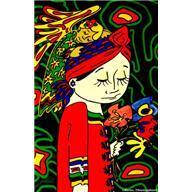
This is a digital interactive book with pictures and music to go with the story, I think it needs to be seen to understand the complexity of the work that has gone into its making. It is unlike anything I have ever read before and would probably appeal more to a young or young adult audience.
The graphics are lovely and the music is designed to match, it is clear that a lot of work and time has gone into making this a unique and, to my mind, innovative style of book.
I would recommend it for all of the above reasons. 3.5★s
June 3, 2020
What did I actually read? Did I need to be on drugs to understand this book? It was like the Bridge to Terabithia and Alice in Wonderland gone wrong. I will not recommend this book to anyone… It was just horrible!

June 18, 2017
Here's another review from 2014 that I just found on my Livejournal and am now adding here.
This is a book that sounds amazing from the summary, but turned out to be too dry and boring and lacking in plot.
The book centers around 2 kids: Robbie and Fristeen. I'm not sure who on earth would name their child Fristeen (no offense if that's your name). They become friends one day while playing in the yard and venturing into the woods. When Robbie comes home that day to find his worried parents, he admits that he was in the woods with Fristeen.
Let me explain why this book already makes no sense. His mother comes home to find that he is gone and the babysitter doesn't know where he is, and calls the dad and tells him to come home from work. But what do they do while he's gone? Sit on the couch wondering where their son is, instead of actually looking. Yeah.
Also, pretty much all dialogue in the story is written terribly and makes no sense. But it's even more true of dialogue between Robbie's parents. The mom tries to be the stereotypical no-nonsense mother, but is also too emotionally weak to crack down on her son's "bad" behavior. The dad is that "good guy" dad who actually understands the child but is afraid to stand up to the mother. And every time they argue, it just goes in circles. I could write a whole essay about Robbie's NPC parents, but I'll just finish that up with a brief mention of the fact that the mother tells the dad "We should never have had a kid together", and the dad agrees. People with kids, correct me if I'm wrong, but...would any parent ever say that? Ever?
Moving on to the subject of Fristeen. Robbie admits to having made friends with Fristeen, and what does his mother say? Something along the lines of "Oh no, not that girl. They have lived next door to us for years, and there's a reason we have never taken you over there to play."
When a normal 6-year-old hears that from his mother, he's likely to say "why? What's the reason?" But what does Robbie say? "But I'm going to marry her." And what would normal parents say? Something that indicates that they don't take that statement seriously. But what do our plot-device parents say? "*gasp* our son wants to marry that crazy girl from next door!"
And let me explain, also, that it is never properly explained why Robbie's parents forbid him from playing with Fristeen, or why they say that there's a reason why they never introduced him to Fristeen or took him to her house to play before. What am I supposed to assume? That she's crazy because she wears colorful scarves and talks to clouds? That her mother is a serial killer? What's the reason? Why are Robbie's parents so anti-Fristeen?
Somehow, the parents agree to let Robbie play with Fristeen anyway, which makes no sense. You see, one thing that destroys a book's plot is indifference. In this situation, the book would have been much more entertaining if the parents had continued to forbid him from playing with Fristeen, or from going into the woods (because going into the woods continues to be a big part of the plot). But no, they're suddenly ok with it.
Then there's a lot of stuff between Robbie and Fristeen, about kissing and "sleeping together" and what have you. Even though they're 6 years old. I don't even know. My brain just fails to comprehend the rest of this book, so I'm going to stop there.
This is a book that sounds amazing from the summary, but turned out to be too dry and boring and lacking in plot.
The book centers around 2 kids: Robbie and Fristeen. I'm not sure who on earth would name their child Fristeen (no offense if that's your name). They become friends one day while playing in the yard and venturing into the woods. When Robbie comes home that day to find his worried parents, he admits that he was in the woods with Fristeen.
Let me explain why this book already makes no sense. His mother comes home to find that he is gone and the babysitter doesn't know where he is, and calls the dad and tells him to come home from work. But what do they do while he's gone? Sit on the couch wondering where their son is, instead of actually looking. Yeah.
Also, pretty much all dialogue in the story is written terribly and makes no sense. But it's even more true of dialogue between Robbie's parents. The mom tries to be the stereotypical no-nonsense mother, but is also too emotionally weak to crack down on her son's "bad" behavior. The dad is that "good guy" dad who actually understands the child but is afraid to stand up to the mother. And every time they argue, it just goes in circles. I could write a whole essay about Robbie's NPC parents, but I'll just finish that up with a brief mention of the fact that the mother tells the dad "We should never have had a kid together", and the dad agrees. People with kids, correct me if I'm wrong, but...would any parent ever say that? Ever?
Moving on to the subject of Fristeen. Robbie admits to having made friends with Fristeen, and what does his mother say? Something along the lines of "Oh no, not that girl. They have lived next door to us for years, and there's a reason we have never taken you over there to play."
When a normal 6-year-old hears that from his mother, he's likely to say "why? What's the reason?" But what does Robbie say? "But I'm going to marry her." And what would normal parents say? Something that indicates that they don't take that statement seriously. But what do our plot-device parents say? "*gasp* our son wants to marry that crazy girl from next door!"
And let me explain, also, that it is never properly explained why Robbie's parents forbid him from playing with Fristeen, or why they say that there's a reason why they never introduced him to Fristeen or took him to her house to play before. What am I supposed to assume? That she's crazy because she wears colorful scarves and talks to clouds? That her mother is a serial killer? What's the reason? Why are Robbie's parents so anti-Fristeen?
Somehow, the parents agree to let Robbie play with Fristeen anyway, which makes no sense. You see, one thing that destroys a book's plot is indifference. In this situation, the book would have been much more entertaining if the parents had continued to forbid him from playing with Fristeen, or from going into the woods (because going into the woods continues to be a big part of the plot). But no, they're suddenly ok with it.
Then there's a lot of stuff between Robbie and Fristeen, about kissing and "sleeping together" and what have you. Even though they're 6 years old. I don't even know. My brain just fails to comprehend the rest of this book, so I'm going to stop there.

March 30, 2016
I had first read this book back in grade 3. Needless to say, not the most appropriate story for a eight year old. However, this was one of the more mature stories I have read, and I can confidently say that I thoroughly enjoyed it. Back then, there were parts I did not understand that well such as the drug use and sexual innuendos. Rereading it when I am slightly older lead me to have a better appreciation for the story.
First of all, the land is very creative and imaginative. Rich Shapero created a world mainly made of imagination.
Second of all, the characters are children, who are dependent on their parents. The children are deprived of a worryless childhood, as they both have separate family issues.
Third of all, the fiction and reality clashes, making you feeling hopeful when the fictional parts of the story begins, but leaving you feeling depressed as the children go back to their families.
A few critiques I have for the story are the cliche ending, the character personalities, and the overly excessive mentions of sexual things...
When you think six year olds, you think innocence. Yet, in this story, Rich deems them old enough to consider sleeping together. THEY'RE SIX. Leave them some of their purity. The adults having sex is better than the kids considering it. Seriously. Stop.
The ending was fast. There were a build-up, but it was never really mentioned what was going to happen until the last few chapters. Plus, Fristeen's ending came out of nowhere...Well. There were hints, but for a book which does not have many parts where it leaves you guessing what is going to happen, the small mentions of the future of the kids left me feeling cheated.
The six year old children act like teens. They are much more adventurous than normal people. No one in my entire life have ever left home with a friend for days and days, exploring the wilderness. Six years old is still too young to be able to form coherent thoughts. A little bit older wouldn't hurt anyone, and would still be able to have childish innocence. (But they really weren't children by the end of this book now were they.).
All in all, this was a deep story, recommended for an older audience. Some problems didn't settle well with me, but that is just my personal opinion. Great book.
First of all, the land is very creative and imaginative. Rich Shapero created a world mainly made of imagination.
Second of all, the characters are children, who are dependent on their parents. The children are deprived of a worryless childhood, as they both have separate family issues.
Third of all, the fiction and reality clashes, making you feeling hopeful when the fictional parts of the story begins, but leaving you feeling depressed as the children go back to their families.
A few critiques I have for the story are the cliche ending, the character personalities, and the overly excessive mentions of sexual things...
When you think six year olds, you think innocence. Yet, in this story, Rich deems them old enough to consider sleeping together. THEY'RE SIX. Leave them some of their purity. The adults having sex is better than the kids considering it. Seriously. Stop.
The ending was fast. There were a build-up, but it was never really mentioned what was going to happen until the last few chapters. Plus, Fristeen's ending came out of nowhere...Well. There were hints, but for a book which does not have many parts where it leaves you guessing what is going to happen, the small mentions of the future of the kids left me feeling cheated.
The six year old children act like teens. They are much more adventurous than normal people. No one in my entire life have ever left home with a friend for days and days, exploring the wilderness. Six years old is still too young to be able to form coherent thoughts. A little bit older wouldn't hurt anyone, and would still be able to have childish innocence. (But they really weren't children by the end of this book now were they.).
All in all, this was a deep story, recommended for an older audience. Some problems didn't settle well with me, but that is just my personal opinion. Great book.
June 14, 2020
I got this book for free many years ago at a music festival. I was intrigued by the cool cover art and the description of the story on the back. It also came with a CD (which I have since lost). I was excited to read this, but never got around to it and it sat on my shelf for a long time. I knew eventually it would be a fun read.
Naw, I was wrong. This book was very hard to follow and understand. I liked the idea of two kids exploring a forest, and the way their imaginations really create this wonderful magical world. And I enjoyed the contrast of their magical world with their unhealthy home lives. The author does a pretty good job of capturing the innocence and magic of being this young.
But mostly this book was a confusing read. The author really struggles with making a coherent story. He will go on long tangents of unnecessary and overly flowerly/metaphorical descriptions of things, while simultaneously not explaining the important parts, so I often found I had no idea what the author was talking about. Sometimes I thought he was just really high and trying to write pretty words.
The story just gets harder and harder to understand, with dawn and dream gods and shivers, strange story lines that I could not really understand, descriptions of things that didn't really make any sense. The story is weird, which I can enjoy if the writing is clear, but it was too hard to know what the hell the author was talking about about 60% of the time.
Additionally, the end wasn't very good in my opinion. It was very sudden and jarring, and just didn't make the story worth the read. Meh. At least I finally read it.
Naw, I was wrong. This book was very hard to follow and understand. I liked the idea of two kids exploring a forest, and the way their imaginations really create this wonderful magical world. And I enjoyed the contrast of their magical world with their unhealthy home lives. The author does a pretty good job of capturing the innocence and magic of being this young.
But mostly this book was a confusing read. The author really struggles with making a coherent story. He will go on long tangents of unnecessary and overly flowerly/metaphorical descriptions of things, while simultaneously not explaining the important parts, so I often found I had no idea what the author was talking about. Sometimes I thought he was just really high and trying to write pretty words.
The story just gets harder and harder to understand, with dawn and dream gods and shivers, strange story lines that I could not really understand, descriptions of things that didn't really make any sense. The story is weird, which I can enjoy if the writing is clear, but it was too hard to know what the hell the author was talking about about 60% of the time.
Additionally, the end wasn't very good in my opinion. It was very sudden and jarring, and just didn't make the story worth the read. Meh. At least I finally read it.
May 17, 2012
I was all too impressed by this novel and by Rich Shapero's unique style and beautiful prose. I could not believe that people were handing these out for free, especially in the sheer numbers that they seem to have been given.
I appreciate the arguments made against the realism of the children's behaviour, as well as the arguments regarding the sexually shocking content of the novel and would therefore like to assert for all future readers that reading the synopses inside of book covers, while it occasionally reveals unwanted information about the book, can often aid understanding of the author's purpose. The synopsis of Too Far explicitly refers to the story as a parable, indicating that the characters are not constructed with realism in mind but rather to illustrate a spiritual or philosophical assertion about mankind.
Despite its spiritual bent I found Too Far to be a refreshing escape from the all-too didactic and ideocentric writing that is common in books with moral purposes. Shapero writes with a soft voice and understated assertions. His beliefs form a unifying current within his story, not a harsh, cut-and-dried representation of what he feels life should be. Robbie and Fristeen reflect what we lose as we age and what our kind as a whole has lost as we have migrated from the forests to our "civilized" world. This book is a must read for anyone who is searching for something they cannot find in their day to day lives, something elusive, the lack of which is felt all too keenly.
I appreciate the arguments made against the realism of the children's behaviour, as well as the arguments regarding the sexually shocking content of the novel and would therefore like to assert for all future readers that reading the synopses inside of book covers, while it occasionally reveals unwanted information about the book, can often aid understanding of the author's purpose. The synopsis of Too Far explicitly refers to the story as a parable, indicating that the characters are not constructed with realism in mind but rather to illustrate a spiritual or philosophical assertion about mankind.
Despite its spiritual bent I found Too Far to be a refreshing escape from the all-too didactic and ideocentric writing that is common in books with moral purposes. Shapero writes with a soft voice and understated assertions. His beliefs form a unifying current within his story, not a harsh, cut-and-dried representation of what he feels life should be. Robbie and Fristeen reflect what we lose as we age and what our kind as a whole has lost as we have migrated from the forests to our "civilized" world. This book is a must read for anyone who is searching for something they cannot find in their day to day lives, something elusive, the lack of which is felt all too keenly.
August 15, 2012
NOTE: I did not have the accompanying music/art; I am reviewing the book on solely its own merits.
So I picked this book up as part of my bi-annual shopping spree at Half Price Books, mostly for the flashy cover and promise of trippy, dream-like imagery. Plus, it featured kids and their imaginations. Double win, I thought.
While I don't regret reading this book, I'm still at war with myself as to whether or not I actually liked it much. The main characters Robbie and Fristeen (6 and 8, I believe?), do venture into some crazy worlds of imagination as they explore the forest behind their houses. While this is a fantastic idea in theory, the simplistic style the author utilized--while appropriate for the child-like tone of the story--did not allow for the most vivid mindscape while reading. For example, He Knows was a blur of differing, fluid shapes that never seemed to finally mesh into one specific image befitting of the role.
On the other hand, the two main spirits of divinity gave the book great direction as they, in many ways, paralleled the adults of the "real world" and drew Robbie and Fristeen away from that real world. Although, maybe it's just me, but how exactly they managed to draw Robbie and Fristeen into their world remains, to me, a puzzling mystery.
In short, I'd say you have to be the right audience for this book to really speak to you. As for me, I'm not that audience. Next time I'll have to have the musical and artistic accompaniments and see if that doesn't bring everything to life better than the book on its own.
So I picked this book up as part of my bi-annual shopping spree at Half Price Books, mostly for the flashy cover and promise of trippy, dream-like imagery. Plus, it featured kids and their imaginations. Double win, I thought.
While I don't regret reading this book, I'm still at war with myself as to whether or not I actually liked it much. The main characters Robbie and Fristeen (6 and 8, I believe?), do venture into some crazy worlds of imagination as they explore the forest behind their houses. While this is a fantastic idea in theory, the simplistic style the author utilized--while appropriate for the child-like tone of the story--did not allow for the most vivid mindscape while reading. For example, He Knows was a blur of differing, fluid shapes that never seemed to finally mesh into one specific image befitting of the role.
On the other hand, the two main spirits of divinity gave the book great direction as they, in many ways, paralleled the adults of the "real world" and drew Robbie and Fristeen away from that real world. Although, maybe it's just me, but how exactly they managed to draw Robbie and Fristeen into their world remains, to me, a puzzling mystery.
In short, I'd say you have to be the right audience for this book to really speak to you. As for me, I'm not that audience. Next time I'll have to have the musical and artistic accompaniments and see if that doesn't bring everything to life better than the book on its own.

February 2, 2016
As I was browsing through the local library I came across this book. Right away, just from reading the premise on the book jacket, I knew I was going to really enjoy this book.
The biggest reason I liked this book so much is that it reminded me of my own childhood. The adult in me loved the writing used to describe the imaginative world of Robbie and Fristeen. But child in me was right there with them; dodging dangerous monsters, and scaling colorful landscapes.
I also loved the story of two people (even kids), both very young, and having troubled home lives, finding each other and escaping to this world together.
Also, the sexual aspect between Robbie and Fristeen that other people bring up didn’t bother me, because it’s not sexual. If you read closely you can tell there is nothing close to that on their minds.
The map that's at the back of the book was nice, however, I found myself constantly looking to the back every time they discovered a new place. I think this could have been done better. Maybe show a smaller one every time they found a new place.
The book did lose me a little bit at the very end. I felt the ending was rushed, and even though I kind of predicted that’s where it was headed, I feel it could have been fleshed out a bit more.
Overall it was a quick and enjoyable read.
The biggest reason I liked this book so much is that it reminded me of my own childhood. The adult in me loved the writing used to describe the imaginative world of Robbie and Fristeen. But child in me was right there with them; dodging dangerous monsters, and scaling colorful landscapes.
I also loved the story of two people (even kids), both very young, and having troubled home lives, finding each other and escaping to this world together.
Also, the sexual aspect between Robbie and Fristeen that other people bring up didn’t bother me, because it’s not sexual. If you read closely you can tell there is nothing close to that on their minds.
The map that's at the back of the book was nice, however, I found myself constantly looking to the back every time they discovered a new place. I think this could have been done better. Maybe show a smaller one every time they found a new place.
The book did lose me a little bit at the very end. I felt the ending was rushed, and even though I kind of predicted that’s where it was headed, I feel it could have been fleshed out a bit more.
Overall it was a quick and enjoyable read.
May 15, 2012
I just adored this little book. It's (bitter)sweet and heart-rending and one of the truest depictions of childhood friendship I've ever read. The writer, Rich Shapero, has an amazing eye for detail and finely observes the conjoined spirits of these remarkable six-year-olds. The book came banded with a beautifully designed CD of delightful music and colorful artwork. Someone was handing out the package on campus and told me there's also an app for it. Since I read almost everything on my iPad these days, I chose to display the beautiful book/CD in my room and download the app. It's one of the best I've seen: it allows you to choose to listen to the music at the appropriate moments, or not, and there's a "kid-drawn" map so you can get a lay of the land - an Alaskan forest on the outskirts of Fairbanks, Alaska. I kind of wanted it to be narrated too, and for the narration to play over the music, which is often ambient. But I was happy enough to toggle back and forth between the book, the music and the paintings (which are very trippy and wonderful!). What a beautiful artistic experience this was. I look forward to reading more "mulitmedia" fiction from this author.

November 9, 2012
This book started out as an interesting story with an intriguing fantasy story about two children exploring nature. At first, the fantastic world of the children and their imagination blended nicely with the real parts of the story, but as the book wore on, the story got stranger and stranger. On top of this, the scary yet strong imaginative land into which the children escaped soon became the only uplifting part of the story as the interludes of home life and reality became more depressing.
Though this juxtaposition of a fantastic forest world and a sobering, and all too often true, reality, the strange nature of the fantasy world led to it being somewhat unrelatable for me. I didn't understand any deeper meaning or metaphor in the fantasy world, and it seemed like a hallucination rather than any foil for the reality the children faced.
Though easy to read, the story never really gains momentum and isn't, to me, worth reading.
Though this juxtaposition of a fantastic forest world and a sobering, and all too often true, reality, the strange nature of the fantasy world led to it being somewhat unrelatable for me. I didn't understand any deeper meaning or metaphor in the fantasy world, and it seemed like a hallucination rather than any foil for the reality the children faced.
Though easy to read, the story never really gains momentum and isn't, to me, worth reading.
August 29, 2011
Like many other reviewers I was handed this book for free during the Edinburgh Book Festival last week.
I had a vague recollection of seeing a précis of the book some-place so I was eager to read it.
It is a slightly whimsical book. The descriptions of the countryside through which the children wander are vivid; although the language employed doesn't really resonate as being that of six year olds.
It is more of a fairy-tale than a story - the actual storyline has very little substance, and is given second place to the imaginary world of the children; echoed by the rushed and abrupt ending.
The book will resonate with anyone, who as a child, was lucky enough to enjoy imaginary kingdoms and freedom to know countryside like the back of their hand.
I had a vague recollection of seeing a précis of the book some-place so I was eager to read it.
It is a slightly whimsical book. The descriptions of the countryside through which the children wander are vivid; although the language employed doesn't really resonate as being that of six year olds.
It is more of a fairy-tale than a story - the actual storyline has very little substance, and is given second place to the imaginary world of the children; echoed by the rushed and abrupt ending.
The book will resonate with anyone, who as a child, was lucky enough to enjoy imaginary kingdoms and freedom to know countryside like the back of their hand.
Displaying 1 - 30 of 328 reviews