Ted Kooser’s third book in the Pitt Poetry Series is a selection of poems published in literary journals over a ten year period by a writer whose work has been praised for its clarity and accessiblity, its mastery of figurative language, and its warmth and charm.
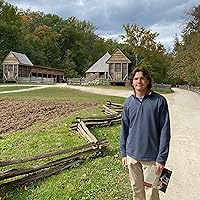
Ted Kooser lives in rural Nebraska with his wife, Kathleen, and three dogs. He is one of America's most noted poets, having served two terms as U. S. Poet Laureate and, during the second term, he won the Pulitzer Prize for Poetry for his collection, Delights & Shadows. He is a retired life insurance executive who now teaches part-time at the University of Nebraska in Lincoln. The school board in Lincoln, Nebraska, recently opened Ted Kooser Elementary School, which Ted says is his greatest honor, among many awards and distinctions. He has published twelve collections of poetry and three nonfiction books. Two of the latter are books on writing, The Poetry Home Repair Manual and Writing Brave and Free, and a memoir, Lights on a Ground of Darkness (all from University of Nebraska Press. Bag in the Wind from Candlewick is his first children's book, with which he is delighted. "It's wonderful," Ted said, "to be writing for young people. I am reinventing myself at age 70."
Ted Kooser like Billy Collins, another American poet laureate, strikes me as a keen observer of the everyday. Reading Weather Central I am drawn into the culture and rhythm of the American Midwest. Hardships (past and present) faced by rural communities, the rhythm of life. He’s one of those poets who can draw our mind to an everyday event and make it seem momentous or profound.
His conversational tone, his uncomplicated diction and syntax, make him accessible to a broad audience and I’d especially recommend him to starting readers of poetry or those with an interest in extending their experience of free verse that isn’t too confronting in format.
Site
A fenced-in square of sand and yellow grass,
five miles or more from the nearest town
is the site where the County Poor Farm stood
for seventy years, and here the County
permitted the poor to garden, permitted them
use of the County water from a hand-pump,
lent them buckets to carry it spilling
over the grass to the sandy, burning furrows
that drank it away—a kind of Workfare
from 1900. At night, each family slept
…
The American Midwest has some cultural similarities with the rural communities I live in, both in terms of relation to the land and the effect of economic decline. Kooser’s focus on this subject matter strikes a chord with me and I think if you're a fan of someone like Phillip Hodgins (though he was much more of a rhymer) you’ll enjoy Kooser’s work.
Overall I found the tone of the work to be reflective. If you like being drawn into a brief poetic tale you won’t be disappointed.
I scratched your name in longhand on the night, then you wrote mine. I couldn't see you, near me, laughing and chasing my name through the air, but I could hear your heart, I think, and feel your breath against the darkness, hurrying.
One word swirled out of your hand as you rushed hard to write it all the way out to its end before its beginning was gone. It left a frail red line trembling along on the darkness, and that was my name, my name.
Another wonderful random pull of the university library shelves.
Ted Kooser worked as an insurance executive, lived in Nebraska, and was poet laureate of the United States from 2004-06.
I absolutely loved this collection, especially for the way he could evoke such tenderness, sadness and quiet joy with descriptions of rural life, everyday scenes and special moments in life. His style is accessible and yet layered with deeper meanings. By all means seek him out.
Three of my favorites:
A Statue of the Unknown Soldier
Because he was always to stand there superior, high on his pedestal, staring out over our heads from beneath the stone bill of his watch cap;
and because at the feet of a statue all people are children, diminished; the sculptor foreshortened this soldier and chiseled his head just a shade big
for his body. It must have made sense in the studio, but perspective is tricky; from the opposite side of the street, from the point of view
of the mannequins jauntily lifting their heels in the window of Penney's, he looks like a child, his head too large for the care-broken, delicate shoulders.
He is weary from walking so far from the quarry, dragging his symbols; his ragged Yankee uniform, his rifle as thick as a fence post, this boy
with his lips pulled down over a pout of bad teeth. He's a sad one, all right, with a poor complexion; over the years, his face has been stung
time and again by the smoke of blizzards and pocked by the grapeshot of hail whistling in over the five-and-dime. Such action he's seen in his time:
those Shriners soft as marshmallows riding their scooters, the high school bands with trumpets that sound like someone tearing up cotton for bandages, and worse,
those majorettes, every Fourth of July, lifting a leg and kicking it once; then lifting the other and kicking it too, making it all look so terribly easy.
Sparklers
I scratched your name in longhand on the night, then you wrote mine. I couldn't see you, near me, laughing and chasing my name through the air, but I could hear your heart, I think, and feel your breath against the darkness, hurrying.
One word swirled out of your hand as you rushed hard to write it all the way out to its end before its beginning was gone. It left a frail red line trembling along on the darkness, and that was my name, my name.
Four Secretaries
All through the day I hear or overhear their clear, light voices calling from desk to desk, young women whose fingers play casually over their documents,
setting the incoming checks to one side, the thick computer reports to the other, tapping the correspondence into stacks while they sing to each other, not intending
to sing nor knowing how beautiful their voices are as they call back and forth, singing their troubled marriage ballads, their day-care, car-park, landlord songs.
Even their anger with one another is lovely: the color rising in their throats, their white fists clenched in their laps, the quiet between them that follows.
And their sadness -- how deep and full of love is their sadness when one among them is hurt, and they hear her calling and gather around her to cry.
In an effort to read more poetry, I'm adding one poetry book (from a huge personal collection) to read each month and I started with this one by Ted Kooser, whose work I've always admired and drawn considerable inspiration from it.
Kooser lives in Nebraska and was born in Iowa and his poetry reflects his views on life in the Midwest, particularly rural life (I have lived in a small town in Iowa now for 12 years, and I grew up in a small Iowa town). Kooser also relies heavily on the narrative form in his work, pulling down stunningly stark descriptions on everything from silos to red-wing blackbirds, and spring weather.
My rating is based primarily on the slightly dated feel this poetry now has, and this is nothing reflective of Kooser's writing. The collection is from 1994, now 30 years ago, and as a poet myself, I see the influence of what poetry looked like at that time: think Billy Collins.
There are still standouts, and anytime I can read about a dog, I'm enthralled. In 'A Finding,' he writes of his dog discovering a deer leg in the woods (something my own dog did when I lived outside of town), and the poem 'Old Dog In March,' hit particularly hard because that same dog who found the deer leg is now an old dog himself, and I'm dealing with that inevitability.
The poem 'A Deck of Pornographic Playing Cards' might have been taken right from my own youth and the poem 'Aunt Mildred' made me think of all the women of a certain generation, those farm wives, who did all the canning and economizing for the family, finding thrift in every corner. My own grandmother cold squeeze a nickel so tight, my grandfather used to say it made 'old George' yelp.
So many fine poems in this collection; my favorites include The Back Door, The Great Grandparents, and The Gilbert Stuart Portrait of Washington. In just a few lines he can capture youth’s ignorance of aging, youth encountering age, the experience of vulnerability to memory. I would not call him a midwestern poet, though many of these poems speak of life in Nebraska, for all of these poems speak simply of life.
I really liked this collection. There are some stand-out poems like "Barn Owl" ( which ended up in Valentines), "Lincoln, Nebraska," and my two favorites, "Pasture Trees" and "Old Dog in March." But I do wish he would venture out of his oeuvre a little...a Ted Kooser poem is always a Ted Kooser poem.
——- 4/9/23—I’m reading his Kindest Regards collection right now, which has selected poems from various other collections. I like it all as a whole but the ones I just read through from Weather Central especially were satisfying. They make the mundane momentous—an old dog stretching and dreaming, two men digging a grave, a weatherman as groom to the horse of weather. I like this style of thought.
"The frontier rolled on ahead; we never caught up with whatever it was, that rolling wave or weather front, those wings of cloud. The news came back, delivered by failure, a peach-crate of rags, a face caved in over its smiles."
I love reading Ted Kooser. His poetry paints pictures in my mind. I haven't spent much time in his home state of Nebraska, but after reading his poetry I feel like I have lived there for years. Will be reading this book over and over.
A nice collection of clear, simple and meaningful poems by this accomplished poet. Great reading and poetry for those who may not usually like or read poetry.
Weather Central truly contains some rich work that also demonstrates Ted Kooser’s diversity in topic and form. My particular draw to the poem, City Limits, arrives out of Kooser’s simultaneous lament and salute for a way of life that has all but disappeared. Yet, we can see the direct connection between this piece and the works we’ve been reading throughout the semester. I think for me, I found in this poem an explanation as well as affirmation for many of the characters we’ve read—an aesthetic appendix to the canon.
The author so carefully captures the gradations of life as it evolves on a prairie backdrop in which he is both an omniscient reporter as well as a subjective participant. Through his descriptions of struggle, as in the line, “…cattle dying, the children sick, the limits always ahead like a wall of black mountains,” I see the arrival of Cather’s O Pioneer’s cast arrive on the virgin plains. This lamentation of death and disease echos the pain of hardship as “generations spilled out,” on to the prairies settling “for limits,” stunting the growth of their own migration by stringing “fence wire,” drawing “plat maps with streets squared…” (36).
Wright Morris' characters in Plain Song, Cora and Emerson all seem to be the owners of the “dead weight” trunks that thud “onto the platform bursting their leather straps.” McMurty’s dried up little Texas town becomes the “generations” that “spilled out” of that untimely railroad dropping. And then the poem tells us how “the frontier rolled on ahead”—without them. Kooser, however, at this point in the poem provides for us what Inge, McMurty and others did not: an explanation for their discontent. Kooser suggests that there was something against their nature in the act of settlement. “Our hearts had never been in it, this stopping: we wanted a no where but gave ourselves over to gardens.” Is he insinuating that the nature of man is always that of wanderer? A hunter and gatherer self domesticated? He says, “What we’d done to the Indians happened to us.” This stanza suggests Euro-man has failed by virtue of his own self-betrayal.
Just at the folks of Thalia are bitter, envious and resigned to the life they’ve designed for themselves they “thrive on the failure of others.” Kooser confesses on their behalf that “we never caught up with what ever it was…”, and as the “horse grew heavy and lame,” we understand the metaphor that unveils the sad spirit of surrender.
I read Delights & Shadows in the last month and his Poetry Home Repair Manual and that may in part, and no doubt, unfairly, have affected my expectations; I was somewhat disappointed and initially struggled with some of the poems - mainly because I felt I could not convincingly connect some of the language and ideas together; it's good that an author asks something of me but there were too many occasions where I had to shrug and throw a hand up and say "Ok Ted, you lost me there, I'm sorry but I don't quite follow.." he covers familiar enough ground - life in a changing rural way of life, his dogs, 3rd person observations of other people but there is perhaps more looking back; not yesterday, last week or last winter but a generation or so, enough to bring the mood down. there are certainly some fine poems and many fine moments but I suspect I will need to give this book another chance, I was expecting more after delights & Shadows but this is a earlier book.
I've just finished *Weather Central* and am floating along a stream of nostalgia, smiling at the simple wonder of what I just drifted by. I'd like to see it again, but the river takes me on. I only have Kooser's words to go by.
---
They say a life unexamined is a life lived not to its full potential and I say you can't examine if you aren't able to notice.
Ted Kooser's poetry is a perfected art of noticing - a discovery that all things are sacred, particularly the little things.
Rural life and solitude's explorations are the back drop of Kooser's practice; it's there that we begin noticing and sanctifying the ordinary. I read each poem like an apprentice hoping to catch on.
Another soothing collection of poetry with concise, poignant imagery. What I like most about Kooser is that he glorifies the every day in a way that is not gaudy or excessive. Rather, his verses leave me feeling like I have been granted a privilege in beholding the 'other' in the everyday- the individual on the street, the deer in the lake, the age I've yet to reach. Calming yet not forgettable.