Jump to ratings and reviews
Rate this book

Mermaid Singing

Rate this book
The story of a year spent by two Australian writers on the Greek island of Kalymnos in the 1950s.

216 pages, Paperback

First published January 1, 1958

59 people are currently reading
1341 people want to read

About the author

Charmian Clift

19 books55 followers
Charmian Clift was an Australian writer and essayist during the mid 20th century. She was the second wife and literary collaborator of George Johnston.

Ratings & Reviews

What do you think?
Rate this book

Friends & Following

Create a free account to discover what your friends think of this book!

Community Reviews

5 stars
202 (31%)
4 stars
294 (46%)
3 stars
112 (17%)
2 stars
18 (2%)
1 star
6 (<1%)
Displaying 1 - 30 of 126 reviews
Profile Image for Magrat Ajostiernos.
724 reviews4,879 followers
June 20, 2022
Una auténtica delicida. Enamorada. Muy fan. Quiero más.

Pues eso, que estas memorias me han conquistado hasta niveles insospechados... Por una parte por el humor de la autora, su mirada audaz y su lengua afilada, y por otra por la propia ambientación de aquella Grecia perdida.
En 'Cantos de sirena' la autora narra su primer año viviendo en una islita griega en plenos años 50 junto a su marido y sus hijos. Lo que iba a ser una estancia limitada fue en realidad el inicio de una década viviendo allí, y supuso un choque frontal para esta periodista australiana que llevaba ya tiempo asentada en Londres y que comenzaba a sentirse asfixiada por la rutina y los hábitos de ciudad.
El libro es un canto a la libertad y a ser feliz con lo mínimo, a disfrutar de la vida, de los amigos y de cada momento, y al mismo tiempo es un diario repleto de personajes inolvidables, anécdotas y muy especialmente de detalles sobre la vida en la isla.
La autora narra desde las durísimas condiciones de trabajo de los pescadores de esponjas, hasta el carnaval, habla de su gastronomía, de sus costumbres (terriblemente crueles para con las mujeres), religión y supersticiones.
Es uno de esos libros del estilo de 'Mi familia y otros animales', 'Todas las criaturas grandes y pequeñas' o 'Sidra con Rosie', pero con el añadido de que la narradora es una mujer adulta que tiene muy reciente todos los acontecimientos que va narrando, y que aunque su historia está llena de humor e ironía, también está plagada de tristeza por la vida tan dura en la isla.

Sin duda uno de los libros que más he disfrutado en lo que va de año y con los que más he aprendido.
Profile Image for Ian "Marvin" Graye.
948 reviews2,784 followers
December 4, 2022
CRITIQUE:

Your Beauty Broken Down

Charmian Clift, her husband George Johnston, their son Martin (1) and their daughter Shane left Australia for George's appointment as head of the Associated Newspapers' London office in 1951, where they stayed for three years.

By 1954, they had tired of the Fleet Street treadmill, "the impossibility of writing anything worth while when your only time for creative writing was at night and then you were too drunk or too tired", and living in their small flat in Bayswater Road, despite the relatively sophisticated lifestyle they had enjoyed.

At the same time, they had heard a BBC radio documentary about a group of Greek sponge-divers who had been invited by the Australian Government to come to Australia and dive for pearls in Broome and Darwin. This cemented their decision to move to the Greek island of Kalymnos, where there were about 1,500 sponge-divers. Their aim was to buy "a slice of time" within which to write one or more novels.

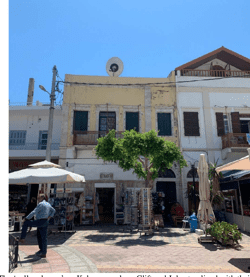
Within hours of their arrival in December, they decided to rent "a spindly yellow house on the waterfront". It sounds idyllic, but was in fact quite modest: it had "a little cast-iron balcony overhanging the plateia and four staring windows that looked down the broad harbour road with its row of coffee houses under the ragged casuarina trees and across to the small coloured cubes piled higgledy-piggledy at the base of the mountain."

George and Charmian resolved to jointly write a novel while they were on the island ("The Sponge Divers" was finished in April, 1955 (during Lent), before the children's first summer holidays on Kalymnos, and their New York publisher agreed to publish it [under the title "The Sea and the Stone"] in Autumn, 1955).

The original plan was that Charmian would do background research, and George would do the principal writing. However, Charmian soon found this arrangement untenable. When she reviewed her notes, she realised that there was enough substance in them for her to develop a travel journal or memoir, which eventually became "Mermaid Singing".

Charmian and the kids (the Greeks called them their "darlinks") had the closest contact with the island community, while George remained indoors, writing. Only at the time of their departure for Hydra (the subject of "Peel Me a Lotus") did George even consider learning Greek.

description
"The spindly yellow house on the waterfront" Source

The Enchantment of Kalymnos

Charmian documents the environment, lifestyle, ceremonies, customs and idiosyncrasies of Kalymnos. She's invited to and witnesses weddings, baptisms, birthdays, anniversaries, and funerals. "It was a time of pure enchantment."

She paints her portrait with carefully chosen words. While life is quite different from Australia and London, she is never condescending or judgmental. She conveys the sense that things have been like this for centuries, that they have emerged naturally out of the insular geography of the island. She writes of the Lenten Carnival:

"In Greek ceremony the pagan world is always there, lingering on, dark, impenitent, enigmatic, patient."

Elsewhere, she writes that "all practices [are] traceable more easily through 'The Golden Bough' than through [the] Holy Bible."

One day, her housekeeper, Sevasti, wakes her up long before dawn so that they can walk up the mountainside to see the sun rise ("huge and jazzy orange") out of "a sea as white and thick and still as milk".

When she asks Sevasti why, she replies "Because this is what we do in Kalymnos. This is what we have always done."

Charmian infers that "it was necessary for the whole populace to reaffirm its faith in the daily miracle on a set occasion every year...like examining one's safe deposit."

The Bitter Thraldom of the Sea

The sponge-divers worked off the north coast of Africa (e.g., Libya and Tunisia). Fleets of small boats took them there for up to six months at a time. Thus, they were largely absent from their families over summer. They borrowed large sums of money for a year's living expenses before they departed, and repaid the loans out of their income when they returned. Unfortunately, they squandered much of their income on gambling and drinking retsina and ouzo.

Ten percent of the population were divers, and one percent of them died or were crippled by the bends every year. Walking sticks were everywhere, especially in the coffee-houses and tavernas.

Charmian also highlights how the culture of the island derives from its relationship with the sea:

"There is something terrifying in this mastery of the sea over the men."

She observes that, perhaps because of the precariousness and inherent danger of sponge-diving -

"Property here descends through the female line, from mother to eldest daughter..."

"A girl must bring to marriage a house, the requisite furnishings, bed linen and kitchen equipment and usually a sum of money as well...

"[Men] need bring to the marriage nothing more than...virility."


Women potentially have greater financial security if they lose their husband to the sea or the temptations of the taverna.

Songs of the Sea and Solitude

Charmian was impressed by the songs of the sea, many of them ancient poems:

"...the old songs, the songs of the sea, the true songs. They are songs filled with sadness, with winds and darkness and months of waiting, with lonely nights and young girls wearing black. I have seldom known anything more poignant than to hear them sung, deep and soft and sad, by a dozen jerseyed men who know what the songs mean and unselfconsciously invest each phrase with this private inward knowledge. Then the sea moves into the songs, surges in, the dark impetuous rush of it, its passion and poetry and loneliness, its cruelty and tenderness, and the men's own bitter thraldom to this oldest of mistresses."

Many young wives were widowed on their husband's first diving trip. Unfortunately, they didn't learn of their husbands' fate, until the boats returned.

Charmian also makes insightful comments about different attitudes to privacy and community:

"It may be that it is necessary to sacrifice privacy in order properly to understand the art of living together, as the Greeks in many ways have understood it better than any civilisation on earth.

"But for us, products of a social structure that puts a high value on an individual right to solitude, it was, and is, difficult to surrender ourselves to a community..."


The children are the first to adjust to and become integrated into the community. The local children follow them through the alleys, calling out "Martis, Say!" Their end of year school reports awarded them 10 out of 10. They're just as popular with their teachers as they are with their school friends.

Charmian's reward was to write this book independently of her husband, and to hear her own, rare mermaid singing. She deserves comparison with Virginia Woolf.

She continued her memoir of life on the Greek Islands in "Peel Me a Lotus".


VERSE:

Mermaid Singing
[In the Words of
Charmian Clift]


If I stay for a moment,
Just a moment,
Perhaps I might hear it too -
That one rare mermaid, singing.


FOOTNOTES:

(1) If I recall correctly, I briefly met Charmian's son, Martin Johnston, a poet, in the early 1980's.

I had flown down to Sydney to spend a weekend with my friend Sally Wagg (who, perhaps, ironically lived in Johnston Street, Annandale, which was named after Lt.-Col. George Johnston, who led the Rum Rebellion in 1808). Sally had her ear to the Sydney ground, and was always au fait with whatever was happening, whether it was a concert, an opening, a protest, or a party.

This weekend, it was a pub crawl. Most of the crawlers had something to do with writing or music. It started at a pub somewhere close to the University of Sydney. We caught a cab to the pub at about 10am, and Sally led me into the public bar, where she introduced me to Martin. He handed to each of us a folded pamphlet that contained a hand-drawn map of inner south-western Sydney (e.g., Glebe, Annandale, Balmain, Rozelle, and Darlinghurst in the inner south-east).

The map linked all of the pubs we were going to crawl through (about ten in all), as well as containing a box beside each pub that listed some detail of its history and notoriety. I think Martin had created it. It clearly involved a lot of research, creativity and hard work. I know, because I brought the map back to Brisbane on my return, and twice replicated it for pub crawls I organised here.


SOUNDTRACK:
Profile Image for Lady Clementina ffinch-ffarowmore.
942 reviews244 followers
April 6, 2021
My thanks to Muswell Press and NetGalley for a review copy of this one.

In the 1950s, Australian writer Charmian Clift and her husband George Johnston (with whom she also jointly wrote books) decided to leave grey, dreary London (where George was working on Fleet Street) to move to a Greek Island with their children and live by their pen—not being of the other persuasion of journalists who apparently take to pig-farming. Mermaid Singing is the first of two volumes of her memoirs, this one of the year the family spent living on the impoverished island of Kalymnos. (The other, of their life in Hydra is Peel Me a Lotus, which I’ll have a separate review of). At the beginning of each chapter are pen and ink illustrations by Cedric Flower—these I think are new.

Beginning with their rather uncomfortable boat ride (after hours of air travel) to the island, experience finding a house and settling in, we are taken through various facets of the family’s life there—the different people they met and interacted with, things Clift observed--from nature to human nature, the children’s experiences and the adults’, to other aspects of island life--taverns, customs, meals and celebrations. Kalymnos was an island of sponge divers—the men went by ship to the African coast each year to dive for sponge while their wives and children remained on the island. Life was hard and the fact that synthetic sponge was being preferred to natural meant the divers’ livelihoods were under threat. (Interestingly around the time I was reading the book, I happened to chance upon a short TV programme on Greece which also discussed the livelihood problems the sponge divers are facing in the current context, half a century or so since this volume). The society was very traditional and strongly patriarchal, but there were women that spoke their mind and questioned the limitations they had to live under (like their domestic help Sevasti). Clift and her family were the only foreigners but there were also Greeks who had been brought up in England or elsewhere but now lived in Kalymnos. Life there was completely different from anything they had known or experienced, yet rich and much more satisfactory and fulfilling. And it is this, from small everyday experiences (like leaks in their house when their first moved in) to little adventures (like getting the children the pet they were promised, or ‘the small animus’ as a Greek friend called it) and trips they took (on which they are never left alone), to larger issues like that of gender that we see in this book.

When I started this book, what immediately captured my attention was Clift’s wit and humour. For instance, ‘There is some mysterious affinity between a journalist and a Berkshire sow, that to me is completely unfathomable, but then I married into the island persuasion of journalists’. Perhaps there are more downright funny observations at the start than later but her writing is great fun all through. Clift was a keen observer and gives us vivid descriptions with great detail about each facet that she is writing about, be it a person or occurrence or scene. Reading the book, one could well be sitting with her and her family watching events unfold or gazing at the landscape.

Considering how full their life seemed with just the events described, she does point out that amidst all that she and George did write the book they were there for, and she would have been writing this one as well. So certainly as she writes, on the island away from modern entertainments and distractions, they had the time to work, spend with their kids, and enjoy the life that it offered to the fullest. Yet reminders of their old life (an unpaid gas bill that follows them) are kept on as their link with that other life.

Reading about island life and culture, especially the patriarchal set up, I was somewhat surprised by how much was similar to other parts of the world—early marriages and dowries (or at least their equivalent), strict (and unfair) gender roles, and of course the misogyny. Charmian stands out and perhaps shocks residents by dressing in pants, swimming with (and faster than) men, and drinking in taverns which were the realm of men alone.

Charmian and her family’s life isn’t necessarily the idyllic island life with picturesque scenes (though there are those) and lolling about in the sun—the characters are rich, there is a great deal of colour but there are also tragic and melancholy stories and gory details (Clift doesn’t shy of describing the butcher’s shop or the fate of the poor spring lambs)—besides work, of course.

This was a really enjoyable read for me, one I could be lost in. So glad to have come across this on NetGalley since I hadn’t heard of either Clift or the books before.
Profile Image for Juan Naranjo.
Author 24 books4,720 followers
Read
August 22, 2025
CANTOS DE SIRENA es un viaje doble: al interior de una familia y al núcleo de una comunidad.
Por una parte conocemos a un matrimonio de escritores anglosajones que, junto a sus hijos, se instalan en una humilde islita griega en los años 50 buscando la inspiración y la vida sencilla huyendo del clima y los precios de Londres; por otra parte, se nos expone la esencia de esa isla en todos los apartados posibles (en lo social, lo económico, lo histórico, lo gastronómico, lo geográfico...) creando un verdadero tratado sociológico que nos habla de un mundo que ya no existe. Y todo está analizado con la prosa inteligente, irónica y afiladísima de una mujer, Charmain Clift, que es capaz de transmitirnos su talento literario y su amor por un universo que le roba el corazón y que consigue instalarse en el nuestro.
Profile Image for iana.
122 reviews20 followers
April 29, 2021
When reading Gerald Durrell you can learn a lot about the Greek nature, its landscapes, flora and fauna. When reading Charmian Clift, you will learn a good deal more about its people and their way of life in the midst of the 20th century.
While living on Kalymnos together with her husband and two children, Clift becomes part of the island’s community, with its simple, traditional and often inconvenient (for a Londoner) Mediterranean life.
She immerses herself in the Greek traditions, celebrations, mournings, stories and tragedies. Clift is very observant, her skill to notice tiny details and changes in one’s behaviour makes the characters alive and breathing. Though her new neighbours don’t have a lot to share with, they give the author’s family all the affection and friendship they can. Writing about these people, Clift finds the essence of Kalymnos’ life, without trying to embellish it, which makes this book very sincere, heartwarming and engaging.
I started reading this book when moving from Russia to the Mediterranean myself, so I related to it deeply. Two main things I enjoyed about these memoirs were Clift’s ability to stay open to everything new and her genuine concern about everyone she meets. We never come back from other countries being the same person, because new experiences, places and people we run into on these journeys change us bit by bit. Clift changes, too, and I’m here for it continuing reading her memoirs with “Peel Me a Lotus”.
Thanks to NetGalley and Muswell Press for a digital copy of this book in exchange for an honest review.
Profile Image for Carmel.
111 reviews3 followers
September 7, 2014
Why this isn't considered an Australian classic is beyond me. A vivid, lyrically-written account of the author's re-location to the Greek island of Kalymnos with her husband and two children in the early 1950s. She draws scenes from their life on this simple, traditional sponge-diving island with affectionate and humorous detail, displaying a rare timelessness of style and observation. Reading it while on another of the Greek islands (Corfu) was a particular pleasure, as in many ways little has changed in the intervening decades. I shall immediately move on to 'Peel Me a Lotus', Charmian Clift's account of her family's life on Hydra, another of the islands.
Profile Image for Jennifer.
95 reviews30 followers
October 20, 2022
Maravillosa autobiografía en la que la periodista australiana nos relató el primer año que pasó viviendo en la isla griega de Kalimnos con su marido y sus hijos, mientras la pareja escribía su novela, huyendo de la rutina y la monotonía de Londres. Acabaron quedándose años allí, incapaces de dejar la isla ,que se había convertido en su hogar tras meses de convivencia con sus vecinos kalimnianos. Está escrita en un tono divertido y cálido que te hace devorar las páginas. Me ha recordado muchísimo a la novela de Durrell, pues creo que en aquella época fueron muchos los escritores que encontraban un lugar de retiro en Grecia para escribir. Debido a las diferencias culturales que había entre nuestra familia protagonista y los habitantes de la isla y algunas de las costumbres arcaicas de los isleños, las memorias de Charmian están repletas de situaciones desternillantes, pero también retrata la dureza de un estilo de vida en vías de extinción, que era el de los pescadores de esponjas. Los peligros a los que se exponían cada día estos hombres para que sus familias pudiesen sobrevivir es sobrecogedor. A pesar de relatar las costumbres profundamente religiosas, machistas y supersticiosas de aquella sociedad, encuentras entre sus páginas muchos momentos de felicidad, amor, amistad, risas y alegría.

Es curioso como en estos lugares en los que la pobreza y las condiciones de vida son durísimas, la gente parece vivir la vida con una sencillez e intensidad que aquí no conocemos. Es muy facíl dejarse seducir, al igual que los protagonistas, por los paisajes y las gentes de un lugar así. Creo que el concepto que tienes de cómo vivir la vida cambia radicalmente.
Profile Image for Kapuss.
551 reviews32 followers
August 6, 2023
Cómo explicarle que estábamos hartos de la civilización, hartos del asfalto y la televisión, que habíamos perdido el norte y sentíamos una especie de vacío que no habíamos podido llenar con bienes materiales. Habíamos acudido a Kálimnos en busca de una fuente, una maravilla o una señal que nos reafirmara en nuestra humanidad.
Profile Image for Elena.
247 reviews133 followers
July 16, 2024
"Cantos de sirena" es un libro de viajes donde la periodista australiana Charmian Clift relata el primer año que pasa junto a su familia en la pequeña isla griega de Kálimnos. Huyen del gris Londres, donde se habían afincado, para tener más tiempo para escribir. Estamos en 1954 y ante el punto de vista de una mujer extranjera observando y tratando de entender una cultura totalmente diferente a la suya. Se dan momentos divertidos pero todavía estoy dándole vueltas si trasciende la anécdota personal. En esa confrontación cultural somos testigos de las costumbres isleñas ancladas en un pasado ya extinto. Una vida todavía ligada a la naturaleza y las estaciones, de marcado carácter religioso, donde los rituales juegan un papel importante. La población masculina, dedicada en su mayoría a la pesca de la esponja, podía pasarse medio año fuera de casa, expuesta a múltiples peligros; mientras los niños desnutridos corretean por la isla y las mujeres ocupan su lugar al cuidado de la casa y la crianza del mayor número posible de niños. Apto para bárbaros del norte que quieran disfrutar de lo bueno. Te dejará con ganas de no parar de beber retsina.
Profile Image for Vaso.
1,753 reviews225 followers
September 21, 2022
Είμαστε στις αρχές της δεκαετίας του '50 και η Charmian Clift με τον σύζυγο και τα δυο παιδιά τους, αποφασίζουν να έρθουν και να ζήσουν στην Ελλάδα και μάλιστα στο νησί της Καλύμνου. Στόχος τους, να γράψουν από κοινού ένα ακόμη βιβλίο και να ζήσουν μια απλή ζωή με φόντο το ελληνικό γαλάζιο. Οι δυσκολίες πολλές όπως αντιλάμβάνεστε. Από τον τρόπο επικοινωνίας, μέχρι τις απλές καθημερινές δουλειές. Η συγγραφέας, περιγράφει τον τρόπο ζωής των σφουγγαράδων της Καλύμνου, τη θέση της γυναίκας εκείνη την εποχή μα και τα ήθη και έθιμα του νησιού, από τις γιορτές των Χριστουγέννων, τις Απόκριες μέχρι και το Πάσχα.

Ένα ταξιδιωτικό memoir που δείχνει την αγάπη της συγγραφέως για τη χώρα μας.
Profile Image for Tripfiction.
2,045 reviews216 followers
April 7, 2021
Bringing 1950s Greece to life - KALYMNOS


Kalymnos lived on the sponge diving industry but it was a dying art when Chairman and her husband arrived, two children in tow, landing in a country that was so unfamiliar, with little money in the bank, but hey, they were up for a change and some adventure. They had left bleak and grey London behind and the lure of Greece was strong. Clift marvelled at the island, it felt imposing with the mountains towering behind and the waterfront quite the cosmopolitan harbour, especially by sleepy Greek island standards. The evidence of the sponge diving history was everywhere and in fact in their rented and rather run down ‘yellow house’, there was a sponge clipping room, where the men cut and sorted the sponges.

They have arrived on an island that is was entrenched in traditional values, where the men had the final say and traditional dress was ubiquitous (mainly for women). Marriages were often arranged, men left to dive, the women left behind, sometimes going years without seeing their husbands.

There are many snippets of island life and I certainly learned a lot from her insightful thoughts and observations – that pine resin was added to wine, to preserve it as it was shipped further afield, for example and, the resultant astringency of resination counteracts the oily nature of Greek food. If you are a fan of retzina, then each glass is a toast (in other words it is not a drink for glugging!) and I raise a glass to the stalwart and resourceful author.
Profile Image for Cat Woods.
111 reviews21 followers
December 26, 2015

Evoking the singular beauty and sacred spirits of Kalymnos in her intriguing memoir of a year in Greece. Clift is engaging, an observer of life, character, place and people. I discovered this where I needed to: in a secondhand bookstore while travelling abroad. Discovering new an Australian author who has bravely set out to escape the toil and woes of urban corporate grind to embrace the wild unknown is inspiring. I am keen to seek out Peel Me a Lotus and her other essays and writings. Though her fate was ultimately a tragic one, this by no means darkens the pure joy and discovery to be experienced in this fabulous read. I only wish to have learnt more about Charmian's own mind and character. She remains an observer reluctant to explore herself. It doesn't detract from the enjoyment, only raises my curiosity.
Profile Image for Tracey.
22 reviews
January 16, 2017
So loved this book when I first read it and I realise now that Clift is so skilled - she beckons you back to savour her descriptive and humorous writing. Kalymnos and it's people come to life. It's a wonderful book and I'm re-reading it with pleasure.
Profile Image for Manuel.
82 reviews19 followers
July 27, 2024
Un libro delicioso para disfrutar en verano. Tremendamente parecido a las aventuras de la familia Durrell en Corfú pero centrándose más en las historias de la isla y sus locales que en el entramado familiar.
Profile Image for Beatriz.
501 reviews212 followers
August 25, 2022
Siempre han sido los marineros, que embelesados por los cantos de las sirenas, perdían la vida sin ser conscientes de su trágico destino. pero siempre han sido hombres. no conocía la historia de ninguna mujer que hubiese parecido por causa de estos seres de leyenda, hasta que llegó a mis manos #cantosdesirena de la escritora y cronista #charmainclift. Pero no es esta la historia del trágico final de la escritora sino del comienzo de una vida que supuso enmarcarla como una gran activista de los derechos de la mujer.
Cuando en el año 1954 decide junto a su marido el periodista George Johnston mudarse a la isla griega de Kalimnos y los hijos de ambos no sabe qué están abriendo la puerta al paraíso. Desde el momento de alquilar la famosa casa amarilla que será lugar de paso para muchos de los habitantes hasta contemplar el bautizo de uno de los niños de la isla, vivir los sacrificios y ayuno de la pascua griega, el embarque de los hombres que se echan al mar durante meses para la pesca de la esponja hasta la propia redacción del manuscrito de su novela que será decisivo para continuar su estancia en la isla y de la que ya se sienten parte.
Así en amplios capítulos donde abundan las descripciones más minuciosas y detallistas que puedas imaginar, casi puedes sentir la tibia brisa de la llegada de la primavera o la algarabía de los niños correteando de un lado a otro o a Sevatis realizando las tareas del hogar.... De este modo, está especie de memorias o biografía de viaje cobran el sentido por el que fueron escritas : ser capaz de transmitir que existe otro tipo de vida más sencilla y sobre todo más humana, porque si algo encontraron Charmin y George en aquella isla griega fue la amistad y el amor desinteresado de todos sus parroquianos. Y estas enseñanzas las trasladaron solo unos meses después a Hydra donde Charmain creo una especie de hogar para todos aquellos artistas escritores, pintores... que necesitasen un lugar para poner a punto su creatividad lo que hizo disparar su fama como "mecenas" cultural.
Pero fue el último día de curso escolar, cuando sus hijos, Shane y Martín, que habían vuelto con magníficas calificaciones de la escuela griega unque aún chapurreaban más que hablaban, Charmain se quedó relegada bajando la pendiente que llevaba a la fiesta de la orilla de la playa..... "todavía no...., dentro de un instante. si me quedo aquí un instante, solo uno más, quizá oiré también eso que se oye tan rara vez: un canto de sirena."
Profile Image for Susan.
254 reviews1 follower
December 30, 2020
This beautiful book was published in 1956. Australian writer Charmian Clift and her writer husband George Johnston moved with their two children from London, where they were both working as journalists, to the impoverished Greek island of Kalymnos. She chronicles the year they spend there, at times telling the stories that expatriates everywhere have of interacting with a new culture and language, at others focusing on the history and everyday lives of the island, and sometimes relating what life looks like for them, their work, and their children. Whatever her focus the writing is precise and beautiful and the portraits are respectful.

This book is full of joy at the life they create there, as well as hope that they can sustain an idyllic and creative life in Greece. But doing a bit of research about her life overshadows this hope in tragic ways. After publishing a novel based on the people of Kalymnos, Clift and Johnston moved to the island of Hydros - less impoverished and having a vibrant expatriate life of creatives (including, most famously, Leonard Cohen). It appears that their years in Hydra set the stage for later tragedy; Clift committed suicide at the age of 44, and Johnston died the year following from complications associated with TB. Their two children, portrayed so beautifully in Mermaid Singing, fared no better; their daughter also committed suicide at a young age and their son died young from alcoholism.

But the writer of Mermaid Singing does not know what the future holds in store for the four of them. She comes across as charming and curious and excellent company. This is also a fascinating look at an ancient way of life that in the 1950's had few modern adaptations. Highly recommend.
Profile Image for Alex Sarll.
7,056 reviews364 followers
Read
April 9, 2021
"'You are a pair of romantic babies,' said a friend of ours. 'And of course you'll live to regret this folly. On the other hand I believe that although the mermaids are mute it is necessary for everybody, once in his life, to go down to the sea and wait and listen.'" Beautiful phrasing, and not an unreasonable response if, in the 1950s, a couple with two young children should tell you that they're leaving London for life on a Greek island, and not even one of the big or famous ones. Kalymnos' dramatic scenery belies its size ("ten miles long and, at its broadest point, less than five miles wide"); its economy rests on a sponge-diving trade which always crippled those who dove, but is now itself faltering thanks to the increasing availability of artificial alternatives. Meaning "It is an island under sentence, an island in suspense" – a sunnier version of all those remote Scottish fastnesses where in the end everyone emigrated. Except, of course, that wasn't how it happened, because not long after this was written, mass Mediterranean tourism became a thing (although if that was unforeseen in 1956, so was the trade's sudden end in 2020, so who knows where they're at now?).

But to go back to that eloquently sceptical response which gives the book its title – obviously the immediate response was that the kids interrupt, taking the statement at face value because small children tend not to be familiar with much modernist poetry. And it cannot be emphasised enough that this is travel writing as done by the mother of two young kids, simply because that's still not the default mode, and was even less so in the mid-20th century. From Stephen Graham through Patrick Leigh Fermor to Clive James, my mental picture of a wanderer thenabouts is an unencumbered young(ish) man. Granted, there is the one obvious counterexample of Dervla Murphy, but even if I was too young to remember it myself, I've always associated her with an awkward anecdote of my infancy, which has shied me away from much investigation. Still, it puts a whole different complexion on proceedings: the traveller themselves may be fine with roughing it in a leaky hovel, or unfamiliar foods, but young children...well. And although being outsiders to some extent exempts the Clifts from Kalymnos' rigid gender roles, it's still unsurprising if Charmian has a more pointed perspective on the matter than her husband might have done were he writing this, or if the pair had collaborated as they did on their novels. Indeed, she offers a fascinating report on a warning from another expat, who found that at some point, and she couldn't even quite put her finger on when, she and her husband had gone from mocking the island's expectations together, to gradually emulating them. Of course, now we have the extra lens of distance, because the Clifts give the impression of having been moderately bohemian by the standards of the day yet pretty old-fashioned by ours – but Charmian still offers an acute account of Kalymnos' set-up, which one might now characterise as 'patriarchy harms everyone' turned up to 11, with absurd strictures placed on both genders such that everyone feels limited and as if the others are getting a better deal.

Also interesting is that these rigid gender roles aren't perceived just as a case of going back in time, but as sometimes distinctly different to what she's known in England and Australia. This was, after all, a time before cheap flights and TV had made such in-roads in homogenising even the Western world, and much of the island life, even when it is presented as a matter of religion, seems to Clift to represent more of a pre-Christian survival. Which is perhaps inevitable when names like Xanthippe and Calliope are just that, names, names which a neighbour might bear without it being thought remotely remarkable, even though they seem that way to Anglophone ears. In places, the weight with which superstition is regarded, or the firm taboos, reminded me of that folk horror mainstay, the pagan village conspiracy – with the key distinction that the locals here are much easier on the unwitting outsiders than those born into them. Also, they seem less invested in the classical past than the incomers – Clift's surprised when the children come home from school to learn that the heroes of whom they're taught there are not those of myth, but of the war of liberation from the Ottomans, simply because it's so easy for an Anglo to forget that Greek history is an ongoing thing, not a distinct and distant era.

At its best, Mermaid Singing catches the wild mood swings of making a new life far away, the way that an infuriating day can shade into a delightful one and then into some baffling alloy of the two. There are some wonderfully whimsical passages: "An unpaid gas bill still pursued us politely from the Edgware Road. Because it was our only surviving link with our previous life we were loath to pay it." In a few setpiece scenes, we get intoxicating cascades of impressions and images which rhapsodically capture the white and blue of the streets, the phantasmagoria of Carnival and christening. At its worst, one is sorely tempted to shout 'Oh do give over!' as Clift lapses towards 'the poor are happier because they're more spiritual' territory - as when, towards the end, she suggests that "what gives the faces a nobility almost unnatural in our age is the complete absence of resentment and pettishness, or those tell-tale lines that mark the frustration of little egos". This mere pages after a study of the pathetic figure of a failed captain, who demonstrates all those attributes in abundance. See also "I knew by experience that labour is not eliminated by gadgets, you can't get entertainment at the flick of a switch" – which is all very easy to say when on Kalymnos you can outsource much domestic drudgery for a pittance. Still, these annoyances were rarer than the poetic passages, or the clear-eyed ones. The overall effect is of a caught moment; a record of a world that was ending, which, even if that's probably for the best, was still a loss for all that.

(Netgalley ARC)
Profile Image for Marika_reads.
636 reviews482 followers
September 11, 2025
4.5

Już wcześniej wydany po polsku tom „Obierz mi lotos” bardzo mi się podobał, ale „Śpiew syreny” podobał mi się jeszcze bardziej i ostatecznie książka dostała ode mnie 5/5 gwiazdek :)

Lata 50-te, australijska pisarka Charmian Clift wraz z mężem (również pisarzem) rzucają wszystko i przenoszą się wraz z dziećmi na odległą grecką wyspę Kalimnos. Zamieszkują w starym domu, z niedziałającą toaletą, przeciekającym dachem i mysimi bobkami w szufladzie ze sztućcami. Z greckimi mieszkańcami wyspy porozumiewają się na migi, i choć bariera językowa jest uciążliwa, jeszcze trudniejsze okazuje się zrozumienie miejscowych zwyczajow czy zachowań. Jak na przykład to, że to kobieta nosi ciężką wodę do domu, czy to, że to kobieta nawet strasza musi ustąpić młodemu mężczyźnie miejsce w autobusie. Muszą przyzwyczaić się do życia w nieustannym gwarze, pogodzić z brakiem prywatności i ciągłego towarzystwa innych osób oraz do przesądów czy stosunku do zwierząt. Pojawia się też bardzo istotny wątek poławiaczy gąbek, którzy opuszczają swoje rodziny na pół roku, by niebezpieczną pracą zarobić na swoje rodziny.

Sama historia i perypetie opisane w książce to jedno. Ale jak to jest napisane! Absolutnie przepiękny język, w dodatku autorce nie brakuje humoru, i bardzo bardzo przypomina mi to moją ukochaną „Trylogię z Korfu”, choć trochę poważniejszą w wydźwięku, bo pisaną z perspektywy dorosłej kobiety. Świetna opowieść o czerpaniu radości z najdrobniejszych rzeczy, o tym jak niewiele potrzeba do szczęścia, jak mało istotne są dobra materialne, a jak ważna jest wspólnota i życzliwi ludzie wokół.
Polecam bardzo, to jest literackie złoto!
Profile Image for jude.
117 reviews
Read
January 15, 2025
'And now we are transformed. Our bodies, freed of their weight, float and flow in the greenish-gold, the goldish-green, the sun-dapple, the cavernous shadows. Our hair streams in the seashine, our bodies, following each other, are wet brown scrawls wavering over the weeds and the sand. We are forced to the sun-sparkling, dancing surface only by the gulping need of our gill-less bodies, and we float there gasping. But this too is wonderful - to bathe in both elements at one - the warm air and the cold sea, with a little dizzy currents of warmth lapping our legs and flowing on. There is a slow soft swell coming in from the southward, and we rock and rock under that great inverted bowl of blue. Surely it must tip a little to let us see what is on the other side, there at the sharp rim of things where the oyster gap between sea and sky opens at dawn?'
Profile Image for Tylkotrocheczytam.
157 reviews25 followers
November 8, 2025
Ta mi się podobała nieco mniej niż “Obierz mi lotos”, ale miło w niej czytać jeszcze o takich pozytywnych odczuciach. Druga część tego swojego rodzaju dziennika autorki jest mniej kolorowa i mam poczucie, że tam już przez kolorowe szkiełka przenika jednak rzeczywistość. Nigdzie nie jest idealnie. Nawet w greckim raju.
Profile Image for Evi.
82 reviews37 followers
July 20, 2022
Ένα βιβλίο από την Αυστραλή δημοσιογράφο, συγγραφέα και φεμινίστρια, Charmian Clift γραμμένο τη δεκαετία του '50.
Ένα βιβλίο για την Ελλάδα και γραμμένο στην Ελλάδα. Η συγγραφέας λοιπόν θεωρώντας την Ελλάδα γη της επαγγελίας αφήνει με την οικογένειά της το Λονδίνο και εγκαθίσταται στο νησί της Καλύμνου!
Έπειτα από το πολιτιστικό σοκ που παθαίνει σύσωμη η οικογένεια καταλήγει να γίνεται μέλος της τοπικής κοινότητας.
.
Το φτωχό και γυμνό νησί των σφουγγαράδων αποτελεί πηγή έμπνευσης για το ζεύγος Charmian Clift και George Johnston, οι οποίοι αφοσιώνονται στη συγγραφή του εν λόγω βιβλίου "Το τραγούδι της γοργόνας". Οι γραφομηχανές τους παίρνουν φωτιά και με γλαφυρό τρόπο αποδίδουν τις ομορφιές του νησιού, το κάθε άρωμα, το κάθε χρώμα της κάθε εποχής, αλλά και αναφέρονται σε κοινωνικά θέματα που τους εντυπώνονται, όπως η θέση της γυναίκας, τα έθιμα, η επιβίωση το χειμώνα στο νησί, μα κάνουν και ιδιαίτερη μνεία στο αυτοκτονικό επάγγελμα του σφουγγαρά.
.
Ένα βιβλίο που με ενθουσίασε πριν ακόμη το πάρω στα χέρια μου! Εξαιρετική η μετάφραση της Φωτεινής Πίπη που συμβάλει στο υπέροχο αυτό μικρό θαύμα της Charmian Clift!
Profile Image for Fabián  Tapia Quintero.
Author 16 books208 followers
May 25, 2025
Amé muchísimo. Charmian me encandiló desde que la conocí a través del lente de Polly Samson en su novela «El teatro de los sueños» y, aunque me intimidaba bastante, cumplió con cada expectativa tras leerla en su viva voz, después de tanto tiempo. Los ritos de Kálimnos, las costumbres, los pescadores de esponjas, las mascotas familiares, la Pascua, las aguas termales... Todo fue tan vívido y bello que dan ganas de llorar. En cada párrafo se notó el amor por esa tierra. Gracias por este viaje, Charmian 🩵.
Profile Image for Christina Grant.
7 reviews
October 24, 2025
Of course Gina Chicks lineage is so strong!! I put this book down sometimes because it’s non fic so not always a page turner but I actually think that’s fine because it’s best savoured as each sentence is so rich. Her reflections at the end on life in a city versus a tiny Greek island really got me - ‘thinking of the pallid faces and apathetic eyes descending into the costive bowels of the early morning tube stations in London, I found myself wondering if frustration is one of the inevitable by-products of sophistication.’…. Okay Charmian (&Gina) I am ready to renounce the shackles of modern city life !!
Profile Image for Kate Vane.
Author 6 books98 followers
June 14, 2021
This is the first of two books Charmian Clift wrote about her life in Greece with her husband, George Johnston, and her two children. The artists’ colony that grew up around them on Hydra, which included a young Leonard Cohen, was the inspiration for Polly Samson’s A Theatre for Dreamers and features in the sequel to this book, Peel Me A Lotus. Mermaid Singing, though, focuses on their time in Kalymnos, for what was then intended to be a stay of a few months, while Clift and Johnston collaborated on a book.

There was a time in the early 2000s when there was a glut of this kind of book (and corresponding TV programmes). Fuelled by cheap flights and freedom of movement, everyone dreamed of starting a sunnier, simpler life on a mountain or by a beach. The books could be aspirational and humorous as they described their authors’ struggles to adapt but at their worst they could turn every anecdote into a “funny foreigner” story.

Mermaid Singing, first published in 1958, was well ahead of this trend and avoids that pitfall. Clift writes with great compassion and curiosity about the people of Kalymnos, neither ridiculing them nor accepting uncritically their way of life. What for Clift is an opportunity to live cheaply in a stunningly beautiful location — both mountain and beach — she appreciates is a challenge for its residents.

The island is in a period of transition. The whole economy is based on the sponge divers who undertake dangerous and demanding work, sailing away for the summer and not returning till the autumn. Many of them are killed, those who are injured are condemned to a kind of twilight, finding work where they can, shunned by their former comrades as representing the fate they may face. Despite the terrifying nature of their work, the loss of it feels worse. Demand is already falling as synthetic sponges become more widespread. Many men are trying to emigrate, other families on the island are reliant on those who have already left.

There is also poignancy when they visit a convent and their friend-cum-housekeeper talks wistfully about being a nun. They are surprised initially but then Clift thinks about the demands on women on the island — married at a young age, producing babies year after year, keeping the household together while their husbands are away for months on end.

Clift’s writing is lyrical, capturing the unique atmosphere of the island, its festivals, the sociability of the islanders, the food — or its lack. She can also be acerbic in her observations, such as on the low status of women and the flipside of the gregariousness of her neighbours — the fact she and Johnston can never be alone.

She also writes movingly about the change it has meant for her own family. I can’t help a wry smile when she talks of the tyranny of the evening news (what would she have made of Twitter!). Other concerns are unchanged – she thinks of how confined her children’s lives were in London and how much energy she expended on keeping them entertained during the school holidays. In Kalymnos they roam free all day, only returning for meals (and not always then).

Clift’s writing is beautiful, and she draws on more than her observations, peppering her writing with history and myth, both focused on the immediacy of life in the island and seeing its place in the wider world. There is a sensuous immersion as vivid as the light and landscape of Kalymnos.
*
I received a copy of Mermaid Singing from the publisher via Netgalley.
Profile Image for Carolyn Lawry.
340 reviews
July 17, 2021
Mermaid Singing’s focus is tightly on the island, it’s people and traditions rather than on Charmian and George. I know more about sponge diving than I ever thought necessary.
Profile Image for Dilek.
34 reviews
June 24, 2021
It's beginning of the 50s. A married couple, both writers decide to leave the post-war London to live on a small Greek island with their small children. They plan to get a living only by writing and to live a simple life under sun. Kalymnos is one of the Greek islands, and its people depend on sponge diving (a very dangerous profession) for living. As they are the first foreigners arrived to live there, this is big news to the whole island.
This is a memoir of settling the family in their new home, getting friends and living among the islanders who are more than eager to help, up to the point never to leave them alone.
Charmian Clift describes the family's experience to the reader from different perspectives; she tells us the stories of the people closer to the family, the way of living on the island, daily life, seasonal activities, religious practices and festivities, etc. She also tells us about the topics usually left out of memoirs, such as the lives of children in a poor remote island, including her own children's eventful lives, women's place in this community, and household practices.
This first book gives the detailed chronicle of the year they spend in Kalymnos, and it tells about the good times and the bad times, their struggles and small triumphs. Chapter by chapter, Clift takes us back in time, when Greek islands were not invaded by travellers and tourists, and gives an authentic account of living on an island in the middle of nowhere with little money as a foreigner.
It's an enjoyable read, especially because leaving big cities behind is still a hot topic. The world has changed a lot since this book was written, but it still resonates with us.
Thanks to the publisher and NetGalley.
Profile Image for Book2chance.
422 reviews15 followers
August 29, 2022
3,5/5
Τον Δεκέμβριο του 1954 ένα ζευγάρι συγγραφέων, με τα δύο τους παιδιά, μετακομίζουν από το Λονδίνο στην Κάλυμνο με σκοπό τη συγγραφή αυτού του βιβλίου.
Εκεί συναντούν μία τόσο διαφορετική πραγματικότητα από αυτήν του αστικού Λονδίνου που αρχικά προβληματίζονται.
Στην πορεία όμως μαθαίνουν να λύνουν τα θέματα τους και αφήνουν χώρο ώστε να κατακτηθούν από το νησί και τους ανθρώπους του...

Ήθη, έθιμα,δεισιδαιμονίες, συνήθειες, τελετουργικά κ άνθρωποι αποτελούν ένα τρελό χορό γύρω τους που τους συνεπαίρνει και καταλήγουν όλοι να χορεύουν μαζί άλλοτε ξέφρενα και άλλοτε γαλήνια.

Η γραφή της Clift είναι άμεση και λιτή αλλά τόσο καλοδουλεμένη που είναι ικανή να σε μεταφέρει σε έναν κόσμο με πάνω από τρεις διαστάσεις. Σαν να παρακολουθείς κινηματογραφική ταινία στο μέλλον...

Δομώντας το βιβλίο δημοσιογραφικά δημιουργεί ένα αξιοζήλευτο λογοτεχνικό ταξιδιωτικό αποτέλεσμα.Θα ήταν παράλειψη να μην αναφερθώ στις έντονες φεμινιστικές αναφορές καθώς και στην αξιοπρόσεκτη σύνδεση με την αρχαία ελληνική ιστορία καθημερινών συμβάντων.
Επίσης παραδειγματική είναι η πολύ καλή δουλειά της μεταφράστριας κυρίας Φωτεινής Πίπη

Ανέμελο,ανάλαφρο, αλλά και μεστο, ένα δροσερό καλοκαιρινό αεράκι, έτσι μπορώ να το χαρακτηρίσω.

Ήταν το ιδανικό βιβλίο διακοπών για να νιώσω το απόλυτο αίσθημα της ξενοιασιάς...
Profile Image for Santiago Sasco.
188 reviews11 followers
December 27, 2023
‘Cómo explicarles que estábamos hartos de la civilización, hartos del asfalto y la televisión, que habíamos perdido el norte y sentíamos una especie de vacío que no habíamos podido llenar con bienes materiales. Habíamos acudido a Kálimnos en busca de una fuente, una maravilla o una señal que nos reafirmara en nuestra humanidad'.

'Sigo creyendo que la vida de ciudad, y particularmente en un piso, con sus limitaciones psicológicas y la necesidad de estar siempre bajo la supervisión de un adulto, no es buena para los niños. Ni toda la educación progresista del mundo, ni todos los juguetes de parvulario y kits de manualidades astutamente diseñados pueden compensar la pérdida del derecho elemental de un niño de hacer sus propios descubrimiento'.
Profile Image for Annarella.
14.2k reviews165 followers
May 14, 2021
I love travelogue and I loved this well written and entertaining book.
It was like travelling back in time to a different place and feeling the sun on your face.
Excellent style of writing and storytelling.
Highly recommended.
Many thanks to the publisher and Netgalley for this ARC, all opinions are mine
Displaying 1 - 30 of 126 reviews

Can't find what you're looking for?

Get help and learn more about the design.