Jump to ratings and reviews
Rate this book

Clean: A History of Personal Hygiene and Purity

Rate this book
In this pioneering book, Virginia Smith combines archeology, psychology, biology, and sociology to reveal how and why standards of cleanliness have come to exist today. Using hundreds of first-hand accounts and sources, Smith bring us from the Neolithic age to the present, peppering her engaging prose with enlightening and often surprising details.

Subconscious cleanliness has been with us since the first cell ejected a foreign invader. Even at the earliest stages of human development, our bodies produced pleasure-giving chemical opiates when things smelled or felt clean, inducing us to do things like bathing and removing dirty clothes. The need to be clean led directly to socialization, as we turned to our fellows for help with those hard to reach spots. In Eurasia during the Bronze Age, an emerging hierarchy of wealthy elites turned their love of grooming into an explosion of the cosmetic and luxury goods industry, greatly effecting the culture and economy of a vast area and leading to advances in chemistry and medicine.
The history that follows, from Greece and Rome, where citizens focused much of their leisure time on perfecting, bathing, or just writing about the model athletic body, through Europe in the middle ages and the following centuries, is full of intriguing customs, convoluted treatises, and many reversals. Baths were good for you, baths were bad for you, baths were good again--but only if they were quite cold. Even the enlightened medical knowledge of modern times could not stop an onslaught of health remedies, treatments, spas, and New Age nature cures that were to follow. While today we are immeasurably closer--perhaps too close--to knowing just what "clean" means to our bodies, we are still just as far as we ever were on agreeing what it means to our souls.
This engrossing and highly original work will introduce you to the customs and ideas of a myriad of cultures from centuries of human history. Not only will you gain a new perspective on the wonderful diversity of the world, but you'll never look at your toothbrush the same way again.

468 pages, Hardcover

First published May 24, 2007

20 people are currently reading
702 people want to read

About the author

Virginia Smith

9 books2 followers

Ratings & Reviews

What do you think?
Rate this book

Friends & Following

Create a free account to discover what your friends think of this book!

Community Reviews

5 stars
24 (19%)
4 stars
37 (30%)
3 stars
41 (33%)
2 stars
20 (16%)
1 star
1 (<1%)
Displaying 1 - 11 of 11 reviews
Profile Image for Holly.
703 reviews
July 31, 2022
What a weird book. Smith makes downright odd assertions. For instance: "Elizabeth [Tudor] was known to be fussy about her health--she hated being ill" (189). Yeah, well, so do a lot of people. Or Louis XIV refused to bathe but "was kept perfectly clean by his attendants, who continually rubbed him down with scented linen cloths, changed sweaty shirts at night, and changed his complete costume two or three times a day at least" (194). But being rubbed with a scented linen cloth won't get dirty dishes or dirty hair or a dirty armpit "perfectly clean." Or this:
The overriding image of eighteenth-century Europe is one of supreme elegance: the perfect 'Quality' lifestyle of the aristocracy, gentry, and educated middle classes, for whom personal cleanliness and orderliness were now very visible marks of being 'genteel'. (226)

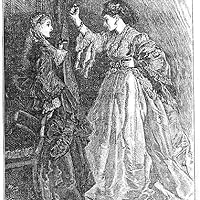
Really? Has she never heard of the French revolution? All those people, cavorting in ridiculous powdered wigs crawling with lice, who are dispatched to the guillotine in their shifts?

It's just so odd. Her discussion of "new age" ideas about health and hygiene in the US is completely off the mark in so many ways, as I can attest because I have witnessed it firsthand. Among other things, she talks about tanning as if she has never heard of skin cancer. Yes, there are still tanning salons in the world. There are also lots of people who won't go near them and wear sunscreen every single day.

I did learn a few things--for instance, aristocratic women used fans to wave away bad air, thought to be a major source of contagion; that's why they were such a common accessory. Also, dresses got shorter at the beginning of the 20th century because "domestic science reformers criticized long hems that brushed in the dirt and dust, bringing potential disease from the street directly into the home" (300). And "eugenicists considered preventive medicine to be thwarting their aims by artificially prolonging the lives of the unfittest" (311), which I think probably helps explain why so many Republican law makers object to Medicaid: it keeps alive people they really believe should die.

But that's not enough to justify reading the whole book. On the topic of purity, Purity and Danger: An Analysis of Concepts of Pollution and Taboo by Mary Douglas is far superior; on the topic of cleanliness, The Dirt on Clean: An Unsanitized History by Katherine Ashenburg is better.
Profile Image for Missy.
26 reviews
June 24, 2009
This fat little book was full of interesting tidbits, and as a bonus, I'm pretty sure my library copy has actaully been dropped IN THE BATHTUB at some point. I had been eagerly anticipating reading this, and although I certainly learned some new things, most of it was rather slow going...More academic than I had imagined. (Then, just when I had gotten used to the pace and exhaustive amount of detail, it practically fast-forwarded through the 20th century and I felt like the ending was quite abrupt.)
Profile Image for Erin.
36 reviews
April 14, 2020
It was an interesting book and the amount of detail in many of the sections, especially Ancient Egypt and Medieval Europe was excellent.

It was frustrating that it was billed as a global history of hygiene when essentially it is a European history, and mainly dealing with Britain. I think there's nothing wrong with choosing a small geographical scope (especially when the time horizon is Neolithic era to present day in 350 pages) but it shouldn't claim to be global.

I also found that, while it was focused on hygiene and concepts of purity, I would have liked a further explanation as to why beauty is lumped in with hygiene. In certain chapters it made a lot of sense when cosmetology was seen as preventative medicine and part of cleanliness routines (which you could say about modern skincare regimens) but it sometimes felt like the focus on concepts of cleanliness was lost a bit.

Overall, definitely worth a read if you're interested in history from a unique perspective, and probably especially interesting in the current pandemic.
Author 3 books89 followers
September 10, 2009

I should note that I speed read this for work, so I didn't get to really immerse myself in it as much as I like to with pleasure reading. But still, this one provides an interesting historical look at the interwoven notions of physical and spiritual hygiene. I may have to come back to it and give it a proper read.
Profile Image for Araminta Matthews.
Author 18 books57 followers
July 17, 2012
I found this book to be a much needed scholarly journey into the history of hygienic practices amongst various ancient (and modern) cultures of Western Civilization. At the same time, I felt the Eastern representation was decidedly lacking and could have been present in this book. Still, I'm completely inspired to make my own Balm of Gilead, now.
Profile Image for Sydney Martinie.
13 reviews2 followers
May 22, 2018
Good book but reads like a dissertation. Many references for the same idea so it gets repetitive but overall a very interesting read.
Profile Image for Siskiyou-Suzy.
2,143 reviews22 followers
July 21, 2021
I got all obsessed with delving deep into mundane, daily topics once. I really, really felt like things were not real (not real in the sense we typically use that word, but it didn't "count") if I did not understand them and then execute them in the perfect way. OCD.

Anyway. This book was part of that process but ooh did I enjoy reading it. I love histories of every day like this. I love knowing the details.
Profile Image for Leslie.
17 reviews1 follower
July 3, 2017
Interesting in parts, but the book requires a fair understanding of philosophy and its histories to follow it properly. I was also more interested in 20th century hygiene history and that was only a small part of the book - perhaps I just wasn't the right audience.
Profile Image for Janet.
796 reviews5 followers
May 30, 2008
I was only able to skim through this book but what I did read was very interesting and fascinating. When I get some extra time, I'll definitely re-order it again.
Displaying 1 - 11 of 11 reviews

Can't find what you're looking for?

Get help and learn more about the design.