As part of his continuing adventures filmed for the BBC TV series Zoo Quest, David Attenborough ventured to the Northern Territory of Australia. It is an area that extends for a thousand miles from north to south and nearly six hundred miles from east to west. Dripping, waterlogged jungle covers the north of the Territory, while a ferociously arid desert lies in the south. This third volume from Attenborough’s chronicles of his early expeditions finds him meeting Aborigines, going walkabout in the bush, learning the secret craft of the artists of Arnhem Land, and seeking out a trio of canny no-hopers of debatable origin. In unique Attenborough style, Quest Under Capricorn paints a compelling and fascinating picture of life Down Under.
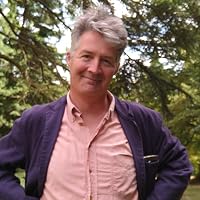
Sir David Frederick Attenborough is a naturalist and broadcaster, who is most well-known for writing and presenting the nine "Life" series, produced in conjunction with BBC's Natural History Unit. The series includes Life on Earth (1979), The Living Planet (1984), The Trials of Life (1990), Life in the Freezer (about Antarctica; 1993), The Private Life of Plants (1995), The Life of Birds (1998), The Life of Mammals (2002), Life in the Undergrowth (2005) and Life in Cold Blood (2008).
He is the younger brother of director and actor Richard Attenborough.
This 'Quest' book from David Attenborough is different to the others I have read, in that it's primary focus is different. Rather than being a quest to capture animals for zoos and museums, or to photograph animals, it is more an anthropological study. I note that most of his other quest books contain 'Zoo' in the title, so it's not like there wasn't a clue. It was published in 1963.
The topic of Capricorn passes through Australia about 2/3 of the way up, and given the area Attenborough spends his time I guess the title means literally around the line of Capricorn, rather than below. The areas he spends time are all in the Northern Territory, between Darwin and Alice Springs, around Alice Springs - west and east. His focus is almost solely Aboriginal culture and art.
That being said, despite the time wasted reading it to myself in his voice, this was a quick read of around 160 pages, accompanied by a few colour photographs and a lot of black and white photographs of generally very good quality.
Attenborough gets the balance between the European history and the Aboriginal history right for me, and mixes in small amounts about the animals and birds with the main Aboriginal culture and art focus. He is very sensitive in his approach with the Aboriginal communities, and in many ways portrays views ahead of his time with regard to the respect they deserve and the effects of colonialism on them.
Cleverly, Attenborough was able to gain the trust of certain elder Aboriginals who were able to share many of the more secret elements to the culture that were forbidden to women and uninitiated younger men, on the basis that Attenborough was neither of these. This was surprising, but obviously a great win for the collecting and recording of this information from an anthropological perspective.
This book tells the story of Attenborough’s adventures in the Australian outback, and it’s interesting because there’s not a particularly huge focus on animals, although they do feature in it here and there.
Mostly, though, it’s all about the characters that he met along the way. Considering that he took this trip as a young man and Australians are notoriously epic and full of character, there’s a lot to like here. I mean, even though the wildlife takes a bit of a backseat, I didn’t feel as though it suffered because of it. Awesome!
A document of David Attenborough's visit to the Northern Territory on Australia, this book is written with his typical wit and charm. At first, I was wary of the book, since there is very clear danger in a wildlife television presenter discussing culture and indigenous societies. However, Attenborough mostly avoids this, presenting indigenous people not as a exoticized or fetishized, but as unique cultures with their own unique understandings. In many ways, Attenborough seems ahead of his time; it is surprising that this book was written in 1963. Although not perfect - Attenborough seems to believe in an inevitability to the colonization of Australia - he discusses the harmful effects of colonization on indigenous societies, as well as the loss to humanity when distinct cultures and societies vanish.
It starts out as satirical ramblings about Attenborough's misadventures in Northern Australia, but leaves the reader touched by his appreciation for the life and culture of Australia's Aboriginals. You can hear his world-famous voice loud and clear in his writing, as well.
Bit light on the wildlife but really good on the anthropology particularly in respect of aborigine culture in the second half with some interesting historical insight on the settlement of the continent too, e.g. its telegraphing.
This is a great book, I liked it much. The author is a great naturalist, but he is also a great master of literary word with the subtlest and most humane humor. Everything is mixed in such a small book! - the historical sketch of the Northern Territory, and a description of its hugeness, roads, unparalleled flora and fauna, great depiction of local unique aborigines and their own, unique and original art. It is a pity that the book ended so quickly... Although there is a lot of work by the author, which can be read with the same great pleasure and in one breath.
Listened to as an audiobook, read by the author. Attenborough's voice is mesmerizing so I highly recommend the audiobook if you can get it.
Attenborough talks about his journey to northern Australia. Interesting encounters with the aboriginal people, the wildlife, and the denizens of an outback ghost town.
Great as a short, non-fiction biographical story. Very well told.
This was good but not great. Everything else I've read by Attenborough so far is 5-star worthy. I guess you can't hit the jackpot every time. I will still continue to read Attenborough until I've exhausted his collection.