Jump to ratings and reviews
Rate this book

My Confession: Recollections of a Rogue

Rate this book
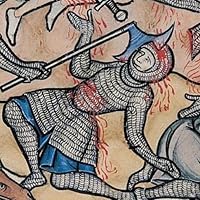
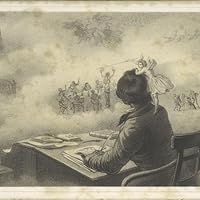
Samuel Chamberlain's My Confession is a classic, ribald tale of nineteenth-century life. Perhaps the best written account of a soldier's adventures and misadventures in the Mexican War and its aftermath, this unexpurgated edition is now available for the first time, complete with over 150 of Chamberlain's wonderful textual illustrations reproduced in full color. If you enjoyed the Chamberlain paintings assembled in Sam Chamberlain's Mexican War:The San Jacinto Museum of History Paintings, you will be fascinated by the tale in My Confession that goes with it and beyond it into Chamberlain's adventures with the scalp-hunting Glanton Gang (the story that Cormac McCarthy used as the basis for his celebrated novel Blood Meridian).

My Confession is the story of Samuel Chamberlain, a Boston boy who hoped to be a theological student but could not control his amorous and pugilistic inclinations and so left for the West. According to his "Confession," he seduced countless women in the U.S. and Mexico, never missed a fandango, fought gallantly against Mexican guerrillas, and rode with the First Dragoons into the Battle of Buena Vista. His remarkable story is pure melodrama, but Goetzmann has proven by his painstaking research that much of it is true.

The editor's annotations are a valuable contribution to an account that virtually every historian of the Mexican War has used.

400 pages, Hardcover

First published January 1, 1850

161 people are currently reading
2571 people want to read

About the author

Samuel E. Chamberlain

2 books2 followers

Ratings & Reviews

What do you think?
Rate this book

Friends & Following

Create a free account to discover what your friends think of this book!

Community Reviews

5 stars
193 (44%)
4 stars
155 (35%)
3 stars
67 (15%)
2 stars
12 (2%)
1 star
6 (1%)
Displaying 1 - 30 of 61 reviews
Profile Image for Sara.
181 reviews47 followers
January 15, 2015
That Samuel Chamberlain’s My Confession inspired the novel Blood Meridian by Cormac McCarthy, is the least interesting thing about this strange autobiography. I mention it early, so I don’t have to bring it up again.

Chamberlain hand-wrote and illustrated the tale of his experiences between about 1844, when he was an unruly 16-year-old leaving his family home in Boston, to 1849 and his defection from the Glanton gang, a band of mercenary scalp hunters who roved the borderlands of the Southwest in the wake of the Mexican-American War. In between these bookend events, he bummed around Illinois and New Orleans, eventually joined the First United States Dragoons and fought in a number of battles and skirmishes of the Mexican-American War, philandering with as many ladies as possible all along the way. He peppers his autobiographical account with healthy doses of myth and hearsay and even includes one heck of a good ghost story.

Chamberlain apparently wrote his Confession (subtitled The Recollections of a Rogue) sometime after about 1850 when he had returned to Massachusetts, but before the onset of the Civil War, in which he would again fight and earn the rank of brevet brigadier general. He eventually would serve as a warden of state prisons in Massachusetts and Connecticut where, I’ve read, he was a conscientious and sympathetic advocate for inmates, particularly veterans. He died at age 78 in Worcester, Massachusetts in 1908.

I am not familiar enough with 19th-century literary tropes to assert this with more specificity, but it seems fairly obvious that Chamberlain penned his account concertedly in the mode of adventure tales of his day. Clearly he sees himself as a rather likeable anti-hero (a rogue, indeed), who had many adventures, many loves, faced many foes and lived to tell the tales. He was frequently in the guardhouse for some transgression or other during the war. He was a hothead (not to mention a teenager) and could never resist getting into a fight if the opportunity presented itself. He narrates most episodes in his tale with a cheeky bravado and often a tone of humor as if he’s winking at his reader.

For all his swagger, Sam comes across as a fairly sensitive individual. The more upsetting events receive a kind of matter-of-fact gravity: rapes and mutilations of local women; the murder of a Mexican priest by a drunken U.S. soldier; what he calls the “massacre of the cave”, where Arkansas volunteer soldiers slew men, women and children in a cave near Saltillo. As Sam says: “The direct cause of the massacre was the barbarous murder of a young man belonging to the Arkansas Regiment. But this murder was undoubtedly committed in retaliation for the outrages committed on the women of the Agua Nueva ranch by the volunteers on Christmas Day.” (88)

Chamberlain was not unresponsive to the terrible human cost of war on both sides. His untrained but expressive, altogether fascinating paintings also demonstrate a good amount of emotional receptivity.

And yet the narrative overall tends toward this buoyant, devil-may-care tone. I attribute it some to Chamberlain’s youth; he was 16-21 during the events of the narrative and in certain harrowing situations acknowledged himself as “nothing but a boy”. (294) But he was no longer a boy when he wrote the account. And so I tend to attribute the tone – which seems weirder and weirder as the tale progresses and the events become distinctly less heroic and more upsetting – to the conventions of the genre Chamberlain imagined himself to be writing within.

The narrative takes a concerted swerve toward the desperate and brutal when Sam’s lover, Carmeleita, is kidnapped by a villain known as El Tuerto*; a man she was coerced into marrying before she gladly ran off with Sam, and one with whom Sam had previously had a knife fight. Chamberlain attempts to track them down, but then hears of her terrible fate: “El Tuerto had carried Carmeleita to a lone ranch where she was outraged by Canales’ whole gang of demons and then cut to pieces!” (216)**

Pretty much from this moment on in the text, bravado starts to sound forced and hollow as Sam’s circumstances worsen and worsen. The war ends, and he joins a wagon train to California as a ranger but, likely deep in a depression from Carmeleita’s savage end, he acts belligerent and unsoldierly enough that he is eventually strung up by his thumbs. Mercifully one night a mysterious lone rider, who has been following the train, cuts him down; a fellow known as Crying Tom Hitchcock, a truly intriguing character who speaks a mishmash of languages, mimics an array of animal calls and, as his nickname implies, frequently cries copious and unexplained tears.

And so Sam deserts the army and follows Tom, who turns out to be a recruiter for John Glanton. Glanton’s rather terrifying group of desperados were officially employed by the Mexican government to kill “hostile” Apaches***, but in practice they killed (and scalped) pretty much anybody they could get something from. Chamberlain had the good sense to be wary of Glanton’s unscrupulous, often drunken decision-making. And he was appropriately distrustful of Glanton’s sociopathic second-in-command, Judge Holden, who, Chamberlain says, he “hated…at first sight”. (272)

Nevertheless he tagged along with this highly suspect crew for, even he seemed to feel, longer than was good for him. You get the impression he didn’t know what else to do with himself and that, before witnessing some of their depravity firsthand, he found Glanton’s ruthless reputation somewhat romantic.

It is possible Chamberlain was called away from the task of writing his narrative by the Civil War. Given that he lived a relatively long life and never picked the task back up, I could also easily be persuaded that he abandoned the project out of disaffection. As the events become more dire and less heroic, the adventurous tone of the narrative attenuates and grows brittle.

Writing this narrative was an act of memory for Chamberlain. Remembering war exploits is one thing; war is violent and horrifying but it is also societally-sanctioned and there is a long history of literature valorizing appalling deeds, and the people who committed them, when done in the name of war. However much I find lionizing depictions of war (along with war itself) juvenile at best, immoral at worst, the practice is not without many literary precedents.

But a different game altogether is recalling the mutilation of a lover, personal sorrow and humiliation, and a stint with mercenaries notorious for their sadism and wanton cruelty. Perhaps it’s my own reading and a modern psychological sensibility, but I felt like I could detect the disparity between Sam’s adopted authorial voice and how he really felt about these latter events. I imagine him getting to the point in his story when Carmeleita is murdered and then realizing the “fun” part of his tale is over. But he has to keep writing because this is the task he’s set himself and of course everybody wants to hear about his exploits with the infamous Glanton gang. And so he continues. But it just gets worse and worse. Until finally he realizes his story is not a glorious adventure at all, he doesn’t particularly want to relive it anymore, and so he simply stops. The final pages of his Confession end with a definite whimper as Sam flees the Yuma’s massacre of Glanton’s boys, drags himself alone through the desert and nearly dies of thirst.

All in all, this is an absorbing primary source that really cries out for a fully annotated version; one that, to the extent it’s possible, corroborates or refutes some of Sam’s depictions, separates his fact from his fiction, and fleshes out much of the historical context he glances over. I found Sam, as a figure, both sympathetic and repellant, which definitely kept me reading. This source deserves to be much better known outside of enthusiasts of military history. And Sam’s paintings alone are worth picking up this book; for his renderings of battle, sure, but also simply for the northeast Mexican landscape and architecture, a milieu he handles visually with fine detail and one he seems to have admired.

* Who was indeed one-eyed.
** For information about the military leader, Antonio Canales Rosillo, this article provides a good overview.
*** “Hostile” in this context vis-à-vis the Mexican government, with whom the Apaches had been waging war since about the 1820s. The governments of several north Mexican states offered bounties for Apache warriors, which eventually meant payment for any scalps that could plausibly be passed off as Apache.
Profile Image for Christopher.
730 reviews269 followers
September 7, 2016
Spoilers for this book and Blood Meridian follow.

Let's be honest. The only reason you'll read this book is if you're obsessed with Cormac McCarthy's masterful Blood Meridian, as I am. Otherwise I would not have sought out this obscure book that sells for no less than a hundred bucks. But it has the unique distinction of being the primary inspiration for one of the best novels by a living writer, and so I sought and so I read.

Blood Meridian is a bleak and violent fictional account of the historical Glanton gang, a band of scalphunters hired by the Mexican government to kill Comanche warriors. Long story short, the gang gets greedy, starts killing everyone, and comes to a bad end. The main character in the book is known only as "the kid", short on biography and personality, mostly just a witness to everything that happens, and the main antagonist (pretty much everyone is an antagonist, actually) is Judge Holden.

Now, to say Chamberlain's book is McCarthy's primary inspiration is a bit misleading. Blood Meridian's inspiration can't really be confined to a single book, as it draws from Dante, the Bible, Moby Dick, Paradise Lost, proto-Christian gnostic texts, &c. But Chamberlain is the primary historical source for the novel's nonfictional characters and events. Chamberlain is the kid; Glanton is Glanton; Tobin appears, as do several other characters. But most importantly, this is the only historical reference to Judge Holden, who seems nearly as terrifying in the historical account as in McCarthy's novel.

The first three-quarters of the book were of little interest to me, through no fault of its own. It is a gripping bildungsromantic memoir about Chamberlain's military experience during the Mexican-American war. But my mind was so singly tracked that it wasn't until he deserted and joined up with the Glanton gang of scalphunters that my attention was really piqued. Out of 300 pages, here is the main payoff:

The second in command, now left in charge of the camp, was a man of gigantic size called 'Judge' Holden of Texas. Who or what he was no one knew but a cooler blooded villain never went unhung; he stood six feet six in his moccasins, had a large fleshy frame, a dull tallow colored face destitute of hair and all expression. His desires was blood and women, and terrible stories were circulated in camp of horrid crimes committed by him when bearing another name, in the Cherokee nation and Texas; and before we left Frontreras a little girl of ten years was found in the chapperal, foully violated and murdered. The mark of a huge hand on her little throat pointed him out as the ravisher as no other man had such a hand, but though all suspected, no one charged him with the crime.

Holden was by far the best educated man in northern Mexico; he conversed with all in their own language, spoke in several Indian lingos, at a fandango would take the Harp or Guitar from the hands of the musicians and charm all with his wonderful performance, and out-waltz any poblana of the ball. He was 'plum centre' with rifle or revolver, a daring horseman, acquainted with the nature of all the strange plants and their botanical names, great in Geology and Mineralogy, in short another Admirable Crichton, and with all an arrant coward. Not but that he possessed enough courage to fight Indians and Mexicans or anyone where he had the advantage in strength, skill and weapons, but where the combat would be equal, he would avoid it if possible. I hated him at first sight, and he knew it, yet nothing could be more gentle and kind than his deportment towards me; he would often seek conversation with me and speak of Massachusetts and to my astonishment I found he knew more about Boston than I did.

[...]

Judge Holden mounted a rock for a rostrum and gave us a scientific lecture on Geology. The Scalp Hunters, grouped in easy attitudes, listened to the "Literati" with marked attention. The whole formed an assemblage worthy of the pencil of Salvator Rosa. Holden's lecture no doubt was very learned, but hardly true, for one statement he made was "that million of years had witnessed the operation producing the result around us," which Glanton with recollections of the Bible teaching his young mind had undergone said "was a d--d lie."


The judge of Chamberlain's account has more in common with McCarthy's than I expected. The fictional judge's description was lifted straight from history: huge and hairless, with an aptitude for music, dance, and violence, and a mind for science and arcane trivia. The only difference is a significant one, however: the historical judge was only a man, a "villain"; McCarthy made him a straight up demon.

If you can get a hold of this book and you're a fan of McCarthy, it is well worth your time to read the last forty pages, to witness the historical characters and events for yourself. You'll get to see several scalpings, Glanton's end at the Colorado River ferry crossing, and a tense showdown in the desert between the judge and Sam Chamberlain.
Profile Image for Josh.
32 reviews136 followers
February 14, 2008
When I went to pick up a copy of My Confession from the library, I was expecting some dusty old paperback filled with dry accounts of long-forgotten troop movements. The librarian, however, handed me a massive tome - nearly a foot by a foot-and-a-half closed - which I actually tried to read on the bus, threatening to take up two seats if I opened the book flat. I got some odd looks that month and my arm still hurts from lugging it around.

This lushly illustrated and questionably reliable autobiography of Mexican-American War veteran (and later civil war brigadier general) Samuel Chamberlain served as the basis for Cormac McCarthy's epic Blood Meridian.

This sweeping-but-frequently-misspelled narrative is full of bloody battles, ghosts, passionate love, saturnalia, heartless massacres, narrow escapes and a confrontation with the devil himself. It attempts the episodic grandeur of Homer, the down-home wit of Twain and, with the aid of perhaps a dozen or more "senoritas," a flavor of Don Juan.

Despite his accounts of wartime atrocity and the murder of innocents, Chamberlain remains ever-chivalrous throughout the story. But, much like his descriptions and paintings of battles and locations he's historically known to never have seen, they remain a constant question and come off as more self-aggrandizement - most times obliviously, but sometimes intentionally for comic effect. After all, Chamberlain's motivation for the book was a public demand for Mexican War inspired romance-adventures, which, unfortunately, had died down by the time the book was finished and the Civil War had begun.

For McCarthy fans who are curious about this source material, be aware that Chamberlain's time with John Glanton's gang of scalp hunters is only covered by the last few chapters of this +300 page book, the majority of which covers his time with American dragoons in the Mexican War. Those few chapters, however, are a fascinating and enlightening look at the inspiration of McCarthy's opus - particularly the accounts of Judge Holden who's description as a pale, fleshy, giant with an unmatched intellect and propensity for child murder has been surprisingly little-exaggerated by McCarthy.
Profile Image for Richard.
Author 12 books329 followers
January 20, 2024
These are the partial memoirs of Sam Chamberlain, who fought in the 1846-48 Mexican-American War and then set out for California with a group of bloodthirsty fortune-seekers. That part of the book provided Cormac McCarthy with inspiration for Blood Meridian, and, in fact, the real John Glanton and Judge Holden appear in these pages. Chamberlain was an amateur painter as well as a soldier, and his lively renditions of his many adventures illustrate this edition of the book. There's some question as to the veracity of many of the tales Chamberlain relays here (and there are some whoppers), but true or not, the stories are full of casual savagery and constant derring-do and provide an entertaining ground-level view of the war and a soldier's life in this period of history.
Profile Image for ~☆~Autumn .
1,200 reviews174 followers
June 9, 2023
I just finished this and enjoyed it far more than I expected I would. He handles some very horrifying situations and yet I didn't feel like reading them left "a scar on my mind" like so many books do these days. At the end I was very surprised that his wife let him name his daughters after women he had known in Mexico! His drawings were fascinating and added so much interest. I was surprised he was able to keep up with his sketch book and pencils or pens.

I recommend this for everyone.
Profile Image for Jesse.
154 reviews39 followers
August 13, 2023
It’s unfortunate that this book is now almost exclusively read for its connection to Cormac McCarthy’s BLOOD MERIDIAN, because Chamberlain is an engaging author and an interesting historical figure in his own right. Written with a heavy flair of adventure-romance and military hubris, MY CONFESSION recounts Chamberlain’s rebellious early life in Boston before his departure west, where he volunteers for, and later enlists in, the Mexican-American War. Throughout the years covered here (mainly 1846–1848), his military rank fluctuates. He was prone to insubordination and compulsive love affairs, often causing his demotion, but he also had a hero’s heart (if his own account can be believed) and his bravery in battle also occasionally entailed a promotion. His skill at knife-fighting earned him the nickname “Peloncillo Jack,” and he was, according to himself, a highly respected though often roguish soldier. Ultimately, though, after particularly harsh treatment from a superior, he decided to desert his regiment and join John Glanton’s gang of scalp hunters.

Chamberlain’s depiction of the Glanton gang, and especially of Judge Holden, is no less nightmarish than McCarthy’s. Whereas the rest of MY CONFESSION reads like an early Melvillian romance, despite some spurts of military brutality, the chapters dealing with Holden seem to take on an air of dread and impending doom, much like in BLOOD MERIDIAN. Holden is described almost mythically—an irregularity in Chamberlain’s otherwise grounded prose. Like McCarthy’s Holden, this ostensibly real Holden is a murderous pedophile with an encyclopedic mind; like McCarthy’s Holden, he performs feats that imply his immortality and make him appear more as a specter of death than a man. Although he only occupies about 30 pages of MY CONFESSION, he overtakes the entire book (and makes it obvious why McCarthy chose to steal him).

MY CONFESSION ends abruptly after an unsettling episode involving Holden. Deciding to abandon Glanton’s gang because of its senseless violence, Chamberlain and three other men (including Ben Tobin, who also appears in BLOOD MERIDIAN), flee from Fort Defiance, where the gang has massacred the Native owners of a ferry and begun running it themselves at extortionist prices. Later realizing that they narrowly escaped a retaliatory massacre by the Natives, Chamberlain and his company continue on toward California, believing everyone in their old party dead. Days later, they spy Holden, seemingly the sole survivor of the massacre, alone in the desert. Holden joins them, but he soon attempts to steal their horses and supplies, although his horse kicks him off immediately, allowing his capture. Chamberlain and the men tie Holden to an abandoned wagon wheel and leave him for dead; however, Chamberlain’s conscience gets the better of him, and he backtracks several miles to untie the Judge, insisting that his kindness not be mistaken for forgiveness. He leaves Holden horseless and without water, alone in the desert. Days later, camped in Vallecita some fifteen miles away, Chamberlain is startled awake by Tobin, who declares that Holden has appeared and is roasting one of Tobin’s mules over a campfire. Chamberlain implies that some Natives must’ve found him, but the Judge’s horrific omnipresence seeps through the page. Even more discomforting, Chamberlain and Tobin decide not to kill Holden, but rather join him in the mule roast, laughing, and insist that he not follow them when they depart the next day. Chamberlain’s account ends here, as he and his men leave Vallecita with the Judge waiting behind them…
Profile Image for Michael Sova.
135 reviews3 followers
April 17, 2022
4.50

I may have come to Samuel Chamberlain’s My Confession for its Blood Meridian connection, but I stayed for the magisterial storytelling. It’s an antidote to the stupor brought on by the banality of historical texts. History itself is full of vivid color, but when reported through the lens of retrospection it can sometimes be painted in black and white. There’s an austere nature to this approach, which can turn many people off. But that’s where Chamberlain comes in.

His firsthand account of life as a soldier on the Texas-Mexico border fighting for his country etched his name in the annals of 19th century folklore. Even more so now because people like me seek it out upon learning of its influence on Cormac McCarthy. As significant as that connection may have been, the characters that form McCarthy’s work are relegated to footnote status here, occupying only the last few dozen pages. So, don’t come to this work expecting a revelatory analysis of the Glanton gang. But you'll still find what McCarthy unearthed on his way to forming his own literary nightmare.

Conversely, My Confession shows a romanticized wild west in a country growing too large and too fast for its flabby muscles to keep up with the load. And Manifest Destiny was just an excuse to rip through the land and conquer it at whatever the cost. But hey, God was on their side. Chamberlain was too young to get caught up in the politics. He was just a boy of sixteen from Boston looking for a fresh new doll each night to waltz with, arm in arm. He was quite the playboy and he’s made sure we won’t forget it. But he’s also made sure we won’t forget about his harrowing exploits, defying death in every battle. And there were a helluva lot of them. It all seems too farfetched to pass the smell test. Afterall, the winners are the ones who write the history books. But those who beat the odds and make it out alive, scars and all, have their say too.

As much as he may stylize a tale that glorifies his adventures and bolsters his American hero repute, he never shies away from an honest indictment of this life on the frontier. When speaking of a fellow man’s death on the battlefield, Chamberlain asserts: “This was considered accidental, but believed otherwise, as battles often decide private grievances, as well as those of nations.” To think that once you step on that soil you were prone to fire from all sides, including that of your own. Better not drop your guard on the enemy or slight the wrong man or you might find yourself within more than just the crosshairs of your country’s enemy. Perhaps the west tamed man as much as the other way around.
Profile Image for Noah P..
44 reviews10 followers
December 4, 2013
I began reading this around the time I began reading Blood Meridian by Cormac McCarthy, which was inspired by the final chapters of this book.

Originally, I started reading an edition published in the 1950s, which I borrowed from the Detroit Public Library. I began with the chapters that inspired Blood Meridian, the end of the book, then continued from Chapter 1. That specific book was stolen when I returned it -- yet another Detroit treasure lost to bandits. I suppose it's ironic considering the subject matter of the book.

This edition, which I currently have on inter-library loan from Alma College is excellent. The brief but thorough introduction by the Texas Historical Association provides the perfect context for this account. Many people have taken issue with the fact that other historic records conflict with Samuel Chamberlain's purported memoir. The introduction to this book beckons the reader to take this book as history -- rather than analysis of history. As with any memoir (I'm talking to you Theodore Roosevelt) things will be changed or left out altogether. While this does diminish its value as a "historic record," it does not diminish its value as "history." Keep in mind, that this book was written by a confessed scalp hunter late in his life. A scalp hunter who survived (and participated in) numerous massacres, and lived into ripe and respectable old age. It's not an almanac. It's a story. Take it as such.

I would close by noting that I am very excited to finish this very interesting story. This wonderful edition by the Texas Historic Society includes reprints of the original pages along with a transliteration for easy reading. Well done Texas Historic Society! Well done.
4,072 reviews84 followers
January 19, 2016
My Confession: Recollections of a Rogue by Samuel E. Chamberlain (Harper & Brothers 1956) (973.6) is the private memoir of a man born in 1829 in New Hampshire. He eventually became a prominent citizen and retired a brevet brigadier general in the Union army following the War of Northern Aggression. However, this memoir/journal is a narrative of the author's adventures "roaming and soldiering" for ten years in Mexico and the Old West and as a young cavalryman in the Mexican War from 1846-1848. Indian fighting and guerilla warfare - it's all here in this one of a kind first-hand story. My rating: 6/10, finished 5/7/13.
Profile Image for John.
767 reviews2 followers
February 5, 2018
Chamberlain's memoir of his Mexican war service as an enlisted Dragoon. A few chapters at the end deal with his escapades with the Glanton gang, which formed the basis of Cormac McCarthy's Blood Meridian. After reading this account of the atrocities committed by the Glanton gang, and by both sides in the Mexican War, nothing in Blood Meridian should come as a surprise.


49 reviews2 followers
November 10, 2010
This is a really cool memoir about a guy fighting and f---ing his way through the war between Mexico and the U.S. in the mid 19th C. Toward the end he joins Glanton's scalp-hunting band that is featured in McCarthy's Blood Meridian. If you like Blood Meridian you will like this book.
31 reviews
August 25, 2025
This book is much more intriguing if you’ve already read Blood Meridian. Chamberlain is unrealistically romantic in his perspective of himself in his story, but the whole book is wild anyway.

It really gets crazy when the Judge and the Glanton gang show up at the end - and crazier how much of a brutal mythical epic like Blood Meridian really was drawn from real events and people. Cool to see what a mind like McCarthy was able to do with a few snippets of their story
Profile Image for Jonathan.
96 reviews
August 3, 2024
Anyone who liked Blood Meridian or is interested in the wild west should read this book. Writen really well and is a insightful piece of history and on human nature.
Profile Image for John Hohman.
28 reviews
August 5, 2024
A literal home run of a story from the original Mr Worldwide. Sam if you're reading this, just know I'm a fan of your work.
Profile Image for Roger.
522 reviews23 followers
October 17, 2017
Samuel Chamberlain was a well respected person in Boston Massachusetts, a well regarded officer of the Union forces in the Civil War, married for over 50 years, who enjoyed a relaxing retirement in his large house in Worcester.

Before all this occurred, he spent time in the US Army in the Mexican War, where he was (from his own telling) known as Peloncillo Jack, and (if he is to be believed) got up to all kinds of scrapes, both military and on the field of love.

Recollections of a Rogue is a narrative written by Chamberlain just before the outbreak of the Civil War, in which he recounts his earlier adventures with some dash and bravado, in the melodramatic style of novels of the time.

Unlucky in his choice of paramour in Boston, Samuel leaves for his Uncle's farm in Illinois, where he is treated harshly. Never one to take a backward step, Samuel is forced to leave after a run-in with his Uncle and Cousin with an axe. As always in this narrative, the women take Samuel's side - but he is forced to leave, and after a few more adventures he joins the First Dragoons, and is marching off to Mexico.

While he does fight in the battle of Buena Vista in 1847, most of Peloncillo Jack's time in Mexico is spent in picket duty, garrison duty, and in ensuring the US Volunteer forces are not ravaging the countryside and inhabitants of Mexico. He not only must have been writing a diary, but also drew many pictures in a naive style, some of which are reproduced in this publication.

He recounts several close shaves with 'Guerillars', quite a few romantic interludes, and many scrapes with Army authority. These are usually set out in a way that shows Chamberlain is wrongly done by, with officers shown as capricious and cruel.

After one depredation too many, he deserts, and joins with the Glanton gang of scalp hunters, which is the part of this book McCarthy used as a source for Blood Meridian. He makes it clear that Glanton himself was a psychopath, probably due to outrages suffered early in his life - on a few occasions the gang vote down particularly barbarous plans that Glanton cooks up - and that Judge Holden was indeed the prototype of the Judge in McCarthy's book.

After a few short chapters of life with the Glanton gang, the narrative suddenly breaks off - Roger Butterfield surmises that this was the time when Chamberlain went off to serve in the Civil War, and he never got around to finishing his story. Which is a shame.

Recollections of a Rogue is a rollicking read, with adventure after adventure (in fact so many it's hard to believe at the end of his narrative he is still but a teenager). It also provides a fine first-hand account of life on the frontiers at a formative stage of US history.

Check out my other reviews at http://aviewoverthebell.blogspot.com.au/
This entire review has been hidden because of spoilers.
Profile Image for Richard Gray.
Author 2 books21 followers
April 30, 2019
As followers of Cormac McCarthy will probably know, Samuel Chamberlain’s memoir was used a primary text in the research for Blood Meridian . It’s much more than this, being a vital document of his adventures in the Mexican War. On one hand, it’s a slightly exaggerated tale – told in the style of the popular westerns at the time – of Chamberlain’s conquests, his violent encounters, and the various women he loved and was loved by in return. As an occasionally unreliable and fanciful first-hand account, it offers both a richly layered text and visual evidence of the massacres, the fighting, skirmishes, and other encounters of this period. Chamberlain was a reasonably accomplished artist, and the book is filled with sketches and gorgeous full-colour plates of his painting. Despite the swashbuckling front, the author was clearly impacted by these episodes: “I broke down completely and found myself blubbering like a child,” he recounts. “I had fancied myself a man, when I was nothing but a boy.” McCarthy fans will find the dark encounters with the Galton gang of most interest, especially given that it shows Blood Meridian to be a work of only partial fiction, with the horrors of the American southwest having a very real and tangible influence on Chamberlain.
Profile Image for Al.
1,658 reviews57 followers
June 19, 2018
Samuel Chamberlain left his safe New England home in 1844 at the age of 15 to seek his fortune in Illinois, or so he intended. Instead, he wound up in the Army fighting in the Mexican War and, if only half of his memoir is true, surviving more hair-raising and life-threatening situations than most people ever experience (not to mention liaisons too numerous to count). His memoir, with his own sketches for illustration, covers the period of his ramblings from 1844 and 1850. Experts, finding much contemporaneous support, believe his tale is substantially correct, with the normal allowances for exaggeration and occasional invention. It certainly makes for exciting reading.
One section of particular interest to me occurs at the end of the book when Chamberlain joins the murderous gang run by John Glanton and Judge Holden, rampaging through Mexico. This gang and its brutal deeds form the basis of Cormac McCarthy's amazing Blood Meridian and undoubtedly Chamberlain's memoir was one of his sources; in fact, several of the incidents Chamberlain recounts in his story actually appear in BM.

Profile Image for Steve.
5 reviews4 followers
March 21, 2008
Fantastic! An amazing view into the world of a dragoon in the mexican war. Parts were used as by Cormac McCArthy in the creation of 'Blood Meridian' (The Judge, Glavin et al. are historical characters who Chamberlain rode with.) Get the new Texas State Historical Association edition if you can - for the incredible reproductions of his paintings and drawing illustrating the text as well as for completeness. Earlier editions were apparently 'expurgated'.
Profile Image for Andrew Edwards.
14 reviews2 followers
August 14, 2008
I'm a huge fan of southwestern memoirs. The grit! The blood! The unexplainable psychological phenomena! This book has it all in spades. Murders, battles, ghost stories, love stories, horse stories, scalp hunters, dragoons, mexican lancers, armed hairless giants. What interests me most about these stories is their psychological realism, minus Freud. And the fact that they're awesome. Highly recommended. The last 40 pages are the primary source for Blood Meridian.
Profile Image for Adrian.
10 reviews5 followers
May 30, 2023
Dropped after the first 7 chapters. It has just been masturbatory fanfiction by the author of his own life. I feel like I’ve always heard this hyped up as an honest confession by a man who took part in the Glanton gang and inspired Blood Meridian. There is nothing honest about it and this is not a confession. It’s a racist and misogynistic gloat. I almost want to finish just to be able to say it doesn’t get better but I’m not willing to do that to myself.
Profile Image for Gill Eastland.
9 reviews5 followers
January 26, 2014
My gosh this is a brilliant screen play for a movie on the US-Mexican War. IT is a great read and great fun. Belongs on every shelf of anyone who reads personal accounts of any war, let alone the war of 1846. Where is Hollywood when you need them?
26 reviews
June 25, 2018
Absolutely fascinating on its own, and even more incredible to digest all of it's ties to Blood Meridian. The Judge and the Kid are very real. Will spend whatever it takes to get my own copy of this book.
Profile Image for Ronald Schulz.
Author 5 books39 followers
April 18, 2025
Be not squeamish and read to the end.
My Confession: Recollections of a Rogue by Samuel Chamberlin exposes the darkest shades of human behavior, as well as the irrepressible jaunty attitude that helps us survive it. I’m always intrigued by honest, self-revelatory memoirs and believe it is important to withhold judgment until we can understand the author’s situation and perspective.
This book will trigger you, and become a seasoning, growth experience, invaluable to help the brave reader understand how friends and lovers can betray, enemies can change into helpers, and even the worst, murderous fiends, like the indiscriminate scalp hunters described toward the end, can show a degree of concern and mercy at times.
As a student of deep history, I was not disappointed until the book suddenly ended. Too soon, as the author-protagonist was on the cusp of a new adventure in California’s gold rush!
I still hope to learn more of his adventurous and harrowing life, but it appears this was his only book, unpublished until it was discovered in a curio shop long after his death. The initial publication left out the sexy parts, and we are lucky that those accounts survived, as so much of our species' sexual history did not, obliterated by overzealous moralists who have robbed us of a deeper understanding of our heritage. Along with his artwork, the author’s complete narrative survived to be revealed to us in more recent publications.
Profile Image for Trey S.
196 reviews1 follower
June 16, 2023
I read this book after hearing parts of it influenced blood meridian. This book is essentially a journal of this man, Samuel Chamberlains journeys in Mexico and the south west during and after the Mexican American war. Reading a war memoir book, I guess that this is what it could be called, was really fun. It was my first time really doing that and now I wanna read more like this. It’s more personal than reading about the whole thing or a bigger picture. Onto this man’s life and story, it’s surely interesting. I can’t take everything he said as full truth, because the publisher did say he lies a bit in a note at the end. Also because a lot of things just can’t be verified true or untrue, at least as far as I know. If you read it as a true story it’s fun or even if you read it as true with minor/fake embellishments, it’s still really fun. This book was pretty quick to read. Some parts were better than others, like reading about the battles was more fun than him putting out a fire for instance but even that was still fun. There were no points in this book that were a slog to get through. Judge Holden makes an appearance in the last chapter and so does the Glanton gang. It’s all really cool to read about. I’d recommend this book to anyone who wants to get into war memoir/story type books.

4.5/5
Profile Image for J Pearson.
53 reviews
November 4, 2025
Well--

Three quarters of the book was a very interesting personal memoir of the Mexican-American war of 1848 as told by a young (teenage) Bostonian who took part in it. During these sections, I was really struck by the disorganized, thuggish mess the military campaign was with out-of-control volunteer cavalry forced and drunken officers, cowardices and personal beefs. The last quarter of the book takes on a different tenor when he leaves the Army at the conclusion of the war and remains in Mexico and the border region to join up with Glanton's gang of scalp hunters hired by the Mexican authorities to fight Apaches. It becomes the actual basis for Cormac McCarthy's Blood Meridian, complete with many of the same characters-- Glanton, Judge Holden, and Tobin, the defrocked priest-- and same plot points, including capturing the ferry.

Wow.

But McCarthy also said 'Books are made of other books."
19 reviews1 follower
June 24, 2025
Interesting insight

Read it to see the influence it had on Blood Meridian. The Glanton Gang and Judge Holden don't show up until the last 50 pages.

The author is a bit of a happy go lucky chap and his conscience doesn't seem all that impacted as he commits various war crimes and atrocities. Some stuff does seem to haunt him but he gets over it quick.

This book has no ending it just stops suddenly as in an editor's note it said that he got distracted and never came back to it.

It's an interesting enough read but some sections are kind of repetitive, kind of like Blood Meridian but it feels more like trying to be complete in telling the tale rather than an artistic flourish.

Also I never feel like I fully believed the author, as in he glosses over some details and his own heroic exploits are exaggerated.
Profile Image for Derek Frasure.
131 reviews13 followers
November 9, 2021
Really cool historical document and literary memoir documenting Samuel Chanberlain's experiences during the Mexican-American war. This is full of romantic melodrama, and is expertly styled as a swashbuckling misadventure. Chamberlain at once is intimately involved in the atrocities he describes and at the same time a moralizing observer of the ravages of war and expanding American capitalism. There's some bullshit mixed in (his fight with a ghost), but overall this is an amazing primary document for an account of that conflict. The editors make the bizarre choice to include some obvious fabrications, but excise other pages for being false. It's an inconsistent approach and annoys me as a reader wanting the full text.
Profile Image for Dacky2.
121 reviews
September 5, 2025
Like most, I found my way here because of Blood Meridian. This is one of the scariest, most unhinged autobiographies of the West I have read. Things were completely out of control and hideously dangerous. Even more disturbing is how the author keeps his sense of humor, with a certain detached pity for the victims. He spares no punches, judges all to his own admittedly skewed standards, and politely leaves graphic language and description out, but he sets the scene so eloquently that the reader has space to fill in the blanks and explore his own dark imagination. Also found it wild that Cormacs Blood Meridian is based on the last 15% of this book. I was pleasantly surprised at how accessible the language and writing style is, considering the period it was written in.
262 reviews1 follower
July 28, 2022
I came for the Glanton Gang, but enjoyed the Mexican-American war stories, encounters and characters(although much seemed to be fabricated or embellished but perhaps was actually fact) leading up to when Chamberlain joined the Glanton gang. I pretty much had to wait for the final 30/40 pages besides one mention of Glanton much earlier in the story. The ending was a bit abrupt, but overall a great read especially if you enjoy Mexican-American War history or cival war history. I really enjoyed it overall, and if not for this book, we may never have been blessed with Blood Meridian.
Profile Image for Hagan Wilson.
54 reviews
December 1, 2024
First read:
Chamberlain is an absolutely stellar storyteller, really feels like you’re just hearing a story from a good friend who’s always getting into some trouble as you read this one. The drawings are a nice supplement as well, good choice on his part to add those. I appreciate the minimal edits from the publisher here, this really is a story that speaks for itself and needs the room to do so. Probably the best book I’ll read all year
This entire review has been hidden because of spoilers.
Displaying 1 - 30 of 61 reviews

Can't find what you're looking for?

Get help and learn more about the design.