

What do you think?

Jump Back, Honey: The Poems of Paul Laurence Dunbar
Young readers will rejoice in a vibrant collection of classic poems compiled to create a stunning tribute to one of the premier Black poets of all time.
Hardcover
First published September 15, 1999
About the author
Paul Laurence Dunbar
407 books138 followersPaul Laurence Dunbar (June 27, 1872 – February 9, 1906) was a seminal American poet of the late 19th and early 20th centuries. Dunbar gained national recognition for his 1896 Lyrics of a Lowly Life, one poem in the collection Ode to Ethiopia. In 2002, scholar Molefi Kete Asante listed Paul Laurence Dunbar on his list of 100 Greatest African Americans.
Dunbar was born in Dayton, Ohio to parents who had escaped from slavery; his father was a veteran of the American Civil War, having served in the 55th Massachusetts Infantry Regiment and the 5th Massachusetts Colored Cavalry Regiment. His parents instilled in him a love of learning and history. He was a student at an all-white high school, Dayton Central High School, and he participated actively as a student. During high school, he was both the editor of the school newspaper and class president, as well as the president of the school literary society. Dunbar had also started the first African-American newsletter in Dayton.
He wrote his first poem at age 6 and gave his first public recital at age 9. Dunbar's first published work came in a newspaper put out by his high school friends Wilbur and Orville Wright, who owned a printing plant. The Wright Brothers later invested in the Dayton Tattler, a newspaper aimed at the black community, edited and published by Dunbar.
His first collection of poetry, Oak and Ivy, was published in 1892 and attracted the attention of James Whitcomb Riley, the popular "Hoosier Poet". Both Riley and Dunbar wrote poems in both standard English and dialect. His second book, Majors and Minors (1895) brought him national fame and the patronage of William Dean Howells, the novelist and critic and editor of Harper's Weekly. After Howells' praise, his first two books were combined as Lyrics of Lowly Life and Dunbar started on a career of international literary fame. He moved to Washington, D.C., in the LeDroit Park neighborhood. While in Washington, he attended Howard University.
He kept a lifelong friendship with the Wrights, and was also associated with Frederick Douglass and Booker T. Washington. Brand Whitlock was also described as a close friend.[2] He was honored with a ceremonial sword by President Theodore Roosevelt.
He wrote a dozen books of poetry, four books of short stories, five novels, and a play. He also wrote lyrics for In Dahomey - the first musical written and performed entirely by African-Americans to appear on Broadway in 1903; the musical comedy successfully toured England and America over a period of four years - one of the more successful theatrical productions of its time.[3] His essays and poems were published widely in the leading journals of the day. His work appeared in Harper's Weekly, the Saturday Evening Post, the Denver Post, Current Literature and a number of other publications. During his life, considerable emphasis was laid on the fact that Dunbar was of pure black descent, with no white ancestors ever.
Dunbar's work is known for its colorful language and use of dialect, and a conversational tone, with a brilliant rhetorical structure.
Dunbar traveled to England in 1897 to recite his works on the London literary circuit. He met the brilliant young black composer Samuel Coleridge-Taylor who some of his poems to music and who was influenced by Dunbar to use African and American Negro songs and tunes in future compositions.
After returning from England, Dunbar married Alice Ruth Moore in 1898. A graduate of Straight University (now Dillard University) in New Orleans, her most famous works include a short story entitled "Violets". She and her husband also wrote books of poetry as companion pieces. An account of their love, life and marriage was depicted in a play by Kathleen McGhee-Anderson titled Oak and Ivy.
Dunbar took a job at the Library of Congress in Washington. In 1900, he was diagnosed with tuberculosis and moved to Colorado with his wife on the advice of his doctors. Dunbar died at age 33.
Dunbar was born in Dayton, Ohio to parents who had escaped from slavery; his father was a veteran of the American Civil War, having served in the 55th Massachusetts Infantry Regiment and the 5th Massachusetts Colored Cavalry Regiment. His parents instilled in him a love of learning and history. He was a student at an all-white high school, Dayton Central High School, and he participated actively as a student. During high school, he was both the editor of the school newspaper and class president, as well as the president of the school literary society. Dunbar had also started the first African-American newsletter in Dayton.
He wrote his first poem at age 6 and gave his first public recital at age 9. Dunbar's first published work came in a newspaper put out by his high school friends Wilbur and Orville Wright, who owned a printing plant. The Wright Brothers later invested in the Dayton Tattler, a newspaper aimed at the black community, edited and published by Dunbar.
His first collection of poetry, Oak and Ivy, was published in 1892 and attracted the attention of James Whitcomb Riley, the popular "Hoosier Poet". Both Riley and Dunbar wrote poems in both standard English and dialect. His second book, Majors and Minors (1895) brought him national fame and the patronage of William Dean Howells, the novelist and critic and editor of Harper's Weekly. After Howells' praise, his first two books were combined as Lyrics of Lowly Life and Dunbar started on a career of international literary fame. He moved to Washington, D.C., in the LeDroit Park neighborhood. While in Washington, he attended Howard University.
He kept a lifelong friendship with the Wrights, and was also associated with Frederick Douglass and Booker T. Washington. Brand Whitlock was also described as a close friend.[2] He was honored with a ceremonial sword by President Theodore Roosevelt.
He wrote a dozen books of poetry, four books of short stories, five novels, and a play. He also wrote lyrics for In Dahomey - the first musical written and performed entirely by African-Americans to appear on Broadway in 1903; the musical comedy successfully toured England and America over a period of four years - one of the more successful theatrical productions of its time.[3] His essays and poems were published widely in the leading journals of the day. His work appeared in Harper's Weekly, the Saturday Evening Post, the Denver Post, Current Literature and a number of other publications. During his life, considerable emphasis was laid on the fact that Dunbar was of pure black descent, with no white ancestors ever.
Dunbar's work is known for its colorful language and use of dialect, and a conversational tone, with a brilliant rhetorical structure.
Dunbar traveled to England in 1897 to recite his works on the London literary circuit. He met the brilliant young black composer Samuel Coleridge-Taylor who some of his poems to music and who was influenced by Dunbar to use African and American Negro songs and tunes in future compositions.
After returning from England, Dunbar married Alice Ruth Moore in 1898. A graduate of Straight University (now Dillard University) in New Orleans, her most famous works include a short story entitled "Violets". She and her husband also wrote books of poetry as companion pieces. An account of their love, life and marriage was depicted in a play by Kathleen McGhee-Anderson titled Oak and Ivy.
Dunbar took a job at the Library of Congress in Washington. In 1900, he was diagnosed with tuberculosis and moved to Colorado with his wife on the advice of his doctors. Dunbar died at age 33.
Ratings & Reviews
Friends & Following
Create a free account to discover what your friends think of this book!
Community Reviews
Displaying 1 - 17 of 17 reviews

February 20, 2020
Enjoyable collection of poetry. I found several that resonated with me, and I think there's something here for everyone. Dunbar's style varied a lot in this collection. (To me, that's a good thing.) The art is pretty, also.

March 17, 2016
"Jump Back, Honey: The Poems of Paul Laurence Dunbar" is the combination of poems from an African American poet. The poems are full of gorgeous illustrations from several different artists. Most of the pictures are full of bright colors, well others used more laid back colors. I liked how there were several different artists to give the book a sense of variety. I would recommenced this book for fifth-middle school for a poetry unit. It was a little harder to read and understand, especially because some poems were written in the way African Americans would speak. Personally, I thought the book with okay, not sure I would recommend it to others unless during a poetry unit or learning about African Americans.

May 22, 2019
I thoroughly enjoyed reading Paul Laurence Dunbar's poetry book, Jump Back, Honey Jump Back, Honey: The Poems of Paul Laurence Dunbar. To those unfamiliar with the poet, this book is an excellent introduction to Dunbar's work. While this book may be challenging for those who are not fans of formally structured, rhymed poetry or of the use of African American vernacular, this collection of Dunbar's works can be a delightful and enlightening window into late-nineteenth century African-American life and culture for those willing to take a chance on something different from the usual free verse and slam poetry dominating today's poetry scene. Brian Pickney's eye-catching illustrations add an extra layer of beauty to Paul Laurence Dunbar's already stellar collection.

November 9, 2020
Even though this is a picture book depicting a collection of poems by Paul Laurence Dunbar, I would strongly recommend this to be read to students after they have learned enough about the historical context of the poems to understand their language. Many of the words and topics of the poems cannot be fully understood or appreciated until one knows the history of how that language developed in the first place (in this case, Ebonics). I would reserve these poems either for students who know enough about the historical context or for older students learning American history, particularly in regards to how it pertains to the African American community.

March 12, 2021
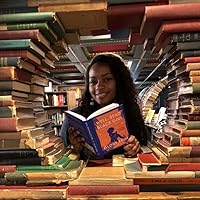
It just so happens that this beautifully illustrated book arrived in the same library book request order as This Dark Country: The American Settlers of Liberia by Catherine Reef. Reading them alongside each other was “good”. Is there a word for when books make each other better and more impactful???? Both are children’s books, and I’m going to use this post to remind people: READ YA and CHILDREN’S BOOKS.
August 9, 2021
A stunning collection of Paul Laurence Dunbar’s poems, specifically intended to expose young readers to his poetry (and Black poetry more generally). The illustrations which accompany each poem are awe-inspiring and bring a new life to the lines etched on the page. The historical significances and nuances of each poem are noted at the end of the book as well. Reading this brightened my day and brought a smile to my face!
December 12, 2019
This beautiful book of poems by Paul Laurence Dunbar is illustrated by six accomplished artists. While most folks would consider this a child's book, I consider it an any-age book. I loved reading the poetry and the history of Dunbar, especially those poems written in dialect. This is a lovely book for children and adults alike and introduces us to Dunbar.

April 23, 2025
What a lovely book! The poems are excellent, of course (though, admittedly, the ones in dialect are a bit more difficult to understand), but they are augmented, embellished, and adorned by gorgeous artwork done by a variety of award-winning black illustrators. Highly recommended. 'The Sparrow' alone is worth the price of admission!

February 27, 2026
I enjoyed this book! This is my first time reading any of Dunbar's poems and I enjoyed them. I am interested to read more of his poems. I also loved the artwork that went along with the poems and that different artists were featured. I also enjoyed the "about the artists" section in the back where they each recounted what Dunbar's works meant to them!

January 14, 2024
I love the illustrations and I think it's a good collection.
With some of the poems being longer and in dialect, I don't know if it is a great first poetry book for young children, but there are some very loving and exciting poems that could be good.
With some of the poems being longer and in dialect, I don't know if it is a great first poetry book for young children, but there are some very loving and exciting poems that could be good.

February 20, 2022
Child friendly poems from a great American poet. Several artists illustrate the poems to beautiful effects.

August 17, 2022
4 stars for this selection of the poems of African American Poet Paul Laurence Dunbar with illustration from noted Coretta Scott King Award (and Honoree) Artists
January 2, 2024
This is a great introduction to the work of Paul L. Dunbar.

July 30, 2014
"Jump Back, Honey: The Poems of Paul Laurence Dunbar" combines several poems from well-beloved African American poet with beautiful illustrations from several different artists which include but not limited to Ashley Bryan, and Faith Ringgold. Dunbar (1872-1906) was an expert at writing poems in both a formal "literary" English and in a style that evoked African-American vernacular speech (this second type of poem was known as a "dialect" poem). This book includes excellent examples of both. An example of a "dialect" poem: "Fiddlin' man jes' stop his fiddlin', / Lay his fiddle on de she'f."
I liked how several different visual artists contributed to this book. It gives the book a nice sense of variety. My favorite illustrations include Jerry Pinkney's pictures, which are vibrant with color and energy, and Carole Byard's delicate picture that accompanies "The Sparrow."These are poems about nature, African-American culture, and the joys of love and family life. This book is an excellent choice for a multicultural children's book collection.
I liked how several different visual artists contributed to this book. It gives the book a nice sense of variety. My favorite illustrations include Jerry Pinkney's pictures, which are vibrant with color and energy, and Carole Byard's delicate picture that accompanies "The Sparrow."These are poems about nature, African-American culture, and the joys of love and family life. This book is an excellent choice for a multicultural children's book collection.

March 2, 2016
This is a fantastic introduction to the poetry of Paul Laurence Dunbar. I've read his poetry before as a high school English teacher, but it's usually part of a bigger anthology of American poetry. Seen/read here, accompanied by the works of some very talented illustrators, his poetry really comes alive. Rich language, terrific artwork, a nice biographical note on Dunbar, and end matter that includes information on the various illustrators make for a great resource. I would totally have used this in a high school English classroom; it works equally well when read to elementary school children simply for the enjoyment of poetry.

June 19, 2008
A rich use of language fills this book. A perfect book to read aloud.
April 15, 2017
The anthology of Paul Laurence Dunbar's poems are culturally based on poems that demonstrate vibrant illustrations to go along with each poem. Every one of these poems have their own rhythm that makes the entire anthology have a vibe that anyone can enjoy, no matter what age group. Dunbar uses a cadence within his poems that ignite a feeling of historical memory. In addition to his cadence he also utilizes different types of figurative language such as similes and metaphors to further his creativity.
Displaying 1 - 17 of 17 reviews