The Future of Publishing: Enigma Variations is a definitive and comprehensive view on how book publishing will evolve and transform. It analyzes the future of not only authors, but also agents, editors, publishers, bookstores, and reading/literacy in general. If you’ve been curious, fearful, or anxious—or just want to know the future ahead of everyone else (and who doesn’t!)—then don’t miss this excellent and informed perspective.
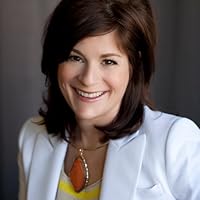
I've worked for 25 years in the publishing industry and have a special interest in how the digital age is transforming writing careers, publishing, and storytelling. Rather than taking a dark view of how the Internet era has affected writers' livelihoods, I'm more interested in how revolutionary change can inspire new business models, and how authorship will ultimately evolve. I believe history is on the writers' side: they've been sustaining their careers in ever more innovative ways since the era of Gutenberg. Furthermore, I don't think that business and art must be at odds—I believe they can inform and push each other to flourish.
I sit at the intersection of several communities, which gives me a 360-degree view of the changes now shaping writing and publishing. People working inside the industry see me as an expert in digital and self-publishing, while independent authors see me as a traditional publishing figure. The university and MFA community see me as very commercially minded, while the business people see me as literary and academic. I would have it no other way; I prefer to serve as a bridge.
I earn my living as a freelancer, and my income is driven largely by my own writing and teaching, as well as consulting services for writers. Thus, I consider my interests to be aligned with writers' interests.
Any mid-level experienced slave in the galley of literature (writer, editor, publisher, venture capitalist) should put down their oar for a few minutes of laughter -- or tears, whatever gives you a break from rowing!
The publishing, writing, and reading worlds seem so full of anxiety lately. As ebooks become more successful (outselling paperbacks on Amazon last year), journalists, publishers, editors, bloggers, and other writers (or readers who write) are piping up about the future of publishing: are we going to lose our cherished books? Are ebooks going to completely take over?
Jane Friedman, in her 39-page delight "The Future of Publishing: Enigma Variations," offers 14 different possibilites for the future of publishing. And trust me - its release on April 1 (April Fools Day) was no accident.
This short ebook is funny. All-the-way-through-funny. Friedman keeps it light and mixes it up with handwritten Creator Notes at the end of each chapter (this is where some of the best humor comes into play...Keep an eye out for the double-rainbow guy).
She also provides a pie chart of how paper books might be used in the future and inserts a fake Wikipedia article about author collectives (it's actually quite convincing and strangely terrifying). Really, those are just some examples of the variety she adds to the book. The genius is in her imagination and her ability to take our current fears about publishing and turn them into silly apocalyptic predictions.
Some of these predictions?
You can't be just a writer anymore. Unless there's potential for franchising your story, don't even bother. You'll be flat like paper (in this particular prediction, paper is not outlawed). "If you can’t sell options for film, television, gaming, and toys for both children and grown-ups, you have to ask yourself: Is this idea really worth putting down on paper/digitalmedia/bit-torrent/injection-molded plastic?" (p.6)
We will all answer to GAA(d) [GoogleAppleAmazon(developers)] who, at this point, "[contract] directly with the author-prophets to carry their gospel" (p.8). Publishers give complete and real value to books and their authors. They even issue public apologies should the book not succeed since, really, it's their fault. Readers refuse to pay for digital copies (which are the only copies available at this point), so writers are subjected to performances and tours to pay the bills. Paper books will be outlawed and eventually used as terrorist weaponry. "As the government cracks down, they start detonating entertainment hubs and gaming-server farms using only massive amounts of wadded up paper, matches, and a little technical knowledge gleaned from the 1946 Boy Scout manual, thank you very much." (p.22-23)
We become an enlightened society where everybody reads, ebooks are outlawed, and "authors [are] royalty" (p.26).
I've mentioned less than half of the potential futures discussed in Friedman's ebook. And I've managed to encapsulate only a fraction of her humor (that's on purpose - I don't want to spoil all the punchlines).
It seems obvious to me that the last prediction, No.14, is what Friedman actually believes will happen in the publishing world. To summarize - what happens happens. Paper books won't disappear, good writers won't lose their place in a crowd of mediocre/bad writers, and "the book will not carry primary cultural authority" (p.35).
Voices will still be heard, we'll just hear them in different ways. Authors will decide in what format(s) and with which service to publish their writing and readers will decide in what format they will read it. We will not lose our free will.
I chose to read Friedman's book. I paid for it, I downloaded it, I enjoyed it. After this review, I'll get back to a classic "long" book. The pages will rustle when I turn them, not click.
As we now relish these choices, we will continue to relish these choices.
Wikipedia is the real revolution in our time and age. Or not? What do you think?
A few days ago I finished reading @JaneFriedman' 'The Future Of Publishing: Enigma Variations'. It's an ebook that made me smile. Lovely to read. I became quickly aware that I'm very, very fond of Wikipedia. According to me it's the real revolution of our digital era.
Revolutions connected to books: * 3,000 BC species 'homo sapiens' learned writing * 800 BC Homer wrote down the stories of an oral tradition in a book * 15th century more efficient book printing * present time digital revolution
I learned nothing new in Jane's book. (Although she gave me views on things I hadn't thought of before.) Not because I know everything ;) but because it seems a natural thing to me that the publishing business is changing. The power of writers, readers, publishers and critics is being shaken up. Remember this. Jobs come and go. When we look back in history we find out that jobs are like a river. The exact definition on what to do (and don't) is never the same. Never! Water floats and floats. The #farmer of today is not the same as the farmer 50, 100, 500 or 1,000 or 10,000 years ago.
Books made it possible for us to transcend our oral tradition. It was a prerequisite for science. It made us smarter. Much smarter. It gave us doctors who can cure patients. It gave us TV and social media. It connected everyone of us on planet Earth 24/7. It made it possible that you can read these lines now.
What will the digital revolution bring us? Are we able to "see" that now?
What I see now is this: books made it possible to remember what was said in the oral tradition. It made it possible to chew and ruminate on ideas and assumptions. It made us smarter. To be more exact: it made some of us smarter. Those who had access to books.
The digital revolution will bring all our books online. It will bring all our information and knowledge online. Condensed in Wikipedia. The scholar of today is not a male who ruminated everything on a given subject. Today all of us are scholars. Partly scholars. Most of the time taking information. Only sometimes adding information on Wikipedia.
Wikipedia makes all of us smarter. Much smarter. To be more exact: it makes all of us smarter who have access to Wikipedia. I don't trust in GAAd. I trust on Wikipedia.
A smart, thoughtful and laugh-out-loud funny imagination of where publishing may end up when the e- versus traditional publishing dust settles. Each chapter is a different possible (well, in some parallel dimension anyway)resolution from the banning of e-books in respect for tradition to the banning of print books in preference for "what's next". My favorite involved a universe where all writers are self-published and the cream of the crop are picked by a mathematical formula, the Online Passive Reader's Algorithmic Helper, or O.P.R.A.H., for short. I highly recomend this book for authors at every phase of their careers, and should probably be a part of university curriculum as well.
A semi-humorous look at trends in publishing and predictions for where it might go. I didn't find the predictions that helpful, the look at the current state of affairs was very brief, and the humor was okay at first but quickly fell flat and didn't do much for me.