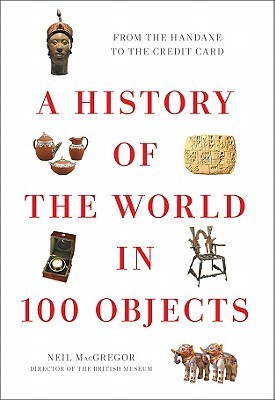
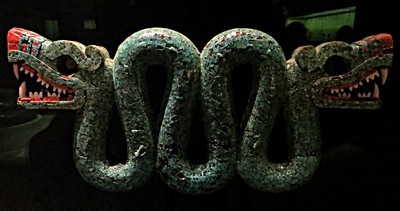
For our 101st object on our history of humanity, we have our first example of a printed book. Now, printing was invented a long time before 2010; but most of the surviving books were lost in the great purges of the Trump-Putin era. This book survived by being buried in rural Canada under a rock on a peninsula far from any population centers. Its owner must have known what was coming. We owe its discovery to the great potato recovery efforts of the previous decade, as the grounds were combed for any remnants of the extinct crop.
The book is roughly the size of a personal meal-processer, but a lot thicker and heavier. It looks superficially like a rectangular prism; but closer inspection reveals that, far from solid, it consists of hundreds (in this case, 350) of pieces of fabric (made from trees) folded tightly together. This cumbersome process was used to cram as much surface-area as possible into a small, portable object, thus allowing for the writing in use at the time. We have, of course, encountered scattered examples of writing already on our tour of human history. This book represents a fairly late and advanced stage in textual writing. The font is easy for the eye to discern at a typical reading distance (45 cm, give or take) and there are glossy photographs (reproductions of the way objects look) to give the reader an idea of the objects under discussion.
In the days before direct informational download, assimilating the information in books like this was a time-consuming affair. Calculating from the known average reading speed and the document’s word count, we know it would have taken several hours to read in its entirety. And even after such an extreme expenditure of time, most readers would not retain even a fraction of the information contained in the text. Yet this book was written for pleasure reading—as an activity to reduce stress—and so most readers probably did not take the time to carefully study the document, in the way that academic and political documents had to be perused in order to be fully grasped.
By chance, we have discovered that a contemporary writer (recovered from a recovered newspaper stash, discussed in Chapter 103), has written a “review” (or evaluation) of this book. Given the length required to read books, people would read these reviews to determine whether they wanted to invest the necessary time. Of course, this ironically led to the need to read hundreds of reviews, defeating the purpose. This review, in a largely positive appraisal, calls the book “intellectual cotton candy.” Now, cotton candy was an example of sugary food that caused the widespread health problems in this era. But the reviewer does not appear to have meant anything negative with the phrase, but rather intends us to understand that the book is pleasurable and also educational, which seems a likely judgment.
Neil MacGregor, the author of this particular book, was the director of the British Museum, in London, one of the biggest terrestrial cities of the time. He speaks about objects on this museum’s collection. Many of these were collected during the years of the powerful British Empire, which for centuries controlled much of the globe (see Chapter 71). Thus, unsurprisingly, many of these objects were obtained by less than legitimate methods. This puts MacGregor in an awkward situation, since he attempts to be inclusive of different ethnic groups and to speak plainly about acts of oppression. As a result there is a sort of balancing act apparent in the text, as the author profits from colonial plunder while presenting an anti-colonial narrative.
It is also worth noting that this book originated as a series of audio transmissions known as “podcasts.” These were popular during this epoch, as a way of absorbing verbal information aurally, which allowed people to do other things at the same time. Unfortunately, however, listening to spoken text took even more time than reading it, and had an even poorer retention rate.
There are some peculiar things about our copy of this book. Its owner has underlined and marked a few passages, some with a graphite pencil and some with a type of marker called a highlighter (which left a bright streak of color without obscuring the text). This was a common practice at the time: readers marked passages that they liked or that they needed to memorize or use in some way, since otherwise it could be difficult to find it among such a mountain of text (all of which, you will recall, is composed of the same handful of symbols in various combinations, which took years of training to decode).
More interestingly, on page 574 and 575 there is a small streak of dried blood, presumably belonging to the owner. (DNA analysis reveals that he was a tall, extremely handsome man.) The pattern of the blood is unusual, and for some time perplexed our researchers, until the solution was found: the blood was not in the reader’s body, but in the body of a mosquito (an extinct blood-sucking insect) which had just finished feeding, and which was then immediately crushed between these pages. I find this bloodstain unspeakably poignant, since it shows how easy it was to damage or besmirch the pages of these books; and it also reveals how intimately connected these forgotten bearers of information are to our species’ history.