This brilliant and revealing self-portrait collects Bernstein's private notes, letters, essays, and musical writings to convey, as never before, the incredible energy, talent, and genius of a man who has confirmed the maturity and originality of American music. Over 100 photos.
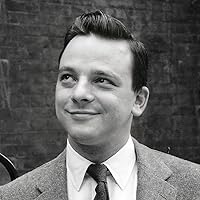
Leonard Bernstein was an American conductor, composer, author, music lecturer and pianist. He was the first conductor born and educated in the United States of America to receive world-wide acclaim. He is perhaps best known for his long conducting relationship with the New York Philharmonic, which included the acclaimed Young People's Concerts series, and his compositions including West Side Story, Candide, and On the Town. He is known to baby boomers primarily as the first classical music conductor to make many television appearances, all between 1954 and 1989. Additionally he had a formidable piano technique and was a highly respected composer. He is one of the most influential figures in the history of American classical music, championing the works of American composers and inspiring the careers of a generation of American musicians.
“There he stands, his left foot (closer to the heart!) firmly planted in the rich, beloved nineteenth century, and his right, rather less firmly, seeking solid ground in the twentieth. Some say he never found this foothold; others (and I agree with them) insist that twentieth-century music could not exist as we know it if that right foot had not landed there with a commanding thud. Whichever assessment is right, the image remains: he straddled. Along with Strauss, Sibelius and, yes, Schoenberg, Mahler sang the last rueful songs of nineteenth-century romanticism. But Strauss’s extraordinary gifts went the route of a not very subjective virtuosity; Sibelius and Schoenberg found their own extremely different but personal routes into the new century. Mahler was left straddling; his destiny was to sum up, package, and lay to ultimate rest the fantastic treasure that was German-Austrian music from Bach to Wagner.” This citation is taken from an essay Bernstein wrote about Mahler for High Fidelity magazine, in conjunction with the first integral release of Mahler’s nine symphonies April, 1967. It is at the heart of all ‘Findings’, assembled in the volume with this name. The book contains many speeches, personal, educational, lobbying, warning and motivating; articles, essays and so on. Quite a variety. I am one of the lucky ones who have seen the conductor Bernstein rehearse and perform the Amsterdam Concertgebouw Orchestra, in Mahler symphonies. Those were wonderful experiences. So much more I could tell you about those happenings, so full of charm and dedication, sparkling and glowing right into my heart. The book is, in my opinion, a good presentation of the versatility of the person Leonard Bernstein. This collection of writings is adequately and richly illustrated. JM
As aptly described in the book description, this work collects a great many of Bernstein's unpublished writings, ranging from undergraduate writing assignments through theses to letters, some poetry, and page upon page of commemorative speeches and tributes to friends, forebears and peers... Copland at 70, at 75, at 79... one runs out of new changes to ring for new audiences.
Music-lovers should seek out the elsewhere-published scripts (and YouTube captures) of Bernstein's Omnibus (see The Joy of Music and Young People's Concerts. These distill and best exemplify the maestro as a brilliant communicator, educator, composer, and musician. Those interested in his pedantry can seek out The Unanswered Question. Findings is more a book for Bernstein scholars and armchair psychiatrists than fans (although the maestro's concert review self-parody at page 273 is itself worth the price of admission).
A few last observations:
(1) Bernstein's theses on musical nationalism may have been better articulated in his more popular writings, but what is presented here does indicate a certain consistency of thought throughout his life.
(2) Many of the letters published in this volume also serve to document the artistic suffocation Bernstein experienced from the cult of serialism that dominated "serious art" music in the mid-twentieth century, an oppression that left him frustrated and floundering when he should have been enjoying the height of his creative powers. It's sad he squandered a precious year chasing what for him could only be an aesthetic dead end and no small relief that he was nonetheless able to salvage the Chichester Psalms out of it. What wonders might he have penned but for the influence of Milton Babbitt and Pierre Boulez's intellectual bullying!
(3) As poetry goes, Bernstein... was an exquisite musician. His Insomniad is nonetheless a hoot. "The school bell rang;/ The moment was saved./ But that night in my bed/ I knew very hard/ That I loved Millie Long/ No longer." (p. 171) Hey-o!