

What do you think?

Past Continuous
'Past Continuous' depicts the crises in the lives of the three Israeli men - Goldman, Israel and Caesar - as they attempt to focus their lives and extract meaning from chaos.
Paperback
First published January 1, 1977
About the author
Yaakov Shabtai
14 books10 followersYaakov Shabtai (Hebrew: יעקב שבתאי) was born in Tel Aviv. After his military service, he moved to a kibbutz and started to write. Ten years later, he returned to Tel Aviv with his family and devoted himself to his literary career. He wrote two novels, a book of short stories, a children`s book, two collections of plays and a collection of poems and ballads.
Shabtai holds a unique place in Hebrew literature. His novel, Past Continuous, is considered one of the high points of modern Hebrew fiction. It received the Kenneth B. Smilen Award for Literature and is included in "The 100 Greatest Works of Modern Jewish Literature" (2001). In 2007, Past Continuous topped the list of the most important as well as "best loved" books since the creation of the State of Israel.
Yaakov Shabtai was awarded the prestigious Agnon Prize posthumously. His work has been published abroad in 10 languages.
Shabtai holds a unique place in Hebrew literature. His novel, Past Continuous, is considered one of the high points of modern Hebrew fiction. It received the Kenneth B. Smilen Award for Literature and is included in "The 100 Greatest Works of Modern Jewish Literature" (2001). In 2007, Past Continuous topped the list of the most important as well as "best loved" books since the creation of the State of Israel.
Yaakov Shabtai was awarded the prestigious Agnon Prize posthumously. His work has been published abroad in 10 languages.
Ratings & Reviews
Friends & Following
Create a free account to discover what your friends think of this book!
Community Reviews
Displaying 1 - 30 of 39 reviews

April 24, 2016
PASSATO PROGRESSIVO E PRESENTE IMPERFETTO
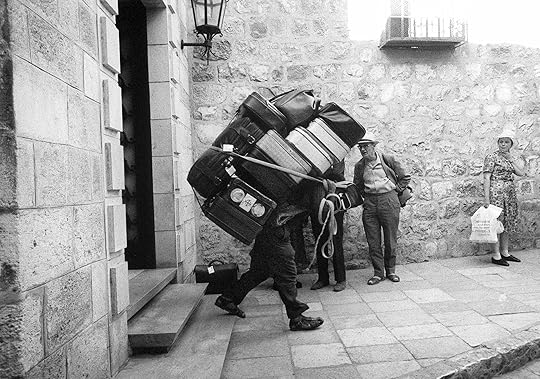
Sandro Becchetti: Gerusalemme, 1970.
Stupore grande ha accolto l’uscita di questo romanzo, sia in patria nel 1977, sia in tutti i paesi dove è stato man mano tradotto e pubblicato: perché Shabtai era un commediografo, neppure di grande fama, aveva scritto opere teatrali sue e tradotto/adattato qualche classico – nella narrativa pura si era al massimo cimentato con una manciata di racconti. C’era stato davvero poco nel suo lavoro precedente per preparare il lettore al talento narrativo che stava per rivelare.
E, trattandosi di esordio, Inventario sembrava già invece l’opera di un artista maturo, un romanzo-fiume, un libro che come un fiume ha rami, affluenti, derivazioni – ci si galleggia sopra come su una zattera, seguendo la corrente, con la sensazione qua e là di andare sotto, di rovesciarsi e tornare a galla, senza riuscire sempre a tenere la rotta della navigazione, lasciandosi trasportare qua e là anche col rischio di smarrirsi e prendere un corso secondario… un flusso di coscienza senza interruzione che inizia al rigo uno e prosegue per trecento pagine, di talento ne dimostra in modo considerevole.
Forse perfino troppo.
Un critico israeliano si spinse a definirlo:
il bivio più importante della letteratura israeliana. Qui tutta la storia di Israele viene riraccontata da capo.

È un’opera che contiene tutto, proprio come disse lo stesso Shabtai nella sua unica intervista radiofonica andata in onda tre giorni dopo la sua morte (a 47 anni, nel 1981, conseguenza di infarto):
Volevo che contenesse tutto. E non mi riferisco a grandi storie. Intendo proprio le cose più piccole. Qualche sbadiglio fatto da qualcuno, una certa frase che mi si è conficcata in testa anni e anni fa, il volto di qualcuno. Poteva essere un parente oppure no, uno dello shtetl. O magari un abito, una forma, un gesto, qualcosa che è successo. A volte era qualcosa di molto transitorio, di assai minuscolo. In qualche modo volevo catturare tutte queste cose dentro il libro.
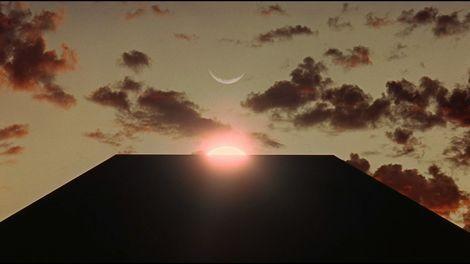
Una lettura impegnativa anche per un lettore concentrato e attento, da affrontare lentamente, in molte sedute, massimo 20-30 pagine alla volta. Un autentico monolite come quello nella foto qui sotto che viene dal mitico film del mitico Stanley.
È una storia che non dipende da tradizionali movimenti di trama, non gioca sullo sviluppo cronologico, non riposa sull’interruzione di capitoli o scene.
La narrazione si muove per associazioni, prima di tutto di personaggi, ma anche di tempo e di luogo.
Il risultato per il lettore è un fitto labirinto letterario di famiglie collegate (e quindi storie intrecciate), in cui un personaggio viene seguito per diverse pagine, poi si passa a seguire un altro, legato in qualche modo al primo, la cui storia conduce in un’altra vita correlata, e andando avanti così, il lettore svolta diversi angoli e si ritrova ad affrontare di nuovo il personaggio di partenza.
Ciò che in un primo momento è sconcertante e discontinuo, lentamente, inesorabilmente, diventa un unico tessuto, un’unica storia, senza soluzione di continuità.
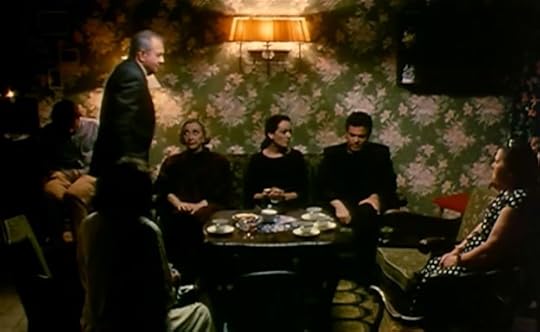
Amos Gitai: Zihron Devarim – L’inventario. 1995.
La stessa frase à la Shabtai contiene in sé un mare intero: si allarga magari per un’intera pagina, a volte anche di più, scivolando e scorrendo in ogni direzione, avanti e indietro, destra e sinistra, sopra e sotto, raccogliendo un flusso di commenti e associazioni, per poi giungere al punto finale senza avere perso nulla della propria forza musica e fascino.
Scrivere un libro è come spazzare Rechov Allenby con uno spazzolino da denti, da Kikar Hamoshavot fino al mare, definì il suo processo di scrittura Shabtai.
Dai materiali ritrovati dopo la sua morte sappiamo che di ogni frase scriveva cinque versioni, e su ognuna lavorava per anni, per lasciarne alla fine quattro varianti alternative.
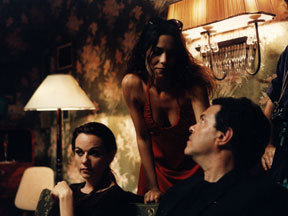
Amos Gitai: Zihron Devarim – L’inventario. 1995.
I protagonisti di queste “descrizioni molecolari”, come le definì Amos Oz, sono tre ebrei ashkenaziti di Tel Aviv, Goldman, Caesar e Israel.
L'azione di partenza è data nella prima frase,
Il padre di Goldman morì il primo di aprile, mentre Goldman si suicidò il primo di gennaio: entrambi i decessi si riflettono sugli amici di Goldman, Caesar e Israel.
Quasi immediatamente, veniamo trascinati nella loro vita e in quella dei loro amici, incluse le storie dei loro genitori nella diaspora, un intrico senza fine di caos familiare - mogli ed ex mogli, turbinio di amanti, matrimoni in frantumi, intrighi disperati, divorzi, delusioni, figli abbandonati, amici, ideali, e poi di nuovo indietro nella vita del padre di Goldman e poi lo stesso Goldman - per tutto il tempo ci si muove tra un passato vivo e un presente che per Shabtai sembra morto.
Per me lettore, invece, la frenesia erotica della gente di Tel Aviv trasmette una gran voglia di esperire.
Nessuna utopia stile kibbutz qui, nessuna mistica Gerusalemme, nessun rigurgito sionista, nessun eroismo ebraico - in altre parole, nessuna Israele come siamo abituati a conoscerla. Si tratta piuttosto del ritratto di un popolo in difficoltà, vite vissute alla fine di un nobile sogno andato in tilt, il paradiso che esplode.
[image error]
Il film di Amos Gitai ignora del tutto qualsiasi back story, si concentra sull’esistenza dei tre amici (Goldman è interpretato dallo stesso regista), sul loro far niente, indugia su azioni molto banali quali mangiare, camminare, affettare verdura, sembra aver centrato in pieno, ma esattamente all’opposto, la visione del maestro Hitchcock il quale genialmente asseriva che un film è la vita a cui sono state tagliate le parti noiose. Per Gitai un film è la vita a cui state tagliate le parti divertenti e interessante per lasciare solo quelle noiose.
La messa in scena ricorda molto quella dei film di Moretti, minimale, punitiva, terra-terra, come se l’occhio dovesse nutrirsi solo di banalità, di ordinario, di dozzinalità e mediocrità. Come nel mitico Ecce Bombo (per me a tutt’oggi il miglior film di Moretti, e l’unico suo che mi sia davvero piaciuto) i personaggi sembrano essenzialmente impegnati nell’indimenticabile massima pronunciata da Olga:
Giro, vedo gente, mi muovo, conosco, faccio delle cose.
Si direbbe anche messa in scena un po’ cialtrona: per esempio il fotografo Cesar ha l’abitudine di porsi tra la sua modella e la luce generando un’ombra che anche un dilettante sa di dover evitare.
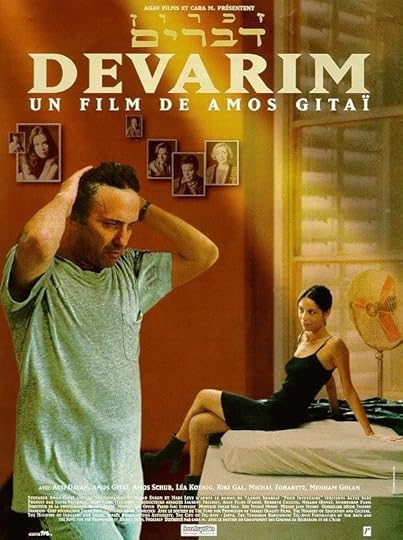
La locandina del film diretto da Amos Gitai nel 1995.
Sandro Becchetti: Gerusalemme, 1970.
Stupore grande ha accolto l’uscita di questo romanzo, sia in patria nel 1977, sia in tutti i paesi dove è stato man mano tradotto e pubblicato: perché Shabtai era un commediografo, neppure di grande fama, aveva scritto opere teatrali sue e tradotto/adattato qualche classico – nella narrativa pura si era al massimo cimentato con una manciata di racconti. C’era stato davvero poco nel suo lavoro precedente per preparare il lettore al talento narrativo che stava per rivelare.
E, trattandosi di esordio, Inventario sembrava già invece l’opera di un artista maturo, un romanzo-fiume, un libro che come un fiume ha rami, affluenti, derivazioni – ci si galleggia sopra come su una zattera, seguendo la corrente, con la sensazione qua e là di andare sotto, di rovesciarsi e tornare a galla, senza riuscire sempre a tenere la rotta della navigazione, lasciandosi trasportare qua e là anche col rischio di smarrirsi e prendere un corso secondario… un flusso di coscienza senza interruzione che inizia al rigo uno e prosegue per trecento pagine, di talento ne dimostra in modo considerevole.
Forse perfino troppo.
Un critico israeliano si spinse a definirlo:
il bivio più importante della letteratura israeliana. Qui tutta la storia di Israele viene riraccontata da capo.
È un’opera che contiene tutto, proprio come disse lo stesso Shabtai nella sua unica intervista radiofonica andata in onda tre giorni dopo la sua morte (a 47 anni, nel 1981, conseguenza di infarto):
Volevo che contenesse tutto. E non mi riferisco a grandi storie. Intendo proprio le cose più piccole. Qualche sbadiglio fatto da qualcuno, una certa frase che mi si è conficcata in testa anni e anni fa, il volto di qualcuno. Poteva essere un parente oppure no, uno dello shtetl. O magari un abito, una forma, un gesto, qualcosa che è successo. A volte era qualcosa di molto transitorio, di assai minuscolo. In qualche modo volevo catturare tutte queste cose dentro il libro.
Una lettura impegnativa anche per un lettore concentrato e attento, da affrontare lentamente, in molte sedute, massimo 20-30 pagine alla volta. Un autentico monolite come quello nella foto qui sotto che viene dal mitico film del mitico Stanley.
È una storia che non dipende da tradizionali movimenti di trama, non gioca sullo sviluppo cronologico, non riposa sull’interruzione di capitoli o scene.
La narrazione si muove per associazioni, prima di tutto di personaggi, ma anche di tempo e di luogo.
Il risultato per il lettore è un fitto labirinto letterario di famiglie collegate (e quindi storie intrecciate), in cui un personaggio viene seguito per diverse pagine, poi si passa a seguire un altro, legato in qualche modo al primo, la cui storia conduce in un’altra vita correlata, e andando avanti così, il lettore svolta diversi angoli e si ritrova ad affrontare di nuovo il personaggio di partenza.
Ciò che in un primo momento è sconcertante e discontinuo, lentamente, inesorabilmente, diventa un unico tessuto, un’unica storia, senza soluzione di continuità.
Amos Gitai: Zihron Devarim – L’inventario. 1995.
La stessa frase à la Shabtai contiene in sé un mare intero: si allarga magari per un’intera pagina, a volte anche di più, scivolando e scorrendo in ogni direzione, avanti e indietro, destra e sinistra, sopra e sotto, raccogliendo un flusso di commenti e associazioni, per poi giungere al punto finale senza avere perso nulla della propria forza musica e fascino.
Scrivere un libro è come spazzare Rechov Allenby con uno spazzolino da denti, da Kikar Hamoshavot fino al mare, definì il suo processo di scrittura Shabtai.
Dai materiali ritrovati dopo la sua morte sappiamo che di ogni frase scriveva cinque versioni, e su ognuna lavorava per anni, per lasciarne alla fine quattro varianti alternative.
Amos Gitai: Zihron Devarim – L’inventario. 1995.
I protagonisti di queste “descrizioni molecolari”, come le definì Amos Oz, sono tre ebrei ashkenaziti di Tel Aviv, Goldman, Caesar e Israel.
L'azione di partenza è data nella prima frase,
Il padre di Goldman morì il primo di aprile, mentre Goldman si suicidò il primo di gennaio: entrambi i decessi si riflettono sugli amici di Goldman, Caesar e Israel.
Quasi immediatamente, veniamo trascinati nella loro vita e in quella dei loro amici, incluse le storie dei loro genitori nella diaspora, un intrico senza fine di caos familiare - mogli ed ex mogli, turbinio di amanti, matrimoni in frantumi, intrighi disperati, divorzi, delusioni, figli abbandonati, amici, ideali, e poi di nuovo indietro nella vita del padre di Goldman e poi lo stesso Goldman - per tutto il tempo ci si muove tra un passato vivo e un presente che per Shabtai sembra morto.
Per me lettore, invece, la frenesia erotica della gente di Tel Aviv trasmette una gran voglia di esperire.
Nessuna utopia stile kibbutz qui, nessuna mistica Gerusalemme, nessun rigurgito sionista, nessun eroismo ebraico - in altre parole, nessuna Israele come siamo abituati a conoscerla. Si tratta piuttosto del ritratto di un popolo in difficoltà, vite vissute alla fine di un nobile sogno andato in tilt, il paradiso che esplode.
[image error]
Il film di Amos Gitai ignora del tutto qualsiasi back story, si concentra sull’esistenza dei tre amici (Goldman è interpretato dallo stesso regista), sul loro far niente, indugia su azioni molto banali quali mangiare, camminare, affettare verdura, sembra aver centrato in pieno, ma esattamente all’opposto, la visione del maestro Hitchcock il quale genialmente asseriva che un film è la vita a cui sono state tagliate le parti noiose. Per Gitai un film è la vita a cui state tagliate le parti divertenti e interessante per lasciare solo quelle noiose.
La messa in scena ricorda molto quella dei film di Moretti, minimale, punitiva, terra-terra, come se l’occhio dovesse nutrirsi solo di banalità, di ordinario, di dozzinalità e mediocrità. Come nel mitico Ecce Bombo (per me a tutt’oggi il miglior film di Moretti, e l’unico suo che mi sia davvero piaciuto) i personaggi sembrano essenzialmente impegnati nell’indimenticabile massima pronunciata da Olga:
Giro, vedo gente, mi muovo, conosco, faccio delle cose.
Si direbbe anche messa in scena un po’ cialtrona: per esempio il fotografo Cesar ha l’abitudine di porsi tra la sua modella e la luce generando un’ombra che anche un dilettante sa di dover evitare.
La locandina del film diretto da Amos Gitai nel 1995.

November 3, 2019
Wow, this is a novel that needs to be better known. It’s rated 4.3 on GR, which is very high, but has only 14 reviews. It won Israel’s Bernstein literary award. In a 2007 survey among 25 top Israeli publishers, editors, and critics, Past Continuous was chosen the best Hebrew book written in Israel since the foundation of the state in 1948. It also happens to be the first novel that was translated into English from vernacular Hebrew.

The focus of the story is on three young men who are buddies in Tel Aviv. The book’s cover summarizes them well: “Goldman, a melancholy intellectual; Israel, a sensitive but weak-willed pianist, and Caesar, obsessed with sex, always involved with three women at a time.” All three men are single, although two of them had been married and have children. Israel, the pianist, hardly makes a living and lives on Caesar's charity, not even paying rent to live in his house. We know from the first sentence of the book that Goldman will commit suicide.
The lives of these three men form a framework for the book but the main focus is on the life stories of the people they are involved with. The author gives us vignettes of the people who are their mothers, fathers, sisters and brothers, other relatives, friends and neighbors. A funeral can be an occasion for a run-down on a dozen individuals. These vignettes, sometimes running to three or four pages about one person, fill the book and almost take on the form of fascinating short stories. In the process we also get a vivid picture of life in Tel Aviv around the time of the book’s publication, 1977.
The writing and insights are truly excellent and for the remainder of this review I’ll let the author speak for himself:
Caesar [the womanizer] “…lied effortlessly and guiltlessly, even when the lie was so obvious that it hit you in the eye, and even when it was completely unnecessary, and sometimes even when it was against his own interests, because he had become so accustomed to lying that the lies jumped out of his mouth as quickly and lightly as grasshoppers, and because he told so many lies that he often couldn’t distinguish them from the truth, but all this didn’t trouble him in the least, because after lying at first for reasons of convenience or moral cowardice he had ended up making falsehoods into a principle and teaching himself to believe that there was no such thing as morality and that lies were more powerful than the truth and only they were capable of guiding human life toward harmonious and pleasurable destinations, whereas the truth, which was so universally extolled, had in his opinion brought little benefit to humanity and a great deal of sorrow and unnecessary difficulties and conflicts, and he Caesar, couldn’t see any point in wasting his life on it…”
“…of whom his father said that he devoted so much time and effort to trying to be happy that in the end it made him unhappy…”
“Good deeds are better if they bring in a profit...Truth and falsehood don’t last forever. After a couple of days all people remember is success…”
[Caesar] “…couldn’t decide, because any decision would be bound to involve some sort of sacrifice, and Caesar was not prepared to sacrifice anything, and this was reflected in his consciousness as an unwillingness and inability on his part to give pain to anyone else, whereas in fact he was unwilling and unable to give pain primarily to himself.”
“…suddenly in a flash of insight, he saw himself reflected in the mirror of Chaim-Lieb’s old age and all at once he realized that old age was not something foreign to him and outside him but, on the contrary, it was part of his very being in this world, and it was moving toward him, and in fact already casting the tip of its shadow on him, a shadow which would grow and spread until it engulfed him completely, and he took another pretzel…”
[She]”…needed an ideology to live by, but she never said exactly what this ideology was, and the truth is that it wasn’t clear to her either, and all it amounted to was the idea, which she had built up very gradually from the details of her education and experience, that life demanded a constant effort, since its complications and difficulties were not accidental but the very stuff of life itself, and it had to be lived with responsibility and the acceptance of duties and values such as honesty, industriousness, loyalty, modesty, simplicity, and other values whose rightness and validity she never doubted…”
While many of the young people in the book were born in Israel, such as the three men who are the focus of the story, most of the older people were Ashkenazi Jews who were immigrants from Russia, Ukraine, Poland or other Eastern European countries. There are many mentions of the deaths of relatives in the Nazi camps but no stories of the actual horrors within the camps.

Shabtai was a playwright and short story writer, so this was his only novel published in his lifetime. He died a heart attack when he was 47.
An excellent read. I’m giving it a 5 and adding it to my favorites.
Photo of Tel Aviv around the time of the story from jpost.com
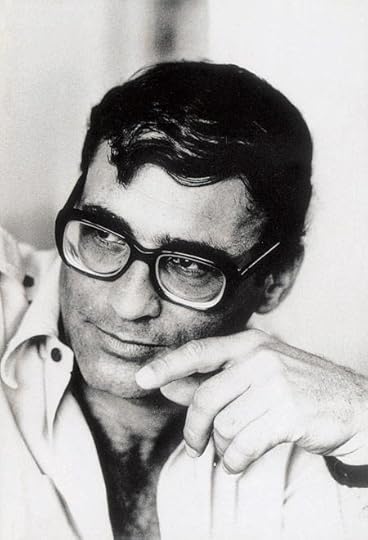
The author from m.media-amazon.com/images
The author on an Israeli postage stamp from philatelia.net
The focus of the story is on three young men who are buddies in Tel Aviv. The book’s cover summarizes them well: “Goldman, a melancholy intellectual; Israel, a sensitive but weak-willed pianist, and Caesar, obsessed with sex, always involved with three women at a time.” All three men are single, although two of them had been married and have children. Israel, the pianist, hardly makes a living and lives on Caesar's charity, not even paying rent to live in his house. We know from the first sentence of the book that Goldman will commit suicide.
The lives of these three men form a framework for the book but the main focus is on the life stories of the people they are involved with. The author gives us vignettes of the people who are their mothers, fathers, sisters and brothers, other relatives, friends and neighbors. A funeral can be an occasion for a run-down on a dozen individuals. These vignettes, sometimes running to three or four pages about one person, fill the book and almost take on the form of fascinating short stories. In the process we also get a vivid picture of life in Tel Aviv around the time of the book’s publication, 1977.
The writing and insights are truly excellent and for the remainder of this review I’ll let the author speak for himself:
Caesar [the womanizer] “…lied effortlessly and guiltlessly, even when the lie was so obvious that it hit you in the eye, and even when it was completely unnecessary, and sometimes even when it was against his own interests, because he had become so accustomed to lying that the lies jumped out of his mouth as quickly and lightly as grasshoppers, and because he told so many lies that he often couldn’t distinguish them from the truth, but all this didn’t trouble him in the least, because after lying at first for reasons of convenience or moral cowardice he had ended up making falsehoods into a principle and teaching himself to believe that there was no such thing as morality and that lies were more powerful than the truth and only they were capable of guiding human life toward harmonious and pleasurable destinations, whereas the truth, which was so universally extolled, had in his opinion brought little benefit to humanity and a great deal of sorrow and unnecessary difficulties and conflicts, and he Caesar, couldn’t see any point in wasting his life on it…”
“…of whom his father said that he devoted so much time and effort to trying to be happy that in the end it made him unhappy…”
“Good deeds are better if they bring in a profit...Truth and falsehood don’t last forever. After a couple of days all people remember is success…”
[Caesar] “…couldn’t decide, because any decision would be bound to involve some sort of sacrifice, and Caesar was not prepared to sacrifice anything, and this was reflected in his consciousness as an unwillingness and inability on his part to give pain to anyone else, whereas in fact he was unwilling and unable to give pain primarily to himself.”
“…suddenly in a flash of insight, he saw himself reflected in the mirror of Chaim-Lieb’s old age and all at once he realized that old age was not something foreign to him and outside him but, on the contrary, it was part of his very being in this world, and it was moving toward him, and in fact already casting the tip of its shadow on him, a shadow which would grow and spread until it engulfed him completely, and he took another pretzel…”
[She]”…needed an ideology to live by, but she never said exactly what this ideology was, and the truth is that it wasn’t clear to her either, and all it amounted to was the idea, which she had built up very gradually from the details of her education and experience, that life demanded a constant effort, since its complications and difficulties were not accidental but the very stuff of life itself, and it had to be lived with responsibility and the acceptance of duties and values such as honesty, industriousness, loyalty, modesty, simplicity, and other values whose rightness and validity she never doubted…”
While many of the young people in the book were born in Israel, such as the three men who are the focus of the story, most of the older people were Ashkenazi Jews who were immigrants from Russia, Ukraine, Poland or other Eastern European countries. There are many mentions of the deaths of relatives in the Nazi camps but no stories of the actual horrors within the camps.
Shabtai was a playwright and short story writer, so this was his only novel published in his lifetime. He died a heart attack when he was 47.
An excellent read. I’m giving it a 5 and adding it to my favorites.
Photo of Tel Aviv around the time of the story from jpost.com
The author from m.media-amazon.com/images
The author on an Israeli postage stamp from philatelia.net

August 4, 2022
Yorum girmeyi düşünmüyordum ama kitabı want to read yapan çok kişi görünce bir iki şey yazmak istedim;
70’ler İsrail’inde (hatta Tel-Aviv) geçen roman, dönemin insanlarının sosyokültürel, politik ve dinsel açılardan müthiş bir panoramasını veriyor. Düşünüyorum ama bizim edebiyatımızda aynı bu şekilde belli bir dönemi bu denli kapsamlı ve bu derecede iyi anlatmış bir eserimiz “maalesef” aklıma gelmiyor (belki de ben okumamışımdır?).
Biraz da İthaki’nin edisyonundan bahsetmek istiyorum çünkü burası önemli; benim sayabildiğim kadarıyla kitapta 200’den fazla yazım hatası, noktalama hatası, anlam düşüklüğü vs var. Benim gibi böyle şeylerden rahatsız olan varsa bu konuya dikkat çekmek isterim. Künyede kitabın düzeltiden geçtiği iddia edilmiş ama buna inanmak pek mümkün değil. Umarım bir dosya hatası gibi bir durum söz konusudur. Okuru geçtim böyle bir edisyon kitabın yazarının anısına ayıp.
70’ler İsrail’inde (hatta Tel-Aviv) geçen roman, dönemin insanlarının sosyokültürel, politik ve dinsel açılardan müthiş bir panoramasını veriyor. Düşünüyorum ama bizim edebiyatımızda aynı bu şekilde belli bir dönemi bu denli kapsamlı ve bu derecede iyi anlatmış bir eserimiz “maalesef” aklıma gelmiyor (belki de ben okumamışımdır?).
Biraz da İthaki’nin edisyonundan bahsetmek istiyorum çünkü burası önemli; benim sayabildiğim kadarıyla kitapta 200’den fazla yazım hatası, noktalama hatası, anlam düşüklüğü vs var. Benim gibi böyle şeylerden rahatsız olan varsa bu konuya dikkat çekmek isterim. Künyede kitabın düzeltiden geçtiği iddia edilmiş ama buna inanmak pek mümkün değil. Umarım bir dosya hatası gibi bir durum söz konusudur. Okuru geçtim böyle bir edisyon kitabın yazarının anısına ayıp.

December 19, 2022
İsrail’de yaşayan yahudi toplumunun büyük bir fotoğrafınını yazıya dökmüş Y. Shabtai. Her ne kadar roman Tel Aviv merkezli ve 1970’li yıllara aitmiş gibi görünse de 1. Dünya Savaşı’na kadar inen tarih ve Tel Aviv ile ilgili başka şehir ve ülkeleri de kapsadığından genel olarak yahudi toplumunu anlatıyor.
Ana karakterler Goldman, Ceasar ve Israel ön plana çıksa da roman çok sayıda karakter içeriyor. Yüzlerce kişiyi romana alan yazar bana Marquez’in “Yüzyıllık Yanlızlık” adlı romanını hatırlattı, tabii bu kalabalık, kişilerin çokluğu okumayı zorlaştırıyor, buna bir de İthaki’nin okura karşı saygısızlığı ve sorumsuzluğunu ekleyince okumak sinir bozucu hale geliyor. Yayın yönetmeni ucuza gelsin diye bir düzeltmen almayıp bunu da kendisi üstlenirse yazım hataları da dağ gibi büyük oluyor.
Romanda bol miktarda aşk, aldatma, cinsellik, intihar temaları var, bir de siyasi tartışmalar. Dikkatimi çeken çok dindar yahudiler (ortodoks/hasidik) dışında neredeyse her yahudi bir kez sol-sosyalist-komunist çizgiye gelmiş. Sonra yön değiştirenler olduğu gibi yerinde kalanlar da olmuş, ancak romandaki Manfred gibi fırıldak gibi dönenlerin sayısı bir hayli fazla. Sol ile milliyetçiliği bir arada yürütme (siyonist sosyalist) gayretleri dikkat çekici. Ama eşyanın tabiatı gereği siyonist ideoloji ağır bastığından zamanla sol değerlerden uzaklaşma toplumsal bir olgu. Zaten roman da bir kuşağın toplumsal düzende aradıklarını bulamama, hayal kırıklıkları ve kaygılarıyla varoluşlarını sorgulamalarını anlatıyor.
İsrail ve yahudi toplumu hakkında tarihi ve sosyolojik bir inceleme gibi.
Ana karakterler Goldman, Ceasar ve Israel ön plana çıksa da roman çok sayıda karakter içeriyor. Yüzlerce kişiyi romana alan yazar bana Marquez’in “Yüzyıllık Yanlızlık” adlı romanını hatırlattı, tabii bu kalabalık, kişilerin çokluğu okumayı zorlaştırıyor, buna bir de İthaki’nin okura karşı saygısızlığı ve sorumsuzluğunu ekleyince okumak sinir bozucu hale geliyor. Yayın yönetmeni ucuza gelsin diye bir düzeltmen almayıp bunu da kendisi üstlenirse yazım hataları da dağ gibi büyük oluyor.
Romanda bol miktarda aşk, aldatma, cinsellik, intihar temaları var, bir de siyasi tartışmalar. Dikkatimi çeken çok dindar yahudiler (ortodoks/hasidik) dışında neredeyse her yahudi bir kez sol-sosyalist-komunist çizgiye gelmiş. Sonra yön değiştirenler olduğu gibi yerinde kalanlar da olmuş, ancak romandaki Manfred gibi fırıldak gibi dönenlerin sayısı bir hayli fazla. Sol ile milliyetçiliği bir arada yürütme (siyonist sosyalist) gayretleri dikkat çekici. Ama eşyanın tabiatı gereği siyonist ideoloji ağır bastığından zamanla sol değerlerden uzaklaşma toplumsal bir olgu. Zaten roman da bir kuşağın toplumsal düzende aradıklarını bulamama, hayal kırıklıkları ve kaygılarıyla varoluşlarını sorgulamalarını anlatıyor.
İsrail ve yahudi toplumu hakkında tarihi ve sosyolojik bir inceleme gibi.

April 2, 2021
Deeply depressing, deeply impressive. In particular there is something he is doing with the shift in authorial focus mid sentence which I don’t think I have seen anywhere before. Highly recommended for fans of this sort of thing.

July 10, 2022
Böyle müthiş bir keyiften sonra yazılacak çok şey var. Ama zaman biraz :)

August 9, 2020
Joshua Cohen call Past Continuous the Hebrew Ulysses, which doesn't appear to be the point. We have almost a four hundred page paragraph which explores the lives of three friends in Tel Aviv. No one is happy, though happiness does find them each on occasion. Their lives are interrelated as are the streets they wander. This is insomniac literature, though it lacks the grace of dreams.
Life as presented is a sum of decay and missed opportunities. This is exacerbated by the grim tidings of History. There are veins of philosophy to be explored but the poetry appears almost monochromatic. It is within cuisine that color creeps into the story. The smells of the sea and citrus are likewise arbiters of fortune.
Life as presented is a sum of decay and missed opportunities. This is exacerbated by the grim tidings of History. There are veins of philosophy to be explored but the poetry appears almost monochromatic. It is within cuisine that color creeps into the story. The smells of the sea and citrus are likewise arbiters of fortune.

January 7, 2023
İsrail’in tarihini, toplumun sosyokültürel ve politik panoramasını muazzam bir şekilde çizip, haletiruhiyesini de zaman içinde geçirdiği değişimlerle beraber karakterlere yansıtarak anlatırken edebi açıdan da büyüleyen, muhteşem bir roman Bitmeyen Geçmiş. Hikayenin merkezinde, Tel Aviv’de yaşayan üç kişiden oluşan bir arkadaş grubu var ve roman bu üç arkadaştan birinin babasının ölümü üzerine diğer ikisinin cenazeye gitmesiyle başlıyor. Roman ilerledikçe bu üç kişinin aile fertlerinin ve tanıdıklarının geçmişleriyle beraber hikayeye dahil olmalarıyla ana hikaye oldukça dallanıp budaklanıyor ve anlıyorsunuz ki tek bir ana hikayeden ziyade pek çok farklı hikayenin bir araya gelip bir bütünü tamamladığı eserlerden biriyle karşı karşıyasınız. Farklı yaş, cinsiyet, sosyal sınıf ve geçmişe sahip pek çok insanın hikayesiyle beraber Shabtai, 1970’lerden günümüze İsrail toplumunu farklı inançları, siyasi görüşleri, hayat tarzları ve dünyanın dört bir yanından taşıyıp getirdikleri bagajlarıyla resmediyor. Bu karakterler hem kuruluşundan günümüze İsrail’in toplumsal ve siyasi tarihini aktarıyorlar hem de yazarın oldukça derinlikli -özellikle bir erkek yazar olarak kadın karakterlerin derinliğine bayıldım- bir şekilde detaylandırdığı psikolojik portreleriyle ülkenin geçmişten bugüne ruh halini yansıtıyorlar. Farklı zaman dilimlerini perspektif değiştirip farklı karakterlere ses vererek anlatan ve uzun cümleler kurmayı seven bir yazar Shabtai. Bu nedenle biraz dikkatinizi yoğunlaştırmanızı isteyen eserlerden. Bir de çok fazla karakter olması sebebiyle romanın başından itibaren not almanızı öneririm. Ancak yazarın anlatımı o kadar güzel ve karakterler o kadar başarılı oluşturulmuş ki ilerledikçe bu kadar fazla karakter olmasına rağmen hepsinin hikayesini nasıl içselleştirdiğinize kendiniz de inanamıyorsunuz. Çok beğendim. Keşke bu başyapıt basılmadan önce son okuması da yapılsaymış.
July 28, 2010
People don't change. They are who they are and they will continue to be that throughout time -- repeating actions, repeating thoughts, repeating. it is the constant sound and fury of our lives. Time is constant and so are we who inhabit it. We are all bound together.
Past Continuous is a really strange book. no chapters, paragraphs that last for pages and sentences that are full paragraphs. It is like nothing I've ever read before, perhaps comparable to James Joyce and Marcel Proust. And to be honest, it took a while to figure out how to read this book with any sense of enjoyment -- to understand the rhythm and give in to it, to go with the subtle changes of perspective and characters. Mid sentence, the point of view could slightly change and then suddenly the reader is on track with an entirely different character. And it's not jarring, it's not a surprise, it's perfectly natural.
An incredible book. I'm very glad I stuck with it. The writing style and the message(s) in the novel coincide beautifully.
Past Continuous is a really strange book. no chapters, paragraphs that last for pages and sentences that are full paragraphs. It is like nothing I've ever read before, perhaps comparable to James Joyce and Marcel Proust. And to be honest, it took a while to figure out how to read this book with any sense of enjoyment -- to understand the rhythm and give in to it, to go with the subtle changes of perspective and characters. Mid sentence, the point of view could slightly change and then suddenly the reader is on track with an entirely different character. And it's not jarring, it's not a surprise, it's perfectly natural.
An incredible book. I'm very glad I stuck with it. The writing style and the message(s) in the novel coincide beautifully.

May 25, 2018
משתבח מקריאה לקריאה.

April 22, 2021
In Hebrew, the title of this book is זכרון דברים (Zikhron Devarim), which google translate renders as "memorandum of understanding". Maybe a "record of understanding" is better? Having no Hebrew, I have no idea. Both the Italian translation (which I've just read) and the English translation (which I haven't read) make no attempt to actually translate it literally, going with "Inventory", and "Past Continuous", respectively. Both of those titles work, given the form and the contents. But I would almost go so far as to say that the best title would be something like "Untitled". For me, it was such a powerful tour de force of story-telling that a title almost takes away from it.
At first, I thought: Bernhard (suicide, right there on the first line). Then I thought: Joyce ("stream-of-consciousness" in one paragraph [1]). But really, it's neither. It's more: Sebald (time, memory, deterioration). Especially this Sebald. [2] And the fact that the whole book is "one paragraph" is not just a gimmick, it's an essential part of the point: there is no time; the past, present and future are one. It's like a botanical garden of the entire universe; an inventory of all the plants and flowers as they grow, live, die, and grow, live, die again, in all their beautiful and ugly variations.
[1] Beckett and Bernhard do this too, of course. The first half of Molloy is one paragraph. Correction is two paragraphs.
[2] And yes, I realize that Shabtai came before Sebald; I'm finding connections, not influences, though perhaps the latter read the former?
At first, I thought: Bernhard (suicide, right there on the first line). Then I thought: Joyce ("stream-of-consciousness" in one paragraph [1]). But really, it's neither. It's more: Sebald (time, memory, deterioration). Especially this Sebald. [2] And the fact that the whole book is "one paragraph" is not just a gimmick, it's an essential part of the point: there is no time; the past, present and future are one. It's like a botanical garden of the entire universe; an inventory of all the plants and flowers as they grow, live, die, and grow, live, die again, in all their beautiful and ugly variations.
[1] Beckett and Bernhard do this too, of course. The first half of Molloy is one paragraph. Correction is two paragraphs.
[2] And yes, I realize that Shabtai came before Sebald; I'm finding connections, not influences, though perhaps the latter read the former?
March 3, 2016
One of the greatest novels of the past fifty years, and yet one of the least remembered... Unforgettable.
October 27, 2022
Bu kitabı, tanıtımında yazıldığı gibi Kayıp Zamanın İzinde ile karşılaştırmak için şuursuz olmak lazım.

November 19, 2024
De ondertitel van dit boek luidt "panoramisch portret van de Israëlische maatschappij door de ogen van drie bohémiens", en die is helemaal raak gekozen.
De drie hoofdpersonages zijn de vrienden Caesar, Jisraël en Goldman. Het hele boek bestaat uit één enkele paragraaf en verhaalt in "stream of consciousness"-stijl een week uit hun leven, met flashbacks en flashforwards. De talrijke familieleden en aanverwanten van Goldman en Caesar komen kort of lang in beeld, waarbij het niet altijd duidelijk is over welke periode het gaat. Dat allemaal maakt dit boek geen "easy reading".
De drie mannen zijn elk op zoek: naar liefde, vriendschap, een levensdoel, een reden voor hun boosheid, een moreel kompas. In het verhaal komen uiteenlopende filosofische en maatschappelijke standpunten aan bod, zodat je inderdaad een caleidoscopisch beeld van de Israëlische maatschappij krijgt. Aanrader wat mij betreft.
De drie hoofdpersonages zijn de vrienden Caesar, Jisraël en Goldman. Het hele boek bestaat uit één enkele paragraaf en verhaalt in "stream of consciousness"-stijl een week uit hun leven, met flashbacks en flashforwards. De talrijke familieleden en aanverwanten van Goldman en Caesar komen kort of lang in beeld, waarbij het niet altijd duidelijk is over welke periode het gaat. Dat allemaal maakt dit boek geen "easy reading".
De drie mannen zijn elk op zoek: naar liefde, vriendschap, een levensdoel, een reden voor hun boosheid, een moreel kompas. In het verhaal komen uiteenlopende filosofische en maatschappelijke standpunten aan bod, zodat je inderdaad een caleidoscopisch beeld van de Israëlische maatschappij krijgt. Aanrader wat mij betreft.

June 5, 2016
Ho fatto un esperimento e ho provato a leggerlo saltando delle pagine, zompando avanti e indietro. Il senso dell'opera non si perdeva, ritrovavo ogni volta la cosa, mi ritrovavo ogni volta nella cosa: le giornate sbiadite dei personaggi, che hanno molto poco di personaggi e molto di persone. Il titolo dice già tutto, un inventario di ciò che succede e ciò che non succede, di ciò in cui si consumano le esistenze delle persone, che compongono famiglie, che compongono comunità, che compongono un popolo: e così si costruisce la realtà. Una realtà di cui viene inventariata l'aridità e l'infondatezza, fino a renderla ingombra e soffocante. Un discorso unico, dalla prima all'ultima pagina, senza capitoli o paragrafi, con periodi lunghi anche un'intera pagina, che conduce alla consapevolezza dell'assenza di un discorso. La catalogazione dei sintomi - le cause, mai - del male che affligge gli individui e le loro relazioni, sullo sfondo di una Tel Aviv che si gonfia e si perde, di una nazione - Israele - che sorge già invecchiata, sostenendo il peso dei pezzi smembrati che la compongono, fondandosi su un'identità ingombrante e tirannica, eppure sempre morta.
Incredibilmente bello e doloroso.
Incredibilmente bello e doloroso.

December 23, 2014
This was a challenging book. It’s considered to be one of the modernist masterpieces of Israeli literature and it probably is but I can’t say I enjoyed much reading it or that it made me think very differently about life. The book is relentlessly depressing in a way that feels contrived. None of the characters, not even the most hedonistic amongst them, seems to be having a good time. Death is really the central character in this book, but even its overpowering presence isn't that convincing.

May 27, 2014
Absolutely amazing book.
June 8, 2018
ספר קשה לקריאה שדורש הרבה ריכוז הן בשל המשפטים הארוכים המרכיבים אותו - לפעמים באורך של שניים שלושה עמודים, והן בשל הכמות
העצומה של הדמויות המוצגות בו. אף על פי כן, ספר מעורר מחשבה ששווה את המאמץ.
העצומה של הדמויות המוצגות בו. אף על פי כן, ספר מעורר מחשבה ששווה את המאמץ.

November 19, 2022
Çok uzun cümleler... not alarak okudum...
bu arada keşke baskıdan önce son okuması yapılsaymış... baskı hatalarıyla dolu malesef
bu arada keşke baskıdan önce son okuması yapılsaymış... baskı hatalarıyla dolu malesef

March 27, 2018
Esistenzialismo puro in questo libro che è, come dice il titolo, un Inventario di vite e di morti. Il libro inizia e finisce con la morte: il primo di aprile muore il padre di Goldman e l'1 gennaio si suicida Goldman. E poi un susseguirsi di incontri tra personaggi durante visite di cordoglio, funerali e matrimoni, storie che si dipanano senza soluzione di continuità, vite che cercano un senso, tutto attraverso i due amici protagonisti, Israel e Cesar, i cui nomi scelti forse non casualmente, ci indicano due approcci alla vita diversi, più pacato e apparentemente equilibrato il primo, dirompente e vorace il secondo. Il libro è scritto senza interruzioni: niente capitoli, niente paragrafi, niente salti di pagina. Periodi lunghi anche due pagine, in un flusso continuo da onda lunga, in cui tra una virgola e l'altra, entrano ed escono i personaggi. Si potrebbe leggere in un qualsiasi ordine sparso, da una pagina all'altra partendo da metà o dalla fine, tanto è unitaria la narrazione interiore di tutti i personaggi. Un libro magnifico, per struttura e contenuti. Un libro senza grandi speranze se non quella di trovare, ognuno di noi trovi la sua, la propria idea di futuro. Così per la mamma di Goldman è la Polonia, dove non tornerà mai, per qualcuno è un figlio da mettere al mondo a scapito di tutto e tutti, per altri esiste un abbandono senza soluzione di continuità al tempo che forse non è infinito e si ripropone sempre allo stesso modo. Sullo sfondo la città di Tel Aviv, metafora delle contraddizioni della vita stessa, del tentativo di un popolo (ma di ogni essere umano) di darsi una identità, per approdare alla consapevolezza che forse la bellezza sta nelle contrapposizioni, nelle piogge incessanti e nel caldo torrido che si alternano e susseguono tra una morte e una nascita.

October 8, 2025
Bir hafta süren mücadelem sonunda bitti. Çok yorucu bir metin ve nedenini anlayamadım. Çeviriden mi kaynaklanıyor, anlatım biçiminden mi yoksa aşırı kalabalık karakterlerinden mi bilemedim. Açık konuşmak gerekirse hiçbir şey anlamadım bu kitaptan. Kim kimin nesi, kim kimi aldatmış, kim aslında kimi seviyormuş, kim kiminle kaçıncı evliliğini yapmış, bunları takip etmekten de o kadar yoruldum ki anlatamam. Aslında uyarıları okumuştum "çok karakter var not alın" gibi yorumlara denk gelmiştim ama kitap okumak bu kadar zahmetli olmamalı ya, metro, marmaray elinde kalem kağıtla kitap okumaya pek müsait yerler olmuyor maalesef. Ne zaman Ceaser, Israel, Goldman ve Goldman'ın babasını takip ettiğimiz sayfalara gelsem heyecanlanıp "hadi bakalım şimdi taşlar yerine oturuyor galiba" dedim ama hop yine geçmişe gitmişiz ve gene tanımadığım 500 karakter daha çıkmış ortaya. Ayrıca o yazım yanlışları neydi öyle ya? Kitabın sonuna doğu öyle arttı ki sayıları, tam bir işkenceye döndü son 100 sayfa...
February 19, 2024
I truly do not understand what people see in this book.
Let's get the style off the table first - the long sentences, and the entire stream of consciousness style, where you jump through different time periods, constantly opening and closing sub-stories, is somewhat amusing at first, but becomes tiresome eventually.
Now as for the content itself - the book works very hard to be "depressing", but mostly it made me feel sorry for the writer. If everything he sees in life are these sad, weak and sorry little people, then I mostly pity him. Essentially I see the book as mostly a collection of random characters with their worst angles highlighted.
I would happily try and hear a different perspective on the book, though it wouldn't change the basic fact that I can't say I enjoyed it.
Let's get the style off the table first - the long sentences, and the entire stream of consciousness style, where you jump through different time periods, constantly opening and closing sub-stories, is somewhat amusing at first, but becomes tiresome eventually.
Now as for the content itself - the book works very hard to be "depressing", but mostly it made me feel sorry for the writer. If everything he sees in life are these sad, weak and sorry little people, then I mostly pity him. Essentially I see the book as mostly a collection of random characters with their worst angles highlighted.
I would happily try and hear a different perspective on the book, though it wouldn't change the basic fact that I can't say I enjoyed it.
Want to Read
November 1, 2021"Past Continuous is considered the first novel ever to be written in truly vernacular Hebrew and in 2005 it was named the best novel written about Tel Aviv by Time Out Tel Aviv. Full of incidental information on the ups and downs of Zionism, the novel serves as an introduction to Israel as well as to Israeli literature. It received international acclaim as a unique work of modernism, prompting critic Gabriel Josipovici of The Independent to name it the greatest novel of the decade in 1989, comparing it to Proust's In Search of Lost Time." (Wikipedia)
This entire review has been hidden because of spoilers.

November 14, 2023
"Love and hate, together with the force of habit and family ties, chained people to each other in a way over which logic and will had no control, and that even death could not sever these bonds, except through the stubborn strength of time, which wore everything away, and even then something of the other person remained behind as part of your being forever, and for years afterward the surface of the great ocean of oblivion would be disturbed by various troublesome memories which, while they were no longer the things themselves, somehow conjured them up like ghosts from the spirit world."

November 24, 2019
A masterpiece!!!

July 8, 2020
One of those instances where the writing is amazing, while the main characters are largely unsympathetic (and in one case, thoroughly despicable).
April 25, 2026
Letto nell'edizione Theoria
August 15, 2026
הbfs לdfs של יוליסס בזרם התודעה. קראתי את זה בעיקר בזמן המלחמה בלילות חסרי שינה, התאים לאווירת סוף הספר, אבל מצריך קריאה חוזרת.
Currently Reading
October 3, 2011Very dense, Joycean Prose. the story of three contemporaries in 1970s Tel Aviv who are fruitlessly searching for meaning in their lives. The story actually spans decades and continents as Shabtai works through digressions prompted by the introduction of one relation/friend after another in this city/country where everyone is interconnected. Difficult to begin, then difficult to read in big chunks, but rewarding--if bleak.

July 21, 2022
Okunması çok zor, bir o kadar da şaşırtıcı, bunaltıcı, üzücü, sürükleyici. Bir ülkenin ruh halinin tarihçesini bir kitap dolusu karakterin ruh halleriyle anlatmak gerçek bir ustalık gerektiriyor.
Bu başyapıtın Türkçeye ilk çevirisi maalesef İngilizceden yapılmış ve besbelli aceleye geldiği için onlarca hatayla dolu. Karakter isimlerinin İngilizceden alınması başlı başına yanlış bence. Yıldız puanı Türkçe edisyon için.
Bu başyapıtın Türkçeye ilk çevirisi maalesef İngilizceden yapılmış ve besbelli aceleye geldiği için onlarca hatayla dolu. Karakter isimlerinin İngilizceden alınması başlı başına yanlış bence. Yıldız puanı Türkçe edisyon için.
Displaying 1 - 30 of 39 reviews