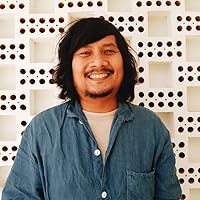
Mark Strand was a Pulitzer Prize-winning American poet, essayist, and translator. He was appointed Poet Laureate Consultant in Poetry to the Library of Congress in 1990. He was a professor of English at Columbia University and also taught at numerous other colleges and universities.
Strand also wrote children's books and art criticism, helped edit several poetry anthologies and translated Spanish poet Rafael Alberti.
Ah, translation - "the art of failure." Such a complicated matter, communicating between languages, cultures, ages... It's hard enough just translating between individuals.
Mark Strand (1934-2014) was an occasional translator and a cursory websearch reveals that his own poetry has been translated into Italian, Spanish, Dutch and Arabic, at least. He said in an interview (to be found in Strand, A Profile) that he chose to translate poets who spoke to him sufficiently strongly that he could bring them into his own idiom. Some poems he found too challenging to translate but so stimulating that he wrote poems for which the originals were models or motive forces or bits of sand around which he could accrete a poem. The matter was strongly on his mind, to the point that in his wonderful The Continuous Life there is a very funny prose-poem about various views on translation.
But, well beyond that, there is his very unusual The Monument (1978), a mixture of quotations, prose and poetry in which the controlling conceit is that he is addressing a person who will translate his (Strand's) work some time in the very distant future.
Walter Benjamin dreamed of a book that would consist only of perfectly chosen quotations that complemented and extended each other in such a manner that the reader would be stunned by the resultant insights. The Monument is not that book, but the quotations are well chosen and are not epigrammatic ornamentation but intrinsic components of this non-deductive, nonlinear, self-contradictory, deeply associative meditation. Then do thy office, Muse; I teach thee how To make him seem, long hence, as he shows now.
This element of translation into the future is the motive force of this book, for this poet so obsessed with death, with disappearance, with absence, already from the beginning of his work. Strand said in the above-mentioned interview, "I started writing The Monument and it became less and less about the translator of a particular text, and more about the translation of a self, and the text as self, the self as book." Oh, and how he plays with this in tones of irony, of hope, of dismissal - above all, of irony! This poor document does not have to do with a self, it dwells on the absence of a self. I--and this pronoun will have to do--have not permitted anything worthwhile to be part of this communication that strains even to exist in a language other than the one in which it was written. So much is excluded that it could not be a document of self-centeredness. If it is a mirror to anything, it is to the gap between the nothing that was and the nothing that will be. It is a thread of longing that binds past and future. Again, it is everything that history is not.
Along with all this, Strand entertained himself by building in a parody of Walt Whitman's Song of Myself - not only is Strand's book written in 52 sections like Whitman's text, but a negation of Whitman's poem occurs as an organic component of The Monument:
Song Of Myself First silence, then some humming, then more silence, then nothing, then more nothing, then silence, then more silence, then nothing.
Song of My Other Self: There is no other self.
The Wind’s Song: Get out of my way.
The Sky’s Song: You’re less than a cloud.
The Tree’s Song: You’re less than a leaf.
The Sea’s Song: You’re a wave, less than a wave.
The Sun’s Song: You’re the moon’s child.
The Moon’s Song: You’re no child of mine.
Nonetheless, he gives Whitman the last word...the last lines in The Monument are Whitman's.
Some readers will view The Monument as a rich poetic stimulus for meditation on "translation," self and continuance, but others will stare aghast as it disappears into a black hole of self-contradiction. Count me among the former.
Erigir un monumento a modo de presunta auto celebración para pasar la antorcha al lector, que este sea quien ponga de su cosecha literaria y vital para que las palabras pasen por el embudo de la traducción. Traspasándolas del inglés al español y de esa lengua al lenguaje unitario que cada quien lleva, el eterno retorno encarnado no será más que vacío.
“El monumento” me recuerda a ratos al Museo de la Novela de la Eterna del argentino Macedonio Fernández. El presente libro consiste en una obra poética que a cada momento pareciera comenzar a construirse en su textualidad, pero en el fondo hay mayor preocupación por pensar “con qué frecuencia nos damos a inventarnos a nosotros mismos, quizá una sola vez, aunque incluso digamos que somos otro, alguien muy parecido” (47). En esta línea, la poética se concibe desde la dualidad del nombrar y errar, asestar con el lenguaje los ladrillos de un legado que quizá a nadie le interese, pero vale más por su intencionalidad ardiente.
“Este pobre documento no tiene nada que ver con un yo, habita en la ausencia de un yo” (81). La disolución del ego se complementa con la interpelación directa, el monumento nos habla: “Solo te conozco a ti, adelantado a mi tiempo (…) Querido amigo, di algo sorprendente por mí” (91). Lo más probable es que no digamos nada, que más bien permanezcamos entregados a la lectura continua de un texto que a ratos entrega poesía, pero más bien postula una actitud dubitativa con su propia esencia, como queriendo romper la cuarta pared en una obra de teatro.
“Te abrazo en esta locura, esta muscular vocalización de posibles. (…) Quizá deberíamos callarnos, no decirlo y que los aires pasen, que pasen sin que lo sepan ellos mismos, no habiendo sido nunca acordados, nunca acordados en discordia, acordados inocuos” (125).
“hay un anhelo que no tiene voz pero la necesita, y teme que morirá de sí mismo” (129)
Just finished for a book club coupled with Whitman’s “Song of Myself.” I see the logic of pairing the two (the discussion will be interesting), but Whitman feels like an artless rant from Leviticus compared to Strand’s paradoxical and self-aware (and self-deprecating) humor.
Strand’s “Monument” fucks with my brain in the best of ways and the hilarious, overtly copious (but sincere?) footnotes are right up my ambiguous page-not-stage, uselessly educated alley. Highly recommended — but, spoiler, lots of death and not much sex.
The conceit used, where a monument talks with posterity is clever, and the things the monument says are intelligent. However, it turns out the monument itself is excerpts from old pieces of literature. And, really, I'm not looking for such an easy layer to be added to the book. I'd almost rather see the monument be anything but that.
Libro inclasificable que aborda el tema de la traducción y la posteridad, ese escenario o espacio invisible dotado de referencias, citas, conceptos, donde la poesía busca explicar y explicarse.
Clever, complicated, unclassifiable text that pleases with light touches such as lines like "I feel a surge of power, I, a single strand..." My next reading of this book, of which there must be one, will also require a reading of all of the references and citations that Strand has neatly organized in an acknowledgements page.