

What do you think?

Patriotic Gore: Studies in the Literature of the American Civil War
Critical/biographical portraits of such notable figures as Harriet Beecher Stowe, Abraham Lincoln, Ulysses S. Grant, Ambrose Bierce, Mary Chesnut, William Tecumseh Sherman, and Oliver Wendell Holmes prove Wilson to be the consummate witness to the most eloquently recorded era in American history.
850 pages, Paperback
First published January 1, 1962
About the author
Edmund Wilson
173 books164 followersLibrarian Note: There is more than one author by this name in the Goodreads database. See also physicist Edmund Wilson.
Edmund Wilson Jr. was a towering figure in 20th-century American literary criticism, known for his expansive intellect, stylistic clarity, and commitment to serious literary and political engagement. Over a prolific career, Wilson wrote for Vanity Fair, The New Republic, The New Yorker, and The New York Review of Books, shaping the critical conversation on literature, politics, and culture. His major critical works—such as Axel's Castle and Patriotic Gore—combined literary analysis with historical insight, and he ventured boldly into subjects typically reserved for academic specialists, including the Dead Sea Scrolls, Native American cultures, and the American Civil War.
Wilson was also the author of fiction, memoirs, and plays, though his influence rested most strongly on his literary essays and political writing. He was instrumental in promoting the reputations of F. Scott Fitzgerald, Ernest Hemingway, William Faulkner, Vladimir Nabokov, and many others. Despite his friendships with several of these authors, his criticism could be unflinching, even scathing—as seen in his public dismissal of H. P. Lovecraft and J. R. R. Tolkien. His combative literary style often drew attention, and his exacting standards for writing, along with his distaste for popular or commercial literature, placed him in a tradition of high-minded literary seriousness.
Beyond the realm of letters, Wilson was politically active, aligning himself at times with socialist ideals and vocally opposing Cold War policies and the Vietnam War. His principled refusal to pay income tax in protest of U.S. militarization led to a legal battle and a widely read protest book.
Wilson was married four times and had several significant personal and intellectual relationships, including with Fitzgerald and Nabokov. He also advocated for the preservation and celebration of American literary heritage, a vision realized in the creation of the Library of America after his death. For his contributions to American letters, Wilson received multiple honors, including the Presidential Medal of Freedom. His legacy endures through his extensive body of work, which remains a touchstone for literary scholars and general readers alike.
Edmund Wilson Jr. was a towering figure in 20th-century American literary criticism, known for his expansive intellect, stylistic clarity, and commitment to serious literary and political engagement. Over a prolific career, Wilson wrote for Vanity Fair, The New Republic, The New Yorker, and The New York Review of Books, shaping the critical conversation on literature, politics, and culture. His major critical works—such as Axel's Castle and Patriotic Gore—combined literary analysis with historical insight, and he ventured boldly into subjects typically reserved for academic specialists, including the Dead Sea Scrolls, Native American cultures, and the American Civil War.
Wilson was also the author of fiction, memoirs, and plays, though his influence rested most strongly on his literary essays and political writing. He was instrumental in promoting the reputations of F. Scott Fitzgerald, Ernest Hemingway, William Faulkner, Vladimir Nabokov, and many others. Despite his friendships with several of these authors, his criticism could be unflinching, even scathing—as seen in his public dismissal of H. P. Lovecraft and J. R. R. Tolkien. His combative literary style often drew attention, and his exacting standards for writing, along with his distaste for popular or commercial literature, placed him in a tradition of high-minded literary seriousness.
Beyond the realm of letters, Wilson was politically active, aligning himself at times with socialist ideals and vocally opposing Cold War policies and the Vietnam War. His principled refusal to pay income tax in protest of U.S. militarization led to a legal battle and a widely read protest book.
Wilson was married four times and had several significant personal and intellectual relationships, including with Fitzgerald and Nabokov. He also advocated for the preservation and celebration of American literary heritage, a vision realized in the creation of the Library of America after his death. For his contributions to American letters, Wilson received multiple honors, including the Presidential Medal of Freedom. His legacy endures through his extensive body of work, which remains a touchstone for literary scholars and general readers alike.
Ratings & Reviews
Friends & Following
Create a free account to discover what your friends think of this book!
Community Reviews
Displaying 1 - 30 of 42 reviews

February 2, 2010
Patriotic Gore (1962) is the big book of Wilson’s final decade and in the dust jacket photo he looks just the toothless, growling old cuss one meets in “The Critic in Winter,” Updike’s worthwhile review of the late journals. Wilson spent his last summers in a decaying corner of Upstate New York, alone in the stately pile his wife refused to live in for more than a week at a time. The windows of the place were an anthology of friends’ verse, Wilson having got Auden and Nabokov and others to inscribe panes with a diamond pencil. Over one of the fireplaces hung an old Civil War musket that he would seize and brandish at the damned kids who liked to drag race past his property. His country amusements were drinking and reading through the dead of night. He would sit up in the library swallowing martinis while chewing through the entire Comédie humaine. “Balzac, though Wilson laments his ‘preposterous’ improbabilities and oppressive ‘murkiness and squalor,’ becomes the critic’s faithful companion, novel after novel, like a raffish buddy indulged for his irrepressible vitality by a superior, more serious friend.” “As the shadows close around him in these journals,” Updike finishes, “Wilson seems, with his Balzac, his martinis, and his night thoughts, grouchily at home.”
That’s a striking picture but I’ve wandered far from what I want to say. Which is that the author of Patriotic Gore is the young Wilson, the Wilson of the 1920s. The disillusioned WWI veteran, the fellow traveler. It is appropriate, and no paradox, that the writer who wanted to remove the war from “the old plane of morality”—who in a polemical preface reduced the victorious Union to a “sea slug” “gobbling up smaller organisms through an orifice at one end of its body”—who claimed to find “in most of us an unreconstructed Southerner who will not accept domination”—was not a ruined and romancing prince of the Cotton Kingdom, but a bourgeois born in 1895, into one of those affluent Northern households whose library was a shrine of Lincolnania, where also the “thick pair of volumes” of Grant’s Personal Memoirs “used to stand, like a solid attestation of the victory of the Union forces.” David Blight calls Wilson’s father “a stalwart, civic example of the post-Civil War Republican Party—a good railroad lawyer, strong on business and the tariff, patriotic and devoted to the republic that had prevailed in the 1860s against the rebel South.” Wilson rebelled against not just household gods (first to reverence, then to take for granted, and finally to scorn, whatever they happen to be), but the whole Gilded Age, with its political complacency, natural to the victorious side of a civil war; its corporate gigantism, and government of Big Business, by Big Business, and for Big Business; its specious humanitarianism, an imperially instrumental sentimentality that reaches perfection in President McKinley’s excuse for annexing the Philippines (“to educate the Filipinos, and uplift and civilize and Christianize them, and by God’s grace do the very best we could by them, as our fellow-men for whom Christ also died”—the Filipinos who had been absorbing Catholicism from the Spanish since the 1600s), and which was doubtless sickeningly familiar to the young Wilson shipped to France in 1917 with a fatuous war-cry ringing in his ears (“To make the world safe for democracy”) and a canting confidence that America only makes war to liberate the oppressed.
How do you remove the war entirely from “the old plane of morality” when a militarily decisive group of participants was fighting for the most basic human rights—fighting, in some cases, to liberate their own families? Easy—you ignore that group. The famous flaw of Patriotic Gore is the absence of any black writers other than Charlotte Forten, a young Salem, Massachusetts schoolteacher who like many of her colleagues went south, freighted with secondhand readers and donated clothing, to civilize freedpeople in the Union-occupied zones. Her diary seems a valuable account of the double consciousness and unceasing anxiety of a black girl living in very white Salem; and once south, in the Sea Islands of South Carolina, she garlands the white colonels of black regiments, Thomas Wentworth Higginson and the soon-sacrificed Shaw, with interesting, inscrutable innuendoes that may indicate actual moonlit trysts, or else an overworked fantasy life. But while very interesting, as a token Forten is inadequate. At first, I assumed Wilson ignored the black freedom struggle because the slaves were, for him, but the sentimental dressing of the Northern war engine. The Helpless Innocents of propaganda, crying out for Intervention, forerunners of the Cuban freedom fighters massacred by Spain, of the French milkmaids and Belgian nuns ravished by the spike-helmed Hun. But Wilson praises Whitman’s “Ethiopia Saluting the Colors” and Higginson’s account of freedpeople singing “My Country, ‘Tis of Thee,” for their presentation of proudly civic, self-determining blacks, far more lifelike than “the slave in chains who has become a stock property of anti-slavery literature.” Well, Wilson, if you enjoy militant expressions of black political will, where is Frederick motherfucking Douglass? Douglass thrashed the locally renowned “slavebreaker” hired to tame him, sailed away north clutching the Columbian Orator, and crisscrossed the North in 1863 exhorting black men to join Lincoln’s Federally-sponsored slave revolt: “By every consideration which binds you to your enslaved fellow countrymen; by every aspiration which you cherish for the freedom and equality of yourselves and your children; by all the ties of blood and identity which make us one with the brave black men now fighting our battles in Louisiana and South Carolina, I urge you to fly to arms, and smite with death the power that would bury the government and your liberty in the same hopeless grave”; “the arm of the slave…the best defense against the arm of the slaveholder!” Wilson’s neglect of Douglass occasioned a sharp exchange at the centennial symposium Princeton, Wilson’s alma mater, hosted in 1995. Randall Kennedy got into with it Arthur Schlesinger and C. Vann Woodward. At the transcript’s pitch of acrimony Toni Morrison rises majestically—could she rise any other way?—from the audience and proceeds to locate and so expiate the “unease [which] has crept into this gathering at the intrusion of race and the possibility of racism into our discussion about Edmund Wilson.” Morrison nods to Kennedy’s point but calls Wilson a “grand man of letters” who could write damn well what he pleased. The “burden of inclusiveness” is one she herself found irksome. I substantially agree with Morrison. Wilson is so brilliant, he gets away with murder. Hence the 5 stars.
But before I praise Wilson, I must finish bitching about him. Most annoying is his conceit that he is nobody’s fool, even as he advances many of the intellectual fashions of his time and indulges nostalgias common in his generation. Wilson dismissed Nabokov’s disdain for Lenin as something conditioned by class and circumstance, aristocracy and exile, while thinking his own youthful admiration of Lenin anything but: brave and anomalous and oh so laudably unlikely in the son of Republican corporate lawyer. Like Strachey, Wilson sneers at the late Victorians while idealizing their immediate predecessors. Patriotic Gore contains some lovely Currier and Ives prints of the antebellum order—“the world of early America just after the Revolution—loose settlements and pleasant towns growing up on the banks of great rivers and on the edge of mysterious wilds”—a rustic republic, bucolic and contented, whose doom is the day “the cities of the East expand, with their tightening reticulation of railroads, their landscape-annihilating factories.” He calls the death of Confederate Vice-President Alexander Stephens “the death of the old political South—the South of Jefferson and Madison, of Randolph, Calhoun and Clay, of the landowners’ and merchants’ republic, of the balance of power in Congress, of the great collaboration and the great debates.”
Lovely prints, yes; static idylls which imply that the United States might not have become a rapacious power; that because the South was defeated, the South was benign; that because the big slave-owners surrendered the “rod of empire,” they never wielded or wanted it. It seems to me that a really relentless skeptic, such as Wilson fancied himself, one who owed no deference to any text or creed or national myth, would have found no utopia in the American past—would have seen the Civil War as simply the replacement of an obsolete, aristocratic style of rapacity, an old model of exploitative expansion, with one newer and better suited to the democratic conceits of the mid-19th century. The filibustering expeditions which in the 1850s set out, with the tacit approval of federal authorities beholden to proslavery interests, to invade and annex Cuba and Nicaragua, did so in a style as old as Cortés. Those aspiring planters sallied forth as had the conquistadors. They were commoner captains and would-be squires in search of dense concentrations of slaves, whose elites they would destroy and replace with themselves. That’s how the colonies of the Americas were largely founded—exceptions include New England, and, crucially, the Northern belt of the United States heavily settled by New Englanders and by white refugees from the static slave oligarchies. In the wake of the American Revolution, in the age of radical Democracy, that North produced a new agent of empire, the white settler-farmer. The unleashed Everyman, well-armed and self-transported (before the war a Conestoga wagon; after, a railway ticket), his activities of expansion and expropriation and, yes, of genocide having the alibi of Progress, of Liberty, of A Farm of One’s Own.
Wilson could have damned the Northern leadership of American expansion without romancing the South or whitewashing its own dreams of a Caribbean empire for slavery, simply by arguing, as Dominic Lieven has, that indigenous peoples probably had more to fear—though not much more—from hordes of common settlers than from small, merely parasitic bands of would-be aristocrats:
But I’ll stop. I’m in deep waters here, and bored by my own review. What’s Lieven doing in here? Chalk it up to a bottle of wine and all my books being within reach; to last night's manic associative buzz. The historiography of Patriotic Gore is baldly reactive, petulant, distorted by a need of Utopias, alternately cynical and starry-eyed (much like To The Finland Station), and at points little more than a hodgepodge of Lost Cause tropes that might have shocked Wilson’s father’s generation, but which were in 1962—shit, in 1915, when Woodrow Wilson screened Birth of a Nation at the White House—solidly mainstream, and shortly passé. Wilson’s humanism, though, is a thing to treasure. Patriotic Gore is something great; and mine is a mean summary. It is simply the most vivid book about the American Civil War that I have yet read. Whitman’s Specimen Days, his sketch album of army camps and vigils beside hospital cots, is the saddest, and the most beautiful; and Mary Chesnut may yet rock my world; and the pleasures of Foote loom like Proust’s; but for now Patriotic Gore is tops. Opening it, you hear the dead.
I think you will come to Balzac yet. When one has disproved all one’s theories, outgrown all of one’s standards, discarded all one’s criterions, and left off minding about one’s appearance, one comes to Balzac. And there he is, waiting outside his canvas tent—with such a circus going on inside.
Sylvia Townsend Warner to William Maxwell, 28 January 1961
That’s a striking picture but I’ve wandered far from what I want to say. Which is that the author of Patriotic Gore is the young Wilson, the Wilson of the 1920s. The disillusioned WWI veteran, the fellow traveler. It is appropriate, and no paradox, that the writer who wanted to remove the war from “the old plane of morality”—who in a polemical preface reduced the victorious Union to a “sea slug” “gobbling up smaller organisms through an orifice at one end of its body”—who claimed to find “in most of us an unreconstructed Southerner who will not accept domination”—was not a ruined and romancing prince of the Cotton Kingdom, but a bourgeois born in 1895, into one of those affluent Northern households whose library was a shrine of Lincolnania, where also the “thick pair of volumes” of Grant’s Personal Memoirs “used to stand, like a solid attestation of the victory of the Union forces.” David Blight calls Wilson’s father “a stalwart, civic example of the post-Civil War Republican Party—a good railroad lawyer, strong on business and the tariff, patriotic and devoted to the republic that had prevailed in the 1860s against the rebel South.” Wilson rebelled against not just household gods (first to reverence, then to take for granted, and finally to scorn, whatever they happen to be), but the whole Gilded Age, with its political complacency, natural to the victorious side of a civil war; its corporate gigantism, and government of Big Business, by Big Business, and for Big Business; its specious humanitarianism, an imperially instrumental sentimentality that reaches perfection in President McKinley’s excuse for annexing the Philippines (“to educate the Filipinos, and uplift and civilize and Christianize them, and by God’s grace do the very best we could by them, as our fellow-men for whom Christ also died”—the Filipinos who had been absorbing Catholicism from the Spanish since the 1600s), and which was doubtless sickeningly familiar to the young Wilson shipped to France in 1917 with a fatuous war-cry ringing in his ears (“To make the world safe for democracy”) and a canting confidence that America only makes war to liberate the oppressed.
How do you remove the war entirely from “the old plane of morality” when a militarily decisive group of participants was fighting for the most basic human rights—fighting, in some cases, to liberate their own families? Easy—you ignore that group. The famous flaw of Patriotic Gore is the absence of any black writers other than Charlotte Forten, a young Salem, Massachusetts schoolteacher who like many of her colleagues went south, freighted with secondhand readers and donated clothing, to civilize freedpeople in the Union-occupied zones. Her diary seems a valuable account of the double consciousness and unceasing anxiety of a black girl living in very white Salem; and once south, in the Sea Islands of South Carolina, she garlands the white colonels of black regiments, Thomas Wentworth Higginson and the soon-sacrificed Shaw, with interesting, inscrutable innuendoes that may indicate actual moonlit trysts, or else an overworked fantasy life. But while very interesting, as a token Forten is inadequate. At first, I assumed Wilson ignored the black freedom struggle because the slaves were, for him, but the sentimental dressing of the Northern war engine. The Helpless Innocents of propaganda, crying out for Intervention, forerunners of the Cuban freedom fighters massacred by Spain, of the French milkmaids and Belgian nuns ravished by the spike-helmed Hun. But Wilson praises Whitman’s “Ethiopia Saluting the Colors” and Higginson’s account of freedpeople singing “My Country, ‘Tis of Thee,” for their presentation of proudly civic, self-determining blacks, far more lifelike than “the slave in chains who has become a stock property of anti-slavery literature.” Well, Wilson, if you enjoy militant expressions of black political will, where is Frederick motherfucking Douglass? Douglass thrashed the locally renowned “slavebreaker” hired to tame him, sailed away north clutching the Columbian Orator, and crisscrossed the North in 1863 exhorting black men to join Lincoln’s Federally-sponsored slave revolt: “By every consideration which binds you to your enslaved fellow countrymen; by every aspiration which you cherish for the freedom and equality of yourselves and your children; by all the ties of blood and identity which make us one with the brave black men now fighting our battles in Louisiana and South Carolina, I urge you to fly to arms, and smite with death the power that would bury the government and your liberty in the same hopeless grave”; “the arm of the slave…the best defense against the arm of the slaveholder!” Wilson’s neglect of Douglass occasioned a sharp exchange at the centennial symposium Princeton, Wilson’s alma mater, hosted in 1995. Randall Kennedy got into with it Arthur Schlesinger and C. Vann Woodward. At the transcript’s pitch of acrimony Toni Morrison rises majestically—could she rise any other way?—from the audience and proceeds to locate and so expiate the “unease [which] has crept into this gathering at the intrusion of race and the possibility of racism into our discussion about Edmund Wilson.” Morrison nods to Kennedy’s point but calls Wilson a “grand man of letters” who could write damn well what he pleased. The “burden of inclusiveness” is one she herself found irksome. I substantially agree with Morrison. Wilson is so brilliant, he gets away with murder. Hence the 5 stars.
But before I praise Wilson, I must finish bitching about him. Most annoying is his conceit that he is nobody’s fool, even as he advances many of the intellectual fashions of his time and indulges nostalgias common in his generation. Wilson dismissed Nabokov’s disdain for Lenin as something conditioned by class and circumstance, aristocracy and exile, while thinking his own youthful admiration of Lenin anything but: brave and anomalous and oh so laudably unlikely in the son of Republican corporate lawyer. Like Strachey, Wilson sneers at the late Victorians while idealizing their immediate predecessors. Patriotic Gore contains some lovely Currier and Ives prints of the antebellum order—“the world of early America just after the Revolution—loose settlements and pleasant towns growing up on the banks of great rivers and on the edge of mysterious wilds”—a rustic republic, bucolic and contented, whose doom is the day “the cities of the East expand, with their tightening reticulation of railroads, their landscape-annihilating factories.” He calls the death of Confederate Vice-President Alexander Stephens “the death of the old political South—the South of Jefferson and Madison, of Randolph, Calhoun and Clay, of the landowners’ and merchants’ republic, of the balance of power in Congress, of the great collaboration and the great debates.”
Lovely prints, yes; static idylls which imply that the United States might not have become a rapacious power; that because the South was defeated, the South was benign; that because the big slave-owners surrendered the “rod of empire,” they never wielded or wanted it. It seems to me that a really relentless skeptic, such as Wilson fancied himself, one who owed no deference to any text or creed or national myth, would have found no utopia in the American past—would have seen the Civil War as simply the replacement of an obsolete, aristocratic style of rapacity, an old model of exploitative expansion, with one newer and better suited to the democratic conceits of the mid-19th century. The filibustering expeditions which in the 1850s set out, with the tacit approval of federal authorities beholden to proslavery interests, to invade and annex Cuba and Nicaragua, did so in a style as old as Cortés. Those aspiring planters sallied forth as had the conquistadors. They were commoner captains and would-be squires in search of dense concentrations of slaves, whose elites they would destroy and replace with themselves. That’s how the colonies of the Americas were largely founded—exceptions include New England, and, crucially, the Northern belt of the United States heavily settled by New Englanders and by white refugees from the static slave oligarchies. In the wake of the American Revolution, in the age of radical Democracy, that North produced a new agent of empire, the white settler-farmer. The unleashed Everyman, well-armed and self-transported (before the war a Conestoga wagon; after, a railway ticket), his activities of expansion and expropriation and, yes, of genocide having the alibi of Progress, of Liberty, of A Farm of One’s Own.
Thunder on! stride on, Democracy! strike with vengeful stroke!
I have witness'd the true lightning, I have witness'd my cities electric,
I have lived to behold man burst forth and warlike America rise...
(Whitman, "Rise, O days")
Wilson could have damned the Northern leadership of American expansion without romancing the South or whitewashing its own dreams of a Caribbean empire for slavery, simply by arguing, as Dominic Lieven has, that indigenous peoples probably had more to fear—though not much more—from hordes of common settlers than from small, merely parasitic bands of would-be aristocrats:
In contemporary White consciousness aristocratic imperialists and, still more, slave-owners enjoy little sympathy. By contrast, the farmer-settler, Everyman’s ancestor, is admired and even romanticized. From the point of view of the subjected indigenous peoples this makes little sense. An imported aristocratic ruling class was generally either assimilated (as in England) or ultimately marginalized and expelled (as in Ireland). Indigenous society and culture was much more likely to be destroyed in the long run by a mass of alien colonists, particularly if its land was expropriated.
But I’ll stop. I’m in deep waters here, and bored by my own review. What’s Lieven doing in here? Chalk it up to a bottle of wine and all my books being within reach; to last night's manic associative buzz. The historiography of Patriotic Gore is baldly reactive, petulant, distorted by a need of Utopias, alternately cynical and starry-eyed (much like To The Finland Station), and at points little more than a hodgepodge of Lost Cause tropes that might have shocked Wilson’s father’s generation, but which were in 1962—shit, in 1915, when Woodrow Wilson screened Birth of a Nation at the White House—solidly mainstream, and shortly passé. Wilson’s humanism, though, is a thing to treasure. Patriotic Gore is something great; and mine is a mean summary. It is simply the most vivid book about the American Civil War that I have yet read. Whitman’s Specimen Days, his sketch album of army camps and vigils beside hospital cots, is the saddest, and the most beautiful; and Mary Chesnut may yet rock my world; and the pleasures of Foote loom like Proust’s; but for now Patriotic Gore is tops. Opening it, you hear the dead.

March 27, 2024
there's a spectre haunting Wilson, the spectre of abolitionists!
This is, more often than not, a fantastic survey of Mid-19th century literature that circled the Civil War. Great readings on the memoirs of Grant, Sherman, and Stephens. The diaries of the southern bells and nihilism of the novelists after the war. But the strangeness starts with the barebones analysis of Lincoln's writings. A man, who more than anyone else, shaped the meaning of the war with his words. And you soon find out this is part of a larger problem.
Wilson seems to have not seriously challenged the received wisdom of the Civil War at the time of writing this. That the Civil War was essentially a disagreement on nothing in particular that went too far. Not to say that's not at the very least an argument that can be made and defended, but the quick skip past any northern writer with a righteous point of view, and the total absence of abolitionist writers: Solomon Northup, William Lloyd Garrison, even Frederick Douglass! The silence calls attention to an actual fear of defending his thesis. Rather than addressing head-on, it's just assumed this is a Euclidean fact of the war, that slavery was a parochial issue in American life and the war itself, and the champions of its destruction weren't really a part of this history. All of which reveals unfortunately a strain of deeply unserious thinking on the part of Wilson.
Patriotic Gore is good, sometimes great, and I already have a stack of books to read that this work highlighted. But as a meditation on America and the Civil War, it's fatally flawed.
This is, more often than not, a fantastic survey of Mid-19th century literature that circled the Civil War. Great readings on the memoirs of Grant, Sherman, and Stephens. The diaries of the southern bells and nihilism of the novelists after the war. But the strangeness starts with the barebones analysis of Lincoln's writings. A man, who more than anyone else, shaped the meaning of the war with his words. And you soon find out this is part of a larger problem.
Wilson seems to have not seriously challenged the received wisdom of the Civil War at the time of writing this. That the Civil War was essentially a disagreement on nothing in particular that went too far. Not to say that's not at the very least an argument that can be made and defended, but the quick skip past any northern writer with a righteous point of view, and the total absence of abolitionist writers: Solomon Northup, William Lloyd Garrison, even Frederick Douglass! The silence calls attention to an actual fear of defending his thesis. Rather than addressing head-on, it's just assumed this is a Euclidean fact of the war, that slavery was a parochial issue in American life and the war itself, and the champions of its destruction weren't really a part of this history. All of which reveals unfortunately a strain of deeply unserious thinking on the part of Wilson.
Patriotic Gore is good, sometimes great, and I already have a stack of books to read that this work highlighted. But as a meditation on America and the Civil War, it's fatally flawed.

February 9, 2016
This is a book whose potential greatness is undermined by a fatal omission. Wilson does not include any discussion of a collection of writings which is essential to any consideration of the period, particularly when one is viewing it through its literature: slave narratives. Not only does he not discuss them at the same length he allots to military memoirs, which I would consider the minimum amount of attention they require in this book, he does not so much as mention them, not even provide a hint anywhere in the text of their existence. Why?
I am reluctant to consider Wilson a racist, as there is no positive evidence for such a charge. I think rather that the exclusion is a matter of special pleading. Wilson accepts the idea that the Confederate states seceded not to preserve slavery but to maintain state sovereignty in the face of an increasingly powerful Federal government. This was a widely-held, but by no means universal belief at the time. Wilson has bought into this interpretation not only intellectually, but emotionally; he needs there to be a legitimate and legally supportable argument for Southern secession. At the time the book was written he was being held liable for back taxes, penalties, and fines for having failed (or refused, I’ve read different accounts) to pay his federal income tax for a number of years. Probably as a result of this, Wilson has some personal animus against the federal government which on a few occasions makes it into the text:
None of this would matter if Patriotic Gore were otherwise a bad or negligible book, but it is not. It is an outstanding work of synoptic literary criticism that, by finding interrelationships of theme, motivation, and experience in the lives and works of its very disparate subjects, forges a persuasive narrative of the new birth of a national literature. But the exclusion of such an important group of voices which should have been central to the narrative results in the picture being highly distorted in important areas and historically false in others. The pity is that the very real virtues and authority of Wilson’s achievement make it unlikely that any subsequent scholar will undertake or accomplish a similarly vast but more inclusive and accurate synthesis.
Only one African-American is included among the writers Wilson discusses, Charlotte Forten, a young lady formally educated in New England and at least four generations removed from slavery, who spent some time during the war teaching former slaves on the Sea Islands of South Carolina. The “moonlight and magnolias” passages Wilson quotes from her diary give a more traditionally romantic picture of the South than most of the Southern white authors he includes in later pages. The sentiments and emotions she expresses are appropriate for a young woman of her background in her situation, but her inclusion does almost nothing to capture the relevant experience of the vast majority of African-Americans, slave or free, North or South, during this period.
The absence of any consideration of the experience of slaves becomes increasingly a liability as Wilson’s survey moves south and he discusses works that seek to justify the institution of slavery. In his long chapter on Alexander H. Stephens, vice-president of the Confederacy, he describes the treatment Stephens and President Jefferson Davis received after the war at the hands of their Federal jailors. These are presented as shocking and unjust cruelties; a previous discussion of slave narratives, however, would have shown the reader that the treatment of these officials that so outraged the prisoners, their supporters, and even many of their onetime foes, was in almost every particular no more cruel or extreme than the common treatment of slaves in their daily lives. The trials inflicted on Davis and Stephens, shackling (only Davis, who spent 5 days in shackles), confinement, separation from their families and friends with no possibility of communication, unsanitary conditions, unhealthy diet, were treatments dealt out to slaves, not as punishment, but as standard and accepted practices in their being dealt with as human property.
Wilson repeats the then commonly accepted version of Reconstruction that depicts it as a tyrannical suppression of white Southerners by Radical Republicans and their freedmen allies, what one might ungenerously, but not totally inaccurately call The Birth of a Nation version of history. He has made no effort to correct or supplement this version by consulting W. E. B. DuBois’ Black Reconstruction in America, a 1935 book of whose existence Wilson surely was aware. So blinded is the author by this version of history that it leads him to misrepresent his own material. He presents the story of Federal judge and novelist Albion W. Tourgée’s years in North Carolina (1965-1876) as one in which the judge went from support of Reconstruction to sympathy for the cause of Southern whites, but while, as a novelist, Tourgée appears to have striven for understanding and an even-handed representation of his characters' situations and motivations, the story Wilson tells of citizen Tourgée is one of a man who, after years of working for the civil rights of former slaves and resisting the terrorism of the Klan, finally had to surrender the fight in the face of Southern white intransigence and Northern indifference.
Perhaps Wilson’s understanding of Tourgée’s surrender as a change of heart is explained in his last chapter, on Justice Oliver Wendell Holmes. This makes for an interesting conclusion, showing how Holmes’ experience in the war left a lasting impression on his thinking and, through his legal opinions and writings, on 20th century US law. This is the most disorganized chapter in the book, presenting a chronologically confusing account of Holmes’ years on the bench and allowing the justice to repeat himself by quoting different letters to different correspondents in which he makes the same points and observations, often almost verbatim. This chapter serves to provide a foundation for Wilson’s own cynical take on history which he outlined in his introduction, by citing Holmes’ opinion, as stated in his letters, that strength and ruthlessness determine right and wrong, that the laws and morals which ultimately triumph are those for which the most men are willing to kill and be killed. This would mean that slavery is morally wrong only because the North emerged victorious in the Civil War and presumably, though neither Wilson nor Holmes as quoted by Wilson says so explicitly, if the victory had gone the other way, the continuation and extension of slavery would have consequently been accepted as morally justified.
Those interested in reading more on Wilson’s book may enjoy this Slate article I discovered while working out my own reactions. The article spends far too much space on Wilson’s admittedly controversial introduction, which is only 24 pages, paginated separately from the main text. In discussing the main text, however, it is a pretty fair treatment of Wilson’s book on the 50th anniversary of its publication. The only point in which I would disagree with the author is that I do not feel Wilson’s chapter on Harriet Beecher Stowe gives an adequate discussion of Uncle Tom’s Cabin, although it is well worth reading for its comprehensive and informative narrative of her life and discussion of her now unknown later novels.
Postscriptum.I think the following passage probably cured me forever from wanting to read Henry James at any length. It is the quintessence of James “chewing more than he bit off”. It is excerpted from a much longer quotation Wilson makes from the memoir, Notes of a Son and Brother concerning an extremely vague injury James suffered in 1861.
I am reluctant to consider Wilson a racist, as there is no positive evidence for such a charge. I think rather that the exclusion is a matter of special pleading. Wilson accepts the idea that the Confederate states seceded not to preserve slavery but to maintain state sovereignty in the face of an increasingly powerful Federal government. This was a widely-held, but by no means universal belief at the time. Wilson has bought into this interpretation not only intellectually, but emotionally; he needs there to be a legitimate and legally supportable argument for Southern secession. At the time the book was written he was being held liable for back taxes, penalties, and fines for having failed (or refused, I’ve read different accounts) to pay his federal income tax for a number of years. Probably as a result of this, Wilson has some personal animus against the federal government which on a few occasions makes it into the text:
There are moments when one may wonder today – as one’s living becomes more and more hampered by the exactions of centralized bureaucracies of both the state and the federal authorities – whether it may not be true, as [Confederate Vice-President Alexander H.] Stephens said, that the cause of the South is the cause of us all. (434)In general Wilson skirts mentions of the cruelty and horrors of slavery, refusing, as if on principle, to repeat the substance of the attacks made by abolitionists, even when they form an essential element of the literature he discusses, as in Uncle Tom’s Cabin. Most of the criticisms of slavery he does cite are taken from the writings of Southern whites who, however they may have regretted or been repulsed by many or most aspects of the institution, nevertheless tolerated it in their daily lives. The reason for this de-emphasis seems to be that if slavery were seen to be the foremost issue in the war, or even as the issue at stake which most moves our emotions and humanity, then the cause of secession would be revealed as a cause in opposition to basic human rights and unworthy of the reader’s support.
None of this would matter if Patriotic Gore were otherwise a bad or negligible book, but it is not. It is an outstanding work of synoptic literary criticism that, by finding interrelationships of theme, motivation, and experience in the lives and works of its very disparate subjects, forges a persuasive narrative of the new birth of a national literature. But the exclusion of such an important group of voices which should have been central to the narrative results in the picture being highly distorted in important areas and historically false in others. The pity is that the very real virtues and authority of Wilson’s achievement make it unlikely that any subsequent scholar will undertake or accomplish a similarly vast but more inclusive and accurate synthesis.
Only one African-American is included among the writers Wilson discusses, Charlotte Forten, a young lady formally educated in New England and at least four generations removed from slavery, who spent some time during the war teaching former slaves on the Sea Islands of South Carolina. The “moonlight and magnolias” passages Wilson quotes from her diary give a more traditionally romantic picture of the South than most of the Southern white authors he includes in later pages. The sentiments and emotions she expresses are appropriate for a young woman of her background in her situation, but her inclusion does almost nothing to capture the relevant experience of the vast majority of African-Americans, slave or free, North or South, during this period.
The absence of any consideration of the experience of slaves becomes increasingly a liability as Wilson’s survey moves south and he discusses works that seek to justify the institution of slavery. In his long chapter on Alexander H. Stephens, vice-president of the Confederacy, he describes the treatment Stephens and President Jefferson Davis received after the war at the hands of their Federal jailors. These are presented as shocking and unjust cruelties; a previous discussion of slave narratives, however, would have shown the reader that the treatment of these officials that so outraged the prisoners, their supporters, and even many of their onetime foes, was in almost every particular no more cruel or extreme than the common treatment of slaves in their daily lives. The trials inflicted on Davis and Stephens, shackling (only Davis, who spent 5 days in shackles), confinement, separation from their families and friends with no possibility of communication, unsanitary conditions, unhealthy diet, were treatments dealt out to slaves, not as punishment, but as standard and accepted practices in their being dealt with as human property.
Wilson repeats the then commonly accepted version of Reconstruction that depicts it as a tyrannical suppression of white Southerners by Radical Republicans and their freedmen allies, what one might ungenerously, but not totally inaccurately call The Birth of a Nation version of history. He has made no effort to correct or supplement this version by consulting W. E. B. DuBois’ Black Reconstruction in America, a 1935 book of whose existence Wilson surely was aware. So blinded is the author by this version of history that it leads him to misrepresent his own material. He presents the story of Federal judge and novelist Albion W. Tourgée’s years in North Carolina (1965-1876) as one in which the judge went from support of Reconstruction to sympathy for the cause of Southern whites, but while, as a novelist, Tourgée appears to have striven for understanding and an even-handed representation of his characters' situations and motivations, the story Wilson tells of citizen Tourgée is one of a man who, after years of working for the civil rights of former slaves and resisting the terrorism of the Klan, finally had to surrender the fight in the face of Southern white intransigence and Northern indifference.
Perhaps Wilson’s understanding of Tourgée’s surrender as a change of heart is explained in his last chapter, on Justice Oliver Wendell Holmes. This makes for an interesting conclusion, showing how Holmes’ experience in the war left a lasting impression on his thinking and, through his legal opinions and writings, on 20th century US law. This is the most disorganized chapter in the book, presenting a chronologically confusing account of Holmes’ years on the bench and allowing the justice to repeat himself by quoting different letters to different correspondents in which he makes the same points and observations, often almost verbatim. This chapter serves to provide a foundation for Wilson’s own cynical take on history which he outlined in his introduction, by citing Holmes’ opinion, as stated in his letters, that strength and ruthlessness determine right and wrong, that the laws and morals which ultimately triumph are those for which the most men are willing to kill and be killed. This would mean that slavery is morally wrong only because the North emerged victorious in the Civil War and presumably, though neither Wilson nor Holmes as quoted by Wilson says so explicitly, if the victory had gone the other way, the continuation and extension of slavery would have consequently been accepted as morally justified.
Those interested in reading more on Wilson’s book may enjoy this Slate article I discovered while working out my own reactions. The article spends far too much space on Wilson’s admittedly controversial introduction, which is only 24 pages, paginated separately from the main text. In discussing the main text, however, it is a pretty fair treatment of Wilson’s book on the 50th anniversary of its publication. The only point in which I would disagree with the author is that I do not feel Wilson’s chapter on Harriet Beecher Stowe gives an adequate discussion of Uncle Tom’s Cabin, although it is well worth reading for its comprehensive and informative narrative of her life and discussion of her now unknown later novels.
Postscriptum.I think the following passage probably cured me forever from wanting to read Henry James at any length. It is the quintessence of James “chewing more than he bit off”. It is excerpted from a much longer quotation Wilson makes from the memoir, Notes of a Son and Brother concerning an extremely vague injury James suffered in 1861.
Jammed into the acute angle between two high fences, where the rhythmic play of my arms, in tune with that of several other pairs, but at a dire disadvantage of position, induced a rural, a rusty, a quasi-extemporised old engine to work and a saving stream to flow, I had done myself, in face of a shabby conflagration, a horrid even if an obscure hurt; and what was interesting from the first was my not doubting in the least its duration -- though what seemed equally clear was that I needn’t as a matter of course adopt and appropriate it, so to speak, or place it for increase of interest on exhibition. The interest of it, I very presently knew, would certainly be of the greatest, would even in conditions kept as simple as I might make them become little less than absorbing. The shortest account of what was to follow for a long time after is therefore to plead that the interest never did fail. It was naturally what is called a painful one, but it consistently declined, as an influence at play, to drop for a single instant. Circumstances, by a wonderful chance, overwhelmingly favoured it - as an interest, an inexhaustible, I mean; since I also felt in the whole enveloping tonic atmosphere a force promoting its growth. Interest, the interest of life and of death, of our national existence, of the fate of those, the vastly numerous, whom it closely concerned, the interest of the extending War, in fine, the hurrying troops, the transfigured scene, formed a cover for every sort of intensity, made tension itself in fact contagious so that almost any tension would do, would serve for one’s share.

February 15, 2008
impossibly bulky and ultra-erudite.
I came into this because I wanted to get more of Edmund Wilson, not so much for the thirst of knowledge about the Civil War.
I learned a lot. The Battle Hymn of The Republic was written as a sort of response to a set of Calvinist fever-dreams, Wilson's comparison of Lincoln with Lenin and Bismark (!), Stonewall Jackson's vacant inhumanity, Sidney Lanier's verse and Ambrose Bierce's morbid musings. The portrait of Oliver Wendell Holmes is brillaintly done, as is the one of Lee and of Jefferson Davis.
There are many small, tucked-away anecdotes within this text that wouldn't be out of place in something by Dickens or Balzac. Wilson had a thing about tiny cameos in his grand historical texts that neve cease to interest me and make me intrigued and make me chuckle.
If you are a Civil War buff this will pay back your time and attention many times over.
If not, just hang on and enjoy the ride.
The introduction is extremely wise, deep, and prophetic...."nations inhaling other nations like slugs..." watch out...
I came into this because I wanted to get more of Edmund Wilson, not so much for the thirst of knowledge about the Civil War.
I learned a lot. The Battle Hymn of The Republic was written as a sort of response to a set of Calvinist fever-dreams, Wilson's comparison of Lincoln with Lenin and Bismark (!), Stonewall Jackson's vacant inhumanity, Sidney Lanier's verse and Ambrose Bierce's morbid musings. The portrait of Oliver Wendell Holmes is brillaintly done, as is the one of Lee and of Jefferson Davis.
There are many small, tucked-away anecdotes within this text that wouldn't be out of place in something by Dickens or Balzac. Wilson had a thing about tiny cameos in his grand historical texts that neve cease to interest me and make me intrigued and make me chuckle.
If you are a Civil War buff this will pay back your time and attention many times over.
If not, just hang on and enjoy the ride.
The introduction is extremely wise, deep, and prophetic...."nations inhaling other nations like slugs..." watch out...

June 7, 2020
“A house divided against itself cannot stand. I believe this government cannot endure, permanently half slave and half free. I do not expect the Union to be dissolved — I do not expect the house to fall — but I do expect it will cease to be divided. It will become all one thing, or all the other.”
Abraham Lincoln
Edmund Wilson was a well known American essayist and literary critic from the 1920’s through the 1960’s. Patriotic Gore was published in 1962. Although it was a finalist for the National Book Award in Non Fiction, it feels quite dated. Wilson’s writing is erudite. While his arguments are well made they are often dry and often lack an insightful human angle. There are no writings from African Americans or anything from the slave’s perspective found here — despite this book’s focus on the Civil War.
Rather in this history of Civil War literature and memoirs from the 19th century he goes deep. Most of the authors he analyzes, beyond Lincoln and the Generals, are now considered obscure historical figures.
Since there isn’t a great deal of context in this book the enjoyment is likely proportional to how deeply grounded one is on the historical figures in each of the chapters. For example, the chapters on Lincoln, Grant and Sherman were quite good. As was the chapter on the Alexander Stephens, the former Vice President of the Confederacy, who began his memoir while in jail in Boston after the war.
I also liked the chapter on Ambrose Bierce, one of my favorite authors from the 19th century. I didn’t know that Bierce suffered so heavily with depression and so many episodes of PTSD. Or that he was a such a decorated soldier who fought in many of the major battles in the South. He wrote so convincingly of the horrors of war but served for three years and was the first in his town to enlist.
So in summary there are interesting sections but perhaps a larger number that were not so riveting.
3.5 stars. Probably most interesting to those who are students of the genre — that is Civil War literature from the 19th century.
Abraham Lincoln
Edmund Wilson was a well known American essayist and literary critic from the 1920’s through the 1960’s. Patriotic Gore was published in 1962. Although it was a finalist for the National Book Award in Non Fiction, it feels quite dated. Wilson’s writing is erudite. While his arguments are well made they are often dry and often lack an insightful human angle. There are no writings from African Americans or anything from the slave’s perspective found here — despite this book’s focus on the Civil War.
Rather in this history of Civil War literature and memoirs from the 19th century he goes deep. Most of the authors he analyzes, beyond Lincoln and the Generals, are now considered obscure historical figures.
Since there isn’t a great deal of context in this book the enjoyment is likely proportional to how deeply grounded one is on the historical figures in each of the chapters. For example, the chapters on Lincoln, Grant and Sherman were quite good. As was the chapter on the Alexander Stephens, the former Vice President of the Confederacy, who began his memoir while in jail in Boston after the war.
I also liked the chapter on Ambrose Bierce, one of my favorite authors from the 19th century. I didn’t know that Bierce suffered so heavily with depression and so many episodes of PTSD. Or that he was a such a decorated soldier who fought in many of the major battles in the South. He wrote so convincingly of the horrors of war but served for three years and was the first in his town to enlist.
So in summary there are interesting sections but perhaps a larger number that were not so riveting.
3.5 stars. Probably most interesting to those who are students of the genre — that is Civil War literature from the 19th century.

October 31, 2008
weird trim size makes it hard to keep book open. this is kind of a serious problem, when you are trying to read an 814 pg book
like 1/8 of this book is absolutely like a radio message from God, the other 7/8ths are mostly excerpts from Mary Chestnut's letters. Still, if you think about the Civil War a lot, this is crucial.
like 1/8 of this book is absolutely like a radio message from God, the other 7/8ths are mostly excerpts from Mary Chestnut's letters. Still, if you think about the Civil War a lot, this is crucial.

June 15, 2010
Excellent!

February 5, 2026
Wilson is a very sharp writer. My only complaint is that he apportions too much space to (imo) less significant figures, but even these sections are worth reading for his brilliant criticism. The last 200ish pages were too slow for my taste - mostly devoted to De Forest and Holmes - would rather have had more space for Lincoln, Grant, Stephens, etc.

April 30, 2014
I'd go as far as to call this an essential read. Wilson is an incredible historian and this is a masterful work of scholarship. Wilson is able to get at the very essence of everyone he turns his magnifying glass on, and these individuals come alive before your eyes in a way that I barely knew was possible.
But if that wasn't enough, what Wilson is really aiming at here is to pull back the veil of mythology surrounding the civil war, separating the war in fact from the war in retrospect. It's an astounding success. Time and time again, through every one of his chapters, he lays bare all the rhetoric of the war. For the South the war was about slavery. States rights was a pretext, propaganda by oligarchs protecting their feudal society. Even Alexander H. Stephens, the Vice President of the Confederacy, the one who most consistently presented the war as a struggle for a decentralized government, can barely separate his political ideas from his belief in the inferiority of African Americans. It being ludicrous and unnatural to suggest equality was possible for such an inferior group of people, an inferiority determined by God himself. (his words)
There is a great chapter in this book where Wilson goes one by one through the intellectuals of the South, showing the confounding moral and mental hoops they had to jump through to justify their system of society. Slavery is a disease that infects everyone associated with it.
However, the South was right about the North. The war was not about slavery in the North. This was an imperialistic war and Lincoln was a tyrant. Abolitionists were only a vocal minority. Slavery was only brought in as a justification once Lincoln saw which way the wind was blowing. The North had lost battle after battle and there was a real chance they would lose the whole war. Moreover, Europe was turning against the war and was about to recognize the Confederacy. Lincoln out maneuvered both situations with the Emancipation Proclamation. Now he had a moral cause to sell the war, increase his army, and trap Europe on the sidelines. In fact, part of Lincoln's genius was the way in which he perfected the formula that proceeds most of our wars, cloaking imperialism in western values to bring public support into line.
And if all that still isn't enough, Wilson's introduction is not to be missed. It's a classic.
But if that wasn't enough, what Wilson is really aiming at here is to pull back the veil of mythology surrounding the civil war, separating the war in fact from the war in retrospect. It's an astounding success. Time and time again, through every one of his chapters, he lays bare all the rhetoric of the war. For the South the war was about slavery. States rights was a pretext, propaganda by oligarchs protecting their feudal society. Even Alexander H. Stephens, the Vice President of the Confederacy, the one who most consistently presented the war as a struggle for a decentralized government, can barely separate his political ideas from his belief in the inferiority of African Americans. It being ludicrous and unnatural to suggest equality was possible for such an inferior group of people, an inferiority determined by God himself. (his words)
There is a great chapter in this book where Wilson goes one by one through the intellectuals of the South, showing the confounding moral and mental hoops they had to jump through to justify their system of society. Slavery is a disease that infects everyone associated with it.
However, the South was right about the North. The war was not about slavery in the North. This was an imperialistic war and Lincoln was a tyrant. Abolitionists were only a vocal minority. Slavery was only brought in as a justification once Lincoln saw which way the wind was blowing. The North had lost battle after battle and there was a real chance they would lose the whole war. Moreover, Europe was turning against the war and was about to recognize the Confederacy. Lincoln out maneuvered both situations with the Emancipation Proclamation. Now he had a moral cause to sell the war, increase his army, and trap Europe on the sidelines. In fact, part of Lincoln's genius was the way in which he perfected the formula that proceeds most of our wars, cloaking imperialism in western values to bring public support into line.
And if all that still isn't enough, Wilson's introduction is not to be missed. It's a classic.

August 24, 2009
A highly entertaining set of studies in "the literature of the American Civil War" -- that is, literature concerning slavery, literature produced during the war, and literature reflecting on the war afterward. Wilson sketches vivid portraits of both major figures like Harriet Beecher Stowe, Ulysses S. Grant, and William T. Sherman, and minor figures like Mary Chestnut, George Fitzhugh, and Albion Winegar Tourgée -- about thirty writers in all. (Not surprisingly, the northerners are generally better-known than the southerners.)
Wilson's main purpose is to humanize the war, to show it as a moment of emotional fervor and profound disruption in individual lives rather than as a world-historical event. This desire on Wilson's part results from a deep skepticism toward war in general. (And also, surely, from disgust with the Cold War in particular; he published Patriotic Gore in 1962.) In his introduction, Wilson explains that he believes that humans will always find ways to rationalize warfare, which ultimately stems from a universal lust for power. In the American Civil War, he argues, both sides developed such noble rationalizations. For many participants, however, the war was more of a mystical religious crusade, a grim personal encounter with fate, or a venting of old frustrations. Wilson does not really prove his case here -- and he certainly goes much too far in downplaying the political stakes of the war and in crediting certain disingenuous explanations. But he does succeed in making the war personal and vivid.
Wilson's main purpose is to humanize the war, to show it as a moment of emotional fervor and profound disruption in individual lives rather than as a world-historical event. This desire on Wilson's part results from a deep skepticism toward war in general. (And also, surely, from disgust with the Cold War in particular; he published Patriotic Gore in 1962.) In his introduction, Wilson explains that he believes that humans will always find ways to rationalize warfare, which ultimately stems from a universal lust for power. In the American Civil War, he argues, both sides developed such noble rationalizations. For many participants, however, the war was more of a mystical religious crusade, a grim personal encounter with fate, or a venting of old frustrations. Wilson does not really prove his case here -- and he certainly goes much too far in downplaying the political stakes of the war and in crediting certain disingenuous explanations. But he does succeed in making the war personal and vivid.

March 7, 2016
Edmund Wilson strips the Civil War of all romance but also of all political purpose in this collection of essays on the American Civil War. He begins with an account of two voracious sea slugs happening upon one another on the ocean bottom. They both try to ingest the other. Eventually, the larger of the two succeeds. Wilson equates international politics to the battle of the sea slugs. The only important question is who eats who. The high flown rationales for war he finds to be just so much cant. He famously compares Lincoln to Bismarck as a consolidator of his nation, simply a more gifted practitioner of real politik than his opponent. Wilson was an idealist who had lost his idealism.
Putting that aside, some of his selections are a pit peculiar, Alexander H. Stephens rather than Jefferson Davis, for example. He spends a great deal of space dealing with Sidney Lanier--and very little with Walt Whitman. But he gives a very close reading to the texts he does analyze, and almost always has something interesting to say, whether or not the reader agrees with him or not. Wilson is the kind of writer that makes a reader examine his own first principles, even after all these years. This is not a bad thing in a writer. It is what keeps _Patriotic Gore_ fresh and worthwhile to read fifty-four years after it was first published.
Putting that aside, some of his selections are a pit peculiar, Alexander H. Stephens rather than Jefferson Davis, for example. He spends a great deal of space dealing with Sidney Lanier--and very little with Walt Whitman. But he gives a very close reading to the texts he does analyze, and almost always has something interesting to say, whether or not the reader agrees with him or not. Wilson is the kind of writer that makes a reader examine his own first principles, even after all these years. This is not a bad thing in a writer. It is what keeps _Patriotic Gore_ fresh and worthwhile to read fifty-four years after it was first published.

November 15, 2016
This is a monster big book and a lot of it reads like a buffet.
Edmund Wilson throws in so much stuff and you don't always know where the stuff is going or whether it had any purpose in the book.
I was especially disappointed with the early pages dealing with Harriet Beecher Stowe. Wilson seemed to have a lot of information and a lot of opinions but he didn't seem to know how to tie it together or relate it to the Civil War, the patriotic gore he supposedly was writing about.
Ditto with the sections on Henry James.
The book however really starts taking off when Wilson starts writing about the writers who actually responded to the war -- Grant and Sherman for example in their memoirs.
Those chapters and the chapters about the South after the Civil War are the best things in this book and worth the time you spend searching for them.
The sections about the Southern fiction of the reconstruction period really are important and lead Wilson into a great discussion of what the South is now and how the North has contributed to the racism that we are all still dealing with.
Edmund Wilson throws in so much stuff and you don't always know where the stuff is going or whether it had any purpose in the book.
I was especially disappointed with the early pages dealing with Harriet Beecher Stowe. Wilson seemed to have a lot of information and a lot of opinions but he didn't seem to know how to tie it together or relate it to the Civil War, the patriotic gore he supposedly was writing about.
Ditto with the sections on Henry James.
The book however really starts taking off when Wilson starts writing about the writers who actually responded to the war -- Grant and Sherman for example in their memoirs.
Those chapters and the chapters about the South after the Civil War are the best things in this book and worth the time you spend searching for them.
The sections about the Southern fiction of the reconstruction period really are important and lead Wilson into a great discussion of what the South is now and how the North has contributed to the racism that we are all still dealing with.

January 19, 2015
In 1962, when the book was published, one of the greatest literary critics of the era wrote a thick book about Civil War literature that doesn't include a single reference to writing by African American authors. Not only no Solomon Northup, but also no Frederick Douglass...a historical lack of vision about "Civil War literature" that makes this book interesting reading on a whole other level.
The first essay is about Harriet Beecher Stowe; I read with interest that Uncle Tom's Cabin was out of print from the late 1880's until the late 1940's. An article by David Blight about this book also pointed out that Frederick Douglass's rhetorical masterpiece "Narrative of the Life of Frederick Douglass, an American Slave" was out of print until 1960. If nothing else Patriotic Gore gives its readers a profound sense of how much of history depends on the present.
A link to Blight's article:
http://www.slate.com/articles/life/hi...
The first essay is about Harriet Beecher Stowe; I read with interest that Uncle Tom's Cabin was out of print from the late 1880's until the late 1940's. An article by David Blight about this book also pointed out that Frederick Douglass's rhetorical masterpiece "Narrative of the Life of Frederick Douglass, an American Slave" was out of print until 1960. If nothing else Patriotic Gore gives its readers a profound sense of how much of history depends on the present.
A link to Blight's article:
http://www.slate.com/articles/life/hi...

November 11, 2019
Voracious human slugs spewing moral justifications. North is religious fanaticism and unionist imperialism. South is deluded romance and uneducated squalor.
July 14, 2020
In the period before and during the 100th anniversary of the U.S. Civil War era there was an outpouring of Civil War literature. Battle narratives and biographies of military and political leaders from both sides were predominant in that output. But there was nothing like this book, which came out in 1962, by the preeminent literary critic and essayist of his time, Edmund Wilson. Wilson selected from the vast body of Civil War memoirs, and evocative examples of writings by a range of people associated with the conflict either with prominent influence in the leadup to it, participants in or affected by it. I guess someone had to chronicle representatives of the element of southern society who attempted a “reasoned” defense of slavery. I guess someone had to critique the literary works of Harriet Beecher Stowe beyond the earthshaking “Uncle Tom’s Cabin”. Where else would one learn that Turgenev’s “Sportsman Sketches”, contemporary with Stowe’s novel and thought of as the Russian Uncle Tom’s Cabin with a similar impact on serfdom in Russia but with greater literary merit? The uber-Abolitionist fighter John Brown does not get the in depth coverage that the Union officer and later figure of towering reputation in jurisprudence Oliver Wendell Holmes does, only that he, Brown, was “crack-brained” and a lunatic and his “fiasco” at Harper’s Ferry only made things worse for slaves, while the world of slavery Wilson touches on elsewhere in the book make it hard to imagine how anything could. The common liberal lament “there had to be a better way” than that a deepening decades-long dispute over slavery would be settled other than bloodily seems to be his take. Speaking of Oliver Wendell Holmes, the veteran of Gettysburg and many other battles whose Civil War record earned him an eventual Supreme Court appointment: for a guy who could famously described Franklin D. Roosevelt as “a first class temperament and a second class intellect”, Holmes had little room to talk, since Wilson shows, intentionally or not, that in his intellectual and political life he exhibited nothing even reaching, much less surpassing FDR in either trait. By the point in the book devoted to “the myth of the old South”, sections on the observations by travelers in the South and female diarists who lived on plantations had obliterated the myths of southern hospitality and charm. Instead they illustrated an infernally inhospitable place utterly devoid of charm of any kind. My favorite chapters are those on Abraham’s Lincoln’s former law partner Herndon’s biography of “the real Lincoln”, and on the association of the free black abolitionist Charlotte Forten and the New Englander and abolitionist Colonel Higginson, commander of a black regiment. This 800+ page book doesn’t support concentrated reading. There are far too many obscure and peripheral figures whose writings were not of interest to me, like the aforementioned “intellectual” defenders of slavery. It’s strengths are the descriptions, albeit passing and somewhat abridged, of the horrors of slavery and the feudal world of the South that it created. The erudition of Wilson as a literary critic is first rate, that of his social criticism is second rate.

October 4, 2025
A truly excellent book. A sort of critical history of American literature during the Civil War era. Brilliant and idiosyncratic.
But readers will have to endure some sentences like this: "One finds also in The Wetherel Affair another character who might have had possibilities--a devoted disciple of Emerson, who pretends, through a touselled robustiouness and an urban adoration of Nature, to live up to the ideal of the Master; but he becomes one of the very worst examples of the labored and monotonous puppetry that almost always results from De Forest's attempts to contribute to the comedy of 'humours.'"
But readers will have to endure some sentences like this: "One finds also in The Wetherel Affair another character who might have had possibilities--a devoted disciple of Emerson, who pretends, through a touselled robustiouness and an urban adoration of Nature, to live up to the ideal of the Master; but he becomes one of the very worst examples of the labored and monotonous puppetry that almost always results from De Forest's attempts to contribute to the comedy of 'humours.'"

September 14, 2023
Review title: Writing the Civil War
First, the bizarre title: "Patriotic gore" is part of a line in the first verse of the state anthem Maryland, My Maryland (p. 400) and the rest of the song is as militaristic and possibly even more pro-Confederate than you might imagine; one of the nine verses from the official state web site promises the state "spurns the Northern scum!" (the exclamation point is in the lyrics). If the official version of the anthem in 2023 still includes these lines, there is then no doubt where the state's sympathies lay in 1861; the only question is why they didn't secede when Virginia called as another verse promised they would, but that will be a topic for a different book and review.
What follows is Edmund Wilson's survey of literature written during, about, and influenced by the Civil War, written less than a century after the war and now over 60 years in the past, and densely packed ("bulging but artful" says a positive review referenced on the back cover) with both the obvious and the obscure. Uncle Tom's Cabin of course gets pride of place for both the classic story that it is and it's influence on the events before, during and after the war, but Wilson pairs it with The Valley of Shadows by the much lesser-known Francis Grierson (p. 88). Wilson makes the key point that Harriet Beecher Stowe's classic cast such moral oppobrium on slavery that "both sides, after the terrible years of the war, were glad to disregard the famous novel" and that southerners still alive as he wrote would have sworn as school children with a raised right hand never to read the book (p. 4)
After this start, Wilson makes his way through many forms of literature--history, political writing and speeches (Lincoln of course figuring prominently here), memoirs (Grant foremost), fiction, and poetry. His chapters cover northern soldiers (Grant and Sherman), northerners in the south (including Frederick Law Olmstead, p. 220 here; see also Spying on the South by Tony Horwitz), Confederate women and soldiers (Mary Chestnut's famous diaries, Lee), novelists and poets of the South both before the war and after, and a smattering of other writers and styles (Confederate Vice-President Alexander Stephens, future U. S. Supreme Court Justice Oliver Wendell Holmes, Jr.). Wilson includes no bibliography and no footnotes, writing in basically continuous narrative that flows logically within and between chapters. Even though dense, it reads surprisingly easily, except when Wilson includes paragraphs and sometimes pages-long block quotes from his subjects with no obvious separation from the body of his survey other than the initial paragraph quotation marks.
And given the great variety of styles, literary forms, viewpoints, and regional origins of his subjects, it isn't possible to summarize to a single theme or thread and to his credit Wilson doesn't try to over-assimilate. The closest he comes is in assigning the new realism and brevity of expression--"lucidity, precision, terseness"--as the 19th century ended to the mechanical age and the "increase of Northern efficiency" that were both cause and effect of the Northern victory (p. 649), and expressing this assessment of how each side in the war willfully misstated its aims and that of the opponent:
Along the way we learn:
--How popular Dickens was with so many American leaders during the Civil War; one example is William Sherman passing away rereading Great Expectations in 1891 (p. 210).
--Before it was an idea and every writer's greatest fantasy, The Great American Novel was an 1868 article in the Nation magazine by John W. De Forest. He describes the great American novel as a "picture of the ordinary emotions and manners of American existence. This task of painting the American soul within the framework of a novel had seldom been attempted." (P. 692), but he gives credit to Stowe's Uncle Tom's Cabin as the "nearest approach" due to its "national breadth . . ., truthful outlining of character, natural speaking, and plenty of strong feeling. " (p. 694). America was then less than a century old, and Twain, Faulkner, Fitzgerald, Hemingway, and many more contenders for the idea were yet future. The Great American Novel was still to come.
--The cost of slavery to freedom and expression. Slavery was not only the greatest sin of America's founding and existence, it relegated millions of human beings to the status of subhuman property no higher than the slaveowners' farm animals, to face a lifetime of unrewarded toil, torture, degradation, and separation from family bonds. And it captured the Southern mind :
The quoted words are from The Impending Crisis, written before the war by Hinton R. Helper, the poor son of an illiterate Southern farmer, who saw slavery as leading to the economic ruin of the South and the entrapment of all but the slaveholding class. I could not help but think that Helper has captured the likely outcome of Florida's attempt to censor the real history of slavery in its schools, an outcome that will lead back to the same loss of freedom, thought, and literary expression.
This is a noble effort with lasting value 60 years after its publication, but it is not a simple survey to read. It takes and rewards serious commitment for students of American history and literature.
First, the bizarre title: "Patriotic gore" is part of a line in the first verse of the state anthem Maryland, My Maryland (p. 400) and the rest of the song is as militaristic and possibly even more pro-Confederate than you might imagine; one of the nine verses from the official state web site promises the state "spurns the Northern scum!" (the exclamation point is in the lyrics). If the official version of the anthem in 2023 still includes these lines, there is then no doubt where the state's sympathies lay in 1861; the only question is why they didn't secede when Virginia called as another verse promised they would, but that will be a topic for a different book and review.
What follows is Edmund Wilson's survey of literature written during, about, and influenced by the Civil War, written less than a century after the war and now over 60 years in the past, and densely packed ("bulging but artful" says a positive review referenced on the back cover) with both the obvious and the obscure. Uncle Tom's Cabin of course gets pride of place for both the classic story that it is and it's influence on the events before, during and after the war, but Wilson pairs it with The Valley of Shadows by the much lesser-known Francis Grierson (p. 88). Wilson makes the key point that Harriet Beecher Stowe's classic cast such moral oppobrium on slavery that "both sides, after the terrible years of the war, were glad to disregard the famous novel" and that southerners still alive as he wrote would have sworn as school children with a raised right hand never to read the book (p. 4)
After this start, Wilson makes his way through many forms of literature--history, political writing and speeches (Lincoln of course figuring prominently here), memoirs (Grant foremost), fiction, and poetry. His chapters cover northern soldiers (Grant and Sherman), northerners in the south (including Frederick Law Olmstead, p. 220 here; see also Spying on the South by Tony Horwitz), Confederate women and soldiers (Mary Chestnut's famous diaries, Lee), novelists and poets of the South both before the war and after, and a smattering of other writers and styles (Confederate Vice-President Alexander Stephens, future U. S. Supreme Court Justice Oliver Wendell Holmes, Jr.). Wilson includes no bibliography and no footnotes, writing in basically continuous narrative that flows logically within and between chapters. Even though dense, it reads surprisingly easily, except when Wilson includes paragraphs and sometimes pages-long block quotes from his subjects with no obvious separation from the body of his survey other than the initial paragraph quotation marks.
And given the great variety of styles, literary forms, viewpoints, and regional origins of his subjects, it isn't possible to summarize to a single theme or thread and to his credit Wilson doesn't try to over-assimilate. The closest he comes is in assigning the new realism and brevity of expression--"lucidity, precision, terseness"--as the 19th century ended to the mechanical age and the "increase of Northern efficiency" that were both cause and effect of the Northern victory (p. 649), and expressing this assessment of how each side in the war willfully misstated its aims and that of the opponent:
The Northerners, with the exception of a few Abolitionists, would never actually have gone to war over slavery; it was vital to them to maintain the Union, and that was what they were fighting for. With the Southerners, state rights were a pretext: what they fought for was really slavery, on which they thought that their economy and their society depended. As soon as they had largely succeeded in putting the Negro back in his place and knew that they would not be much interfered with, they showed little concern about Constitutional rights. (p. 568)
Along the way we learn:
--How popular Dickens was with so many American leaders during the Civil War; one example is William Sherman passing away rereading Great Expectations in 1891 (p. 210).
--Before it was an idea and every writer's greatest fantasy, The Great American Novel was an 1868 article in the Nation magazine by John W. De Forest. He describes the great American novel as a "picture of the ordinary emotions and manners of American existence. This task of painting the American soul within the framework of a novel had seldom been attempted." (P. 692), but he gives credit to Stowe's Uncle Tom's Cabin as the "nearest approach" due to its "national breadth . . ., truthful outlining of character, natural speaking, and plenty of strong feeling. " (p. 694). America was then less than a century old, and Twain, Faulkner, Fitzgerald, Hemingway, and many more contenders for the idea were yet future. The Great American Novel was still to come.
--The cost of slavery to freedom and expression. Slavery was not only the greatest sin of America's founding and existence, it relegated millions of human beings to the status of subhuman property no higher than the slaveowners' farm animals, to face a lifetime of unrewarded toil, torture, degradation, and separation from family bonds. And it captured the Southern mind :
“The entire mind of the South either stultifies itself into acquiescence with slavery, succumbs to its authority, or chafes in indignant protest against its monstrous pretensions and outrageous usurpations. A free press is an institution almost unknown at the South.” This impediment to free expression has served further to slow up the sluggishness natural to a slave society. “Mental activity — force — enterprise — are requisite to the creation of literature”; but “where free thought is treason, the masses will not long take the trouble of thinking at all. Desuetude begets incompetence — the dare-not soon becomes the cannot. The mind, thus enslaved, necessarily loses its interests in the processes of other minds; and its tendency is to sink down into absolute solidity or sottishness. (P. 370)
The quoted words are from The Impending Crisis, written before the war by Hinton R. Helper, the poor son of an illiterate Southern farmer, who saw slavery as leading to the economic ruin of the South and the entrapment of all but the slaveholding class. I could not help but think that Helper has captured the likely outcome of Florida's attempt to censor the real history of slavery in its schools, an outcome that will lead back to the same loss of freedom, thought, and literary expression.
This is a noble effort with lasting value 60 years after its publication, but it is not a simple survey to read. It takes and rewards serious commitment for students of American history and literature.

February 24, 2024
America's greatest critic, arguably, writes about the literature surrounding America's inarguably most important event: no-brainer?
Well, if the reader makes it past the introduction (many don't), a roughly 800-page long campaign awaits them which winds through minorly significant novels, stories, memoirs, speeches, poems, travelogues, letters, and diaries.
All of it is well-written and engaging and some of the material is worthwhile in its own right -- Wilson never fails in his critical judgement and insight into character; some is simply granted due scholarly diligence in service of understanding a literary era which Wilson is quick to acknowledge was lackluster; and some is meant to indirectly support Wilson's main argument about the Civil War: the South seceded to preserve slavery, but the North started the war to maintain its power. In that sense, what the literature read and produced around the time of the war typically conveys, frothing on top of what was really going on, is the bogus fantasy of the chivalric South and the apocalyptic religiosity of the North. For the modern reader, this then becomes a rare opportunity not only to reflect on literary works otherwise rightly consigned to obscurity but also to read in their own words what secessionists thought (George Fitzhugh is a hoot).
Well, if the reader makes it past the introduction (many don't), a roughly 800-page long campaign awaits them which winds through minorly significant novels, stories, memoirs, speeches, poems, travelogues, letters, and diaries.
All of it is well-written and engaging and some of the material is worthwhile in its own right -- Wilson never fails in his critical judgement and insight into character; some is simply granted due scholarly diligence in service of understanding a literary era which Wilson is quick to acknowledge was lackluster; and some is meant to indirectly support Wilson's main argument about the Civil War: the South seceded to preserve slavery, but the North started the war to maintain its power. In that sense, what the literature read and produced around the time of the war typically conveys, frothing on top of what was really going on, is the bogus fantasy of the chivalric South and the apocalyptic religiosity of the North. For the modern reader, this then becomes a rare opportunity not only to reflect on literary works otherwise rightly consigned to obscurity but also to read in their own words what secessionists thought (George Fitzhugh is a hoot).

August 14, 2011
Edmund Wilson’s “Patriotic Gore: A Study…” is an epic masterpiece of literary criticism that does not always cover, for the majority of its 800-plus pages, what is commonly considered literature. As Wilson notes in his introduction, “The period of the American Civil War was not one in which belles letters flourished…but it did produce a remarkable literature [of other kinds].” Wilson’s study explores a range of media: poems and novels are present, but also memoirs, political tracts, songs and other products of the cultural, rather than the purely literary, mind.
“Patriotic Gore” belongs to a different era of scholarship and criticism, one in which the general (if educated) reader is the primary audience rather than the academic peer. Wilson exercises a generalist’s freedom to go both broad and deep and avoids any single, reductive thesis: this is a synoptic, deeply personal study that often travels remarkably esoteric byways, analyzing its subjects in the spirit of high journalism rather than critical theory. The end result is a brilliant and varied portrait of a cultural moment.
To read “Patriotic Gore” is to take on a project, an incredibly rewarding one.
“Patriotic Gore” belongs to a different era of scholarship and criticism, one in which the general (if educated) reader is the primary audience rather than the academic peer. Wilson exercises a generalist’s freedom to go both broad and deep and avoids any single, reductive thesis: this is a synoptic, deeply personal study that often travels remarkably esoteric byways, analyzing its subjects in the spirit of high journalism rather than critical theory. The end result is a brilliant and varied portrait of a cultural moment.
To read “Patriotic Gore” is to take on a project, an incredibly rewarding one.

June 10, 2014
After finishing Goodwin's Team of Rivals, I discovered Wilson's critical analyses of Civil War literature. With the exception of Uncle Tom's Cabin (which I have never successfully completed) I rediscovered many old friends. In fact, I am now re-reading the works of Stephen Crane. One thing I have learned is that the Southern concept of states rights has changed little since the Civil War. I also learned that Henry James may have been a draft dodger! This book is well worth the time--and it will take time--for readers with an interest in history.

January 27, 2020
Wilson made his name as a critic. This is evident by his elevating unknown authors and poets to a place of distinction while ridiculing American icons. This book’s title is a misrepresentation of its content. It amounts to essays by Wilson on selected biographies along with excerpts from the works of the subjects. Wilson takes every opportunity to elevate atheists and denigrate believers in God. The Civil War is supposedly the era, but, alas, Wilson extends the period into the 1920s. A few of his subjects didn’t even experience the war! A disappointment.

November 4, 2010
The only thing I didn't like about this book is the way it downplays slavery as the primary cause of the civil war. I think this reflects the scholarly consensus of the period (Marxist: everything in history driven by economics). The only problem with this economic theory of the civil war is that it is completely wrong! Surely the Civil War would not have been fought to such a bloody near-stalemate were it not for the deeply polarizing issue of slavery.

January 5, 2014
I don't often read books of literary essays anymore, but Wilson was a very fine critic and he brings to light some interesting writers of the Civil War era I hadn't come across before. He also reminds me that Reconstruction was a failed experiment that the Americans should have learned from before they dismantled the Iraqi state. How hard it is to impose democratic institutions where none had been before.
May 8, 2015
Rereading this book is a joy. It's like having a conversation with the best read man in America. Some of the chapters are on authors that, I would venture, are of no interest to anyone but scholars of Southern literature. However, they are a small price to pay for the gems scattered throughout this book.

January 12, 2011
Although written by one residing in and from the northern part of America, this was enthralling and a must for anyone interested in the south before, during and after the "civil war". I love history of the different sort and this one met my mood. Thank-you mister edmund!

June 22, 2017
Really helpful context broadener at a time when scholars and writers seem determined to propagate simplistic myths about the motivations and thinking of northern and southern leaders rather than deal with the messy history of this conflict.

February 16, 2013
This is a superb book. I learned much from it. I rarely give a rating of five stars, but Wilson certainly earned it.

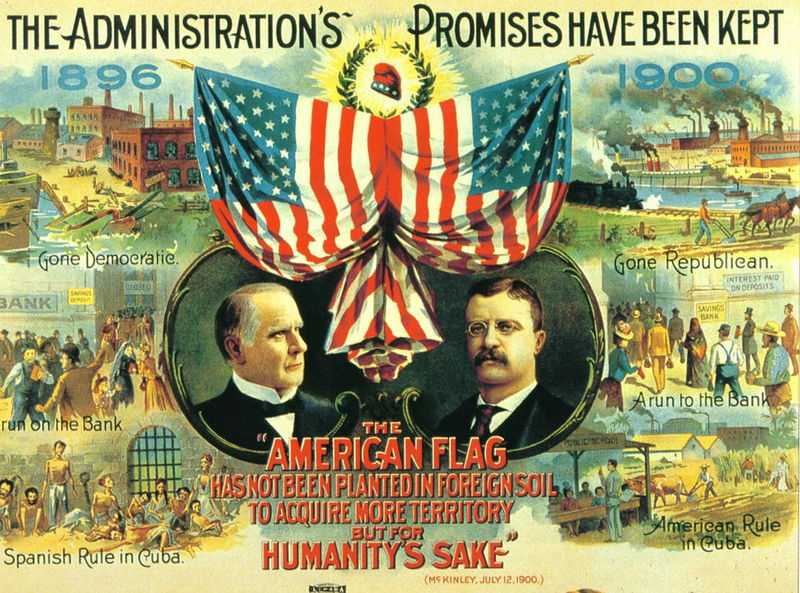
August 5, 2015
So many leads on future reads, e.g. Olmsted, Tourgee, and GW Cable. But: not a single African-American writer. ?????
January 9, 2025
I tried to read this a couple decades ago and was so irritated by the Introduction that I decided that I didn’t really give a damn what this pretentious jackass Wilson had to say about anything. I still feel the same about EW, at least as regards his pathetic reading of history…there was NEVER moral equivalency between the US and the USSR: the Soviets were Evil. Period. Proven in the 90s by the declassification of Soviet archives. End of discussion. And EW’s refusal to pay income taxes because he disagreed with the policies of the Federal Government is just petulant childishness. He should have gone to jail, in chains; Fortress Monroe where they’d held Jeff Davis would have been appropriate. And while I’m at it, EW should thank us for nuking Hiroshima and Nagasaki. It saved the lives of 10,000,000 civilians who would have been killed in an invasion of the home islands. EW’s reading of history is absurd. He knows nothing and has nothing of value to say on the subject.
(On the other hand, his rants about an over-powerful central government unelected bureaucracy kind of have a familiar ring today. I wonder what he’d think of Federal funding of gain-of-function virus research in an out-of-control laboratory somewhere in still-communist-after-all-these-years Red China unleashing a deadly virus on the whole world…among other provocations…)
Be that as it may…
I came back to this pretentiously-titled book because I’m quite fond of Mary Chesnut and C. Van Woodward’s rendition of her Civil War diary/journal/memoires, and everybody who writes about The War cites MC and quotes EW about her. So I thought I should see what he really had to say about her.
Frankly, not much. His ruminations were pretty lame. On the other hand, his enthusiasm for MC seems to have triggered Woodward’s interest in undertaking a serious study of the ‘Diary From Dixie’, which led to his 1981 masterpiece as well as to the publication (in 2011) of a companion volume consisting of MC’s missing-since-the-30s photo album. For that, I thank the insufferably pretentious, historically insipid, and morally defective EW.
And, while I had the book open, I found a lot of other stuff in it that held my interest (mostly.) With no obvious order, EW discusses at greater or lesser length some 30 Civil War era authors, including many whose names I’ve encountered in my other historical and Civil War/Reconstruction era readings but about whom I know little other than their names. Some examples include: Frederick Law Olmsted, John T. Trowbridge, Thomas Wentworth Higginson (mentor of Emily Dickinson and friend of Charles Darwin), Kate Stone, Sarah Morgan, William Grayson, George Fitzhugh, Albion Tourgée, George Cable, Kate Chopin. EW’s discussion of their works has opened up endless vistas of reading for me. I appreciate that. Thank you, EW.
There are also discussions of works by some with whom I consider myself adequately familiar—Lincoln, Grant, Sherman, Lee, Mosby, Stephens, Bierce, Holmes—and I confess to having skipped those chapters.
In any case, this once-rejected work has proven to be a not invaluable source of ideas for future literary excursions.
My biggest criticism is regarding the chapter on Kate Chopin. It doesn’t belong. Nobody cares about her sexual Awakening (1882) which has NOTHING to do with the Civil War. I suspect this was included as a bit of ‘virtue signaling’, a way for EW to prove to early-60s feminists that he was ‘one of them’ (raise fist in solidarity…) despite his four wives and multiple affairs. (I also suspect that his third wife’s (Mary McCarthy) famous comment about Lillian Hellmann…’Everything she writes is a lie including if, and, and the’…was originally composed with EW in mind.)
Finally…the title. “Patriotic Gore”. (Not to be confused with the former Senator from Tennessee or his son the ex-Vice President) Can anyone think of a more pretentious title, more obnoxious? The petulant spoiled child shows his whining face. It makes me wonder why EW even wrote this book. To whine that the US government doesn’t listen to him? Or just to make sure that EW the Magnificent didn’t miss out on the publishing lalapalooza that was sure to accompany the centennial of the Civil War.
He (EW) wrote a lot of stuff. The Library of America, of which he was a Founder, has three volumes dedicated to his eminence. I don’t think I’ll be reading any more of him.
(On the other hand, his rants about an over-powerful central government unelected bureaucracy kind of have a familiar ring today. I wonder what he’d think of Federal funding of gain-of-function virus research in an out-of-control laboratory somewhere in still-communist-after-all-these-years Red China unleashing a deadly virus on the whole world…among other provocations…)
Be that as it may…
I came back to this pretentiously-titled book because I’m quite fond of Mary Chesnut and C. Van Woodward’s rendition of her Civil War diary/journal/memoires, and everybody who writes about The War cites MC and quotes EW about her. So I thought I should see what he really had to say about her.
Frankly, not much. His ruminations were pretty lame. On the other hand, his enthusiasm for MC seems to have triggered Woodward’s interest in undertaking a serious study of the ‘Diary From Dixie’, which led to his 1981 masterpiece as well as to the publication (in 2011) of a companion volume consisting of MC’s missing-since-the-30s photo album. For that, I thank the insufferably pretentious, historically insipid, and morally defective EW.
And, while I had the book open, I found a lot of other stuff in it that held my interest (mostly.) With no obvious order, EW discusses at greater or lesser length some 30 Civil War era authors, including many whose names I’ve encountered in my other historical and Civil War/Reconstruction era readings but about whom I know little other than their names. Some examples include: Frederick Law Olmsted, John T. Trowbridge, Thomas Wentworth Higginson (mentor of Emily Dickinson and friend of Charles Darwin), Kate Stone, Sarah Morgan, William Grayson, George Fitzhugh, Albion Tourgée, George Cable, Kate Chopin. EW’s discussion of their works has opened up endless vistas of reading for me. I appreciate that. Thank you, EW.
There are also discussions of works by some with whom I consider myself adequately familiar—Lincoln, Grant, Sherman, Lee, Mosby, Stephens, Bierce, Holmes—and I confess to having skipped those chapters.
In any case, this once-rejected work has proven to be a not invaluable source of ideas for future literary excursions.
My biggest criticism is regarding the chapter on Kate Chopin. It doesn’t belong. Nobody cares about her sexual Awakening (1882) which has NOTHING to do with the Civil War. I suspect this was included as a bit of ‘virtue signaling’, a way for EW to prove to early-60s feminists that he was ‘one of them’ (raise fist in solidarity…) despite his four wives and multiple affairs. (I also suspect that his third wife’s (Mary McCarthy) famous comment about Lillian Hellmann…’Everything she writes is a lie including if, and, and the’…was originally composed with EW in mind.)
Finally…the title. “Patriotic Gore”. (Not to be confused with the former Senator from Tennessee or his son the ex-Vice President) Can anyone think of a more pretentious title, more obnoxious? The petulant spoiled child shows his whining face. It makes me wonder why EW even wrote this book. To whine that the US government doesn’t listen to him? Or just to make sure that EW the Magnificent didn’t miss out on the publishing lalapalooza that was sure to accompany the centennial of the Civil War.
He (EW) wrote a lot of stuff. The Library of America, of which he was a Founder, has three volumes dedicated to his eminence. I don’t think I’ll be reading any more of him.
July 20, 2026
Edmund Wilson has undeservedly fallen into oblivion, as far as I can tell. Even back in the 1980s, I was the only person that I knew who was familiar with his work (thanks to Gore Vidal's essays). His book To the Finland Station was a good read. And while I was aware of Patriotic Gore, I did not actively search it out for a couple of decades and then it languished on my to-read pile for quite a bit before I finally got round to it.
I could kick myself. I enjoy books written by someone who takes an unconventional approach to the topic. Patriotic Gore does not offer a dramatic or thrilling narrative to drive you on to the end. Instead, it is a rather static collection of portraits of people whose literary output (belles-lettres) had a connection to the Civil War. Yet, because Wilson is such a good writer (probably because he read a lot), each chapter offers a fascinating sidelight onto some aspect of the national crisis, from Uncle Tom's Cabin to the malign postwar influence of veteran Justice Oliver Wendell Holmes' work as a Supreme Court Justice but above all as a public figure. Among the people we meet along the way are Lincoln and Grant, but also Frederick Law Olmstead and Ambrose Bierce, and many people you might never have heard of as, like Wilson, they belong to the ages, and fallen into anonymity outside of departments of literature and history. Regardless of their fame and obscurity, Wilson makes them and their work (or, in the case of Holmes, opinions) interesting.
The book was written as part of the 1961-5 Civil War Centennial celebrations. I was very young then, and remember little about it; but there was a fall-out in the sense that there were plenty of toy soldiers and cannon to be had for years afterwards. Nowadays, I'm far more interested in the American War of Independence (and have been for over a decade, even before the rather muted conversation during the 250th anniversary these recent years). But there seemed to have been much more organised and coherent effort to commemorate that Centennial, a kind of national project.
Nonetheless, the book generated a significant controversy a the time of its publication, and there continues to be some echoes of it in academia. Wilson has little to say about the African-American experience here. I would say that his eyes are open to what the Lost Cause actually represented, and he is not seduced in any way by the romantic character sometimes assigned to the Old South. (He concedes that, at best, any real existence of it died out before 1820.) Nonetheless, his approach is that of a mind shaped by someone educated during the first two decades of the twentieth century, and seeing the republic through the lens of people like Charles A. Beard (whom he mentions in connection with the attack on Pearl Harbor, I add intriguingly).
In its own time, the bigger controversy was over the introduction, which occupies a place that might seem odd, politically, for such a prominent public intellectual. Wilson goes completely against the dominant ideas of American foreign policy at the time, denouncing the hegemonic posture of American moral superiority, which continues up to this day. Rather, he sees the US as an aggressive power, and this aggression goes back to the Westward Expansion of the nineteenth century, which itself aggravated the tension between Free States and Slave States, making war inevitable. That moral superiority is deployed to justify American war-making on people who probably could be left to work out their problems themselves. At root of this scolding rhetoric is his fear of nuclear war destroying the entire world. Given what would happen in the year of the book's publication, 1962, it seems both prescient and a cause to than God for JFK.
If my summary of the introduction puts you off, I'd say you were making a mistake. Just skip that. The rest of the book can be read without it, and is well worth your while.
© 2026 Paul Brewer
I could kick myself. I enjoy books written by someone who takes an unconventional approach to the topic. Patriotic Gore does not offer a dramatic or thrilling narrative to drive you on to the end. Instead, it is a rather static collection of portraits of people whose literary output (belles-lettres) had a connection to the Civil War. Yet, because Wilson is such a good writer (probably because he read a lot), each chapter offers a fascinating sidelight onto some aspect of the national crisis, from Uncle Tom's Cabin to the malign postwar influence of veteran Justice Oliver Wendell Holmes' work as a Supreme Court Justice but above all as a public figure. Among the people we meet along the way are Lincoln and Grant, but also Frederick Law Olmstead and Ambrose Bierce, and many people you might never have heard of as, like Wilson, they belong to the ages, and fallen into anonymity outside of departments of literature and history. Regardless of their fame and obscurity, Wilson makes them and their work (or, in the case of Holmes, opinions) interesting.
The book was written as part of the 1961-5 Civil War Centennial celebrations. I was very young then, and remember little about it; but there was a fall-out in the sense that there were plenty of toy soldiers and cannon to be had for years afterwards. Nowadays, I'm far more interested in the American War of Independence (and have been for over a decade, even before the rather muted conversation during the 250th anniversary these recent years). But there seemed to have been much more organised and coherent effort to commemorate that Centennial, a kind of national project.
Nonetheless, the book generated a significant controversy a the time of its publication, and there continues to be some echoes of it in academia. Wilson has little to say about the African-American experience here. I would say that his eyes are open to what the Lost Cause actually represented, and he is not seduced in any way by the romantic character sometimes assigned to the Old South. (He concedes that, at best, any real existence of it died out before 1820.) Nonetheless, his approach is that of a mind shaped by someone educated during the first two decades of the twentieth century, and seeing the republic through the lens of people like Charles A. Beard (whom he mentions in connection with the attack on Pearl Harbor, I add intriguingly).
In its own time, the bigger controversy was over the introduction, which occupies a place that might seem odd, politically, for such a prominent public intellectual. Wilson goes completely against the dominant ideas of American foreign policy at the time, denouncing the hegemonic posture of American moral superiority, which continues up to this day. Rather, he sees the US as an aggressive power, and this aggression goes back to the Westward Expansion of the nineteenth century, which itself aggravated the tension between Free States and Slave States, making war inevitable. That moral superiority is deployed to justify American war-making on people who probably could be left to work out their problems themselves. At root of this scolding rhetoric is his fear of nuclear war destroying the entire world. Given what would happen in the year of the book's publication, 1962, it seems both prescient and a cause to than God for JFK.
If my summary of the introduction puts you off, I'd say you were making a mistake. Just skip that. The rest of the book can be read without it, and is well worth your while.
© 2026 Paul Brewer
Displaying 1 - 30 of 42 reviews