The Isaac Quartet contains four detective stories from an internationally acclaimed master of the genre. Blue Eyes, the first book in Jerome Charyn’s legendary crime series, introduces Isaac Sidel — the toughest, most incorruptible police inspector in the biz. In Marilyn the Wild, Isaac confronts the hot-headed daughter of the first deputy police commissioner. The Education of Patrick Silver tells the story of a giant shoeless Irishman who becomes just another pawn in the war between Isaac and a gang of Peruvian pimps. And in Secret Isaac, a scar on a prostitute’s cheek sends Isaac on a desperate trip to Ireland in search of relief from the tightening grip on his soul. “Packed with manic energy, peopled with bizarre characters and outrageous situations. [Charyn] sounds like a ... Jewish Philip Marlowe.” — Chicago Sun-Times “These books constitute the highest kind of novelistic art ... absolutely unique among contemporary writers.” — Los Angeles Times
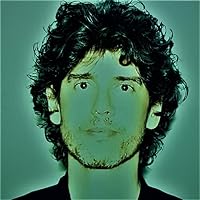
Jerome Charyn is an award-winning American author. With more than 50 published works, Charyn has earned a long-standing reputation as an inventive and prolific chronicler of real and imagined American life.
Pulitzer Prize-winning novelist Michael Chabon calls him "one of the most important writers in American literature." New York Newsday hailed Charyn as "a contemporary American Balzac," and the Los Angeles Times described him as "absolutely unique among American writers."
Since the 1964 release of Charyn's first novel, Once Upon a Droshky, he has published thirty novels, three memoirs, eight graphic novels, two books about film, short stories, plays, and works of non-fiction. Two of his memoirs were named New York Times Book of the Year.
Charyn has been a finalist for the PEN/Faulkner Award for Fiction. He received the Rosenthal Award from the American Academy of Arts and Letters and was named Commander of Arts and Letters by the French Minister of Culture. Charyn is Distinguished Professor Emeritus of Film Studies at the American University of Paris.
In addition to writing and teaching, Charyn is a tournament table tennis player, once ranked in the top ten percent of players in France. Noted novelist Don DeLillo called Charyn's book on table tennis, Sizzling Chops & Devilish Spins, "The Sun Also Rises of ping-pong."
Charyn's most recent novel, Jerzy, was described by The New Yorker as a "fictional fantasia" about the life of Jerzy Kosinski, the controversial author of The Painted Bird. In 2010, Charyn wrote The Secret Life of Emily Dickinson, an imagined autobiography of the renowned poet, a book characterized by Joyce Carol Oates as a "fever-dream picaresque."
Charyn lives in New York City. He's currently working with artists Asaf and Tomer Hanuka on an animated television series based on his Isaac Sidel crime novels.
As it turns out, Isaac Sidel is about as raw a Jerome Charyn experience as you're liable to find.
Sidel, as of 2014, is the recurring Charyn character who appears in eleven of his books. The Isaac Quartet collects the first four, and this year marks the fortieth anniversary of Sidel's first appearance in the pages of Blue Eyes.
As outlined in a forward from Charyn himself, this is a series that began by accident. The author was struggling with another project entirely (which he apparently completely abandoned) when he read a crime novel and fell in love with the idea of writing his own, combining his impression of his brother's life as a New York cop with a pastiche on Melville's Billy Budd. The result is something I hadn't previously read in fiction but became familiar with in the films of Martin Scorsese and Robert Rodriguez, the latter of whom is perhaps most pertinent, especially in his adaptions of Frank Miller's Sin City comics.
If you ever read a review of Miller's work, chances are good that the critic found his obsession with "stripper with a heart of gold" shtick hard to swallow, that and the whole world of hard hard-boiled characters around them. But that's exactly the world Isaac Sidel inhabits, a New York City well before any of the late millennium reforms that finally cleaned it up, a sort of urban environmental reclamation project. One gets the sense that the young Charyn knew the old New York very well indeed, something that scarred him to his bones, made him the writer he is today, living in a fallen world where the ghosts of Sin City really do exist and a hardcase like Sidel must stroll its dirty streets in the same squalor as the rats he chases out of them.
In a nutshell, this is what Charyn writes in all of his books. I recently read his very first book, Once Upon a Droshky, and tried to figure out why it and pretty much everything else he's written has been so easy for critics and readers in his native land to ignore if not outright dismiss. I theorized that maybe it was a touch of antisemitism or perhaps even homophobia (with that book it really could be either one), but it might be even more basic: it may be hard to find readers keyed-in to Charyn's perspective, a cynical, if by his terms realistic, view of what society is really like when you strip away the mythology we live with every day.
To do so Charyn has carefully curated his own mythology. It's funny, because in the forward he talks about Sidel as an escape from self-mythologizing, but that's what you'll find in these stories. It can be exhausting, mind you, relentless, a steady stream of individuals forced into desperate circumstances and base instincts, all reflected through terminology that might have read very differently a few decades back than it does now, making it a curious time capsule, very much a mark of transition although perhaps unintentional, which is the opposite of what occurs in all Charyn's standalone works.
The abandoned project Charyn references might even be the reason Sidel has since appeared in so many of his books, since it was something that had apparently gotten to a thousand pages, something he couldn't stop writing. Well, he can't stop writing Sidel, either. Sidel is also appropriate as a subject of a writer's cycle, since his name (Isaac Sidel) is borrowed from one of Charyn's literary inspirations (Isaac Babel), who made his reputation on such things.
Sidel may be front and center, but in these books it's Manfred Coen, the eponymous "Blues Eyes" of the first entry, who haunts the volume, the sacrifice who helps crack New York in half, by accident, leading to the defeats of a number of crack conspiracies. Coen is as innocent as a Charyn creation can get, the typical lead in most of his other books, but it's Sidel who survives to fight another day, reluctantly, becoming more and more convinced that he doesn't deserve it. Might that be Charyn himself peaking around the page? Except Sidel proves how vital Charyn really is.
This may not be his best material, but it's some of Charyn's best storytelling, and it explains so much. These quotes all come from the fourth book, Secret Isaac:
"'It's ungovernable,' Isaac said, '...this terrain. Psychosis is everywhere...in your armpit...under your shoe. You can smell it in the sweat in this room...we're all baby killers, repressed or not...how do you measure a man's rage? Either we behave like robots, or we kill. Why do you expect your police force to be any less crazy than you?'" (p. 445)
"The planet is running low." (p. 590)
"How many police commissioners are prophets and fools in one gulp?" (p. 590)
"He had a set of Lionel trains that wound across the room like the territories of an unfathomable world. Tracks snaked into one another. Tunnels bloomed. Alex presided over every switch. He could make bridges collapse, have engines explode and spit out their parts, and torture a caboose with his systems of flags and lights. You didn't need a mother when you had Lionel trains." (p. 604)
There's an animated series, Hard Apple, in the works, but me, I'd try to wrangle Rodriguez into having a look at Isaac Sidel.
A dream of early 70s New York vice as seen through the mysteries of Isaac Sidel, the first deputy commissioner's chief whip. It's a world of Peruvian marrano pimps, albino stoolies, table tennis showdowns, and Kosher dairy restaurants. Lots of Yiddishkeit -- so welcome, so missed -- the author writing in the language of the Bronx ghetto he escaped for Paris. One may wish to take a breather between each of the four books in this collection.