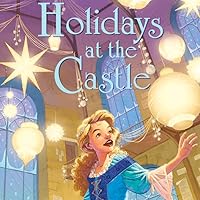
The first book in a new series by the author of The Frog Princess, a delightful re-imagining of Sleeping Beauty. Princess Annie is frustratingly (and luckily) resistant to magic. When her sister Gwen pricks her finger and the whole castle falls asleep, only Annie stays awake. Now it's up to Annie to find a prince to kiss her sister and break the spell. But who is her sister's true love? And what about Annie's own happily-ever-after? Annie travels through a fairy tale land filled with characters both familiar and new in this original adventure from the beloved author of The Tales of the Frog Princess. Don't miss the rest of the Wide-Awake Princess series by E. D. The Wide-Awake Princess Unlocking the Spell The Bravest Princess Princess in Disguise Princess between Worlds The Princess and the Pearl Princess before Dawn And these other magical Tales of the Frog Princess The Fairy-Tale Matchmaker More Than a Princess Magic Animal Rescue and more!
E.D. Baker made her international debut in 2002 with The Frog Princess, which was a Texas Lone Star Reading List Book, A Book Sense Children's Pick, a Florida's Sunshine State Readers List pick & a 2006 Sasquatch Book Award nominee. The Frog Princess inspired the Disney's Princess and the Frog!
E. D. Baker was born in Buffalo, New York and spent most of the next eighteen years in the Town of Tonawanda with her older brother and her parents. She married her husband while in college, and had two children a few years after graduating from Allegheny College in Meadville, Pennsylvania with a bachelor’s degree in psychology. When her son was four, the family moved to the state of Maryland. With two young children at home, E.D. worked part time in her husband’s business and took writing classes at the local community college. She continued taking writing classes after the birth of her second daughter, but when she and her husband divorced, she went back to school and entered the SIMAT (School Immersion Masters in the Art of Teaching) program at Johns Hopkins University. After graduating, she taught fifth grade until her parents’ health began to fail. Her son had already graduated from college when E.D. and her daughters moved north to be closer to her parents. Having gained a new perspective on what is important in life, E.D. decided that it was time to believe in herself and devoted her time to writing. Her first book, The Frog Princess, was published in 2002. E.D. has written 25 books to date and has no plans to quite writing anytime soon.
Currently E. D. Baker lives on a small farm in Maryland where she and her family breed Appaloosa horses. They also have dogs, cats and goats.
If you have a question or a comment for E. D. Baker regarding her books, you can e-mail her at edbakerbooks@gmail.com and she will try very hard to reply to your e-mails. (Just keep in mind it may take a while before she responds, because she is working on a new book for you to enjoy!) For updates, announcements on upcoming books and daily posts by E.D. Baker be sure to follow her on Facebook.
This was terribly adorable. It starts from a pretty simple idea: what if Sleeping Beauty had a little sister? Wouldn't her parents do everything in their power to save their next child from her older sister's fate? And so Annie becomes literally unenchantable, completely immune to all forms of magic. Considering how very common magic is in this fairy tale world, it follows that young Princess Annie makes many people, including her family, uncomfortable. After all, fairy gifts are neutralized around her. Gift of beauty? Not if Annie's sitting next to you!
Annie herself is the best thing about this book. What happens to a princess pretty much left to her own devices? She becomes smart, capable, proactive, and unwilling to suffer fools gladly. Which makes her an excellent candidate to save her family when big sister Gwen really does prick her finger on that spindle. Only magic-immune Annie gets out of the castle awake, and it's up to her to find her sister's true love.
Queue cross-country fairy tale adventures, with Annie using her wits and honestly acquired skills to best witches, mischievous princes, evil fairies, and wicked queens. Yes, she has a sidekick in prison guard Liam, but Annie is very solidly the hero of this story. The only damsel in distress is Gwen, and it's refreshing to read.
There's a tiny bit of romance, but it's very much in the background for much of the story. And neither Annie nor Liam let the romance dominate the adventure. Also refreshing! It isn't a terribly exciting romance, but it is just starting.
At times, this book was a little predictable. Not enough to really bother me, because Annie was nearly as quick to catch on as I was. Still, it's one of the things that made me think of this as more of a middle grade book. I still had fun with it, and I think that in a few years, my niece will have even more fun with it.
This is sort of an alternate-world fairy tale--it's a Sleeping Beauty retelling with the caveat that the sleeping princess has a magically immune little sister. Being that it's a fairy tale motif that mixes in a bunch of other fairy tales, I guess I shouldn't be annoyed that it's very questy and has one-dimensional characters, but it did bother me that the premise of the story was so heavily inundated with "it happened this way, because . . . it has to happen this way." I didn't like that the younger princess's gift/curse was so crappy--Princess Annie was immune to magic, but that not only meant that magic couldn't harm OR help her; it also somehow meant that magic didn't work in her general vicinity, so people with magical enhancements forced her to stay away from them (including her family, even though their magical gifts would start working again as soon as she wasn't nearby). I didn't like that the fairy who cast this magic did so in such a way and there was no discussion of why it had to be that way, and I didn't like that her family members were such jackasses about it, acting like they thought they were superior to her because of having beauty and grace and all kinds of gifts that were literally given to them magically rather than earned.
I also didn't like that even though everyone knew a curse was supposed to come on the princess's birthday or before, they still allowed so many risks and loopholes for the curse to manifest. If you knew your daughter's curse would manifest if she got pricked by a spinning wheel, not only would you ban all the spinning wheels from the kingdom, but you wouldn't let her open any freaking birthday presents if you didn't know what they were.
Premise ridiculousness aside, Princess Annie's forced ordinariness was kinda refreshing, though it also made her seem like a contrived person too--of COURSE you would gather skills through practice instead of magic and throw yourself into that if you had nothing else and no one respected you. I liked that her immunity to magic made her uniquely qualified to do things like RESCUE PEOPLE (including, dare we say, herself, and A MAN!, more than once!), and I noticed that this book actually did something that fairy tales normally don't do--it acknowledged that people go to the bathroom! Wow!
But I think the thing that annoyed me the most was how contrived a prince's princess-finding contest was. Princess Annie's looking for a prince to kiss her sister Gwendolyn, but she enters the princess contest without telling him that she's doing so on her sister's behalf. Prince Andreas is portrayed as not being as much of an idiot as royalty usually is in these stories, caring more for finding a wife who can keep up with him on a horse, dance for fun, and eat what he likes to eat. So when Annie turns out to be his perfect match, there's an ISSUE because a) she was looking for someone for Gwen, and b) she's got a thing for her companion, Liam, and he for her. Good thing the story solved that problem and didn't bother to keep the interpersonal conflict going . . . Andreas turns into a slobbering fool at the mention of maybe marrying Gwendolyn and all his credibility as a halfway decent person is thrown out the window. It's exactly what the story needed to go forward and let Princess #1 get her kiss and Princess #2 get her guy, but it isn't interesting.
There seemed to be kind of a lot of plot holes too, as well as lots of plot elements that were super predictable. Princess Annie heard plotting scoundrels outside her castle immediately upon going on her prince-finding quest (who talked in a stereotypical thuggish way), and because of overhearing their intentions she knows her time is short. Regardless, her quest takes a really long time, and some of it is avoidable--the urgency to return to the castle doesn't seem to figure into the princess's thoughts very often. At first I was thinking "Okay, she's sending the princes back to her castle to try to kiss her sister, so she can keep questing." But then I remembered that they couldn't get inside without her, because magical roses kept them out and they would fall asleep because of the curse without her touching them. So that bothered me, and the princess's companion turning out to be a prince was obvious from the beginning as soon as she let it slip that she knew so little about his background (doing that is an obvious giveaway that the background is going to be significant), and I knew which fairy tale was going to get shoehorned in every time the scene was set. And Rapunzel's tower was deserted when Princess Annie got imprisoned there . . . why would the thugs put her in Rapunzel's tower, and where was Rapunzel? That was never explained.
There was a bit with Liam's brother receiving a handwritten note from his mother (enclosing a pin he supposedly needed), but there was no reason she needed to write him a note when she could have told him anything she needed to say in person. The reason, of course, why he had a note was so that he could accidentally drop it where Annie could find it and serendipitously match the handwriting and solve the big mystery of the book. And since one of the men who was recruited to kiss Princess Gwendolyn had to be both a prince and her "true love," of course it turned out to be the nicest one (even though Princess Gwen herself didn't seem very nice), and of course someone she's never met can somehow "be" her true love . . . because the story says so.
So much of it read like a series of plot bullet points with the fraying edges inexpertly stitched together like they'd been found during late stages of editing. It was frustrating, but I bet it would be kind of a fun story to read to very little kids (below age 8), because they probably wouldn't see everything coming a mile away. Maybe I was just reading it like too much of a grown-up? But I don't at all believe that books for kids should be dumbed down. The writing style itself was okay--nothing ever wowed me, but it was quite readable and not ornate or distracting--but the storytelling was very ham-fisted. I'm glad at least that the story explored both the advantages and the disadvantages of being unable to be affected by magic in a world that depends so heavily on it, and I'm glad that the author didn't decide to make Princess Annie get transformed into a more beautiful girl by magic at the end somehow.
Delightfully plays with the fairy tale of Sleeping Beauty, and several others! Intrepid Princess Annabelle travels through several kingdoms, gathering up princes in hopes that one of them will be her sister's true love and wake Gwendolyn from her sleeping curse. She meets an old woman who lives in a candy house, a prince who used to be a frog, and a number of other characters readers will easily recognize, while exposing how silly and selfish and even sad these stories and their characters are. Princess Annabelle and her loyal guard Liam are a fun pair, and I was also really rooting for Beldegard the bear prince and Emilio the former frog!
This is a must-read for fans of fairy tales, especially if you like the more humorous takes on them, like Patricia C. Wrede's DEALING WITH DRAGONS. I think this might be my favorite of Baker's books that I've read so far!
I'm a big fan of fractured fairy tales, and The Wide-Awake Princess is a fun one. Annabelle, the younger, very much unmagical younger sister of Gwendolyn, she of Sleeping Beauty fame. When the curse is activated, it's up to Annie (and the faithful guard, Liam) to break the curse.
Who knew that the Frog Prince's children were Hansel and Gretel, er, Clara and Tomas? Or that Rapunzel was not interested in being rescued by any of her princes? All that, and more, are found here!
Serious fun for those that love this type of genre.
Magical, humorous, imaginative and very cute are a few words I would use to describe this book. My daughter has been loving this series, now I understand why. It's definitely written for younger readers. As a mom, I only had two integrity issues with the book. The first was that there is a prince who is drunk and had two barmaid type girls sitting on his knees, and the second was a quick line where a man comes to visit Rapunzel for his weekly date, but you quickly learn he has a wife and she doesn't know about his "dates." I wish those details were left out, for this really is the perfect book for young girls. I would have given 5 stars if the book was kept more innocent.
Oh gosh, a wonderful retelling of the old classical tales of Sleeping Beauty.
And refreshing indeed. Because the heroine of this book is not Princess Gwennie, the 'Sleeping Beauty' herself, but her younger sister, Princess Annie, who is not endowed by the magic, but cannot be touch by any good or evil magic.
In the kingdom where everything is magical, Annie seems to be just a plain character. So, when somebody cast a spell and everyone in the castle just fall asleep, Annie is wide awake! Thus, the adventure of saving her family falls on her shoulder.
I love this book, because of the retelling of many classical stories has such a twist. I see reminiscence of stories from the Princess and the Pea, Beauty and the Beast, The Frog Prince, Rapunzel and Hansel and Gretel.
FYI, I was laughing when I know Rapunzel has affair with a married prince (and the prince defended that Rapunzel has never ask about his status), or when a prince try to rescue his beloved, but finds that the princess is actually enjoying her time with a beast.
There is also hygienic issues, when Annie complains about the 22 mattresses (another retelling of the beloved 'Princess and the Pea'), since the mattresses has never been washed properly as a test to find a real princess.
This Annie is not as dainty as her older sister, but she can shoot, she can ride a horse like a man and she can eat whatever she likes.
I am liking Annie, and feel that she deserves a much better family than her royal ones. Just because, her family does not want to stay close to her, because her gift is actually viewed as a curse for them, when they come near to her, their 'beauty' spell might be lost, and reveal their true age.
Her quest of finding the perfect prince for her sister turns out to be hilarious, because she brings not one or two princes, but 5 princes (she is not taking any chance, in case her sister might not wake up).
What a sweet little fairy story retelling - there were some very clever references to other fairy tales as well – such as Princess and the Pea, Beauty and the Beast, The Frog Prince, Rapunzel and Hansel and Gretel to name a few - and found myself chuckling over the references.
The heroine is Annie who is the younger sister to the most beautiful princess in their world – Gwendolyn aka Gwennie. At Gwennie’s christening she is cursed by a cranky fairy and doomed to prick her finger on a spindly and fall asleep for a hundred years – or until kissed by her true love.
When Annie was born her distressed parents asked that she be protected from magic spells – which an obliging fairy does but a side effect is that while Annie is resistant to magic, any magic aimed at her bounces back to the caster. Also if she is near magic then the magic disappears which upsets her mother and sister, because they have all sorts of beauty charms going on, and when Annie gets too close buck teeth and age spots start appearing. So for most of her life Annie is kept in the back of the room away from magic enhanced friends and relatives, and allowed to run wild around the castle, in fact anywhere, as long as she’s as far away from magic enhanced people.
As a result Annie is smart, capable, hands-on, and doesn’t suffer fools gladly. Which puts her in an excellent position to save her family when her stupid sister Gwennie, you guessed it , pricks her finger on a spindle and send the whole castle to sleep – except Annie. So off she goes to find her sister’s one true love, accompanied by a palace guard, Liam, who was not in the castle when the curse was triggered. As the story progresses Annie thwarts witches, mischievous princes, evil fairies, and wicked queens to find the right prince.
There are more books in this series – and I have the second one in my TBR pile.
This was the most wonderful, amazing, whimsical book! Annie is so sweet and strong and funny! Liam is the best guy you could ever hope for! The plot was AMAZING. I love all of the references to other fairytale characters too. 5/5.
**Contains some spoilers, minor stuff, no major spoilers (those are hidden) but anyhow — you have been warned.**
Okay...this was a super weird book. I think this is actually pretty popular? So I guess I have a very unpopular opinion... But hear me out!
The plot was pretty good: Sleeping Beauty has a sister! Princess Annabelle (Annie for short). Since her parents don't want their second child to suffer from curses like their eldest, they got a fairy to protect Annie.
The fairy's way of protecting Annie is to make her immune from magic, good or bad.
Logical...?
Therefore, when Sleeping Beauty (her name is Gwendolyn) falls asleep and so does the whole castle, Annie is protected.
Then Annie has to go on a quest to find Gwen's true love.
Alright. So, I guess it's interesting.
But the characters are so...flat. Boring.
Annie, from the start, is this very *kind*, *gentle*, *nice*, *ect.* girl.
Right....
She singlehandedly saves the royal, professional guards from life as beetles. So, apparently, Annie can hear magic. She hears magic coming from a room. She barges right in, and when someone tries to stop her, she's just like, "I repel magic, dude, so NOTHING can harm me!!!"
There's a witch and Annie stops her because the magic casted on her (by witch) bounces off and turns the witch into a beetle instead.
But what if the witch had a knife or something?! One stab and it's bye bye, Princess Annie!
Annie does this a bunch a times throughout the book.
Another thing. Basically ALL nobles and ALL royalty have been gifted by fairies with grace and beauty and blah blah blah.
So Annie's family don't even touch her because she will make their beauty disappear!!
THEY ARE SO VAIN.
Basically everyone in this book isn't kind or nice or gentle or not snobby — unlike our dear Princess Annie.
The only person that was SUPPOSED to be likeable (aside from Annie) was Liam, ANNIE'S love interest. Oh, and probably Gwen's love interest.
Sense a pattern?
And can we talk about that prince? Prince Andreas. He is...um.
Originally he's a pretty unique guy, wants a princess who can have fun with him, so he has a wacky contest to find a princess.
So...obviously Annie is that. She's basically a princessy tomboy. She is actually happy when Liam treats her like a princess — offering his hand to get off a horse, cross over something, ect.
Okay, I'm kinda like that, I want to have big strong men protect me.
But.
Annie is a princess. You're telling me NO ONE actually treats her like one?!
Man, that's just sad.
Anyway!
Prince Andreas!
He was okay, likeable, not very snobby — but then.
The moment of truth.
Annie originally participated in this contest to get the prince for her SISTER.
Because having just one man as her true ain't enough, there needs to be bunches — just in case.
[laughs into a pillow]
That is so...practical.
It's like, "um, this dude kinda feels like he's my soulmate...but just in case I shall get five others!"
*thumbs up*
So anyhow, when Annie breaks the news to Andreas — "so sorry but I can't marry you, yes I know I participated in your contest, but I need you to kiss my sister" — Annie expects the prince to be disappointed.
I mean, he wants a fun-lovin' gal, right?
Noooooooooooooo
The moment he hears, he's just like, "wow Princess Gwendolyn?! Most beautifulest girl in all the land?
Sign me up!
But if she and I don't work out...will ya marry me?"
Okayyyyyy.
This just proves my point of everyone has to be horrid because Annie and Gwen have only one true love!
This made is so easy to guess who's the true true love.😑
And seriously? So many random boys are just makes out with Gwen.
Poor Gwen.
Do they have toothpaste there? Cuz that girl is gonna have to do a LOT of brushing...
And um...so many fairy tales are weaved into this story. Listen, I like fairy tale retellings, I really do. And bunches of fairy tales mixed together?
But there's this one scene from the Princess and the Pea, I assume, and Annie sleeps on a billion mattresses, duh, and there's a pea under it.
The next morning, that queen's like, sleep well, my dear? and Annie's like no way, are you kidding? and BTW I dunno why.
Then it's revealed that there's a pea under all those mattresses.
At this point, Little Miss Perfect actually asks a decent question.
"Shouldn't the pea be squished?"
And YEAH, the pea should be squished!
Another dude's just like, sure, yep, and that's that.
NO EXPLANATION WHATSOEVER.
Alrighty!
The whole "battle" at the end was so dumb, I can't even describe it.😪
Maybe this is because I am old and this book is for young kids so I find it unappealing. But there are loads of good "little kids" books! This one is below average...
If you want middle school fairy tale retellings, check out Ms. Gail Carson Levine's books — much worth your time.
Unfortunately, I'm a very naive gal and I got all seven books of this series.
Yeah.
That's the only reason I finished this book, so I could move on to the second book. Then third. And fourth.
WHY DOES THIS SERIES HAVE SEVEN BOOKS?!
Anyway, if I ever get the patience to finish this series, prepare for lots of negative reviews! Sorry, fans!!!
And if you read to the end of my little ramble, congrats! Buy yerself some cookies.
This book could have been so awesome. But it wasn't. It was disappointing.
First of all, there is zippo character development. And too many characters. All of them felt like cardboard cutouts of people, with no real personalities. I wish the author had focused more on character development (particularly with Annie, Liam, Gwen and Beldegard. They were the most interesting) instead of the action going on in the story. Which leads me to my next point.
At lot happens, but very little of it has anything to do with the actual plot of finding Gwen's true love. They talk to random people and go to random places, but little of it has anything to do with the main story.
Too many fairytales are crammed into this one book!!! The author should have stuck with one fairytale (Sleeping Beauty) and maybe added elements of other fairytales, but trying to cram in Sleeping Beauty, Hansel and Gretel, Snow White, the Frog Prince, and Rapunzel into one story is not a good idea.
There is little to no world-building. I had no idea of what the setting looked like. The author spent no time on this.
Annie's power ruins the story. Think about it; the only power any of the villains have is magic, and not only is Annie immune to any and all magic, but she can suck out any magic that the villains have. What?!? Annie's power should have been limited to only being resistant to magic, and only some magic. Otherwise there is no conflict!!
Because of the absurdity of Annie's power (more specifically, the fact that is has no limits), the lack of world-building, the absolute absence of character development, too many fairytales crammed Into one story, and lots of pointless action, I give it one star. Absolutely disappointing. I'm sure even 9-11 year olds will be disappointed with this book.
I'm pissed. So much potential, so poorly executed.
This book was really cute. Who knew "Sleeping Beauty" (Gwen) had a little sister? To prevent any more undesirable curses, young Annie was blessed (or cursed?) with an immunity to magic. Neither good or bad works on her, she grows up without any of the usual fairy gifts. Not remarkably beautiful (as opposed to her sister, the most beautiful girl in the land), not blessed with gracefulness or a good singing voice. Nothing. Along with this gift comes the ability to neutralize anyone's gift (or spell) that came near her. Her sister's famed beauty fades in her sister's presence. Annie is thus lives as far apart from her father, mother and sister as is possible while still being honored as a member of the royal family. When Gwen pricks her finger and everyone in the castle falls asleep, Annie is the only one left awake! Determined to seek out her sister's true love, Annie starts out on a journey to collect all the princes she can find. Joined by the handsome guard Liam, she will encounter a whole lot of enchanted bears, greedy (if forgetful) witches, and coniving royalty before she is done. Like I said, the book was very cute. Annie's character is very likeable, a perfect age for the targeted age group (and, as I found this book while hunting up something completely different for Anna in the children's section, I'm assuming the age group is like first grade to pre-teen) What really struck me though is something I've been picking up a lot in books of this sort. The main character, Annie, is both hero & heroine. I'm not sure if that makes much sense, but very similar lines of thought take place in similar books, like Dragon Slippers or even The Frog Princess (by the same author). While a "hero" always comes along to help the fair young lady, she does everything. It is by her ability the dragon or whatever bad guy might be is defeated, by her unique ability/gift that she saves the prince/soldier/hero numerous times, and she always throws herself head-long into danger, with little warning, making life for the poor said hero rather crazy. Why bring this up? Two reasons. The first is that the same said books leaves the poor hero dangling, often revealed as such, with a lack of something to do. The heroine is kicking butt and taking names, constantly saving his life, and making his character seem quite usless. The second reason is that "The Wide-Awake Princess", while following such a common line, gives the hero a much better chance. While he is, upon occasion, saved by Annie, he is perfectly capable of taking care of himself. In fact, though Annie might save herself from Rapunzel's tower, he is not far behind in searching for her. Annie doesn't go around meddling and getting herself dragged into problems, but neither does Liam. She manages to be the strong, perfectly capable young lady readers have come to expect, Liam is allowed to be a perfectly capable and truly quite likeable hero, who (unlike the Frog Princess - much to my frequest disgust) does not have an obsession with kissing the heroine, but rather uses chivalry to express his affection. In fact, chivalric is a very good word to describe him :) A good variety of characters and a truly interesting plot, I enjoyed "The Wide Awake Princess" by E.D. Baker (even if I am a bit old for it ;) )
Queen Karolina and King Halbert fear for there second child, Princess Annabelle. With a terrible curse already bestowed for there first daughter Princess Gwendoyn (AKA, Sleeping Beauty) the King and Queen fear that the same fate will harm there second. Seeking the help of there favorite fairy God mother, Fairy Moonbeam granted her own gift to the new princess; "From this day on no magic shall touch you or bring you to harm. You'll have to survive on your natural charm". So, Annie had to grow up without the grace of magic that touches everyone in the kingdom, normals looks, normal talents and a normal life. On the day of her sisters 16 birthday arrives, the curse finally finds it's way into a castle casting everyone to fall asleep for 100 years, only Annie isn't touch by this magic and is the only one who can find Gwens true love to break the spell and maybe along the way even find her own happily ever after...
The Wide Awake Princess is a cleaver and charming adventure that intertwines other fairy tales along the way. A wonderful mixture of fun and romance made this really sweet and utterly adorable. This is the first E.D Baker that I ever read, but I hope I'll never be too old to enjoy these fairy tales, they are just to cute. Loved it!
SPOILER ALERT go away if you dont want to read spoilers
Please let him be a prince... please let him be a prince... please let him be a prince... YES!!!! LIAM IS A PRINCE!!! AND THEY LIKE EACH OTHER!! Okay this book was really well-written, I fell in love with the characters, blah blah blah. Liam's mother is evil, Clarence is stupid and Liam and Annie make a very good couple. Loved loved loved it! I've already started the next one ;D
this book was, once again, forced upon me by my friend ash, who insisted that it was one of their favorites and that i read it. it was a fun, short read, with a unique take on the sleeping beauty fairytale, based off of the concept that she has a sister - one who is immune to the magic and, therefore, to the curse. the sidekicks were likable, as was annie, so it was easy to relax and enjoy her journey (as well as the multiple other fairytale references sprinkled throughout!)
With all this talk lately regarding the merits of fractured fairy tales, sometimes it’s nice to just sit back and enjoy a sugar-spun story. The Wide-Awake Princess by E.D. Baker is ADORABLE. I think it’s my favorite book yet by Baker, who wrote the Tales of the Frog Princess book (the first novel was the inspiration for Disney’s The Princess and the Frog). The novel revolves around Princess Annie, the younger sister of Crown Princess Gwendolyn. As babies, Gwendolyn was cursed, destined to prick her finger on a spinning wheel upon turning sixteen. Not wanting another cursed princess, the King and Queen ask one fairy to gift Annie when she is born, making it so that no magic (good or bad) can ever harm her. When Gwendolyn pricks her finger and sends her kingdom into one hundred years of sleep, Annie is the only one unaffected. The Wide-Awake Princess is her story, and deservedly so—Annie is one kick-ass heroine!
I hate how fairy tales can fall into tropes where the prince is always the one to save the day and rescue the powerless maiden. Not so here. One thing that hooked me early on was the way Annie saves Liam ( one of the unaffected guards who was away from the palace when the curse set in). He gets all shame-faced about it, but Annie could care less. Without her, he would have died. Liam joins Annie on her journey to gather up princes in an attempt to find her sister’s True Love. Along the way, she encounters a mish-mash of fairy tale encounters such as Hansel and Gretel as cleverly thrown together as something out of Stephen Sondheim’s epic musical Into the Woods or the Shrek movies. There’s even a fairy tale role for Annie, which I didn’t see coming, but was delighted about. The way the novel arrives at its conclusion was completely satisfactory. I especially loved the way romance builds between Annie and Liam despite their opposite roles in society. This book hit my sweet spot in all the right ways. It’s ADORABLE and I loved it to bits. I would have loved to see what happened next and wasn’t quite ready to leave Annie behind; she’s such a strong heroine that she wormed her way irrevocably into my heart.
The Wide-Awake Princess is a sweet, fun-filled retelling of the classic Sleeping Beauty tale. It's really quite short, which has a bonus of skipping any boring set-up and jumping straight into the action. On the other hand, this means the character development is limited, so if you're after that sort of thing, I'd look elsewhere.
Annie is a plucky, resourceful and eminently sensible girl who is easy to like, however. In a way, I enjoy that her personal journey is about more about her saving her family and breaking Gwendolyn's curse than about Annie herself. She begins the novel as someone who is already well aware of her own "shortcomings" due to being impervious to magic, but she's smart enough to also know how useful it could be and makes full use of it. Never does she wallow in silly angst over a situation of which she has no control, and thank goodness!
It seems funny to use "realistic" in a story that plays on a number of fairy tales aside from Sleeping Beauty - there are mentions of Rapunzel, Snow White and the Princess and the Frog, amongst others - but it's a fitting word to describe Annie's happy ending. She does get one, and it's really the only thing that she had wished for: someone that appreciated her despite her "gift." Her sweet little romance with Liam is as sensible and straightforward as Annie is, but she never magically rids herself of that "gift," nor does she somehow become more beautiful and accomplished. Her family remains rather selfish, and Gwendolyn is still a pest. But Annie's journey is fun, and because she finds it so rewarding, readers are happy for her anyway.
I did have one issue with the book (or at least the editing side of things) - the complete miuse of honorifics on several occasions! You'd think a book about royalty would get this correct, but Annie is addressed as "Your Majesty" at least once when it should be "Your Highness" and similar mistakes pop up with the other princes; certainly enough times for me to sit up and take notice. It's a minor quibble, however, and one that shouldn't seriously detract from one's enjoyment of this book.
If I need to describe this book in one word it would be: CUTE. This book is adorable! With a fun twist to the original Sleeping beauty story, Baker creates a fun story about friendship and finding yourself.
Summary. When Annie’s sister Gwendolyn was cursed, the good fairies bestowed her with unusual gifts: instead of beauty, grace and a certain talent, Annie can resist magic and everyone loses their magic when she is around. That is the reason why everybody treats her like the plague, but it’s Annie they need to break the curse. Despite all efforts, Gwendolyn pricks her finger and everyone falls asleep. Except for Annie and one of the guards who was outside of the castle. Liam and Annie embark on an adventure to find the right prince to kiss Gwendolyn awake. And Annie might find her own true love too.
Review. You got to love Annie. It was horrible to see who everyone treats her, even her parents! They only appreciate her when she rescues them from the curse, so it’s amazing that Annie grew up as the sweet, loving girl she is. She doesn’t hesitate a moment when Gwendolyn pricks her finger. This brave girl knows what she has to do and she tries to find Gwendolyn's true love together with Liam.
On her way, we get to meet several interesting princes. I really liked the distinct voices from the princes. Most of them are after Gwendolyn for her famous great looks. That makes the growing romance between Annie and Liam even better. He accepts her for who she is and they are great together. Liam is a sweetheart.
The slight touch of mystery – who sent Gwendolyn the small spinning wheel? – made this story complete. It gave the story enough depth and I was surprised by something that is revealed in the end. This is definitely the book you want to read if you are in for something fluffy and funny.
A mild disappointment. There were some really clever set pieces in the story--the candy cottage was especially well done--but by and large it was just the protagonist walking through a series of fairy tales that worked exactly as they always have. The only characters with more than a single personality trait were love interests, and even they only had two dimensions, tops. There was an awful lot of ugly old women (invariably witches) and an awful lot of snippy unpleasant beautiful women (invariably royalty and/or idiots), which made the protagonist look not so much appealing in contrast as like the only non-horrible female in the world. Which was...kinda anti-feminist.
The whole setting was some sort of weird combination of almost-humorous fairytale and horrible people. By the end of the book I didn't want the castle reawakened, I wanted the peasants to show up with guillotines. Not that any of the peasants were bright enough to rule either, but it'd at least be a change of pace. While I don't demand unpredictable plots--though it would've been nice to have at least a single plot twist that I couldn't call six chapters early--I would've liked at least some sort of twist to the fairy tales, or some character nuance beyond "People who like the protagonist are good and nice and awesome, people who dislike the protagonist are bad and stupid and horrible."
This book is just amazing. Annie is one of the best character I have came across.I loved how brave she is .The writing style is elegant . The book is a wonderful adaptation of the fairy tale SLEEPING BEAUTY. It is a little known fact that when sleeping beauty and Whole castle goes to sleep only her little sister Annie who is resistant to all the magic stays awake .Now as the only one awake , It is up to Annie to find a prince to wake her Sister Gwendolyn.
This wonderful story has many amazing twists and turns which makes it more beautiful.It is best for young readers who love to read fairy tale adaptations .
This heart warming story will cast its spell around you whether you are magic resistant or not ....
When Annie was born, a fairy gave her a gift - for as long as she lived, Annie wouldn't be able to be touched by magic. If she touched something magical, it would lose its power for however long it was held. In a kingdom holding its breath for the day her sister, Gwennie, is pricked by a needle, Annie's blessing is the one thing that gives her the power to save her sister.
A very light, frothy, fast-paced adventure where we follow Annie on her quest to find Gwennie's true love. I loved that this book was very much about finding your own power within your family, what makes you special. It also referenced a lot of different fairy tales, not just one, and the secondary characters are all very memorable. It's a lovely mash-up of different tales tied together in a very cute story. I loved everything about it and I'm really eager to read the rest of the books in the series!
I really liked this book. I do wish that Annie’s gift didn’t stop magic in her general vicinity though. I guess it has to so that the end of the book would work out, where Annie has to hold all the princes hands so they don’t fall asleep in her castle. My only question is, why does the magic of the curse Voracia has on the castle make anyone fall asleep that’s inside it? Overall great book though
Ahhhhhh I remember this one! This may look like a children's book, and maybe it is, but it is unexpectedly sweet. It's like... a soft fluffy marshmallow. No, a packet of marshmallows! I sincerely believe that any similar minded reader is going to love this, even if they like their retellings heavier and more on the world-saving, dark side.
Book review on the The Wide Awake Princess by E.D Baker Roses are forming on the walls. What does this mean? Annie is out on her own little journey. Why may you ask? Well because… The story takes place in Treecrest, which is the home of Gwendolyn and Annie. And other magical kingdoms that princess Annie and the knight Liam goes to to try and save the castle and her family from the sleep. Annie is the younger sister of the beautiful, graceful princess Gwendolyn. The problem is that she needs to find princes, because her family and the whole castle is in a very deep sleep. Annie is not your typical kind of princess, she is not as: graceful, gorgeous, or elegant as the other princesses in the story. The knight Liam is not an ordinary knight. He doesn’t treat Annie like a royal princess. For example instead of “yes your highness” he would say “ yes Annie” like he is pretending that she is not a princess. Liam is a: brave, strong, kind, friendly, joyful, and caring knight. Annie and Liam are together in most of the story because they are trying to help wake the castle. Hooray! Its princess Gwendolyn's 16th birthday! Wait is that such a good thing? Suddenly Treecrest has tons and tons of roses growing on the castle walls. Annie the little sister of princess Gwendolyn, she goes out on her own little journey to help save the castle with the trusty knight/ friend Liam. E.D Baker can really make the story come to life because there is such good description like when she says “ Annies hair would have been a muddy brown if she didn’t spend so much time outside. E.D Baker puts in some fairy tales but puts Annie in the fairy tale. Like when she comes to a castle and there is a room that she is led to by the queen. In that room there are tons of mattress piled on top of each other. So basicly its the princess and the pea with Annie in it. I liked how E.D Baker put twists in the story like when the princes are in the room waiting to kiss the princess. I had know idea that it was going to be that prince. This book has lots of fairy tales and magic, so if you like magic/ fairy tales or even both, this is a book you should read. The book has lots of action like when Annie comes to a gingerbread house in the woods. I think its fun because its like its actually happening because there is good description. Theres lots of action like when Annie escapes from the gingerbread house, with the other children. E.D Baker tweaks parts of the story, like when the princes are in the room I had know idea that it was going to be that prince. Or when they go to rescue a princess there was a total twist when Liam, Annie, and the other prince come into the room. I don’t like how it has the same fairy tales that we've heard before, like when she comes to a castle and in a room there is mattresses stacked on top of each other. I said in my mind oh, its the princess and the pea, except with Annie in it. I think its annoying how Annie is always in the fairy tale like the princess and the pea, and when she comes to a gingerbread house in the woods. I would give this book four stars. Not five because it was kind of annoying (I think) because it takes the same fairy tales that we’ve heard before but E.D Baker puts Annie in it. But I liked how it has lots of adventure, for example when Annie is doing a contest so she can get another prince so there is a better chance of the castle waking up. I was surprised that the title didn’t exactly match what the book was about. I thought oh its going to be a really princessy but its actually not that princessy. I would recommend this book to someone who likes magic or adventurous stories or even fairy tales or all three of them. Will the roses be gone? Are the people in the castle going to wake up? Can princess Annie help wake up the castle? If you want to find out you’ll have to flip the pages and read, read, read!
A version of Sleeping Beauty but its about her sister Annabelle who was gifted with being untouchable by magic so when Gwendolyn gets pricked, she doesn't get affect and goes out to help her sister out. I love how there is a small touch of romance with her but it not something that is so focused on so the main goal of removing the curse is still there.
I've always been a fan of fairy-tales so when I saw this book, I knew that I had to read it. I wasn't certain what to expect. After all, you often can't tell what direction a fairytale book will take. Some are filled with such dark plot lines with witches and goblins and heroine's that are corrupt and not worth rooting for. Then on the other hand, sometimes you get such romantically centered ones that make you sick or ones that are just plain childish in nature and writing structure that you can't stand them.
I was happy to find none of these problems with “The Wide-Awake Princess.” It was reminiscent of Gail Carson Levine's writing style in “Ella Enchanted.” I was very pleased with the storyline, the characters, and the overall writing. I would call it an extremely mild fantasy. There was a witch and a few other fanciful characters but they weren't any more terrible or scary than an evil witch from a Disney movie. The creatures were just scary enough to be the bad guy without being so gross and scary that you would have nightmares about them.
In this first book, you are told the tale of Sleeping Beauty from the perspective of her younger sister, Annie. I really enjoyed Annie's character. She was spunky and determined and confident in who she was. She also had a pretty remarkable ability that made her unique and though at first she resented this gift, in the end she came to accept it and embrace that side of her as being something worthwhile.
Liam, a humble soldier, was one of my favorite characters. He acted as brave as a knight and as gentlemanly as a nobleman. I especially loved how he treated Annie as an equal unlike her family and subjects. The characters in this book felt very genuine and real to me and by the end, I couldn't wait to read book two and see what adventures awaited them next.
The only thing that I didn't like was the character of Digby – a prince Annie's sister was expected to marry. There was a point in the story where Annie and Liam sought Digby out, only to discover he was a liar and a fake. He pretends to be a man of good character, but you find out later that he frequents a tavern, inevitably getting drunk and carousing with tavern girls. Digby, however, wasn't an annoying enough character to put me off reading. He was hardly in the book so it was easy to forget about him and move on.
If you liked Ella Enchanted then you will probably like “The Wide-Awake Princess” as well. This story is packed with adventure. It was a fresh retelling of an old fairytale. I never much cared for the story of sleeping beauty but now, after reading this book, I find I like it a lot. This is going on my shelf and I plan to read it over and over again whenever I need a light, fun read. It is definitely beneath my reading level, but who cares. It was such a cute fairytale retelling. I'm glad that I own it and can add it to my collection.
i remember reading this book 80000 times as a child. Idk why. Maybe because it was the only thing downloaded on my kindle. Safe to say i hated it. Im nauseous just thinking about it. Yet I still continued to reread it? Wow.