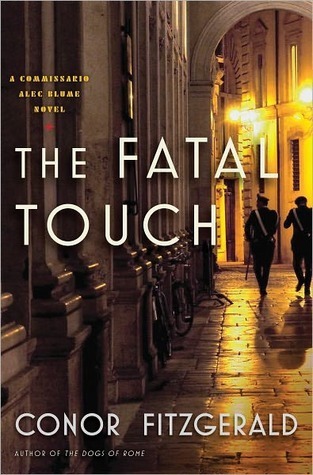
It is very difficult to enter into a mystery genre when the marketplace is already filled with others trying to use the same starting point as you are. Colin Fitzgerald is jumping into the Italian murder mystery club with an added side note of art history, or more accurately, the art forgery genre.
While this book shows good promise and held my interest for long periods of time, there are significant weaknesses. It just seems like the author really doesn't know where he is headed with the protagonist. The character development is somewhat weak, and the plotting is ambiguous. This is especially glaring when comparing Alec Blume with such characters as Aurelio Zen, Guido Brunetti, Inspector Montalbano, and Jonathan Argyll. Granted, comparisons with those characters are unfair since they are well ingrained in our minds, since they have long been established, but such is the perils of entering into genre fiction writing.
I can see Blume developing into an interesting character. His quirks, personal pain, and warped sense of humor need to be examined in sharper focus and used in ways that are more than window dressing. The meandering nature of the plot needs to be a little more focused, and the villains need to be less pure evil and more nuanced. The villain in this book is almost a caricature of a villain.
Not that this story has no redeeming qualities. Blumes' newly introduced sidekick is a nice touch, bringing some sense of freshness and hope for the story. While she is a minor character, I am hoping she grows like Annie Cabot in the Inspector Banks series by Peter Robinson. Blumes little interplays with his subordinates are at this point, a little forced. He doesn't spar with them with the ease of Inspector Montalbano, but again it shows promise.
After that litany of comparisons and nitpicky criticisms, one may ask: why bring all those comparisons up at all? My read on the author is that he has added certain elements in the story that are reminiscent of those other mysteries and authors because he has been influenced by the works or by the authors. My intention is not to say that Mr. Fitzgerald is unoriginal, it would be impossible to completely wash out all of one's influences in the writing, but I think he is a much more capable and original writer, and that scrub he must, of his influences from his writing.
The best part of all this is the cultural details of Italy, the cynical attitudes that the characters show for their society, and how their civic infrastructure work, or doesn't work. The social critique of Italy was extremely interesting but not quite biting enough.
What Mr. Fitzgerald is absolutely fantastic at is explaining art forgery, from the nuts and bolts of the technique and chemistry to what art forgers and art experts look at in terms of clues to the authenticity of the art work. The small interludes of geeky art forgery history and techniques is the perfectly juxtaposed respites from the plot. It gives the reader a nice pause to consider something other than the plot. I thought those sections were engaging and very well written.
Overall, I enjoyed the reading experience, I do feel like this could have been better executed, but I feel like I will be rewarded later on as the characters of Alec Blume and Catarina Mattiola evolves and grows.