Jump to ratings and reviews
Rate this book

La valle dei sette innocenti

Rate this book
Quan, ventotto anni, da dieci combatte per la causa comunista Nordvietnamita. Il ragazzo di un tempo, pieno di ideali e speranze è ora un uomo che passa giorno e notte a evitare pallottole e bombe vaganti, andando alla ricerca di cibo per nutrire se stesso e i suoi uomini. Di fronte all’orrore della guerra, ai tanti compagni morti di stenti o malattie o semplicemente uccisi per sbaglio, e al cinismo politico di molti alti funzionari di partito, Quan sente crescere dentro di se il conflitto sempre più lacerante tra patriottismo e disillusione al quale tenta di sfuggire cercando conforto nei ricordi d’infanzia. Di ritorno a casa in licenza premio, Quan intraprenderà un viaggio fisico e spirituale che lo porterà non solo a confrontarsi con i protagonisti del suo passato - un padre violento e astioso, la fidanzata di un tempo, gli amici d’infanzia mutilati o morti – ma a prendere coscienza della sua dolorosa realtà esistenziale. Con l’amara consapevolezza di chi ha sbagliato tutto, di chi si guarda indietro e si rende conto di aver perso irrimediabilmente la propria innocenza e le persone amate, Quan rimane incatenato a una vita che è solo morte, lenta ma inesorabile. Con una prosa nitida, in uno stile che sa coniugare asciuttezza e lirismo, Duong Thu Huong descrive con incisività il conflitto che ha annientato spiritualmente la sua generazione.

245 pages, Paperback

First published January 31, 1991

34 people are currently reading
3746 people want to read

About the author

Dương Thu Hương

31 books188 followers
Dương Thu Hương (b. 1947) is a Vietnamese author and political dissident. Formerly a member of Vietnam's communist party, she was expelled from the party in 1989, and has been denied the right to travel abroad, and was temporarily imprisoned for her writings and outspoken criticism of corruption in the Vietnamese government.

Born in 1947 in Thai Binh a province in northern Vietnam, Dương came of age just as the Vietnam War was turning violent. At the age of twenty, when she was a student at Vietnamese Ministry of Culture’s Arts College, Dương Thu Hương volunteered to serve in a women’s youth brigade on the front lines of “The War Against the Americans". Dương spent the next seven years of the war in the jungles and tunnels of Binh Tri Thien, the most heavily bombarded region of the war. Her mission was to “sing louder than the bombs” and to give theatrical performances for the North Vietnamese troops, but also to tend to the wounded, bury the dead, and accompany the soldiers along. She was one of three survivors out of the forty volunteers in that group. She was also at the front during China’s attacks on Vietnam in 1979 during the short-lived Sino-Vietnamese War. However, in the period after Vietnam’s reunification in 1975, Dương became increasingly outspoken and critical about the repressive atmosphere created by the Communist government. Upon seeing the conditions in the South – compared with the North – she began speaking out against the communist government.
Dương moved to Paris in 2006. In January 2009, her latest novel, Đỉnh Cao Chói Lọi, was published; it was also translated into French as Au zénith.

Ratings & Reviews

What do you think?
Rate this book

Friends & Following

Create a free account to discover what your friends think of this book!

Community Reviews

5 stars
343 (23%)
4 stars
597 (41%)
3 stars
383 (26%)
2 stars
94 (6%)
1 star
15 (1%)
Displaying 1 - 30 of 166 reviews
Profile Image for Jim Fonseca.
1,163 reviews8,494 followers
September 16, 2023
There have been dozens of novels (hundreds?) written about the Vietnam War by Americans, but this novel, written by a former female North Vietnamese soldier in 1995, is one of the first novels to give a perspective on the combat from a North Vietnamese viewpoint. Her earlier novel, Paradise of the Blind, which I read, is about a young woman on the homefront during the war.

The narrator, a commander of a troop of 100 men, is a mid-20-ish man who, as the story opens near the end of the war, has been in the field for ten years in the same unit. At the end of the war he is one of only 12 of the 100 who survived. All the other men in the unit replaced those who died.

description

The following contains some SPOILERS although some are hidden.

There’s a warping of time. Soldiers are in the field for years without going home. The commander gets his first letter from his woman friend asking ‘I’ve written you 14 times – why don’t you answer?’ The letter is dated a year and a half ago. A soldier learns his brother died in combat years ago. Parents have not heard from soldier sons and daughters for years and have no idea if they are dead or alive.

Tiny details add to the realism of the story. The 100 men have only four ratty decks of playing cards. They are treasured and the men have rules about when you can play and when you just watch.

There’s some gore and tales of atrocities, of course, but that is limited. So are details of actual combat. This is not a book of battle stories. The focus is on the scenes behind the front lines and on the psychologically corrupting effects of killing, fear of being killed, watching your friends die, and carrying their disemboweled bodies on your back to be buried.

Some men go crazy. They are sent to a ‘psychological ward’ – basically an empty warehouse where dozens of men sit in their excrement, maybe screaming, maybe singing. The troop takes over an American supply warehouse.

There’s a discussion of ‘what type of men are born killers.’ They make good soldiers but they will also knife their best friend over an argument about a card game.

Because of the constant aerial bombardments that interrupt supply lines, the men are often on the verge of starvation, digging up roots as herbs to flavor rice. They seldom have medical supplies and with the poor diet the men often suffer from dysentery and beriberi as well as malaria.

Much of the story is structured around a month-long trip the commander is sent on, ostensibly to deliver military documents, but really because his commander is a good friend from childhood and he sends him back to their home village to see what’s going on after all these years. As he travels (mostly on foot) to various other military bases, it gives the author a chance to talk about different landscapes of the nation and different military activities, such as a coffin-building troops in the forest.

description

When she was 20 years old the author (b. 1947) was one of the first women to volunteer in a combat role when China attacked North Vietnam in 1979. She wrote a book during a period of liberalization in Vietnam in 1989, but by 1991 the tide had turned and not only was her book banned but she was imprisoned for six months. She is quoted as saying “I never intended to write. It just happened, because of the pain.”

description

You can see why this book too might upset the authorities. The commander and his men at times lose heart for the cause because of corruption in the upper ranks of the military and among politicians. There’s an extended political discussion on a train where the conclusion seems to be ‘Marxism has become the opiate of the people.’

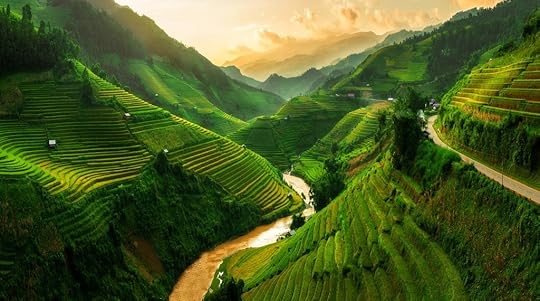
Top photo of a landscape in northern Vietnam from kimkim.com
North Vietnamese soldiers from operationtriumphus.org
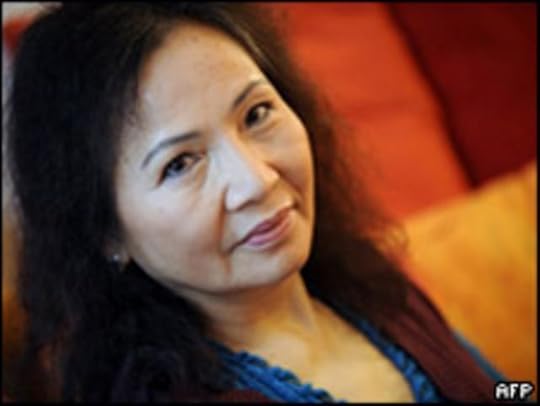
The author (b. 1947) from bbci.co.uk

[Edited 9/15/23]
Profile Image for Magrat Ajostiernos.
724 reviews4,879 followers
May 23, 2020
3,5/5
"La cualidad más importante que la guerra exige del hombre es saber renunciar a sí mismo".
Me cuesta mucho puntuar esta novela porque aún no sé muy bien el poso que va a dejarme, y posiblemente me ocurra como con el otro libro que leí de esta autora "Los paraísos ciegos", y termine gustándome aún más con el paso del tiempo.
Aquí la autora nos presenta a Qûan, un combatiente de 28 años que lleva ya 10 años de su vida viviendo como soldado, luchando con la jungla y con los hombres por igual, hasta volverse frío y aparentemente apático. Una misión para ayudar a un amigo de infancia lo llevará a su pueblo natal, lo que revivirá todo tipo de sentimientos olvidados.
Una vez más me ha gustado muchísimo el estilo de la autora, a veces frío, a veces lírico, en el que siempre se mezcla el presente con recuerdos del pasado.
'Novela sin título' resulta una lectura dura pero no difícil, tratándose como trata de la guerra de Vietnam desde el punto de vista de los vietnamitas (por una vez) ya empecé la lectura sabiendo que no iba a ser un libro para dejarse llevar precisamente, pero áun así he disfrutado mucho con esta narración, la descripción de personajes y esa crítica tan descarnada a lo absurdo de la guerra, la corrupción y los totalitarismos.
Ojalá poder leer más novelas de esta autora, porque realmente me parecen pequeñas piezas que te abren los ojos hacia un mundo que la mayoría desconocemos e ignoramos.
La mayoría de sus obras están descatalogadas en España, pero esta aún podéis comprarla en las librerías y yo no puedo dejar de recomendarla, eso sí, teniendo en cuenta que es una de esas historias en las que parece que no pasa nada, y pasa todo.
Profile Image for Zanna.
676 reviews1,088 followers
December 3, 2015
We might look at it this way: one of the areas of life from which female voices are sorely absent is the war front. There are relatively few soldierly memoirs, fictionalised or otherwise, by women. Duong Thu Huong fought in the war she describes, yet she chooses to take the perspective of a man, Quan, who is living in the blur of transitions from young to middle-aged, from idealism to disillusionment through the dark tunnel of a long, grinding conflict.

Initially I was disappointed by her decision, but very quickly I realised that I was wrong to be, since she brings to Quan's perspective a focus that runs counter to the notions of masculinity, particularly as imagined through military conflict, in my culture, emphasising the web of personal, deeply felt connections with family, friends old and new in his sorrow-stained world, his deep capacity for empathy and his susceptibility to communion with the landscape and reflection on emotional relationships, interpersonal and between people and land, nation and political movements. The result is a moody, moving, curiously light novel, in which constant sorrow like tirelessly falling rain is balanced by the warmth of friendship and sensuousness. If you hate war literature, perhaps try this anyway.

What made me feel a sustaining comfort in reading this was that the relationships between soldiers everywhere is one of deep trust - how important this is! When Quan is lost in a wooded valley, a dead man's spirit calls to him knowing he can help; the spirit trusts him and he can be trusted. When he almost dies of starvation and heatstroke, a child is able to revive him with produce from the land; young rice porridge, honey, tea made from the same herbs the soldiers use for camouflage. The land is on the side of its children.

Bien, Quan's old friend, mad in a pile of filth, is healed and sane the moment his friend comes for him. Quan returns to his home village. He remembers his mother with love, has none for his father. Yet he draws strength from deep roots in community. Gifts speak kindly. Age is counted from conception 'the first year in the belly'. Roots! Quan dreams often of his village, another life 'no one can step in two streams at once' the war is 'indescribably beautiful', so that he fears he will not know how to live in peace. And I trust him...

Quan is so pleasant, gently, kind, caring, humane. A fellow soldier, Hung, is his psychopathic alter-ego. Quan understands him, fears him, recognises in Hung's lack of it what makes him who he is: the love of others and for others. Many of his duties are pleasant for wherever he goes he takes pleasure in people and in helping them, and he remains inexhaustibly sensitive to beauty and emotion. He laments loss and death with genuine grief, mourning men and their talents, feeling the anguish of mothers and fathers and sweethearts; no violence is numbly witnessed here, every blow and cut and pang raises a response, a wound. Quan's talent is clear; he is a poet, even if he writes no verses.

This is a novel of such warmth it makes murder unthinkable. War is an outrage against a spirit like Quan's, yet bitterly he goes on, dreaming layers of his own past, warming to joy in sweet sunlight and in the pleasures of food and talk and memory.

One late dream visitation is an unknown ancestor who weeps for him, has an enigmatic message that Quan rejects in irritation and confusion. This encounter coincides with Quans disillusionment at the hands of a younger soldier, the most significant development in his character. In the light of this, the 'wraith's' comment about 'triumphal arches' takes on a new meaning I think. Quan mixes up his ancestor's urging with the Party's mythology; both seem to be trying to extract life and effort from the people in the name of worthless, illusory glory. But when the image of the Party shatters, Quan will have to find a new meaning for the words and tears of the ghost: what triumph can he and his comrades really reach? What arching legacy would he bestow, given the choice? It's his coming to maturity that makes this question urgent, yet leaves it open.

The text's meandering, cycling, flat structure mirrors the monotony of the long conflict. There are no climaxes; even the fabular omen of the lynx brings undramatised suffering and death. Hardship and grief are as much the substance of daily life as rice and shrimp sauce. Quan's dreams offer a shift in tone to high flown and emotive language, but the tedium of attritional conflict evoked by Quan's plodding quests is not reflected in readerly boredom. As Quan labours through landscapes of irresistable, soul-nourishing (though often melancholic) beauty, so the reader is led along a channel of sweetness and sadness that compels empathy, attention, hunger for the next day, the next journey, the next dream. As Quan finds the strength to live, I grew stronger myself. I found his relationships crowding into my heart. Every interaction had, I felt, an ease and tenderness totally absent in my culture from all but the tightest sibling bonds. If my people are to make ourselves whole, I thought, we must learn to speak to each other like this. Perhaps it's just me. My brother knows how.

I have been thinking critically about the violence in the language of book reviews and the synopsis of this edition here is a case in point. I was not pierced or shattered by this book, rather I was embraced by it, engulfed if you must, but gently: a sister grasped my hand while she told me a necessary tale in her kind, sorrow roughened voice. She helped me to see and hear what I had lived blind and deaf to, and I thank her and wish her peace.
Profile Image for Luke.
1,627 reviews1,196 followers
December 17, 2015
Lovesick doves cooed all day in the bamboo. Grasshoppers flew in the grass on the edge of the dikes. Women laughed, teasing and chasing one another, rolling in the rice fields. They made us laugh...There was once a kite that dipped and swayed in the blue of the sky, our dreams reeling in the same space...And there is the earth, this mud where the flesh rots, where eyes decompose. These arms, these legs that crunch in the jaws of the boars. The souls ulcerated and foul from killing, the bodies so starved for tenderness that they haunt stables in search of pleasure. There is this gangrene that eats at the heart...
This is the first book I've read that is wholly concerned with the Vietnam War. It was likely simple procrastination that birthed the mission to have my first literature experience set in complete opposition to the mythos of the US, the endless me me me of protests and veterans and yet another tale of isolated invaders making a far away country their Agent Orange playground of honored atrocity. People suffered, yes, people died, yes, but these people could escape. Those who feel I'm belittling, look at the wealth of white-gaze narratives and monuments and politics on one end. Then make your way over.
Orangutans are almost human. There's no tastier flesh.
One, the author was a Việt cộng, before whom the United States fell to its knees. Two, the author is a woman, one of three survivors of forty after setting off at twenty years of age, and the first scene is of female bodies with the remains of breasts and genitals strewn around their worm-ridden corpses. Three, none of this matters, but such a rare perspective does deserve our full attention.
It's like dreaming. That's what it's like when you plunge into a forest. You can call and scream all you like; no one can hear you.
Bear in mind that this is the story of a winner. Bear in mind at all times that this is the story of a soldier whose hope has bred with their despair for far too long. Always remember that this is just one of the usual youths plumped up by the idealogues for the slaughter, for whom it took ten years of mishaps of death and decay on a nightmare landscape to reach the nickname of 'Chief' and the insanity to show for it.
Fighting and dying; two acts, the same indescribable beauty of the war.
Suddenly I remembered my mother's savage, heartrending cry, her face bathed in sweat, the horrible spasm that had disfigured her, and then, on that same, horribly twisted face, the radiance of the smile born with a child's cry, when she saw his tiny red legs beat the air...Barbaric beauty of life, of creation. It had slipped away, dissolved in the myriad memories of childhood.
I was seized with terror. No one can bathe in two different streams at the same time. Me, my friends, we had lived this war for too long, steeped ourselves for too long in the beauty of all its moments of fire and blood. Would it still be possible, one day, for us to go back, to rediscover our roots, the beauty of creation, the rapture of a peaceful life?
Fortunately for us, there is a mercy the soul of someone utterly sick with blood spilled for an ideal, and so we don't mind being enmeshed in the memorial swamp of this "gook" as much. Or perhaps we do, for we don't want to hear of forbearance of raping out of concern for the eventual danger of pregnant labor, we don't want to know about what horrors of flora and fauna will be birthed out of a healthy sprinkling of mortar and military grade herbicide, we don't want to see the blonde-haired blue-eyed as an unnatural invader after all this respect and courage and love of the other side, a side with its own measure of brave people and unfeeling corruption. You don't need Communism for an all but (are you sure?) Soylent Green extraction of the many by the few. You just need humanity, greed, their inherent love for lies, all of them ubiquitous, all of them wherever you may lay your weary head.
"Everything we've paid for with our blood belongs to the people."
Kha just laughed. "Ah, but do the people really exist?...You see, the people, they do exist from time to time, but they're only a shadow. When they need rice, the people are the buffalo that pulls the plow. When they need soldiers, they cover the people with armor, put guns in the people's hands. When all is said and done, at the festivals, when it comes time for the banquets, they put the people on an alter, and feed them incense and ashes. But the real food, that's always for them."
We haven't even touched upon the redemption and the fever craze, the insipidness of mortal circumstances and the graveyard leech of military success, the postcolonial inheritance of cannibal ideals and the retributional maw of time, what happens when everything is said and done and the pieces expect to be picked up. But you can find out for yourself.
Revolution, like love, blooms and then withers. But revolution rots much faster than love, 'comrade.'
Profile Image for Ian.
982 reviews60 followers
February 7, 2023
The curiously titled Novel Without a Name is the second book I’ve recently read from Dương Thu Hương, the other being Paradise of the Blind. In that book, the central character was a young Vietnamese woman born in the mid-1960s. In this one the lead character, Quan, is a male soldier who joins the North Vietnamese Army in 1965 as an 18-year-old. The novel itself is mainly set in 1975 after Quan has spent 10 years at war, though there are numerous flashbacks as well as passages involving dreams and visions.

Quan’s age mirrors that of the author, who was born in 1947. According to her GR page, during the war she was a member of a theatre troupe who gave performances to the frontline troops, and who also had to tend the wounded and bury the dead. As such she was exposed to American bombing and other hazards such as mines.

The largest segment of this book concerns a journey made by Quan when he is sent on a mission behind the lines, and subsequently is allowed his first ever period of leave. The journey is reminiscent of the Odyssey in its strangeness and in Quan’s encounter with a series of characters. I did notice one odd reference in the novel, which I think may have been a translation issue.

The two books I’ve read from this author share similar themes. One is the geopolitics that dealt the Vietnamese such a tough hand. Quan for example has been at war through what should have been his best years, but he and his comrades experience only pain, hunger, fear, malaria, dysentery, news of family members being killed, relationships wrecked.

Early on in the war Quan and his comrades have a mixture of nationalist and ideological motives. They want to fight “the invader” but they also believe that when the war is won, Vietnam will become “humanity’s paradise”. Some of Quan’s dreams feature ghostlike figures who speak about how his ancestors fought off invasions from the Chinese and the Mongols, and how he must carry on that tradition.

Another major theme is disillusionment with the communist system, something that reflects the author’s own experiences. Gradually Quan loses his faith in the ideology, though he clings on to some vestiges of it until right at the end. On his return from leave he is on a train when he overhears two senior Party bosses talking cynically about how they manipulate the population. The attitudes displayed may be accurate, but I found the scene itself a bit contrived. Later he encounters a military “special unit” who are frantically cutting down trees and sawing them up to make coffins for the frontline casualties. The unit works to unironic slogans like “The Special Unit is Determined to Surpass Target!” and “Raise Productivity!”

The concluding part of the novel features the collapse of South Vietnam. Ironically it is perhaps at this point that Quan experiences his final disillusionment with the Party.

Despite the victory of the Northern armies, I think the author poses the question, “was the war worth it?” She doesn’t try to answer on behalf of the reader, but I imagine that even asking the question would be considered heretical in Vietnam.

This novel is a quick and easy read, but I didn’t enjoy it quite as much as Paradise of the Blind. Perhaps it’s because the two books were similar in terms of the ideas they put forward.
Profile Image for G.G..
Author 5 books139 followers
March 21, 2022
For a full and moving account of this novel, see the review by Zanna:(https://www.goodreads.com/review/show...). I confess I felt some paragraphs strained for effect:
Everything was awash in somber, distant music, murmuring in endless, droning prayer, bewitching chants. Like a curse that time had carried from century to century in a symphony of innocent blood, raining down, drenching the earth. As if this blood had bred the tortured vegetation, these scarlet blooms where macabre butterflies alighted, the reincarnations of lost souls. (p.71)
But there are also moments of grim authenticity:
Supply unit 559 had brought us everything: rice, canned meat, fish, lard, Hai-Chau candies, dehydrated food BA70, and dried patties of shrimp sauce. And, the height of luxury, there was concentrated milk from the Soviet Union and powdered eggs from China. (p.211)
The narrator never loses his ability to see beauty in the natural world, despite all that he and his compatriots have lost:
The rain had fallen suddenly, like fate, like an accident, like love. For half a month it pounded down in torrential, blinding sheets, completely masking the sun, weaving a dense, white woof through space. The streams and rivers swelled into cataracts. (p.238)
Would that we had learned from those, like the author, who survived, that nothing good comes of war.
Profile Image for Jimmy.
513 reviews905 followers
June 23, 2016
I don't think I've ever read a war novel, other than The Red Badge of Courage, and that was only because it was required reading for school. It simply does not interest me. But here I thought I'd give this one a chance, since it was written by a Vietnamese woman, i.e. not your typical war novel writer.
“All [Hoang] had left was one arm, one leg, and a diary filled with gilded dreams. I remember ripping the [Communist] Party newspaper into shreds and throwing them into a stream. I never told anyone, of course. It was then that I realized that lies are common currency among men, and that the most virtuous are those who have no scruples about resorting to them. Since then, I've stopped reading newspapers, let alone bulletins from the front. I understood how those who didn't know this still felt joy, just as I understand their lust for victories, their fervor for drawing lines between true and false. Blindness gave them such extraordinary energy.”
When we join Quan, the narrator, he's already a broken man, already seen way too much. He's already telling his men things they want to hear while knowing in his heart the dark truth. From there, the novel is a series of hazy episodes, not novelistic at all in that there was no story arc--but this I found to be a strength. There was none of that fake structure placed on it to suggest any kind of closure is even possible.

At first I was not sure what to make of the title Novel Without a Name. But then I realized that a name is an attachment. Once you name something, a pet, a baby, a vehicle, you start to get attached. Perhaps the name of this novel without a name is just that–an attempt to not be human. An attempt to distance oneself from the emotions that we would otherwise feel if we were human. An attempt to not hurt.

This was a good book. Don't let the mediocre star rating fool you, I enjoyed it more than I think I could have enjoyed any war novel.
556 reviews46 followers
September 19, 2016
The war for national unification--one hesitates to call it liberation, since the bulk of the novel takes place after the Americans have withdrawn--narrated by a Northern veteran. Quan, having enlisted as a patriotic eighteen year old, reflects on the changes that ten years of war and violence has inflicted on his country and his life. He finds many of the same issues that the American soldiers experienced during their service and after their return: a self-serving command structure blinded by ideology, post-traumatic stress, friendly fire, and, most devastating of all, loss of faith. Sent on a mission to his village, a family shattered, a loved one beyond estrangement. But this is Quan's own country, so survival does not lead to escape, and winning is not triumphant: even as it drives toward victory, the North deploys a lonely woman whose only job is to gather the corpses of its soldiers and a brigade for the sole task of making coffins. The prose of Duong Thu Huong, the justly celebrated Vietnamese novelist, is (at least in this translation) spare and unsentimental, as befits a soldier who is moving, to borrow the title of one of her other novels, beyond illusions. And yet there are moments where the prose, for all its devastating clarity, pierces: "'Don't breathe a word--to anyone. These days relatives spy against relatives, like jackals. Even their faces have changed. These aren't human faces anymore,'" Quan is told. Later he tells one of his soldiers, "'I am afraid there is going to come a time when no one will want to say anything to anyone anymore...'" And "Later in life, I learned that all the petty treacheries and crimes between people happen like that, seeping into relationships as easily as rain passes through straw." It is one thing for a writer to take up her country's pride in its struggle, but only the greatest can show it as a nightmare, that pushes a decent person, Quan, to the edge of what is human. But not beyond.
Author 6 books253 followers
August 26, 2020
"If, if."

Like all war novels, Duong's Novel is both horrifying and weirdly moving, just as they should be. War is awful in and of itself, but its effects on the people involved, even if not in combat (but especially those) is worse because they linger long after the battles have been fought.
In Quan's case, he's been fighting for ten years (the novel seems to take place in the final year of the American phase of the war, 1975), seen lots of friends die, but still keeps pushing on. Sent by one childhood friend, now an officer, to help another childhood friend feigning insanity (or is he?), Quan wanders across North Vietnam and then some, returning to his home village on leave and wandering through his own memories of what was and what was lost.
Beautifully written and completely lacking any narrative backbone, read: plot, save for sorrowful tangents here and there, it's mostly the story of war's splinters that you can't pry out no matter how hard you try.
Profile Image for Sentimental Surrealist.
294 reviews47 followers
December 14, 2014
We've all, I'm sure, seen plenty of anti-Vietnam movies - Apocalypse Now, Platoon, Full Metal Jacket, The Deer Hunter. But how many of us have experienced a piece of art that told Vietnam's story from the Vietnamese perspective? Duong Thu Huong seeks to give the country a voice with this novel, and oh does she succeed in the most horrifying way imaginable.

This novel is often compared with All Quiet on the Western Front, and like that novel, this is a largely unstructured and plotless novel, to fit alongside the idea of war as a dull, grueling thing. It isn't even divided into chapters, preferring instead to take the form of several brief episodes ranging in length from a few paragraphs to a few pages. Throughout these episodes, emphasis is placed on the complete debasement and loss of innocence the war has wreaked on those who fight it. Much is made throughout the novel of fighting the war for the sake of glory, but there isn't much glory to be found here.

So that's one reason for me to love this novel. I hate the idea of war, and can only think of three even remotely justifiable wars America has participated in: World War II is obvious, and I see both the American Revolution and the Civil War as inevitable; even then, I'm convinced America committed a few crimes over the course of the Second World War (the atomic bomb springs to mind) that don't fully bear out our reputation as the glorious heroes of that war. What pushes this novel up to the top for me, besides it matching with my own beliefs and several beautiful passages ("On the banks the lush green foliage gently rippled. The paddles lapped monotonously at the water, in cadence") is the treatment of the characters. With the minimal physical description they're offered and the emphasis on their past, they seem to appear and disappear like ghosts, resulting in several fascinating exchanges about ideology and the nature of war. Check this out.
Profile Image for Noah.
550 reviews74 followers
Read
August 19, 2020
"Novel Without A Name" ist eines der wenigen Kriegsbücher einer weiblichen Krigsveteranin und eines der wenigen Bücher über den Vietnamkrieg aus vietnamesischer Perspektive. Der Roman hat - insbesondere am Anfang - einige wirklich starke Passagen. Leider verzettelt sich die Autorin immer mehr in dem Dorfgeschehen abseits der Front und der Beziehung zwischen Schulfreunden. Dabei nehmen Traumsequenzen, in denen sich der Protagonist mit dem frühen Tod seiner Mutter auseinandersetzt überhand. Zu Schade, da der eigentliche Kriegsteil wirklich gut geschrieben ist und erschreckend an "Im Westen nichts Neues" erinnert.
Profile Image for Andrew.
2,258 reviews931 followers
Read
January 21, 2014
Why I think this might be the finest piece of Vietnam War fiction I've ever read, even better than the fine accounts given by Tim O'Brien and Bao Ninh, and a ready rival to that of Denis Johnson.

Most American art tends to describe the Vietnam War in gruff plainspeak (The Things They Carried, The Deer Hunter) or fractured psychedelia (Apocalypse Now, Full Metal Jacket, Tree of Smoke), Vietnamese writers take a different tack altogether. Vietnam might have been the war that signaled the end of America's age of innocence, but it was the war that defined the very existence of the Vietnamese nation. For an entire nation to be colonized, cut in half along Cold War lines, and then bathed in blood for two decades, well, that does things to a culture.

Quan, the protagonist, is honest and cynical and deathly afraid and wandering the ravaged hills of Vietnam, trying to reconcile the lyrical, village world of his childhood with the world he inhabits. And, unlike the Americans, for him there is not even the hope of an escape route.
Profile Image for Lecturas con chimenea, lluvia y compañía perruna.
67 reviews19 followers
June 26, 2020
Nos encontramos ante una novela frente a la cual quizá tenía más expectativas que las que finalmente el libro ha cubierto. Se trata de la historia vivida por una serie de personajes, entre ellos su protagonista Quân, en el seno de la guerra de Vietnam. A lo mejor el principal defecto que le he visto es la mayor virtud que este tipo de libros puede tener: que se narra la historia contextualizando los hechos, pero sin profundizar de una forma excesiva. Se me ha quedado corta por ello, pero al mismo tiempo reconozco que en caso de haberlo hecho, según la forma de redacción, quizá me hubiera abrumado.

Por otra parte, no he terminado de empatizar mucho con los personajes. Se sigue la historia con bastante facilidad e incluso te llegas a adentrar en ella poniéndote en la piel de éstos, pero no terminas de conectar y no te engancha salvo en momentos muy puntuales.

Una parte que me ha impactado es la alusión que alguno de los personajes realiza a la idea de "civilización", dando por hecho que la sociedad anterior al comunismo debía ser objeto de persecución y supresión, para ser sustituida por el orden ahora establecido.

En general, he echado en falta más alusiones a Vietnam del Sur y a Estados Unidos. Se trata de una historia muy centrada en situaciones que se daban dentro del bando norvietnamita en la guerra contra Estados Unidos.


Alguna frase destacable:


"A continuación, el silencio, como una sonrisa arrogante. Una marea negra que proyectaba espumas verdes hasta el infinito. A continuación, un sol cegador sobre la belleza lúgubre de un mundo donde caían lágrimas azules procedentes de otros lugares. Todo había terminado; no quedaba nadie. Igualdad definitiva, último regalo de la naturaleza...".


NOTA: 7/10
Profile Image for Addy.
108 reviews5 followers
January 3, 2019
Recommended
Most of the war novels I have read have been written from an American perspective. The ability to explore a non-American view of the Vietnam war was something I didn't want to pass up.

Reading Novel Without a Name was like walking through a dream. The world the author crafted was so surreally beautiful, and yet undeniably haunting. Many of the evocative images will stay with me; the soldiers sleeping in coffins to avoid tigers for example. Though described in lilting, lovely detail by Duong Thu Huong, the fact that death is still lurking for these soldiers in this time of vulnerability grounds the reader.

The appeal of this book for me was originally getting to read a new perspective on the Vietnam war. This novel did this, but I was also stuck by the similarities that the author draws between the soldiers on both sides of the conflict; there is a scene near the end of the book of an interrogation between the main character, Quan, and a South Vietnamese prisoner. Quan and the reader are brought to an unsettling realization about the realities of war and the people who fight in it.

Overall, I thought the writing in this book was decidedly beautiful, and I appreciated the opportunity to experience reading a book that was different from other war novels I have, and yet, oddly reminiscent in terms of the themes and ideas that are presented. I would recommend it.
Profile Image for Michael Burnam-Fink.
1,702 reviews304 followers
June 12, 2022
Novel Without a Name is a cynical, bitter, and clear-eyed account of war from the Vietnamese side. The narrator, Quan, is a company commander, responsible for the lives of 100 men, and particularly responsible for the life of his childhood friend Bien, who has gone mad.

This is a novel about war, but it's not one about combat. Battles are treated perfunctorily, a few sentences describing horrific causalities. What concerns Quan are his peregrinations through the war zone, and the soldier's obsession with food, distance, and a place to sleep at night. The war ages soldiers before their time, casts them adrift from both the rhythms of their traditional villages and exiles them from the benefits of modernity.

Huong was a North Vietnamese soldier for the period described, and this book has the bronze ring of authentic truth, emotional without being sentimental, lyrical in its description of the countryside and the privation of the soldiers, and bravely truthful about the broken glories of liberation.
Profile Image for Quân Khuê.
370 reviews891 followers
August 4, 2020
Second reading. Still think this is a good novel.
Profile Image for SilviaG.
439 reviews
March 18, 2023
"Novela sin título" de la autora Duong Thu Huong trancurre durante la guerra de Vietnam. Han pasado 10 años desde que el protagonista (Quân), con tan sólo 18 años, se alistó junto a sus amigos de la infancia (Luong y Biên) para servir a su pais y conseguir instaurar los ideales y dotrinas comunistas en los que creia.

El paso del tiempo, junto con la violencia de la guerra y las masacres vividas, han ido aniquilando sus convicciones y creencias de juventud. Mientras que su amigo Luong ha ido escalando a lo más alto del escalafón militar, y Biên ha perdido casi la razón por los traumas sufridos, Quân sigue manteniendo su humanidad y capacidad de compansión por los demás. Cómo oficial del ejército, aún conserva la empatia y su habilidad de comprender a sus hombres.

Recapacita sobre las consecuencias de la guerra en su entorno, que han llevado a la población a sufrir penurias y hambre. Mientras que una élite, amparandose aún en unos ideales vacios, se aprovecha del resto de sus conciudadanos.

Una visión diferente, desde el punto de vista vietnamita, de esta larga guerra sangrienta que sacudió este país asiático durante los años 60-70 del pasado siglo.
Profile Image for Ju.
10 reviews1 follower
September 16, 2025
Une trop bonne lecture. On est plongés à 100% au fin fond du Vietnam (les paysages, l’ambiance, mais surtout la NOURRITURE sous toutes ses formes et bien dépaysante).
L’histoire est belle, l’ambiance est crue et dure mais honnête, on en apprend beaucoup. On arrive à s’attacher au perso qui n’est pas pour autant parfait.
Bref trop cooool et touchant !!
Et c’était évidemment encore + un plaisir de le lire sachant que c’était pour Doma 😜
1,197 reviews34 followers
March 15, 2022
I certainly wanted and expected more from this book. But it is just one more war book - a young man went into the military, eager to serve his country. More than a decade later, after many battles, both best friends dead in the war, too many of his outfit dead, not enough food; he is tired, not so excited about war anymore. But what is he to do? The girlfriend is no long available, pregnant, thrown out of her family home, the father of the child unknown, his mother is dead, he knows his father is fading - physically and mentally, his brother is dead in the war. Where is he to go? What is he to do for a living? He joined the Army after finishing high school. His only training is to kill, to organize his troops. He is depressed and the young recruits are pointing out that the war is a failure. He is Viet Cong, fighting not only the Americans but his fellow citizens who are not Viet Cong. It is a sad book. This book has been translated so all the writing flaws may not be the authors. It is jumpy, does not flow well, has multiple loose endings. But the author is a female Viet Cong. Of her volunteer unit of forty, she was one of three survivors. She has been imprisoned and now lives in Hanoi with her children. She is a vocal advocate for human rights and her books are not published or sold in VietNam. A sad story and a sad situation.

Author 7 books24 followers
June 13, 2013
Set in Vietnam in 1975, on the verge of South Vietnam's capitulation to the north, Novel Without a Name is narrated by a North Vietnamese soldier who has been fighting for ten years. His round-trip journey to the north and back to the front for the final push, on his first leave, is both a love song of the country and its pre-colonial history, and an indictment of what the war has wrought on the people Quan has known or meets: his best friend's humiliation that after ten years he is still a sergeant, his childhood sweetheart who was recruited as a "comfort girl" for the higher echelons, his observation of two Communist officials laughing at the people they govern, the hunger and homelessness of the population, the cynicism of the men he leads.

"Fighting and dying: two acts, the same indescribable beauty of the war."

"No on can bathe in two different streams at the same time. Me, my friends, we had lived this war for too long, steeped in the beauty of all its moments of fire and blood. Would it still be possible, one day, for us to go back, to rediscover our roots, the beauty of creation, the rapture of a peaceful life?"
Profile Image for Valkyrie Vu.
192 reviews100 followers
May 5, 2016
"Nhưng mà, nhân dân lúc có thật, lúc như bóng ma: Nếu cần lúa, nhân dân là con bò kéo cày. Lúc có chiến tranh, con bò ấy mặc áo giáp và cầm súng. Rồi, khi mọi sự đã qua, vào những ngày lễ lạt, hội hè... người ta tôn xưng nhân dân như hú vọng các hồn ma, tưởng thưởng cho khói thơm và tro tiền, còn phần xôi thịt thì kẻ khác hưởng..."

Bình thường ngại đọc lịch sử và tránh chính trị như tránh tà . Nhưng đọc cuốn này được dăm trang thì bập vào ngay . Bập vào rồi mới thấy khó đọc quá . Mất mát , toàn là mất mát . Đầy những nuối tiếc , những đớn đau , những hi sinh , những hi vọng , ước mơ , tuổi trẻ tan nát , ứa máu . Chiến tranh không chỉ là những dòng vẻ vang in trong sách giáo khoa lịch sử . Lần đầu đọc tiểu thuyết về chiến tranh nặng mùi chính trị như này . Nhưng mà sách cấm vẫn luôn có một sức quyến rũ khó cưỡng với mình . đọc xong muốn in ra một bản để ngay ngắn trên giá sách , chỉ vì cuốn này xứng đáng được như vầy . Dương THu Hương đúng là một nữ nhà văn "bad-ass" mà . *tung tóe tim bay*
Profile Image for Windy hapsari.
54 reviews9 followers
June 20, 2008
i cant say this is my review, its more like my comment. this book is my favourite book, about the vietnam war, about how the vietnamnesse face the war. I read this book is like a thousand time. but i never get bored.
I always have negative opinion about army or soldier, but maybe in the war situation those soldier return to their main function. to defend their country, to be the savior.
Profile Image for Ale Sandoval Tress.
907 reviews26 followers
June 29, 2022
“¡Participar en la noble misión!..¡Participar en el glorioso banquete del porvenir!...El puñado de arroz pegajoso y el pedazo de carne de los festines de pueblo que se habían convertido en el glorioso banquete de la Historia, ¡siempre la misma ambición! Hacía entonces diez años. Me exaltaba el mismo sueño. Aquellas palabras me habían transportado. Nunca había conocido semejante embriaguez, ni siquiera al abrazar a la primera mujer de mi vida.”

“Nosotros, la gente del pueblo, tenemos que vivir con el estómago vacío, la boca cerrada y, si me apura, le diré que con la verga muerta…Pero ellos, los generales, se aprovechan de la situación. De Norte a Sur, donde quiera que vayan, disponen de un montón de mujeres. Antes, tenían concubinas, ahora las llaman camaradas en misión de servicios, ¿comprende, Quan? Sigue siendo la misma mierda.”

“¡Vaya contradicción! ¡Usted lo quiere todo: disfrutar del confort de la civilización, pero sin tener que crearla!”.

https://bibliobulimica.wordpress.com/...
Profile Image for Ronald Morton.
408 reviews207 followers
March 20, 2016
How proud we were of our youth! Ten years ago, the day we left for the front, I had never imagined this. All we had wanted was to be able to sing songs of glory. Who cared about mortars, machine guns, mines, bayonets, daggers? Anything was good for killing, as long as it brought us glory We pulled the trigger, we shot, we hacked away, intoxicated by hatred; we demanded equality with our hatred.
The primary events of this novel take place in the last year of the conflict between North and South Vietnam. It’s important to distinguish that from the “Vietnam War” which is specific to the US intervention into the conflict, a conflict which preceded our intervention by a great number of years, and continued for another two years after the Paris Peace Accord was signed. Further, it is important to note that this novel is specifically and distinctly Vietnamese – with one brief exception – the Americans (all Westerners) are long gone by the events of this novel, and are basically never mentioned, even in the flashbacks. In the West the Vietnam War remains a major touchpoint of the 20th century, while here, in the context of a decades long conflict that tore a country apart, it’s not worth a mention.

In many ways this reads like a standard war narrative; setting aside some cultural specifics, large passages of this novel could be read and interpreted to be about many other battles and wars. There is a universality to the proceedings, to the fears, to the anguish, to the long interminable grind of war that ties this into the long and storied tradition of the war novel. And yet, again, it is deeply personal and specific to the Vietnamese perspective. There is a long stretch where the protagonist travels across the country, ruminating over his 10 years of war, running into friends and acquaintances of his childhood and early war days, and eventually returning home. In this we are privy to the destruction and depravation – of infrastructure, of families, of philosophy, of culture – that decades of war inflicts.

More than anything though, even with that focus on the high level destruction, the book is intimately focused on the psychological impact of war, of the constant assault on the psyche, and the loss of youth and innocence – as a society and as an individual – that cannot be reclaimed.
Never. We never forget anything, never lose anything, never exchange anything, never undo what has been. There is no way back to the source, to the place where the pure, clear water once gushed forth. The river had out across the countryside, the towns, dragging. refuse and mud in its wake.
Profile Image for Dawn Stowell.
227 reviews15 followers
November 9, 2014
Dương Thu Hương wrote about Vietnam from an experiential pov, having lived through war herself. The images she invokes are both incredibly beautiful and terribly horrible. These are captured in brief sentences and short paragraphs, frequently alternating between these two poles so that there is not an over-emphasis on one or another image, and instead a visceral blending occurs. So that,
Even silk has a rough side.


to put it very mildly.

Many aspects of war are covered in, “Novel Without a Name.”

The inheritance of a propensity towards war; “Like a curse that time had carried down from century to century in a symphony of innocent blood, raining down, drenching the earth.”

Loss of innocence in gradual increments or all at once; “Never. We never forget anything, never lose anything, never exchange anything, never undo what has been. There is no way to the source, to the place where the pure clear water once gushed forth.”


The things that can’t be said even in a book about the Vietnamese War and even from the perspective of a Viet Cong that cannot be expressed directly because they remain left unsaid as a “gangrene of that eats at the heart.”

Like the lateral telling of napalm, “A heavy, suffocating odor, like fumes from a chemical factory, suffused the air. And everywhere, all through the valleys and ravines, drifted a weird, oppressive green vapor. Lights merged and flickered out, etching strange patterns in space."

Or, the role that Dương Thu Hương confesses she really took part in, with, “In the old days they had concubines; now they call themselves ‘mission comrades.’

What courage this woman has. I am left in awe not only of Dương Thu Hương’s both lyrical and realistic novel of war, but of her story left to the imagination of the reader and all that she decided to not share with the world.
Profile Image for Nandes.
275 reviews51 followers
June 13, 2016
Bo, bo... A través del dia a dia d'un oficial de l'exèrcit de la República de Vietnam, aquest llibre ens dóna a conèixer una visió molt particular del conflicte, des de dintre.

Hi trobarem els sentiments d'un poble, dels soldats del seu exèrcit, les esperances i el desengany d'aquests, l'evolució d'un llarg conflicte armat i el regust a l'acabar-se, més enllà de vencedors i vençuts.

M'ha agradat molt, seguirem amb la temàtica!
Profile Image for Sonia.
758 reviews172 followers
August 2, 2021
Siguiendo mi ciclo sobre la Guerra de Vietnam, esta vez tocaba leer algo desde la perspectiva vietnamita -bueno, de Vietnam del Norte- (después de haber pasado por la visión norteamericana con los "Despachos de guerra" de Michael Herr, y la de una corresponsal "neutral" como Oriana Fallacci y su "Nada y así sea").
Y aunque, en este caso, se trata de una narrativa de ficción, no podría haber escogido una novela mejor para poder acercarme a las viviencias del bando nordvietnamita: en primer lugar porque pocas veces me he encontrado con una obra de ficción que parezca tan real, y en segundo lugar porque Huong (hago uso de la costumbre vietnamita de referirse a las personas por su nombre de pila, y no por su apellido) sabía perfectamente de qué hablaba, ya que ella misma formó parte de un grupo de mujeres voluntarias en las primeras líneas del frente durante los años en que la guerra fue más cruenta (teniendo en cuenta lo bestia que fue ese conflicto bélico ya es mucho decir), y vivió 7 años en plena jungla.
Narrada con gran belleza, a veces poética, lírica (e incluso onírica en algunos pasajes), pero también con cierta frialdad en otras partes (fruto del necesario distanciamiento por el dolor para el protagonista y narrador en primera persona -e intuyo que también para la autora-), es una novela dura, melancólica y ciertamente desencantada (no me extraña que sea una autora prohibida por el régimen comunista, porque la trayectoria mental del Quân joven e idealista al Quân tras 10 años de combate, fue la misma que experimentó Huong, y las críticas al partido están ahí, sin paños calientes).
Con un principio de los más duros que he leído, por la crudeza de los hechos que describe, y un final también duro, pero por la tristeza y la sensación de pérdida, no puedo sino decir que esta novela, que es muy peculiar y no creo que guste a todo el mundo, a mí, me ha gustado muchísimo.
Y me ha permitido entender un poco mejor por qué ganaron la guerra, y cómo se sentían ellos también en medio de ese conflicto devastador, que arrasó su tierra, y a sus gentes.
Impactante
Profile Image for Thomas Hale.
976 reviews31 followers
January 10, 2022
After ten years of constant war, a once-idealistic young soldier now commands a group of exhausted veterans and naive rookies through jungle misery, fending off hunger, disease and boredom as their orders send them from nameless hills to behind enemy lines. The prose is rich with sensory imagery, with sounds and smells creating a vivid and grisly series of vignettes. The actual battles are told through consequence and emotion rather than action - the reader is shown the brutal, demoralising tolls of each skirmish. Ideas of fight ing for a "greater good" - be it ideology, nationalism, a sense of duty - are interrogated ruthlessly in the face of violence and drudgery. I don't read a lot of novels about war, but this was a very good one.
Profile Image for NoraDawn.
212 reviews2 followers
April 9, 2024
This was a well written book, but I didn't get much enjoyment out of reading it. I don't generally read books that center on the experiences of frontline male soldiers. There are just other things I like reading so much more. I read this one because my son read it for a class he's taking and I decided to read all the books, too. The class is called Women Writers, and I've enjoyed the other books much more. I'm a little surprised the professor chose this book since there are no female characters that exist as anything other what they are in the male protagonist's mind. What I mean is, his mother is only what his mother represents in his life, she doesn't develop as a character beyond that, and same with the other very few female characters briefly mentioned. But the class is about women writers, not female characters, and I understand they aren't the same thing. I'm hoping there has been some class discussion regarding why she chose this book and I'm curious to find out what I can.
Displaying 1 - 30 of 166 reviews

Can't find what you're looking for?

Get help and learn more about the design.