Ryunosuke Akutagawa (1892-1927) is known primarily as the author whose books formed the basis of Kurosawa's Rashomon. Originally published in 1927, Kappa was published just before he committed suicide, at the age of 35. Patient No. 23 tells his story to anyone in the asylum who will listen. On his way home through a valley, he falls into a deep abyss while chasing a nimble creature with a face like a tiger and a sharp beak. The creature was a Kappa, and when he awoke he was in Kappaland. One man's initiation into the rites of this parallel world becomes the vehicle for a savage and funny critique of contemporary Japanese life and customs.
Akutagawa Ryūnosuke (芥川 龍之介) was one of the first prewar Japanese writers to achieve a wide foreign readership, partly because of his technical virtuosity, partly because his work seemed to represent imaginative fiction as opposed to the mundane accounts of the I-novelists of the time, partly because of his brilliant joining of traditional material to a modern sensibility, and partly because of film director Kurosawa Akira's masterful adaptation of two of his short stories for the screen.
Akutagawa was born in the Kyōbashi district Tokyo as the eldest son of a dairy operator named Shinbara Toshizō and his wife Fuku. He was named "Ryūnosuke" ("Dragon Offshoot") because he was born in the Year of the Dragon, in the Month of the Dragon, on the Day of the Dragon, and at the Hour of the Dragon (8 a.m.). Seven months after Akutagawa's birth, his mother went insane and he was adopted by her older brother, taking the Akutagawa family name. Despite the shadow this experience cast over Akutagawa's life, he benefited from the traditional literary atmosphere of his uncle's home, located in what had been the "downtown" section of Edo.
At school Akutagawa was an outstanding student, excelling in the Chinese classics. He entered the First High School in 1910, striking up relationships with such classmates as Kikuchi Kan, Kume Masao, Yamamoto Yūzō, and Tsuchiya Bunmei. Immersing himself in Western literature, he increasingly came to look for meaning in art rather than in life. In 1913, he entered Tokyo Imperial University, majoring in English literature. The next year, Akutagawa and his former high school friends revived the journal Shinshichō (New Currents of Thought), publishing translations of William Butler Yeats and Anatole France along with original works of their own. Akutagawa published the story Rashōmon in the magazine Teikoku bungaku (Imperial Literature) in 1915. The story, which went largely unnoticed, grew out of the egoism Akutagawa confronted after experiencing disappointment in love. The same year, Akutagawa started going to the meetings held every Thursday at the house of Natsume Sōseki, and thereafter considered himself Sōseki's disciple.
The lapsed Shinshichō was revived yet again in 1916, and Sōseki lavished praise on Akutagawa's story Hana (The Nose) when it appeared in the first issue of that magazine. After graduating from Tokyo University, Akutagawa earned a reputation as a highly skilled stylist whose stories reinterpreted classical works and historical incidents from a distinctly modern standpoint. His overriding themes became the ugliness of human egoism and the value of art, themes that received expression in a number of brilliant, tightly organized short stories conventionally categorized as Edo-mono (stories set in the Edo period), ōchō-mono (stories set in the Heian period), Kirishitan-mono (stories dealing with premodern Christians in Japan), and kaika-mono (stories of the early Meiji period). The Edo-mono include Gesaku zanmai (A Life Devoted to Gesaku, 1917) and Kareno-shō (Gleanings from a Withered Field, 1918); the ōchō-mono are perhaps best represented by Jigoku hen (Hell Screen, 1918); the Kirishitan-mono include Hokōnin no shi (The Death of a Christian, 1918), and kaika-mono include Butōkai(The Ball, 1920).
Akutagawa married Tsukamoto Fumiko in 1918 and the following year left his post as English instructor at the naval academy in Yokosuka, becoming an employee of the Mainichi Shinbun. This period was a productive one, as has already been noted, and the success of stories like Mikan (Mandarin Oranges, 1919) and Aki (Autumn, 1920) prompted him to turn his attention increasingly to modern materials. This, along with the introspection occasioned by growing health and nervous problems, resulted in a series of autobiographically-based stories known as Yasukichi-mono, after the name of the main character. Works such as Daidōji Shinsuke no hansei(The Early Life of
A patient in a mental hospital tells anyone who will listen his story of chasing a Kappa in the woods, when he fell down a hole and landed in Kappaland, a parallel world to the one above. And, by the way, friends he made in Kappaland come back to visit him nightly.
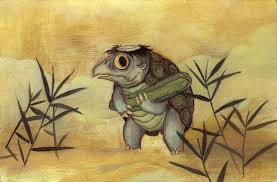
What’s a Kappa? It’s a scaly, amphibious human-like mythical creature in Japanese culture. Kappas are small, so the furniture and houses the man visits makes him feels like he is in a nursery. Things that we take seriously, like death, the Kappas find humorous. Females chase the males. Baby Kappas have to agree to be born; they can walk and talk from birth. Some are born old and reverse age through life. Some have homosexual experiences; some drink themselves to death.
Their parallel world has a parallel culture to ours with art, music and literature. The unemployed are killed and eaten to save them the bother of committing suicide. They war against the Otters. They have the same major religions we do but the one followed by most people is ‘Viverism’ which simply means “to live” as in the sense of “eating rice, drinking wine and having sex.” Kappa suicides come back in a paranormal Q & A session where they ask questions such as how is my child? and what’s happened to my house?
So we have a satire of Japanese society and culture. Capitalism, politics, art, music, literature, and even family structure all get their shots from the author. Art censorship in Kappaland is “more progressive than that in Japan.” A new book of philosophy is called “Words of the Fool.” The philosopher states that “the ideas essential to our livelihood were burnt out three thousand years ago. No doubt all that we do is add new flames to old faggots.” And, by the way, the ink they use in their books is made from “ass-brain.”
But saying this short book is a satire of Japanese culture is just the start. We are told in the introduction that the author “had come to regard life as a shabby and despicable affair that could only achieve any sort of beauty when refined and polished by art.” So one interpretation of Kappa is that it is not just a parody making fun of art and politics but a parody of humanity: a misanthrope’s feeling of revulsion and disgust for human society that was fundamentally evil.
This misanthropic view was the author’s final verdict on life while he was ill, in pain, and on opium shortly before his suicide in 1927 at age 35. He joined the long list of Japanese male authors who took their life. All his life he had feared inheriting insanity which ran in his family. He also got into ghosts and the paranormal. He suffered from schizophrenia and had feelings of persecution, hallucinations and déjà vécu experiences -- where he felt he had lived through his life before and current events were all a repeat of past experiences.
Akutagawa has been called the “father of the Japanese short story.” And Kappa is short – about 95 pages, so the paperback is pumped up with a 40-page introduction about the story, the author’s life and his other works. One of Japan's two premier literary awards, the Akutagawa Prize, is named in his honor.
It’s an interesting read – kind of like putting Jonathan Swift, Alice’s rabbit hole and Coleridge’s opium into a blender and pressing 'puree.'
Top image from jpninfo.com Photo of the author from wikipedia
Japon mitolojisi üzerinden yarattığı fantastik bir hikaye üzerinden; özellikle de Japon toplumu genelinde çok iyi bir sistem ve kapitalizm eleştirisi. Oldukça kısa bir hikaye ve çok sade bir anlatımı var. Ancak mesajları çok net. Çok beğendim.
نوشتن در مورد آکوتاگاوا خیلی بیشتر از اونچه فکر می کردم، کار سختیه. هربار که کتابی از اکوتاگاوا رو تموم می کردم اینکه چی بنویسم که درخور این نویسنده باشه و فکرم رو درموردش تمام و کمال منتقل کنه و در عین حال توی ذوق خواننده هم نزنه و منسجم باشه منو از نوشتن در مورد این نویسنده منصرف می کرد. ( اینجا ریویویی از کلیت داستان های آکوتاگاوا رو نوشتم چون به نظرم میرسه برای فهم کاپا ضروری اند)
شاید یکی از دلایل این سختیِ نوشتن درمورد او اینه که متاسفانه (حداقل) توی ایران این نویسنده آنچنان که باید شناخته نشده و عمده ریویوهایی که بر داستان های کوتاه این نویسنده ی مهم نوشته شده برچسب "داستان کودکان" و "ابتدایی" خورده و متاسفانه گاهی وقتها "بی ارزش و بد" تلقی شده که حوصله خواننده رو سر برده. عنوان داستان کودکان دلالت می کنه بر تاثیر پذیری اکوتاگاوا از ادبیات فولکلور. علاوه بر این، نقش این فرد در حفظ ادبیات سنتی ژاپن و چین در ابتدای قرن بیستم مسلما انکار ناپذیر و بسیار قابل توجهه.(برای مثال داستان توتز چان یا توشی شان که زمانی کارتون عروسکی شو تماشا می کردیم ملهم از افسانههای چینیه) اینها داستانهایی اند که عمدتا متعلق به قرون ۱۱ تا ۱۶ م هستند و توسط راهب های بودایی و مسیحی ژاپنی جمع آوری و نقل می شدند.
با اینحال، هرچه بیشتر از دوران جوانی نویسنده عبور می کنیم داستانها پیچیده تر و تاریکتر می شند تا جایی که با داستانهایی مثل "راشومون" و "در بیشه" روبه روییم که گل سرسبد روایت پست مدرن هستند و ادغام این دو داستان، اساسِ فیلم اقتباسیِ راشومونِ کوروساوا رو شکل میده. دو داستان کوتاه "آشِ یام" و "نارنگی ها" هم در مجموعه داستانِ تار عنکبوت (نشر مروارید) پیچیدگی های رفتاری انسان رو به ساده ترین شکل ممکن به تصویر کشیده؛ برخلاف برخی نویسنده ها که قلنبه نویسی رو برای وصف پیچیده ترین حالت انسانی باب کردند ، اکوتاگاوا نشون داد با یک زبان ساده و شیرینِ الهام گرفته از افسانه ها چطور میشه تفکرات پیچیده انسان رو منعکس کرد.
به نظر میرسه دغدغه ی اصلی آکوتاگاوا توی این داستانها تقابل بین خیر و شر و کندوکاو در رابطه با سرشت انسانه. آکوتاگاوا به شدت به این سرشت بدبینه و آثارش ، تلاش او رو برای آشکار کردن لایههای پنهان ذهن و رویارویی اندیشههای خیر و شر نشون میده. این تفکر در داستان "پرده ی جهنم" و "دماغ" به اوج پیچیدگی خودش میرسه. و در نهایت آخرین اثرش کاپا نقطه ی پایانی میشه بر این شیوه ی نگرش عجیب، پیچیده و زبان روایی ساده که میوه و حاصل کار سالها نویسندگیه.
قبل از شروع کاپا، خوندن داستانهای کوتاه آکوتاگاوا و افسانه های ژاپنی و چینی(مثل کتاب افسانه های ژاپنی، نوشته تئودورا اوزاکی، کوایدان لافکادیو هرن ) برای آشنایی با سبک نوشتاری این نویسنده خالی از لطف نیست.
و بلخره داستان کاپا: شاید بشه گفت انعکاس ترس بی حد و مرز اکوتاگاوا از ابتلا به بیماری شیزوفرنیه. داستان فردی بستری در بیمارستان روانی که از ورود خودش به سرزمین کاپاها(موجودات اساطیری) صحبت می کنه. بیشترِ تفاسیر سیاسی که بر این داستان نوشته شده، از این اثر به عنوان یه اثر دیستوپیایی(ویرانشهری) یاد کردن. علاوه بر این، میشه گفت آکوتاگاوا با وصف و سفر به دنیای کاپاها خودش رو در ردیف نویسنده های مهمی مثل جاناتان سوئیفت در سفرهای گالیور ، لوئیس کارول در آلیس در سرزمین عجایب، آناتول فرانس در جزیره ی پنگوئن ها و فرانک ال بائوم در دوروتی و جادوگر شهر اوز قرار داده. همینطور رد پای داستان های افسانه ای اوشیماتاروی ماهیگیر به وضوح قابل ردیابیه. تم اصلی این داستانها مثل اودیسه ی هومر، جستجوی یک آرمان، سفر و بازگشت از این سفر اکتشافی از سرزمینهای ناشناخته است. ناامیدی آکوتاگاوا از این جست و جو به دلیل تعریفی که از ماهیت انسان داره در این آخرین اثرش از زبان لَپ دانشجو بیان میشه:
" آنقدر همه چیز دلگیر به نظر میرسید که فکر کردم بهتر است از زاویه ی دیگر به دنیا نگاه کنم اما معلوم شد که هیچ فرقی نمی کند."
**کتابهای به فارسی ترجمه شده آکوتاگاوا و افسانه های ژاپن:
۱. افسانه های ژاپنی تئودورا اوزاکی ، نشر مروارید ترجمه ی تهمینه زاردشتی. ۲. کوایدان، داستان اشباح، لافکادیو هرن نشر نفیر ترجمه زهرا نی چین ۳. تار عنکبوت ریونوسوکه آکوتاگاوا، نشر مروارید، ترجمه ی نیکی نیکنام اصل ۴.پرده ی جهنم ریونوسوکه آکوتاگاوا، نشر نیلوفر ، ترجمه جلال بایرام. ۵.آکوتاگاوا و دیگران ، سه داستان کوتاه ژاپنی، نشر سیفتال ترجمه شادی سلطان زاده
6. Rashomon and other stories, Akutagawa, Tuttle publishing. 7. The hell screen, penguin books. 8. Japanese fairy tales, Theodore Ozaki Independently published. 9. Qwaidan, Lafcadio Hearn, Tuttle publishing.
Yes, it is a farcical satire; I get that. No, it didn't do much for me. Cut from the same lacking cloth as Animal Farm, this is too cute by half but not fuckable enough by 1/10th. Its allegory is heavy-handed and threadbare: y'mean, the kappa might actually be a commentary on...(gulp) us and our human peculiarities? Bah-bah-boring from Akutagawa, a master who did better elsewhere with pretty much everything he wrote before fulfilling the 20thC. Japanese author categorical imperative of killing himself.
This was a fascinating Japanese novella about a man who finds himself in the land of the mythical Kappa.He lives there quite peacefully with the Kappa, and begins to analyze his own society based on what he sees in the Kappaland. I found it quite fascinating, and it reminded me a bit of Gulliver's Travels. Of course, perhaps I would have appreciated the satirical elements better had I known more about Japan's society at the time.
After not reading anything in what feels like forever (due to health problems), I put this book in my bag when I left home on Saturday. The plan was to try to read it during the day and I managed to see it through. Kappa was surprisingly easy to read, even in my 'sickly' state of being. I had no problems following the narrative. In fact, the writing style of this short novel is fairy simple. Nor does it takes a great effort to understand what it is about. The human satire, directed to Japanese society, is in many ways universal and easy to understand. Narrated by a psychiatric patient, this novel managed to escape the state censure and speak openly about problems in Japanese society.
Kappa is basically a satirical description of an imaginary society populated by creatures from Japanese mythology, the so called kappas. I heard it being compared to Gulliver's travel, but apart from the form I personally didn't make too many connections between the two. The reason for that is that Gulliver Travels belongs to another era, and while that particular era also had corruption as its topic (a timeless topic really), Kappa might be more appealing to our modern sensitives because it's infused with a sense of great loneliness.
The irony in Kappa feels more modern, even if the satire itself is reminiscent of Swift. Personally, I think Orwell would be a better equivalent of an English Akutagawa with its dystopian novel 1984 or modern satire such as Animal Farm. Kafka also comes to my mind when I think of writers to compare Akutagawa with. Akutagawa sees human beings for what they are, creatures often ruled by their 'inner' animal or in this case 'kappa'. Religions, ideologies or even intellectual accomplishments- it all may serve to fuel the basic (animal like) desires.
I heard it said that this novel is hard to understand to those not familiar with Japanese culture, but I'm not sure I can agree with that. I don't think one needs a great insight or a degree in Japanese's history to be able to get what it is about. I would say that Kappa is a pretty universal story. This novel while it does criticize some aspects of Japanese society in detail, is mostly criticizes the human society as such. A feeling of disappointed in human society is quite strong in this one. The author also really seems to hate women (having read facts from his bio, it seems to be result of a personal trauma) but still it might be hard to read to some. Apart from that, this novel reads easily. In addition, the writer often mentions European writers or books, so it's not like he's discussing only Japanese culture. The author seems to be disillusioned with every aspect of human society: the religion, the authority and the government. This short book criticizes both communist and capitalist figures, seeing through them.
I did enjoy reading this novel, as dark as it was. This was my first reading of Akutawaga btw. My conclusion? Akutawaga was a brilliant writer. Such a shame he killed himself the same year he wrote this book. The writer does flirt with death a lot in this one. Maybe it is not the best book for overly sensitive people. It is definitely dark and pessimistic, but in an intelligent kind of way. You know, like Kafka, Orwell and the rest. If you can take them, you're probably ready for this author as well.
"Ezt a történetet az egyik elmegyógyintézet lakója, a 23-as számú beteg meséli el annak, aki hajlandó meghallgatni."
A japán Gulliver (becsületes nevén: "23-as számú beteg") leereszkedik a kappák országába, és ott számos különös dolognak lesz szemtanúja. Én meg azon gondolkodom, mit írhatnék még ezen kívül. Ez a könyv olyan rövid, hogy mire megragadhattam volna benne leendő értékelésem körvonalait, már véget is ért. Kedvvel, lendülettel olvastam, ugyanakkor sokszor nem tudtam eldönteni, amit olvasok, egy mélységesen bölcs metafora a társadalomról, vagy egyszerűen nonszensz. Az mondjuk eszembe jutott, hogy talán nem is olyan rossz dolog őrültnek lenni: az embernek nincs gondja kosztra meg kvártélyra, mégis olyan világokat jár be, amilyeneket mi - szegény épelméjűek - sosem láthatunk.
Bu kitabı uzundur okumak istiyordum. Basımını bulmakta oldukça zorlandım ama sonunda Ankara İmge Kitabevi'nden edinebildim. Ryunosuke'nin Rashomon kitabını 15 yaşındayken falan okumuştum. Son derece etkilenmiş ve Kurosawa'nın filmini de yaklaşık 10 kere izlemiştim. Ryunosuke'nin benim şu andaki yaşlarımda intihar edip aramızdan ayrılmış olması sarsıcı bir bilgi. Teoman'nın dediği gibi "babamın öldüğü yaştayım". Ryunosuke'nin öldüğü yaştayım. Ve onunla öldüğü yaşta tekrar buluştum. Neyse benim hikayem şöyle bir kenarda dursun. Gelelim Kappa'ya. Kappa, toplum üzerine ağır bir taşlama. Kapitalist toplumu dibine kadar eleştiren bir hiciv (özellikle işten atılan işçi Kappalar'ın diğer Kappalar tarafından yenmesi). Düşünen insanın yalnızlığı ve ümitsizliği (Ne demiş Sait Faik, "ben bahtsız değildim ben ümitsizdim") ve tabiri caizse şairin ölümü son derece kısa ama vurucu bir şekilde işlenmiş. Kitap Japonca'dan doğrudan dilimize kazandırılmış ve elimdeki ikinci baskısıydı. Dünyada güzel şeyler de oluyor. :)
Despite the intriguing context (composed in self-disgust and fear of madness at the end of the life of one of Japan's pioneering modernists), subject (a kind of ethnography of the fanciful water spirits of the title) and presentation (the tale of a madman), this gets caught up in satire at the expense of any real narrative intrigue. An interesting note in the progression of the fantastic-surreal-subjective in world lit, but not really, to me, enjoyable on its own merits.
"'Kappa' was born out of my disgust with many things, especially with myself."
A madman falls into Kappaland and recounts his adventures there. Akutagawa wrote it a year before his suicide and it's fairly clear he wasn't very happy.
"As I watched, the he-Kappa got her in his arms and bore her to the ground, their bodies locked in a tight embrace. They lay there together for a while. But when at last he stood up, there was a wretched look on his face that I can't quite put into words: it might have been the product of disappointment or, again, it could well have been an expression of remorse."
"But I cannot bring myself to associate with ... the pessimist weary of life who did not kill himself."
There's a statue of Doppo Kunikida in Kappaland: "This is Kunikida Doppo, a poet who had a vivid recognition of the humour of the coolie who hurls himself in front of an unrushing train."
My edition came with a nice introduction from G. H. Healey: Akutagawa on school: "It was not necessarily difficult, if one made just a little effort. But it was not easy to forget that it was all so useless."
"There seems little room for doubt that Ryunosuke's suicide was precipitated by Uno Kōji's brekadown."
Ryunosuke Akutagawa yarattığı Kappa dünyası üzerinden Japon toplumunu hicvediyor. Anlatıcı da akıl hastası olduğu söylenen birisi. Japon yazarların böyle çılgın hikayelerini çok seviyorum. Hele anlatıcının Kappaların Yerim-Diriman dinine ait tapınağı ziyaret ettiği bölüm çok eğlenceliydi. Oğuz Baykara hocanın çevirisi her zamanki gibi mükemmel.
Aku suka buku ini, salah satu seri sastra dunia terbitan KPG favorit setelah Monte Cristo karya Alexander Dumas.
Kappa sendiri, menceritakan kisah seorang pasien no. 23( tidak disebutkan seorang lelaki/wanita (?) ) yang terjebak didalam dunia mahluk mitos di Jepang bernama Kappa. Di dunia Kappa tersebut sangat bertolak belakang dengan dunia manusia.
Buku yang bahkan halamannya tidak mencapai angka 100 ini sukses membuatku geleng2, karena banyak sekali sindiran sarkas yang dimaksudkan utuk rakyat Jepang pada zaman tersebut. Dan isu yang diangat bahkan sangat beragam mulai dari kehidupan bermasyarakat, sosial budaya, politik, bahkan beberapa jenis pekerja seni.
Diketahui bahwa Akutagawa sendiri meninggal karena bunuh diri, dan itu seperti tergambar pada salah satu tokoh di dalam cerita ini, yang meninggal akibat menembak kepalanya sendiri dengan pistol.
Selain Shusako Endo, tulisan Ryunosuke Akutagawa juga merupakan karya yang cukup berpengaruh buatku.
terjemahan KGP yang juga cukup bagus, walaupun ada ketidak konsistenan ketika menye utkan "Aku" atau "Saya". Namun, juga tidak begitu terlihat, sehingga bisa termaafkan.
Rate : 4,5/5 star. ( aku bulatkan menjadi 5 )
**** Jujur, aku sebagai pembaca sangat hati2 jika meriview buku2 sastra yang memang sarkas, dan juga bernada satire, karena aku sendiri memiliki banyak ketidak tahuan akan zaman tersebut, dan juga Jepang sendiri. Namun, jika pembaca mengetahui maknanya, tentu buku ini juga cukup menohok bukan hanya untuk rakyat Jepang, tapi untuk kita, sebagai manusia yang semakin kedepan menjadi semakin modern. Namun, memiliki pikiran yang sempit.
Ne insan dışı bi canlı olup insanlara benzer yaşam süren Kappa'ları, ne de kappaların hayatlarını betimlerken ilgi çekici ve yaratıcı malzemeler kullanamamış yazar. O yüzden türünün başarılı bir örneği olduğunu söyleyemem.
تدور احداث الكتاب حول رحلة احد نزلاء المشفى العقلي الى دولة الكابا التي تسكنها مخلوقات غريبة عارية عاداتها وتقاليدها قريبة وبعيدة جدا في نفس الوقت ��ن عادات وتقاليد البشر. الكتاب عبارة عن نقد اجتماي مقدم من خلال نوفيلا قصيرة كان ممتعا ومكتوبا بأسلوب مسلي
Akıl hastanesinde tedavi gören bir hastanın anlattıkları. Kısacık denebilecek bir hikaye ancak içinde çok güzel taşlamalar var. Ben en çok işten çıkarılan işçilerin yenmesi mevsundan etkilendim.
Απλά εξαιρετικό. Δεδομένου της εποχής που γράφηκε και απο το συγγραφέα του, ο οποιος εγραψε και το Ρασομον το θεωρώ υπεροχο! Σε καποιους μπορεί να μην αρεσει, αλλά ειναι ενα μικρο ταξιδι μεσω της σχιζοφρενειας σε διαφορες πτυχες, χαρακτηρες και εκδηλωσεις τους σε μία παράλληλη πραγματικότητα. Ή και όχι. Κάπα λοιπόν!
کاپا: موجود اساطیری شروری مثل پری دریایی است. بین انگشت های دست و پایش پرده و پوستی شبیه خزنده های فلس دار به رنگ سبزآبی یا زرد دارد. مثل لاک پشت یک لاک دارد و روی سرش یک تورفتگی کاسه مانند هست که باید مدام پر از آب باشد. اگر آب این کاسه بریزد، کاپا فلج میشود.
*پیشنهاد میکنم حتما کلمه ی kappa رو سرچ کنید و تصاویر و نقاشی هایی که ازش موجوده رو ببینید!
داستان از جایی شروع میشه که مردی در مسیر سفرش به یکی از کوهستانهای ژاپن، با کاپایی برخورد میکنه و وقتی دنبال کاپا راه میوفته تا اونو بگیره، ناخواسته به سرزمین و دنیای کاپاها وارد و اونجا موندگار میشه!! البته انتهای داستان مشخص میشه که گویا این مرد یک بیمار مبتلا به اسکیزوفرنیه و ماجراهایی که تعریف میکنه هم چیزی جز خیال پردازی و توهم نیست..
آکوتاگاوا توی این کتاب، تا تونسته به مفاهیم و ارزش های انسانی حمله ور شده و قانونها و کلیشه ها رو زیر سوال برده!!
قوانین دنیای کاپاها کاملا متفاوت و حتی در مواردی دقیقا عکس قوانین دنیای ما انسانهاست! توی دنیای کاپاها، این زنها هستن که مردها رو انتخاب میکنن و حتی در اکثر مواقع، به مردها حمله و تجاوز میکنن جوری که کاپاهای مذکر تمام عمر با ترس از کاپاهای مونث زندگی میکنن و کاپاهای مذکری که مورد حمله ی کاپاهای مونث قرار میگیرن گاهی جوری به قعر ناراحتی و افسردگی فرو میرن که نوکشون میپوسه و میوفته!! توی دنیای کاپاها بر خلاف دنیای آدمها، قبل از تولد، به بچه ها با پرسیدن این سوال که دلت میخواد پا به دنیای بیرون بذاری یا نه، حق انتخابِ زاده شدن یا نشدن میدن!
جالب تر اینکه، گاهی مرد داستان فکر میکنه از کاپاها برتره و یا به برخی قوانین کاپاها اعتراض میکنه و عکس العمل ها و جوابهای جالبی از سمت کاپاها دریافت میکنه! مثلا روزی یکی از کاپاها از سرنوشت کارگرهای مبارز و معترضی میگه که از بیکار شدن شکایت میکنن و بعد کشته و تبدیل به خوراک کاپاهای دیگه میشن و مرد این قانون رو وحشتناک و ناجوانمردانه تلقی میکنه، کاپا هم در جواب بهش میگه مگر شما در کشورتون از زنها به عنوان کالاها و برده های جنسی استفاده نمیکنید؟ حالا تو فکر میکنی این با کاری که ما میکنیم تفاوت خاصی داره و یا فکر میکنی که شما آدمها از ما کاپاها خیلی بهتر و برتر هستید؟:))))
من قبلا هم اشاره کرده بودم که آکوتاگاوا نویسنده ی محبوب منه، و خداروشکر هنوز دو سه تا کار ترجمه شده ی دیگه ازش هست که بتونم سراغشون برم!
این کتابش رو هم مثل باقی کارهایی که ازش خوندم خیلی دوست داشتم، هم به خاطر اینکه توش از افسانه های ژاپنی و موجودات اساطیری که همون کاپاها باشن استفاده کرده و من هم که میمیرم برای این چیزا :)) و هم به خاطر نقدش به تمام قوانین نادرست و کلیشه ها..
De Akutagawa sólo conocía algunos rasgos superficiales, cuatro datos dispersos que averigüé en la época que vi varias películas de Kurosawa, por supuesto Rashomon, una de las más populares del director y, en consecuencia, también uno de los textos más famosos de Akutagawa. Pero me topé con el maravilloso libro de David Peace, dónde compone una biografía en relatos inspirados en los textos de Akutagawa, un libro tan brillante que, si te gusta, es imposible que no te despierte el interés por este escritor japonés, que se suicidó en 1927.
Por azares, empecé por esta fábula, que publicó precisamente en 1927, de lo que se deduce que su salud mental no era la mejor, Akutagawa ya había sido internado varias veces en el psiquiátrico, consumía morfina a expuertas, por eso resulta todavía más sorprendente encontrar esta fábula que contiene no pocas dosis de humor en forma de sátira de la sociedad nipona y por ejemplo de Nietzsche, que si bien es citado directamente en el texto, antes se le satirizaba mediante la sociedad de los superkappadianos, unos kappa que se creen muy especiales y se reúnen para básicamente esforzarse a ver cómo se logra destacar más que el resto de miembros.
Los kappa forman parte del folclore fantástico japonés, son unos seres anfibios que navegan con facilidad por los ríos y resultan muy escurridizos. El narrador de esta historia, al cual conocemos como interno de una institución psiquiátrica, no sólo los contactó, además logró perseguir a uno hasta dar con un agujero que le llevó a su mundo. Conoció así un mundo regido por sus propias reglas, como por ejemplo que el arte debe ser muy explícito o que si alguien comete un crimen y sus circunstancias personales cambian, entonces el crimen prescribe. Por ejemplo, al narrador le roban una pluma, siendo la intención del ladrón regalársela a su hijo, pero como el hijo murió, pues entonces ya no hay crimen. Un mundo disparatado, dónde lo serio hace reír y lo divertido les pone serio. A mí me ha traído a la mente lo rarísimo que me resultaba el mundo de Fraggel Rock cuando era pequeño.
Parte del chiste es que, una vez se adapta y se acostumbra a la diferencia, ese mundo le resulta más apetecible que su propia sociedad, a la que ridiculiza o crítica de varias formas. En otro pasaje, el narrador se extraña que los kappa promuevan casarse con otros kappas con enfermedades en orden para combatir las enfermedades degenerativas. Cuando expone esta reserva, la respuesta de uno de los kappa es que los japoneses en cierta forma también lo hacen cuando los señoritos se fugaban con las sirvientas o con el chófer, era una forma de escapar al círculo social, luchar contra la endogamia, sólo que no los ve capaces de aceptarlo abiertamente.
Así pues, una lectura con casi cien años que denota un gran gusto por la modernidad y sabe dosificarlo con acertadas dosis de humor, tanto es así que no ha perdido frescura y encima se lee rápido gracias al ágil manejo de los mecanismos narrativos. No sé si es lo más canónico de Akutagawa, pero sí que es bastante recomendable.
Kapa nije odevan predmet, već posebna vrsta bića, poznata japanskom folkloru. Povest o kapama ispovedna je - pripovedni okvir izgrađen je na osnovu pripovedanja pacijenta jedne ustanove za duševno zdravlje. I kao što je to inače slučaj sa pričama o ludilu - pitanje je ko je zaista lud. Kape su naličje društva, satira koja začuđuje i reže. Zanimljivo je da imaju i svoju religiju u kojoj su sveci i Strindberg, Niče i Tolstoj. Vizija zapada u japanskoj književnosti je jako zanimljiva tema - a Strindberg se, na primer, spominje u još nekoliko priča.
U priči 'Duvan i Nečastivi' obrađena je i tema dolaska katoličanstva u Japan. Narativizacija predanja sučeljava istorijsku sa folklornom istinom - optuživanje Španaca i Portugalaca zamenjuje se povešću o Svetom Franji (!) koji je doveo Nečastivog sa sobom i uz pomoću njega 'zasadio' duvan. Ali nije to bila zemlja kakvu je očekivao, kakvu je Marko Polo opisao. A u njegovom sećanju Japan je zemlja puna zlata gde znaju da vaskrsavaju mrtve biserima.
Pripovetka 'Nos' je jedna nadogradnja gogoljevke opsesije. Nos je u ovom slučaju ne odbegao, nego prevelik. U prevodu stoji kao kakva 'hrenovka'. I vlasnik takvog nosa pokušava da se reši tog viška koji mu otežava život.
Tu je i priča o vašima, nesrećnom učitelju engleskog Moriju, kao i o jednoj Akiko (Tićmi treba da ih sve skuplja)...
Međutim, možda sam previše očekivao, ali priče me nisu zapanjile. Da su loše - nisu, da su maestralne - nisu, ali čini se da bolje deluju u prepričavanju nego u samom čitanju. Možda je sa čuvenim 'Rašomonom' drukčije.
Mari mendengar kisah pasien no. 23 dari sebuah rumah sakit jiwa sebuah desa di luar kota Tokyo yang menderita dementia praecox. Suatu hari ia terdampar di dunia Kappa. Dunia yang sama sekali belum pernah dilihatnya. Dunia yang menurutnya berbeda--sangat berkebalikan--dengan dunia manusia yang sehari-hari ia tinggali.
Contohnya saja, di dunia #Kappa jika ada bayi Kappa yang akan lahir, sebelum lahir bayi Kappa akan ditanyai terlebih dahulu apakah ia ingin dilahirkan atau tidak. Jika ia menolak, maka bayi Kappa tersebut akan langsung lenyap.
Jika di dunia manusia, kebanyakan pihak laki-laki yang mengejar perempuan, di dunia Kappa pihak betinalah yang mengejar jantan bagaimanapun caranya.
Kappa adalah makhluk mitos dari Jepang. Akutagawa menciptakan sosok #Kappa mungkin sebagai bentuk satir terhadap masyarakat kita, khususnya masyarakat modern Jepang. Novel tipis ini sangat memukau. Sangat. ❤ Diterbitkan kali pertama tahun 1927, buku ini masih sangat relevan dengan kehidupan saat ini.
Akutagawa 'menyentuh' segala hal dalam aspek kehidupan. Keluarga, hubungan sosial, ekonomi, politik, bahkan agama. Buku ini tipis, tetapi berisi banyak hal. Dalam dunia Kappa, sebuah perkataan pun bisa membuat #Kappa meninggal. Banyak sindiran di dalamnya. Fix saya jatuh cinta dengan karya Akutagawa ini.
Sayangnya, Akutagawa meninggal dalam usia muda--35 tahun--dengan cara bunuh diri. Tepat 80 tahun yang lalu pada tanggal yang sama dengan hari ini, 24 Juli 1927.
"Apa yang paling ingin kita banggakan ialah yang tidak ada pada kita." (Halaman 48)