Noi ci troviamo, di fronte all'artista in una condizione di privilegio, come avviene tutte le volte che sui risultati si sono accumulate ragioni e interpretazioni, nel nostro caso da contare per secoli. E' proprio un segno di distinzione artistica questa libera accettazione, anzi questa stratificazione dei movimenti culturali: accettazione e stratificazione che sono in grado non solo di registrare la ricchezza dell'invenzione artistica ma anche la continuità del discorso culturale. Un artista, in un certo senso, prevede a lunga scadenza quello che dopo un certo periodo apparirà agli occhi degli osservatori, e immette nel suo testo, nella sua raffigurazione, toni e soluzioni che soltanto dopo un lungo deposito di anni acquisteranno il loro autentico rilievo. Con questo si vuol dire che il nostro modo di guardare Botticelli è completamente diverso da quello adottato dai suoi contemporanei, probabilmente è anche diverso dalla valutazione dei contemporanei maggiori in senso assoluto (si legga Leonardo), in quanto noi - a volte coscientemente, il più delle volte inconsciamente - vi aggiungiamo qualcosa che appartiene alla somma delle varie esperienze culturali che si sono accumulate su quell'esemplare d'invenzione. Naturalmente, c'è una grossa parte di arbitrio in operazioni del genere; ma è un arbitrio giustificato. Altrimenti non esisterebbe senso della storia, e ci sarebbe una grave impossibilità di adesione all'opera e al lavoro di chi ci ha preceduto. (Dalla Presentazione di Carlo Bo)
A high-quality monograph of Alessandro Botticelli, which includes 49 colored paintings with individual analysis, 23 full-page details, a 40-page essay by Chiara Basta and Carlo Bo, a 7-page extract of the "Lives" by Vasari, a chronological table, and a geographical table of the paintings.
Pleasant book to read, high-quality print. I wish some larger paintings could have been printed on a single page, instead of being cut in the middle.
His Life and Art
Alessandro Botticelli was born in 1445 in Florence. His father, Mariano Filipepi, was a rich tanner. Vasari explained that his nickname Botticelli comes from his presence at the workshop of a goldsmith known as "Botticello". It might also come from his brother, goldsmith battigello himself. In Florence, many artists started their apprenticeship this way to learn definition and attention to details.
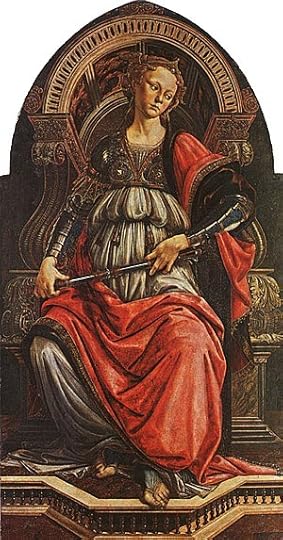
In the early 1460's, he is sent to learn with Fra Filippo Lippi, one of the most famous painter of his time, who receives important commissions from the Medici family. He is greatly influenced by Madonna and Child with Angels, 1465 by Lippi. Important commission in 1470: Piero del Pollaiuolo is late to deliver the seven paintings for La Sala Tribunale della Mercanzia. Thanks to Antonio Vespucci, Botticelli paints Fortitude, a tournant in his work. He has fully created his language and is now ready to develop a new sense of space and scenic presence.
The period between 1470 and 1481, in Rome, is marked by the prestigious commissions by the Medici family and their network of influence.
Cosimo the Elder created the Academia Neoplatonica, a place where intellectuals could read, study and translate Greek and Latin texts and meet to discuss them. The leader was Marsilio Ficino, specialized in Plato's theology. They discussed the immortality of the soul and its inclination toward God propelled by the strength of Love. Thus, earthly beauty was considered one of the most powerful means for accessing the contemplation of divine beauty, which is God. A link between earthly beauty and divine beauty is communicated via symbols and allegory. Art becomes useful both for stimulating sensations tied to the world of the Beautiful, and for carrying knowledge to a higher level, through the interpretation of symbols. This is how the The Allegory of Spring / The birth of Venus is read. Botticelli became its official painter, via Lorenzo the Magnificent.
In 1481, Botticello is called to Rome to the service of Pope Sixtus IV, with Ghirlandaio, Perugino and Cosimo Rosselli to the Sistine Chapel.
Giovanni carried out his mercantile and financial activities in London, but we know that in 1483 he returned to Florence to acquire a chapel in the church of Santa Spirito.
The last years of the century in Florence, particularly after the death of Lorenzo the Magnificent in 1492, were scarred by internal political problem caused by discontentment with the Medici management of power, problems with international policies, and the defense of the boundaries menaced by Charles VIII, who invaded Italy two years later. The ideals of government and civil development enter a crisis, with a revival into mystic and prophetic themes. At the end of his life, Botticelli and his prestigious workshop focus on simplified and immediate devotional features. He dies in Florence in 1510.
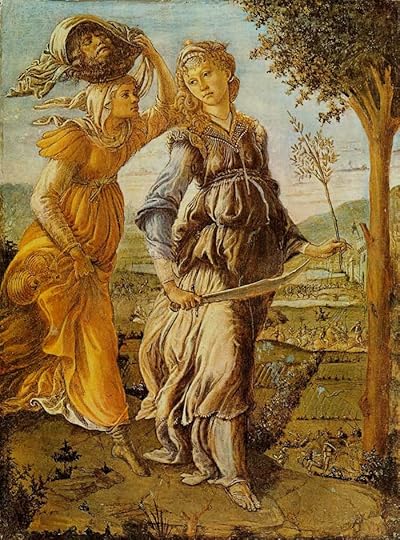
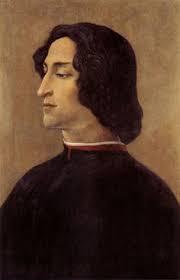
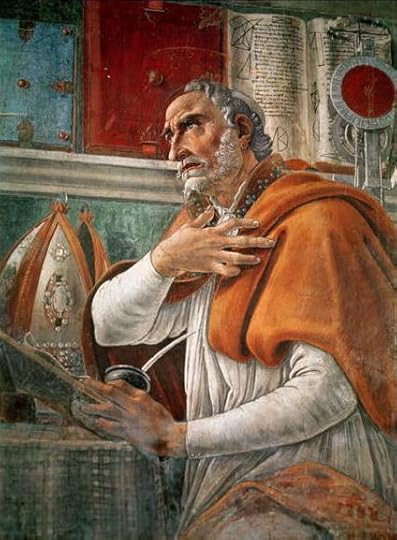
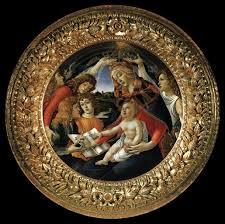
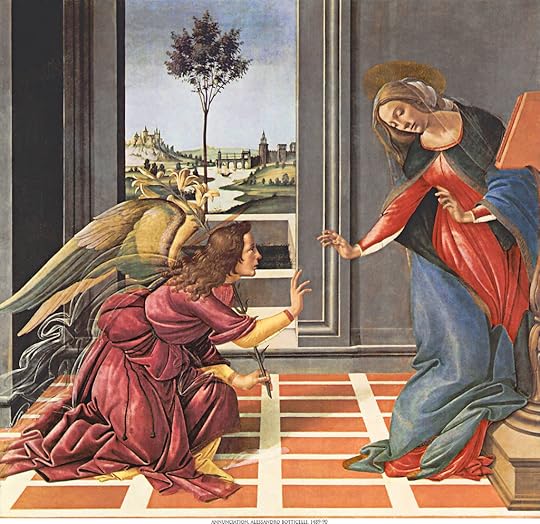
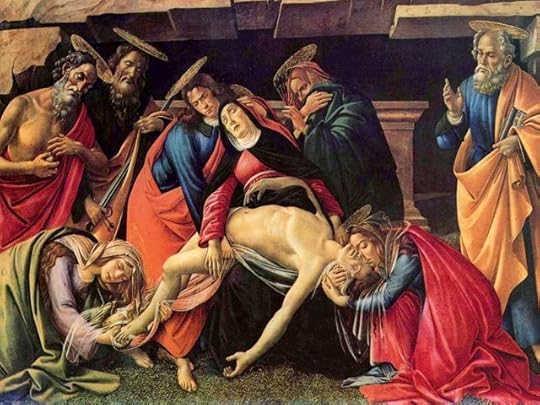
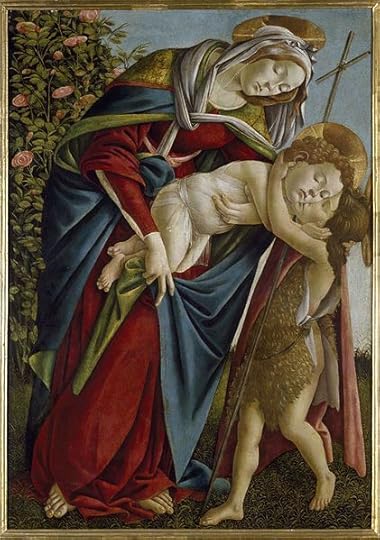
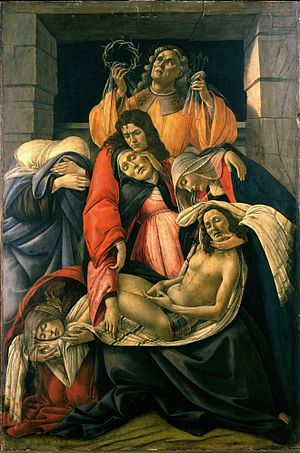
My favorites: - Fortitude, 1470 - Stories of Judith (diptych), 1470-1472 - Portrait of Giuliano de' Medici, c. 1478 - Saint Augustine, 1480 - Madonna and Child with Five Angels, 1481 - Annunciation, 1489 - Lamentations over the Dead Christ, with Saints Jerome, Paul and Peter, 1492 - Virgin and Child and Infant Saint John, c. 1490-1495 - Lamentation over the Dead Christ, 1495
Fortitude, 1470:
Stories of Judith (diptych), 1470-1472:
Portrait of Giuliano de' Medici, c. 1478:
Saint Augustine, 1480 (detail):
Madonna and Child with Five Angels, 1481:
Annunciation, 1489:
Lamentations over the Dead Christ, with Saints Jerome, Paul and Peter, 1492:
Virgin and Child and Infant Saint John, c. 1490-1495
3 stelle non, naturalmente, al pittore (che ha fatto della cura lenticolare dei particolari una sublime forma d'arte) ma al testo a corredo delle immagini. Un po' slegato e non sempre chiaro nel delineare il percorso umano e stilistico del Botticelli.
There were only 32 pages to read and the rest was artwork. The book provided a nice brief summary of his life and the photos provided a summary of the different periods for his artwork.