Was the Enlightenment a unified body of thought generated by an established canon of great thinkers, or were there many areas of contradiction and divergence? This important new textbook presents the major debates of the period against the background of broader social changes.
ما هو التنوير ؟! هل كان التنوير اجتهادات فردية ؟! هل شارك الحكام والملوك فى جهود التنوير ؟! ما هى نظرة أوروبا فى عصر التنوير للآخر ؟! هل تسبب التنوير فى إندلاع الثورة الفرنسية ؟! انتشار المقاهى والتنوير ! العلاقة بين الدين والتنوير ! المرأة والتنوير !
هذا ما يُجيب عنه هذا الكتاب الأكاديمي للمؤرخة الأمريكية الدكتورة دوريندا أوترام، وهى أستاذة للتاريخ فى جامعة كورك، كما كانت تعمل أستاذ زائر فى جامعة هارفارد وقامت بتدريس مادة "تاريخ العلوم".
الترجمة ممتازة من الدكتور ماجد موريس إبراهيم. يقول الدكتور ماجد موريس فى مُقدمة الكتاب عن التنوير : (التنوير هو الحل لأنه يُعفى من نتائج الصراع بين الانتماء للدين أو الانتماء للوطن ولا يُشكل حزباً ولا ميليشيا تستعرض قوتها داخل الحرم الجامعى، وليس التنوير تكتلاً يتنازع السلطة مع نظام الحكم مثلما هو الحال مع حماس وحزب الله. التنوير هو الحل لأنه إنساني بطبعه وليس نظرية ثابتة.. ليس دوجما لا تتغير ولا تابو لا يمكن المساس به. ليس التنوير وصفة سحرية نُطبقها وهو ليس تعويذة نقرأها فتنفتح الأبواب الموصدة وتنجلي النوائب والمصائب. إن التنوير عملية متواصلة من تشغيل العقل وترشيد الفكر وإحلال المنطق محل الخرافات. يضع التنوير نتائج ما يصل إليه موضع الفحص والاختبار والتمحيص ويسمح بطرح البدائل إذا فشل ويراعى الظروف والمتغيرات.)
التنوير هو عملية خلاص الإنسان من سذاجته التى جلبها لنفسه وذلك عن طريق استخدامه للعقل دون أن يشوه التعصب تفكيره ودون أن يوجه الآخرون هذا التفكير ..
عمونائيل كانط
إن الشعائر الدينية يحب أن نتحملها فقط لفائدتها فى تحقيق الإستقرار الإجتماعي، وليس بسبب أن ما تقوله صحيح وحقيقي. - فولتير
ذات يوم تعرفت على عالم باللاهوت.. كان يعرف البراهمة والكلدانيين والسريانيين والمصريين كما أنه كان يعرف اليهود. كان عالما بقراءات الإنجيل المتعددة. وكلما زادات معرفته الحقيقية كانت ثقته تهتز بكل شئ عرفه. كان سلفيا طوال حياته، وعند موته اعترف أنه بعثر حياته بلا فائدة. - فولتير
سوف يأتى اليوم الذى تُشرق فيه الشمس على الرجال الأحرار فقط، أولئك الذين لا سيد لهم سوى عقلهم.
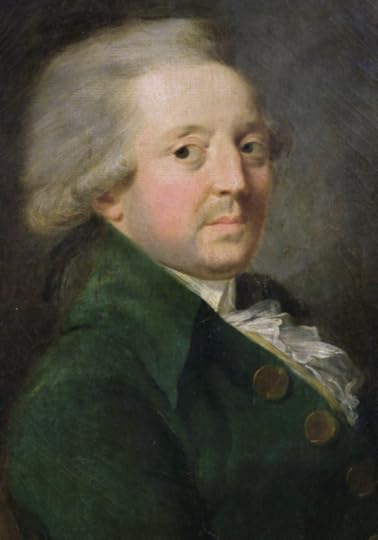
ماركيز دى كوندورسيه
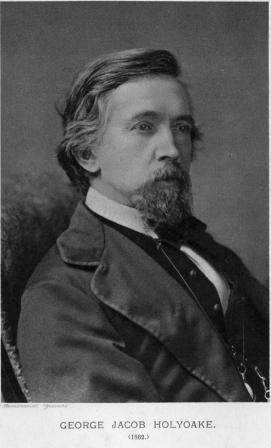
إن العلمانية ليست نظاماً يُهدد المسيحية ولا الدين، ولكنه نظام مستقل عن الدين لا يُنكر أهمية الإيمان بالله الخالق ولا يلغى دور رجال الدين ولا التعاليم الدينية، ولكنه يؤكد وجود تيار مواز من اليقين ومن المعرفة يوفره التفكير العلمانى الذى ينبع من تجارب وخبرة هذه الحياة ويصب أيضاً باتجاهها ويهدف إلى سعادة ورخاء البشر، بينما الفكر الديني يساعد الفرد عن طريق توصيل رسالة السماء إليه وهو يقوده إلى نمط أخلاقي سام فى الحياة اليومية ويعده بالسعادة فى الآخرة ومن حيث أنه نزل من السماء فهو لا يخضع للفحص ولا للتجربة البشرية.
جورج هوليوآك
لا يوجد شئ مثل الروح، فالمعرفة تأتي فى النهاية من انطباعات حسية من العالم الفيزيائى المحيط.
“Bir gün gelecek ve güneş akıllarından başka efendileri olmayan özgür insanlar üzerinde parlayacak”
Aydınlanma kavramını büyük toplumsal dönüşümler ve bunların küresel ölçekteki etkileri bağlamında ele alan Dorinda Outram; kölelikten koloni imparatorluklarına uzanan bir zeminde düşünce tarihinin kapılarını aralıyor.
“Dolaşıyorum, öğreniyorum, görüyorum, bilgi sahibi oluyorum ve not alıyorum. Bu bir fatih olmaktan çok öğrenci olmaya benziyor”
There are hundreds, if not thousands of books intended to introduce the Enlightenment. They range from short concise to bricks whose main use seems to be a door stops (or to look impressive where they stand unread in a bookshelf). As always, this excess leads to the fact that most of what has been written or published turns out to be of dubious quality, or too ambitious to function as an orientation in the subject. Dorinda Outram book succeeds with a piece of art to be orienteering, bursting with knowledge and at the same time short. If this concise masterpiece had only succeeded in this, it would have been enough to raise the over decaying ocean of books to which the subject belongs. But Outram succeeds with something much more impressive.
When it comes to orienteering works or overviews, far too many authors fall into the trap of writing a relatively superficial chronological account. Outram avoids this trap as she realizes that the object in question is too extensive to be seen with the naked eye, it is not even possible to conceptualize. The solution is as simple as it is pedestrian. She tackles the subject by studying how different aspects of the Enlightenment changed over time. From the view of reading to gardens. From women's place in the salons to the scientific academies. From the nation to issues of race. She presents the enlightenment as a series of phenomena that are connected but still distinct, pushing each other in unforeseen directions that push each other in feedback loops that are as unforeseen as they subsequently came to appear as irresistible.
A common problem when discussing enlightenment is that it is often considered a turning point without history. Something completely new. Outram avoids this problem by focusing on the material conditions and the slow development that led to this era, especially development of travel, new navigation strategies and increased globalization within the aristocracy are highlighted as one of the main reasons for the same. This long look also means that she avoids the classic writing of history where " great men" create history. What we see is instead a society that sometimes slowly, sometimes rapidly changes in unforeseen directions.
The only objection to the book is that a basic prior knowledge is desirable. As a reader, you can not come in as a blank sheet. With that said, it is not a book for those already initiated either, but for those who have basic knowledge of the era and wish to understand what happened. The greatest asset is that Outram shows the complexity of the Enlightenment, how it was a patchwork quilt of different currents that together created a whirlwind. And how the various actors often started processes they did not understand where to lead. It is a case study in unforeseen consequences.
Up until about twenty years ago, Dorinda Outram writes, historians tended to see the Enlightenment as “homogenous and basically unified in thought and action,” as a process in which human reason and science could guide human affairs, change society, and “liberate the individual from the restrains of custom or arbitrary authority.” Outram’s synthesis of the subject, however, emphasizes the diversity at the heart of the Enlightenment and suggests that the changing ways of understanding the era reflect the Enlightenment’s complexity.
As Outram points out, much recent historical research has focused on the social context in which Enlightenment ideas were produced, received, and marketed. Herein lay the source of great change during the eighteenth century, and herein also lay the source of great complexity. Economic expansion, population growth, increased literacy, and the proliferation of learned societies – to name only several of the many changes – diminished the authority of the monarchy and religious establishments while giving greater influence to the writers and thinkers who shaped the changes during the Enlightenment. One category in which change was particularly marked was that of religion. Some historians, such as Gay, Vovelle, and Thomas, saw the Enlightenment as above all a challenge to religion, while others – chiefly Hegel – saw the Enlightenment as a corollary to the Reformation insofar as both movements sought to free human thought. Nevertheless, as Outram argues, the picture becomes more complex when one looks beyond the small group of anti-religious writers confined mostly to the French Enlightenment. Many religious movements during this period sought to make orthodox religious beliefs commensurable with human reason and other Enlightenment ideals. This was an obvious and indeed reasonable response to the religiously motivated violence of the Thirty Years’ War, for example, and it led to an increased emphasis on toleration as a religious principle.
Religion did, however, come under threat during the Enlightenment, and the application of reason to the interpretation of scripture heightened the ambivalence surrounding not only Christianity, but also the legitimacy of the monarchs who found sanction by evoking a divine order. Moreover, where changing theological beliefs left off, emerging “science” picked up. Heretofore the two fields of inquiry had been closely connected, and indeed remained so for much of the eighteenth century. The Enlightenment never posed a uniform attack on religion, and religion never blindly refuted the precepts of the Enlightenment; the theme was one of complexity and ambiguity.
Outram carries the theme of complexity into her discussion of the “exotic.” Europeans confronted questions not only about colonialism and the exploitation of nature, but also the question of difference. Were Europeans different? Were European ideals universal? Was civilization morally ideal? Outram argues that Europeans often saw native peoples as natural and inherently good – not corrupted by civilization – and found in natives a set of qualities resembling those of classical Greece and Rome during their most virtuous eras. Many accepted that it was man’s duty to exploit the earth’s resources, for example, but considered slavery and colonialism an affront to Enlightenment ideals.
One of the greatest contradictions within Enlightenment thought involves that of gender. How could a movement seeking to establish freedom and equality simultaneously garner so-called scientific evidence to support the idea that women have a qualitatively lower ability to reason? As with the other topics of discussion, Outram emphasizes that the picture was one of complexity and ambiguity: the Enlightenment both created a masculine political culture, and provided the theoretical basis for those who were to later struggle to free women from restrictive definitions of gender. Similarly, the relationship between the monarchy and the people was one of complexity. Many states, particularly in central Europe, already possessed well-developed theories of legitimation – such as Cameralism – that in fact sought reform by reconciling traditional notions of hierarchy with emerging Enlightenment ideals. There remained certain contradictions, of course, such as the exclusion of large numbers of people from the exercise of universal rights, and the Enlightenment certainly influenced the course of the Revolution of 1789, but as Outram emphasizes throughout her book, the connections are less direct, and the Enlightenment less unified, than historians have traditionally assumed.
My main criticism is that Outram’s The Enlightenment may leave the uninitiated reader wondering where the study of the Enlightenment ends the study of the eighteenth century begins. One could study the Renaissance, or the Reformation, or the Romantic Movement – for example – as specific areas of inquiry within their respective centuries. Like the Enlightenment, each of these subjects would present a number of “complexities” and contradictions when considered alongside other themes occurring simultaneously. If traditional Enlightenment historians – Peter Gay, for instance – intended to write a history of “the Enlightenment,” how can they be criticized for failing to discuss the many other complex and contradictory movements occurring throughout the eighteenth century? In this way, perhaps Outram criticizes the book that Gay never intended to write; perhaps also she overstates the complexity of the Enlightenment. Nevertheless, her study is coherent and compellingly argued, and it finds its enduring value in the issues it emphasizes and the questions it raises.
جمالية الكتاب تكمن في محاولة الكاتبه احتواء وتقريب جميع الاديان وخلق صورة ذهنيه لتعايش كافة المعتقدات والمذاهب في سلام وولاء خالص للدولة ، مع بيان أبرز الصور التي قاربت هذه الصورة والنقيض بالصور التي عادتها من التاريخ مثل فريدريك العظيم الذي صعد الى بروسيا في نفس العام الذي اعتلت فيه ماريا تيريزا عرش جارته النمسا وانتهج كلاهما منهجين متناقضين فبينما فصل فريدريك الدين عن الدولة وساوا جميع الاديان في الحقوق راحت تيريزا تطارد ما اسمتهم بالمهرطقين وهم من يخالفون ديانتها الكاثوليكية .
المأخذ الوحيد على هذا الكتاب إنه دعم جميع حججه في تأييده لتنوير بتناوله للديانه المسيحية ، إضافة اليهودية والاسلامية كانت ستشكل فارق في مجريات الكتاب وآراءها ككل مما قد يضاعف روعة الكتاب
Outram did not provide what I expected, instead offering a bunch of hints about the Enlightement, instead of definitive statements. Wonderful hints as she offers a social context among coffee houses and a rising consumer culture and as she connects Enlightenent ideas to exploration, government, slavery, gender, science, religion, and revolution. Historians have clouded the belief of a great unitary march of reason and Outram shows how the pieces have fallen. They are great hints.
Read this for a class! Overall it was a great introduction into the rest of the seminar and the different aspects of the Enlightenment. With such a broad scope, I can imagine that it was difficult to focus each chapter into a topic, but as a guide for a course this is a great resource :)
More historiography than history, so not a good introduction to the Enlightenment, but okay for me. Touches on a lot of the different topics that Enlightenment writers wrote about (politics, religion, science, gender, etc.) but also the myriad different ways of interpreting this output. The main point that the author seems to want to convey throughout the whole text is that the Enlightenment was not a unitary moment with singular, consistent contentions; this comes through no matter the aspect of the Enlightenment being discussed. This slender volume is successful as a jumping off point to more specific areas of scholarship, as it is richly filled with in-text references, footnotes and a bumper bibliography outlining further reading. There are some good recommendations of books that are fuller overviews of the period; coming away with some next steps for further reading is always a good sign for a non-fiction book for me.
Dorinda Outram provides an excellent introduction to the enlightenment. Readers familiar with 18th century thought may criticize the book for not being sufficiently thorough; however, the work outlines the contradictory discourses of the various dimensions of the enlightenment, providing a useful framework for further studies.
The first chapter lays out what is at stake in the discussion and provides an account of the changing historiographical approaches. She first identifies the monolithic view of the enlightenment with Cassirer, and within this tradition the enlightenment is given a chronology according to the lives of great philosophers. Then, she traces how this historiography evolved to evaluate the material conditions of transmission, and then to the different national embodiments of the movement. This trajectory previews her talent in complicating the popular homogenous view of the enlightenment. To conclude, she turns to 20th century reconsiderations of the enlightenment by Adorno and Horkheimer, and Habermas. The former identify the sovereignty of reason as paving the way for the commodification, pragmatization, and therefore sterilization of knowledge, and insofar as human thought could be thought to be boundless, and secularization rendered heaven (utopia) something rationally achievable, rational governance announces the administration of life itself. Habermas, contra, sees in the enlightenment the birth of the public sphere, the forerunner to public opinion, in which the constructive dialogue of epistemological equals is presupposed. This is answer to the question: "why does the enlightenment matter?".
With the high-level issues circumscribed, Outram delves into the following arenas: material production of the enlightenment, religion, science, "the exotic", gender, government, and revolution. At no time is a definitive answer provided, but this indecision merely reflects the wealth of literature. In any case, it is an upgrade from the popular notion of the enlightenment that somehow Europeans created reason in the 18th century.
Outram gives an impressive conceptual threading. Just to provide one example, the enlightenment is contextualized within industrialization, creating new wealth, and this population had access to the institutions of the coffee house, learned societies, Masonic lodges, public lectures, etc. So, the movement is partially presented as a democratization of knowledge, though economically mediated, an uneasy relation the reader is invited to consider. This dynamic is again presented in the discussion of grub street versus the elite literary figures, as well as the literary trade and consumption in the country side and urban help. Presenting a more inclusive view of the enlightenment, it both differentiates and collapses social distinctions. The urban help are said to have shared intellectual affinities with their masters, due to the intimacy of living in, whereas the rural population had a second-order trade sometimes mirroring elite reading habits. Additionally, insofar as urban help came from and returned to the countryside, this is another complication in assessing transmission. The rest of the topics are addressed with similar rigor, and the immanently political and economic nature of enlightenment thought is always exposed.
While the book is excellent, there is a sense in which this is an overview of 18th century intellectual history rather than the enlightenment. Given the understandable choice to abstain from detailing the thought of particular enlightenment philosophers, which would have made the book a collection of condensed SEP articles, it would have been nice to see whatever was presented as belonging to the enlightenment consistently juxtaposed with "traditional" and counter-enlightenment views, in addition to the revealing of the enlightenment's own antinomies. However, it is difficult to fault the historiography too much, as it is made abundantly clear that there is not really an ideal way to go about the enlightenment itself nor any of the dimensions covered in the text. Nonetheless, the book elucidates the enlightenment in its context, and is incredibly well-written. You cannot ask for much more out of an introduction to the enlightenment, not a companion to 18th century (enlightenment) philosophers.
Lettura: 14/12/2019 - 16/12/2019 Studio: 26/12/2019 Esame: 14/01/2020 Voto: 30 e lode
Era troppo bello per essere vero: ho scoperto di avere l'edizione sbagliata a poco più di una settimana dall'esame! Grazie al mio sangue freddo, sembra che abbia risolto tutto, ma ho comunque imparato: a) frequentare tutti i corsi a tutti i costi; b) mai fidarsi delle proprie colleghe universitarie; c) mai fidarsi delle copisterie; d) mai affidarsi ai libri fotocopiati - ribadisco: "'O sparagno nun è maje guaragno!"
Rather than being a history of the Enlightenment, this revisionist work (part of the “new approaches to European history” series) mostly surveys ways of thinking about the enlightenment from contemporary to current scholarship. Its arguments are, in a way, predictably contrary to common opinion: the Enlightenment was not a unified body of thought centered in France; it contained many contradictions; it was not completely anti-religious; it relied on non-European cultures and women for some of its arguments; the French Revolution probably did not originate in Enlightenment ideas, nor was the Enlightenment free of revolution before then. All very interesting and mostly well-reasoned arguments. On the other hand, the book leaves many questions open, a result of its historiographical purpose and disinclination to overlook any factors, or to rely heavily on any specific evidence --- but irritating nonetheless, There were some stylistic flaws. But on the whole, an interesting aspect to the period.
Really good survey for beginners of 18th century studies. It looks at the Enlightenment in a more expansive sense - how it related to areas modern studies are concerned with (race and gender - as well as including America in its geography) as well as the classic topics of economics, religion and the marketplace of ideas. It's only just over 150 pages so if you have a decent grip on the Enlightenment it may appear shallow in some respects, but as an introduction, it's an effective and expansive overview of the characteristics and historiographical arguments. Though there is a subtle reliance on the framework of Michel Foucault, despite the author seeing his work as something to be overcome in 18th century studies. It's not a deal breaker though, unless you're one of the people who loathe what Foucault and other postmodernists have done to the historiography of the Enlightenment.
A wholly terrible introduction to the Enlightenment, mostly because it barely discusses the Enlightenment, Enlightenment thinkers, and patterns of Enlightenment thought. Yes, yes, yes the Enlightenment was complicated, diverse, and patchy, we get that, but give us some shit about what was going down! Wasted space on arbitrary musings about the way gender and science affected and affected by the big E. The chapter on science is unholy and bad. There are random plates of historical figures that aren't even in the text. There is a "brief biography" section at the end which includes scads of interesting people who aren't mentioned in the text at all! Needless to say, I don't feel very enlightened after reading this book. Actually, there are some nice bits on Cameralism.
A typical example of Modern Academic Style -- equivocal, non-committal; everything is "problematic." It has some potential although unpleasurable use as an indication of the current state of academic debates concerning the Enlightenment (although on that score, it will go out of date fast), and it can point one in the direction of a few superior books, such as Albion W. Small's The Cameralists, an interesting, confident 1909 study that can still be read with pleasure and profit one hundred years after publication -- because of that very confidence (as well as the depth of Small's research). The small-mindedness of Outram's text is, by contrast, extremely uninspiring.
As an introduction to the Enlightenment, this book works well. It is a bit repetitive, although this may be to aid the reader who wishes to read only one or two seperate chapters. Unlike other books like this that I have read, Outram keeps remembering to write about women, and not only remark who had a clever mistress, or cram it all into two pages and then thinking that's enough. She may not however be very original in her conclusions, and as someone reading this for a university course, I would have liked to see more references to reputable sources. Still, it was an entertaining read.
Fantastic (4th edition), indispensable survey of scholarship and opinions both current and subsequent on the various, often conflicting thought of most leading Enlightenment theorists, politicians and artists. Provides a convenient context for much of the Aufklarung movements and "rational" philosophers with accent on their effect on politics, gender, race and economics between Locke and the Terror.
Excellent book! Very interesting! This period saw the opening of arguments on the nature of man, truth, on the place of God, and the international circulation of ideas, people and commerce. This book proves invaluable reading to whoever wants to study eighteenth century history, philosophy, and the history of ideas!
This was required reading for a class I'm taking on the Enlightenment. I wouldn't have picked up a historiography on my own, but this wasn't bad. The first few chapters are nothing new if you're familiar with the Enlightenment and common scholarly thought surrounding it. I found the later chapters that addressed Enlightenment and women/gender, slavery, and religion to be very interesting.
مره اخرى اعيد قراءه هذا الكتاب نظراً لاهميته ول دسامته بالاضافه لرصده لموضوع مهم ..التنوير فى اوربا. يتناول الكتاب نشأه ورحله التنوير فى اوربا . علاقه التنوير وتناقضاته فى تعريفه للآخر "الغريب , المرأه , حقوق الانسان , وتبرير الاستعمار . مناكفاته مع الاديان والكنيسه بالاضافه الى مواقفه من الملكيه .
Well-written introductory text on the mid-eighteenth century Enlightenment. Outram has produced a handy and accessible book; I would recommend this work to university new to the subject and scholars looking to be reminded of the different perspectives and theories on the Enlightenment. The chapter on the 'exotic' and imperialism is handy and insightful, as is the Introduction.