

What do you think?

The Lymond Chronicles #1
The Game of Kings
Discover the compelling and addictive adventure from one of the nation's favourite historical writers, perfect for fans of Game of Thrones 'A brilliant storyteller, The Lymond Chronicles will keep you reading late into the night' The Times Literary Supplement ________ 'I despised men who accepted their fate. I shaped mine twenty times and had it broken twenty times in my hands' 1547. After five years imprisonment and exile far from his homeland, Francis Crawford of Lymond - scholar, soldier, rebel, nobleman, outlaw - returns to Edinburgh. But for many in an already divided Scotland, where conspiracies swarm around the infant Queen Mary, he is not welcome. Lymond is wanted for treason and murder, and he is accompanied by a band of killers and ruffians who will only bring further violence and strife. Is he back to foment rebellion? Does he seek revenge on those who banished him? Or has he returned to clear his name? No one but the enigmatic Lymond himself knows the truth - and no one will discover it until he is ready . . . ________ 'A storyteller who could teach Scheherazade a thing or two about pace, suspense and imaginative invention' New York Times 'Melodrama of the most magnificent kind' Guardian VOTED ONE OF BRITAIN'S FAVOURITE HISTORICAL NOVELS
562 pages, Kindle Edition
First published January 1, 1961
About the author
Dorothy Dunnett
31 books957 followersDorothy Dunnett OBE was a Scottish historical novelist. She is best known for her six-part series about Francis Crawford of Lymond, The Lymond Chronicles, which she followed with the eight-part prequel The House of Niccolò. She also wrote a novel about the real Macbeth called King Hereafter and a series of mystery novels centered on Johnson Johnson, a portrait painter/spy.
Her New York times obituary is here.
Dorothy Dunnett Society: http://dorothydunnett.org
Fansite: http://www.dorothydunnett.co.uk/
Her New York times obituary is here.
Dorothy Dunnett Society: http://dorothydunnett.org
Fansite: http://www.dorothydunnett.co.uk/
Ratings & Reviews
Friends & Following
Create a free account to discover what your friends think of this book!
Community Reviews
Displaying 1 - 30 of 1,468 reviews

January 2, 2008
Attention: Please ignore the word romance in the goodreads description. I would argue that classification.
I spent years trying to get anyone I knew to read this book just so I could talk about it with someone other than myself. I've even given it as a gift half a dozen times or so. Useless. They all whine it’s too hard to follow with the classical references, obscure poetry, and French quotes. I say the story stands on its own without the reader being as well-read as dear Dorothy. Or you could look it up and learn something. They groan. Lazy readers.
So I've either just given the least persuasive book review ever or I've challenged you. It makes no difference to me. I've stopped recommending it. It's one of my very favorite books and if you never read it that’s fine. I'll just go in the other room and laugh to myself about Mungo’s pig. When you follow and ask what I’m laughing about I’ll say “Oh nothing. You wouldn’t understand.”
I spent years trying to get anyone I knew to read this book just so I could talk about it with someone other than myself. I've even given it as a gift half a dozen times or so. Useless. They all whine it’s too hard to follow with the classical references, obscure poetry, and French quotes. I say the story stands on its own without the reader being as well-read as dear Dorothy. Or you could look it up and learn something. They groan. Lazy readers.
So I've either just given the least persuasive book review ever or I've challenged you. It makes no difference to me. I've stopped recommending it. It's one of my very favorite books and if you never read it that’s fine. I'll just go in the other room and laugh to myself about Mungo’s pig. When you follow and ask what I’m laughing about I’ll say “Oh nothing. You wouldn’t understand.”

January 5, 2022
2023: It held up on reread, so that’s a relief. Actually more fun this time around.
———
2022: Well then. I must say Dorothy Dunnett hasDunnett done it. “It” being a seemingly impossible feat of taking a book that I was physically restraining myself from throwing at the wall for the first 70 pages or so and making me love it by the end.
At the beginning I was reduced to angrily typing this* as I was seething from not understanding any accolades this book received from all my bookish friends:
Yeah, foolish Nataliya from a couple of weeks ago, I laugh at your frustrated naïveté. But in my defense, Dunnett came up with sentences like this: “Dumbness, flowing among them uncovered like a crocus in the snow the lost reprise of a hornpipe, pursuing its scratchy but dogged course in the musicians’ gallery.” Or like this: “The luminous eyes, apparently satisfied with their diet, released their grip.”
So can you blame me for that initial lapse in judgment? Lymond himself would agree, I’m sure.
————
This book is a historical mystery of sorts, slowly revealing to us the gradual redemption of what initially seems the most irredeemable character. Francis Crawford of Lymond, he of the “cornflower-blue” eyes and a sharp tongue that never stops talking. A traitor and pariah who does not stoop at double-crossing, lying, corruption and even setting fire to his ancestral home while his own mother is inside. Or did it really happen this way? Dunnett will have you find out, slowly, deliberately, while only showing you Lymond through others’s eyes, making you infer his motivations from his actions while he is frustratingly opaque about them, while he plays a masterful chess game of politics too complicated to understand for the longest time, and all while he’s being rude and obnoxious in his obscure quotes-filled excessively erudite speech*.
And yet slowly, slowly the metaphorical layers are peeled off and you realize that not only have you, like pretty much everyone who spends more than five minutes in Lymond’s company, have fallen under the spell of his charisma but that so many things you assumed are wrong. And by the time he starts speaking like less of a prick and more like the Renaissance man he is (seriously, there’s not a subject at which our Francis doesn’t fully excel at) you realize that he actually has quite a few interesting things to say — culminating in that wonderful “patriotism sucks” (paraphrasing here, as you may gather) speech at the end.
————
This story is set during the “Rough Wooing” time in the 16th century, after English King Henry VIII died and the plans were concocted to annex Scotland by marrying the orphaned toddler Queen Mary to Henry’s young son, with Scotland pulled into different directions by England and France, and endless armed conflicts and squirmishes between the English and the Scots became the norm. And here’s the thing — Dorothy Dunnett expect the readers to come to this story already reasonably versed in the history of that time. I lucked out having recently read Queen of Scots: The True Life of Mary Stuart, but at the very least a through Wikipedia perusal may be quite helpful. Otherwise you just may get lost in the sea of characters and references and events, and your enjoyment will suffer quite a bit.
————
Dunnett is a absolute master at characterization. Her characters are so alive, they almost walk off the page — Lymond himself, his mother Sybilla, Gideon and Kate Somerville, Christian Stewart, Tom Erskine, Wat Buccleuch — you guys are all invited to dinner at my place. And even the infuriating ones gradually acquire surprising depths (looking at you, Richard of the grey eyeballs!), and get a bit of a redemption for foolish foolhardy choices (Will Scott, something tells me you will need your hand held for a few more years in life), and a gentle lessons in the simple truths of life and marriage (Mariotta, you stupid shallow girl). They all are vivid and vibrant — but even supporting characters who are only on-page briefly still are memorable.
————
It’s not an easy book. It requires focus and often a quick history refresher, and a passing knowledge of French and some Latin (or patience with online translator), and a tolerance for the words “cornflower-blue”, and acceptance of the fact that Dorothy Dunnett and her character Francis Crawford of a Lymond are likely much erudite than any one of us.
But it’s worth the effort and the patience and a few hairs pulled out in frustration.
4.5 stars.
————
Thank you to my wonderful buddy readers Jennifer and Stephen!
And special thanks to Nastya, the memory of whose enthusiastic love for this book (and encouraging comments) helped me get through that rough beginning of Lymond being an absolute jerk and the language being a thicket of impenetrable density. Yeah, I’m a fan now.
————
And for a bit of fun for those who have read this book, here’s a condensed version of it in the “Movies in 15 Minutes” style: https://archiveofourown.org/works/314...
——————
Also posted on my blog.
———
2022: Well then. I must say Dorothy Dunnett has
At the beginning I was reduced to angrily typing this* as I was seething from not understanding any accolades this book received from all my bookish friends:
* “I wish to God,” said Gideon, with mild exasperation, “that you’d talk – just once – in prose like other people.”
Yeah, me too. I wish this book had been written in normal prose, like other authors manage. But apparently both me and Dorothy Dunnett eschew the knowledge that “Brevity is the soul of wit” because why use one word where an ornamental sentence containing a bit of an obscure medieval poetry reference (in French, probably) would do? And so we split into two warring camps here - (1) those who bask in the richness of the language and multilayered complexity of the story and (2) those who view this book as a bramble thicket of overwritten metaphors that grind repartees and battles to eyes-glazing-over stupor.
Yeah, foolish Nataliya from a couple of weeks ago, I laugh at your frustrated naïveté. But in my defense, Dunnett came up with sentences like this: “Dumbness, flowing among them uncovered like a crocus in the snow the lost reprise of a hornpipe, pursuing its scratchy but dogged course in the musicians’ gallery.” Or like this: “The luminous eyes, apparently satisfied with their diet, released their grip.”
So can you blame me for that initial lapse in judgment? Lymond himself would agree, I’m sure.
————
(Whoever was responsible for those book covers that make this novel look like a cheap bodice-ripper should be hanged. Or quartered. Or both.)

This book is a historical mystery of sorts, slowly revealing to us the gradual redemption of what initially seems the most irredeemable character. Francis Crawford of Lymond, he of the “cornflower-blue” eyes and a sharp tongue that never stops talking. A traitor and pariah who does not stoop at double-crossing, lying, corruption and even setting fire to his ancestral home while his own mother is inside. Or did it really happen this way? Dunnett will have you find out, slowly, deliberately, while only showing you Lymond through others’s eyes, making you infer his motivations from his actions while he is frustratingly opaque about them, while he plays a masterful chess game of politics too complicated to understand for the longest time, and all while he’s being rude and obnoxious in his obscure quotes-filled excessively erudite speech*.
* “I am a narwhal looking for my virgin. I have sucked up the sea like Charybdis and failing other entertainment will spew it three times daily, for a fee.”
See what I mean? It’s like he’s trying to drive you insane. And yes, that’s on purpose.
And yet slowly, slowly the metaphorical layers are peeled off and you realize that not only have you, like pretty much everyone who spends more than five minutes in Lymond’s company, have fallen under the spell of his charisma but that so many things you assumed are wrong. And by the time he starts speaking like less of a prick and more like the Renaissance man he is (seriously, there’s not a subject at which our Francis doesn’t fully excel at) you realize that he actually has quite a few interesting things to say — culminating in that wonderful “patriotism sucks” (paraphrasing here, as you may gather) speech at the end.
“That,” said Henry Lauder, closing his spectacles and throwing his pen in the wastepaper basket, “is a brain. If I were ten years younger and a lassie, I’d woo him myself.”
Don’t we all, Mr. Lauder, don’t we all. Get in line, and that line is long.
————

This story is set during the “Rough Wooing” time in the 16th century, after English King Henry VIII died and the plans were concocted to annex Scotland by marrying the orphaned toddler Queen Mary to Henry’s young son, with Scotland pulled into different directions by England and France, and endless armed conflicts and squirmishes between the English and the Scots became the norm. And here’s the thing — Dorothy Dunnett expect the readers to come to this story already reasonably versed in the history of that time. I lucked out having recently read Queen of Scots: The True Life of Mary Stuart, but at the very least a through Wikipedia perusal may be quite helpful. Otherwise you just may get lost in the sea of characters and references and events, and your enjoyment will suffer quite a bit.
————
Dunnett is a absolute master at characterization. Her characters are so alive, they almost walk off the page — Lymond himself, his mother Sybilla, Gideon and Kate Somerville, Christian Stewart, Tom Erskine, Wat Buccleuch — you guys are all invited to dinner at my place. And even the infuriating ones gradually acquire surprising depths (looking at you, Richard of the grey eyeballs!), and get a bit of a redemption for foolish foolhardy choices (Will Scott, something tells me you will need your hand held for a few more years in life), and a gentle lessons in the simple truths of life and marriage (Mariotta, you stupid shallow girl). They all are vivid and vibrant — but even supporting characters who are only on-page briefly still are memorable.
“So she was on her own, Kate thought, and instilled all the friendly helpfulness she could into her next question. “Excuse me, but are you the bad company young Mr. Scott has got into?”
————
It’s not an easy book. It requires focus and often a quick history refresher, and a passing knowledge of French and some Latin (or patience with online translator), and a tolerance for the words “cornflower-blue”, and acceptance of the fact that Dorothy Dunnett and her character Francis Crawford of a Lymond are likely much erudite than any one of us.
But it’s worth the effort and the patience and a few hairs pulled out in frustration.
“I wish to God,” said Gideon, with mild exasperation, “that you’d talk – just once – in prose like other people.”
4.5 stars.
————
Thank you to my wonderful buddy readers Jennifer and Stephen!
And special thanks to Nastya, the memory of whose enthusiastic love for this book (and encouraging comments) helped me get through that rough beginning of Lymond being an absolute jerk and the language being a thicket of impenetrable density. Yeah, I’m a fan now.
————
And for a bit of fun for those who have read this book, here’s a condensed version of it in the “Movies in 15 Minutes” style: https://archiveofourown.org/works/314...
——————
Also posted on my blog.

April 4, 2013
“I despised men who accepted their fate. I shaped mine twenty times and had it broken twenty times in my hands.”
Bold words from a bold man.
Francis Crawford of Lymond has been accused of the most nefarious things: deceit, treachery, rape, drunkenness, murder,and just so he will for sure hang...treason. He has the same problem as Prince Harry of Wales does today. He is the spare son, the second son. The one that will have to make his own way while the grand Crawford estate goes to his older brother Richard.

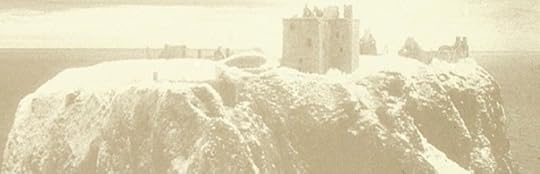
Dumbarton Castle, Scotland
Women are swept up under the sway of his seductive powers. Men want to be him or kill him. He makes it impossible for anyone to remain neutral in their regard for him. His tongue is as sharp as a rapier and his reticence about not sharing plans has even his most stout allies tearing their hair out in frustration. He is an accomplished polyglot and a master of disguise. He is a force of nature creating havoc for the ever shifting alliances between the Scots and the English. He does not join a side, does not trust any organization enough to actually call himself a member (nice to know I’m not the only one with this affliction). In 1547 Scotland he is a Renaissance Man and that does create it’s own problems.
”Versatility is one of the few human traits which are universally intolerable. You may be good at Greek and good at painting and be popular. You may be good at Greek and good at sport, and be wildly popular. But try all three and you’re a mountebank, Nothing arouses suspicion quicker than genuine, all-round proficiency.”
When his sister-in-law first meets Lymond, under rather awkward circumstances. He was looting her house of silver at the time. She can tell this brother has different stripes than her husband.
So this was Richard’s brother. Every line of him spoke, palimpsestwise, with two voices. The clothes, black and rich, were vaguely slovenly; the skin sun-glazed and cracked; the fine eyes slackly lidded; the mouth insolent and self-indulgent. He returned the scrutiny without rancour.
“What had you expected? A viper, or a devil, or a ravening idiot; Milo with the ox on his shoulders, Angra-Mainyo prepared to do battle with Zoroaster, or the Golden Ass? OR didn’t you know the family colouring? Richard hasn’t got it. Poor Richard is merely Brown and fit to break bread with....”
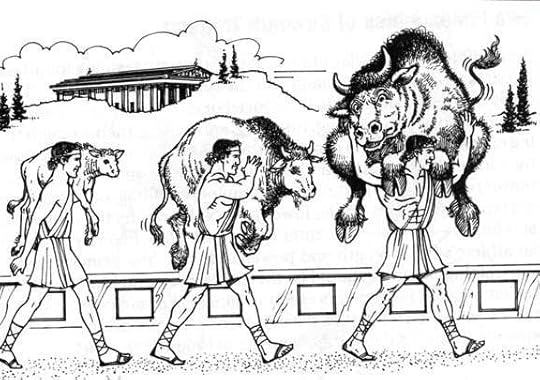
Milo with his Ox
Now you may have noted several classical references in that bit of repartee. Throughout the book Dunnett shows her range of reading and her understanding of classical literature.
”Look what we’ve got! Orpheus wriggling rump first out of Hades with his chivalry ashine like a ten-thread twill.”
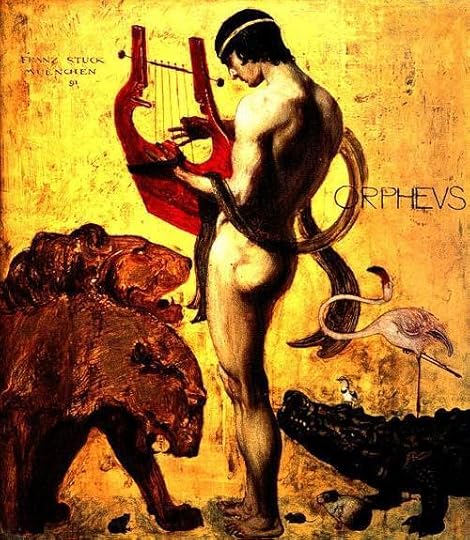
It could make a reader (ME!!!) feel self-conscious about my own inadequate reading resume.
One of my favorite characters was a blind woman named Lady Christian Stewart who despite her affliction is brave and brilliant proving more than a match for Lymond in a battle of wits.
”To be sure,” said Christian serenely. “And painting with breath is my stock-in-trade--you’d forgotten that, hadn’t you? I’m an architect in lexicography; I can build you a palace of adverbs and a hermitage of personal pronouns...”
As the plot slithers around and the mystery surrounding Lymond’s innocence or guilt becomes more convoluted, key characters die at untimely moments, and shifting alliance change people’s perspective of events. The tension mounts as we are driven towards a final showdown between brothers, and a game of cards determines whether Lymond will swing or be welcomed back into the arms of his family.

The book is set against the backdrop of an English invasion of Scotland with Mary Queen of Scots a mere tot and incapable of providing commanding leadership. Men like Lymond have to stand up and do more than their share to insure that there remains a kingdom to be commanded. Dunnett deftly weaves fictional characters in with real life personages giving us an authentic feel for this turbulent time in Scottish History. In the next book in the series Lymond follows Mary Queen of Scots to France to insure her safety. I wouldn’t miss it for anything.
If you wish to see more of my most recent book and movie reviews, visit http://www.jeffreykeeten.com
I also have a Facebook blogger page at:https://www.facebook.com/JeffreyKeeten
Bold words from a bold man.
Francis Crawford of Lymond has been accused of the most nefarious things: deceit, treachery, rape, drunkenness, murder,and just so he will for sure hang...treason. He has the same problem as Prince Harry of Wales does today. He is the spare son, the second son. The one that will have to make his own way while the grand Crawford estate goes to his older brother Richard.

Dumbarton Castle, Scotland
Women are swept up under the sway of his seductive powers. Men want to be him or kill him. He makes it impossible for anyone to remain neutral in their regard for him. His tongue is as sharp as a rapier and his reticence about not sharing plans has even his most stout allies tearing their hair out in frustration. He is an accomplished polyglot and a master of disguise. He is a force of nature creating havoc for the ever shifting alliances between the Scots and the English. He does not join a side, does not trust any organization enough to actually call himself a member (nice to know I’m not the only one with this affliction). In 1547 Scotland he is a Renaissance Man and that does create it’s own problems.
”Versatility is one of the few human traits which are universally intolerable. You may be good at Greek and good at painting and be popular. You may be good at Greek and good at sport, and be wildly popular. But try all three and you’re a mountebank, Nothing arouses suspicion quicker than genuine, all-round proficiency.”
When his sister-in-law first meets Lymond, under rather awkward circumstances. He was looting her house of silver at the time. She can tell this brother has different stripes than her husband.
So this was Richard’s brother. Every line of him spoke, palimpsestwise, with two voices. The clothes, black and rich, were vaguely slovenly; the skin sun-glazed and cracked; the fine eyes slackly lidded; the mouth insolent and self-indulgent. He returned the scrutiny without rancour.
“What had you expected? A viper, or a devil, or a ravening idiot; Milo with the ox on his shoulders, Angra-Mainyo prepared to do battle with Zoroaster, or the Golden Ass? OR didn’t you know the family colouring? Richard hasn’t got it. Poor Richard is merely Brown and fit to break bread with....”

Milo with his Ox
Now you may have noted several classical references in that bit of repartee. Throughout the book Dunnett shows her range of reading and her understanding of classical literature.
”Look what we’ve got! Orpheus wriggling rump first out of Hades with his chivalry ashine like a ten-thread twill.”

It could make a reader (ME!!!) feel self-conscious about my own inadequate reading resume.
One of my favorite characters was a blind woman named Lady Christian Stewart who despite her affliction is brave and brilliant proving more than a match for Lymond in a battle of wits.
”To be sure,” said Christian serenely. “And painting with breath is my stock-in-trade--you’d forgotten that, hadn’t you? I’m an architect in lexicography; I can build you a palace of adverbs and a hermitage of personal pronouns...”
As the plot slithers around and the mystery surrounding Lymond’s innocence or guilt becomes more convoluted, key characters die at untimely moments, and shifting alliance change people’s perspective of events. The tension mounts as we are driven towards a final showdown between brothers, and a game of cards determines whether Lymond will swing or be welcomed back into the arms of his family.

The book is set against the backdrop of an English invasion of Scotland with Mary Queen of Scots a mere tot and incapable of providing commanding leadership. Men like Lymond have to stand up and do more than their share to insure that there remains a kingdom to be commanded. Dunnett deftly weaves fictional characters in with real life personages giving us an authentic feel for this turbulent time in Scottish History. In the next book in the series Lymond follows Mary Queen of Scots to France to insure her safety. I wouldn’t miss it for anything.
If you wish to see more of my most recent book and movie reviews, visit http://www.jeffreykeeten.com
I also have a Facebook blogger page at:https://www.facebook.com/JeffreyKeeten

February 20, 2014
This is going to be my last and final review of Lymond. And I have a confession to make: I no longer like it.
Yes, I'm prepared for the public stoning and the flood of "unlikes."
But I don't want to pretend I am still onboard this long-ago sunk ship and leave my old ratings keep that impression alive. The truth is, I've reread Lymond several times I didn't even keep track of them all, and with each reread I liked it less and less. And less, and less . . . My GR records only register four rereads, but there were more, the last one was on my own and alone in 2020 during the Covid-19 pandemic and I didn't register it on here. That reread showed me that I had ceased being a fan.
I've had issues with Lymond since my first read, particularly with book 1 and book 6, but they started to grow from my second reread on, when I simply couldn't overlook the mounting problems and decided to never reread the last book again. I kept to that until my last reread, when I reread bits and pieces of "Checkmate," and that was probably the killing blow for any remnants of love left for the series. I did discuss it at length with one of my best friends, and I think that should've been the closure.
I don't know if I'm the only one, but I don't know anyone else who has become this disenchanted to the point of stopped being a fan of Dorothy Dunnett. It's a bit awkward to be an outlier, and I have tried to discuss my issues before, many times. I thought I would give it another try this April 2023 in a reread with a group of friends*; maybe there'd be some positive change this time, I thought, and . . .
Part I of "A Game of Kings" is how long I lasted until I became exhausted and decided it wasn't worth it trying to resurrect the dead. What is gone is gone and won't be back. I've come to terms with that.
So, with that context, here's my updated review stating my reasons (most but not all, or it'd be even longer). There be spoilers, beware.
THE REVIEW:
I’ve never liked those books—and TV shows—in which the writers felt that the readers need to have it all spelt out for them for a variety of reasons, mainly the assumption that they will miss it otherwise.
And then I found Dorothy Dunnett and met the other extreme of the “dumbing it down for the masses” spectrum. That I didn’t like it either is evident, but my issue isn’t that she employs language that most of humanity won’t get. It’s what it does to the narrative.
I won’t include here a summary of the plot, there are excellent reviews out there that have done it better than I could; instead I’ll talk about my own impressions, and so I’ll go point by point.
THE PLOT: The story starts interestingly enough, wrenching some laughter from the readers via Lymond’s comical initial antics, and keeping the interest till the middle with a rapid succession of swashbuckling adventures that makes the delight of those of us that grew up crushing hard on d’Artagnan, Edmond Dantès, and Percy Blakeney.
You begin to see in Francis Crawford of Lymond another potential classic hero to love. You start to make conjectures about the genesis of his mystifying feud with his elder brother, you mull earnestly over your own hypotheses that would explain things ranging from why he doesn’t kill his brother to why he seems to be courting his sister-in-law, you try to make sense of his mother’s baffling sang froid towards two sons that aim to rip each other’s throat, you laugh at Lymond’s abduction of a certain lady and the way he outmanoeuvres his pursuers, you admire his pluck, his ruthlessness, his apparent flexible morality, his devil-may-care attitude in playing chess with humans that results in the death of an innocent woman . . . By the time of the duel, you think you know—as much as you can surmise from the obscure narrative—who and what he is and what he may be doing or may have done.
But then the last pages come. The courtroom comes. And it all goes down in a crash.
The author that hadn’t given a fig for whether her readers would or wouldn’t grasp what she was saying and what the storyline was about, resorts to a literary technique that smells suspiciously of Agatha Christie, in my opinion. We find out that, oh no, it wasn’t precious Lymond after all, it was that weakling Dandy. That’s so, folks, the assassin was the butler all along, and with a stroke of the plume everything that had added some layers of greyness, of human fallibility and base demeanour is swept away from Lymond’s sheet, which is left lily-white clean. And what’s worse, it’s not even Lymond who unveils it; it’s his mother. There’s a word for that trope: character idealisation, or in plain slang, Mary Sue-ness.
The courtroom wasn’t an appropriate closure, it was anticlimactic. With it, the reader’s laborious mental work during the entirety of the book just doesn’t pay off. You were lost and buried under the avalanche of rhymes and preciousness, and didn’t understand what the thing was about? Don’t worry, it will be explained, no, spelt out in detail, to you at the end during Lymond’s trial. Without his distracting rhyming (for the most part) and obtuse referencing, so you won’t miss a thing. Isn’t it just wonderful; all that worry that you were missing something was for naught, all that theorising and guessing was for naught, the author is telling you what happened, so the job is done for you.
This I can’t forgive Dame Dorothy for. One star is lost.
THE CHARACTERISATION OF THE HERO: Although I tend to prefer deeply flawed men with scores of layers, men who aren’t redeemed with a stroke of a magical plume and that know what they are, unapologetically so, yet still are likable because one dozen or two of their layers are relatable, very human, I can also love the more conventionally perfect brand of literary heroes. With a caveat: that they must be believable. There is where the characterisation of Lymond fails. He isn’t believable; not only is he extremely capable at everything under the sun, which itself alone would be enough to cast a fake varnish over his character, but he’s also so young for all these achievements and besides he's physically impressive. Sure, there were—and are—some extraordinary souls that can leave us mere mortals with our jaws hanging low in amazement. But they also have their darker sides. Which is Francis’? Hard to tell from the way Dunnett has described him. He feels more like an idealised Renaissance man raised exponentially to the Nth degree: a Leonardo da Vinci with the handsomeness of Leonardo DiCaprio and the luck of Lucifer and an early fame to match Alexander the Great.
His idiosyncratic speech doesn’t help much either, but would’ve been better taken in if not for Dunnett’s decision to spread the same merry rhymin’ and recitin’ across several pages and characters, which brings me to the next point.
THE LANGUAGE: For many readers, language is the sole reason they can’t persevere with this book, and a good reason this is. A very good one.
As a polyglot myself, I didn’t have excessive trouble with the quotes in French and Spanish, and could comprehend the Latin quotations as well, and the German and Italian, without needing the Dunnett companion. I was able to recognise the source of many of them from earlier readings of Spanish writers from the period and some Roman classics; they aren’t that unknown to a well-read person as the Olde English ones. The Middle-English quotes gave me more headaches because they were just too obscure. I don’t know if, were they from more known period sources like, say, Shakespeare, a greater number of readers would’ve gotten them, because he’s more accessible. But that’s not the case, the quotes she includes, without name of the source, aren’t readily recognisable, which may be due to the fact that they’re chess quotes, though not all of them are.
Because of that, and the fact that the quotes can be skipped with no loss, I said that my issue isn’t the language itself as much as what it does to the narrative. I’m not sure I can explain this in a way that conveys exactly what I mean, but I’ll try.
First things first, let’s state the bare facts: the quotations aren’t restricted to chapter openings. They are all over the place, everywhere. Second: Lymond can’t speak without a quote thrown in to save his life. Third: And it’s not only Lymond, other characters are afflicted with the Quotation Fever as well. Now my point: it’s excessive. If the literary references were for chapter openings or for reinforcing the chess-imagery only, then very good. If not that, then if the quotations were made to be a speech quirk of Lymond’s only, it’d be counted as a character trait, irritating or endearing depending on the reader’s taste but no more than that. But he’s not the only one that speaks like that, others do too, and that gives the impression of being in the company of actors, not of real people that existed at the time. The little foreign-language lines are too distracting even if you don’t read them, because they interrupt the flow of the dialogue and force you to either stop to try to understand it, or to skip them, so you read dialogue hop-hopping from one English phrase to the next. And though likely the Guides that were written to clarify these will disagree with me on this, I can say that a good number of them are just too random and don’t really add to the narrative. At times, it even reads like Dunnett was just showing off; there are lines that could support my point.
It’s that sense of unreality brought in by that narrative style what I liked the least. The period description and the historical accuracy may be splendid, though I disagree here (they aren't), but the characterisation, the language and Dunnett’s storytelling left me with the sensation of watching a mummer’s show instead of real people in real events, which I appreciate in historical fiction. I felt like the characters were actors performing for an audience, they spoke like actors for an audience, and the events unfold just like in a scripted play in which the characters are the puppets moved by a master puppeteer, not events that unfold naturally and suffer the setbacks of chance and human nature. Mummery, in sum, it felt like mummery. Artificial, implausible, not believable.
So, to conclude, the book loses two more stars on account of the last points, and is left with two only. Now, let's move to the much-lauded accuracy and research by Dunnett.
THE ACCURACY: Fans of this series like to slavishly praise it for its supposed impeccable historical research, and yet, in the very first opening scene there's already a historical error. And there's another in the first chapter, so you can imagine how many more there are if there's this many so early in the book; those who know the history of the 16th century will be able to spot at least three early enough, and that's not a good sign.
Added to this accuracy point is the historicity/historical plausibility part. Dunnett falls in the same trap as many other writers: she has her fictional character meet and be close to all the important real characters. It's not as heavy-handed in this first book, but throughout the series Lymond becomes a Forrest Gump of the 1500s, going from here to there to meet all the Big Names of the period like he has a bucket list, going as far as Russia. Do you find all this credible? His connections to the Scottish court and relationship with the child Queen already stretch credulity, but what happens in the next books break all sense of plausibility. Who in the historical record for the 16th century is there that's remotely as well-connected and well-travelled and well-accepted everywhere regardless of religion and race as Lymond is? Nobody. Some might not mind it and love the grand adventure aspect, but I do demand plausibility in my Hist-Fic. Mindset wise, Lymond doesn't belong in his period either. He's very modern-minded, a product of the 1960s than of the 1560s, not a man of his times.
THE TREATMENT OF FEMALE CHARACTERS: In AGOK, there's one woman who is Lymond's match in every sense: Christian Stewart, the blind lady of Boghall. She was well-educated, very smart, well-connected, independent and enterprising in spite of her blindness, and the only one who could talk with Lymond in his convoluted language. And she was sacrificed for male angst.
Yes, Christian Stewart's fate was merely for Lymond to angst over. It's the equivalent of using female rape so the hero can angst and wangst over it for all eternity in the book, as it later happens in another book in the series. I have seen arguments that if she had lived she'd have been a "burden" for Lymond. Ableist hogwash! She was capable on her own, and her disability would've actually been a good way to realistically portray the challenges someone like her would have to face, which would've made for more challenging but interesting plots than grooming Pippa to be another sacrifice.
All the women in this series are sacrifices on the altar of Lymond, misogynistically used to create, nurture, and grow his angst and suicidality. Even Kate, who supposedly escapes this fate, in reality doesn't. She's also sacrificed and given a consolation prize in the end in the form of a man that she didn't really need. She could've kept her Gideon, but that would've meant less angst for Saint Francis the Perfect.
And this is merely in the first book, because every single book in this series right until the epilogue of "Checkmate" has a woman sacrificed for Lymond. The first book has two, the second book has one, the third book has one, the fourth book has one, the fifth book has one, the last book has two. This is a very troubling pattern in Dunnett's writing that few seem to be bothered by. I am bothered by this, and always have been. The sacrifice of Christian was the benchmark for me even before that awful plot point in "Checkmate," and the more I've reread this, the more troubling I find it. How is it possible that a series where women live for the hero be praised for being so good with female characters? Don't readers see the issue?
THE LANGUAGE II: Another aspect Dunnett is undeservedly praised for is the use of foreign languages. For a character who supposedly speaks so many languages and is a linguistic wunderkind, Dunnett's use of foreign language for Lymond isn't that good. In fact, in this first book, it's shitty.
Take the Don Luis scene, which is offensively racist and relies entirely on stereotypes. I can tell Dunnett never met a Spaniard in her life if she thinks Will's name would be pronounced "Huile" by a Spanish speaker. On top of that, she used Spanish incorrectly, there's wrong words wrongly "translated," and the articles are incorrect as well; even when a line is correct, that's not the Spanish that would be spoken in the 1500s (see Don Quixote in the original for a quick check). Where's the vaunted accuracy and linguistic gift? Nowhere.
And that's only one scene with one foreign ethnicity, don't get me started on the depiction of the "Gypsies" in this book that is racist as well. And no, you can't say it's the characters that are, because the POV is universal narrator, ergo an authorial choice. In other books, there's also racial stereotyping and exoticisation that is authorial choice and not characters' views.
I could go on with examples, but I think the above suffice to make my point. I've reread this series enough times to know there's no turning back for me. Some series survive several rereads, but The Lymond Chronicles was the opposite for me, and that is it. Am I sad? No, not really. I'm happy that I can say I'm done, leave my thoughts out in the open, and move on. Plenty of books in the world to love yet!
________________________
* Thank you, Ryan, Nastya, Nataliya, Clodia, Alexandra, Justin, Temperance. Not your fault it ended like this for me, my friends!
Yes, I'm prepared for the public stoning and the flood of "unlikes."
But I don't want to pretend I am still onboard this long-ago sunk ship and leave my old ratings keep that impression alive. The truth is, I've reread Lymond several times I didn't even keep track of them all, and with each reread I liked it less and less. And less, and less . . . My GR records only register four rereads, but there were more, the last one was on my own and alone in 2020 during the Covid-19 pandemic and I didn't register it on here. That reread showed me that I had ceased being a fan.
I've had issues with Lymond since my first read, particularly with book 1 and book 6, but they started to grow from my second reread on, when I simply couldn't overlook the mounting problems and decided to never reread the last book again. I kept to that until my last reread, when I reread bits and pieces of "Checkmate," and that was probably the killing blow for any remnants of love left for the series. I did discuss it at length with one of my best friends, and I think that should've been the closure.
I don't know if I'm the only one, but I don't know anyone else who has become this disenchanted to the point of stopped being a fan of Dorothy Dunnett. It's a bit awkward to be an outlier, and I have tried to discuss my issues before, many times. I thought I would give it another try this April 2023 in a reread with a group of friends*; maybe there'd be some positive change this time, I thought, and . . .
Part I of "A Game of Kings" is how long I lasted until I became exhausted and decided it wasn't worth it trying to resurrect the dead. What is gone is gone and won't be back. I've come to terms with that.
So, with that context, here's my updated review stating my reasons (most but not all, or it'd be even longer). There be spoilers, beware.
THE REVIEW:
I’ve never liked those books—and TV shows—in which the writers felt that the readers need to have it all spelt out for them for a variety of reasons, mainly the assumption that they will miss it otherwise.
And then I found Dorothy Dunnett and met the other extreme of the “dumbing it down for the masses” spectrum. That I didn’t like it either is evident, but my issue isn’t that she employs language that most of humanity won’t get. It’s what it does to the narrative.
I won’t include here a summary of the plot, there are excellent reviews out there that have done it better than I could; instead I’ll talk about my own impressions, and so I’ll go point by point.
THE PLOT: The story starts interestingly enough, wrenching some laughter from the readers via Lymond’s comical initial antics, and keeping the interest till the middle with a rapid succession of swashbuckling adventures that makes the delight of those of us that grew up crushing hard on d’Artagnan, Edmond Dantès, and Percy Blakeney.
You begin to see in Francis Crawford of Lymond another potential classic hero to love. You start to make conjectures about the genesis of his mystifying feud with his elder brother, you mull earnestly over your own hypotheses that would explain things ranging from why he doesn’t kill his brother to why he seems to be courting his sister-in-law, you try to make sense of his mother’s baffling sang froid towards two sons that aim to rip each other’s throat, you laugh at Lymond’s abduction of a certain lady and the way he outmanoeuvres his pursuers, you admire his pluck, his ruthlessness, his apparent flexible morality, his devil-may-care attitude in playing chess with humans that results in the death of an innocent woman . . . By the time of the duel, you think you know—as much as you can surmise from the obscure narrative—who and what he is and what he may be doing or may have done.
But then the last pages come. The courtroom comes. And it all goes down in a crash.
The author that hadn’t given a fig for whether her readers would or wouldn’t grasp what she was saying and what the storyline was about, resorts to a literary technique that smells suspiciously of Agatha Christie, in my opinion. We find out that, oh no, it wasn’t precious Lymond after all, it was that weakling Dandy. That’s so, folks, the assassin was the butler all along, and with a stroke of the plume everything that had added some layers of greyness, of human fallibility and base demeanour is swept away from Lymond’s sheet, which is left lily-white clean. And what’s worse, it’s not even Lymond who unveils it; it’s his mother. There’s a word for that trope: character idealisation, or in plain slang, Mary Sue-ness.
The courtroom wasn’t an appropriate closure, it was anticlimactic. With it, the reader’s laborious mental work during the entirety of the book just doesn’t pay off. You were lost and buried under the avalanche of rhymes and preciousness, and didn’t understand what the thing was about? Don’t worry, it will be explained, no, spelt out in detail, to you at the end during Lymond’s trial. Without his distracting rhyming (for the most part) and obtuse referencing, so you won’t miss a thing. Isn’t it just wonderful; all that worry that you were missing something was for naught, all that theorising and guessing was for naught, the author is telling you what happened, so the job is done for you.
This I can’t forgive Dame Dorothy for. One star is lost.
THE CHARACTERISATION OF THE HERO: Although I tend to prefer deeply flawed men with scores of layers, men who aren’t redeemed with a stroke of a magical plume and that know what they are, unapologetically so, yet still are likable because one dozen or two of their layers are relatable, very human, I can also love the more conventionally perfect brand of literary heroes. With a caveat: that they must be believable. There is where the characterisation of Lymond fails. He isn’t believable; not only is he extremely capable at everything under the sun, which itself alone would be enough to cast a fake varnish over his character, but he’s also so young for all these achievements and besides he's physically impressive. Sure, there were—and are—some extraordinary souls that can leave us mere mortals with our jaws hanging low in amazement. But they also have their darker sides. Which is Francis’? Hard to tell from the way Dunnett has described him. He feels more like an idealised Renaissance man raised exponentially to the Nth degree: a Leonardo da Vinci with the handsomeness of Leonardo DiCaprio and the luck of Lucifer and an early fame to match Alexander the Great.
His idiosyncratic speech doesn’t help much either, but would’ve been better taken in if not for Dunnett’s decision to spread the same merry rhymin’ and recitin’ across several pages and characters, which brings me to the next point.
THE LANGUAGE: For many readers, language is the sole reason they can’t persevere with this book, and a good reason this is. A very good one.
As a polyglot myself, I didn’t have excessive trouble with the quotes in French and Spanish, and could comprehend the Latin quotations as well, and the German and Italian, without needing the Dunnett companion. I was able to recognise the source of many of them from earlier readings of Spanish writers from the period and some Roman classics; they aren’t that unknown to a well-read person as the Olde English ones. The Middle-English quotes gave me more headaches because they were just too obscure. I don’t know if, were they from more known period sources like, say, Shakespeare, a greater number of readers would’ve gotten them, because he’s more accessible. But that’s not the case, the quotes she includes, without name of the source, aren’t readily recognisable, which may be due to the fact that they’re chess quotes, though not all of them are.
Because of that, and the fact that the quotes can be skipped with no loss, I said that my issue isn’t the language itself as much as what it does to the narrative. I’m not sure I can explain this in a way that conveys exactly what I mean, but I’ll try.
First things first, let’s state the bare facts: the quotations aren’t restricted to chapter openings. They are all over the place, everywhere. Second: Lymond can’t speak without a quote thrown in to save his life. Third: And it’s not only Lymond, other characters are afflicted with the Quotation Fever as well. Now my point: it’s excessive. If the literary references were for chapter openings or for reinforcing the chess-imagery only, then very good. If not that, then if the quotations were made to be a speech quirk of Lymond’s only, it’d be counted as a character trait, irritating or endearing depending on the reader’s taste but no more than that. But he’s not the only one that speaks like that, others do too, and that gives the impression of being in the company of actors, not of real people that existed at the time. The little foreign-language lines are too distracting even if you don’t read them, because they interrupt the flow of the dialogue and force you to either stop to try to understand it, or to skip them, so you read dialogue hop-hopping from one English phrase to the next. And though likely the Guides that were written to clarify these will disagree with me on this, I can say that a good number of them are just too random and don’t really add to the narrative. At times, it even reads like Dunnett was just showing off; there are lines that could support my point.
It’s that sense of unreality brought in by that narrative style what I liked the least. The period description and the historical accuracy may be splendid, though I disagree here (they aren't), but the characterisation, the language and Dunnett’s storytelling left me with the sensation of watching a mummer’s show instead of real people in real events, which I appreciate in historical fiction. I felt like the characters were actors performing for an audience, they spoke like actors for an audience, and the events unfold just like in a scripted play in which the characters are the puppets moved by a master puppeteer, not events that unfold naturally and suffer the setbacks of chance and human nature. Mummery, in sum, it felt like mummery. Artificial, implausible, not believable.
So, to conclude, the book loses two more stars on account of the last points, and is left with two only. Now, let's move to the much-lauded accuracy and research by Dunnett.
THE ACCURACY: Fans of this series like to slavishly praise it for its supposed impeccable historical research, and yet, in the very first opening scene there's already a historical error. And there's another in the first chapter, so you can imagine how many more there are if there's this many so early in the book; those who know the history of the 16th century will be able to spot at least three early enough, and that's not a good sign.
Added to this accuracy point is the historicity/historical plausibility part. Dunnett falls in the same trap as many other writers: she has her fictional character meet and be close to all the important real characters. It's not as heavy-handed in this first book, but throughout the series Lymond becomes a Forrest Gump of the 1500s, going from here to there to meet all the Big Names of the period like he has a bucket list, going as far as Russia. Do you find all this credible? His connections to the Scottish court and relationship with the child Queen already stretch credulity, but what happens in the next books break all sense of plausibility. Who in the historical record for the 16th century is there that's remotely as well-connected and well-travelled and well-accepted everywhere regardless of religion and race as Lymond is? Nobody. Some might not mind it and love the grand adventure aspect, but I do demand plausibility in my Hist-Fic. Mindset wise, Lymond doesn't belong in his period either. He's very modern-minded, a product of the 1960s than of the 1560s, not a man of his times.
THE TREATMENT OF FEMALE CHARACTERS: In AGOK, there's one woman who is Lymond's match in every sense: Christian Stewart, the blind lady of Boghall. She was well-educated, very smart, well-connected, independent and enterprising in spite of her blindness, and the only one who could talk with Lymond in his convoluted language. And she was sacrificed for male angst.
Yes, Christian Stewart's fate was merely for Lymond to angst over. It's the equivalent of using female rape so the hero can angst and wangst over it for all eternity in the book, as it later happens in another book in the series. I have seen arguments that if she had lived she'd have been a "burden" for Lymond. Ableist hogwash! She was capable on her own, and her disability would've actually been a good way to realistically portray the challenges someone like her would have to face, which would've made for more challenging but interesting plots than grooming Pippa to be another sacrifice.
All the women in this series are sacrifices on the altar of Lymond, misogynistically used to create, nurture, and grow his angst and suicidality. Even Kate, who supposedly escapes this fate, in reality doesn't. She's also sacrificed and given a consolation prize in the end in the form of a man that she didn't really need. She could've kept her Gideon, but that would've meant less angst for Saint Francis the Perfect.
And this is merely in the first book, because every single book in this series right until the epilogue of "Checkmate" has a woman sacrificed for Lymond. The first book has two, the second book has one, the third book has one, the fourth book has one, the fifth book has one, the last book has two. This is a very troubling pattern in Dunnett's writing that few seem to be bothered by. I am bothered by this, and always have been. The sacrifice of Christian was the benchmark for me even before that awful plot point in "Checkmate," and the more I've reread this, the more troubling I find it. How is it possible that a series where women live for the hero be praised for being so good with female characters? Don't readers see the issue?
THE LANGUAGE II: Another aspect Dunnett is undeservedly praised for is the use of foreign languages. For a character who supposedly speaks so many languages and is a linguistic wunderkind, Dunnett's use of foreign language for Lymond isn't that good. In fact, in this first book, it's shitty.
Take the Don Luis scene, which is offensively racist and relies entirely on stereotypes. I can tell Dunnett never met a Spaniard in her life if she thinks Will's name would be pronounced "Huile" by a Spanish speaker. On top of that, she used Spanish incorrectly, there's wrong words wrongly "translated," and the articles are incorrect as well; even when a line is correct, that's not the Spanish that would be spoken in the 1500s (see Don Quixote in the original for a quick check). Where's the vaunted accuracy and linguistic gift? Nowhere.
And that's only one scene with one foreign ethnicity, don't get me started on the depiction of the "Gypsies" in this book that is racist as well. And no, you can't say it's the characters that are, because the POV is universal narrator, ergo an authorial choice. In other books, there's also racial stereotyping and exoticisation that is authorial choice and not characters' views.
I could go on with examples, but I think the above suffice to make my point. I've reread this series enough times to know there's no turning back for me. Some series survive several rereads, but The Lymond Chronicles was the opposite for me, and that is it. Am I sad? No, not really. I'm happy that I can say I'm done, leave my thoughts out in the open, and move on. Plenty of books in the world to love yet!
________________________
* Thank you, Ryan, Nastya, Nataliya, Clodia, Alexandra, Justin, Temperance. Not your fault it ended like this for me, my friends!

January 17, 2014
$1.99 Kindle sale, June 23, 2019. If you ever feel like you need a REALLY mentally challenging novel, I have the solution right here.
Game of Kings, first published in 1961, is an intricate, well-plotted tale of the conflict between England and Scotland in 1547, when Mary Queen of Scots is a very young child, and the machinations of the various players in that conflict, especially Francis Crawford, called Lymond. Lymond is a young man, exiled from Scotland for treason, who has now snuck back into the country and is busy making waves and causing trouble, for reasons that gradually are revealed.
Dorothy Dunnett uses chess terms as chapter titles and Middle English quotes about chess at the start of most chapters, and really this book is very much like one massive chess game, played by a master player.
Parts of Game of Kings were completely fascinating: I always enjoy reading about a person who has their own mysterious agenda, which they follow to the end while everyone around them sees only their small piece of the puzzle. This book is very well-written, and a lot of the scenes really came to life for me. The last couple of hundred pages kept me up until past 1:30 am reading, since I couldn't put the book down unfinished.
But (and this is a fairly large "but") any book that reminds me of reading Ulysses in college, I'm going to have some issues with. Lymond is a brilliant scholar as well as an athlete ― and musician, and excellent swordsman and archer, and . . . well, I'm not sure there's anything he doesn't do well. Except not be an asshole. So aside from being a bit of a Gary Stu, which I have absolutely no issues with when the book is good enough, Lymond is given to dialogue that includes various quotes in French or Latin (which Dunnett never bothers translating for you) and obscure literary references that may have been familiar to well-read people back in the 16th century but certainly aren't well-known now. I was an English major in college, and most of this stuff I did not get AT ALL.

Here's a sample Lymond quote (and no, this is not atypical):
Several people told me that you just need to let the parts that you don't understand roll over you. Ignore them and just go on, was their advice. And yes, that worked pretty well, but still, any book written as late as 1961 that needs to (and does!) have several guidebooks written about it to help readers get all the in-jokes and obscure quotes and references, maybe has a bit too much going on for its own good.
I should be fair and add that most people in the book talk like normal people. Even Lymond, when he's not trying to be mysterious or evasive, can use plain speech. And if you're willing to take on (or overlook) the difficult parts, there is so much in this book to love. Lymond's adventures, as well as his problematic relationships with his brother; his second-in-command, Will Scott; a blind woman, Christian Stewart; and others make for incredible, sometimes humorous and often very exciting reading.
So, marvelous book, but minus a star for being a little too obscure and difficult and making me all irritated and surly for the first 100 pages, until I just got over it. :) One of these times I'm going to reread it, and maybe my rating will go up then.
Thanks so much to Marquise for the buddy read!
ETA: Queens' Play, the second book in this series, is much easier to read--though still challenging--and incredibly gripping and rewarding. So if you gave up on Dunnett after Game of Kings, I encourage you to give the second one a shot.
Game of Kings, first published in 1961, is an intricate, well-plotted tale of the conflict between England and Scotland in 1547, when Mary Queen of Scots is a very young child, and the machinations of the various players in that conflict, especially Francis Crawford, called Lymond. Lymond is a young man, exiled from Scotland for treason, who has now snuck back into the country and is busy making waves and causing trouble, for reasons that gradually are revealed.
Dorothy Dunnett uses chess terms as chapter titles and Middle English quotes about chess at the start of most chapters, and really this book is very much like one massive chess game, played by a master player.
Parts of Game of Kings were completely fascinating: I always enjoy reading about a person who has their own mysterious agenda, which they follow to the end while everyone around them sees only their small piece of the puzzle. This book is very well-written, and a lot of the scenes really came to life for me. The last couple of hundred pages kept me up until past 1:30 am reading, since I couldn't put the book down unfinished.
But (and this is a fairly large "but") any book that reminds me of reading Ulysses in college, I'm going to have some issues with. Lymond is a brilliant scholar as well as an athlete ― and musician, and excellent swordsman and archer, and . . . well, I'm not sure there's anything he doesn't do well. Except not be an asshole. So aside from being a bit of a Gary Stu, which I have absolutely no issues with when the book is good enough, Lymond is given to dialogue that includes various quotes in French or Latin (which Dunnett never bothers translating for you) and obscure literary references that may have been familiar to well-read people back in the 16th century but certainly aren't well-known now. I was an English major in college, and most of this stuff I did not get AT ALL.
Here's a sample Lymond quote (and no, this is not atypical):
"Don't you think it's time my family shared in my misfortunes, as Christians should? Then, vice is so costly: May dew or none, my brown and tender diamonds don't engender, they dissolve. Immoderation, Mariotta, is a thief of money and intestinal joy, but who'd check it? Here I am, weeping soft tears of myrrh, to prove it."I rest my case. I also had a challenge following the political maneuvering and battles, although that may not be a problem for more historically savvy readers.
Several people told me that you just need to let the parts that you don't understand roll over you. Ignore them and just go on, was their advice. And yes, that worked pretty well, but still, any book written as late as 1961 that needs to (and does!) have several guidebooks written about it to help readers get all the in-jokes and obscure quotes and references, maybe has a bit too much going on for its own good.
I should be fair and add that most people in the book talk like normal people. Even Lymond, when he's not trying to be mysterious or evasive, can use plain speech. And if you're willing to take on (or overlook) the difficult parts, there is so much in this book to love. Lymond's adventures, as well as his problematic relationships with his brother; his second-in-command, Will Scott; a blind woman, Christian Stewart; and others make for incredible, sometimes humorous and often very exciting reading.
So, marvelous book, but minus a star for being a little too obscure and difficult and making me all irritated and surly for the first 100 pages, until I just got over it. :) One of these times I'm going to reread it, and maybe my rating will go up then.
Thanks so much to Marquise for the buddy read!
ETA: Queens' Play, the second book in this series, is much easier to read--though still challenging--and incredibly gripping and rewarding. So if you gave up on Dunnett after Game of Kings, I encourage you to give the second one a shot.

April 13, 2016
Being a fan of Game of Kings—of any Dunnett novel—is a strange experience. The fandom is passionate, but of plenty of folks, understandably, don’t get what the fuss is about. Dunnett makes no concessions to readers. You have to think about what you are reading. With Dunnett, it’s important to consider the possibilities and implications of each interaction—which can take you out of the story.
Plus, Dunnett is given to quotations in Renaissance French, Spanish, and Latin without the benefit of translation (which can also take you out of the flow) And her hero frequently comes off as a terrible person, although he invariably has his reasons.
But if you are willing to do what the author demands, (the thinking and the Latin Googling, and the adapting yourself to her style), what you get is a dazzling portrait of the High Renaissance, with an equally dazzling cast of characters at its heart.
In Game of Kings, the first book of the Lymond Chronicles, Francis Crawford of Lymond, disgraced younger son of a noble Scottish family, returns to Scotland, an outlaw, after a long absence. The year is 1547, Henry VIII’s young son Edward is on the throne of England, and skirmishing between England and Scotland is happening all along the borders.
With this background of turmoil, and at the head of a band of fellow outlaws, Francis will reunite with his estranged family, strike up a complex friendship with the heir to a great estate, and with his outlaws, interfere in the political workings of England and Scotland—but is he betraying his country or saving it, trying to clear his name, or just cause trouble?
The thing that strikes you first is Dunnett’s prose. It is dense, rich, distinctive, full of allusion, implication, and subtlety. Often she will imply something rather than tell the reader outright. Her descriptions—of clothing, food, weather, are incredibly evocative.
The second thing that strikes you is her hero, Francis. He starts off insufferable: a prosy, high-handed know-it-all, too clever and pretty for his own good, and in his second on-page appearance he breaks into his own mother’s castle, robs it, and sets it on fire. It’s hard to muster sympathy for him for the vast majority of the book. But nothing is as it appears, and if you are willing to put up with Francis, the unfolding of his story—including the purpose behind his actions—will hit you like a rock to the forehead late in the game, one of those fantastic ah-ha moments that every writer hopes to give their readers.
And fortunately Francis is surrounded by a vivid and appealing supporting cast, in which one is happy to find a lot of amazing women. Francis’ indomitable mother, his friend the blind but dauntless Christian Stewart, the romantic Agnes Herries, and the severely practical Kate Somerville are standouts.
Add to that a plot that ticks along like a good stopwatch, a dry, subtle sense of humor, and just a wonderfully romantic sensibility, without stooping to cliché, and you have a winning combination. Not romance in the sense of love or sex, although that plays a part. But romance in the sense of swordfights, last stands, desperate escapes, grand sacrifices, a larger-than-life hero. All those things can be found in Dunnett’s work, and she can and will dazzle you, like her hero, if you just give her time to do so.
To conclude, I have two pieces of advice for readers just embarking on their first read of Game of Kings:
1) If, after the first chapter, you find yourself asking, “Buy why was the pig drunk?” you aren’t reading closely enough.
2) Before passing judgment on Francis, wait until you find out who the Spanish nobleman is.
Plus, Dunnett is given to quotations in Renaissance French, Spanish, and Latin without the benefit of translation (which can also take you out of the flow) And her hero frequently comes off as a terrible person, although he invariably has his reasons.
But if you are willing to do what the author demands, (the thinking and the Latin Googling, and the adapting yourself to her style), what you get is a dazzling portrait of the High Renaissance, with an equally dazzling cast of characters at its heart.
In Game of Kings, the first book of the Lymond Chronicles, Francis Crawford of Lymond, disgraced younger son of a noble Scottish family, returns to Scotland, an outlaw, after a long absence. The year is 1547, Henry VIII’s young son Edward is on the throne of England, and skirmishing between England and Scotland is happening all along the borders.
With this background of turmoil, and at the head of a band of fellow outlaws, Francis will reunite with his estranged family, strike up a complex friendship with the heir to a great estate, and with his outlaws, interfere in the political workings of England and Scotland—but is he betraying his country or saving it, trying to clear his name, or just cause trouble?
The thing that strikes you first is Dunnett’s prose. It is dense, rich, distinctive, full of allusion, implication, and subtlety. Often she will imply something rather than tell the reader outright. Her descriptions—of clothing, food, weather, are incredibly evocative.
The second thing that strikes you is her hero, Francis. He starts off insufferable: a prosy, high-handed know-it-all, too clever and pretty for his own good, and in his second on-page appearance he breaks into his own mother’s castle, robs it, and sets it on fire. It’s hard to muster sympathy for him for the vast majority of the book. But nothing is as it appears, and if you are willing to put up with Francis, the unfolding of his story—including the purpose behind his actions—will hit you like a rock to the forehead late in the game, one of those fantastic ah-ha moments that every writer hopes to give their readers.
And fortunately Francis is surrounded by a vivid and appealing supporting cast, in which one is happy to find a lot of amazing women. Francis’ indomitable mother, his friend the blind but dauntless Christian Stewart, the romantic Agnes Herries, and the severely practical Kate Somerville are standouts.
Add to that a plot that ticks along like a good stopwatch, a dry, subtle sense of humor, and just a wonderfully romantic sensibility, without stooping to cliché, and you have a winning combination. Not romance in the sense of love or sex, although that plays a part. But romance in the sense of swordfights, last stands, desperate escapes, grand sacrifices, a larger-than-life hero. All those things can be found in Dunnett’s work, and she can and will dazzle you, like her hero, if you just give her time to do so.
To conclude, I have two pieces of advice for readers just embarking on their first read of Game of Kings:
1) If, after the first chapter, you find yourself asking, “Buy why was the pig drunk?” you aren’t reading closely enough.
2) Before passing judgment on Francis, wait until you find out who the Spanish nobleman is.
May 3, 2023
Round 1 in 2022:
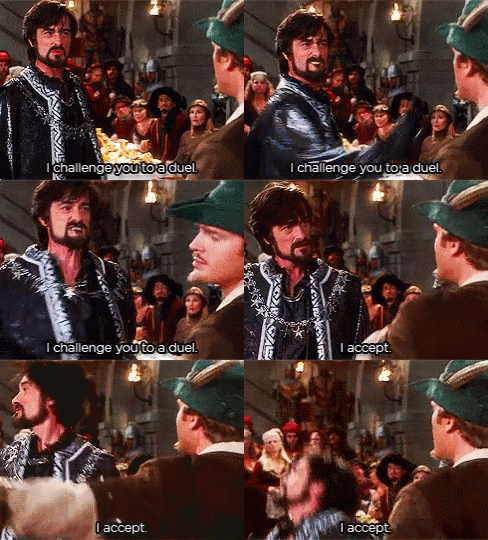
Crawford of Lymond of the cornflower-blue eyes and golden hair: 1
Melinda of the common brown eyes and nondescript brown hair: nil

----------------------------
----------------------------
Update in 2023
I CAME, I READ, I CONQUERED.
Round 2 in 2023:
Crawford of Lymond of the cornflower-blue eyes and golden hair: nil.
Melinda of the common brown eyes and nondescript brown hair: 1.
YUUSSSS!
This book and I have a history. (Isn't this a good pun? Kind of? Not on Lymond-levels, of course, but, hey, I must have acquired a little polish from him, right?) It had been on my radar for a time thanks to the great reviews of Nastya and Nataliya and also because I happen to have this fascination with Scotland (4 visits and counting!) and dabbled a bit in Scottish history in my past life at uni.
Alas! that learning had been ages ago and when last year (2022) I finally started listening to the audiobook -despite the fair warnings- I had to realise that my knowledge was inadequate to follow the Scottish Who-is-Who Issue of 1547 unaided. Dunnett’s board is chockful of deceptive moves— every time I thought I had a piece figured out, it changed colors mid-game.
It was a game where pawns promote unexpectedly, knights double-cross, and bishops can be traitors in disguise. (In retrospect, this all make sense now.)
I really felt like this:
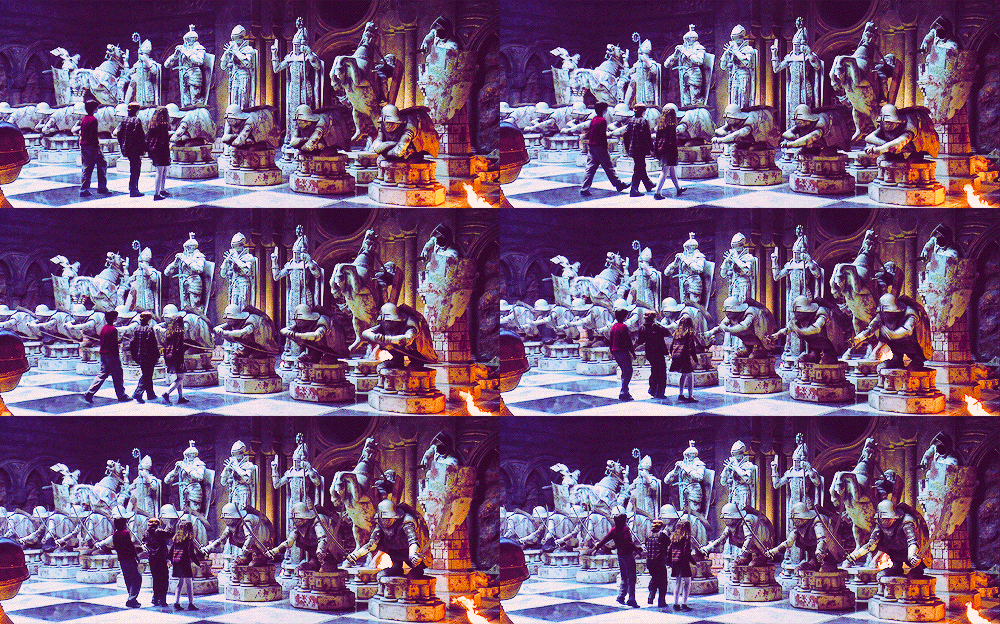
I guess it also didn't help that I could not in any way connect to the larger than life Enigma, the obscure Renaissance Superhero that was Dunnett's Crawford of Lymond.
So, I gave up at that point, but vowed to return and finish the story eventually.
Here we are a year later and I decided to throw the proverbial gauntlet to the book & Lymond again
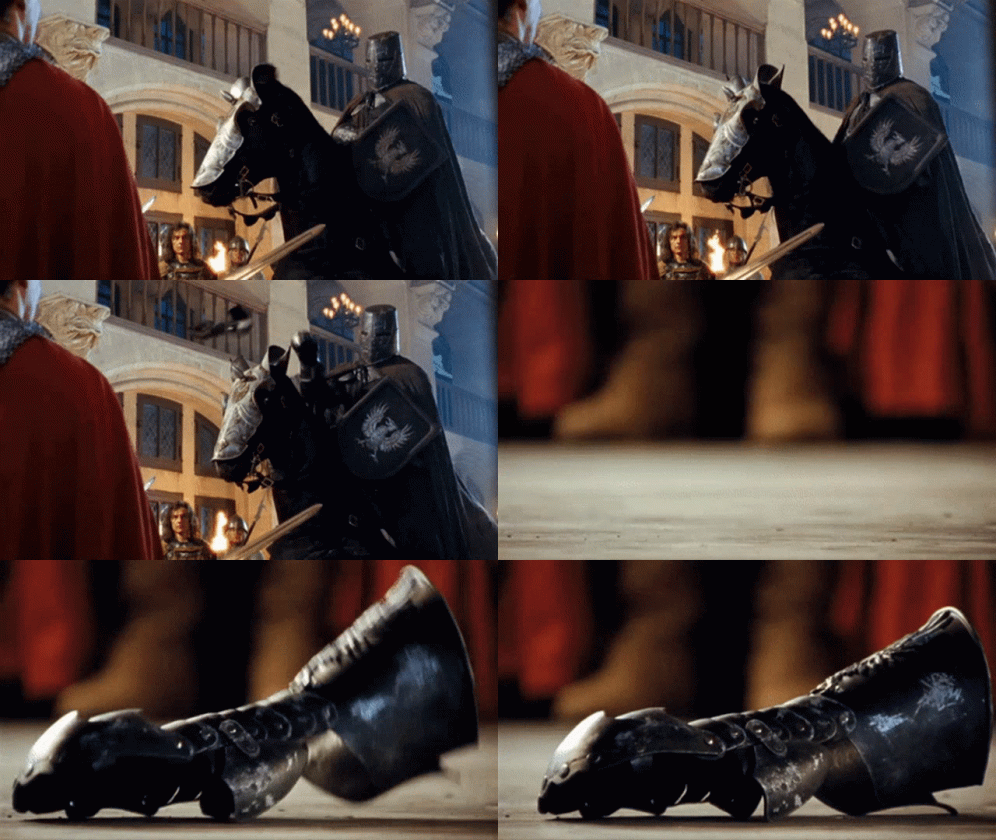
and with the help of The Ultimate Guide to Dorothy Dunnett's The Game of Kings
I was ready to read from first page to the last or die trying!
This time I managed the feat and enjoyed it. Somewhere around 25% the story finally gripped me and did not let go. I smiled, I teared up and held my breath and was impressed.
Also, I will most definitely will go on with the series, after giving my brain a little time to recover after all the hard work it has been doing concentrating, learning, following all the chess pieces around.
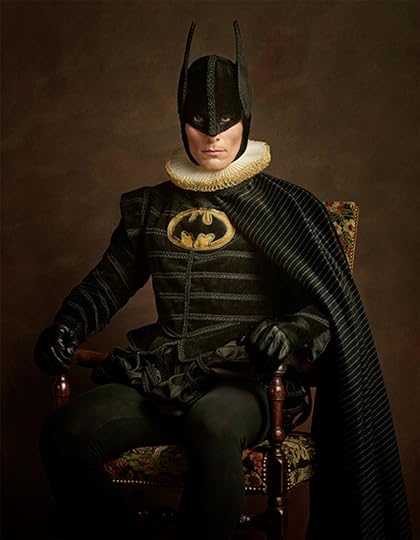
I should -of course- try and write a review about the actual book instead of blowing my own trumpet, but I am only human, after all, not some obscure polyglot Renaissance Batman.. 😅
----------------------------
Round 3 in 2025::

Updating my original 4-star rating to 5.
Compared to the other books in The Lymond Chronicles this book is "only" a strong 4 stars, but compared to other books in the Historical Fiction genre it is a radiant 5 or more! Because imo author Dorothy Dunnett is like sunshine compared to the candle light of others (with a few exceptions).
Remembering my first struggles, re-reading (listening) to the book was almost plain sailing. It was more leisurely, not the previous ride-or-die experience. I had the chance to look for layers, clues, connections and finding them (and I'm sure I picked up a few only and am bound to find more later on) was so satisfactory.
Also, lots of love and thanks to The Dunnetteers for their support. ❤️
Crawford of Lymond of the cornflower-blue eyes and golden hair: 1
Melinda of the common brown eyes and nondescript brown hair: nil
----------------------------
----------------------------
Update in 2023
I CAME, I READ, I CONQUERED.
Round 2 in 2023:
Crawford of Lymond of the cornflower-blue eyes and golden hair: nil.
Melinda of the common brown eyes and nondescript brown hair: 1.
YUUSSSS!
This book and I have a history. (Isn't this a good pun? Kind of? Not on Lymond-levels, of course, but, hey, I must have acquired a little polish from him, right?) It had been on my radar for a time thanks to the great reviews of Nastya and Nataliya and also because I happen to have this fascination with Scotland (4 visits and counting!) and dabbled a bit in Scottish history in my past life at uni.
Alas! that learning had been ages ago and when last year (2022) I finally started listening to the audiobook -despite the fair warnings- I had to realise that my knowledge was inadequate to follow the Scottish Who-is-Who Issue of 1547 unaided. Dunnett’s board is chockful of deceptive moves— every time I thought I had a piece figured out, it changed colors mid-game.
It was a game where pawns promote unexpectedly, knights double-cross, and bishops can be traitors in disguise. (In retrospect, this all make sense now.)
I really felt like this:
I guess it also didn't help that I could not in any way connect to the larger than life Enigma, the obscure Renaissance Superhero that was Dunnett's Crawford of Lymond.
So, I gave up at that point, but vowed to return and finish the story eventually.
Here we are a year later and I decided to throw the proverbial gauntlet to the book & Lymond again
and with the help of The Ultimate Guide to Dorothy Dunnett's The Game of Kings
I was ready to read from first page to the last or die trying!
This time I managed the feat and enjoyed it. Somewhere around 25% the story finally gripped me and did not let go. I smiled, I teared up and held my breath and was impressed.
Also, I will most definitely will go on with the series, after giving my brain a little time to recover after all the hard work it has been doing concentrating, learning, following all the chess pieces around.
I should -of course- try and write a review about the actual book instead of blowing my own trumpet, but I am only human, after all, not some obscure polyglot Renaissance Batman.. 😅
----------------------------
Round 3 in 2025::
Updating my original 4-star rating to 5.
Compared to the other books in The Lymond Chronicles this book is "only" a strong 4 stars, but compared to other books in the Historical Fiction genre it is a radiant 5 or more! Because imo author Dorothy Dunnett is like sunshine compared to the candle light of others (with a few exceptions).
Remembering my first struggles, re-reading (listening) to the book was almost plain sailing. It was more leisurely, not the previous ride-or-die experience. I had the chance to look for layers, clues, connections and finding them (and I'm sure I picked up a few only and am bound to find more later on) was so satisfactory.
Also, lots of love and thanks to The Dunnetteers for their support. ❤️

December 29, 2008
This book, and how I feeeeeel about this book. They demand flights of eloquence and rhetorical brilliance that I just don’t have right now. Or probably ever, if I’m honest, not for this.
It’s only the second time I’ve read this cover-to-cover. But pieces of this book are graven into me. Particular turns of phrase from scenes I’ve read over again – “I despised men who accepted their fate. I shaped mine twenty times and had it broken twenty times in my hands.” And more fundamental things. I remembered the fact of Lymond’s speech about patriotism, but not it’s chilling, blazing content. Yet when I got to it again, it rang my whole brain like a bell because it turns out I did remember, I just remembered so far down it felt like it came from me.
It’s a book with speeches, let me just repeat that.
Okay, some actual content. This is Scotland, 1547, conflict sparking with England, France circling. It’s a story of nations, but mostly it’s about the lost son coming home, about his brother’s marriage bending and bending until the cracks show, it’s about his extraordinary mother, and their friends, and a long, awful, painful coming in from the cold. I love them all so much I am helpless about it. This is a ridiculous, absurd book where the main character is incomprehensible 75% of the time if you don’t have a Ph.D. in sixteenth-century literature, and you don’t have the faintest idea what anything means for about 500 pages, and I love it as passionately and unreservedly as all its excesses demand. It's about the flaw, the break, the shattering, and building strength from personal anialation. And in the last, a humanitarianism so strong, it feels brutal.
...Nope, definitely don't have it in me.
It’s only the second time I’ve read this cover-to-cover. But pieces of this book are graven into me. Particular turns of phrase from scenes I’ve read over again – “I despised men who accepted their fate. I shaped mine twenty times and had it broken twenty times in my hands.” And more fundamental things. I remembered the fact of Lymond’s speech about patriotism, but not it’s chilling, blazing content. Yet when I got to it again, it rang my whole brain like a bell because it turns out I did remember, I just remembered so far down it felt like it came from me.
It’s a book with speeches, let me just repeat that.
Okay, some actual content. This is Scotland, 1547, conflict sparking with England, France circling. It’s a story of nations, but mostly it’s about the lost son coming home, about his brother’s marriage bending and bending until the cracks show, it’s about his extraordinary mother, and their friends, and a long, awful, painful coming in from the cold. I love them all so much I am helpless about it. This is a ridiculous, absurd book where the main character is incomprehensible 75% of the time if you don’t have a Ph.D. in sixteenth-century literature, and you don’t have the faintest idea what anything means for about 500 pages, and I love it as passionately and unreservedly as all its excesses demand. It's about the flaw, the break, the shattering, and building strength from personal anialation. And in the last, a humanitarianism so strong, it feels brutal.
...Nope, definitely don't have it in me.

March 10, 2011
Six stars out of five for Dorothy Dunnett. She's in class of her own when it comes to historical fiction and, while I continue to enjoy the epics told by Bernard Cornwell or Patrick O'Brian (the ones I'm currently in the middle of), I have to admit that in a celebrity deathmatch they would come second place to the Lymond / Niccolo series. Fans of the author tend towards unbridled enthusiasm (witness the 4,42 median rating here on Goodreads - the highest I've come across so far, and the international conventions meeting in places of import from the books). So what is the secret of this amazing popularity, seeing as the number of votes is relatively low? I could point out to the erudition and the word plays that rival Umberto Eco, to the wild swashbuckling adventures that surpass even Alexandre Dumas, to the intricate puzzles and whodunnit investigations that pay tribute to Arthur Conan Doyle or Agatha Christie, the grand vision, panoramic scope that challenge Gone with the Wind and War and Peace, and last but not least the wild, absurd, disruptive sense of humour that reminds me of the best of Blackadder or Monty Python ( 'We need to uthe thronger perthuathion. The men below are obviouthly in colluthion too.' - Lord Grey channelling Michael Palin as Pontius Pilates).
All these aspects are part of the attraction, but I believe above and beyond the technical skills and the richness of the setting, the books of Dorothy Dunnet are about passion : for history, for the people that made history and for living life to the full. Wikipedia mentions that the inception of the Lymond Chronicles came when Dunnett complained to her husband that she has run out of things to read, and he suggested she should write her own. Thus we are reading the kind of tale a voracious reader wrote for her own enjoyment, and we tag along with googly eyes and mouths open in wonder. As for the low number of votes : the books were written five decades ago, so they lack the exposure of newcomers on the scene. They are also too big for impulse buyers and too complex to be included in a school curriculum (maybe at university level). These factors combine to keep away the casual browser of library shelves, but attract the more dedicated readers of history and the ones who prefer sprawling, immersive adventures. And once you pass the initial reluctance to invest time and effort in 13 books you end up under Dunnett spell.
I wished to explore, within several books, the nature and experiences of a classical hero: a gifted leader whose star-crossed career, disturbing, hilarious, dangerous, I could follow in finest detail for ten years. And I wished to set him in the age of the Renaissance.
Enters Francis Crawford of Lymond, younger son of the Coulter family. The year is 1547 and Scotland is like 'a lark surrounded by crocodiles'. After a series of disastrous military campaigns, most of the nobles are either dead, prisoners across the Border or secretly in the pay of the English who claim the hand of the six year old Queen Mary in marriage to their own infant heir to the throne. At the start of the novel Francis is an outlaw, hunted across the realm for betraying his side to the English, and at the most basic level the plot can be resumed as the struggle of Francis to clear his name and discover who and how he was framed. Complicating the issue is the deadly rivalry between Francis and his older brother, the heir to the Coulter castle and lands, his responsibility in the death of their beloved sister, a budding romance with a blind heiress and a dysfunctional relationship with young and idealistic Will Scott, who wants to become an apprentice to the charysmatic outlaw leader.
The Game of Kings reflects the battle for Scottish sovereignty through the language and tactics of chess. The analogy is deeply embedded at all the levels of the story - from the opening moves of Lymond stealing his mother's jewels, burning the family castle and flirting with his brother's wife, to his game of cat and mouse playing both sides against each other and stealing equally from the British and from the Scots, to the relative role of each piece on the board - passive kings and queens, fiery knights, besieged towers, wild horse runs or bishops betrayals.
The rybauldes, players of dyce And the messangers and corrours ought to be sette tofore the rook. For hit apperteyneth to the rook ... to have men convenable for to renne here and there for tenquire and espie the place and cyties that myght be contrarye to the kynge.
Each chapter is prefaced by a reference to the game, written in old English and usually related to the current developments in the plot. As a side note, don't get unnerved by the apparent obscurity of these introductions: the rest of the novel is written in plain English, or what Dunnett considers plain English in the context of the Renaissance: authentic Scots idiom seasoned with Latin, French, Italian, occasional German, Dutch and Spanish, verses from popular ballads and court poets, references to mythology and the equivalent of XVI century pop culture. It comes as no surprise that the Lymond / Nicollo Chronicles have spawned a two volume hefty companion book that references and translates and comments on all the trivia and all the research included in the original books. I am lucky to be familiar with the major European languages and with several modern Scottish authors, and to have the patience and the drive to solve / compose crossword puzzles, but even so I could not claim to have caught every nuance and every reference here. There's just too damn many of them, every time a character opens his / her mouth, especially Lymond. But I had no problem following the gist of the conversations and the more subtle put-downs or barbed arrows of irony. The book practically begs for a re-read, both for spotting the later developments as they are first introduced (Lymond is always thinking and responding to his adversaries with several moves ahead of the game, like a true chess grandmaster) and for taking a breather from the frantic pacing and spend some leisure time with Wikipedia and with the reference books, savouring the more obscure points of the text.
Coming back to Francis Lymond, the hero of the epic, I can understand but I cannot subscribe to the theory that he is a Gary Stu, unrealistic, uberpowerful and infallible. Yes, he is super smart, good looking, proficient with bow and sword, well read and a musical prodigy, but he is not supposed to be an ordinary Joe or a farmboy with a secret identity and a prophecy to fulfil, he is a Renaissance man, a natural born leader, a hero of his time period. Most of his talents can be explained by the fact that he is a second son, who inherits nothing and who has the pressing incentive to make his own place in the world, and by the circumstances forced on him: warrior, prisoner, galley slave, outlaw leader, spy, etc. In addition to his talents, there is the way Dunnett is treating him, like a bar of iron that is heated and re-heated in the fire of adversity and then moulded into shape with sledgehammers until the sword is sharp and deadly. ( This peculiar mental agility of yours has been no friend to you, has it? Without it, you might have survived, harmless, in a lukewarm limbo of drink and drugs and insipid women! )
He is an actor who struggles to give up his mask and change the role Fate and the lords of the land have written for him, he tries to do right by his followers and by his friends, but more often than not the results are hurtful to guilty and innocents alike. He makes mistakes, big ones, in keeping with his big struggles. He learns painfully that a leader is responsible for the lives of the people he involves in his plans and for the unforeseen consequences of his actions.
And now where are we? It's difficult, isn't it, to know whom to trust? Fide et diffide, in fact: and that is the moral of this little story. Be mistrustful, and you will live happy and die hated and be much more useful to me in between.
In a great supporting role is Will Scott, who wants to learn from Lymond how to lead, how to be free of family and patriotic obligations, how to control his own life. Where Francis is practical and cynical, Will is idealistic and impulse driven. He is easily manipulated because he doesn't follow through the moves of the chess game far enough into the future. Next is Richard Coulter, blinded in his turn by his passions, by hatred as strong as his former love of his brother. Insufficient or false knowledge drive both Will and Richard to pit themselves against Francis and his plans in a struggle that sees a new twist and reversal of fortunes every other page. Appearances are misleading and more than one killer may be interested in putting Francis Lymond out of the game.
I could pick any of the major themes of the novel ( Patriotism is a fine hothouse for maggots. It breeds intolerance , family relations, youth versus experience, law versus freedom) for a more indepth analysis, but I would like to pause for a moment on the way Dunnett treated gender roles in the novel. While men have the lion's share of the action and women are generally relegated to passive roles as childbearers and household managers, the end result is refreshingly well balanced with the ladies more than holding their own in the unravelling of the mysteries and as adept in working from the shadows as the men are at swinging their axes and swords. Stately clan matron Sybilla Coulter, fiery Irish wife Mariotta Coulter, no-nonsense Lady Buccleuth, romantically challenged thirteen year old heiress Agnes Herries, malefic Margaret Douglas countess of Lennox, reliable and sensible Christian Stewart - they usually surpass their men in wit and fortitude. I particularly like the way Dunnett moulded her militant feminism to the social strictures of the period and didn't try to endow her heroines with modern sensibilities. There is friction and misunderstanding between the genders, but there are also open channels of communication and the promise of a path together, side by side into the future. As George Douglas responds to Agnes Herries on the lack of romance in arranged marriages:
It's pretty well a full-time job, these days, keeping a family housed and clothed and warm and protected. Doesn't leave much time for poetry under the apple trees. But chivalry hasn't gone: don't think it. You'll even find it paramount still with some people, but a trifle the worse for wear, because it's not the best protection against an aggressive and materialistic world ...
I've run out of bookmarks, and I still feel that I only touched on the surface of the story, that I didn't stress enough how wildly entertaining and how intellectually stimulating the journey was. I've actually put off writing the review for a couple of months, hoping for inspiration to match the enthusiasm I felt reading it, but as I'm already halfway through book three of Lymond I was in danger of falling too far behind to ever reach closure. Maybe I'll rewrite when I get around to reading the books again, this time back to back with the house of Niccolo, to see how they are related. Until then, I'll leave you with these rambling notes.
All these aspects are part of the attraction, but I believe above and beyond the technical skills and the richness of the setting, the books of Dorothy Dunnet are about passion : for history, for the people that made history and for living life to the full. Wikipedia mentions that the inception of the Lymond Chronicles came when Dunnett complained to her husband that she has run out of things to read, and he suggested she should write her own. Thus we are reading the kind of tale a voracious reader wrote for her own enjoyment, and we tag along with googly eyes and mouths open in wonder. As for the low number of votes : the books were written five decades ago, so they lack the exposure of newcomers on the scene. They are also too big for impulse buyers and too complex to be included in a school curriculum (maybe at university level). These factors combine to keep away the casual browser of library shelves, but attract the more dedicated readers of history and the ones who prefer sprawling, immersive adventures. And once you pass the initial reluctance to invest time and effort in 13 books you end up under Dunnett spell.
I wished to explore, within several books, the nature and experiences of a classical hero: a gifted leader whose star-crossed career, disturbing, hilarious, dangerous, I could follow in finest detail for ten years. And I wished to set him in the age of the Renaissance.
Enters Francis Crawford of Lymond, younger son of the Coulter family. The year is 1547 and Scotland is like 'a lark surrounded by crocodiles'. After a series of disastrous military campaigns, most of the nobles are either dead, prisoners across the Border or secretly in the pay of the English who claim the hand of the six year old Queen Mary in marriage to their own infant heir to the throne. At the start of the novel Francis is an outlaw, hunted across the realm for betraying his side to the English, and at the most basic level the plot can be resumed as the struggle of Francis to clear his name and discover who and how he was framed. Complicating the issue is the deadly rivalry between Francis and his older brother, the heir to the Coulter castle and lands, his responsibility in the death of their beloved sister, a budding romance with a blind heiress and a dysfunctional relationship with young and idealistic Will Scott, who wants to become an apprentice to the charysmatic outlaw leader.
The Game of Kings reflects the battle for Scottish sovereignty through the language and tactics of chess. The analogy is deeply embedded at all the levels of the story - from the opening moves of Lymond stealing his mother's jewels, burning the family castle and flirting with his brother's wife, to his game of cat and mouse playing both sides against each other and stealing equally from the British and from the Scots, to the relative role of each piece on the board - passive kings and queens, fiery knights, besieged towers, wild horse runs or bishops betrayals.
The rybauldes, players of dyce And the messangers and corrours ought to be sette tofore the rook. For hit apperteyneth to the rook ... to have men convenable for to renne here and there for tenquire and espie the place and cyties that myght be contrarye to the kynge.
Each chapter is prefaced by a reference to the game, written in old English and usually related to the current developments in the plot. As a side note, don't get unnerved by the apparent obscurity of these introductions: the rest of the novel is written in plain English, or what Dunnett considers plain English in the context of the Renaissance: authentic Scots idiom seasoned with Latin, French, Italian, occasional German, Dutch and Spanish, verses from popular ballads and court poets, references to mythology and the equivalent of XVI century pop culture. It comes as no surprise that the Lymond / Nicollo Chronicles have spawned a two volume hefty companion book that references and translates and comments on all the trivia and all the research included in the original books. I am lucky to be familiar with the major European languages and with several modern Scottish authors, and to have the patience and the drive to solve / compose crossword puzzles, but even so I could not claim to have caught every nuance and every reference here. There's just too damn many of them, every time a character opens his / her mouth, especially Lymond. But I had no problem following the gist of the conversations and the more subtle put-downs or barbed arrows of irony. The book practically begs for a re-read, both for spotting the later developments as they are first introduced (Lymond is always thinking and responding to his adversaries with several moves ahead of the game, like a true chess grandmaster) and for taking a breather from the frantic pacing and spend some leisure time with Wikipedia and with the reference books, savouring the more obscure points of the text.
Coming back to Francis Lymond, the hero of the epic, I can understand but I cannot subscribe to the theory that he is a Gary Stu, unrealistic, uberpowerful and infallible. Yes, he is super smart, good looking, proficient with bow and sword, well read and a musical prodigy, but he is not supposed to be an ordinary Joe or a farmboy with a secret identity and a prophecy to fulfil, he is a Renaissance man, a natural born leader, a hero of his time period. Most of his talents can be explained by the fact that he is a second son, who inherits nothing and who has the pressing incentive to make his own place in the world, and by the circumstances forced on him: warrior, prisoner, galley slave, outlaw leader, spy, etc. In addition to his talents, there is the way Dunnett is treating him, like a bar of iron that is heated and re-heated in the fire of adversity and then moulded into shape with sledgehammers until the sword is sharp and deadly. ( This peculiar mental agility of yours has been no friend to you, has it? Without it, you might have survived, harmless, in a lukewarm limbo of drink and drugs and insipid women! )
He is an actor who struggles to give up his mask and change the role Fate and the lords of the land have written for him, he tries to do right by his followers and by his friends, but more often than not the results are hurtful to guilty and innocents alike. He makes mistakes, big ones, in keeping with his big struggles. He learns painfully that a leader is responsible for the lives of the people he involves in his plans and for the unforeseen consequences of his actions.
And now where are we? It's difficult, isn't it, to know whom to trust? Fide et diffide, in fact: and that is the moral of this little story. Be mistrustful, and you will live happy and die hated and be much more useful to me in between.
In a great supporting role is Will Scott, who wants to learn from Lymond how to lead, how to be free of family and patriotic obligations, how to control his own life. Where Francis is practical and cynical, Will is idealistic and impulse driven. He is easily manipulated because he doesn't follow through the moves of the chess game far enough into the future. Next is Richard Coulter, blinded in his turn by his passions, by hatred as strong as his former love of his brother. Insufficient or false knowledge drive both Will and Richard to pit themselves against Francis and his plans in a struggle that sees a new twist and reversal of fortunes every other page. Appearances are misleading and more than one killer may be interested in putting Francis Lymond out of the game.
I could pick any of the major themes of the novel ( Patriotism is a fine hothouse for maggots. It breeds intolerance , family relations, youth versus experience, law versus freedom) for a more indepth analysis, but I would like to pause for a moment on the way Dunnett treated gender roles in the novel. While men have the lion's share of the action and women are generally relegated to passive roles as childbearers and household managers, the end result is refreshingly well balanced with the ladies more than holding their own in the unravelling of the mysteries and as adept in working from the shadows as the men are at swinging their axes and swords. Stately clan matron Sybilla Coulter, fiery Irish wife Mariotta Coulter, no-nonsense Lady Buccleuth, romantically challenged thirteen year old heiress Agnes Herries, malefic Margaret Douglas countess of Lennox, reliable and sensible Christian Stewart - they usually surpass their men in wit and fortitude. I particularly like the way Dunnett moulded her militant feminism to the social strictures of the period and didn't try to endow her heroines with modern sensibilities. There is friction and misunderstanding between the genders, but there are also open channels of communication and the promise of a path together, side by side into the future. As George Douglas responds to Agnes Herries on the lack of romance in arranged marriages:
It's pretty well a full-time job, these days, keeping a family housed and clothed and warm and protected. Doesn't leave much time for poetry under the apple trees. But chivalry hasn't gone: don't think it. You'll even find it paramount still with some people, but a trifle the worse for wear, because it's not the best protection against an aggressive and materialistic world ...
I've run out of bookmarks, and I still feel that I only touched on the surface of the story, that I didn't stress enough how wildly entertaining and how intellectually stimulating the journey was. I've actually put off writing the review for a couple of months, hoping for inspiration to match the enthusiasm I felt reading it, but as I'm already halfway through book three of Lymond I was in danger of falling too far behind to ever reach closure. Maybe I'll rewrite when I get around to reading the books again, this time back to back with the house of Niccolo, to see how they are related. Until then, I'll leave you with these rambling notes.

August 12, 2017

In order to clarify the situation with regard to said novel, let me first rehash what the two sides of the discussion have been saying :
Side 'What the fuck is this' : It's obscure. Every time Lymond opens his mouth, I want to smack his face and make him eat his weird ancient references.
Side 'This book is brilliant' : Well if you were less lazy, now. That's classics for you, lads. You have to work a little to discover the gem.
Me : *chokes*
Now let's deconstruct something together, okay? No 'classic' needs to be obscure. Many aren't.
That was fast, wasn't it? What, not convinced? Alright.
What is the similarity between say, The Red and the Black, The Three Musketeers (by the way, I saw readers comparing The Game of Kings with this one and please, don't even), Anna Karenina, Stello and Les Misérables?
They're classics, but they're utterly readable. One does not need a textbook to understand every fucking page, and you know what? It doesn't mean they're average because the 'masses' can understand them (I genuinely saw people referring to the 'masses' in reviews today : are you guys for real?), no. It means that their authors are master of storytelling, and do not feel the need to drown their readers in ludicrous and useless literary references to get their point across. Is it possible to go beyond their first-glance easiness and extract well-hidden references with the help of some sharp expertise? Hell yes, or my five years in Uni would have been useless, and I can't have that. Yet first and foremost, they are stories, and the weight of references never becomes a burden the reader has to bear in order to unravel the layers and get to the fucking story.
Hence why I whole-heartedly disagree with any reader who would stamp his contempt upon me and from the great height of his pretension, dismiss me the right to call myself an intelligent reader because no, I have no intention to waste my time on Google when I should be reading, thank you very much. I realized I should stop trying when the 'French jokes' made me readjust what exactly people referred as 'jokes'. Look, I am French. I understand French. I am not quite bad at Latin, and I can decipher Spanish sentences if they are written and aren't too many. At no moment did it change a thing. It's not the language I don't understand, it's the purpose I abhor. I do not care about so-called winks and I do not believe that needing a textbook to be understood reflects some kind of superiority. The Game of Kings reeks of pretension and everything I despise in Literary circles.
Even if I could ignore my annoyance and follow the story - which I could, it didn't bode well for my love for the main character, Lymond. I am sorry. Any man who declaims obscure French quotes while fighting annihilates any interest I could have felt for him.The guy's a Gary Stu of epic proportions - there's literally nothing he cannot do - who loves nothing more than hearing himself talk, and I'm supposed to swoon? Ugh, nope. And given that he is the heart of the story, excuse me if I'm slowly disengaging from this mess.
Therefore, I shall leave you all on this : by all means, entertain yourselves, but do not come at me and at other readers for being 'too lazy' and 'not clever enough'. Fuck this rhetoric, and ô please give this French proverb a thought : Un point fait à temps en épargne cent.
Dorothy Dunnett, for all her outstanding education, forgot that. I'm sure there is a splendid story hidden somewhere in the clusterfuck that is this book ; however, I do not think it's worth wasting my time.
And for all the literary warriors out there : Ab imo pectore, fuck off.
For more of my reviews, please visit:


May 23, 2016
On re-reading this (listening to the audio-book) I had a far less gushy response (see below!) and also noticed how Dunnett upends what we expect from historical fiction. For there is no 'love story' for Lymond - or, at least, not in a romantic sense. Instead, we see a reconciliation with love of family, love of country (and that big court speech on the dangers of patriotism and its ability to make enemies of fellow humans is tremendous) and the love of friendship.
It's other characters who go on a journey towards maturation: Richard and Mariotta, Will Scott. And, at the end, Lymond finds sanctuary and relief .
-------------------------------------------
I have read both Dunnett's huge series of books a few times and still return to them for the amazing story-telling, beautiful writing, and sheer compelling-ness of her characters.
Francis Crawford of Lymond just has to be the ultimate literary hero: brilliant, flawed, haunted and haunting; I think he was the first written man I ever truly fell in love with and it's a relationship that hasn't palled.
But these are not 'romantic' novels in any kind of reductive Mills-and-Boon or Georgette Heyer way: they are incredibly robust, violent at times, and amazingly rewarding. Dunnett never writes down to her readers, and if that means quoting lightly in Latin, medieval French or Arabic, then she goes right on ahead to do it, because that's the way the character would speak.
Not that these are over-intellectualised, 'novels of ideas' either - they are simply the most stunning evocation of 16th century Europe, brought to us with true characters who walk off the pages and live their lives as they choose.
In 'Kings', Lymond returns to his home in Scotland, pursued by his bad reputation and an aura of evil. Called traitor, murderer and, potentially, fratricide, he plays out the game amongst the Scottish families closest to the throne of Mary of Guise and her young child, Mary Queen of Scots.
I don't want to give anything about the plot, because it is so intricate and every small comment fits in later, but this remains one of my top series of books ever.
It's other characters who go on a journey towards maturation: Richard and Mariotta, Will Scott. And, at the end, Lymond finds sanctuary and relief .
-------------------------------------------
I have read both Dunnett's huge series of books a few times and still return to them for the amazing story-telling, beautiful writing, and sheer compelling-ness of her characters.
Francis Crawford of Lymond just has to be the ultimate literary hero: brilliant, flawed, haunted and haunting; I think he was the first written man I ever truly fell in love with and it's a relationship that hasn't palled.
But these are not 'romantic' novels in any kind of reductive Mills-and-Boon or Georgette Heyer way: they are incredibly robust, violent at times, and amazingly rewarding. Dunnett never writes down to her readers, and if that means quoting lightly in Latin, medieval French or Arabic, then she goes right on ahead to do it, because that's the way the character would speak.
Not that these are over-intellectualised, 'novels of ideas' either - they are simply the most stunning evocation of 16th century Europe, brought to us with true characters who walk off the pages and live their lives as they choose.
In 'Kings', Lymond returns to his home in Scotland, pursued by his bad reputation and an aura of evil. Called traitor, murderer and, potentially, fratricide, he plays out the game amongst the Scottish families closest to the throne of Mary of Guise and her young child, Mary Queen of Scots.
I don't want to give anything about the plot, because it is so intricate and every small comment fits in later, but this remains one of my top series of books ever.

June 7, 2021
First reread 3 months later (I know, I know...)
So ok, it's obviously 5 stars, duh. This time I enjoyed it even more, knowing all the characters and noticing Dunnett's carefully planted clues. And every emotional scene hit me like a ton of bricks.
Just absolutely incredible!
(I promised myself I would read very slowly this time, failed and read the last 200 pages in one day. Argh!)
-------------------------
Mary Queen of Scots is just a young child, the coveted prize-bride for young king Edward of England with Scotland as dowry. France wants the same and also put some pressure on England.
Mysterious Lymond returns to Scotland after the 5 year absence with a tarnished reputation. A grand political chess game begins.
Lymond is an incredible protagonist. He is the most accomlished young man on the planet and always 5 steps ahead of every other character. And it would have been so frustrating if we had a first-person or third-person limited narration, but thankfully we don't. We never see his POV, we only get glimpses of him through other characters’ eyes most of the tine. You never know what’s his plan and end game. Imagine Jack Sparrow if he was Scottish, overeducated and blond; but as drunk and scheming.
What ensues next is a great adventure story of double crosses, triple crosses, politics, betrayals, swashbuckling andmelodrama.
I've seen some reviewers calling this book pretentious and calling Dunnett a show-off but nothing could be further from the truth. But it is smart, subtle and requires attention from the reader.
And the writing is so smart and gorgeous, sometimes very cheeky, the book is intricately plotted and the author respects her readers. It can be confusing at first, you are dropped into the middle of the war with a lot of actors. But it didn’t last long.
And I loved so many characters - papa Buccleuch, Christian Stewart, Somervilles, Agnes, mama bear, even grumpy Richard to name a few.
If you’re a fan of historical fiction with fun adventures, you need to give this a try! I gobbled it up in 2 days.
Now please excuse me, I'm going back to the 16th century.
So ok, it's obviously 5 stars, duh. This time I enjoyed it even more, knowing all the characters and noticing Dunnett's carefully planted clues. And every emotional scene hit me like a ton of bricks.
Just absolutely incredible!
(I promised myself I would read very slowly this time, failed and read the last 200 pages in one day. Argh!)
-------------------------
Mary Queen of Scots is just a young child, the coveted prize-bride for young king Edward of England with Scotland as dowry. France wants the same and also put some pressure on England.
Mysterious Lymond returns to Scotland after the 5 year absence with a tarnished reputation. A grand political chess game begins.
Lymond is an incredible protagonist. He is the most accomlished young man on the planet and always 5 steps ahead of every other character. And it would have been so frustrating if we had a first-person or third-person limited narration, but thankfully we don't. We never see his POV, we only get glimpses of him through other characters’ eyes most of the tine. You never know what’s his plan and end game. Imagine Jack Sparrow if he was Scottish, overeducated and blond; but as drunk and scheming.
What ensues next is a great adventure story of double crosses, triple crosses, politics, betrayals, swashbuckling and
I've seen some reviewers calling this book pretentious and calling Dunnett a show-off but nothing could be further from the truth. But it is smart, subtle and requires attention from the reader.
“The Scot, the Frencheman, the Pope and heresie, overcommed by Trothe have had a fall. Again yes.”
“I wish to God,” said Gideon with mild exasperation, “that you’d talk—just once—in prose like other people.”
And the writing is so smart and gorgeous, sometimes very cheeky, the book is intricately plotted and the author respects her readers. It can be confusing at first, you are dropped into the middle of the war with a lot of actors. But it didn’t last long.
And I loved so many characters - papa Buccleuch, Christian Stewart, Somervilles, Agnes, mama bear, even grumpy Richard to name a few.
If you’re a fan of historical fiction with fun adventures, you need to give this a try! I gobbled it up in 2 days.
Now please excuse me, I'm going back to the 16th century.

March 1, 2017
A massive BR with Alex, Amanda and great people in fab group for reading Dorothy Dunnett books :)
*Sigh* IDK what happened for sure. "The Game of Kings" has all I need for the historical treat, interesting historical spices, naughty and evil main character, some action, peculiar writing. Hmm...as long as I read Riyria Revelations alongside - it was ok, but when I ended up with Lymond and Lord Idiot (Dragon Actually) only, I felt that it was going to be a downfall for my reads. After finishing Rise of Empire I couldn't get properly involved into reading "The Game of Kings" and it's bad, 'cause this book is really outstanding and it should keep me hooked without any additional help from Riyria or other books! So I'm putting this book on hold for some time :)
Sorry guy! I promise to stalk you for yummy updates on this book ;)

*Sigh* IDK what happened for sure. "The Game of Kings" has all I need for the historical treat, interesting historical spices, naughty and evil main character, some action, peculiar writing. Hmm...as long as I read Riyria Revelations alongside - it was ok, but when I ended up with Lymond and Lord Idiot (Dragon Actually) only, I felt that it was going to be a downfall for my reads. After finishing Rise of Empire I couldn't get properly involved into reading "The Game of Kings" and it's bad, 'cause this book is really outstanding and it should keep me hooked without any additional help from Riyria or other books! So I'm putting this book on hold for some time :)
Sorry guy! I promise to stalk you for yummy updates on this book ;)
June 15, 2019
Doubleday/Vintage Anchor has reprinted the Lymond Chronicles series. with gorgeous new covers in paperback form. I loved my first adventures with Lymond! ⭐️ ⭐️ ⭐️ ⭐️
Francis Crawford of Lymond stands accused of many crimes, including deceit, drunkenness, murder, and treason. It’s 1547 when he returns to his native Scotland, just as it is threatened by an English invasion.
Lymond leads a group of outlaws and dissidents to defend his land, as well as his name. Lymond is the second son, and second in line for any inheritance.
Classical literature references abound, always testing me and adding fun when I actually knew one. Characters also abound, and we are on pins and needles as we wait to find out if Lymond is guilty or innocent.
Lymond is in a fight to end all fights with his brother, and the outcome will determine if Lymond dies or is welcomed back into the fold of his family.
Mary Queen of Scots is here, too, but too young to truly lead, which is why Lymond and men like him have to join up and join in to make sure Scotland remains a kingdom.
There are true-to-history characters mixed in with fictional ones. Lymond is a main character to champion: complex, foolhardy, passionate, clever, impressive.
The writing is rich and intricately detailed and is rather sumptuous overall. I’m so grateful there is a series to continue on with because I can’t wait to read Lymond’s next adventure, where he escorts Mary Queen of Scots to France. I’m so grateful this book and series was put on my radar because I have lots of adventure ahead of me!
I received a complimentary copy. All opinions are my own.
My reviews can also be found on my blog: www.jennifertarheelreader.com
Francis Crawford of Lymond stands accused of many crimes, including deceit, drunkenness, murder, and treason. It’s 1547 when he returns to his native Scotland, just as it is threatened by an English invasion.
Lymond leads a group of outlaws and dissidents to defend his land, as well as his name. Lymond is the second son, and second in line for any inheritance.
Classical literature references abound, always testing me and adding fun when I actually knew one. Characters also abound, and we are on pins and needles as we wait to find out if Lymond is guilty or innocent.
Lymond is in a fight to end all fights with his brother, and the outcome will determine if Lymond dies or is welcomed back into the fold of his family.
Mary Queen of Scots is here, too, but too young to truly lead, which is why Lymond and men like him have to join up and join in to make sure Scotland remains a kingdom.
There are true-to-history characters mixed in with fictional ones. Lymond is a main character to champion: complex, foolhardy, passionate, clever, impressive.
The writing is rich and intricately detailed and is rather sumptuous overall. I’m so grateful there is a series to continue on with because I can’t wait to read Lymond’s next adventure, where he escorts Mary Queen of Scots to France. I’m so grateful this book and series was put on my radar because I have lots of adventure ahead of me!
I received a complimentary copy. All opinions are my own.
My reviews can also be found on my blog: www.jennifertarheelreader.com
July 28, 2008
Ever love a series of books so much that it is hard to describe just why you love them?
I love Lymond. He is my all-time favorite hero. He’s a 16th century polyglot scholar, soldier-for-hire, poet, musician, nobleman, and treasonous outlaw. He’s trying to clear his name (as a traitor to Scotland – his homeland), and yet his methods are so convoluted and often counter-productive that everything he does is a muddle. He is fascinating.
I love the language that Dunnett uses to make Lymond and the rest of the characters come alive. Even their names have a ring to them. ("Turkey Mat," "the Lang Cleg," "Johnnie Bullo," even “Sybilla”) At times the language can be too much. When characters speak in foreign tongues (or quote them), there is no translation. Most of it I can puzzle out, but it’s not easy. Plus there are constant references to things that I knew nothing about. Lymond’s opening line is: “I am a narwal looking for my virgin. I have sucked up the sea like Charybdis and failing other entertainment will spew it three times daily, for a few.” Believe it or not, there is actually a strong, coherent statement in that. But you need Wikipedia to puzzle it out.
I love the drama of Lymond’s story. In particular I love his relationship with his brother, his mother, Will Scott, and the blind Christian Stewart. I love that they each both love him and despise him.
I love the accurate historical details. I love the ‘feeling’ of the story. This is not a costume party book.
I love everything about The Lymond Chronicles. The series are by far, my most cherished books.
I love Lymond. He is my all-time favorite hero. He’s a 16th century polyglot scholar, soldier-for-hire, poet, musician, nobleman, and treasonous outlaw. He’s trying to clear his name (as a traitor to Scotland – his homeland), and yet his methods are so convoluted and often counter-productive that everything he does is a muddle. He is fascinating.
I love the language that Dunnett uses to make Lymond and the rest of the characters come alive. Even their names have a ring to them. ("Turkey Mat," "the Lang Cleg," "Johnnie Bullo," even “Sybilla”) At times the language can be too much. When characters speak in foreign tongues (or quote them), there is no translation. Most of it I can puzzle out, but it’s not easy. Plus there are constant references to things that I knew nothing about. Lymond’s opening line is: “I am a narwal looking for my virgin. I have sucked up the sea like Charybdis and failing other entertainment will spew it three times daily, for a few.” Believe it or not, there is actually a strong, coherent statement in that. But you need Wikipedia to puzzle it out.
I love the drama of Lymond’s story. In particular I love his relationship with his brother, his mother, Will Scott, and the blind Christian Stewart. I love that they each both love him and despise him.
I love the accurate historical details. I love the ‘feeling’ of the story. This is not a costume party book.
I love everything about The Lymond Chronicles. The series are by far, my most cherished books.

March 8, 2014
My best effort at a response to this great read is to cheat and direct you to the fine reviews of Algernon and
Jeffry Keeten. They covers so well its themes of betrayal and loss, love and loyalty, its stimulating mix of humor and adventure, and richness in characters and language.
As a brief orientation, we are treated to the capers, conflicts, and liaisons of a mysterious outlaw in Scotland in the 1540’s, a time when the British and French are competing to eventually take over Scotland by setting up the marriage of their princes to the four-year old Queen Mary. Lymond is the second son of an aristocratic family but now reviled by his fellow Scots for betraying their forces to the invading British army five years earlier, resulting in tragic losses, including a sister. Even his own brother is after his hide. At the same time, he is an enemy to the Brits for signs of double-crossing them too. He takes up life on the run and living off banditry with a colorful cast of followers. His network of schemes and interventions is a confusing web which is subsumed under the metaphors of chess in the chapter structure. Whether Lymond is just a justifiable scoundrel in the face of all the brutal politics and personal guilt or has a secret noble cause is unclear for much of the book.
I could tolerate such painful uncertainty because of the lively plot elements and plenty of lingering in the dialog and characters that make this such a rich and rewarding read. The arcane lingo took some getting used to render fluid comprehension, but as with reading Shakespeare a bit of looseness of the mind helps let the meaning flow. Unusual words and snatches of Latin and French can send you looking things up or lead you to my lazy shortcut of driving on with the context to carry the content. For example, you can just grok that “whaup and peewit” are birds and let that stand, and make your own meaning for “cheeks plimmed” and “fustian coat” But sometimes it was worth the effort of looking up some wonders, such as digging to find that “dance a vuelta on the widdy” is to dance a tango on the end of a noose.
Ultimately, the tale had the feel of classic adventure tales like Zorro, Three Musketeers, and The Prisoner of Zenda and the charm of characterization reaching toward that of Patrick O’Brian. Some characters show their true selves or meet their just fate, and in that way the book is a romance. Those who meet ironic fates or stumble and bumble are part of the comedy. Underlying all is the tragedy of all the “collateral damage” and treachery among family and friends arising from Scotland’s unstable state among the wolves. I liked the capsule summary of blogger Regina Thorne that the book is “the Scottish love-child of Alexandre Dumas and Dorothy L. Sayers, with an added layer of psychological complexity and political maneuvering that is reminiscent of Game of Thrones”.
Jeffry Keeten. They covers so well its themes of betrayal and loss, love and loyalty, its stimulating mix of humor and adventure, and richness in characters and language.
As a brief orientation, we are treated to the capers, conflicts, and liaisons of a mysterious outlaw in Scotland in the 1540’s, a time when the British and French are competing to eventually take over Scotland by setting up the marriage of their princes to the four-year old Queen Mary. Lymond is the second son of an aristocratic family but now reviled by his fellow Scots for betraying their forces to the invading British army five years earlier, resulting in tragic losses, including a sister. Even his own brother is after his hide. At the same time, he is an enemy to the Brits for signs of double-crossing them too. He takes up life on the run and living off banditry with a colorful cast of followers. His network of schemes and interventions is a confusing web which is subsumed under the metaphors of chess in the chapter structure. Whether Lymond is just a justifiable scoundrel in the face of all the brutal politics and personal guilt or has a secret noble cause is unclear for much of the book.
I could tolerate such painful uncertainty because of the lively plot elements and plenty of lingering in the dialog and characters that make this such a rich and rewarding read. The arcane lingo took some getting used to render fluid comprehension, but as with reading Shakespeare a bit of looseness of the mind helps let the meaning flow. Unusual words and snatches of Latin and French can send you looking things up or lead you to my lazy shortcut of driving on with the context to carry the content. For example, you can just grok that “whaup and peewit” are birds and let that stand, and make your own meaning for “cheeks plimmed” and “fustian coat” But sometimes it was worth the effort of looking up some wonders, such as digging to find that “dance a vuelta on the widdy” is to dance a tango on the end of a noose.
Ultimately, the tale had the feel of classic adventure tales like Zorro, Three Musketeers, and The Prisoner of Zenda and the charm of characterization reaching toward that of Patrick O’Brian. Some characters show their true selves or meet their just fate, and in that way the book is a romance. Those who meet ironic fates or stumble and bumble are part of the comedy. Underlying all is the tragedy of all the “collateral damage” and treachery among family and friends arising from Scotland’s unstable state among the wolves. I liked the capsule summary of blogger Regina Thorne that the book is “the Scottish love-child of Alexandre Dumas and Dorothy L. Sayers, with an added layer of psychological complexity and political maneuvering that is reminiscent of Game of Thrones”.

August 27, 2015
Why fans of the Captive Prince should read Game of Kings.
On numerous occasions, the author of the Captive Prince has cited Dorothy Dunnett as a major influence on her work. In particular, Pacat has modeled her character Laurent on the hero of this book, Francis Crawford of Lymond.
For me, (for Damen), and I think for many fans, Laurent is the center of our attention. He captivates us, and though told through Damen’s perspective, the story truly revolves around him.
The similarities between Lymond and Laurent are apparent. Both are fair-haired, blue-eyed second sons; both are master swordsmen, intensely loyal, and sharp-tongued leaders; both have wretched reputations which their enemies abuse in heartbreaking fashion.
Laurent has an unwavering sense honor to match Damen’s, though he goes about it in backwards, sometimes counter-intuitive ways. He’s mysterious, hard to unravel, and impossible to predict. That’s what makes him so irresistible. And that’s what Lymond embodies.
The first time we meet him, we're greeted lines like:
If you liked watching Laurent go undercover at the inn to deliver a coded message and then make a daring escape over the rooftops, just wait until you see Lymond adopt a ridiculous alter ego and sack a castle with its own defenses.
If you got chills hearing Laurent chastise Aimeric, wait until you hear Lymond rip apart his foes with the glorious fury of his words.
If you cheered when the army marches in at the end of Vol. 2, wait until Lymond orchestrates victories, turning battlefields into chess games where only he controls the board.
Here’s you’ll find life-or-death battles of wit, epic sword fights, and sweeping adventure. You’ll find bravery pitted against honor, and love against power. There’s tension, and beauty, and some of the most gorgeous writing ever written.
The style is sparse, yet jam packed with information, making this a long, involved read. The references to literature, poetry and myths make understanding Lymond’s speech a slow, sometimes frustrating process, so much so that one character burst out, “I wish to God that you’d talk – just once – in prose like other people!” But don’t let that stop you. I read this book with a pen in hand, taking notes and folding pages, which I think helped. I also learned some cool new words like “sartorial,” “erumpent” and “susurrus.”
From a gender perspective, it’s fantastic to read historical fiction where the women in the story are intelligent, vital characters. And icing on the cake, Dunnett codes Lymond as feminine while he’s clearly dominating everyone in the room. It’s amazing.
Keep in mind – this is not a romance, it’s not dripping in homoeroticism and there’s very little sex. But for all the other wonderful reasons Captive Prince stands out above the rest, you’ll find here in Dororthy Dunnett’s series.
During the wait for Kings Rising – and let’s be honest, when we all finish it the next day – Lymond and all his mysteries will be there, just waiting to be discovered.
On numerous occasions, the author of the Captive Prince has cited Dorothy Dunnett as a major influence on her work. In particular, Pacat has modeled her character Laurent on the hero of this book, Francis Crawford of Lymond.
For me, (for Damen), and I think for many fans, Laurent is the center of our attention. He captivates us, and though told through Damen’s perspective, the story truly revolves around him.
The similarities between Lymond and Laurent are apparent. Both are fair-haired, blue-eyed second sons; both are master swordsmen, intensely loyal, and sharp-tongued leaders; both have wretched reputations which their enemies abuse in heartbreaking fashion.
Laurent has an unwavering sense honor to match Damen’s, though he goes about it in backwards, sometimes counter-intuitive ways. He’s mysterious, hard to unravel, and impossible to predict. That’s what makes him so irresistible. And that’s what Lymond embodies.
The first time we meet him, we're greeted lines like:
“Lymond, a man of wit and crooked felicities, bred to luxury and heir to a fortune, rode off serenely to Midcutler to break into his new sister-in-law’s castle.”Game of Kings follows Lymond on a quest to restore his name to his fellow Scots, his story set against the English border disputes that plagued much of 16th century British history.
If you liked watching Laurent go undercover at the inn to deliver a coded message and then make a daring escape over the rooftops, just wait until you see Lymond adopt a ridiculous alter ego and sack a castle with its own defenses.
If you got chills hearing Laurent chastise Aimeric, wait until you hear Lymond rip apart his foes with the glorious fury of his words.
If you cheered when the army marches in at the end of Vol. 2, wait until Lymond orchestrates victories, turning battlefields into chess games where only he controls the board.
Here’s you’ll find life-or-death battles of wit, epic sword fights, and sweeping adventure. You’ll find bravery pitted against honor, and love against power. There’s tension, and beauty, and some of the most gorgeous writing ever written.
The style is sparse, yet jam packed with information, making this a long, involved read. The references to literature, poetry and myths make understanding Lymond’s speech a slow, sometimes frustrating process, so much so that one character burst out, “I wish to God that you’d talk – just once – in prose like other people!” But don’t let that stop you. I read this book with a pen in hand, taking notes and folding pages, which I think helped. I also learned some cool new words like “sartorial,” “erumpent” and “susurrus.”
From a gender perspective, it’s fantastic to read historical fiction where the women in the story are intelligent, vital characters. And icing on the cake, Dunnett codes Lymond as feminine while he’s clearly dominating everyone in the room. It’s amazing.
Keep in mind – this is not a romance, it’s not dripping in homoeroticism and there’s very little sex. But for all the other wonderful reasons Captive Prince stands out above the rest, you’ll find here in Dororthy Dunnett’s series.
During the wait for Kings Rising – and let’s be honest, when we all finish it the next day – Lymond and all his mysteries will be there, just waiting to be discovered.

April 10, 2007
Listen. I'm not going to say much here and I'm going to refer the other books in the series to this review. This is my all time favorite series of books (it goes with the Niccolo series) and I don't think anything will ever even come close to topping it. It's historical fiction at its best--accurate, well drawn, witty, intelligent, perfectly researched, and intricately designed. If you have ever wanted to live in a different time period, this is as close as you're going to get. These are not beach books. They are so deeply enmeshed with each other and so perfectly written that someone wrote a guide to go with them. However, they are so worth it. If your brain and your imagination love to play, these will not disappoint. Finally, I dare you not to fall in love with the protagonist. Sigh.

February 27, 2017
Even more fabulous than my first read. Thanks mostly to understanding more of what was going on in this most incomprehensible yet equally enchanting novel.
Your mind is put to work here, this is not a beach read. And it is so gratifying to feel the cogs moving upstairs even if you're glossing over all the Classical references, like I was. You're still disentangling a complex story and gobbling up the most beautiful prose while you're at it.
Our main character Lymond, is a legend. I can't wait to continue our adventures with him. Best book scoundrel of all time. No challenge.
Your mind is put to work here, this is not a beach read. And it is so gratifying to feel the cogs moving upstairs even if you're glossing over all the Classical references, like I was. You're still disentangling a complex story and gobbling up the most beautiful prose while you're at it.
Our main character Lymond, is a legend. I can't wait to continue our adventures with him. Best book scoundrel of all time. No challenge.

August 20, 2008
Francis Crawford of Lymond, 16C's James Bond? What fun! Its 1547, Henry VIII is dead and his young son Edward VII sits on the throne, as does a very young Mary sit on the throne of Scotland. Negotiations were made and broken to betroth young Mary to Edward and cement the two countries - or will the Scots marry her off to the dauphin of France instead? Francis Crawford of Lymond, a disgraced nobleman accused of treason sneaks back into Scotland and thus the game begins (to clear his name? is he working for the English as a spy? to murder his brother so that Lymond can inherit the Culter estates?).
Francis and his band of "merry men" immediately begin to wreak havoc, including setting fire to his brother's estate after stealing the silver and holding the ladies (including his mother) at knife point for their jewelry. Throughout, Francis' brilliant wit, sarcasm and heroism keep the reader enthralled and at times laughing out loud. Lymond's escapades take him up and down the breadth of Scotland as Dunnett slowly peels back the layers of her story and keeps the reader guessing until the very end, finishing in a trial of ups and downs, twists and turns ala Perry Mason.
This is not an easy tale to get into, especially if you have no passing knowledge of the Tudor/Stuart courts and noblemen during the 16C. Dunnett also liberally sprinkles her text with quotes from Latin, French and Olde English, you can purchase her companion book if you must know every word and nuance but I did just fine without it -- just skip the Latin you won't miss it. However, it's well worth the effort to stick with it until you "get it" as you will be well rewarded with a jolly good yarn, with as much action, excitement and swashbuckling good sword play as you would find in any Dumas novel -- for me that is the highest compliment I can give any author. A solid five stars, and I am now starting book two in the series, Queens' Play (Lymond Chronicles, 2).
Francis and his band of "merry men" immediately begin to wreak havoc, including setting fire to his brother's estate after stealing the silver and holding the ladies (including his mother) at knife point for their jewelry. Throughout, Francis' brilliant wit, sarcasm and heroism keep the reader enthralled and at times laughing out loud. Lymond's escapades take him up and down the breadth of Scotland as Dunnett slowly peels back the layers of her story and keeps the reader guessing until the very end, finishing in a trial of ups and downs, twists and turns ala Perry Mason.
This is not an easy tale to get into, especially if you have no passing knowledge of the Tudor/Stuart courts and noblemen during the 16C. Dunnett also liberally sprinkles her text with quotes from Latin, French and Olde English, you can purchase her companion book if you must know every word and nuance but I did just fine without it -- just skip the Latin you won't miss it. However, it's well worth the effort to stick with it until you "get it" as you will be well rewarded with a jolly good yarn, with as much action, excitement and swashbuckling good sword play as you would find in any Dumas novel -- for me that is the highest compliment I can give any author. A solid five stars, and I am now starting book two in the series, Queens' Play (Lymond Chronicles, 2).

October 9, 2011
Star Trek, deleted scene #674:

McCoy: "He's dead, Jim."
Kirk: "Hey, what's that stuck in his belly?"
McCoy: "The Game of Kings: The Lymond Chronicles, Book 1. Poor bastard. He must've eaten the damn thing to end his suffering."
Kirk: "...You're not gonna like what I brought along to read."
McCoy: "What is it with you?"
Seriously, though -- this book is boring, choppy, overwritten, wooden, & self-congratulatory. The flood of high ratings has me baffled. DNF & good riddance.
[Edit: Shout-out to Robert McGinnis & his lovely vintage covers. He made the series look so appealing with his classic kissy-face poses.]
McCoy: "He's dead, Jim."
Kirk: "Hey, what's that stuck in his belly?"
McCoy: "The Game of Kings: The Lymond Chronicles, Book 1. Poor bastard. He must've eaten the damn thing to end his suffering."
Kirk: "...You're not gonna like what I brought along to read."
McCoy: "What is it with you?"
Seriously, though -- this book is boring, choppy, overwritten, wooden, & self-congratulatory. The flood of high ratings has me baffled. DNF & good riddance.
[Edit: Shout-out to Robert McGinnis & his lovely vintage covers. He made the series look so appealing with his classic kissy-face poses.]

January 17, 2022
*** 4.65 ***
“I wish to God,” said Gideon with mild exasperation, “that you’d talk—just once—in prose like other people.”
What a storyteller! In my eyes, Dorothy Dunnett can do no wrong, but I am not blind to certain elements of her story construction which are not very desirable. She is a wordsmith, a great historical researcher, a creator of characters who are larger than life and walk the gray area between good and evil to a degree you are never sure where they stand, are smart, devious, and perfectly fit their time period. I have rarely read authors who manage to weave historical facts with fictional characters in such a seamless manner. Her immense knowledge of language and literature through the ages is breathtaking, and I for one truly appreciate it. However, most of those qualities are the same ones which seem to repel many a reader, and I understand that too. I am a firm believer that you should read whatever makes you happy and speaks to you. It just so happens that what some may perceive as cumbersome or bloated, I find beautiful and a gymnastics for the brain. I love the manner in which she creates her dialogue, despite not loving very much how she complicates the plot by linguistic misunderstandings and characters, whom I would like to shake and say "just say what you mean, not just what is true, but misleading when taken out of context!!!". That is actually my biggest pet peeve with all of her work. To me that leads to unnecessary manufactured drama, when there is enough drama in the story to begin with. But I know many of my favorite authors use this method, so I have learned to live with it.
Otherwise the story, about Francis Crawford of Lymond of Scotland, second son of a noble family, during the Rough Wooing period between England and Scotland after the death of Henry the Viii, is brilliant and informative, but also managed to make me care deeply about some of the characters, to a degree I actually cried like a baby when one of them met her demise under very cruel circumstances. If I could have, I would have strangled her assailant with my own hands! Had bad dreams all night....
The final chapters include a trial, where the author brings one of the best arguments about the meaningless of the concept of Patriotism I have ever come across! Despite our best desires to accept that as many cultural differences as there are, we as people, as human beings are the same, when you bring the fervency of Patriotism in the mix, all best intentions of harmony between different peoples goes out of the window... I am not saying it is a bad thing, I am just saying it is a bit absurd when you look at the big picture...
I will recommend this book to anyone who enjoys historical fiction which stays true to the period and tends to get a bit verbose, but in a good way, in my opinion. Of course, I accept that many would probably not enjoy it, so make sure you get an excerpt before you commit to buying it.
❤️😃👍
“I wish to God,” said Gideon with mild exasperation, “that you’d talk—just once—in prose like other people.”
What a storyteller! In my eyes, Dorothy Dunnett can do no wrong, but I am not blind to certain elements of her story construction which are not very desirable. She is a wordsmith, a great historical researcher, a creator of characters who are larger than life and walk the gray area between good and evil to a degree you are never sure where they stand, are smart, devious, and perfectly fit their time period. I have rarely read authors who manage to weave historical facts with fictional characters in such a seamless manner. Her immense knowledge of language and literature through the ages is breathtaking, and I for one truly appreciate it. However, most of those qualities are the same ones which seem to repel many a reader, and I understand that too. I am a firm believer that you should read whatever makes you happy and speaks to you. It just so happens that what some may perceive as cumbersome or bloated, I find beautiful and a gymnastics for the brain. I love the manner in which she creates her dialogue, despite not loving very much how she complicates the plot by linguistic misunderstandings and characters, whom I would like to shake and say "just say what you mean, not just what is true, but misleading when taken out of context!!!". That is actually my biggest pet peeve with all of her work. To me that leads to unnecessary manufactured drama, when there is enough drama in the story to begin with. But I know many of my favorite authors use this method, so I have learned to live with it.
Otherwise the story, about Francis Crawford of Lymond of Scotland, second son of a noble family, during the Rough Wooing period between England and Scotland after the death of Henry the Viii, is brilliant and informative, but also managed to make me care deeply about some of the characters, to a degree I actually cried like a baby when one of them met her demise under very cruel circumstances. If I could have, I would have strangled her assailant with my own hands! Had bad dreams all night....
The final chapters include a trial, where the author brings one of the best arguments about the meaningless of the concept of Patriotism I have ever come across! Despite our best desires to accept that as many cultural differences as there are, we as people, as human beings are the same, when you bring the fervency of Patriotism in the mix, all best intentions of harmony between different peoples goes out of the window... I am not saying it is a bad thing, I am just saying it is a bit absurd when you look at the big picture...
I will recommend this book to anyone who enjoys historical fiction which stays true to the period and tends to get a bit verbose, but in a good way, in my opinion. Of course, I accept that many would probably not enjoy it, so make sure you get an excerpt before you commit to buying it.
❤️😃👍

March 19, 2017
Do you have a book – or a series of books – that you keep in a box marked ‘ I want to read, it, I know I’ll love it, but I have to wait for the perfect moment’ ?
I did – I still do.
And I say that because Dorothy Dunnett’s books used to live in that box, but they don’t live there any more.
I began to collect those books when they were out of print in this country; because I have always loved historical novels, and because the author of these historical novels was so lauded. I have come across many readers who read and re-read her books, and I have a very clear memory of a bookish television, some years ago, where I saw an author speaking so articulately of how she and her husband would eagerly await publication of each new book, and read aloud to each other.
I was sure that I would love them, but I hesitated to start reading because there were so many thick books, because I heard they were filled with complex plots, and a wealth of abstruse literary and historical allusions.
In the end though, the arguments for reading became overwhelming.
I picked up the first book, and now I can tell you that I loved it.
It was complex, I’m quite sure there were things I missed, I wasn’t always entirely sure what was going on, but none of that mattered. I was captivated, I had to keep turning the pages, and it was lovely to be able to listen to someone so much cleverer than me, who was so articulate, who had so much to say about a subject that she loved, talking at very great length …
The story opens in Scotland, in the 1540s.
The king’s widow, Mary of Guise, rules the country as regent for her infant daughter, who the world will come to know as Mary Queen of Scots. England has a boy king, Edward VI, and his realm is governed by the Lord Protector. He wants the Queen of Scots to be the bride of his King, so that he will rule over the whole of island of Great Britain. His troops are making forays into Scotland, and some of the Lords of that country are inclined to throw their lots in with the English. The rulers of the great European powers are watching, eager to see what will happen, and thinking how that might benefit, what they might do to steers events.
That’s an interesting point in history that I hadn’t considered too much, I don’t remember finding in fiction before, and it was lovely to follow a story in that period, so richly evoked.
That story was sparked by the dramatic return from exile of Francis Crawford of Lymond: the younger son of a noble family, a lover of wit and game-playing, and a former galley-slave. It gradually became clear that he was on a mission to prove himself innocent of a six-year-old charge of treason, that he believed that one of three distinguished Englishmen held the key to the success or failure of that mission, but that to have any chance of success he must avoid a great many interested parties who want to take him captive – or worse.
That’s as much as I can say about specifics of the plot.
That plot is labyrinthine; and as I found my way through that labyrinth I saw so many different scenes, and I realised that there were so many different aspects to this story; there were twists and turns, shocks and revelations, tragedy and comedy, high drama and quiet reflection. Some things became clear, other things remained opaque, and often it was revealed that things were not as they seemed at all.
The construction was so clever, and I loved that there were so many small details that could have slipped by unnoticed but would prove to be vitally important.
The depth and the complexity of the characterisation is extraordinary; and a cast populated by fictional characters and historical figures lived and breathed.
The world that they lived in is as well evoked; and I loved the cinematic sweep as well as perfectly framed close-ups. There is so a wealth of detail that makes up the bigger picture, and I could see no flaw in it; everything felt real and everything felt right.
The use of language is wonderful, and the love of language is clear; it may be too much for some in Lymond’s verbal flourishes, but I loved them and I think that anyone with a love of words, anyone who regrets that some many lovely words in the English language are underused, would love them too.
The success or failure of this book though, rested firmly on the shoulders of its central character. Francis Crawford of Lymond could be infuriating, but he had such charisma that I had to follow his story. He is incomparable, and the nearest I can come to any sort of comparison is to say that if you can imagine that the Count of Monte Christo had not been an honest sailor but an educated, cultured player of games …
It took a little time for him to grow on me. I realised that there was a lot of back story to account for the way he chose to make his entrance, the ridiculous risks he took, the terrible antipathy between him and his elder brother; but even taking all of that into his account there were times when he struck me as juvenile and spoilt.
As the story progressed though, he seemed to become more mature, and I came to realise that his history had left him damaged and deeply troubled. His relationship with one particular woman swung me completely to his side, even though I still wasn’t entirely sure where right and wrong lay in this story.
As events unfolded I became more and more involved, and though I didn’t want the story to end I did want to know how it would end.
That this is the first book in a series gave me a clue, and how I envy those readers who found this book when it was first published who didn’t even have that one small clue.
Dorothy Dunnett played fair, but oh how clever she was. The drama kept on coming, even after a dramatic shift into a courtroom, and it was only at the very end of the book that I could stop, draw breath, and realise what an extraordinary journey this book had been.
There is so much that could be said, and I feel that I’ve barely scratched the surface.
I understand now why so many people love this series of books, have read and re-read them, have written at length.
I’d love to do the same, I wish I’d started sooner, and now it’s time I started reading the next book.
I did – I still do.
And I say that because Dorothy Dunnett’s books used to live in that box, but they don’t live there any more.
I began to collect those books when they were out of print in this country; because I have always loved historical novels, and because the author of these historical novels was so lauded. I have come across many readers who read and re-read her books, and I have a very clear memory of a bookish television, some years ago, where I saw an author speaking so articulately of how she and her husband would eagerly await publication of each new book, and read aloud to each other.
I was sure that I would love them, but I hesitated to start reading because there were so many thick books, because I heard they were filled with complex plots, and a wealth of abstruse literary and historical allusions.
In the end though, the arguments for reading became overwhelming.
I picked up the first book, and now I can tell you that I loved it.
It was complex, I’m quite sure there were things I missed, I wasn’t always entirely sure what was going on, but none of that mattered. I was captivated, I had to keep turning the pages, and it was lovely to be able to listen to someone so much cleverer than me, who was so articulate, who had so much to say about a subject that she loved, talking at very great length …
The story opens in Scotland, in the 1540s.
The king’s widow, Mary of Guise, rules the country as regent for her infant daughter, who the world will come to know as Mary Queen of Scots. England has a boy king, Edward VI, and his realm is governed by the Lord Protector. He wants the Queen of Scots to be the bride of his King, so that he will rule over the whole of island of Great Britain. His troops are making forays into Scotland, and some of the Lords of that country are inclined to throw their lots in with the English. The rulers of the great European powers are watching, eager to see what will happen, and thinking how that might benefit, what they might do to steers events.
That’s an interesting point in history that I hadn’t considered too much, I don’t remember finding in fiction before, and it was lovely to follow a story in that period, so richly evoked.
That story was sparked by the dramatic return from exile of Francis Crawford of Lymond: the younger son of a noble family, a lover of wit and game-playing, and a former galley-slave. It gradually became clear that he was on a mission to prove himself innocent of a six-year-old charge of treason, that he believed that one of three distinguished Englishmen held the key to the success or failure of that mission, but that to have any chance of success he must avoid a great many interested parties who want to take him captive – or worse.
That’s as much as I can say about specifics of the plot.
That plot is labyrinthine; and as I found my way through that labyrinth I saw so many different scenes, and I realised that there were so many different aspects to this story; there were twists and turns, shocks and revelations, tragedy and comedy, high drama and quiet reflection. Some things became clear, other things remained opaque, and often it was revealed that things were not as they seemed at all.
The construction was so clever, and I loved that there were so many small details that could have slipped by unnoticed but would prove to be vitally important.
The depth and the complexity of the characterisation is extraordinary; and a cast populated by fictional characters and historical figures lived and breathed.
The world that they lived in is as well evoked; and I loved the cinematic sweep as well as perfectly framed close-ups. There is so a wealth of detail that makes up the bigger picture, and I could see no flaw in it; everything felt real and everything felt right.
The use of language is wonderful, and the love of language is clear; it may be too much for some in Lymond’s verbal flourishes, but I loved them and I think that anyone with a love of words, anyone who regrets that some many lovely words in the English language are underused, would love them too.
The success or failure of this book though, rested firmly on the shoulders of its central character. Francis Crawford of Lymond could be infuriating, but he had such charisma that I had to follow his story. He is incomparable, and the nearest I can come to any sort of comparison is to say that if you can imagine that the Count of Monte Christo had not been an honest sailor but an educated, cultured player of games …
It took a little time for him to grow on me. I realised that there was a lot of back story to account for the way he chose to make his entrance, the ridiculous risks he took, the terrible antipathy between him and his elder brother; but even taking all of that into his account there were times when he struck me as juvenile and spoilt.
As the story progressed though, he seemed to become more mature, and I came to realise that his history had left him damaged and deeply troubled. His relationship with one particular woman swung me completely to his side, even though I still wasn’t entirely sure where right and wrong lay in this story.
As events unfolded I became more and more involved, and though I didn’t want the story to end I did want to know how it would end.
That this is the first book in a series gave me a clue, and how I envy those readers who found this book when it was first published who didn’t even have that one small clue.
Dorothy Dunnett played fair, but oh how clever she was. The drama kept on coming, even after a dramatic shift into a courtroom, and it was only at the very end of the book that I could stop, draw breath, and realise what an extraordinary journey this book had been.
There is so much that could be said, and I feel that I’ve barely scratched the surface.
I understand now why so many people love this series of books, have read and re-read them, have written at length.
I’d love to do the same, I wish I’d started sooner, and now it’s time I started reading the next book.
February 16, 2007
Ok, I don't say this lightly but if one can make it through these books it will change your life. I won't try to explain a series of 6 books with this review. It is an amazing historical fiction set during the 14th-15th century. What I can say is the effect it had on me.
The build up and release with the sixth book broke my heart. I am not a cryier. I don't cry very much, and if a movie or book brings a tear to my eye I consider it pretty moving. When I finished the last book, I lost it. I mean complete and total crying and sobbing and weeping for an hour. Cathartic and amazing. It truly moved me and rekindled the romantic in my heart. I don't know what else I can say other than ask me if you see me "Can I borrow it?"
The build up and release with the sixth book broke my heart. I am not a cryier. I don't cry very much, and if a movie or book brings a tear to my eye I consider it pretty moving. When I finished the last book, I lost it. I mean complete and total crying and sobbing and weeping for an hour. Cathartic and amazing. It truly moved me and rekindled the romantic in my heart. I don't know what else I can say other than ask me if you see me "Can I borrow it?"

February 26, 2015
Back in the late 1950's (the book was published in 1961!!!!) Dorothy Dunnett confided to her husband that she could find nothing to read. Said husband suggested that she write a book that she herself would like to read. (Because that's what husband do - haha!)But, THANK YOU - THANK YOU!!!! Sir Alastair Dunnett, because without your suggestion there might never have been written The Game of Kings; the first book in a series of 6 books jointly referred to as the Lymond Chronicles. In my opinion THE BEST BOOKS ever written - series or not. It is classical literature, and it is not an easy read, nor is it meant to be! Dunnett doesn't hold your hand or make exceptions for one's lack of languages, the classics, etc.
I personally have never been on a more breathtaking, awe inspiring, emotional journey while reading in my 52 years. I have never read a series of books that each time they're re-read brings to me more detail, scope, understanding, and LAYERS of the story. Human characters that you love, you hate, you care about; and not just the main characters, but all the characters because Dunnett makes them ALL come alive. Then add the background. The detail of Renaissance Europe, and the Ottoman Empire which draws you in through her writing as though you, the reader are actually there experiencing it. The best, most accurate sort of history lesson you can imagine wrapped into and around the fictional stories themselves.
I hope you take a chance and read The Game of Kings, and I hope you LOVE it! If you do, and decide to read the series (READ IT!), then hold onto your hat, your heart, and your stomach. You are in for the literary ride of your life! These books are wonderous, magnificent, unforgettable!!!!!!
I love these books+
I personally have never been on a more breathtaking, awe inspiring, emotional journey while reading in my 52 years. I have never read a series of books that each time they're re-read brings to me more detail, scope, understanding, and LAYERS of the story. Human characters that you love, you hate, you care about; and not just the main characters, but all the characters because Dunnett makes them ALL come alive. Then add the background. The detail of Renaissance Europe, and the Ottoman Empire which draws you in through her writing as though you, the reader are actually there experiencing it. The best, most accurate sort of history lesson you can imagine wrapped into and around the fictional stories themselves.
I hope you take a chance and read The Game of Kings, and I hope you LOVE it! If you do, and decide to read the series (READ IT!), then hold onto your hat, your heart, and your stomach. You are in for the literary ride of your life! These books are wonderous, magnificent, unforgettable!!!!!!
I love these books+

June 2, 2013
Wow.
I hadn't done that in a while. Staying up all night with a book is a pleasure when you have the morning to sleep in, not when your alarm rings before you've read the last page and you still haven't gone to bed. Last time I stayed up with a book - to the last page of a book - was in March, with (who'd have guessed?) Captive Prince: Volume One and Captive Prince: Volume Two.
June is a busy month I should not be spending reading fiction, which is one reason I was keeping a moderate pace with this novel. So, assuming I had (have, it's morning already) lots to study, I decided to go to bed last night relatively early and read just a scene - sort of a chapter. It didn't really work out that way.
Now, the book.
The best novels surprise me at every turn. I expect something to happen, or in a certain way, but what really happens is unexpected and much better. :D Or worse.
At times I thought Lymond didn't have as good control over people as I was being led to believe. I had two examples - Will and Mariotta. When you wind a spring too tightly, it's bound to snap eventually, and in the wrong direction. But I was disabused of this train of thought by later appeared information and the characters' personalities.
Some characters I wished would drop dead . Others I'd like to know better - Johnnie, Sybilla, Molly, Gideon. Richard. Lymond, duh.
My thoughts are not organised nor complete. I'll come back later to add and/or edit. My thought process leaves a lot to be expected on zero hours sleep.
I hadn't done that in a while. Staying up all night with a book is a pleasure when you have the morning to sleep in, not when your alarm rings before you've read the last page and you still haven't gone to bed. Last time I stayed up with a book - to the last page of a book - was in March, with (who'd have guessed?) Captive Prince: Volume One and Captive Prince: Volume Two.
June is a busy month I should not be spending reading fiction, which is one reason I was keeping a moderate pace with this novel. So, assuming I had (have, it's morning already) lots to study, I decided to go to bed last night relatively early and read just a scene - sort of a chapter. It didn't really work out that way.
Now, the book.
The best novels surprise me at every turn. I expect something to happen, or in a certain way, but what really happens is unexpected and much better. :D Or worse.
At times I thought Lymond didn't have as good control over people as I was being led to believe. I had two examples - Will and Mariotta. When you wind a spring too tightly, it's bound to snap eventually, and in the wrong direction. But I was disabused of this train of thought by later appeared information and the characters' personalities.
Some characters I wished would drop dead . Others I'd like to know better - Johnnie, Sybilla, Molly, Gideon. Richard. Lymond, duh.
My thoughts are not organised nor complete. I'll come back later to add and/or edit. My thought process leaves a lot to be expected on zero hours sleep.

November 3, 2007
I knew absolutely nothing about the period of history this book is set in, the 1540s in Scotland, when I first started and I was quite lost even when I was enjoying myself reading it very much. The wit! The intrigue! The utter perfectness of Lymond! (Though sometimes I felt like strangling him.)
I'll admit to struggling with this book at the start. It's not an easy book to get into, I guess, with all the literary references (in many languages!) and the history and language in general. This book abused my poor dictionary -- I swear I came across words I didn't know on every single page of this book. I gave up trying to look things up after page 30. But I enjoyed it nonetheless.
I hear that there's a companion to the series, and it's probably worthwhile to look it up one of these days, but probably after I finish reading the series.
I'll admit to struggling with this book at the start. It's not an easy book to get into, I guess, with all the literary references (in many languages!) and the history and language in general. This book abused my poor dictionary -- I swear I came across words I didn't know on every single page of this book. I gave up trying to look things up after page 30. But I enjoyed it nonetheless.
I hear that there's a companion to the series, and it's probably worthwhile to look it up one of these days, but probably after I finish reading the series.
November 18, 2018
Top quality historical fiction. I can honestly say that this book had me enthralled from beginning to end, both times I’ve read it now. In fact it’s probably even better the second time around.
Usually with a book of this size and calibre I find myself finished within a day or two. With Lymond however it’s serves you better to take it slow. I’ve mentioned in other reviews that I am dyslexic. Well this book is set in 1540’s Scotland and speech is mostly written in the way that it is spoken, accent and all. It’s a heavy undertaking without taking into account that the main character Lymond is a polyglot, and constantly slips in and out of different languages. He quotes ancient philosophy, plays, poems and all types of dramatic prose. In fact 90% of what comes out of his mouth is quoting someone or something else. His entire persona is theatrics and he always knows what to say and what role to play. So as you can imagine it is very difficult to read and make sense of. But once you get the flow and learn to listen to what Lymond is saying, things start to fall into place. He’s like watching a magician. You know you’re being tricked, you just can’t tell at what part he started tricking you. That being said, if you are reading the book and it’s not infuriating you, you might not be reading it closely or slowly enough. It is such a clever book and Francis is such a clever man. This is how you write an intelligent character. So many books have supposedly smart characters, but you are just told they are smart. Dunnett makes it immediately clear that Francis is ridiculously intelligent and makes no shy game of throwing that fact at you every time he is on the page.
He’s one of my favourite characters, he encapsulates some of my favourite traits while being very unique. His lightning fast wit and wicked barbed tongue bring his dramatic and theatrical speeches down on his foes like a ton of bricks. I would hate to be on the receiving end of his verbal lashings. He is fantastically clever and the master of double dealings, feints, and secrets. He is acting or playing a part almost all of the time, and when he is showing his real self no one believes it. He is isolated whilst being beloved by his followers. He is condemned and judged by everyone. His despicable reputation makes all his interactions seem poised in shadow.
But there is a angelic quality to this butter haired rogue. There is a tender side, and a part of him that wants to do the right thing. Towards the end of the novel you see a much more vulnerable side to Francis. He’s hurt and almost out of options, yet he still doesn’t truly let the act drop.
I think what makes him the most interesting is that we never actually read from his POV. We aren’t in his head so we see everything from the rest of the colourful cast. I can see why, knowing how the trick is done ruins the fun.
We follow many different characters and see the plot spinning out from many different sides. I really enjoyed this aspect of the story as it made me root for pretty much all the sides at one point or another. It was great to see Lymond’s theatrics from the point of view of his foes. You never really know what Lymond has planned and he surprised me on countless occasions. You know he’s going to do something ridiculous that only he could pull off. Not only that, but some of his greatest feats in the book are executed flawlessly whilst he is incredibly intoxicated.
I’d also like to scream about the fact that he is 21 at the start of this book!
So yeah. I’m in love, obviously.
It terms of plot I don’t want to say much at all. Just know that this is a book of secrets and lies. Political intrigue is a heavy focus as is strategy and mind games. If you don’t like these things in your historical fiction then you probably won’t enjoy this book. There is a handy list of everyone at the front of the book which is very useful as there is a large cast of characters and it is a little difficult to follow who is who at some points. Especially early on. History is also a major focus. The book uses real historical people and events and basically inputs the Crawford family right in the middle of it. But all the characters felt like they had purpose and real impact on the events that were taking place. The Crawford family and it’s dynamics are one of my favourite fictional family’s. They are all distinguished from one another and you really get the sense that they know how to wind each other up.
I really wish more people would give this a go. Even just this first book. You could definitely read this first book as a stand-alone. However you may well find yourself falling for Lymond too.
When I last read book 2 I remember that I didn’t like it as much but I’m hoping I’ll like it better this time around. I know what I’m getting into at least.
Usually with a book of this size and calibre I find myself finished within a day or two. With Lymond however it’s serves you better to take it slow. I’ve mentioned in other reviews that I am dyslexic. Well this book is set in 1540’s Scotland and speech is mostly written in the way that it is spoken, accent and all. It’s a heavy undertaking without taking into account that the main character Lymond is a polyglot, and constantly slips in and out of different languages. He quotes ancient philosophy, plays, poems and all types of dramatic prose. In fact 90% of what comes out of his mouth is quoting someone or something else. His entire persona is theatrics and he always knows what to say and what role to play. So as you can imagine it is very difficult to read and make sense of. But once you get the flow and learn to listen to what Lymond is saying, things start to fall into place. He’s like watching a magician. You know you’re being tricked, you just can’t tell at what part he started tricking you. That being said, if you are reading the book and it’s not infuriating you, you might not be reading it closely or slowly enough. It is such a clever book and Francis is such a clever man. This is how you write an intelligent character. So many books have supposedly smart characters, but you are just told they are smart. Dunnett makes it immediately clear that Francis is ridiculously intelligent and makes no shy game of throwing that fact at you every time he is on the page.
He’s one of my favourite characters, he encapsulates some of my favourite traits while being very unique. His lightning fast wit and wicked barbed tongue bring his dramatic and theatrical speeches down on his foes like a ton of bricks. I would hate to be on the receiving end of his verbal lashings. He is fantastically clever and the master of double dealings, feints, and secrets. He is acting or playing a part almost all of the time, and when he is showing his real self no one believes it. He is isolated whilst being beloved by his followers. He is condemned and judged by everyone. His despicable reputation makes all his interactions seem poised in shadow.
But there is a angelic quality to this butter haired rogue. There is a tender side, and a part of him that wants to do the right thing. Towards the end of the novel you see a much more vulnerable side to Francis. He’s hurt and almost out of options, yet he still doesn’t truly let the act drop.
I think what makes him the most interesting is that we never actually read from his POV. We aren’t in his head so we see everything from the rest of the colourful cast. I can see why, knowing how the trick is done ruins the fun.
We follow many different characters and see the plot spinning out from many different sides. I really enjoyed this aspect of the story as it made me root for pretty much all the sides at one point or another. It was great to see Lymond’s theatrics from the point of view of his foes. You never really know what Lymond has planned and he surprised me on countless occasions. You know he’s going to do something ridiculous that only he could pull off. Not only that, but some of his greatest feats in the book are executed flawlessly whilst he is incredibly intoxicated.
I’d also like to scream about the fact that he is 21 at the start of this book!
So yeah. I’m in love, obviously.
It terms of plot I don’t want to say much at all. Just know that this is a book of secrets and lies. Political intrigue is a heavy focus as is strategy and mind games. If you don’t like these things in your historical fiction then you probably won’t enjoy this book. There is a handy list of everyone at the front of the book which is very useful as there is a large cast of characters and it is a little difficult to follow who is who at some points. Especially early on. History is also a major focus. The book uses real historical people and events and basically inputs the Crawford family right in the middle of it. But all the characters felt like they had purpose and real impact on the events that were taking place. The Crawford family and it’s dynamics are one of my favourite fictional family’s. They are all distinguished from one another and you really get the sense that they know how to wind each other up.
I really wish more people would give this a go. Even just this first book. You could definitely read this first book as a stand-alone. However you may well find yourself falling for Lymond too.
When I last read book 2 I remember that I didn’t like it as much but I’m hoping I’ll like it better this time around. I know what I’m getting into at least.

March 7, 2010
I haven't quite finished, but feel the need to write some thoughts down. Will finish later. At first, I didn't quite know what to make of this book. It's written in a sort of antique English brogue with frequent French and old English spellings that are hard to read. I have mostly skimmed the parts I don't understand, being basically lazy, but when something was necessary for me to understand what was being said, I used Google, the ubiquitous explainer without which I could not live. I frequently wondered if it was worth all the effort, as it was initially very unclear where the plot was going. The first vignette is quite promising, however, being fairly comic and interesting if convoluted.... about a drunken pig and being smuggled into the country... the story progresses with one vignette or chapter after the other winding a circuitous route around the main character, a dashing, handsome, brilliant, and irrepressible noble by the name of Francis Crawford of Lymond, Master of Culter.
As I waded through a bewildering array of scenarios and characters, I gradually became enthralled. I am now almost finished and while reading this afternoon, I found myself responding to the story in a visceral way and realized that Ms. Dunnett had quite magically wound the story around my emotions, pulling them out and into a great knot in my stomach as I wondered how Lymond was going to survive; knowing he would as there are five more books, my heart torn asunder by his battle with his brother, Richard. Now, on the cusp of being finished, I am already sad that this sometimes exasperating and exhausting journey is almost at an end.
I am finished and have little to add, except the ending was most satisfactory. The hero is complicated and intelligent and the ideas and thinking are quite deep and profound. I am quite satisfied and am extremely glad I made the effort of reading it. Now, I think I will indulge in a little lightweight fantasy of Chicagoland Vampires and when in my car or walking my dogs, will listen to A Clash of Kings.
As I waded through a bewildering array of scenarios and characters, I gradually became enthralled. I am now almost finished and while reading this afternoon, I found myself responding to the story in a visceral way and realized that Ms. Dunnett had quite magically wound the story around my emotions, pulling them out and into a great knot in my stomach as I wondered how Lymond was going to survive; knowing he would as there are five more books, my heart torn asunder by his battle with his brother, Richard. Now, on the cusp of being finished, I am already sad that this sometimes exasperating and exhausting journey is almost at an end.
I am finished and have little to add, except the ending was most satisfactory. The hero is complicated and intelligent and the ideas and thinking are quite deep and profound. I am quite satisfied and am extremely glad I made the effort of reading it. Now, I think I will indulge in a little lightweight fantasy of Chicagoland Vampires and when in my car or walking my dogs, will listen to A Clash of Kings.

May 12, 2022
A CHALLENGING READ
This book requires some work to get through. So if you want easy reading, best to bypass this.
That said, if you like a reading challenge, this is well worth the effort. (I do. I’m one of those weird people that enjoyed books like Ulysses, Infinite Jest, House of Leaves, Gravity’s Rainbow, and Moby Dick).
SPOILERS AHEAD!
NOTE: I’ve turned on the SPOILER ALERT, but like most other features in the Goodreads app, it seems not to work. So please skip this review if you haven’t read the book and want to avoid spoilers.
REFERENCES NEEDED, ESPECIALLY FOR SCOTS DIALECT
Unless you’re familiar with the Scottish dialect and Old French, you’ll need to arm yourself with references (both websites and books). I list a few at the end of this review.
THANK YOU GOODREADERS
I’m late to the party with this series. (This book, the first of The Lymond Chronicles, was first published in 1961 (although the version I read was a 2019 revision). I discovered this by reading reviews posted by Goodreads friends. I’m very grateful to them for highlighting this gem.
MY FAVORITE (READING) THINGS
This book combines several of my reading interests. It takes place in the period right after the Middle Ages (which used to be called the Renaissance, but is now labelled “The Early Modern Era”. I’m fascinated by any time period which falls in the Middle Ages or the era just afterwards. I also love to read any novel taking place in Scotland. Add to this mix plenty of accurate details of the history and literature of the time, a compelling story line, fascinating and complex characters, and lyrical writing and you’ve got me hooked.
THE MOTHER OF SWORD AND SORCERY
I’m a lifelong and ardent fantasy fan. So I was astonished to discover that the roots of many of the sword and sorcery novels (and other works of fantasy) are in this book, although this is NOT a fantasy, but a historical novel (and a very historically accurate one, by all accounts).
George R.R. Martin obviously got the title Game of Thrones from this book, which was published about 45 years before his. Diana Gabaldon was clearly influenced by this book in her Outlander time travel series, although this book gives a more well balanced view of Scotland and Scots (In The Lymond Chronicles Scotsmen aren’t just hyper masculine hunks, but all types of people). Gabaldon probably even got her famous “Sassenach” from this. (Young Will Scott, playing cards with an English prisoner, exclaims,
“if you’ve any pins holding up your breeks you’d best watch them, because I’ll have them skint off the superior Sassenach dowp o’ ye before another day dawns”). Ellen Kushner certainly got the germ of her Swordspoint series from The Lymond Chronicles. Someone quipped that not many people read these books, but they all wrote novels. (See that reference in this Guardian article here: https://amp.theguardian.com/books/boo...)
Anyway, this book has been around for so long that I’m not sure I can say much about it that hasn’t already been said.
MAIN CHARACTER: HERO OR ANTI-HERO?
Our central character is the peculiar and multi-talented Francis Crawford of Lymond, usually referred to as simply Lymond. To say he’s complex is the understatement of the millennium. He’s a brigand and a murderer, but also an expert swordsman and warrior, a very brainy scholar, an apt quoter of literature, poetry, philosophy, and myth; sharp and accurate judge of character, a polyglot and polymath, a legal mind to rival any lawyer’s, a Renaissance man, and an accomplished athlete. He’s strikingly good looking to boot. He’s generally assumed to be a traitor and a criminal. He served time on French galleys (“forced labor”…basically slavery as a punishment). For much of the book he comes across as a conceited, self serving, arrogant, manipulative cruel, sharp tongued know it all. But then we find out there’s more to him.
SECONDARY CHARACTERS
His brother, Lord Richard Crawford, is obsessed with bringing Lymond to justice for his crimes, while Lymond himself is obsessed with clearing his name.
There are a number of interesting secondary characters. One of my favorites was Sybilla Crawford (“The Dowager”), Lymond’s mother. It’s clear that Lymond got his brains from her, as she proves to be not only devoted to her children, but very wise and exceedingly shrewd. English POW Gideon Somerville, and his wife, Kate, were both intelligent and kind. I also liked Christian Stewart, the blind, redheaded goddaughter of Lady Fleming who managed her property Bog Hall. Richard Crawford is shown to be a good man in the end, although both he and Lymond certainly seem like villains through much of the book.
HISTORICAL FIGURES
Several actual historical figures appear in the story, including:
. Mary Queen of Scots as a child (“The Baby Queen”)
. Mary of Guise (Marie de Guise, “The Dowager Queen”), the French mother of baby Mary
. Lady Janet “Jenny” Fleming, Scottish mistress of the French king.
. Sir Thomas Wharton, First Baron Wharton, an
English military commander who was one of the
Wardens of Scotland for the English crown
. William Grey, 13th Baron Grey de Wilton, Wharton’s
counterpart
. The loud mouthed and tactless Scot Sir Walter “Wat”
Scott of Buccleuch.
COMPELLING STORY
Anyway, Lymond and those around him go through a series of amazing adventures during a nasty war in which the English attempt to conquer Scotland. But their Scottish foes frequently outwit the stodgy English invaders. (It reminds me of today’s war between the Ukrainians and Russia). Sometimes those adventures prove fatal for those associated with Lymond.
BEAUTIFUL WRITING
Dorothy Dunnett’s writing is often beautiful and poetic, although it never overwhelms the compelling story. Here’s a sample:
The river wound its way dimly to the coast; and the estuary, flat and moon-bright, with small ships black as buttons on its surface, lay at the bottom of the sky and rolled in the east-by-east wind which with spare and racking fingers was withdrawing the coasts from the English fleet.
NOT QUITE A 5
I enjoyed this a lot. But I couldn’t give it a perfect 5. For one thing, I found the final scenes a bit incredible even by the standards of this story, which stretched credulity all along, but managed to keep me believing in it until the vaguely unsatisfactory ending. I also found myself slightly confused at times, in spite of consulting multiple references as I read. This book may be worth rereading.
A LIST OF REFERENCES
Here’s a list of references:
The Ultimate Guide to Dorothy Dunett’s The Game of Kings. (This book is on Goodreads, but I couldn’t get the Goodreads book link to work). Useful and available free on Kindle Unlimited. However, it did not explain all uses of Scottish. I also thought the information on shamanism was “meh”. So-so on the Tarot also, although I did not know that at the time the Tarot was used as a regular deck of cards in card games. But still, overall a very useful reference.
The Dorothy Dunnett Companion. I did not use this, as it was not available on Kindle and I didn’t feel like waiting weeks for the physical book at my library. It’s supposed to be very good.
https://www.angelfire.com/zine/azurit.... Useful, but only covered the first part of the book
https://nowyouhavedunnett.blogspot.co...
A helpful blog. A bit tricky to navigate, and I often
disagreed with the blog author’s viewpoint. Helpful nevertheless.
AUDIO
David Monteath (not to be confused with British actor David Monteith) was an excellent reader and obviously a native of Scotland.
This book requires some work to get through. So if you want easy reading, best to bypass this.
That said, if you like a reading challenge, this is well worth the effort. (I do. I’m one of those weird people that enjoyed books like Ulysses, Infinite Jest, House of Leaves, Gravity’s Rainbow, and Moby Dick).
SPOILERS AHEAD!
NOTE: I’ve turned on the SPOILER ALERT, but like most other features in the Goodreads app, it seems not to work. So please skip this review if you haven’t read the book and want to avoid spoilers.
REFERENCES NEEDED, ESPECIALLY FOR SCOTS DIALECT
Unless you’re familiar with the Scottish dialect and Old French, you’ll need to arm yourself with references (both websites and books). I list a few at the end of this review.
THANK YOU GOODREADERS
I’m late to the party with this series. (This book, the first of The Lymond Chronicles, was first published in 1961 (although the version I read was a 2019 revision). I discovered this by reading reviews posted by Goodreads friends. I’m very grateful to them for highlighting this gem.
MY FAVORITE (READING) THINGS
This book combines several of my reading interests. It takes place in the period right after the Middle Ages (which used to be called the Renaissance, but is now labelled “The Early Modern Era”. I’m fascinated by any time period which falls in the Middle Ages or the era just afterwards. I also love to read any novel taking place in Scotland. Add to this mix plenty of accurate details of the history and literature of the time, a compelling story line, fascinating and complex characters, and lyrical writing and you’ve got me hooked.
THE MOTHER OF SWORD AND SORCERY
I’m a lifelong and ardent fantasy fan. So I was astonished to discover that the roots of many of the sword and sorcery novels (and other works of fantasy) are in this book, although this is NOT a fantasy, but a historical novel (and a very historically accurate one, by all accounts).
George R.R. Martin obviously got the title Game of Thrones from this book, which was published about 45 years before his. Diana Gabaldon was clearly influenced by this book in her Outlander time travel series, although this book gives a more well balanced view of Scotland and Scots (In The Lymond Chronicles Scotsmen aren’t just hyper masculine hunks, but all types of people). Gabaldon probably even got her famous “Sassenach” from this. (Young Will Scott, playing cards with an English prisoner, exclaims,
“if you’ve any pins holding up your breeks you’d best watch them, because I’ll have them skint off the superior Sassenach dowp o’ ye before another day dawns”). Ellen Kushner certainly got the germ of her Swordspoint series from The Lymond Chronicles. Someone quipped that not many people read these books, but they all wrote novels. (See that reference in this Guardian article here: https://amp.theguardian.com/books/boo...)
Anyway, this book has been around for so long that I’m not sure I can say much about it that hasn’t already been said.
MAIN CHARACTER: HERO OR ANTI-HERO?
Our central character is the peculiar and multi-talented Francis Crawford of Lymond, usually referred to as simply Lymond. To say he’s complex is the understatement of the millennium. He’s a brigand and a murderer, but also an expert swordsman and warrior, a very brainy scholar, an apt quoter of literature, poetry, philosophy, and myth; sharp and accurate judge of character, a polyglot and polymath, a legal mind to rival any lawyer’s, a Renaissance man, and an accomplished athlete. He’s strikingly good looking to boot. He’s generally assumed to be a traitor and a criminal. He served time on French galleys (“forced labor”…basically slavery as a punishment). For much of the book he comes across as a conceited, self serving, arrogant, manipulative cruel, sharp tongued know it all. But then we find out there’s more to him.
SECONDARY CHARACTERS
His brother, Lord Richard Crawford, is obsessed with bringing Lymond to justice for his crimes, while Lymond himself is obsessed with clearing his name.
There are a number of interesting secondary characters. One of my favorites was Sybilla Crawford (“The Dowager”), Lymond’s mother. It’s clear that Lymond got his brains from her, as she proves to be not only devoted to her children, but very wise and exceedingly shrewd. English POW Gideon Somerville, and his wife, Kate, were both intelligent and kind. I also liked Christian Stewart, the blind, redheaded goddaughter of Lady Fleming who managed her property Bog Hall. Richard Crawford is shown to be a good man in the end, although both he and Lymond certainly seem like villains through much of the book.
HISTORICAL FIGURES
Several actual historical figures appear in the story, including:
. Mary Queen of Scots as a child (“The Baby Queen”)
. Mary of Guise (Marie de Guise, “The Dowager Queen”), the French mother of baby Mary
. Lady Janet “Jenny” Fleming, Scottish mistress of the French king.
. Sir Thomas Wharton, First Baron Wharton, an
English military commander who was one of the
Wardens of Scotland for the English crown
. William Grey, 13th Baron Grey de Wilton, Wharton’s
counterpart
. The loud mouthed and tactless Scot Sir Walter “Wat”
Scott of Buccleuch.
COMPELLING STORY
Anyway, Lymond and those around him go through a series of amazing adventures during a nasty war in which the English attempt to conquer Scotland. But their Scottish foes frequently outwit the stodgy English invaders. (It reminds me of today’s war between the Ukrainians and Russia). Sometimes those adventures prove fatal for those associated with Lymond.
BEAUTIFUL WRITING
Dorothy Dunnett’s writing is often beautiful and poetic, although it never overwhelms the compelling story. Here’s a sample:
The river wound its way dimly to the coast; and the estuary, flat and moon-bright, with small ships black as buttons on its surface, lay at the bottom of the sky and rolled in the east-by-east wind which with spare and racking fingers was withdrawing the coasts from the English fleet.
NOT QUITE A 5
I enjoyed this a lot. But I couldn’t give it a perfect 5. For one thing, I found the final scenes a bit incredible even by the standards of this story, which stretched credulity all along, but managed to keep me believing in it until the vaguely unsatisfactory ending. I also found myself slightly confused at times, in spite of consulting multiple references as I read. This book may be worth rereading.
A LIST OF REFERENCES
Here’s a list of references:
The Ultimate Guide to Dorothy Dunett’s The Game of Kings. (This book is on Goodreads, but I couldn’t get the Goodreads book link to work). Useful and available free on Kindle Unlimited. However, it did not explain all uses of Scottish. I also thought the information on shamanism was “meh”. So-so on the Tarot also, although I did not know that at the time the Tarot was used as a regular deck of cards in card games. But still, overall a very useful reference.
The Dorothy Dunnett Companion. I did not use this, as it was not available on Kindle and I didn’t feel like waiting weeks for the physical book at my library. It’s supposed to be very good.
https://www.angelfire.com/zine/azurit.... Useful, but only covered the first part of the book
https://nowyouhavedunnett.blogspot.co...
A helpful blog. A bit tricky to navigate, and I often
disagreed with the blog author’s viewpoint. Helpful nevertheless.
AUDIO
David Monteath (not to be confused with British actor David Monteith) was an excellent reader and obviously a native of Scotland.
This entire review has been hidden because of spoilers.
Displaying 1 - 30 of 1,468 reviews