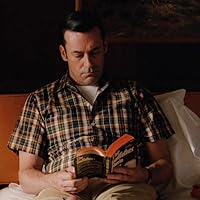
"Nel rileggere questo libro, sono stato colpito da come i frammenti, gli haiku, i racconti, gli appunti, le osservazioni siano scritti da una prospettiva precisa o, per meglio dire, da un punto di vista unico. Nessun poeta, romanziere, fotografo, pittore o giornalista avrebbe potuto raggiungere un simile risultato. Solo una mente abituata a pensare in modo 'cinematografico' può esprimersi con un linguaggio essenziale, nitido, preciso, poetico, fotografico e, in mancanza di un termine più adeguato, visivo. Talvolta da una sola riga emergono interi film, non solo le immagini, ma anche i sentimenti e le emozioni che li avrebbero accompagnati se mai fossero stati realizzati, consentendoci di sbirciare nel laboratorio di idee e immagini di un maestro".(Wim Wenders)
I am a huge fan of Antonioni, a brilliant filmmaker. This is a compilation of notes, meditations, ideas by the master: some whimsical, others philosophical, others like scenarios that could be realized as stories or films. I like to dip in & out of it, reading here and there, at random...when you're stuck in a story, in the middle of writing, dipping into this book can help. And some of his ideas & meditations are fascinating. Here's one (in its entirety): Let's try thinking of a film that tells the story of two days in a man's life. The day he's born and the day he dies. A life whose prelude seems to start on one road and whose epilogue shows that he's taken a route quite different, even geographically speaking, from where he started. Let's try thinking of a film with a morning and a night, but not the interim anxieties. --Antonioni.
The great Italian filmmaker Michelangelo Antonioni's notes, dreams, and film treatments that are light as air. Highly poetic, he was an artist who could gasp the relationship between man and woman with a few strokes of a paint brush - except he wasn't a painter. But there is something paint-like about him and his work.
Antonioni is one of my very favorite film directors, and probably the first whose I work I truly loved because of his own unique style. This does not concern itself directly with his filmmaking, but there is a strong tangential relationship. This book is a collection of short pieces, most of them fiction. These are nicely written sketches - some have an interesting style, with the omniscient narrator putting himself into the piece and discussing things from his perspective.
There is insight to be gained into Antonioni's creative engine from these pieces. The topic and characters often resemble those of his films: alienated, middle aged bourgeois Italians, couples whose relationships are lurching toward dead ends, and lonely people in a pitiless, industrial, modern wasteland. The dialogue is infrequent and the descriptions are cool and factual. These are superficially gray narratives beneath which reside strong passions and touching dolors, and beneath those, a sense of mystery which suffuses everything.
There is a great deal of variety here as well. Many of the pieces are extremely short, less than a page, while others are considerably longer. The topic range from simple journal entries to descriptions of how creative ideas form in the artist's mind, to pieces that could fall into the category of conventional short stories and essays. Some of the short pieces seemed to be undeveloped fragments and were not that engaging. One interesting piece is the wonderful "From a 37th Floor Over Central Park", which describes the symphony that is New York City waking up in the morning.
Much of Antonioni's work points implicitly in the direction of the spiritual - his disdain for riches, his portrayals of personal pain among the glittering surfaces of the privileged. I hope this comes back into print someday. Antonioni's great films should not be, and hopefully never will be forgotten, but his writing deserves to be remembered as well.
Revisiting the physical incarnation of memories should be banned.
Al di la delle Nuvole or Beyond the Clouds made a impact my recollection assures me was significant when I first watched this film. As an ode to a Cairean friend who died senselessly yesterday, I elected to refresh my memories of Michelangelo Antonioni's and Wim Wender's portrayal of four love stories intertwining the ephemerality of romance, the impossibility of imagined perfection, the bitterness of betrayal, and the seduction of the strange.
What I ended up with was a heavy-handed, platitudinous pampering to chauvinistic portrayals of the female ideal. John Malkovich was perfect as himself (what else would be expected) and Jean Reno thankfully provided comic relief. Irene Jacob was as ever ethereal. The panoramic visuals remained as beautiful as I remembered. The rest...let me remain restrained in saying "to be discarded".
As always, it is sensual gratification to experience a film using multiple languages. The added bonus was that this time I noted the original title of the book on which the film is based.
I'm curious to see whether the reading will be adequate compensation for this corruption (better still, theft) of my original wonder.
Come un Maestro vede e reinventa la realtà. Come costruire interi universi attraverso poche immagini, attraverso i silenzi, o brevi frasi come inquadrature e movimenti di macchina. Un libro che mi ha affascinata perché molto visuale e allo stesso tempo narrativo. Da leggere per capire come la mente di un Maestro del cinema Italiano disseziona e illumina ed estrae l'essenziale (o l'essenza?) dai personaggi cui dà vita.
one of my favorite ever books, a total gem & a rare find. read it in one sitting on a drive downstate; so many beautiful ideas, and it's interesting to see which were tenderly fleshed out into films. lots of short stories about my favorite topics: moody love affairs, Antarctica, the mornings after big parties. very simple writing interiorizing the eerie, the awkward.
Racconti, appunti, note, soggetti cinematografici. Come se tenessimo in mano il taccuino del regista e potessimo vederne l'ispirazione prendere forma e costruire lentamente storie. Bello ascoltare come funziona l'immaginazione di uno dei registi che ha fatto del silenzio un oggetto concreto della vita. Bello leggere cosa si nasconde dietro quei silenzi.
Genijaus eskizų knygelė. Iš atsitiktinio praeivio rankos judesio, pardavėjos žvilgsnio, telegrafo vielų dūzgesio gimsta beveik filmas: siužetas, veiksmo vieta, apšvietimas, garso takelis, veikėjai, jų išvaizda, charakteriai ir nesusikalbėjimas.