Four key historians present a comprehensive history of art from the past century, documenting through 100 essays presented in a year-by-year format key events that contributed to the changing of artistic traditions and the invention of new practices and forms, in a volume complemented by more than 600 reproductions of some of the century's most important works.
Two years and three months, with frequent interruptions and long stretches of lassitude; this is what it took to finish this tome.
I cannot begin to impart the knowledge contained herein. This could easily fill a two-semester university course, especially if one were to read the ancillary readings in the suggested reading lists contained at the end of each chapter. I was a humanities major as an undergrad, and would have loved to have had this book as a reference. Modernism and post-modernism got short-shrift in my studies. Yes, we touched on some of the major movements (Cubism, Expressionism, The Vienna School, Bauhaus, Futurism, etc.), but this volume delves much deeper, especially on the level of academic analysis, than we were ever able to get in my undergraduate years.
But that doesn't mean the work is without problems. Au contraire, I found that the biases toward one school or another sometimes overwhelmed the analysis and even overshadowed and occluded the art itself. This was especially true in the essays where Freudian analysis was given so much emphasis that the essays turned into pastiches of their own intellectual position. The Marxist analysis came in a close second place in its ability to obfuscate the works themselves. Yes, both are useful, and there are some good insights gained from both, but the writers' confidence in their respective schools turned into over-confidence, at times, and undercut their overall theoretical arguments.
One thing that is presented successfully is the scattered nature of modernism and post-modernism. Influences cannot be seen in a strictly linear fashion, as have might have been the case in earlier artistic eras. The introduction of new media (photography, film), as well as the intentional anachronisms introduced into modern art (Primitivist art, Art Brut, Outsider Art) muddle the picture. Also, the intentional subversion of art itself and its presentation, especially from the 1970s onward, served to tie any linearity up in Gordian knots.
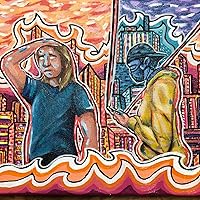
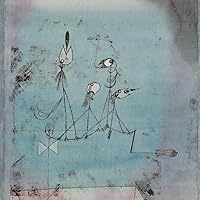
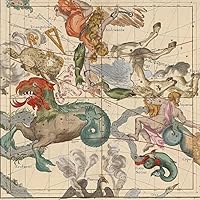
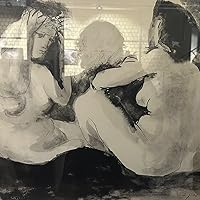
Keep in mind that this is a textbook, not an art book, per se. Yes, there are some beautiful and compelling plates throughout, but you'll note very quickly that there is a relative weakness of visual presentation vis-a-vis the written presentation: i.e., for every piece of art shown, another four or five are referenced that are not in the book, and sometimes those referents are critical to making sense of the words that refer to the pieces that are in the book.
Am I glad I read it? Absolutely. Will I ever read it again? Absolutely not. And if I read another paragraph of Freudian analysis like some of those found herein, I am going to need therapy. So, approach the book, but do so with caution. You will be better for having read it, and you will gain insights into art that you otherwise would not have found. In other words, this book could make you smarter (or at least sound smarter), but at the cost of developing a strong (or even stronger) aversion to academic blathering.
I pity the unfortunate student who is assigned this textbook for class. The writing in this book is anti-student, as if they were not stressed out enough.
a solid overview, for sure. i appreciate the aesthetics of the layout, it's a beautiful series. i have some qualms with the chronological structure and the theoretical camps of the authors themselves, but still worthwhile.
Molto comprensibile e scorrevole, copre bene l’arte internazionale. Purtroppo nell’edizione italiana I titoli delle opere sono tradotti e non ci sono i titoli originali. Questo rende impossibile fare ulteriori approfondimenti sulle opere e spesso tralascia parte del significato (“no ghost, just a shell” viene tradotto in “nessun fantasma, solo un lenzuolo” e “étant données” in “dati”.)
So this was a book I had to read for the semester in one of my courses for art history. I would also like to state that I did not read it back to back like some would with a regular book. But in my defense, this is a history of art detailing things since 1900; it is a massive tome of a work.
It is also a thing that I would say is probably not meant for an average reader that may be extremely new to the topic, it is very scholarly and dry and details loads of things in terms of historical context and relation to other ways of viewing art such as utilizing the thoughts of Freud, Marx, etc.
But, one of the reasons why I wanted to put in this review is that it changed the way I view art history, both as a topic and academic field. I would've never thought that there would be more to it than just art movements and styles. Historical conditions and philosophy runs though art history more than seen at first glance.
But moving back to the readability aspect. Is it a good work? I would say so if you already have some knowledge on art history. Would I read it back to back? Possibly not, I would most likely recommend looking at indexes and glossaries if you want to look at a specific movement or artist. If you're a research or art student wanting to look into Modern art then read this book!
Hopefully this review will give some pointers for what to expect.
A friend of mine who is an art history professor recently recommended this one as the best guide to modern art. Now, I do despise nearly all modern art, but back when I was in college I did enjoy reading Art News the way some people enjoy watching horror movies. "No... he's not going to pick up the hitchhiker with the crazy eyes, is he? HE DID! No... he's not going to pay $12 million for a shark some dude poured formaldehyde over, is he? HE DID!"
Used to study for exam: If you are looking for a really good overview of the scope of art past WW2. This book does a pretty tremendous job of capturing art across the globe. It looks at art history through 4 main sort of lenses social history (aligning aesthetics with social experience/history), psychoanylisis (link between psychic and social), post -structuralism ( link with human subject and a signifying system, how our culture makes us view a certain artwork a certain way, and formalism(organization of art piece). One issue that may be me reading into the sections too much is the narrative approach in the text involving thinkers like Freud and Lacan and so I think this inclusion is sometimes out of nowhere and leads to teleological interpretations, potentially shaping the perception of art as either advancing or retreating? But overall if you have an exam USE THE BOOK!
Es la primera vez que leo un libro sobre arte del siglo 20 en general y en ese sentido creo que me cuesta juzgarlo pq es el primero. Me gustó mucho cómo entreteje lo que sucede en los distintos países europeos y estados unidos. Sin embargo, me molestó que cuando hablase de artistas mujeres fuese en capitulos separados, no tan unidas a su relato histórico sino como un apéndice. Tal vez fue una impresión mía. Y bueno, como la palabra arte es europea, el arte que presenta es casi todo de europa y estados unidos. Menciones muy esporádicas de artistas de otras partes, pero tampoco se podía esperar otra cosa. A veces me hubiera gustado que hablase más de la recepción del público porque da la impresión de que el arte se vuelve un debate ajeno a la opinión pública.
A thorough collaborative work on art since 1900. The formatting, resources, and further suggestions for related reading were excellent, and the book's writing and ideas conveyed are overall impressive and contain depth. I would consider this a more advanced text, with much of the ideas expressed being somewhat inaccessible to readers not well versed in a variety of philosophical concepts. I would also warn my past self that this book is more philosophically dense than expected, and that there are better options if you want a straightforward objective history of art book that covers the 20th and 21st centuries. Overall, an interesting and rigorous read that provides lots of information enriched with philosophical, sociological, and psychological arguments
I originally picked up Art Since 1900 just to study for my exams, but it turned out to be absolutely impressive and very useful. The book is packed with detail and context, and I found myself highlighting sections that weren't even required for my subject, especially the historical facts that caught my attention. Can get tiring, but it really draws you in and makes you want to keep exploring. What started as exam prep ended up giving me a much broader and deeper appreciation of modern and contemporary art.
Не простое, но полезное чтиво для фанов модернизма и профессионалов. Академический язык, полная хорошо проработанная история арт-движений и знаковых авторов 20 века. Много материала для понимания контекста. Вследствие коллективного авторства некоторые куски воспринимать проще, другие - более запутанные и философские. Количество иллюстрации невелико, для полного представления об эпохе придется немало погуглить.
Very comprehensive overview of modern and contemporary art since 1900 filtered through the lens of postmodernism. Very well designed - it is clearly laid out and easy to follow. Major art landmarks are intelligently covered and there are some beautiful illustrations and reproductions. Full of fantastic thought provoking essays.
The first full textbook I’ve read for a college class. It was a Contemporary Art History Class, and I felt I did learn a lot from this artwork, which was very cool. It went chronologically and addressed a lot of main art movements, however most were only focusing on western arts at the time. Pretty good though.
This book, written and revised by five prominent art historians, offers a comprehensive understanding of modern and contemporary art on a global scale. After reading it, readers will be well-equipped with historical knowledge and ready to embark on their journey through the history and future of art.
Not exactly light reading, this panoply of scholarly texts is divided into two major time periods, 20th century pre and post war, with roundtable discussions after each by the authors, and is bookended by a superb introduction and a very selective glossary. It's not exactly a narrative non-fiction either, as one can easily move around to whichever chapter suits their fancy and the readings are theoretically driven, but it was great to read cover to cover this view of art history. Having done so, I now feel that art is one of the best, if not THE best, stories that can be told. Much of my own critical writing, including 'The Sublime Parody' and the 'Transconceptual Manifesto', come out of what once was a hack research-oriented approach to artmaking involving the writings of the writers in this circle, starting in the late 2000's with Nicholas Cullinan's 'From Vietnam to Fiat-nam: The Politics of Arte Povera' and an assortment of slapdash readings in another popular compendium, Art In Theory 1900-2000: An Anthology of Changing Ideas. Little did I know that the work fueled by the concepts of these prior texts (and of course experiences of looking at art) would become a topographical schema hellbent on a restructuration of post-riot/9-11/Obama presidency/internet dynamics, akin to Joseph Beuy's social sculpture but recuperated by either a consumer capitalist society at large or a marginalized art world (academic, commercial gallery, museum, etc) already advancing a capitalist agenda towards a period of a mosaic fractal themes and meta-themes, akin to 'memes' but with interwoven thematic superstructures. These themes themselves are workable mediums and meta-mediums, a reworking of the meaning of medium through which choice intersubjective exchanges and the discursivity surrounding them form a cohesive artistic movement perhaps best described as 'Ribaldry'. It is not a new medium at all that defines this movement, but in fact, a new kind of Artist, the Spartist – half technologically soft-engineered and half 'crowd-sourfed' non-physical human – is the logical extension of the 20th century robot/cyborg/automaton. He, or she, or wother, or 'it' is a shapeless telematic organism whose intelligent design incorporates decolonization strategies that are contradictorily espousing modernist claiming of proto-spirituality in the guise of diction and/or piction in maintaining a type fictional topological no-mans land, the extension of an outdated 'global village' concept. -S
I'm absolutely obsessed with this book. Anyone with a love for modern art should purchase it. It's well-organized and get be read at a leisurely pace. Beautiful images, insightful commentary. I would definitely recommend the two volume format.
I've been reading this for over a year. I have now gotten to the 1970s w/Haacke, Broodthaers, et al. It has a glossary ... which is exceptionally useful.