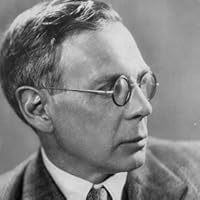
Rev. Cramer explains the high dignity, honor, and responsibility of the vocation of Fatherhood and the virtues necessary to fulfill this important vocation. Since God gave fathers the title He would have us call Him when He entrusted children to their care, the importance of the role of a father cannot be stressed enough. Fathers will understand the great obligation of their vocation which they will be asked to render an account of, and will turn to this book time and time again for important advice on raising children, heading their family, and setting a good example. This book, considered timely at the turn of the century, is more necessary now to teach and guide fathers in their duties and obligations. The current lack of models of good Christian fathers and families may be overcome by the lessons which fathers will learn. This is much needed since the good examples that are learned by children watching and imitating their fathers are necessary all through life and unto eternity. This treasure for fathers will provide the direction the father needs to raise his children and the prayers he should daily raise to heaven to request graces for himself and his family.
FATHERS WILL LEARN:
The honor and dignity of fatherhood The correct stewardship of the father his children's welfare depends on him His necessary qualifications The nature of his vocation The rewards of fatherhood— on what does his and his children's happiness depend? Why the Christian mother alone is not sufficient Actions that hinder the training of children The importance of the father's example Overcoming difficulties and dangers Dangers against the faith In what does a Christian life consist The work of a Christian father His education of his children Discipline What is proper How to enforce it Punishments Supervision of children as they grow When children leave home Children's choice of a state in life Mixed marriages An account of a truly Christian father
Franz Wilhelm Cramer (* 3. März 1815 in Oelde; † 15. März 1903 in Münster) war ein deutscher römisch-katholischer Theologe, Schriftsteller und von 1884 bis zu seinem Tod Weihbischof im Bistum Münster.
Cramer besuchte zunächst das Progymnasium in Warendorf, später dann das Gymnasium Paulinum in Münster. Dort machte er 1834 das Abitur. Das Studium der katholischen Theologie absolvierte er an der Akademischen Lehranstalt des Bistums Münster. Am 10. August 1838 wurde er hier zum Priester geweiht.
Ab 1839 war er als Kaplan in Neuenkirchen bei Rheine tätig. 1850 zum Pfarrdechanten in Dülmen sowie zum Rektor von Haus Dülmen berufen, begründete und redigierte er dort spätestens seit 1852 das Katholische Missionsblatt Dülmen.
1864 erfolgte die Ernennung zum Domkapitular in Münster sowie, in der Nachfolge Gustav van der Meulens, zum Regens des Bischöflichen Priesterseminars Collegium Borromaeum Münster, das er bis 1880 leitete. 1866 wurde er zeitgleich Prosynodal-Examinator (Direktor) der Weltpriesterkongregation von Kevelaer, der späteren Canisianergemeinschaft.
In dieser Zeit entfaltete Cramer eine rege Tätigkeit als Volksschriftsteller. Seine Werke zur Volksfrömmigkeit und -andacht, unter anderem Gebetbücher, Mahn- und Erbauungsschriften, erreichten hohe Auflagen und wurden in verschiedene Sprachen übersetzt. Während der im Jahr 1876 verfügten Schließung des Priesterseminars zur Zeit des Kulturkampfs hielt er Volksmissionen ab.
Im April 1884 wurde Cramer die katholisch-theologische Ehrendoktorwürde der Königlichen Akademie, Nachfolgerin der Akademischen Lehranstalt und Vorgängerin der heutigen Westfälischen Wilhelms-Universität Münster verliehen, im selben Jahr wurde er sowohl Domdechant als auch (bis zu seinem Rücktritt 1897) Bischöflicher Offizial in Münster.
Cramer war zudem Päpstlicher Hausprälat und Päpstlicher Thronassistent.
Papst Leo XIII. ernannte Cramer am 13. November 1884 zum Weihbischof in Münster und Titularbischof von Lycopolis. Die Bischofsweihe spendete ihm der damalige Bischof von Münster Johannes Bernhard Brinkmann am 21. Dezember 1884.
Cramer war über viele Jahre Beichtvater der Schwestern von der Göttlichen Vorsehung in Münster.
Er starb am 15. März 1903 in Münster und ist auf dem dortigen Zentralfriedhof begraben.
As a reprint: beautiful snapshot of faith in the family at the turn of the century. The material itself remains relevant if not even moreso in the world of today. A tremendous resource for Catholic fathers.