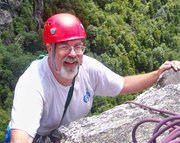
In February 2000 Guy Waterman died in the White Mountains of New Hampshire. In recognition of the renewed interest in his life and work, The Countryman Press is proud to reissue this classic text, with a new appreciation of her late husband by Laura Waterman. In this environmental call to action, Laura and Guy Waterman look beyond preserving the ecology of the backcountry to focus on what they call its spiritual dimension--its fragile, untamed wildness. "Without some management, wildness cannot survive the number of people who seek to enjoy it," they write. "But with too much management, or the wrong kind, we can destroy the spiritual component of wildness in our zeal to preserve its physical side." Trailside huts and lodges, large groups seeking "wilderness experiences," federal and state regulations, and technology such as radios, cell phones, global positioning devices, and emergency helicopters, all have an impact on our experience. With humor and insight, the Watermans explore these difficult wilderness management issues. They ask us to evaluate the impact that even "environmentally conscious" values have on the wilderness experience, and to ask the What are we trying to preserve?
4.5 stars. I was worried at the start that this book might prove to be a bit too preservationists versus conservationist for my taste.. It proved not to be, and instead led me to consider and review the practical, theoretical, and philosophical aspects of the way I (and others) use the wild and semi-wild places I visit. I live in a place that is mostly wild space, so the concerns raised by the authors are pertinent to my daily life. In fact, I hadn't realized how pertinent wild and semi-wild spaces are to my life, or really focused on the changes I've seen in them during my lifetime, until I started reading the Watermans' book. I found the book to be relatable and readable despite the age gap between myself and the authors (I am a Millennial, they were both born in the 30s), although there were some emergent issues talked about in the book that had basically become common practice by the time I was becoming acquainted with the outdoors. I highly recommend this work for anyone who enjoys spending time in the outdoors and wants to explore their personal philosophy regarding stewardship of the wilderness or consider the weighty question of how to nudge others who may be less conscientious towards responsible usage of our wild spaces.
The Watermans where instrumental in the preservation of the Franconia Ridge Trail. The same trail that for the summer of 2018 I advised hikers on conditions and routes before their ascent, the same trail that can now see over a 1,000 visitors on a fair weekend day. This book showcases their beliefs and the contradictions between some of them. Wanting the "wild" of wilderness to remain, ways to find solitude in what are becoming crowded mountains, and struggling to find the line between accessibility & civilized. Conclusions are not given, instead questions are raised and it is left up to the reader to use their own code of ethics. My only qualm with the arguments presented is how some crucial points are mentioned flippantly. When discussing accessibility they focus on how making it easier takes away the wildness and only mention physical disabilities once, though I agree with the concept of having a wide array of difficulties available in a park. With Search and Rescue, particularly the use of cell phones to call in, it takes several chapters of lamenting increased SAR before focusing on the point that people should use it as a last resort, be able to self rescue, and understand outdoor recreation has inherit risks. The arguments brought up are incredibly important to the well being of our environment and though they could use some refining to bring them up to date; this book will help get you started in a lifelong debate about what wilderness truly is.
A true "must-read" for any outdoor recreator. Whether you are a budding naturalist, a badass mountaineer, canoeist, backpacker, or birder, this book will provide with you new perspectives. You may not agree with every aspect, but the outdoor industry would be a better place if this book was built in to the culture. Keep it wild! Thank you, Laura and Guy!
As an avid hiker and environmentalist, I wanted to like this book. It begins with a philosophical introduction, followed by case studies and anecdotes.
My caution to readers is this: it’s impossible to ignore the perspective from which this book is written. Readers must be willing to apply an extremely critical lens if using this to develop their relationship with the outdoors.
At no point in this book do the Waterman’s acknowledge the Indigenous people who have inhabited and stewarded this land for millennia. Where the Watermans see their unspoiled “spirit of wilderness,” countless Indigenous people see what has been violently disrupted, forcefully taken, and mismanaged for hundreds of years.
The stories, opinions and experiences the Waterman’s share in the book stem from an assuredness that their experience in and understanding of wilderness is the correct one. They are laying claim to a feeling that is tied to the land—but it’s land that isn’t theirs to begin with.
Additionally, the book is filled with stories about climbers and mountaineers as well as excerpts from Wendell Berry, Charles Ernst Fay, Dr. Seuss, Keats, and more—every single one a white man.
Should we really be so narrowly focused on preserving the current state of so-called wilderness? Is this account a truthful, well-rounded one—or are many of these accomplishments just another example of Indigenous erasure?
The bottom line for me: the outdoors we have in America now isn’t untamed wilderness—it’s stolen land. While this books isn’t a bad read, in my opinion, your time would be better spent reading a book by an Indigenous author and educating yourself on the true history of the lands we recreate on as well as Indigenous knowledges and ethics.