

What do you think?

An Infinity of Little Hours: Five Young Men and Their Trial of Faith in the Western World's Most Austere Monastic Order
In 1960, five young men arrived at the imposing gates of Parkminster, the largest center of the most rigorous and ascetic monastic order in the Western the Carthusians. This is the story of their five-year journey into a society virtually unchanged in its behavior and lifestyle since its foundation in 1084. An Infinity of Little Hours is a uniquely intimate portrait of the customs and practices of a monastic order almost entirely unknown until now. It is also a drama of the men's struggle as they avoid the 1960s—the decade of hedonism, music, fashion, and amorality—and enter an entirely different era and a spiritual world of their own making. After five years each must face a to make "solemn profession" and never leave Parkminster; or to turn his back on his life's ambition to find God in solitude. A remarkable investigative work, the book combines first-hand testimony with unique source material to describe the Carthusian life. And in the final chapter, which recounts a reunion forty years after the events described elsewhere in the book, Nancy Klein Maguire reveals which of the five succeeded in their quest, and which did not.
296 pages, Hardcover
First published January 1, 2006
About the author
Nancy Klein Maguire
7 books11 followersNancy Klein Maguire, PhD became a widow in 2015, after a fifty-year marriage. Since then, her work has focused on the experience and the transcendence of dying, death, and grief. Her twenty-six month death vigil gave her the archive and insight to write The Monk’s Widow. Since 1981, Maguire’s professional home has been the Folger Shakespeare library in Washington DC.
Ratings & Reviews
Friends & Following
Create a free account to discover what your friends think of this book!
Community Reviews
Displaying 1 - 30 of 79 reviews

January 23, 2018
Joining the Carthusian order is a tough business - and even more so in the pre-Vatican II world where the story is. From July 1960 to October 1965 (with an epilogue in 2005), we follow five young men as the come to the Parkminster monastery of West Sussex, England, struggle with their calling, and finally decide (or someone decides for them) should they stay or go. It can be said already that all of them don't give up on easily, but sometimes things become too much. And only continue successfully in the 'to the grave' path.
There are two sets of black and white pictures in the book, both from the time period and after that. There is a drawn map of the monastery, and we can see there each individual cell, whose letter(s) are sometimes mentioned in the text. At the end is the Carthusian daily timetable, glossary, interview with the author, and a reading group guide.
From reading the story we can clearly see all the challenges the novices faced (and face). This is not a place for someone who gets cold easily (there was no central heating or warm showers, for sure). People wear hairshirts in one layer. And you spend most of the time really alone, alone in your two-floors cell, no talking except on walks and with your novice master, and in emergencies. No news from the outside world (no radio, tv, papers).
You're supposed to cultivate, not just your small back garden, but most importanly your mind, which can be harder than you think. There are fast days (bread and water). And the mental struggles can be hard: thinking about things you left behind, pushing down sexual thoughts, struggling to understand what you're reading...
And just because you're alone most of the time doesn't mean you won't be struggling with other people there with you. The novice master might grate on you. Others' singing during the mass might go too off-key fashionly for your ears (especially so if you're the one whose supposed to instruct their singing). Or they might just irritate in normal ways: not giving you the bell-rope fast enough, for example XD
Some reasons for leaving: conflict between personalities, not being able to stand being alone (sometimes even one night is too much), health reasons (physical and/or mental, like hallucinations or overdoing your asceticism), desire of women (or lack of, as one comes to realise - and loses peace of mind). Most of the time, leaving is done discreetly, and sometimes novices that stay don't get to know the reason (and may have found out only as this book was made).
That said, the text doesn't talk just about the personal struggles. We learn of the history of the order, and of Parkminster (established 1873). We read about their Christmas. The clothing ceremony; the walks. And just because we learn so much of the challenges doesn't mean that success is impossible - it's just a narrow gate-hole. And one can truly see why succeeded: none of the reasons to leave above happened; the struggles of the beginning gradually grew away and balance was reached. And even made some changes - though some only temporary - at the monastery. There's now a much better system at taking care of the novices, so I can guess succeeding might be more likely today.
This was one of the books I had left unfinished for at least two years; I don't know why I struggled with the book at first, because as soon as I picked it up again, it was a very smooth reading, and quick reading, too. There are not many books about this order around, so it was a very interesting a read.
(There are also some Carthusian nun monasteries too. I recommend the document "Into Great Silence", which is interesting even though it doesn't have much talking in it - but then, Carthusians prefer silence ;)
Today, as of January 2017, there are 26 monks at Parkminster.)
There are two sets of black and white pictures in the book, both from the time period and after that. There is a drawn map of the monastery, and we can see there each individual cell, whose letter(s) are sometimes mentioned in the text. At the end is the Carthusian daily timetable, glossary, interview with the author, and a reading group guide.
From reading the story we can clearly see all the challenges the novices faced (and face). This is not a place for someone who gets cold easily (there was no central heating or warm showers, for sure). People wear hairshirts in one layer. And you spend most of the time really alone, alone in your two-floors cell, no talking except on walks and with your novice master, and in emergencies. No news from the outside world (no radio, tv, papers).
You're supposed to cultivate, not just your small back garden, but most importanly your mind, which can be harder than you think. There are fast days (bread and water). And the mental struggles can be hard: thinking about things you left behind, pushing down sexual thoughts, struggling to understand what you're reading...
And just because you're alone most of the time doesn't mean you won't be struggling with other people there with you. The novice master might grate on you. Others' singing during the mass might go too off-key fashionly for your ears (especially so if you're the one whose supposed to instruct their singing). Or they might just irritate in normal ways: not giving you the bell-rope fast enough, for example XD
Some reasons for leaving: conflict between personalities, not being able to stand being alone (sometimes even one night is too much), health reasons (physical and/or mental, like hallucinations or overdoing your asceticism), desire of women (or lack of, as one comes to realise - and loses peace of mind). Most of the time, leaving is done discreetly, and sometimes novices that stay don't get to know the reason (and may have found out only as this book was made).
That said, the text doesn't talk just about the personal struggles. We learn of the history of the order, and of Parkminster (established 1873). We read about their Christmas. The clothing ceremony; the walks. And just because we learn so much of the challenges doesn't mean that success is impossible - it's just a narrow gate-hole. And one can truly see why succeeded: none of the reasons to leave above happened; the struggles of the beginning gradually grew away and balance was reached. And even made some changes - though some only temporary - at the monastery. There's now a much better system at taking care of the novices, so I can guess succeeding might be more likely today.
This was one of the books I had left unfinished for at least two years; I don't know why I struggled with the book at first, because as soon as I picked it up again, it was a very smooth reading, and quick reading, too. There are not many books about this order around, so it was a very interesting a read.
(There are also some Carthusian nun monasteries too. I recommend the document "Into Great Silence", which is interesting even though it doesn't have much talking in it - but then, Carthusians prefer silence ;)
Today, as of January 2017, there are 26 monks at Parkminster.)

December 13, 2020
I felt like entering into a new world, in a different era so old, so archaic and fascinating! Deeply researched and astonishingly documented, An Infinity of Little Hours was unlike any non-fiction books I have read before. I couldn't put it down! The story was told about the most austere and isolated monastic order in the western world, the Carthusian Monks. Ms. Nancy Maguire chronicled the life of five individuals from their arrival at the Charterhouse in England in 1960s up to the time of their admittance or non-admittance to the Order. What was really going on inside the Charterhouse? What were the inner struggles of the novices? What did it take to be admitted to the Order? What did a Carthusian monk do every day? These were some of the questions so significant in this book. Of the five, only two made it to the solemn profession but only one remained to live a lifelong commitment of solitude and contemplation. Founded in 1084, the Carthusian monks still followed a 900 year-old tradition and defied any change or intrusion in their way of life. Thanks to an episode in #WhatShouldIReadNext by #AnneBogel where this book was mentioned, I immediately grabbed a copy and read it. I never even heard about Carthusians before! It was a whole new experience and remarkably worth my time.

January 19, 2013
Reading this book is like making a retreat into the most ascetic and devout religious order in the Christian world. Based on comprehensive research and extensive interviews with the men of the title and others, Maguire actually gets inside the day-to-day, hour-by-hour life of the Carthusian monastery of Parkminster in England. Delving deeper she gets inside the heads of the young men who entered the monastery in 1960 as they struggle to adapt to this austere life. Driven by a profound devotion to God, over the five year course of their novitiate and simple vows they shed their former lives, all knowledge of the ouside world, physical comfort, and companionship. They immerse themselves in the silence, solitude, and stillness of this life of prayer. Yet despite the surface simplicity the internal world of these men is often seething with questions, joys, doubts, triumphs, despair and the full range of human emotion. Overriding all of this is the singular devotion to living a life for God. As the time for solemn vows approaches each of them struggle with making this final commitment for the rest of his life. They each deal with the decision in a different way yet whether they stay or leave they are all deeply changed by this experience. By extension the reader is deeply moved and changed by the reading experience.
For the record I am not a religious person. However I find the human capacity for this level of privation in the service of devotion to be challenging and inspiring.
For the record I am not a religious person. However I find the human capacity for this level of privation in the service of devotion to be challenging and inspiring.

April 11, 2020
I was a Benedictine monk for four years back in the 1970s. Nearly fifty years later, I would still rate my monastic life as critical to my formation as an adult. I enjoyed the book although parts of it were extremely frustrating. Maguire never can get a handle on why her subjects pursued the Carthusian vocation. Nor, save in one case, does she come to grips with why four of them left the Order --- or why one stayed in. The endings seem to come out of nowhere, and when she picks up the threads of their post-monastic lives, Maguire and the men themselves become strangely inarticulate. It seems clear that the vocations mattered to them but not why. It does not say anything negative about religious life to accept that there is a psychology behind it that attracts the devotee. Maguire never gives us any insight into the men as personalities. Which can make a kind of sense, I suppose, since the purpose of the hermit life is to die to self.
Nor does the Parkminster community emerge with distinction. The young men (they were all young) were pretty much left to their own devices without much in the way of spiritual direction, or at least it appears that way in Maguire's version.
The story is interesting, although I do wish she had managed to explain the attraction of a Carthusian lifestyle to people who have no natural religious sympathies for it. Still, if you do, you will enjoy the book. It provides a partial glimpse of a world not often seen by outsiders.
Nor does the Parkminster community emerge with distinction. The young men (they were all young) were pretty much left to their own devices without much in the way of spiritual direction, or at least it appears that way in Maguire's version.
The story is interesting, although I do wish she had managed to explain the attraction of a Carthusian lifestyle to people who have no natural religious sympathies for it. Still, if you do, you will enjoy the book. It provides a partial glimpse of a world not often seen by outsiders.

September 3, 2012
Love this book and its hard knock glimpse of the Carthusian life. Sometimes the level of detail, i.e., minute explanations of the Christmas Eve liturgy, got me bogged down - I just skimmed those parts. But liturgy geeks might love that stuff. I liked the descriptions of what the Carthusians might get in their lunch boxes, what they're growing in their gardens, the quirks of their life, and the physical and spiritual struggles of five young men who tried to join the order in the 60s.

July 11, 2019
Well written and fascinating
Thrilling read about joining the Carthusian order. This account starts off with 5 men who enter 1960 seeking a deeper relationship with God. It closely covers the 5 formative years as novices and juniors. As well as the fall out from this years. It offers universal lessons about seeking , determining calling, commitment, and the dark night of the soul.
Thrilling read about joining the Carthusian order. This account starts off with 5 men who enter 1960 seeking a deeper relationship with God. It closely covers the 5 formative years as novices and juniors. As well as the fall out from this years. It offers universal lessons about seeking , determining calling, commitment, and the dark night of the soul.

December 31, 2009
A fascinating view into the Roman Catholic religious order of enclosed monastics, the Carthusians. Founded by Saint Bruno in 1084 when he left Rome disgusted with the corruption and evil he found there in the Roman Catholic Church. The order uses the Grenoble rite from the 12th century, and in almost all things has been unchanged from 1084 to just after Vatican II in 1965.
The author is married to an ex-Carthusian monk, and it is his story and the story of 4 other young men who were in the last generation of monks to enter the ancient world of the Carthusians prior to the 1965 changes.
The story reads in many ways like a mystery. You are introduced to each of the young men, and you know that in the end only one of them will remain a monk. Which young man will it be? I found myself writing down the names of each of the men as they were introduced, then writing their monk names next to that to keep track of what happened to each brother and if I could figure out which one would be the next to go.
An excellent visual companion to this book is the DVD, "Into Great Silence", which is a documentary of the Carthusian monks of the Grande Chartreuse in the French Alps. To see what is written about in the book is a delight.
The author is married to an ex-Carthusian monk, and it is his story and the story of 4 other young men who were in the last generation of monks to enter the ancient world of the Carthusians prior to the 1965 changes.
The story reads in many ways like a mystery. You are introduced to each of the young men, and you know that in the end only one of them will remain a monk. Which young man will it be? I found myself writing down the names of each of the men as they were introduced, then writing their monk names next to that to keep track of what happened to each brother and if I could figure out which one would be the next to go.
An excellent visual companion to this book is the DVD, "Into Great Silence", which is a documentary of the Carthusian monks of the Grande Chartreuse in the French Alps. To see what is written about in the book is a delight.

August 25, 2009
Though this book is occasionally flawed (and really, what book isn't?), I found it fascinating and compelling. You wouldn't think a book about guys joining an extremely strict contemplative monastery would be, but it is. The journey of each man is clearly, compassionately told, and the cultural changes that took place during the 60s -- which were completely unknown to the Carthusian monks, who eschew exposure to all forms of media -- end up impacting them each in their own ways even if they chose to stay enclosed. This is nonfiction that reads like a novel, and the details and narrative drive are both excellent. It's a tad repetitive, but when you're talking about an order that has lived each day in the same way for nearly a thousand years, that shouldn't be surprising.

August 4, 2010
I want to watch Into Great Silence again now that she's described the Carthusian way of life so well. McGuire gives a very balanced and sympathetic portrait of five young men who dream of becoming fully-professed "solemns" in this monastic order that before the 1960s, had changed little since its inception in 1084. Although only one of the five made it through the first five years of life in the charterhouse, each of the young novices had a life-changing experience. Fascinating portrayal.

December 29, 2023
This was an intense and fascinating read. This book was referenced in Dr. Greg Peters' "The Monkhood of All Believers." Though among monastic orders I am most drawn to the Benedictines, the Carthusian idea of living in silence and solitude in order to engage in unhindered contemplation of God was fascinating. Though as a Protestant there were of course theological elements I disagreed with in this book, learning about the most spartan and ascetic monastic order was quite interesting. Following the lives of five men in their quest to contemplate God in this incredibly austere environment was captivating to me. After reading this, I feel that if I am ever imprisoned for my faith, I will be able to persevere knowing that there are individuals who voluntarily subject themselves to these kinds of privations in order to commune with God!

November 9, 2025
Before you ask...No, I'm not considering entering a monastery. But several times in his life Wittgenstein considered entering a monastery, and I wanted to know more about what that could mean. This is a book about the ancient Carthusian order in England. The author contacted 5 men who had entered the order around 1960, and followed their journeys. You learn a lot about the day-to-day life and rituals, though it would help to be Catholic and know the jargon. (There's a glossary in the back, but it is still a bit impenetrable.) Of the 5, only one really lasted, though we learn that all were deeply affected by their experiences. I suppose what I missed was more about the spiritual journeys/experiences/insights of the 5. Perhaps this is what cannot be put into words, but I was sorry no real attempt was made. In any case, an interesting exploration of unfamiliar territory.

August 17, 2018
A fascinating glimpse into the Pre-Vatican II life of the English Carthusian at Parkminster Charterhouse. The author follows 5 postulents as they make their way toward Solemn profession. Although only one man makes it, the insights into this most solitary roman Catholic religious order offers insights into all stages of Carthusian development.
The psychological aspects of this calling are explored through the stories of each individual novice monk. Unfortunately the life of the Solemns (those under perpetual vows) is not explored in as much detail--the author' source material is taken from the 5 Novices.
I would be very interested in a comparison of this era of monastic life with the current situation in the Charterhouses. What changes Vatican II made in this essentially timeless order would be very instructive. But you will not find that in this work.
Anyhow, there are dozen of little insights into life inside Parkminster, and especially for anyone who has ever had even a scintilla of a contemplative calling, this book is wonderful.
The psychological aspects of this calling are explored through the stories of each individual novice monk. Unfortunately the life of the Solemns (those under perpetual vows) is not explored in as much detail--the author' source material is taken from the 5 Novices.
I would be very interested in a comparison of this era of monastic life with the current situation in the Charterhouses. What changes Vatican II made in this essentially timeless order would be very instructive. But you will not find that in this work.
Anyhow, there are dozen of little insights into life inside Parkminster, and especially for anyone who has ever had even a scintilla of a contemplative calling, this book is wonderful.
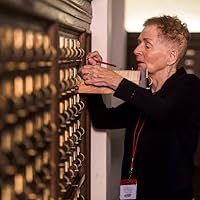
October 19, 2022
An Infinity of Little Hours Nancy Klein Maguire
Over a six-year time span, An Infinity of Little Hours became an intoxicating project. I personally connected to thirty-some Carthusian monks and ex-monks. They all responded to my initial letter, one of them sending me a forty-page response. Every monk needed to tell his story. I felt as if each monk was simply waiting for me to ask them about their experience in the Charterhouse. We became a team. As I reread Infinity now, I wonder how I possibly wrote this book, certainly a challenge, but also a gift.
Over a six-year time span, An Infinity of Little Hours became an intoxicating project. I personally connected to thirty-some Carthusian monks and ex-monks. They all responded to my initial letter, one of them sending me a forty-page response. Every monk needed to tell his story. I felt as if each monk was simply waiting for me to ask them about their experience in the Charterhouse. We became a team. As I reread Infinity now, I wonder how I possibly wrote this book, certainly a challenge, but also a gift.

February 12, 2008
Note: The spoilers here don't really tell you much about the book, but reveal the outcome in generalities.
This book follows the stories of five men who entered a religious order. Only one of the men remains there today.
Generally, I liked this book. However, I was disappointed at the outcome and "lifestyle" choices made. It is also disappointing that the order no longer observes its original rule.
This book follows the stories of five men who entered a religious order. Only one of the men remains there today.
Generally, I liked this book. However, I was disappointed at the outcome and "lifestyle" choices made. It is also disappointing that the order no longer observes its original rule.
This entire review has been hidden because of spoilers.

March 15, 2008
I think I'll be able to better appreciate the documentary "Into Great Silence" after having read this book. The idea of withdrawing from everything the way the Carthusians do was once very appealing to me, although I understand this desire less and less. But the less severe monastic traditions are still fascinating to me, and every time I go up to Mt. Angel I wish there was a way to be married and be a monk.

April 16, 2018
Thorough, fascinating look at the inner lives and daily activities of 5 men who chose to become monks. The author took the trouble to gain the men's confidence, all of whom were reticent. I suppose being a monk would predispose one to reticence.
Lots of details about the arcane and labyrinthine traditions dating to the Middle Ages.
Anyone interested in the life of the religious, religious ritual, or just curious minds will find this a good read.
Lots of details about the arcane and labyrinthine traditions dating to the Middle Ages.
Anyone interested in the life of the religious, religious ritual, or just curious minds will find this a good read.

November 20, 2015
The history of the Carthusian order and the description of daily practices were fascinating. The story of the five men who joined the order started well but it became confusing (hard to keep separate one monk challenges and problems from the others) and a bit boring with too many repetitions. 2 ½ stars
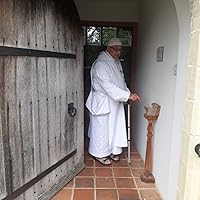
July 11, 2017
This is one of the most brilliant books I've had the privilege to read. I spent several months in a Carthusian Charterhouse and Ms. Maguire's descriptions were so accurate it felt as if I was back. It is exhaustingly researches, well written and a joy to read again and again. My heartfelt gratitude Ms. maguire. Benedicite +

September 15, 2017
A good read and a fascinating look into a very secretive, very old way of life. Unfortunately, you need to take notes and pay close attention halfway through the book, as the candidates take on new names. So many names are thrown at you that it can be difficult to know what is going on, or who is who.

February 6, 2009
five men join the carthusians - the most austere religious order that, compared with others, has seen little change since its foundation. reads like an account of jacob wrestling with the angel from five different perspectives, as told by a woman who married one of them.
May 27, 2017
I would actually round this up to 4 1/2 stars. This is a fascinating book on a way of life that is fading. It was interesting to read, and really makes you think about what is important and what is not.y

October 17, 2013
Excellent story

May 23, 2017
A marvelous look at the cloistered life, which in fact confirmed that I have made the right track in life.

January 23, 2022
Until the modifications of Vatican II, the Carthusians successfully resisted every attempt, even papal attempts, to substantially modify their austere and primitive rule. Carthusians report that in the early fourteenth century, the Carthusians sent a deputation of twenty-seven monks to the Pope in Avignon to protest against the command to eat meat when ill: The youngest monk was eighty-eight years of age, the oldest ninety-five. This convinced the Pope that the Carthusian rule did not shorten life. Later in the century, another Pope, Urban V, thinking to please the Carthusians, introduced modifications to ease the severity of their rule, which threw the order into a panic. The General Chapter immediately sent an ambassador to the Pope to beg him not to force them to accept the more relaxed rules. The ambassador opened his papal audience with: “These new Rules, so far from being of use to us, will lead to no less than the destruction of our Order.” His words astonished Urban V, who immediately told the attending cardinals that the Carthusians “do not wish for the modifications I thought fit to offer them; let them follow their pious inclinations and courageously persevere in their primitive observances.” The monks did, however, agree to obey the Pope’s command to wear hats in bad weather. (32–33)In An Infinity of Little Hours, Maguire takes a deep dive into an austere English monastery, focussing on the last days before Vatican II. Through extensive research and networking, she connected with five men who joined the order around 1960, thinking that they would spend the rest of their lives behind Parkminster's great doors. This was not a commitment for the fainthearted: all their material needs taken care of, yes, but that in exchange for a lifetime of interrupted sleep, and regular fasts on bread and water, and an isolation meant to both inspire prayer and weed out those not suited to the life.
The five young men at the Gatehouse door were attempting to join a distinguished group, many of whom had endured great hardship long before they entered Parkminster. The caliber of the Carthusians was, in a way, a warning: Only the strongest would survive Parkminster’s rigors. Only one of the five hopeful novices in 1960 is still a member of the order. (44)I've read a fair amount about nuns, but I'm not sure I've read anything about monks before. I didn't know there was a distinction between monks and brothers: the monks, the focus of this book, spend their lives in isolation and prayer (extremely structured isolation and prayer, it must be said), while the 'lay' brothers take care of all the details that make that possible: cooking and delivering meals, laundry, basic medical care, gardening, tailoring, etc. At one point one of the novice monks is observed to be perhaps a better fit for a brother's life than a monk's life, but I don't get the impression that it is or was a common thing for a novice monk to move to a brother's life—more a sense that that would have been considered a failure, something of a letdown to God.
But it's fascinating. Maguire's interest was sparked in part by her husband, an ex-Carthusian himself, and she notes that ex-monks—especially not ones who at one time expected to spend their lives removed from the world—are a singular bunch, and not particularly likely to go forth and share their stories with the world. There are some truly funny moments, but also sad ones: that the ex-monks had typically not sought out other ex-monks and had, for years and years, perceived their exit from the order as a terrible personal failure.
Maguire makes some mention of changes that came about following Vatican II, but I'm not sure just what those changes looked like (in general or for the Carthusians more specifically). I'd be curious to find some sort of ex-monk memoir, whether Carthusian or otherwise.
October 15, 2022
I started off enjoying this book and I was certainly looking forward to delving into this hidden world. What depths of thought would be uncovered by examining the lives of people who are so devoted to their search for God that they would join such a severe and reclusive order dating back to 1084?
The more I read, the more disappointed I became. I had the uneasy feeling that there truly wasn't a desire to delve deeply on the part of the author, and that the five men she followed also held a lot within themselves. Of course, there's a lot of talk about their self-examinations and their quest to be closer to God, but it felt superficial. This hit home for me when I got to the epilogue (and I did consider DNFing) and the author tells us she had been emailing the monks drafts of the book, and also had shown one of the Doms and a Prior a draft of the book, asking if there was anything he wanted her to change. Now I don't know how usual or unusual that is, but it really solidified my feeling as the book wore on that it was more hagiography than investigation.
Also, not much happens. The struggles often seem very self-absorbed, childish and petty. There is talk of the "dark force" and this just seemed like hype when so much of this narrative is so ordinary even though it is under extraordinary conditions. The chapter, Monks Off Pitch, required my endurance. Sixteen boring, drawn-out pages of one of the monks who can't handle the other monks' pace, pitch or key while singing in the choir. I was beyond fed up with this narrative, but lamentably it pops up more times.
Having said that, I can see where this will be very appealing to some. I did enjoy the earlier parts of the book and learning about the history of the Carthusians. I think there are readers who will be perfectly content with the hagiographic bent, and ruminations on passages from Psalms or various theologians. For me the inner dialogues that these men faced while trying to get closer to God did not reveal themselves, but remained mostly obscured as well as esoteric. I didn't feel that I had been on a journey where their true struggles with the world and the monastic order came into better focus... it felt like a lot of cards were being held close.
The more I read, the more disappointed I became. I had the uneasy feeling that there truly wasn't a desire to delve deeply on the part of the author, and that the five men she followed also held a lot within themselves. Of course, there's a lot of talk about their self-examinations and their quest to be closer to God, but it felt superficial. This hit home for me when I got to the epilogue (and I did consider DNFing) and the author tells us she had been emailing the monks drafts of the book, and also had shown one of the Doms and a Prior a draft of the book, asking if there was anything he wanted her to change. Now I don't know how usual or unusual that is, but it really solidified my feeling as the book wore on that it was more hagiography than investigation.
Also, not much happens. The struggles often seem very self-absorbed, childish and petty. There is talk of the "dark force" and this just seemed like hype when so much of this narrative is so ordinary even though it is under extraordinary conditions. The chapter, Monks Off Pitch, required my endurance. Sixteen boring, drawn-out pages of one of the monks who can't handle the other monks' pace, pitch or key while singing in the choir. I was beyond fed up with this narrative, but lamentably it pops up more times.
Having said that, I can see where this will be very appealing to some. I did enjoy the earlier parts of the book and learning about the history of the Carthusians. I think there are readers who will be perfectly content with the hagiographic bent, and ruminations on passages from Psalms or various theologians. For me the inner dialogues that these men faced while trying to get closer to God did not reveal themselves, but remained mostly obscured as well as esoteric. I didn't feel that I had been on a journey where their true struggles with the world and the monastic order came into better focus... it felt like a lot of cards were being held close.
September 17, 2022
This is a remarkably well documented and researched book. The Carthusians' way of life always fascinated me and to find documentation of the outer and specifically the inner life and struggles of the monks isn't easy. This book does this extremely well.
Some details might seem disconcerting to the non catholic or even catholic reader like the Reliquary Chapel or the division of 'labour' between "Solemns" (monk priests) and lay brothers or the importance of the worship of Mary. Yet these traits merely underline the medieval feeling of this order.
Seeking God with an intensity like that of these monks in the Christian context is a rare thing in our times and probably always was.
This book gives a deeply probing account of that journey and its inner and outer challenges.
Some details might seem disconcerting to the non catholic or even catholic reader like the Reliquary Chapel or the division of 'labour' between "Solemns" (monk priests) and lay brothers or the importance of the worship of Mary. Yet these traits merely underline the medieval feeling of this order.
Seeking God with an intensity like that of these monks in the Christian context is a rare thing in our times and probably always was.
This book gives a deeply probing account of that journey and its inner and outer challenges.

February 13, 2026
Reading this makes me want to go back in time and start my adult life again, pulling the bell by those giant doors. This is well written, a documentary told with passion and skill, a narrative that flows and keeps the reader hooked. Will the novices make it, will the Novice Master get his comeuppance, will that novice just man up.
It makes me think about my own life, how I can apply some of the principles in to my day. I've already booked my retreat at my own Trappist Monastery where I have visited for decades.
It makes me think about my own life, how I can apply some of the principles in to my day. I've already booked my retreat at my own Trappist Monastery where I have visited for decades.
June 23, 2017
Well-written, engaging portrait of life in a British Carthusian monastery immediately before Vatican II, showing both the appealing aspects and the great difficulty of the life they led. It falls into an interesting genre, creative non-fiction; the manuscript was read by many of the subjects, current and ex-Carthusians, and met with their approval, but it has a lot of detail which makes it sound like the author must have been present.

June 3, 2020
A detailed look at life in the UK Carthusian charterhouse before Vatican II. The author describes the Carthusian life from the perspective of five men who entered the charterhouse at around the same time, and all had very different and unique experiences. She examines the strict life of the hermit monks and presents a compelling look at solitude in pursuit of God. She is married to a former Carthusian.
January 7, 2024
Over the last 6 months, I've read 2 books on the Carthusians. This is my third. While not the best... I preferred... "When Silence Speaks: The Spiritual Way of the Carthusian Order"... this was still a good book and explained a lot about the difficult road 5 novice Carthusians travelled as they pursued perpetual vows. Of note, the first book I read this year... Cardinal Sarah's "Silence" ....was in part about Carthusian spirituality.
Displaying 1 - 30 of 79 reviews