

What do you think?
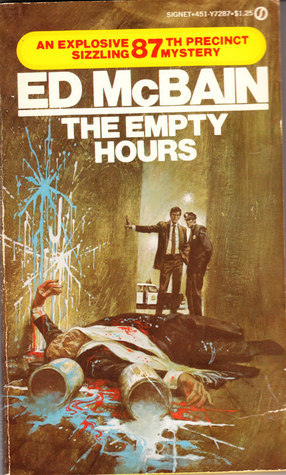
87th Precinct #15
The Empty Hours
Here are three chillers from the files of the 87th Precinct--by the author of the New York Times bestseller Kiss. This trilogy of murder includes "The Empty Hours", "J", and "Storm".
165 pages, Mass Market Paperback
First published January 1, 1962
About the author
Ed McBain
686 books688 followers"Ed McBain" is one of the pen names of American author and screenwriter Salvatore Albert Lombino (1926-2005), who legally adopted the name
Evan Hunter
in 1952.
While successful and well known as Evan Hunter, he was even better known as Ed McBain, a name he used for most of his crime fiction, beginning in 1956.
He also used the pen names John Abbott, Curt Cannon, Hunt Collins, Ezra Hannon, Dean Hudson, Evan Hunter, and Richard Marsten.
While successful and well known as Evan Hunter, he was even better known as Ed McBain, a name he used for most of his crime fiction, beginning in 1956.
He also used the pen names John Abbott, Curt Cannon, Hunt Collins, Ezra Hannon, Dean Hudson, Evan Hunter, and Richard Marsten.
Ratings & Reviews
Friends & Following
Create a free account to discover what your friends think of this book!
Community Reviews
Displaying 1 - 30 of 93 reviews

October 10, 2013
The fifteenth entry in Ed McBain's 87th Precinct series consists of three novellas featuring the precinct's detectives. In the first, a wealthy young woman is found murdered in a room in a run-down boarding house. Why in the world was she living there, when she had loads of money and a very upscale home at her disposal? There's precious little evidence to go on, and Detective Steve Carella is reduced to going through her cancelled checks, grasping at straws in an effort to find her killer.
In the second story, a rabbi is viciously stabbed to death on Passover. The precinct’s Jewish detective, Meyer Meyer, interrupts his own observation of the holiday to help Carella investigate the killing. The trail leads to a rabid anti-Semite, but can the detectives make a case?
In the third story, Detective Cotton Hawes is off for a weekend skiing vacation with a tall, limber showgirl. He’s reserved two rooms, but things are definitely looking up when she asks to stay in his. Then some inconsiderate jerk commits a murder…
In the second story, a rabbi is viciously stabbed to death on Passover. The precinct’s Jewish detective, Meyer Meyer, interrupts his own observation of the holiday to help Carella investigate the killing. The trail leads to a rabid anti-Semite, but can the detectives make a case?
In the third story, Detective Cotton Hawes is off for a weekend skiing vacation with a tall, limber showgirl. He’s reserved two rooms, but things are definitely looking up when she asks to stay in his. Then some inconsiderate jerk commits a murder…

March 13, 2025
⭐⭐⭐⭐
Really enjoyed "The Empty Hours". The 15th book in the 87th Precinct series takes a different approach, offering three novellas instead of one full-length novel. Each story focuses on a different detective solving a mystery, giving the book a fresh feel while still staying true to the series' style.
I liked all three stories, and some of the plot twists genuinely caught me off guard. The second story, "J", was my favourite. It follows Meyer Meyer investigating the murder of a rabbi, and it stands out because it delves into his personal connection to his faith. It was interesting to see Meyer take centre stage in a story with more depth to his character.
The pacing across all three novellas is tight—there’s no room for filler, just strong, focused storytelling. Like other books in the series, this one builds out the world of Isola, and I particularly enjoyed the exploration of the city’s Jewish community in "J". It reminded me of how McBain has previously brought in other cultural perspectives, like the Latino community in earlier books.
Another big plus is that these stories can be read in one or two sittings. Perfect if you want a quick but satisfying crime read. Looking forward to diving into more of the 87th Precinct’s cases—still plenty of them left to enjoy.
Really enjoyed "The Empty Hours". The 15th book in the 87th Precinct series takes a different approach, offering three novellas instead of one full-length novel. Each story focuses on a different detective solving a mystery, giving the book a fresh feel while still staying true to the series' style.
I liked all three stories, and some of the plot twists genuinely caught me off guard. The second story, "J", was my favourite. It follows Meyer Meyer investigating the murder of a rabbi, and it stands out because it delves into his personal connection to his faith. It was interesting to see Meyer take centre stage in a story with more depth to his character.
The pacing across all three novellas is tight—there’s no room for filler, just strong, focused storytelling. Like other books in the series, this one builds out the world of Isola, and I particularly enjoyed the exploration of the city’s Jewish community in "J". It reminded me of how McBain has previously brought in other cultural perspectives, like the Latino community in earlier books.
Another big plus is that these stories can be read in one or two sittings. Perfect if you want a quick but satisfying crime read. Looking forward to diving into more of the 87th Precinct’s cases—still plenty of them left to enjoy.

Want to Read
August 8, 2018The Empty Hours consists of three 87th Precinct novelettes:
007 - "The Empty Hours"
095 - "J"
171 - "Storm"
The book is 255 pages.
007 - "The Empty Hours"
095 - "J"
171 - "Storm"
The book is 255 pages.

September 13, 2025
Three stories about the detectives of the 87th Precinct.
The Empty Hours is about a wealthy woman found strangled in her apartment. The investigation finds her cousin and companion recently drowned in an accident. I enjoyed the twist and the use of mistaken identity. The motive was believable and also who was her murderer.
A rabbi is brutally murdered behind his synagogue. The only clue is letter J painted on a nearby wall. The appearance of a hate crime. It seems an open and shut case with the racist Finch heard threatening the rabbi. He is arrested and his alibi checked. However, looks can be deceiving with the murderer more close to home.
Storm is set on a ski field during a snowstorm. Cotton Hawes with his girlfriend are on a weekend away when Helga a ski instructor is stabbed to death on a ski lift in a storm. Cotton investigates in the belief that the local sheriff is incompetent. There are a few suspects the two male instructors and the ski lodge manager but he has a broken leg. In the end the murders are for jealousy but that is a mistaken belief.
The Empty Hours is about a wealthy woman found strangled in her apartment. The investigation finds her cousin and companion recently drowned in an accident. I enjoyed the twist and the use of mistaken identity. The motive was believable and also who was her murderer.
A rabbi is brutally murdered behind his synagogue. The only clue is letter J painted on a nearby wall. The appearance of a hate crime. It seems an open and shut case with the racist Finch heard threatening the rabbi. He is arrested and his alibi checked. However, looks can be deceiving with the murderer more close to home.
Storm is set on a ski field during a snowstorm. Cotton Hawes with his girlfriend are on a weekend away when Helga a ski instructor is stabbed to death on a ski lift in a storm. Cotton investigates in the belief that the local sheriff is incompetent. There are a few suspects the two male instructors and the ski lodge manager but he has a broken leg. In the end the murders are for jealousy but that is a mistaken belief.

June 19, 2017
A break from the norm, in that this features 3 novellas rather than a single novel, but none the worse for it. My favourite of the 3 stories was the last one, which has Hawes on a skiing holiday, butting heads with the local cops as he tries to solve a murder.

August 31, 2026
“The Empty Hours” is both the title of the fifteenth volume in the series and the title of the first of three novelletes collected in the volume. McBain teaches us: “There are no mysteries in police work. Nothing fits into a carefully preconceived scheme.” Instead: “There are only people and curiously twisted motives, and small unexplained details, and coincidence, and the unexpected, and they combine to form a sequence of events, but there is no real mystery, there never is. There is only life, and sometimes death, and neither follows a rule book.” ‘Empty Hours” begins with a corpse in an apartment, but nothing about the case makes sense until Carella finally puts the jigsaw pieces together from the morass of canceled checks left behind.
“J” begins on Passover as Detective Meyer Meyer is sitting down with his family for Seder. He can’t believe they are calling him on Passover, but they tell him they need him because a rabbi was found murdered behind the synagogue and there were certain aspects Meyer’s ethnic heritage might be helpful with. The first suspect is Finch the local antisemite, who manages to piss off Meyer in just a few seconds and for the first time in the series we see Meyer who is usually cool and collected loose his cool.
The third mini-novel is “Storm.” It is unusual in that it doesn’t take place in the 87th precinct and only involves one of the detectives. Cotton Hawes is taking a ski weekend with the dancer Blanche, and their romantic getaway is marred by a murder on the mountain. Hawes, the big city outsider, can’t keep his nose out of the murder investigation to the annoyance of the local sheriff.
Each of the three novellas is complete in themselves and all three definitely worth reading,
“J” begins on Passover as Detective Meyer Meyer is sitting down with his family for Seder. He can’t believe they are calling him on Passover, but they tell him they need him because a rabbi was found murdered behind the synagogue and there were certain aspects Meyer’s ethnic heritage might be helpful with. The first suspect is Finch the local antisemite, who manages to piss off Meyer in just a few seconds and for the first time in the series we see Meyer who is usually cool and collected loose his cool.
The third mini-novel is “Storm.” It is unusual in that it doesn’t take place in the 87th precinct and only involves one of the detectives. Cotton Hawes is taking a ski weekend with the dancer Blanche, and their romantic getaway is marred by a murder on the mountain. Hawes, the big city outsider, can’t keep his nose out of the murder investigation to the annoyance of the local sheriff.
Each of the three novellas is complete in themselves and all three definitely worth reading,

June 1, 2018
First of all, the cover of the edition I read describes this thing as an “87th precinct novel”. It isn’t a novel. It’s a collection of stories. I like stories but if I begin reading something with the idea that it’s a novel I don’t like discovering that it isn’t when I get to page 90. I get it that novels sell better than short story collections, but please don’t mislead me about what I’m reading.
Second of all, this collection isn’t very good. The titular story is remarkably predictable and completely lacking in any kind of suspense. The second story, about the murder of a rabbi, is a little better but McBain goes way out of his way to explain details of Judaism that even a meshugenah goy like myself understands. The third story is different from most of the 87th Precinct series, and it’s the best of the three in this collection. Instead of taking place in McBain’s fictional stand-in for New York, it takes place at a remote, snowed-in ski resort, and instead of the whole team, Detective Hawes has to solve it by himself (while arguing with idiot local cops).
By the way, it’s pretty dumb of McBain to set his regular 87th precinct stories in a fictional city based on New York. People love New York and they love reading stories set there. This fictional version feels off and unnecessary, and is clearly a mistake.
Second of all, this collection isn’t very good. The titular story is remarkably predictable and completely lacking in any kind of suspense. The second story, about the murder of a rabbi, is a little better but McBain goes way out of his way to explain details of Judaism that even a meshugenah goy like myself understands. The third story is different from most of the 87th Precinct series, and it’s the best of the three in this collection. Instead of taking place in McBain’s fictional stand-in for New York, it takes place at a remote, snowed-in ski resort, and instead of the whole team, Detective Hawes has to solve it by himself (while arguing with idiot local cops).
By the way, it’s pretty dumb of McBain to set his regular 87th precinct stories in a fictional city based on New York. People love New York and they love reading stories set there. This fictional version feels off and unnecessary, and is clearly a mistake.

October 21, 2025
McBain likes to change some things up from book to book with his 87th Precinct Series - this 15th installment "The Empty Hours" (1962) is actually three separate short stories, murder mysteries that the detectives are trying to solve.
In the first short mystery, the detectives are investigating the murder of a woman in New Isola who had no friends, family, or enemies but some unexplained cash accounts. It is a smart police procedural as we see Detectives Carella and Hawes, and then Meyer and King, jump around this victim's recent history and find a few other mysterious threads.
The second is the street murder of a local rabbi that Carella and Meyer are investigating.
The third is a solo adventure from Detective Cotton Hawes, who has taken a lady friend up to a resort for a weekend of skiing before a snowstorm hits. There is a murder on the slopes and Hawes lends a hand with the investigation.
Verdict: The first and third stories are pretty good, the middle one less so; overall, a short, quality crime-solving whodunit mystery read.
Jeff's Rating: 3 / 5 (Good)
movie rating if made into a movie: R
In the first short mystery, the detectives are investigating the murder of a woman in New Isola who had no friends, family, or enemies but some unexplained cash accounts. It is a smart police procedural as we see Detectives Carella and Hawes, and then Meyer and King, jump around this victim's recent history and find a few other mysterious threads.
The second is the street murder of a local rabbi that Carella and Meyer are investigating.
The third is a solo adventure from Detective Cotton Hawes, who has taken a lady friend up to a resort for a weekend of skiing before a snowstorm hits. There is a murder on the slopes and Hawes lends a hand with the investigation.
Verdict: The first and third stories are pretty good, the middle one less so; overall, a short, quality crime-solving whodunit mystery read.
Jeff's Rating: 3 / 5 (Good)
movie rating if made into a movie: R
August 9, 2014
Three novellas involving the cast of the 87th. Didn't know how I'd feel about short stories instead of the usual length, but I was very pleasantly surprised. All three stories were concise and intriguing and character driven. McBain doesn't get nearly enough credit for his character development and commentary. A story involving the murder of a rabbi was surprisingly touching.

December 29, 2018
The Empty Hours by Ed McBain is really a collection of three short stories. Each story is self contained, features one or more of the detectives of the 87th precinct, and all are entertaining and well paced.
Of the three, I found the second story to be the most compelling. It’s the second day of Passover and a rabbi has been murdered just outside his synagogue. The letter “J” is scrawled on the wall, suggesting that this was a hate crime perpetrated by an anti-semite. Despite it being Det. Steve Carella that caught the case, Det. Meyer Meyer is brought in to help, given his familiarity with the observances and customs of Jewish congregations. The mystery is a good one and it was fun to see Meyer in action and coming to terms with his own Judaism in an authentic fashion.
The other two stories are both well done and different from one another. Despite their more “mundane“ plot lines, each held my interest.
This is a great way to fill in a day or two with a reliable author who wrote the best police procedural/ murder mystery stories of his time. Always a pleasure to round out a year of books with our friends from the 87th Precinct. I might just squeeze in one more!
Of the three, I found the second story to be the most compelling. It’s the second day of Passover and a rabbi has been murdered just outside his synagogue. The letter “J” is scrawled on the wall, suggesting that this was a hate crime perpetrated by an anti-semite. Despite it being Det. Steve Carella that caught the case, Det. Meyer Meyer is brought in to help, given his familiarity with the observances and customs of Jewish congregations. The mystery is a good one and it was fun to see Meyer in action and coming to terms with his own Judaism in an authentic fashion.
The other two stories are both well done and different from one another. Despite their more “mundane“ plot lines, each held my interest.
This is a great way to fill in a day or two with a reliable author who wrote the best police procedural/ murder mystery stories of his time. Always a pleasure to round out a year of books with our friends from the 87th Precinct. I might just squeeze in one more!

April 11, 2018
Unlike all the previous books in this series, this one is collection of three short novellas. The first is a standard murder investigation with a twist at the end. The middle one is a story about the murder of a Jewish rabbi in what looks like an anti semetic hate crime. The final story is what happens when Cotton Hawes goes away for a weekend skiing with his lady friend.
Pretty good and an easy read as each story is only about 80 pages.
Pretty good and an easy read as each story is only about 80 pages.

December 23, 2023
Eye read 2023
9.5/10 three murder mysteries written without too much fluff. Following detectives Carella, Hawes and Meyer. A girl back from an ill fated lake vacation, a supporter of his faith in a back alley, a skier during a snow storm. I haven’t read previous books in the series and you don’t need to to follow along with these 3 intriguing short stories.
9.5/10 three murder mysteries written without too much fluff. Following detectives Carella, Hawes and Meyer. A girl back from an ill fated lake vacation, a supporter of his faith in a back alley, a skier during a snow storm. I haven’t read previous books in the series and you don’t need to to follow along with these 3 intriguing short stories.

July 13, 2023
Good early 60s police mystery, with a young wealthy lady found strangled in her apartment. Carella works the case, surrounded by the usual police - Cotton, Meyer Meyer, Bert and the lieutenant.

July 14, 2018
An interesting set of three novellas set in or around the detectives of the 87th precinct. As the books in this series go, this was a solid addition to the overall story arc.

July 18, 2020
The Empty Hours consists of three stories featuring the usual cast from the 87th Precinct. As the development of plot and character are important within the series, a part of me was concerned that the shorter works might not grab me in the usual way. I can say with total conviction that I needn't have worried. Each morsel is more a substantial meal than a snack. In many ways this is because the characters are so well-formed from their other outings that they don't need to be expanded, so the cases become more central to the enjoyment. Having said that, if this was your first encounter with either Carella or Myer or Hawes, I think you'd still feel totally satisfied by this collection.
The Empty Hours tells of a wealthy loner who turns up dead in her apartment. The case leads the detectives to a boating accident and a safe-deposit box and there's plenty of gratification to be found if you like to work things out just before the detectives because of McBain's excellent navigation.
J involves the murder of a Rabbi spattered in paint and left to die below the graffiti of the letter in the title. It takes the detectives into the word of anti-Semites and racist thugs and has Meyer thinking about his own Jewishness.
Storm sees our loveable giant, Cotton Hawes, the man who had a Mallen streak long before Catherine Cookson got there taking a beautiful dancer up the mountains for the weekend and winding up becoming involved in a murder when a young instructor is stabbed with a ski pole. This one's a particularly atmospheric piece and the conflict between the big city detective and the local sheriff is a treat.
I loved each of these. They're long enough to give a lot of satisfaction and short enough to get through them at a pace. Having finished them, I'm hoping that I'll come across more of a similar length in due course. The first story is strong, the second better still and the best is saved till last.
Terrific stuff and a great reminder that small really can be very beautiful indeed.
The Empty Hours tells of a wealthy loner who turns up dead in her apartment. The case leads the detectives to a boating accident and a safe-deposit box and there's plenty of gratification to be found if you like to work things out just before the detectives because of McBain's excellent navigation.
J involves the murder of a Rabbi spattered in paint and left to die below the graffiti of the letter in the title. It takes the detectives into the word of anti-Semites and racist thugs and has Meyer thinking about his own Jewishness.
Storm sees our loveable giant, Cotton Hawes, the man who had a Mallen streak long before Catherine Cookson got there taking a beautiful dancer up the mountains for the weekend and winding up becoming involved in a murder when a young instructor is stabbed with a ski pole. This one's a particularly atmospheric piece and the conflict between the big city detective and the local sheriff is a treat.
I loved each of these. They're long enough to give a lot of satisfaction and short enough to get through them at a pace. Having finished them, I'm hoping that I'll come across more of a similar length in due course. The first story is strong, the second better still and the best is saved till last.
Terrific stuff and a great reminder that small really can be very beautiful indeed.

January 29, 2025
This is the fifteenth volume in this series and I'm reading my way through in the order they were published, or as near as dammit. This is the only one that offered three long-short stories for the price of a novel, or three novellas if you want to sound literary. I wonder why. Were they ideas he didn't have time to flesh out fully? Or was it that he simply had too many 87th P. ideas altogether? Theoretically, each of these stories has enough to it to work the charm, but somehow they're not as satisfying as the novels, and the proof of this was that I forgot what each one had been about as soon as I read it, so when I came to review, the only one I could remember well was the last one.
The middle one features the death of a Rabbi, and gives McBain a chance to explore anti-Semitism and the idea of Jewish communities, with Meyer Meyer (Jewish, but not practising) at the heart of the story. I thought it was interesting but also a bit complicated or it could have been that I was too tired when I was reading it. In each of these three novellas, the dead person is just a body, not a character we've come to care about, and that makes a difference. And there's not much time for developing the other characters, including the murderer. So there's a neat plot but you don't (at least I didn't) get caught up in it.
I think I remember the last one most clearly, not because it was the best but because the murder victim was killed on a chair lift. She was intending to ski downhill, not die in the chairlift. But someone pierced her through the heart with a specially sharpened ski stick. It's a whole different setting from the usual, so I found it curiously vivid, though undeveloped. Cotton Hawes was the detective and he was away on a break with a new girlfriend. I like Cotton Hawes, although his love life didn't really get much of an outing. I can't remember who killed the girl skier or why. Just that for an 87th Precinct detective murder follows you everywhere you go.
The middle one features the death of a Rabbi, and gives McBain a chance to explore anti-Semitism and the idea of Jewish communities, with Meyer Meyer (Jewish, but not practising) at the heart of the story. I thought it was interesting but also a bit complicated or it could have been that I was too tired when I was reading it. In each of these three novellas, the dead person is just a body, not a character we've come to care about, and that makes a difference. And there's not much time for developing the other characters, including the murderer. So there's a neat plot but you don't (at least I didn't) get caught up in it.
I think I remember the last one most clearly, not because it was the best but because the murder victim was killed on a chair lift. She was intending to ski downhill, not die in the chairlift. But someone pierced her through the heart with a specially sharpened ski stick. It's a whole different setting from the usual, so I found it curiously vivid, though undeveloped. Cotton Hawes was the detective and he was away on a break with a new girlfriend. I like Cotton Hawes, although his love life didn't really get much of an outing. I can't remember who killed the girl skier or why. Just that for an 87th Precinct detective murder follows you everywhere you go.
December 7, 2022
The Empty Hours is another adventure in the 87th precinct, or perhaps I should say three mysteries involving the heroic detectives from Ed McBain's classic series. There are three novellas in this volume, each focusing on a case.
The first case was the most interesting. It involved a murdered woman and the main clues was a statement from her bank. Detective Carella follows each of the checks written in the previous month until the details become clear. Each check leads to an interview and eventually-- to the killer.
The Second was also quite well developed for a novella. This one involved a murdered rabbi and the primary detective dealing with this case is Meyer Meyer. That's right, the same first and last name. Meyer is forced to face his own lapsed Jewish faith as he delves into the murder of the rabbi. Along the way he looks at the clues, but struggles with what they really mean. What makes these clues fun is that the reader arrives at the proper conclusion long before the detective is able to do so. The clues are there, but the detectives in McBain's precinct always seems to have the wrong interpretation of them initially.
The third novella is not nearly as good as the first two. In this one, Detective Cotton Hawes is off for a ski weekend with a willing woman. A murder on the ski lift interferes with this pleasure trip. He is completely out of his element and deals with what he views as incompetence on the part of the local police.
Still, the 87th Precinct stories are always a pleasure to read. McBain builds on the back story of each character and designes conflicted characters with a strong sense of justice.
The first case was the most interesting. It involved a murdered woman and the main clues was a statement from her bank. Detective Carella follows each of the checks written in the previous month until the details become clear. Each check leads to an interview and eventually-- to the killer.
The Second was also quite well developed for a novella. This one involved a murdered rabbi and the primary detective dealing with this case is Meyer Meyer. That's right, the same first and last name. Meyer is forced to face his own lapsed Jewish faith as he delves into the murder of the rabbi. Along the way he looks at the clues, but struggles with what they really mean. What makes these clues fun is that the reader arrives at the proper conclusion long before the detective is able to do so. The clues are there, but the detectives in McBain's precinct always seems to have the wrong interpretation of them initially.
The third novella is not nearly as good as the first two. In this one, Detective Cotton Hawes is off for a ski weekend with a willing woman. A murder on the ski lift interferes with this pleasure trip. He is completely out of his element and deals with what he views as incompetence on the part of the local police.
Still, the 87th Precinct stories are always a pleasure to read. McBain builds on the back story of each character and designes conflicted characters with a strong sense of justice.

May 2, 2022
The Empty Novel, that was three decent yet unrelated ideas involving the 87th members, felt like the title. Yes, I read it to complete the 87th series, but I would have been fine without it.
With three short tales, this wasn't awful but it wasn't exciting either.
The first tale gets solved by an offhand remark during the lineup. The remainder of the story is an era specific happenstance that couldn't have happened today, in any measure.
The second story hinged on McBain's favorite name-twist premise. Although there was much about the Jewish faith, holiday of Passover/Easter, and terms that felt more like a lesson than a case. And wouldn't killing somebody be considered "work"?
The final story was Cotton's road trip/booty call. I have to imagine how much things have changed if he can get hit in the face with a hammer and still pursue the bad guy. Tougher then than now?
Overall, it felt like story ideas McBain couldn't combine into a better story line and had a deadline of sorts to meet, ergo, throw them together and slap a title on it.
Thanks for reading.
With three short tales, this wasn't awful but it wasn't exciting either.
The first tale gets solved by an offhand remark during the lineup. The remainder of the story is an era specific happenstance that couldn't have happened today, in any measure.
The second story hinged on McBain's favorite name-twist premise. Although there was much about the Jewish faith, holiday of Passover/Easter, and terms that felt more like a lesson than a case. And wouldn't killing somebody be considered "work"?
The final story was Cotton's road trip/booty call. I have to imagine how much things have changed if he can get hit in the face with a hammer and still pursue the bad guy. Tougher then than now?
Overall, it felt like story ideas McBain couldn't combine into a better story line and had a deadline of sorts to meet, ergo, throw them together and slap a title on it.
Thanks for reading.

November 2, 2025
Rather than a novel, this one is a collection of three novellas featuring cases handled by the 87th Precinct. The first involves a woman found dead in her apartment, in which tracing her past uncovers some strange financial shenanigans that don't seem to make any sort of sense. The second is about the murder of a rabbi who was brutally stabbed to death. In both cases, there's a very effective twist near the end that sends the case in a new direction to eventually identify the killer.
The third case has Detective Cotton Hawes on a skiing vacation. One wonders why any fictional detective ever bothers going on vacation--they are pretty much destined to stumble over a corpse and end up working a case. This time, a young lady is stabbed to death with a sharpened ski pole while riding a ski lift. Hawes begins looking into the case when he loses confidence in the local cops, who blunder inexpertly around the crime scene.
All three are excellent novels--a reminder that Ed McBain was an expert storyteller in both long form and short form tales.
The third case has Detective Cotton Hawes on a skiing vacation. One wonders why any fictional detective ever bothers going on vacation--they are pretty much destined to stumble over a corpse and end up working a case. This time, a young lady is stabbed to death with a sharpened ski pole while riding a ski lift. Hawes begins looking into the case when he loses confidence in the local cops, who blunder inexpertly around the crime scene.
All three are excellent novels--a reminder that Ed McBain was an expert storyteller in both long form and short form tales.

October 18, 2018
Tri poviedky. Tri skvelé texty. Tri hlboké zamyslenia nad tým, čo vedie vrahov k vražde. Náhody, omyly, nepotvrdené obvinenia. Skvelé príbehy.
#Príliš tiché hodiny - nečakaná zámena dvoch osob a náhoda viedla k vražde. Tých zámen tam bolo viac a poviedka bola na tom skutočne dobre vystavaná. 4/5
#A - keď je niekto tak posadnutý tým, čo verí, že ani nezisťuje skutočné dôvody, je to na zamyslenie, čo robí fanatika fanatikom, ale zomrieť pre nedorozumenie je veľmi smutné. Brilantný záver. 4/5
#Vánice - skvelá oddychovka mimo obvod 87.revíru, skvelý Cotton Hawes, ktorého mám každým príbehom radšej a radšej. Tá záverečná scéna mi došla o niečo skôr ako jemu, ale to, čo viedlo k vražde, omyl a nepotvrdené obvinenie to som nečakal, ľudská podstata je neskutočná, vraždiť na základe dohadu a zistenie, že to bol nesprávny dohad bol veľmí mrazivý prvok tejto, už aj tak studenej poviedky. 5/5
#Príliš tiché hodiny - nečakaná zámena dvoch osob a náhoda viedla k vražde. Tých zámen tam bolo viac a poviedka bola na tom skutočne dobre vystavaná. 4/5
#A - keď je niekto tak posadnutý tým, čo verí, že ani nezisťuje skutočné dôvody, je to na zamyslenie, čo robí fanatika fanatikom, ale zomrieť pre nedorozumenie je veľmi smutné. Brilantný záver. 4/5
#Vánice - skvelá oddychovka mimo obvod 87.revíru, skvelý Cotton Hawes, ktorého mám každým príbehom radšej a radšej. Tá záverečná scéna mi došla o niečo skôr ako jemu, ale to, čo viedlo k vražde, omyl a nepotvrdené obvinenie to som nečakal, ľudská podstata je neskutočná, vraždiť na základe dohadu a zistenie, že to bol nesprávny dohad bol veľmí mrazivý prvok tejto, už aj tak studenej poviedky. 5/5
February 26, 2020
Tři povídky z 87 revíru... a je fakt, že povídky nejsou zrovna McBainova parketa. Jeho silou jsou barvité dialogy a popisy, nikoliv úderné pointy a rozhodně ne brilantní dedukce a překvapivá řešení případu. A samozřejmě, proti němu stojí i současný čtenář, který už je podezřívavý - zvláště vůči osobám, u kterých se autor tváří, že pachatelé stoprocentně nemůžou být. Asi nejklasičtějším detektivním případem je vražda na sjezdovce, pak tam máte vraždu rabína... a jako rozehřívačka je tu uškrcení dívky s tajemnou minulostí. Tam detektivy, jak je u McBaina typické, přivede k pachateli náhoda. Přijde mi občas, že celé pátrání je u nich takové zaříkávání, snaha zaběhnutými rituály vyvolat tu očekávanou náhodu. Ale, náhoda nebo ne, u většiny povídek, je tady čtenář před detektivy. Možná byly ty zvraty ve své době novátorské, dnes už jsou to spíš ohrané písničky.
Čili, romány jsou rozhodně lepší.
Čili, romány jsou rozhodně lepší.

April 4, 2021
This one is 3 unrelated novellas instead of a full book. Two are fine, nothing great but enjoyable, even though McBain can get hacky with his word salads he spits out at times. The third, Storm, is kind of boring and not all that good. Have to admit Cotton Hawes is not a character I like in this series anyway, and this story is a Cotton solo story. So that is one strike against it for me, plus it being kind of obvious, and just badly written on top of that just kills it. The other two, The Empty Hours and J, at least had the whole cast and were decently done mysteries. The Empty Hours was about a murdered girl who may not be all she appears to be, and J was about a murdered Rabbi and a graffiti J painted on the wall.
Recommended for fans of the 87th precinct novels, at least the first 2 novellas. If you are a fan, you know what you can expect from a Cotton solo so you will know if you want to read it or not.
Recommended for fans of the 87th precinct novels, at least the first 2 novellas. If you are a fan, you know what you can expect from a Cotton solo so you will know if you want to read it or not.
September 21, 2017
This book, which is considered the 15th in the 87th precinct series, actually consists of three novellas, each of which has a personality all its own. In the first novella, "The Empty Hours" a rich young woman is found dead in a slum. The second concerns the murder of a Rabbi and shows the Antisemitism which was so much a part of our culture at that time (and which, of course, still exists today.) The third entry, my favorite, takes place at a rundown ski resort where detective Hawes and his female companion hope to spend an enjoyable weekend only to have it disrupted by a murder. (I hate when that happens!)
What is remarkable about this series is that there is tremendous variety in the books, but the author is true to the characters he creates. It's easy to see why these were so popular and why they stand the test of time.
What is remarkable about this series is that there is tremendous variety in the books, but the author is true to the characters he creates. It's easy to see why these were so popular and why they stand the test of time.
December 8, 2022
Hmm…
3 novellas, mixed bag.
The first novella, the titular “Empty Hours” is pretty good! It’s like a strong A plot from the main books without a B or C plot, and feels very focused. The mystery takes enough turns and resolves logically even if I think you will see the killer coming when a certain chapter is too obvious.
The second novella, “J” is an interesting exploration of Meyer’s character - one he has needed beyond being a punchline - but I think the mystery feels very obvious and I’m not sure if the “message” the story ends up forming is all that good of a one.
The third novella is pretty good but probably too short- we get a second victim we know mere pages before she dies, a suspect like one chapter before he’s ruled out, and the climax while logical in terms of who/how sort of just falls into the detective’s lap.
3 novellas, mixed bag.
The first novella, the titular “Empty Hours” is pretty good! It’s like a strong A plot from the main books without a B or C plot, and feels very focused. The mystery takes enough turns and resolves logically even if I think you will see the killer coming when a certain chapter is too obvious.
The second novella, “J” is an interesting exploration of Meyer’s character - one he has needed beyond being a punchline - but I think the mystery feels very obvious and I’m not sure if the “message” the story ends up forming is all that good of a one.
The third novella is pretty good but probably too short- we get a second victim we know mere pages before she dies, a suspect like one chapter before he’s ruled out, and the climax while logical in terms of who/how sort of just falls into the detective’s lap.

February 1, 2024
This entry, the 15th in the 87th Precinct series, consists of three novellas... The Empty Hours, J & Storm...
The strongest of the the 3 is Storm. Detective Cotton Hawes, out of the setting of the other books, so far in this series, travels to a ski resort with a lady friend. While on the weekend vacation, he tries to help the local sheriff and his team solve a murder that takes place on a ski lift. The problem is, the sheriff doesn't want his help, adding to the tension of the story.
J is about the murder of a Rabbi and the ominous "J" painted on the wall of the synagogue. Was it a hate crime or something else. Through the investigation, Meyer Meyer struggles with his faith and questions himself.
The Empty Hours story is decent, but the weakest of the 3 revolving around a dead woman and a trail of cancelled checks that Steve Carella must track down to solve the mystery.
The strongest of the the 3 is Storm. Detective Cotton Hawes, out of the setting of the other books, so far in this series, travels to a ski resort with a lady friend. While on the weekend vacation, he tries to help the local sheriff and his team solve a murder that takes place on a ski lift. The problem is, the sheriff doesn't want his help, adding to the tension of the story.
J is about the murder of a Rabbi and the ominous "J" painted on the wall of the synagogue. Was it a hate crime or something else. Through the investigation, Meyer Meyer struggles with his faith and questions himself.
The Empty Hours story is decent, but the weakest of the 3 revolving around a dead woman and a trail of cancelled checks that Steve Carella must track down to solve the mystery.

January 6, 2025
After thoroughly enjoying Lady, Lady, I Did It!, the 14th installment in Ed McBain's 87th Precinct series (I think it was the best in the series so far), I doubled up, went back to the well, and picked up
The Empty Hours
for my second 2025 read.
It was a miss.
Not a novel, but three brief novelettes, The Empty Hours was a bit... empty. The three shorts, "The Empty Hours," "J," and "Storm" didn't capture the same charm.
"J" and "Storm" both held promise if they'd been developed to the same extent as the other episodic novels. Instead, they're thin. We don't have time to chase fizzled leads, nor is there any mystery as we're introduced to so few characters... it has to be him.
So my favorite and least favorite 87th Precinct installments (to date) come back to back. Go figure.
Rating: Two stars. Disappointing.
It was a miss.
Not a novel, but three brief novelettes, The Empty Hours was a bit... empty. The three shorts, "The Empty Hours," "J," and "Storm" didn't capture the same charm.
"J" and "Storm" both held promise if they'd been developed to the same extent as the other episodic novels. Instead, they're thin. We don't have time to chase fizzled leads, nor is there any mystery as we're introduced to so few characters... it has to be him.
So my favorite and least favorite 87th Precinct installments (to date) come back to back. Go figure.
Rating: Two stars. Disappointing.
June 23, 2023
This is my first book by Ed McBain. So I started with a novella. This has a good old police detective story. Detective Carella carefully sifts through the cancelled checks of a wealthy victim to track the killer.
There were some gaps I felt. Like the detective not showing the victim's picture when he is interviewing people and trying to put together the Victim's background. Also why does the first police on scene, while making a report, says the victim is an African, though she was a Caucasian.
Ignoring the niggles, this was a good mystery and I might read more in this series
There were some gaps I felt. Like the detective not showing the victim's picture when he is interviewing people and trying to put together the Victim's background. Also why does the first police on scene, while making a report, says the victim is an African, though she was a Caucasian.
Ignoring the niggles, this was a good mystery and I might read more in this series

March 18, 2026
Three novellas featuring the detectives of the 87th. The first is a mystery surrounding a woman living alone who is found dead with a lot of cash. It wasn't a tough puzzle to solve for Steve Carella.
The second is about a rabbi who is killed. It is filled with information about the practice of the Jewish religion. Jewish detective Meyer Meyer is assigned the case.
The third involves a killer at a snowed-in ski resort where Cotton Hawes and his current squeeze are staying.
Great narration.
The second is about a rabbi who is killed. It is filled with information about the practice of the Jewish religion. Jewish detective Meyer Meyer is assigned the case.
The third involves a killer at a snowed-in ski resort where Cotton Hawes and his current squeeze are staying.
Great narration.

December 23, 2016
The three shorter 87th Precinct stories featuring a ski resort, a synagogue, and a dead rich girl. They each contain and interesting idea that works as the entire story skipping the subplots of the previous 87th novels. Carella wants to know why a rich girl is living in ramshackle boarding house. Meyer wants to know who killed the rabbi. Cotton Hawes is on a skiing vacation with his girlfriend when a ski instructor is murdered.

March 23, 2017
just finished this one. thursday, afternoon. four pee em if it matters. three shorter pieces in this one. the description says that, but i didn't know when i looked at amazon. saw the price, 2.99 i think, and that was the draw, other than it is from mcbain. i really enjoy the stories. the last one takes place on the ski slopes north of town. one has the jewish element. lot of things jewish in that one, makes for an interesting read, things some don't know. i didn't. have another mcbain ready on the kindle and so away i go. be great if i could find some more marked 2.99. time for a look-see.
Displaying 1 - 30 of 93 reviews