The original, instant classic which set the world afire. The first book to introduce the phenomenon that is the life story and work of Vivian Maier.
A good street photographer must be possessed of many talents: an eye for detail, light, and composition; impeccable timing; a populist or humanitarian outlook; and a tireless ability to constantly shoot, shoot, shoot, shoot and never miss a moment. It is hard enough to find these qualities in trained photographers with the benefit of schooling and mentors and a community of fellow artists and aficionados supporting and rewarding their efforts. It is incredibly rare to find it in someone with no formal training and no network of peers.
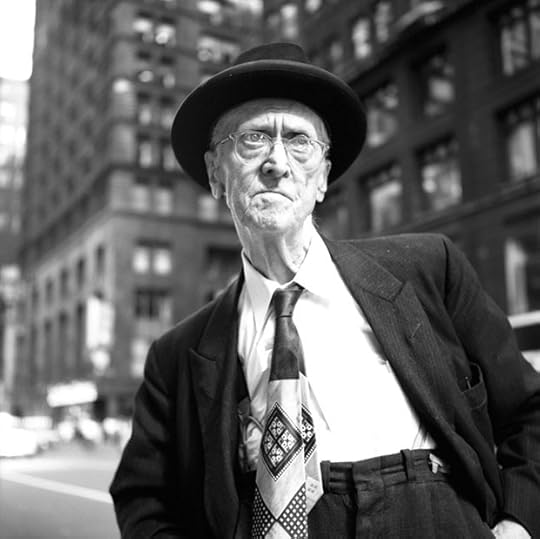
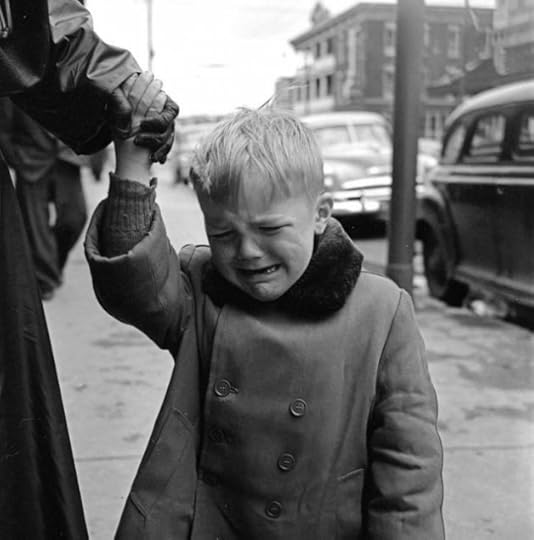
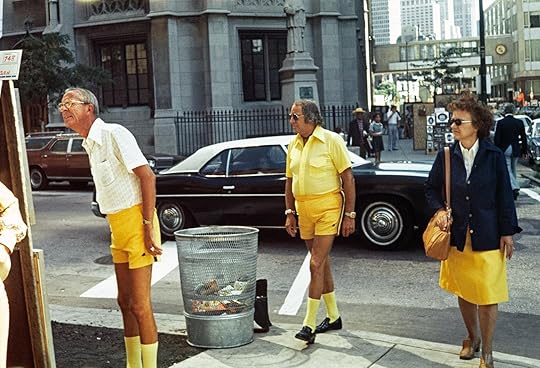
Yet Vivian Maier is all of these things, a professional nanny, who from the 1950s until the 1990s took over 100,000 photographs worldwide-from France to New York City to Chicago and dozens of other countries-and yet showed the results to no one. The photos are amazing both for the breadth of the work and for the high quality of the humorous, moving, beautiful, and raw images of all facets of city life in America's post-war golden age.
It wasn't until local historian John Maloof purchased a box of Maier's negatives from a Chicago auction house and began collecting and championing her marvelous work just a few years ago that any of it saw the light of day. Presented here for the first time in print, Vivian Maier: Street Photographer collects the best of her incredible, unseen body of work.
Please note that all blank pages in the book were chosen as part of the design by the publisher.
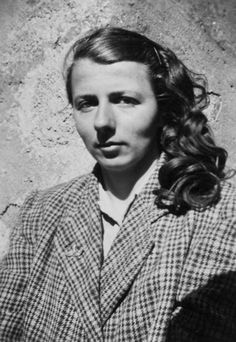
Vivian Dorothea Maier (February 1, 1926 – April 21, 2009) was an American street photographer, who was born in New York City and spent much of her childhood in France.[1] After returning to the United States, she worked for approximately forty years as a nanny in Chicago, Illinois. During those years, she took more than 150,000 photographs, primarily of people and architecture of New York, Chicago, Los Angeles, although she traveled and photographed worldwide.[2]
Maier's photographs remained unknown, and many of her films remained undeveloped, until her boxes of possessions were auctioned off. A Chicago historian and collector, John Maloof, examined the images and started to post Maier's photographs on the web in 2009, soon after Maier's death. Critical acclaim and interest in Maier's work quickly followed.[3][4] Maier's photographs have been exhibited in the USA, Europe and Asia and have been featured in many articles throughout the world.[5] Her life and work have been the subject of both books and documentary films.
Was so glad to come across this book. The photos are truly remarkable and the 'unremarkability' of Vivian Maier's life makes her accomplishments even more remarkable. The way she was able to capture the ebb and flow of life; just amazing - she has become one of my favorite photographers. Will look up more of her work.
I have watched the documentary “Finding Vivian Maier”. One of the participants suggested the mystery surrounding the woman-nanny is still more interesting after her death. Yet, through amazement, I got to the position of: now on, it will be tougher in the legal field, yet wide open for fiction and nonfiction possibilities.
The documentary film by Maloof and Charlie S. starts with Maloof acquiring the nanny’s stuff at an auction. The stuff is made of ”tons” (my expression) of films and negatives of photos, yet to be printed.
Maloof at a certain time decides to start a search on the nanny personality and queries people who had been under her care. You’ll hear both negative and positive appraisals of Vivian, the so-called “French lady”, of whom little was known about. For birthers, records say she was born in the USA, New York; to a French mother.
Maloof’s investigation will lead him to France and to contact some of her relatives. She had an interest in photography early on. Then she went to the USA and served as nanny in several families.
“Mental illness” is one of the words you’ll hear about the nanny due to her obsession on collecting newspapers. Always carrying her camera. And keeping a secret sort of life.
What for, did she pack so many newspapers (stacks of papers!!)? Why filming certain macabre situations,… and the children too? Why her interests on politics …even her (reasonable) knowledge about?
At times she’ll affirm: “I am a sort of spy” . But then her accent. It sounded to me somewhat German. Experts confirmed it was French.
And how about her androphobia?
Maloof faces now great challenges, and he’s been faring quite well in putting Vivian in the mainstream cultural circuits of the world. Exhibits now abound all over the USA, and abroad . Yet, he faces all the same, the dilemma: why showing something which the author had kept secret for so many years? How legitimate is it?
A photographer from Texas (Ted Forbes) even questioned the curator capabilities of Maloof and others, assisting.
One thing is for sure: her talent as a photographer raises no doubt to any of the experts consulted.
Nevertheless: why so private a person? Why more and more reclusive, she became.
She’d been “seen” for the last time in 2000. The documentary "pictures" her death and late life conditions; appalling. A dumpster-picker? Some, who had been under her care, provided an apartment for her final years.
Photographer Joel M. saw in her “tenderness …and a caring person”. Yet her dark side still lingers on.
It seems she left “instructions” on how to handle her materials. And this is a fundamental argument for Maloof showing her photos: that means she wanted her work to be shown. Maloof even added: Cartier-Bresson hated printing.
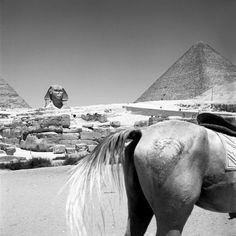
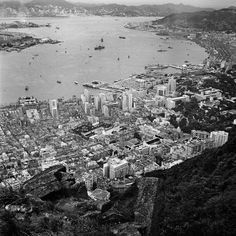
(Egypt) (Hong-Kong)
Her world travel-photos are just stunning. All on her own. In Egypt, Yemen, Thailand, India…, South America; in 1959. Then back to the USA.
She was “identified with the poor”, “had no medical insurance”.
First, she worked in a factory; then chose the nanny job. She wanted to be “out” in the streets, close to nature.
A spy? Someone will tell: maybe she wanted to be “somebody else”.
Vivian Maier, the “spinster” who never got married, master photographer, born February the 1st of 1926, died on April 21st 2009.
Her work, now, starts a new life. I’ll be following it. Keenly.
UPDATE
I’ve recently watched a short documentary work on Vivian Maier (”The meteoric rise of Vivian Maier) and you can conclude there are at least three collectors holding negatives and prints and films of the gone-French lady. Namely: Ron Slattery and Jeffrey Goldstein, and, of course John Maloof. Some of them have been selling prints ($800 each, I’ve heard). One man, Steven Daiter, from a Chicago gallery, called Maier “an excellent student,…not an excellent master”.
NOW ABOUT THE BOOK
This is a wonderful collection of photographs by V. Maier, preceded by a 2011 introduction by Maloof and some lines by Geoff Dyer. As for the introduction, I pretty much liked the philosophizing words of the photographer at stake:
"We have to make room for other people. It's a wheel -you get on, you go to the end, and someone else has the opportunity to go to the end, and so on, and somebody else takes their place. There's nothing new under the sun".
Dyer's 2-pages analysis: (1) points to a sort of regret on those photographers who got, only posthumously known; yet Maier, is "an extreme case"; (2) Dyer also found some analogies between her work and some known photographers such as Lisette Model, Helen Levitt, Diane Arbus, Andre Kertesz etc. But that's up to the observer, and, I reckon, it may be difficult to identify "who did it first". (3) Granted, Dyer is right, one such a nanny "limited to observation" due to the nature of her job, and yet that fact shows one promise: "the unknowable potential of all human beings". Yes, talent.
The story of a this former nanny whose photographs were discovered after her death could be a novel. Or a memoir. This book is neither. There is no arc (as agents so happily say all writers pitching their labors must have). There is no obvious beginning, middle, and end. There is no conflict to overcome that is proposed at the start. There is no discovery, self or otherwise, for the protagonist. There is no moment of truth - ping - when all the confusion of the world comes together into one quotable sentence. Nothing. Nada.
There is also no discussion about the mechanics of Maier's photography. Nothing about the odd device she used called a Rolleiflex although it could be a character on its own. The box-like shape of the rectangle hanging lengthways to expose two eyeballs - one on top of the other - reminiscent of a cyclops one better in nightmares. Those two are lenses actually. And they are made all the stranger by the posture which the device requires. Unlike with other cameras, you look down into the Rolleiflex which hangs waist high on a strap or held by your hands. Thus, the photographer seems to NOT be looking at the subject. Chin tucked, head down, the photographer seems even to have shut eyes. None of this is described in the very few words of introduction to Maier's photographs. But its crucial to how she captures many of the images that are most haunting. These are the images of children.
Forget the smiling pics in most family albums or social media accounts. These are children caught unawares and revealed at their most human and vulnerable. That Rolleiflex down by Maier's waist as she seemed not to be looking comes into its own with these diminuitive subjects. And this brings me to what is so marvelous about her art and this collection of photographs. They are not about Maier. Hers is just the hand on the Rolleiflex. A very steady hand as it requires. Unflinching. Honest. Reportage. Poetry through a lens.
Maier highlights for me why I've always mistrusted people who say "I like children." Why? I want to ask. Because they're small. Because you can tower over them and . . . None of which I'd ever say. Maier's photographs give children the dignity which forced smiles (say "cheese!") reduce to the posturing of models. This book shows children as fully fledged human beings with feelings worthy of respect along with the working people, old and poor on these streets. A triumph.
I came to find this photographer from a news article. Shortly before Maier's death, a huge collection of her photographs and negatives where sold, she had been storing them in a lock up, having fallen behind with the payments they were bought at auction, I think for a couple of hundred pounds.
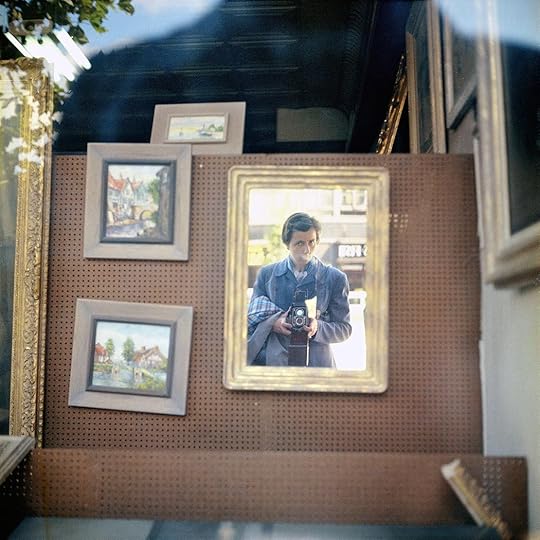
This is a collection of some of her work, whilst I appreciated the chance to look at some more, the images chosen for this book weren't the ones I have found the most interesting from what I've seen online. Lots of the images were quite depressing, some felt too staged. I see that some of her work is showing the harsh realities of life in 50s and 60s which was probably something that needed highlighting at the time. I enjoyed her more subtle images, her self portraits using reflections in mirrors and windows, a family reflected in a puddle, there's a few of these but would have liked more.
It was very sad to learn she never knew her work was discovered. There is currently an exhibition of her work in the UK.
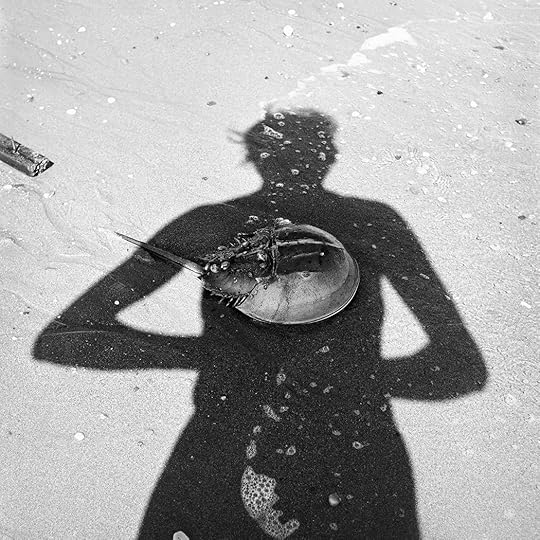
The blurb for this book lets us know that the publisher put blank pages in on purpose. And I know why: so you can breathe. This book is breathless; not breathtaking, but so alive and vital, you forget that breathing is an involuntary function. And what an extraordinary story! A nanny with no known family or connection, few friends, but a good camera and an amazing eye and decent walking shoes with access to cities and city people. Thousands of photos taken and she never showed anyone. Did not develop the film. John Maloof bought the negatives at auction from Maier's storage locker that was taken for nonpayment. That Maloof bid on these, and then created a place for the photographer Vivian Maier in art and history is a story nobody could make up. Bless you, John Maloof! Maier's self-portraits are in reflection, or her shadow and, in the most revealing photo of all, self-aware. Genius to choose that photo for the last image in the book. Oh my, I want to know her story! How could she do what she did? Why? Was she content with capturing images and not ever seeing the result herself? Or sharing with others? What was she thinking when she chose her images? We see the pride of place in the face of a woman wearing one shoe, the heart-crushing posture of a man receiving a coin in his cup, the face of a boy so confident, you just know he grew up to do well with life. There are more photographs on the internet, and of course, others chose the pictures for this book, and I want, I want, I want to know which pictures Vivian would have appreciated the most, which images she would have chosen herself. But then she chose not to show these photos to anyone. What story would she tell about the day she and the children were about in the city, and she clicked the shutter? How would she feel about this new notoriety, her new position in the ranks of famous street photographers? This praise and exposure? We'll never know. I wish there had been no foreword, and absolutely not one by a person who is not a woman nor a photographer, and who is not now and never will be a nanny. It adds only an unpleasant note to an otherwise perfect production. I don't give a rat's patoot whether Maier was familiar with other photographers' work or not, and neither will any other nascent follower. But, once again, the breathlessness of this woman's work. Magnificent secret, overwhelming visual storytelling, wrenching beauty.
There were two other books about this woman and her photography in which I had more interest but this was the only book for borrowing that my library offers.
I was a young girl during the time she took her photographs in Chicago and NYC and at times we were both in both places. I was too young to remember my time in Chicago and but I remember NYC well. Even though it was highly unlikely to find photos of people I would recognize included in this book, I unsuccessfully looked for them.
I wish that there was more to this book. Maier was a talented photographer and many of the images she captured were striking, important, artistic. I wanted to see more of them. I am glad that her work was found and its importance was recognized.
I did find many of the photographs in this book depressing and distressing. I thought that all the photos would be candid but many of them seemed posed.
I’m glad that I read this and I’d like to read more about Maier and see all of her work, but I did not enjoy this book as much as I thought I would. I think seeing these images hanging in a museum vs. seeing them on book pages would be more gratifying for me.
আমার ফিল্ম ফটোগ্রাফির প্রতি আগ্রহ দেখে একজন পরামর্শ দিয়েছিলো ভিভিয়ান মায়ারের কাজ দেখতে। তাঁর সুপরামর্শে আমি দেখে ফেলি Finding Vivian Maierনামের চমৎকার এই প্রামাণ্য চিত্র। এই প্রামাণ্যচিত্র ফটোগ্রাফি নিয়ে, বিশেষ করে স্ট্রিট ফটোগ্রাফি নিয়ে আমায় নতুন করে ভাবতে শেখায়।
কে এই ভিভিয়ান মায়ার? ভিভিয়ান মায়ার ছিলেন একজন আমেরিকান স্ট্রিট ফটোগ্রাফার। ত্রিশের দশকে জন্ম নেয়া এই নারীর ২০০৯ সালে মৃত্যুর আগ পর্যন্তও কেও তাঁর কাজ সম্পর্কে (বিশেষ) অবগত ছিলেন না। তিনি চল্লিশ বছর ধরে শিকাগোতে ন্যানি বা দাই মা হিসেবে কাজ করেছেন। সে সময়ে শখের বসে শুরু করেন ফটোগ্রাফি। তিনি তাঁর জীবদ্দশায় আমেরিকার বড় বড় শহর আর পৃথিবীর কয়েকটা দেশ ঘুরে দেড় লক্ষের বেশি ছবি তুলেছেন। তাঁর মৃত্যুর পর শত শত নেগিটিভস ফটো পাওয়া গেছে যা তাঁর জীবিত থাকাকালীন অবস্থায় ডেভেলপ করাই হয়নি।
দুই হাজার সাত সালে জন মালূফ নামক একজন সংগ্রাহক নিলাম থেকে একটা বক্স উদ্ধার করেন। সেখানে তিনি ভিভিয়ান মায়ারের অসংখ্য ছবি আর নেগেটিভ ফটো আর রিলস পান। এরপর তিনি ভিভিয়ান মায়ারের খোঁজে লেগে পড়েন। নেট পাড়ায় তাঁর প্রকাশিত ছবি ‘ভাইরাল’ হওয়ার পর মানুষেরা ভিভিয়ান মায়ারে আগ্রহী হয়ে ওঠে। তাঁর ফটোগ্রাফি দিয়ে দেশ বিদশে প্রদর্শনী শুরু হয়। ২০১৩ সালে নির্মিত হয় প্রামাণ্য চিত্র Finding Vivian Maier (2013)
এই রহস্যময়ী মহিলার ব্যাক্তিগত জীবন সম্পর্কে প্রায় কিছুই জানা যায়না। তিনি ছিলেন যেন এক জীবন্ত মেরি পপিনস। তাঁর একটা নিজস্ব জগত ছিল। সে জগতে আর কারও প্রবেশাধিকার ছিল না। আমি সেই জগতের নাম দিয়েছি ভিভিয়ান ওয়ার্ল্ডস। তাঁর ফটোগ্রাফি দেখবার সময়েও মাথায় রাখি ভিভিয়ান ওয়ার্ল্ডসের কথ্যা। আমার উপলব্ধি হয় রাস্তায় জনজীবন পরখ করে দেখবার একটা আলাদা ক্ষমতা থাকা দরকার। সবার দেখা এক নয়। ভিভিয়ান তাঁর স্থানকালকে বেশ সূক্ষ্মভাবে দেখতেন। সাজানো গোছানো যে শহরের প্রতিটা দেয়াল ইউক্লিডীয় জ্যামিতি মেনে তৈরি সেখানে যেন তিনি পরখ করতেন কোন ইউক্লিডীয় জ্যামিতির ফাকে কোন ননইউক্লিডিয় শেপ আছে কি না। মানুষের হাসি কান্নার রাগ অভিমানের মধ্যেও যেন একরকম জ্যামিতি আছে। ভিভিয়ান সেই সূক্ষ্ম জ্যামিতি খুঁজতেন কি? ছবি গুলো দেখলে কিন্তু তাই মনে হয়। আমি যত বার তাঁর ফোটোগ্রাফ দেখেছি মনে হয়েছে প্রথমবার দেখছি।
এখন পর্যন্ত এই অজ্ঞাতকুলশীল নারীই আমার প্রিয় ফটোগ্রাফার।
I bought this book a few years ago, and I hadn't till that moment heard about Vivian Maier. I just loved the photos. She is the true example of someone who photographed for the joy of it. Her fame is postume. In that matter, she is a true inspiration nowadays when everybody is running for instagram likes and facebook likes and does expensive street photography courses (don't take those, it is a waste of time and money). Just go outside, be kind, and shoot. Her photos are alive, she is alive through her photos. Watching her photos, I could actually feel her presence there, standing with her camera on the other side of the road and taking her shots. I was happy to see that we have a motiv in common. I cannot wait to put my hands on her other works (actually works that were put together). It is a true gift for the eyes.
Con tan sólo una pequeña introducción en inglés, el resto del libro se compone tan sólo de fotografías. No hay lectura explícita, no. Pero si implícita, la historia que hay encerrada detrás de cada una de las fotografías de este libro. Historias abiertas a cada uno de nosotros, con mil interpretaciones distintas. ¿Puede ser más maravilloso? Muy enamorada de este libro y de las calles y personas de Nueva York de la época en que Maier las fotografió. En este tiempo, IG la aconsejaría. Por decir algo, porque simplemente era una artista. Una joyita de libro, para ver muy a menudo.
Great work, mostly taken in Chicago, a selection of street photography,from the astonishly more than 150,000 or so negatives Maier, the sort of Emily Dickinson of photography, left in lockers she had rented and near her death at 83 in 2009 was no longer able to pay for. The negatives were sold for pennies and now, after she is dead, she and her work are being justly celebrated. I and many of us in the world wouldn't even be looking at these photographs were it not for having heard of her sensational story through the documentary Finding Vivian Maier (which was nominated for all sorts of awards; highly recommended!). Maier was a nanny, without family or friends, apparently, and never shared these snaps with anyone, didn't seek fame, made no professional connections, kept no journal or anything to help us figure what her conscious links were being made to other photographers. . . she was off the grid. Someone wrote that it was like finding A Confederacy of Dunces by Toole after he died, a kind of masterpiece. That seems about right.
Maier was a kind of recluse in a time of obsession with fame, like Pynchon, yet Pynchon sends out books to the world regularly. Harper Lee became private after her one book but at least we had the book (and now another)! Salinger dropped out of sight, but we had a body of work before he escaped public scrutiny. Here I am talking about her story, right, and THAT becomes an inescapable part of reading her photographs. The photographs in this volume are culled from some five decades of work no one knew about, now being carefully preserved and curated in various ways and venues. It's an artistic sensation. And it is among the best work of its kind ever, beautifully accomplished work mainly of people on the streets; some self portraits, too, as in reflections in mirrors and windows.
Much of this book is older stuff that she took on her days off from her manys jobs in the north Chicago suburbs, taken mainly in downtown Chicago (though she was born in New York and she did travel there and to Europe sometimes). She had a good camera, comfortable shoes and she walked the city taking photographs with a remarkable sense of composition and eye for details and ironies and design. Really fine work. Great to have. And a great story out of which the photographs emerge.
So good that Vivian Maier's photography was discovered accidentally. Her work is incredibly powerful. No other street photographer I have read or known about lived such a private life.
Vivian Maier Street Photographer by Vivian Maier, John Maloof (Editor), Allan Sekula (Contributor), Geoff Dyer (Contributor) is a sampling of photographs chosen from the mostly undeveloped collection of Miss Maier, a nanny, whose street photography was discovered after her death.
John Maloof, Chicago historian, purchased a trunk of Maier's collection, sold due to nonpayment of storage fees, and has subsequently spend several years archiving and preserving her work, Maloof chose a sample of her photos, 8 self portraits and 99 others, to include in this volume.
Maier's artistry, technique, and visual "eye" are impressive in this look at work from her time living in New York and Chicago, and are urban in nature. While some feel that art does not need context, I greatly miss the inclusion of the date and city where each photo was taken. I especially valued such details in the book Eye to Eye Photographs by Vivian Maier.
Compared to Eye to Eye, Vivian Maier: Street Photographer is far more urban and gritty. I found over twenty of the pictures to be powerful and disturbing, as they dealt with death, poverty, animal cruelty, urban decay, and disabilities, including mental. Nearly fifty I felt were very interesting or very appealing. The rest were interesting in their various aspects. Among my favorites were the varied self portraits of Maier which are delightful.
Maier's photos are riveting, breathtaking and often stunning. These pictures will cause most viewers to pause and reflect or contemplate the images she has recorded.
I rate this 4.5 stars, despite the questions of whether these would be Vivian Maier's favorites or whether she would have ever exhibited them. That said this is an impressive collection of 1950's and 1960's street photography that deserves to be viewed and shared with many.
For street photography, photography, Chicago, New York, poverty, urban living, and fans of Vivian Maier.
Vivian Maier’s Street Photography is a portfolio of images from Chicago streets covering the time period from the1950s to the 1990s. Maier is an enigma, with her work only being discovered after her death. Her curator, John Maloof noted, “I have always been fond of a quote by Maier from an audio recording she made where we can hear her philosophize about the meaning of life and death: ‘We have to make room for other people. It’s a wheel—you get on, you go to the end, and someone else has the same opportunity to go to the end, and so on, and somebody else takes their place. There’s nothing new under the sun’.” Maier’s images of the full range of Chicagoans over this period bring home the meaning of human family to me and prompt reflection on our society and social mores. They would be an excellent springboard for theological reflection or writing. Find out more about Maeir here. http://vivianmaier.blogspot.com/ or here http://www.vivianmaier.com/
This woman was the Emily Dickinson of photography. The well-edited collection tells a story through compositional arrangements alone.
The one downside a friend noted was the use of blank pages in between correlated themes. She said I should ask for a refund for the empty paper! I didn't have much of a problem with that though, since they seemed to make sense in the rhythm of the presentation.
Though only including a small fraction of the alleged work this secretive and amazing lady created, it was equally enchanting and mesmerizing. Her ability to capture the moment, the sublime beauty inherent in light and shadow, and to summarize a human soul in divisions of a second are nothing short of extraordinary.
This was the first book to recognize the increasingly famous legacy of Vivian Maier, the recluse who worked as a nanny on Chicago's North Shore and who spent her time off downtown taking pictures from 1956-1994.
Sumptuous photographs. Sumptuous because Vivian used a medium-format Rolleiflex at a time when street photographers preferred small-format 35mm cameras.
This book pairs well with two others published recently: Vivian Maier: Out of the Shadows, published in 2012, which adds context. Vivian Maier: A Photographer Found, published six months ago, includes an excellent twenty-seven-page essay about Maier, her work and her life.
But I like this Maier quote from the introduction, which may help explain her sense of modesty and lack of pretension:
"We have to make room for other people. It's a wheel. You get on. You go to the end. And someone else has the same opportunity to go to the end. And so on. And somebody else takes their place."
Vivian Maier intrigues me, in part, because she took her black-and-white street photographs during the period that I grew up in Chicago.
"Finding Vivian Maier," the film: http://www.landmarktheatres.com/Films... One subject in the film explained how Vivian could take close and intimate photos: Her twin-lens Rolleiflex required her to look down into the viewfinder, an indirect and less intrusive framing technique than aiming a single-lens-reflex camera directly at a subject.
Her eye and sense of timing drew inspiration from photography books of the '50s that she owned, including the work of Carter-Bresson.
Vivian Maier came on my radar in 2011 when the first exhibition of her work appeared at the Chicago Cultural Center, kitty-corner from Millennium Park. A good daytrip.
Three exhibitions of her work now hang in Chicago: — through Sep 28 at the Harold Washington Library Center on State Street http://www.chipublib.org/news/vivian-...
— through summer in a gallery at the Chicago History Museum, an engaging, worthwhile exhibition with larger-than-life photographs and street sounds of the period. My favorite installation of her photographs. http://chicagohistory.org/planavisit/....
The book of photographs by Maier contains a couple of essays by Maloof and Dyer, which discuss how the negatives were found, the efforts Maloof has made to present them and place them in context, and in Dyer's essay, an appraisal of the wonderful body of work Maier left behind.
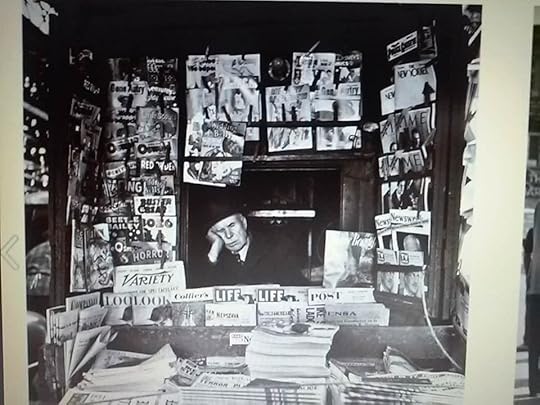
These are all astonishing photos - glimpses into a lost world of 50 years. For someone of my age, they offer a glimpse into the world of my childhood - styles that were popular with older people when I was a child, the recollection of certain types of shoe styles, the density of commercial development, even the names of department stores on shopping bags, the many different papers that were once sold at newsstands and how cheap they once were. I certainly hope Maloof will continue to present the mass of photos - it may indeed become his life work as the photographer left behind 100,000 negatives. Once they are presented, there's no doubt that she will have to be considered among the most talented, and lucky photographers that ever lived.
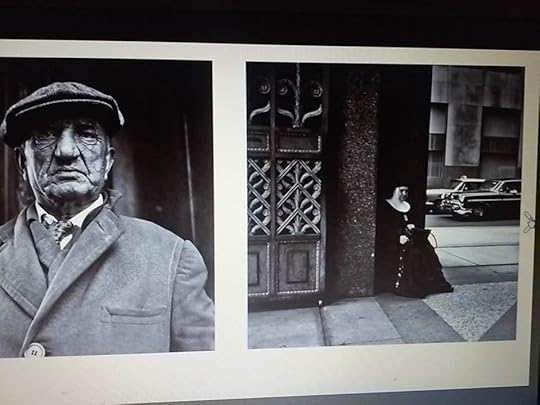
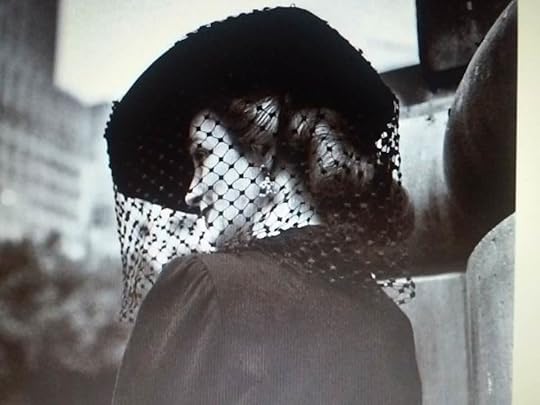
She was photographing random bits of time - happenstance - anywhere and everywhere in Chicago and New York. The subjects are all strangers, and the streets are often difficult to identify, although occasionally there are familiar landmarks like the Chrysler Building, or it's obvious a photo was taken on the Staten Island Ferry. There's hopelessness, time, strangers' entire life story is etched in deeply wrinkled faces, but there's also mystery, possibly the idea of being caught up in various games in the meticulously groomed veiled younger women - randomly photographed, sometimes in front of recognizable landmarks like the 42nd Street branch of the New York Public Library. What was considered "respectable" and "well-groomed" then as opposed to how people dress today - or don't bother to dress; part of the change occurred in the iconoclastic 60s, after which everyone tried to emulate the trappings of the counterculture - it was cool to be hip, and anything associated with the lost world Maier photographed, prior to the 60s, was jettisoned (or maybe a few older people still continued to dress demurely despite the change in ethos). Structured clothing, tightly cinched belts, all sorts of hats, headscarfs, the busy details of an outfit - all of that changed, to be supplanted with the uniform of jeans, T-shirts, more casual wear.
Maier knew no-one would obtain or deal with her work - her belongings were discovered in an auction of the contents of a storage cubicle. If the message is that her work was entirely random, in a way so was her life as an observer of random people and events, and thus consigning her work to a random fate, may have been the only deliberate thing she did - if her work survived and was recognized as great, all the better (of course, there was no way she would know as the contents of the storage closet were auctioned off after her death); if not, if no-one ever appreciated her work and it was all simply disposed of - it probably would have been regarded as a fitting irony, or perhaps completely consistent with her entirely random life.
Amazing. The 100 or so photos in this collection are but a tiny fraction of the 100,000 negatives discovered so far. Was she consistently this good, or are these the one-tenth of one percent best? I don't think it matters; to have taken even 100 good photos in a lifetime is an achievement. Another GR reviewer called her the Emily Dickinson of photography, I think that is apt; as far as is known, she never showed her work to others. Her work has all the ingredients of great street photography: an eye for composition, a sense of the moment, and a recognition of some of the absurd juxtapositions that street life offers but that many of us fail to notice. I could have done with fewer of the clichéd alcoholics in a doorway, but that's a minor quibble. Very glad to have become aware of her work.
It's been a while since I looked through a book of photography, and I have to say that I really enjoyed flipping through Maier's work. She is, of course, an enigma, but this small sample of her work is fascinating, with a sly sense of humour that pops up from time to time. I found myself lost in the period details, the clothing, and the crowd, and I wanted more at the end of it.
Vivian Maier was a nanny who did photography in her free time. She left behind lockers crammed with negatives, "found objects" and other items. She must have been an interesting person. The photographs in the book are fascinating. Not only is the subject matter interesting, but they are like a time machine back to a world that looks so very different from today. Her New York is gritty and not nearly as fashionable and glittery as it is today. For someone like me who is an avid amateur photographer, I can only aspire to photos like this. It takes guts to go up to someone you don't know and ask if you can take their picture. I've done it, but it's hard. Yet when I've done street photography, I'm really pleased with the results. This is a wonderful introduction to Vivian Maier. There is a website dedicated to her work. You can find it here @ //www.vivianmaier.com/about-vivian-maier/
Mostly a photo book. This is the woman who was a nanny and no one knew she took thousands of photos. There's a movie coming out about her, although someone said they already watched a movie about her, so maybe it's out... This book was non-circulating so I had to go sit in the art library to read it. It's sad that her work wasn't discovered while she was still alive. I have mixed feelings about random dudes making money off of her work.
Can you imagine doing a body of work and it never see the light of day until after you are gone. I've been fascinated by street photography lately and so this book was a no brainer for me. Loved every photo, some were so raw they were hard to look at. I went through it from cover to cover this morning and I'm sure I'm going to do that again many times. The one thing that would have made it perfect would have been a bit more about her life,
This entire review has been hidden because of spoilers.
I wish Maier's work had been discovered when she was still alive, so she could have enjoyed some recognition. The impromptu portraits of strangers (some of whom are totally giving her the stink eye), the scenes of old Chicago, and the self-portraits are my favorites here.
Photographer Vivian Maier took outstanding pictures from the 1950s onward but showed them to no one during her lifetime. A treasure trove of undeveloped photos was discovered after her death in 2009, and have been collected in this book by John Maloof who now owns a bulk of her work. Ms. Maier took most of her pictures in New York City and Chicago, where she lived as a live-in nanny for various families. She captured slice-of-life moments from eras gone by, with a remarkable eye for composition. When I first heard of her photos a few years back, I thought about how tragic it was that she didn't get the recognition she deserved during her lifetime, but I've since reconsidered. She obviously gained pleasure from taking the pictures, and there is value in making art for art's sake even if she didn't wish to share her talents with others. I have the documentary about her life and another book about her on reserve at my library.
My favorite pictures include- three women of various ages on a street (pg 16), a woman and man near a subway stop (pg 27), a sleeping man at a newsstand (pg 30), a man riding a horse under a city bridge (pg 34), a lovely woman gazing directly at the camera (pg 42), park slide (pg 51), long view of city street (pg 57), a handsome young man with pigeons (pg 60), older woman with pin curls (pg 90), a sharp-faced woman with furs (pg 92), a family in a reflected puddle at a park (pg 120), and the last photograph of Maier taking a picture of herself (a selfie before that term was invented) in a mirror being moved out of a wagon (pg 134). I wonder if any people found themselves in her photos when they were younger or found a family member long gone.
I've run into Maier's work only on the internet and her story as the nanny-photographer whose hidden cache of amazing work was discovered after her death has been re-told a thousand times so I won't bore everyone with this as you can read it in far better written quarters. I will say this though - I find the one quote I've read of her talking (she left tapes as well as film) fascinating:
"We have to make room for other people. It's a wheel. You get on, you have to go to the end. And then somebody has the same opportunity to go to the end."
Now I have been in the mindset of Boethius' wheel for the past week which of course talks of a different kind of human impermanence, in fortune (for a primer on that particular subject consult 24 Hour Party People - the book or the film or maybe A Confederacy of Dunce's if you want to have more fun with posthumous discovery of genius in a literary sense) and as far as I'm concerned as fortune and luck would have it she has certainly won herself a bit of immortality and those of her subjects in this book particularly through her endeavour to "give opportunities for others to go to the end".
Photography is a beautiful art and this book gives us a glimpse of that. Fascinating stuff.
Meg Storey (Editor, Tin House Books): It is said that a picture is worth a thousand words. I spent the month of January “reading” the work of Vivian Maier, a nanny who spent her free time wandering among and photographing the streets and people of 1950s and ’60s Chicago (and, before that, Europe and New York City). Maier died in 2009, poor and unknown. Shortly before her death, thousands of her prints and negatives (many undeveloped) were sold at auction because she could no longer pay her storage unit fee. Luckily, the buyer recognized the caliber of Maier’s work, and there have since been several exhibits and two books published. From all accounts, it seems Maier was fiercely independent, opinionated, and private, and I suspect that had she lived to see it, she would have disdained all the attention her work is now receiving. But the great irony of Maier’s photographs being brought to light is that her work is an important reminder that we should do the things we love not out of a desire for acknowledgment or fame but out of instinct and impulse, that what drives us is often difficult to articulate, and that a picture is worth an innumerable amount of words.