

What do you think?
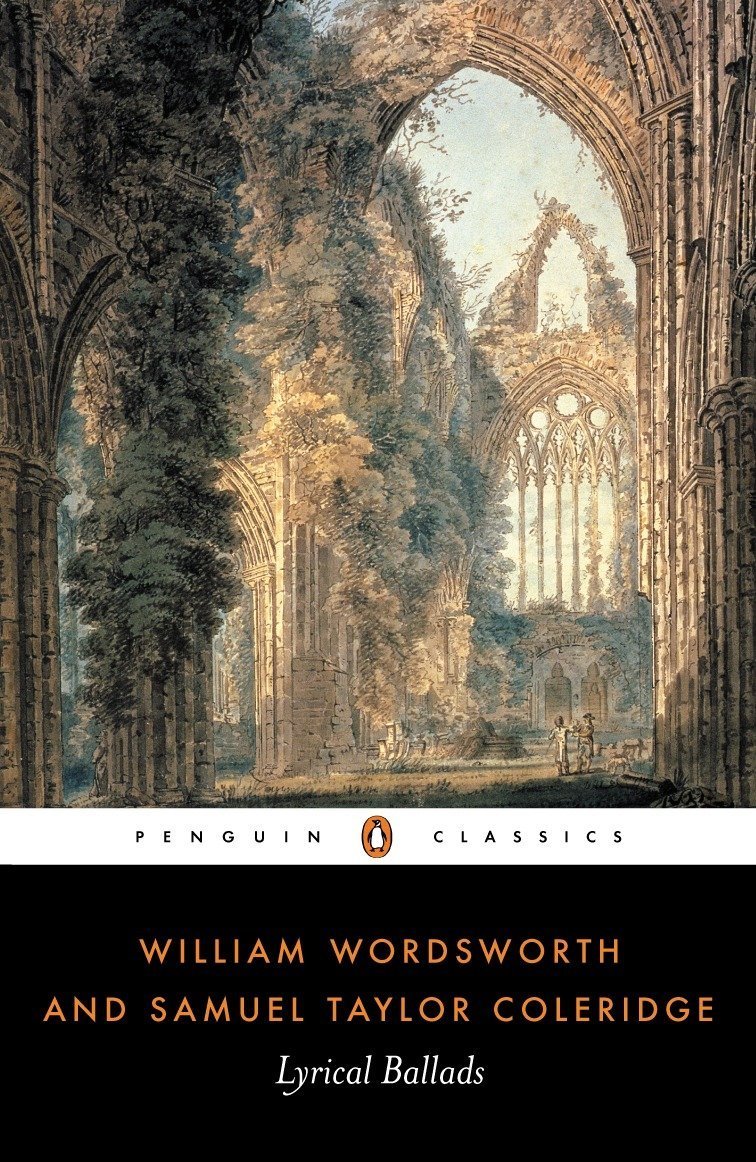
Lyrical Ballads
"The majority of the following poems are to be considered as experiments. They were written chiefly with a view to ascertain how far the language of conversation in the middle and lower classes of society is adapted to the purposes of poetic pleasure." -- William Wordsworth, from the Advertisment prefacing the original 1798 edition. When it was first published, Lyrical Ballads enraged the critics of the day: Wordsworth and Coleridge had given poetry a voice, one decidedly different to what had been voiced before.
For Wordsworth, as he so clearly stated in his celebrated preface to the 1800 edition (also reproduced here), the important thing was the emotion aroused by the poem, and not the poem itself. This acclaimed Routledge Classics edition offers the reader the opportunity to study the poems in their original contexts as they appeared to Coleridge's and Wordsworth's contemporaries, and includes some of their most famous poems, including Coleridge's Rime of the Ancyent Marinere.
For Wordsworth, as he so clearly stated in his celebrated preface to the 1800 edition (also reproduced here), the important thing was the emotion aroused by the poem, and not the poem itself. This acclaimed Routledge Classics edition offers the reader the opportunity to study the poems in their original contexts as they appeared to Coleridge's and Wordsworth's contemporaries, and includes some of their most famous poems, including Coleridge's Rime of the Ancyent Marinere.
118 pages, Paperback
First published January 1, 1798
About the author
William Wordsworth
2,287 books1,408 followersWilliam Wordsworth (1770-1850) was a major English romantic poet who, with Samuel Taylor Coleridge, helped launch the Romantic Age in English literature with their 1798 joint publication, Lyrical Ballads.
Wordsworth's masterpiece is generally considered to be The Prelude, an autobiographical poem of his early years, which the poet revised and expanded a number of times. The work was posthumously titled and published, prior to which, it was generally known as the poem "to Coleridge". Wordsworth was England's Poet Laureate from 1843 until his death in 1850.
Wordsworth's masterpiece is generally considered to be The Prelude, an autobiographical poem of his early years, which the poet revised and expanded a number of times. The work was posthumously titled and published, prior to which, it was generally known as the poem "to Coleridge". Wordsworth was England's Poet Laureate from 1843 until his death in 1850.
Ratings & Reviews
Friends & Following
Create a free account to discover what your friends think of this book!
Community Reviews
Displaying 1 - 30 of 438 reviews

September 13, 2016
Small volumes of verse often start literary revolutions, and this little book published in 1798 is perhaps the most revolutionary of all. It not only brought England into the Romantic Movement, but also simplified English poetic diction, right up to the present day.
In 1800, Wordsworth would add the famous preface which defined poetry as "the spontaneous overflow of powerful feelings" originating in "great emotion recollected in tranquility," but this influential definition provided a more sophisticated rationale for what was a simple experiment by two young poets. They used every day speech to create the most forceful poetic expressions possible by 1) telling realistic stories of humble English people, often in their own voices (Wordsworth) and 2) creating fantastic tales in the plain though archaic language of the the old English ballad (Coleridge). By so doing, they hoped to invigorate the pastoral, dignify the gothic, and create something new as well.
Wordsworth performs his task ably, endowing his simple people with full humanity, evoking our pity on their behalf. Occasionally, his poems are too long--"The Idiot Boy" comes immediately to mind--but, even at his "words-words" redundant worst, he gives--for the first time, I believe--poor country people a dignified human voice, thus preparing the way for Hardy and Steinbeck and many writers to come.
This first edition consists of nineteen poems by Wordsworth and four by Coleridge. This isn't as imbalanced as it may seem, for one of Coleridge's four poems is the impressive--and lengthy--"Rime of the Ancient Mariner." In this imitation ballad, Coleridge takes Chatterton's experiment in antiquarian forgery and transforms it into great literature. His archaic diction seems vivid and new, and allows his contemporary Romantic theme--the reverence for nature in all her wild variety--to speak with the authority of the ages.
"Mariner" and "Tintern Abbey" are undoubtedly the two greatest poems in this collection, but each and every poem is worth your time. If on occasion--particularly in Wordsworth--a phrase may strike you as trite and sentimental, remember that Wordsworth was the one who "made it new." The triteness, the sentimentality came after.

October 25, 2017
Who wants a revolution?
Well Wordsworth and Coleridge certainly did. Their writing existed in the intellectual aftermath of the French revolution; thus, they tried to radicalise it and revolutionise it. With Lyrical ballads they, undoubtedly, changed the destiny of English literature. Granted, that’s a huge sweeping statement to make but, nevertheless, it is a true one.
No longer would poetry be the lofty language of the elites, a means for the bourgeoisie to demonstrate their intellect; it would now be the language of the common man: it would exist in a natural form, simple, basic even, so that that everybody could understand it and appreciate its beauty. Whist the two were not the first to start writing in such a way, Blake came much earlier on with his Songs of Innocence and Experience, though they were the first to actually set down what they were trying to do, to explain it and provide a critique of what they were actually doing rather than just doing it.
This work is brave and experimental and it would help to create a new class of poetry. Poetry, above all things, should have a purpose; it should aim to present human emotion and experience in a clear and considerate way. It’s not about who has the best diction or control over metrical forms: it’s about whom can portray life and human nature with the most honesty, at least, according to the preface Wordsworth added to the second edition. It’s really worth considering whist reading how many of these goals to two actually achieved.
Compare this work to something written by Shakespeare, Pope or Milton and you will clearly see the difference in complexity. The style of this poetry is far more accessible and easier to understand, but, that being said, would you have agreed if you were a common man in the early nineteenth century? Possibly not. The educated would have appreciated what was happening here, but the uneducated would not have even been able to read it never mind afford a copy. And that’s why they are “Lyrical Ballads.” Again, like Blake’s work, many of these poems were meant to be read aloud and as such would have been easy to memorise and understand upon hearing them; thus, in a way, the two poets achieved their goals.
Coleridge’s Nightingale
Lyrical ballads is undeniably one sided. Wordsworth wrote most of the poems in here, though Coleridge contributed, arguably, one of the best poems written in the English language: The Rime of the Ancient Mariner. I didn’t want to talk about that here though, I’ve already reviewed it separately so here’s the next best one he included:
The Nightingale
And hark! the Nightingale begins its song,
'Most musical, most melancholy' bird!
A melancholy bird? Oh! idle thought!
In Nature there is nothing melancholy.

I like it so much because it is so deeply personal. Just like Wordsworth, Coleridge explicitly voices his opinion on the beauty of nature and life; he also mocks those “venerable” poets who try to emulate these ideas but fail to do so; they are inexperienced and don’t speak with a voice that is one with nature. They write from the deplorable ball room, and spend their lives in theatres; yet, they attempt to write poetry about nature. Coleridge was one of the Lakers, a poet who wrote in the Lake District from a voice of first-hand experience, so he was a little bit of an expert. I could fell the sarcasm and annoyance oozing out of his words, but also a sense of literary superiority. Coleridge clearly felt like his voice was prominent in these matters:
My Friend, and thou, our Sister! we have learnt
A different lore: we may not thus profane
Nature's sweet voices, always full of love
And joyance! 'Tis the merry Nightingale
That crowds and hurries, and precipitates
With fast thick warble his delicious notes,
As he were fearful that an April night
Would be too short for him to utter forth
His love-chant, and disburthen his full soul
Of all its music!
You could call these words arrogance, but I think his ego is deserved. And, if you haven’t already guessed, the Nightingale is clearly Coleridge. Well, he and the other early romantic poets; they make up the flock. I love the symbolism here; he suggests because he was one with nature, he could express it perfectly in his poems. He and his friends could provoke each other’s songs and make them sweeter in the process. It’s a quaint image, and perhaps alludes to how he and Wordsworth improved each other’s art.
Wordsworth’s Wonderers
Wordsworth’s poems are not quite as varied as Coleridge’s. After reading many the lines between each become blurred as he often repeats similar themes and ideas. Sometimes he takes an old poem, and uses it to make a new one by expanding upon the ideas and depicting it in a more artful way. He would do this often, and here “Old man Travelling” felt like a very early version of “The Old Cumberland Beggar.”
Both poems depict an aged wonderer, someone who exits in nature and is vitalised by it. He roams through the landscape seemingly unaffected by the troubles of the world and mortality. But that is a lie. Under the surface, as Wordsworth reveals, is a constant preoccupation with death. It will never escape us not matter how far we may wonder. The two exist together and as such behind the surface of the wonderers is knowledge of their eventual demise or the demise of their loved ones:
Old man Travelling
“The little hedge-row birds,
That peck along the road, regard him not.
He travels on, and in his face, his step,
His gait, is one expression; every limb,
His look and bending figure, all bespeak
A man who does not move with pain, but moves
With thought—He is insensibly subdued
To settled quiet: he is one by whom
All effort seems forgotten, one to whom
Long patience has such mild composure given,
That patience now doth seem a thing, of which
He hath no need. He is by nature led
To peace so perfect, that the young behold
With envy, what the old man hardly feels.
—I asked him whither he was bound, and what
The object of his journey; he replied
"Sir! I am going many miles to take
A last leave of my son, a mariner,
Who from a sea-fight has been brought to Falmouth,
And there is dying in an hospital."

The old man’s reply ushers in a sudden change of tone; it’s almost shocking and abrupt, but read the poem again and you will see the subtlety. The poem is simple, more so than Coleridge’s, but is also extremely effective at what it does.
These two men changed poetry forever with this; they helped to make popular a model that would eventually be adapted by later generations. This poetry is a true pleasure to read.
Well Wordsworth and Coleridge certainly did. Their writing existed in the intellectual aftermath of the French revolution; thus, they tried to radicalise it and revolutionise it. With Lyrical ballads they, undoubtedly, changed the destiny of English literature. Granted, that’s a huge sweeping statement to make but, nevertheless, it is a true one.
No longer would poetry be the lofty language of the elites, a means for the bourgeoisie to demonstrate their intellect; it would now be the language of the common man: it would exist in a natural form, simple, basic even, so that that everybody could understand it and appreciate its beauty. Whist the two were not the first to start writing in such a way, Blake came much earlier on with his Songs of Innocence and Experience, though they were the first to actually set down what they were trying to do, to explain it and provide a critique of what they were actually doing rather than just doing it.
This work is brave and experimental and it would help to create a new class of poetry. Poetry, above all things, should have a purpose; it should aim to present human emotion and experience in a clear and considerate way. It’s not about who has the best diction or control over metrical forms: it’s about whom can portray life and human nature with the most honesty, at least, according to the preface Wordsworth added to the second edition. It’s really worth considering whist reading how many of these goals to two actually achieved.
Compare this work to something written by Shakespeare, Pope or Milton and you will clearly see the difference in complexity. The style of this poetry is far more accessible and easier to understand, but, that being said, would you have agreed if you were a common man in the early nineteenth century? Possibly not. The educated would have appreciated what was happening here, but the uneducated would not have even been able to read it never mind afford a copy. And that’s why they are “Lyrical Ballads.” Again, like Blake’s work, many of these poems were meant to be read aloud and as such would have been easy to memorise and understand upon hearing them; thus, in a way, the two poets achieved their goals.
Coleridge’s Nightingale
Lyrical ballads is undeniably one sided. Wordsworth wrote most of the poems in here, though Coleridge contributed, arguably, one of the best poems written in the English language: The Rime of the Ancient Mariner. I didn’t want to talk about that here though, I’ve already reviewed it separately so here’s the next best one he included:
The Nightingale
And hark! the Nightingale begins its song,
'Most musical, most melancholy' bird!
A melancholy bird? Oh! idle thought!
In Nature there is nothing melancholy.
I like it so much because it is so deeply personal. Just like Wordsworth, Coleridge explicitly voices his opinion on the beauty of nature and life; he also mocks those “venerable” poets who try to emulate these ideas but fail to do so; they are inexperienced and don’t speak with a voice that is one with nature. They write from the deplorable ball room, and spend their lives in theatres; yet, they attempt to write poetry about nature. Coleridge was one of the Lakers, a poet who wrote in the Lake District from a voice of first-hand experience, so he was a little bit of an expert. I could fell the sarcasm and annoyance oozing out of his words, but also a sense of literary superiority. Coleridge clearly felt like his voice was prominent in these matters:
My Friend, and thou, our Sister! we have learnt
A different lore: we may not thus profane
Nature's sweet voices, always full of love
And joyance! 'Tis the merry Nightingale
That crowds and hurries, and precipitates
With fast thick warble his delicious notes,
As he were fearful that an April night
Would be too short for him to utter forth
His love-chant, and disburthen his full soul
Of all its music!
You could call these words arrogance, but I think his ego is deserved. And, if you haven’t already guessed, the Nightingale is clearly Coleridge. Well, he and the other early romantic poets; they make up the flock. I love the symbolism here; he suggests because he was one with nature, he could express it perfectly in his poems. He and his friends could provoke each other’s songs and make them sweeter in the process. It’s a quaint image, and perhaps alludes to how he and Wordsworth improved each other’s art.
Wordsworth’s Wonderers
Wordsworth’s poems are not quite as varied as Coleridge’s. After reading many the lines between each become blurred as he often repeats similar themes and ideas. Sometimes he takes an old poem, and uses it to make a new one by expanding upon the ideas and depicting it in a more artful way. He would do this often, and here “Old man Travelling” felt like a very early version of “The Old Cumberland Beggar.”
Both poems depict an aged wonderer, someone who exits in nature and is vitalised by it. He roams through the landscape seemingly unaffected by the troubles of the world and mortality. But that is a lie. Under the surface, as Wordsworth reveals, is a constant preoccupation with death. It will never escape us not matter how far we may wonder. The two exist together and as such behind the surface of the wonderers is knowledge of their eventual demise or the demise of their loved ones:
Old man Travelling
“The little hedge-row birds,
That peck along the road, regard him not.
He travels on, and in his face, his step,
His gait, is one expression; every limb,
His look and bending figure, all bespeak
A man who does not move with pain, but moves
With thought—He is insensibly subdued
To settled quiet: he is one by whom
All effort seems forgotten, one to whom
Long patience has such mild composure given,
That patience now doth seem a thing, of which
He hath no need. He is by nature led
To peace so perfect, that the young behold
With envy, what the old man hardly feels.
—I asked him whither he was bound, and what
The object of his journey; he replied
"Sir! I am going many miles to take
A last leave of my son, a mariner,
Who from a sea-fight has been brought to Falmouth,
And there is dying in an hospital."
The old man’s reply ushers in a sudden change of tone; it’s almost shocking and abrupt, but read the poem again and you will see the subtlety. The poem is simple, more so than Coleridge’s, but is also extremely effective at what it does.
These two men changed poetry forever with this; they helped to make popular a model that would eventually be adapted by later generations. This poetry is a true pleasure to read.

Read
July 21, 2025Mixed feelings about this well-known book. Lyrical Ballads, originally published in 1798, is still regarded as the clarion call of the British Romantic movement. And I understand why: the evocation of natural beauty, sometimes in an inspired-spiritual form, speaks volumes. This collection contains numerous compelling examples of this. But this work offers much more, in very different directions. I had the impression that Coleridge's – limited – contributions emphasized a more gothic aspect. And that Wordsworth's poems are much more appealing, fresher in form as well. I also read the preface (by Wordsworth) to the 1800 edition, which does discuss formal aspects in great detail (the text is truly dense): a departure from earlier strict formal requirements and a greater connection to everyday language. Much of this is recognizable in the poems, often with a refreshing effect. But in some cases, Wordsworth lapses into very simplistic language, into childish-sounding stories. So not everything still appeals more than two centuries later, and that is logical.

September 13, 2012
Happy birthday, William Wordsworh, April 7.
The World Is Too Much With Us
William Wordsworth
The world is too much with us; late and soon,
Getting and spending, we lay waste our powers;—
Little we see in Nature that is ours;
We have given our hearts away, a sordid boon!
This Sea that bares her bosom to the moon;
The winds that will be howling at all hours,
And are up-gathered now like sleeping flowers;
For this, for everything, we are out of tune;
It moves us not. Great God! I’d rather be
A Pagan suckled in a creed outworn;
So might I, standing on this pleasant lea,
Have glimpses that would make me less forlorn;
Have sight of Proteus rising from the sea;
Or hear old Triton blow his wreathèd horn.
The World Is Too Much With Us
William Wordsworth
The world is too much with us; late and soon,
Getting and spending, we lay waste our powers;—
Little we see in Nature that is ours;
We have given our hearts away, a sordid boon!
This Sea that bares her bosom to the moon;
The winds that will be howling at all hours,
And are up-gathered now like sleeping flowers;
For this, for everything, we are out of tune;
It moves us not. Great God! I’d rather be
A Pagan suckled in a creed outworn;
So might I, standing on this pleasant lea,
Have glimpses that would make me less forlorn;
Have sight of Proteus rising from the sea;
Or hear old Triton blow his wreathèd horn.

February 13, 2020
#20for2020 I am counting this as a complete book of poems by a single author as there are only 2 or 3 poems in this book which were not written by William Wordsworth.
Confession 1: I was very intimidated by this book. I felt like I should read it in preparation for my trip to Ambleside in April but I thought it was going to be a slog. It was not even close to a slog. It was entirely delightful.
Confession 2: I like my poetry lyrical and that is exactly what these poems are. They rhyme, they flow, and they feel good on the lips.
I loved all the references in the poems to the Lake District. As with Wordsworth I now have the Lake District in my mind's eye for the coming years ahead. I loved many of these poems but this volume includes one of my all-time favorite poems Lucy or She Dwelt Among the Untrodden Ways...
She dwelt among the untrodden ways
Beside the springs of Dove,
A Maid whom there were none to praise
And very few to love:
A violet by a mossy stone
Half hidden from the eye!
—Fair as a star, when only one
Is shining in the sky.
She lived unknown, and few could know
When Lucy ceased to be;
But she is in her grave, and, oh,
The difference to me!
Confession 1: I was very intimidated by this book. I felt like I should read it in preparation for my trip to Ambleside in April but I thought it was going to be a slog. It was not even close to a slog. It was entirely delightful.
Confession 2: I like my poetry lyrical and that is exactly what these poems are. They rhyme, they flow, and they feel good on the lips.
I loved all the references in the poems to the Lake District. As with Wordsworth I now have the Lake District in my mind's eye for the coming years ahead. I loved many of these poems but this volume includes one of my all-time favorite poems Lucy or She Dwelt Among the Untrodden Ways...
She dwelt among the untrodden ways
Beside the springs of Dove,
A Maid whom there were none to praise
And very few to love:
A violet by a mossy stone
Half hidden from the eye!
—Fair as a star, when only one
Is shining in the sky.
She lived unknown, and few could know
When Lucy ceased to be;
But she is in her grave, and, oh,
The difference to me!

January 17, 2024
"A tale in every thing"
A seminal collection of poems issued in 1798 that I find moving and highly evocative, be it only for its vivid imagery, the range of its themes, or the bold spirit of invention that inhabits it.
Quotes:
'Day after day, day after day,
We stuck, nor breath nor motion;
As idle as a painted ship
Upon a painted ocean.
Water, water, every where,
And all the boards did shrink;
Water, water, every where,
Nor any drop to drink.
The very deep did rot: O Christ!
That ever this should be!
Yea, slimy things did crawl with legs
Upon the slimy sea.'
---
'Stranger! henceforth be warned; and know, that pride,
Howe'er disguised in its own majesty,
Is littleness; that he, who feels contempt
For any living thing, hath faculties
Which he has never used; [...]'
---
My gentle Reader, I perceive,
How patiently you've waited,
And now I fear that you expect
Some tale will be related.
O Reader! had you in your mind
Such stores as silent thought can bring,
O gentle Reader! you would find
A tale in every thing.'
---
Ah me! what lovely tints are there
Of olive green and scarlet bright,
In spikes, in branches, and in stars,
Green, red, and pearly white!
This heap of earth o’ergrown with moss,
Which close beside the Thorn you see,
So fresh in all its beauteous dyes,
Is like an infant’s grave in size,
As like as like can be:
But never, never any where,
An infant’s grave was half so fair.'
---
'Is this the only cure? Merciful God!
Each pore and natural outlet shrivell'd up
By ignorance and parching poverty,
His energies roll back upon his heart,
And stagnate and corrupt; till changed to poison,
They break out on him, like a loathsome plague spot.
Then we call in our pamper'd mountebanks—
And this is their best cure! uncomforted
And friendless solitude, groaning and tears,
And savage faces, at the clanking hour,
Seen through the steams and vapour of his dungeon,
By the lamp's dismal twilight! So he lies
Circled with evil, till his very soul
Unmoulds its essence, hopelessly deformed
By sights of ever more deformity!'
---
'She's past the bridge that's in the dale,
And now the thought torments her sore,
Johnny perhaps his horse forsook,
To hunt the moon that's in the brook,
And never will be heard of more.'
See also:
Tales from 1,001 Nights: Aladdin, Ali Baba and Other Favourites
The Narrative of Arthur Gordon Pym of Nantucket and Related Tales
MS. Found in a Bottle
The Ghost Pirates
La Montagne morte de la vie
L'odyssée de l'endurance
Movies:
The Lighthouse - Robert Eggers (2019)
A seminal collection of poems issued in 1798 that I find moving and highly evocative, be it only for its vivid imagery, the range of its themes, or the bold spirit of invention that inhabits it.
Quotes:
'Day after day, day after day,
We stuck, nor breath nor motion;
As idle as a painted ship
Upon a painted ocean.
Water, water, every where,
And all the boards did shrink;
Water, water, every where,
Nor any drop to drink.
The very deep did rot: O Christ!
That ever this should be!
Yea, slimy things did crawl with legs
Upon the slimy sea.'
---
'Stranger! henceforth be warned; and know, that pride,
Howe'er disguised in its own majesty,
Is littleness; that he, who feels contempt
For any living thing, hath faculties
Which he has never used; [...]'
---
My gentle Reader, I perceive,
How patiently you've waited,
And now I fear that you expect
Some tale will be related.
O Reader! had you in your mind
Such stores as silent thought can bring,
O gentle Reader! you would find
A tale in every thing.'
---
Ah me! what lovely tints are there
Of olive green and scarlet bright,
In spikes, in branches, and in stars,
Green, red, and pearly white!
This heap of earth o’ergrown with moss,
Which close beside the Thorn you see,
So fresh in all its beauteous dyes,
Is like an infant’s grave in size,
As like as like can be:
But never, never any where,
An infant’s grave was half so fair.'
---
'Is this the only cure? Merciful God!
Each pore and natural outlet shrivell'd up
By ignorance and parching poverty,
His energies roll back upon his heart,
And stagnate and corrupt; till changed to poison,
They break out on him, like a loathsome plague spot.
Then we call in our pamper'd mountebanks—
And this is their best cure! uncomforted
And friendless solitude, groaning and tears,
And savage faces, at the clanking hour,
Seen through the steams and vapour of his dungeon,
By the lamp's dismal twilight! So he lies
Circled with evil, till his very soul
Unmoulds its essence, hopelessly deformed
By sights of ever more deformity!'
---
'She's past the bridge that's in the dale,
And now the thought torments her sore,
Johnny perhaps his horse forsook,
To hunt the moon that's in the brook,
And never will be heard of more.'
See also:
Tales from 1,001 Nights: Aladdin, Ali Baba and Other Favourites
The Narrative of Arthur Gordon Pym of Nantucket and Related Tales
MS. Found in a Bottle
The Ghost Pirates
La Montagne morte de la vie
L'odyssée de l'endurance
Movies:
The Lighthouse - Robert Eggers (2019)

July 19, 2025
Note: This collection went through two subsequent editions, in 1800 and in 1802, with expanded content. But the 1798 edition which I read and am reviewing here was the original one.
Literary historians typically date the Neoclassical period in Western culture as running from 1688 to 1789, so that it's neatly bracketed by the English Glorious Revolution and the French Revolution. But those political landmarks didn't actually mark comparable sudden, neat revolutions in popular tastes. In particular, Romantic poetry didn't immediately sweep to popularity with readers and critics in 1789. It was, as it were, gathering steam in the ensuing years; but this short collection, published in 1798 and highlighting the work of two great Romantic poets, was really the first of its kind. As such, it has an out-sized, bellwether significance as the herald of a new poetic era in English-language literature, breaking decisively with the Neoclassical school.
Most of the 23 poems in the 1798 edition are by Wordsworth. According to his preface to the 1800 edition, the four here that are by his close friend Coleridge are (in modern spelling) "The Rhyme of the Ancient Mariner," "The Foster-Mother's Tale," "The Nightingale," and "The Dungeon." (The 1800 edition also included Coleridge's "Love.") Of these 23, I'd previously read "The Rhyme of the Ancient Mariner" (and mentioned it in my review of English Poems from Chaucer to Kipling as one I particularly appreciated), "We Are Seven," and "Tintern Abbey." However, I didn't really remember the latter one very well. (I reread it here, as well as "We Are Seven.”) One common theme that recurs in many of the poems (by both authors) is the quintessentially Romantic view of communion with the natural world/Nature as a central source of joy, fulfillment and even revelation to healthy humans. Another characteristic common to many of the poems here (and stressed by Wordsworth both in the Advertisement for this edition and his 1800 Preface) is the deliberate use of the everyday speech of common English speakers in that day, often to describe events or experiences that are the stuff of ordinary life, in conscious contrast to the grandiloquent diction and preference for “exalted” subjects characteristic of the Neoclassical poets as they imitated classical Greek and Roman models. Of course, with its archaic (even by late 18th-century standards) language and spellings, and its recounting of very unusual events, “The Rhyme of the Ancient Mariner” is an exception, but one that illustrates another Romantic characteristic, the embrace of the medieval; its literary models are drawn not from the poets of classic antiquity, but from the ballad tradition of what Wordsworth calls “the elder poets.”
Wordsworth's prose discussions of the purpose of the poems here are valuable in their own right as statements of Romantic literary theory (though Owen's editorial practices make the Preface hard to read; see below). Although he doesn't use the word “emotion” (he characteristically refers to “excitement”), it's clear that he sees evocation of emotion as central to the poetic enterprise. It's also interesting (to me, at least) that he considers meter essential to producing the pleasure that the poetic form uniquely provides and that prose does not. From his discussion, it's clear that he doesn't mean the reader must consciously count the syllables in given lines; rather, the effect of the meter is experienced just in reading or listening to the words.
In my reading of the collection, I first read the poems by Coleridge, to respect the distinct identity of the two authors here as poets in their own right, not clones of each other, though they have similar styles, themes, attitudes and concerns. Both of the first two poems are story-telling poems, a type I particularly like. “The Nightingale” and "The Dungeon” are shorter, responses to experiences or observations that draw lessons from them. The lessons they draw, as is also the case with “The Foster-Mother's Tale," include (in the two latter poems), deprecation of human inhumanity to other humans, and in all three poems exaltation of Nature as benevolent guide to moral and spiritual wholeness. I've read relatively little of Coleridge's work (even in comparison to Wordsworth's, of which I haven't read much), but these examples whet my interest in reading more.
It's not possible, in the scope of a review of this sort, to comment on all 19 poems here by Wordsworth, so I'll speak only to those that I found particularly memorable. The poem we call “Tintern Abbey” (the full title is “Lines written a Few Miles above Tintern Abbey”) is an eloquent testimony to the poet's trust in communion with Nature to wordlessly convey moral and spiritual truth and uplift to the human soul. This is compatible with the Apostle Paul's conviction that the created natural world, through the common grace of God, does provide humans with a true revelation of “what may be known about God;” and my reading of the poem this time resonated with me in a way that it didn't before, reminding me of how as a teen and young man I also felt impressed with similar truths in the presence of Nature's created beauty, a sensation I've tended to forget since I've grown older and spent less time outdoors. It's worth noting that both of our authors make other statements here that reflect or are very compatible with Christian beliefs, most notably in the latter part of “The Rhyme of the Ancient Mariner." While the textbook treatments of both men that I'd previously read suggested that they were Deists, closer study prompted by reading this collection revealed that both were in fact fairly conservative Christians; Wordsworth was a committed Anglican all his life, and while Coleridge inclined to the Unitarian form of the faith in his younger days, he returned to a traditional Anglican stance by his middle years.
“The Female Vagrant” is the most powerful heart cry against the social injustices of the day that this collection contains (though “The Convict” is also notable), and an excellent example of Wordsworth's story poems. Having recently read all of Hardy's poetical corpus, I could recognize in “The Thorn” a thematic similarity to some of the later poet's work. Other favorites of mine here, in addition to “We are Seven,” were the folktale -like “Goody Blake and Harry Gill,” the surprisingly multicultural dramatic monologue “The Complaint of a Forsaken Indian Woman,” and “The Idiot Boy.”
I read this in the 1969 second edition of the Oxford Univ. Press printing, with an Introduction and other features by W. J. B. Owen, then Professor of English at McMaster Univ., one of Canada's premier higher education institutions. However, I absolutely do not recommend this printing to any readers, even though I'm not familiar with the alternatives; none of the latter could possibly be any worse. Rather than dealing with the themes and historical context and significance of the poems, Owen's nearly 30-page Introduction concentrates on a.) the prehistory of the book's conception and publication, delivered in eye-glazing detail (and with a stress on the two authors' mutual need for money at the time), and b.) minute tracing of definite or possible parallels to various images/phrases in the poems here found in the work of earlier or contemporary poets, many of whom I never heard of. (It wasn't long before I was skimming this, and not much longer before I abandoned it altogether.) The over 25-page Appendix reproduces Wordsworth's preface to the 1800 edition –but with a LOT of text-critical footnotes that drove me up the wall (I normally prefer an editor to establish the best text he/she can, and then let me read it straight through!) and a 6 ½ page footnote quoting added material from the 1802 preface, which ends in mid-sentence but doesn't connect with the continuation of the sentence it interrupts. Confusingly, the Errata appears to be a list of corrections the editor already made to his first edition, not corrections the reader is to make to this one. Finally, the roughly 34-page Commentary (which I also finally gave up on!) on the poems themselves occasionally offers interesting or useful information, but is very difficult to refer to because Owen didn't use end-note numbers. That's also true of the three notes in the Addenda hidden on the last page (and not included in the table of contents!), the separate existence of which makes no sense. It's as if, in these features, the editor were actually trying to make his editorial decisions as perverse as possible. (This criticism doesn't apply to the bit over three-page Select Bibliography, which actually does appear to give a solid listing of useful resources up through 1969, though I didn't recognize any of the secondary authors.)
Literary historians typically date the Neoclassical period in Western culture as running from 1688 to 1789, so that it's neatly bracketed by the English Glorious Revolution and the French Revolution. But those political landmarks didn't actually mark comparable sudden, neat revolutions in popular tastes. In particular, Romantic poetry didn't immediately sweep to popularity with readers and critics in 1789. It was, as it were, gathering steam in the ensuing years; but this short collection, published in 1798 and highlighting the work of two great Romantic poets, was really the first of its kind. As such, it has an out-sized, bellwether significance as the herald of a new poetic era in English-language literature, breaking decisively with the Neoclassical school.
Most of the 23 poems in the 1798 edition are by Wordsworth. According to his preface to the 1800 edition, the four here that are by his close friend Coleridge are (in modern spelling) "The Rhyme of the Ancient Mariner," "The Foster-Mother's Tale," "The Nightingale," and "The Dungeon." (The 1800 edition also included Coleridge's "Love.") Of these 23, I'd previously read "The Rhyme of the Ancient Mariner" (and mentioned it in my review of English Poems from Chaucer to Kipling as one I particularly appreciated), "We Are Seven," and "Tintern Abbey." However, I didn't really remember the latter one very well. (I reread it here, as well as "We Are Seven.”) One common theme that recurs in many of the poems (by both authors) is the quintessentially Romantic view of communion with the natural world/Nature as a central source of joy, fulfillment and even revelation to healthy humans. Another characteristic common to many of the poems here (and stressed by Wordsworth both in the Advertisement for this edition and his 1800 Preface) is the deliberate use of the everyday speech of common English speakers in that day, often to describe events or experiences that are the stuff of ordinary life, in conscious contrast to the grandiloquent diction and preference for “exalted” subjects characteristic of the Neoclassical poets as they imitated classical Greek and Roman models. Of course, with its archaic (even by late 18th-century standards) language and spellings, and its recounting of very unusual events, “The Rhyme of the Ancient Mariner” is an exception, but one that illustrates another Romantic characteristic, the embrace of the medieval; its literary models are drawn not from the poets of classic antiquity, but from the ballad tradition of what Wordsworth calls “the elder poets.”
Wordsworth's prose discussions of the purpose of the poems here are valuable in their own right as statements of Romantic literary theory (though Owen's editorial practices make the Preface hard to read; see below). Although he doesn't use the word “emotion” (he characteristically refers to “excitement”), it's clear that he sees evocation of emotion as central to the poetic enterprise. It's also interesting (to me, at least) that he considers meter essential to producing the pleasure that the poetic form uniquely provides and that prose does not. From his discussion, it's clear that he doesn't mean the reader must consciously count the syllables in given lines; rather, the effect of the meter is experienced just in reading or listening to the words.
In my reading of the collection, I first read the poems by Coleridge, to respect the distinct identity of the two authors here as poets in their own right, not clones of each other, though they have similar styles, themes, attitudes and concerns. Both of the first two poems are story-telling poems, a type I particularly like. “The Nightingale” and "The Dungeon” are shorter, responses to experiences or observations that draw lessons from them. The lessons they draw, as is also the case with “The Foster-Mother's Tale," include (in the two latter poems), deprecation of human inhumanity to other humans, and in all three poems exaltation of Nature as benevolent guide to moral and spiritual wholeness. I've read relatively little of Coleridge's work (even in comparison to Wordsworth's, of which I haven't read much), but these examples whet my interest in reading more.
It's not possible, in the scope of a review of this sort, to comment on all 19 poems here by Wordsworth, so I'll speak only to those that I found particularly memorable. The poem we call “Tintern Abbey” (the full title is “Lines written a Few Miles above Tintern Abbey”) is an eloquent testimony to the poet's trust in communion with Nature to wordlessly convey moral and spiritual truth and uplift to the human soul. This is compatible with the Apostle Paul's conviction that the created natural world, through the common grace of God, does provide humans with a true revelation of “what may be known about God;” and my reading of the poem this time resonated with me in a way that it didn't before, reminding me of how as a teen and young man I also felt impressed with similar truths in the presence of Nature's created beauty, a sensation I've tended to forget since I've grown older and spent less time outdoors. It's worth noting that both of our authors make other statements here that reflect or are very compatible with Christian beliefs, most notably in the latter part of “The Rhyme of the Ancient Mariner." While the textbook treatments of both men that I'd previously read suggested that they were Deists, closer study prompted by reading this collection revealed that both were in fact fairly conservative Christians; Wordsworth was a committed Anglican all his life, and while Coleridge inclined to the Unitarian form of the faith in his younger days, he returned to a traditional Anglican stance by his middle years.
“The Female Vagrant” is the most powerful heart cry against the social injustices of the day that this collection contains (though “The Convict” is also notable), and an excellent example of Wordsworth's story poems. Having recently read all of Hardy's poetical corpus, I could recognize in “The Thorn” a thematic similarity to some of the later poet's work. Other favorites of mine here, in addition to “We are Seven,” were the folktale -like “Goody Blake and Harry Gill,” the surprisingly multicultural dramatic monologue “The Complaint of a Forsaken Indian Woman,” and “The Idiot Boy.”
I read this in the 1969 second edition of the Oxford Univ. Press printing, with an Introduction and other features by W. J. B. Owen, then Professor of English at McMaster Univ., one of Canada's premier higher education institutions. However, I absolutely do not recommend this printing to any readers, even though I'm not familiar with the alternatives; none of the latter could possibly be any worse. Rather than dealing with the themes and historical context and significance of the poems, Owen's nearly 30-page Introduction concentrates on a.) the prehistory of the book's conception and publication, delivered in eye-glazing detail (and with a stress on the two authors' mutual need for money at the time), and b.) minute tracing of definite or possible parallels to various images/phrases in the poems here found in the work of earlier or contemporary poets, many of whom I never heard of. (It wasn't long before I was skimming this, and not much longer before I abandoned it altogether.) The over 25-page Appendix reproduces Wordsworth's preface to the 1800 edition –but with a LOT of text-critical footnotes that drove me up the wall (I normally prefer an editor to establish the best text he/she can, and then let me read it straight through!) and a 6 ½ page footnote quoting added material from the 1802 preface, which ends in mid-sentence but doesn't connect with the continuation of the sentence it interrupts. Confusingly, the Errata appears to be a list of corrections the editor already made to his first edition, not corrections the reader is to make to this one. Finally, the roughly 34-page Commentary (which I also finally gave up on!) on the poems themselves occasionally offers interesting or useful information, but is very difficult to refer to because Owen didn't use end-note numbers. That's also true of the three notes in the Addenda hidden on the last page (and not included in the table of contents!), the separate existence of which makes no sense. It's as if, in these features, the editor were actually trying to make his editorial decisions as perverse as possible. (This criticism doesn't apply to the bit over three-page Select Bibliography, which actually does appear to give a solid listing of useful resources up through 1969, though I didn't recognize any of the secondary authors.)
October 11, 2020
What started out as an expetiment for Wordsworth and Coleridge, became a major factor in bringing forth the English Romantic Movement in literature.
Even though they have employed the use of vernacular language, the poetry is so rhyming, rhythmical and beautiful. There are plenty of poems, some a love letter to nature, some stories of the common people. It contains some of their most famous poems, including Coleridge's "Rime of the Ancient Mariner".
Overall, it is an absolutely delightful read.
Even though they have employed the use of vernacular language, the poetry is so rhyming, rhythmical and beautiful. There are plenty of poems, some a love letter to nature, some stories of the common people. It contains some of their most famous poems, including Coleridge's "Rime of the Ancient Mariner".
Overall, it is an absolutely delightful read.

March 29, 2021
northern excellence. coleridge is alright too.

November 29, 2008
Of course these are wonderful. If only he'd died a little younger, like a good lyric poet . . .

July 21, 2009
The copy of this that I have, and have just finished reading, is a reprint of the first edition of 1798. It has no notes, other than those presented by the authors themselves, and the book probably suffers for this. I probably should have gotten hold of a version that had a good introduction – but too late now.
There are two poems in this collection that I have read before – The Rime of the Ancyent Marinere and Lines written a few miles above Tintern Abbey. There is a reason why these are the most famous poems from this collection, I think they are clearly the best poems in the collection and the only ones I would choose to read again.
Some of the other poems are very ‘dramatic’ – The Thorn for example and The Mad Mother both on the theme of seduced women driven mad by abandoned lovers who leave them pregnant – but the themes seem quaint. I also felt the images were perhaps a little too ‘easy’. Not something I could ever say about the images in The Rime of the Ancyent Marinere .
There is a self-confidence in Coleridge’s Rime that really marks it out as something special compared with many of the other poems here. The idea of an old man stopping you on your way to a wedding and you stopping to listen to the point of missing the wedding tells you that the story being told is going to have to be one worth listening to. I don’t think there is any threat of someone missing a wedding to finish hearing the ballad of The Idiot Boy. The images of killing the albatross with a cross-bow, of wearing the bird like a cross around the sailor’s neck, of all of the crew dying of thirst while surrounded by literally an ocean of water, or the dead sailors, come back to life, raising their right-arms aflame as torches – these are not the sorts of images that are easy to forget.
I had hoped I would enjoy the other poems in this collection nearly as much as I’ve always enjoyed the Rime and Tintern Abbey – but I found the others rather dull, to be honest. I do understand that this collection holds a very important place in the history of poetry, it being the first work of the Romantic Movement. All the same, I found poems like Expostulation and Reply and even Lines left upon a seat too keen to make a point – and that point being that idol reflection on nature is an unequivocal good. To me, this point – no matter how right – just wasn’t really enough to sustain my interest. However, I have to concede that much the same point is being made in Tintern Abbey and yet that poem never bothers me at all.
There are two poems in this collection that I have read before – The Rime of the Ancyent Marinere and Lines written a few miles above Tintern Abbey. There is a reason why these are the most famous poems from this collection, I think they are clearly the best poems in the collection and the only ones I would choose to read again.
Some of the other poems are very ‘dramatic’ – The Thorn for example and The Mad Mother both on the theme of seduced women driven mad by abandoned lovers who leave them pregnant – but the themes seem quaint. I also felt the images were perhaps a little too ‘easy’. Not something I could ever say about the images in The Rime of the Ancyent Marinere .
There is a self-confidence in Coleridge’s Rime that really marks it out as something special compared with many of the other poems here. The idea of an old man stopping you on your way to a wedding and you stopping to listen to the point of missing the wedding tells you that the story being told is going to have to be one worth listening to. I don’t think there is any threat of someone missing a wedding to finish hearing the ballad of The Idiot Boy. The images of killing the albatross with a cross-bow, of wearing the bird like a cross around the sailor’s neck, of all of the crew dying of thirst while surrounded by literally an ocean of water, or the dead sailors, come back to life, raising their right-arms aflame as torches – these are not the sorts of images that are easy to forget.
I had hoped I would enjoy the other poems in this collection nearly as much as I’ve always enjoyed the Rime and Tintern Abbey – but I found the others rather dull, to be honest. I do understand that this collection holds a very important place in the history of poetry, it being the first work of the Romantic Movement. All the same, I found poems like Expostulation and Reply and even Lines left upon a seat too keen to make a point – and that point being that idol reflection on nature is an unequivocal good. To me, this point – no matter how right – just wasn’t really enough to sustain my interest. However, I have to concede that much the same point is being made in Tintern Abbey and yet that poem never bothers me at all.

Read
February 22, 2023Wordsworth and Coleridge had one of those fortuitous friendships that prove invaluable for many writers, bouncing ideas off of each other - with Coleridge, already famous, encouraging Wordsworth’s lesser known talent. They wrote this collection together in 1798; a couple of years later, Wordsworth added a “Preface” which includes some of the most memorable lines in literary criticism: “poetry is the spontaneous overflow of powerful feelings: it takes its origin from emotion recollected in tranquility.”
Though he liked rhythmic meter, Wordsworth did not believe in the use of elevated “poetic diction,” preferring instead the everyday language of ordinary people which he thought infused poetry with flesh and blood. He argued that, with the exception of meter, there was no fundamental difference between verse and prose when prose is written well. He greatly disliked the increasing speed of the industrial age, worrying that people would lose their ability to be excited by very little (I suspect he really would have hated our addiction to entertainment, but been pleased by GR and the democratization of reading).
Funny enough, my favorite lines of the collection turn the reader away from reading altogether. I would go back to them only to be spun directly around. They insist I put down the poem, close my book, look and listen – within and without – and receive my wisdom in idle passiveness.
“And bring no book, for this one day
We'll give to idleness.”
“Up! up! my friend, and quit your books,
Or surely you'll grow double.”
“The eye it cannot chuse but see,
We cannot bid the ear be still;
Our bodies feel, where'er they be,
Against, or with our will.
Nor less I deem that there are powers,
Which of themselves our minds impress,
That we can feed this mind of ours,
In a wise passiveness.
Think you, mid all this mighty sum
Of things for ever speaking,
That nothing of itself will come,
But we must still be seeking?”
Though he liked rhythmic meter, Wordsworth did not believe in the use of elevated “poetic diction,” preferring instead the everyday language of ordinary people which he thought infused poetry with flesh and blood. He argued that, with the exception of meter, there was no fundamental difference between verse and prose when prose is written well. He greatly disliked the increasing speed of the industrial age, worrying that people would lose their ability to be excited by very little (I suspect he really would have hated our addiction to entertainment, but been pleased by GR and the democratization of reading).
Funny enough, my favorite lines of the collection turn the reader away from reading altogether. I would go back to them only to be spun directly around. They insist I put down the poem, close my book, look and listen – within and without – and receive my wisdom in idle passiveness.
“And bring no book, for this one day
We'll give to idleness.”
“Up! up! my friend, and quit your books,
Or surely you'll grow double.”
“The eye it cannot chuse but see,
We cannot bid the ear be still;
Our bodies feel, where'er they be,
Against, or with our will.
Nor less I deem that there are powers,
Which of themselves our minds impress,
That we can feed this mind of ours,
In a wise passiveness.
Think you, mid all this mighty sum
Of things for ever speaking,
That nothing of itself will come,
But we must still be seeking?”

January 11, 2026
"Books! 'tis a dull and endless strife,
Come, hear the woodland linnet,
How sweet his music; on my life
There's more of wisdom in it."
~The Tables Turned
Come, hear the woodland linnet,
How sweet his music; on my life
There's more of wisdom in it."
~The Tables Turned

January 9, 2026
"He prayeth best who loveth best, All things both great and small: For the dear God, who loveth us, He made and loveth all."
- The Rime of the Ancyent Marinere
- The Rime of the Ancyent Marinere

Read
March 27, 2018I honestly don't know how to rate this. I've just spent an entire semester talking about this book, so I know these poems quite well. That being said, this is not something I would ever pick up just for fun. I don't particularly like poetry, but I have developed a certain appreciation for this collection.
October 9, 2023
tinc claríssim que si haguera nascut en el segle 18 sería un lake poet: depressius en ganes de morir i enamorats de la naturalesa jssjjs
highlights dels poemes que he llegit:
"i read, and loved the books in which i read; for books in every neighbouring house i sought, and nothing to my mind a sweeter pleasure brought" (mmm SOC)
"i am happy when i sing full many a sad and doleful thing" (SI)
"the eye it cannot chuse but see, we cannot bid the ear be still; our bodies feel, where'er they be, against, or with our will"
"and know, that pride, howe'er disguised in its own majesty, is littleness"
"all is still, a balmy night! and tho' the stars be dim, yet let us think upon the vernal showers that gladden the green earth, and we shall find a pleasure in the dimness of the stars"
"peaceful as some immeasurable plain by the first beams of dawning light impress'd, in the calm sunshine slept the glittering main. the very ocean has its hour of rest, that comes not to the human mourner's breast. remote from man, and storms of mortal care, a heavenly silence did the waves invest; i looked and looked along the silent air, until it seemed to bring a joy to my despair"
"my heart for better lore would seldom yearn, could i but teach the hundredth part of what from thee i learn"
"to her fair works did nature link the human soul that through me ran; and much it griev'd my heart to think what man has made of man"
"and 'tis my faith that every flower enjoys the air it breathes"
i tot el poema de tintern abbey i el de "lines written at a small distance from my house, and sent by my little boy to the person to whom they are addressed", super bonic només per a dir que comença la primavera jjj
soc una intensa necessite ajuda
highlights dels poemes que he llegit:
"i read, and loved the books in which i read; for books in every neighbouring house i sought, and nothing to my mind a sweeter pleasure brought" (mmm SOC)
"i am happy when i sing full many a sad and doleful thing" (SI)
"the eye it cannot chuse but see, we cannot bid the ear be still; our bodies feel, where'er they be, against, or with our will"
"and know, that pride, howe'er disguised in its own majesty, is littleness"
"all is still, a balmy night! and tho' the stars be dim, yet let us think upon the vernal showers that gladden the green earth, and we shall find a pleasure in the dimness of the stars"
"peaceful as some immeasurable plain by the first beams of dawning light impress'd, in the calm sunshine slept the glittering main. the very ocean has its hour of rest, that comes not to the human mourner's breast. remote from man, and storms of mortal care, a heavenly silence did the waves invest; i looked and looked along the silent air, until it seemed to bring a joy to my despair"
"my heart for better lore would seldom yearn, could i but teach the hundredth part of what from thee i learn"
"to her fair works did nature link the human soul that through me ran; and much it griev'd my heart to think what man has made of man"
"and 'tis my faith that every flower enjoys the air it breathes"
i tot el poema de tintern abbey i el de "lines written at a small distance from my house, and sent by my little boy to the person to whom they are addressed", super bonic només per a dir que comença la primavera jjj
soc una intensa necessite ajuda

December 1, 2021
Who would have thought I could enjoy (and at times even understand!!) poetry. We are seven is and always will be best girl.

February 7, 2017

Though absent long,
These forms of beauty have not been to me,
As is a landscape to a blind man's eye:
But oft, in lonely rooms, and mid the din
Of towns and cities, I have owed to them,
In hours of weariness, sensations sweet
The poetry equivalent of sinking into a hot bath and with Classic FM playing something wholesome for you in the background.

October 29, 2025
(Thank goodness for this class, or my reading goal would be on life support by now!)
Everyone talks about Tintern Abbey and the preface, which are both excellent, but what I found most helpful was reading the lesser known poems, which gave me better appreciation for the average poem in the Romantic movement. I’ve learned a lot about the philosophies behind the Romantic era, but what gets lost in learning all that’s new about Romanticism is that so many of these poems are simple and beautiful in a way that doesn’t feel new at all.
Favorites were Nutting, We Are Seven, Lucy Grey, Ruth and of course Tintern Abbey.
Everyone talks about Tintern Abbey and the preface, which are both excellent, but what I found most helpful was reading the lesser known poems, which gave me better appreciation for the average poem in the Romantic movement. I’ve learned a lot about the philosophies behind the Romantic era, but what gets lost in learning all that’s new about Romanticism is that so many of these poems are simple and beautiful in a way that doesn’t feel new at all.
Favorites were Nutting, We Are Seven, Lucy Grey, Ruth and of course Tintern Abbey.

January 14, 2026
“We are laid asleep
In body, and become a living souls:
While with an eye made quiet by the power
Of harming, and the deep power of joy,
We see into the life of things.”
In body, and become a living souls:
While with an eye made quiet by the power
Of harming, and the deep power of joy,
We see into the life of things.”

May 3, 2013
If I continued with my theme of replacing books of the bible with works of poetry instead, I would use mostly Wadsworth to replace Proverbs. Many of these poems are cautionary tales encouraging kindness and empathy, and the rest are extolling the virtues of nature. No, going out into nature isn’t one of the commandments, but it should have been, I think we would all be better for it. Wadsworth encourages “nature baths,” a spiritual bathing in nature to cleanse the soul of the stresses of urban life. It’s a recommendation all should heed.
Some of the particularly potent verses that I feel could be good replacements for the “O Heed you Mother” rhetoric of Proverbs:
One impulse from a vernal wood
May teach you more of man;
Of moral evil and of good,
Than all the sages can.
Enough of science and of art;
Close up these barren leaves;
Come forth, and bring with you a heart
That watches and receives.
O reader! had you in your mind
Such stores as silent thought can bring,
O gentle reader! you would find
A tale in every thing.
Some of the particularly potent verses that I feel could be good replacements for the “O Heed you Mother” rhetoric of Proverbs:
One impulse from a vernal wood
May teach you more of man;
Of moral evil and of good,
Than all the sages can.
Enough of science and of art;
Close up these barren leaves;
Come forth, and bring with you a heart
That watches and receives.
O reader! had you in your mind
Such stores as silent thought can bring,
O gentle reader! you would find
A tale in every thing.

April 11, 2020
I set out to approach this as a reader might have done in 1798. I realized, though, that I couldn't really do it; the way people thought about poetry then is so alien to how I think of it now, that it seemed impossible to put myself in an 18th century mindset and allow myself to be carried away with by the vibrant energy of early Romanticism. Nevertheless, I enjoyed reading most of these poems, and I was occasionally struck by a brilliant line that gave me just a taste of how fresh and revolutionary this book must have seemed in 1798.

March 19, 2015
I actually really enjoyed this poems more than I thought I would. Especially Tintern Abbey (a beautiful poem).
Romanticism isn't really my favourite area of poetry, but this definitely makes me want to explore more of Wordsworth's work!
Romanticism isn't really my favourite area of poetry, but this definitely makes me want to explore more of Wordsworth's work!

April 14, 2026
If I’m being honest, I started reading this because of its prominence in The Other Bennet Sister, but I had a great time! I’m already itching to read more poetry now, it’s a lovely companion for springtime!

December 30, 2020
A fun reminder that I hate Wordsworth

February 16, 2019
It's nice to have now read this defining work of English literature in its entirety. It's about as Romantic Era as it gets - full of shepherds, innocent children, bubbling brooks, and emotional walks in the lake country. The narrative poems were my favorite although there were some standout lyrical ones as well. I wouldn't reread the entire work over and over, but I have found some new favorites.
Favorites: "Goody Blake and Harry Gill," "We Are Seven," "Simon Lee, the Old Huntsman," "Lines Written in Early Spring," "The Idiot Boy," "The Rime of the Ancient Mariner," "The Two April Mornings," and "Rural Architecture"
Great examples of Romantic poetry: "Lines Written Above Tintern Abbey" and "Three Years She Grew in Sun and Shower, &c."
Favorites: "Goody Blake and Harry Gill," "We Are Seven," "Simon Lee, the Old Huntsman," "Lines Written in Early Spring," "The Idiot Boy," "The Rime of the Ancient Mariner," "The Two April Mornings," and "Rural Architecture"
Great examples of Romantic poetry: "Lines Written Above Tintern Abbey" and "Three Years She Grew in Sun and Shower, &c."

April 10, 2022
I enjoyed this far more than i thought i would!!
Not painful to read or claggy in any way- some brilliantly light and humorous poems in here!
I enjoyed some of Wordsworth’s funny and childish poems like ‘Goody blake and Harry Gill’ ‘the last of the flock’ and ‘idiot boy’. Not convinced that Coleridge’s contributions were significant - maybe should have been called ‘poems by Wordsworth and supported by (although maybe better off without) Coleridge’
Interestingly these are a very different style to the second wave romantics and have a much lighter and more humorous tone.
Not painful to read or claggy in any way- some brilliantly light and humorous poems in here!
I enjoyed some of Wordsworth’s funny and childish poems like ‘Goody blake and Harry Gill’ ‘the last of the flock’ and ‘idiot boy’. Not convinced that Coleridge’s contributions were significant - maybe should have been called ‘poems by Wordsworth and supported by (although maybe better off without) Coleridge’
Interestingly these are a very different style to the second wave romantics and have a much lighter and more humorous tone.

May 6, 2026
3.75

November 13, 2017
Very well written, but the themes were not interesting to me, so the rating is completely subjective.

July 4, 2016
I give this small collection of poems by Wordsworth and Coleridge 3,5 stars. A few of the poems were a bit tedious and long for my taste but some really captured feelings and thoughts in a beautiful way. On the whole, I preferred Wordsworth's poems over Colderidge's, mainly because the latter used a more advanced and superior language which (in my case) distanced the reader from both the writer and what he was trying to say. My favorites from this collection are We Are Seven, The Thorn and The Last of the Flock. We Are Seven because of its meaning, The Last of the Flock earns a place in this category as well. And I really liked The Thorn because of the poignant and beautiful way it was written in.
I'll definitely read more of Wordsworth in the future and think that this short collection of both his and Coleridge's poems was a great start.
We Are Seven and The Thorn can both be found at Poetry Foundation, (but The Thorn was a bit too long to include here).
We Are Seven
by William Wordsworth
———A simple Child,
That lightly draws its breath,
And feels its life in every limb,
What should it know of death?
I met a little cottage Girl:
She was eight years old, she said;
Her hair was thick with many a curl
That clustered round her head.
She had a rustic, woodland air,
And she was wildly clad:
Her eyes were fair, and very fair;
—Her beauty made me glad.
“Sisters and brothers, little Maid,
How many may you be?”
“How many? Seven in all,” she said,
And wondering looked at me.
“And where are they? I pray you tell.”
She answered, “Seven are we;
And two of us at Conway dwell,
And two are gone to sea.
“Two of us in the church-yard lie,
My sister and my brother;
And, in the church-yard cottage, I
Dwell near them with my mother.”
“You say that two at Conway dwell,
And two are gone to sea,
Yet ye are seven! I pray you tell,
Sweet Maid, how this may be.”
Then did the little Maid reply,
“Seven boys and girls are we;
Two of us in the church-yard lie,
Beneath the church-yard tree.”
“You run about, my little Maid,
Your limbs they are alive;
If two are in the church-yard laid,
Then ye are only five.”
“Their graves are green, they may be seen,”
The little Maid replied,
“Twelve steps or more from my mother’s door,
And they are side by side.
“My stockings there I often knit,
My kerchief there I hem;
And there upon the ground I sit,
And sing a song to them.
“And often after sun-set, Sir,
When it is light and fair,
I take my little porringer,
And eat my supper there.
“The first that died was sister Jane;
In bed she moaning lay,
Till God released her of her pain;
And then she went away.
“So in the church-yard she was laid;
And, when the grass was dry,
Together round her grave we played,
My brother John and I.
“And when the ground was white with snow,
And I could run and slide,
My brother John was forced to go,
And he lies by her side.”
“How many are you, then,” said I,
“If they two are in heaven?”
Quick was the little Maid’s reply,
“O Master! we are seven.”
“But they are dead; those two are dead!
Their spirits are in heaven!”
’Twas throwing words away; for still
The little Maid would have her will,
And said, “Nay, we are seven!”
Displaying 1 - 30 of 438 reviews