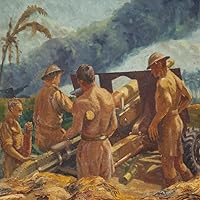
Artillery was the decisive weapon of the Great War - it dominated the battlefields. Yet the history of artillery during the conflict has been neglected, and its impact on the fighting is inadequately understood. Paul Strong and Sanders Marble, in this important and highly readable study, seek to balance the account.Their work shows that artillery was central to the tactics of the belligerent nations throughout the long course of the conflict, in attack and in defense. They describe, in vivid detail, how in theory and practice the use of artillery developed in different ways among the opposing armies, and they reveal how artillery men on all sides coped with the extraordinary challenges that confronted them on the battlefield. They also give graphic accounts of the role played by artillery in specific operations, including the battles of Le Cateau, the Somme and Valenciennes.Their work will be fascinating reading for anyone who is keen to understand the impact of artillery
This book sets out to examine artillery's direct influence on both the planning and the conduct of operations in WW1. This examination includes: - an exploration (looking at battles on various fronts during the war) how the constant process of reciprocal development affected the conduct of operations and the people fighting the battles; - the changing technologies of artillery and shells; - the innovations that effected accuracy (mapping, sound-ranging and aerial observation); - military doctrine (how was artillery fitted into the evolving combined armed doctrine); - organisation (how was artillery organised and commanded). Reciprocal development is described as an evolutionary process where organisations develop and counter new technologies and organisational structures in a continuous competitive process. This in direct response to the impact of the artillery on the battlefield, usually inspired by the enemy's own innovations.
Did the authors succeed in what they set out to do? The book starts with a gripping prologue: the use of artillery by the British at Le Cateau. Then it goes on describing year by year the evolution of artillery on all fronts of WW1. As an introduction the book succeeds. A lot of interesting aspects of the evolution are described, but not explored in depth. These aspects are: - the use direct fire - indirect fire - orchestration of fire (Bruchmuller; fire-planning) - direct infantry support - counter-battery suppression (using gas) - anti-infantry fire - anti-fieldworks fire (barbed wire-bunkers-trenches) - creeping barrage.
These aspects, and often their gruesome effects, are described in the books on battles in WW1 and understanding the how and the why of the artillery evolution made me better understand the importance and the use of artillery in the great war. This book does a good job introducing the reader in the evolution of artillery in WW1 No more, no less. Its not "the" book on artillery in the great war, but an interesting read and introduction.
"The thanks of the infantry, in my opinion, must be treasured more by every artilleryman than all decorations and citations. " Colonel Georg Bruchmuller
Didn't see any outright howlers but generally not informative. The book deals in sweeping generalizations and fails to get specific at all about developments in gun and shell technology, tactics, techniques, spotting, liaison, manufacturing or indeed anything else related to how artillery was used in the Great War.
Decent. Covers the change in artillery usage throughout WWI including the tactical, strategic and technological changes. Covers all the major combatants but primarily focused on the Western Front. Overall I enjoyed it.
This was a surprising book. While it is very well-researched, and academic, it was also very readable. I hadn't figured on reading the whole thing, but it was rather engrossing (at least for a military nerd like myself)
A highly readable account of perhaps one of the most important aspects of World War One. The book is broken down into the different years of the war and the combatants showing how the employment of artillery changed so dramatically within these four terrible years.