Finalist Best Nonfiction-Stanford University Libraries- William Saroyan International Prize for Writing
Solacers tells the touching story of a 5-year old child’s search for family life and safety following the divorce of his parents in Iran during the 1960’s. The first child of a heartless father and a discarded mother is left to fend for himself on the streets of Mashhad, seeking food and shelter wherever he can. His lonely early years are an unbelievable tale of cruelty and betrayal on the part of nearly everyone who might be expected to help, save for one aunt who does her best to keep him from starving.
But living a harsh and solitary existence has one advantage for this little boy: other than forcing him to be self-reliant, no one attempts to indoctrinate him on rural Iranian society's archaic cultural values and religious beliefs. And so he never accepts his wretched state as fate, choosing instead to dream big dreams about getting an education, having his own family, and starting a new life – possibly in the faraway land called America. He makes a plan and by the age of 17 he boards a plane to the land of possibilities, where his dreams eventually also take flight.
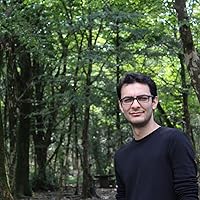
Arion Golmakani is an author whose writing explores memory, resilience, and the quiet forces that shape a human life. Born in Iran and raised amid uncertainty and displacement, he later made his life in the United States. His work draws from experiences that span the streets of Iran, years of personal struggle, and a lifelong search for meaning beyond doctrine or ideology. He is the author of the memoir Solacers, along with William Baffin’s Rose of Persia, The One-Eyed Ghoul, and The Allegory of the Virtual Cave of Life. Moving between memoir, allegory, and children’s storytelling, Golmakani blends philosophical reflection with narrative simplicity, often exploring themes of moral awakening, unity, and the quiet resilience of the human spirit. His writing moves easily between introspection and fable, offering stories that suggest how hope, attention, and compassion can emerge even in the most uncertain circumstances.
Living in a quiet corner of Canada, I seek books that move me and take me on journey to places different than my own. I look for inspiring stories from remote corners and cultures of the world. Books that help me become a better human, like this one or the ones written about the life of Gandhi. I borrowed this book from a friend who had won it at goodreads and was hooked from the very first page. A beautifully written human tail with perfection in the voice of the forgotten little boy. A must read.
After reading Solacers, the reader will come away with the realization and validation for the justification in believing in a better tomorrow; this appears to be a recurring theme throughout the memoir. From the very opening pages, I found myself captivated by the ensuing narrative of Golmakani’s extremely hard and difficult existence in the back villages of Iran. Every page afforded me the opportunity to witness the author’s trials and tribulations—from the opening page to the last. So enmeshed do we become in this memoir that it becomes difficult to not feel the personal pains that the author descriptively lays out before us. We also find ourselves cheering for him during those fleeting periods in his life when things appear to be going his way (as with his new-found relationship with Molouk, a ten year old light years ahead of her physical age—and later Sarah who befriended him on the river’s edge). Throughout all the hardships he endures while growing up, he never once gave up on the notion that his tomorrows would justify the many sacrifices encountered along the way. We soon learn that it was those never-ending thoughts of tomorrow, coupled with a number of helping hands along the way that enabled him to realize his youthful dreams. Even with those helping hands, however, it was his inner desire for a better life that catapulted him in his survival against great odds. Solacers effortlessly records his youthful struggles to find a better life for himself and, above all, to be loved, unconditionally. Golmakani convincingly demonstrates throughout the memoir that in spite of external forces forever attempting to beat us back, there is a light at the end of the tunnel for those that maintain a sense of faith and hope. Even though we learn upfront in his Prologue that “This is not a book about Iran or the Iranian people,” we nevertheless gain a wealth of knowledge of the prevailing culture of Iran and its people during the sixties and seventies leading up to the Iranian Revolution—a revolution which eventually toppled the long reign of Mohammad Reza Shah Pahlavi in 1979. It was interesting to note that in spite of those that sought to beat him back, he bears no animosity towards them. As he sought the forgiveness of others, so too did he openly forgive. A must read for those looking for inspiration in overcoming personal hardships.
This book was won in the GoodReads.com First Read contest.
This book is based on the author's childhood in Iran. This book is from the 1950's through the 1970's. This book is heart-wrenching. Reading about how a mother and child can not be together. How a child is forgotten and disregarded. It is about being lost, having not hope and then it turns out that this child makes sure he finds his own way.
This book makes the reader want to cry with frustration or cry about the lost childhood. But this book turns around and gives the reader a small glimpse into something they probably know nothing about.
While this book was a great wonderful read, I will admit to having a hard time reading it. I am glad I read the book but it just makes the reader hurt for the child in the book.
You are a very brave man!! You have lead such an interesting life, full of hardships and yet you overcame everything and were able to achieve your goals. Your story really made me think about all the children out there who don't have families or permanent residences. I Loved that you acknowledged everyone who helped you. Your book was very well written.
I won this book and really enjoyed reading it. I felt such sympathy for the author, who struggled as an unwanted child in Iran. I found myself cheering for him and hoping someone would reach out to this poor, defenseless child and provide him with the basic necessities and, even more importantly, the love for which he so desperately yearned. Thank you for sharing your story!
I really loved this book! Golmakami voice brings a captivating depth to his early life’s journey.
It is written with courage, honesty, love, and hope. The boy’s life story is unnervingly entrancing and depressing while also being dramatically fascinating due to his resolve to keep on keeping on. This memoir tells the story of an Iranian boy who becomes an abandoned child as a preschooler.
This makes him an orphan. It is complicated because both of his parents are alive and have families they are raising, yet he is not a part of either of their families. Conditions get arranged from time to time to attempt to have him housed, yet he is absolutely abandoned emotionally, physically and financially.
You will want to read this book because this little boy is resourceful, observant and loving - even with the isolation and hardship he is facing. He is a boy with dreams: Dreams that most anyone would discount as impossibly unreasonable. Those dreams and some good fortune allowed him to survive. Yes, survive, there were many real threats to him that could have led to his end.
As you read, be prepared for hardship, disaster, pain, desperation and unfulfilled promise. And be willing to envelop yourself in this young boy’s journey. This memoir will allow you to witness an unimaginable passage through childhood. This child’s resilience is tangible.
It was a finalist for Best Nonfiction-Stanford University Libraries- William Saroyan International Prize for Writing in 2012. Golmakami published this memoir when he was 55 years old and it covers his early years through his 17 year.
Here quotes that I found powerful and want to share.
The author writes: "Why couldn't I have a home like his (referring to his father) children and my mother's children?"
"While I never stopped longing for a place to call home, after two years of wondering from place to place, I had come to accept my circumstances and it didn't matter where I was being taken anymore. At that age (7 years old) I was like water that had been spilled from a fallen pitcher into the ground; all I could do was follow the gravity and hope for a depth large enough to hold me for a while, until such a time that I could grow into a stream of my own and carve my own path through life."
His is a story of compassionate understanding and with his intentional will to survive. He writes: "There is a unique pleasure found in forgiveness that can never be found in revenge." As a ten-year-old, on his own he explains: "Loneliness, constant hunger, and boredom made every hour of every day weigh a thousand tons." "Only ten years old and without any money or permanent address to go to, I led the life of an alley cat." Because of my pride, "I never begged for anything, refused to touch anyone's food, and asked no one for help."
Golmakami writes: "I believe those who have spiritually evolved - and by that I do not mean religiously - perceive the world and everyone in it as ‘us,’ as did Momon Bozorg, while the unenlightened souls view the world as ‘me’ and ‘not me,’ while in Momon Bozorg's spiritually driven view, we were all water of the same ocean separated only by a physical bottle called body."
I just finished reading Solacers and must say how moved I was. The story brought tears to my eyes countless times. I was completely amazed that an individual can triumph as a man after such a neglected, lost, and abusive childhood. Albeit sad, the story is filled with hope. A must read.
I am buying a copy for a young man struggling with his past. This book can certainly help him focus on his future, believe in himself and become who he wants to be regardless of what is behind him. Thank you Arion for sharing. Thank you Arion for not seeing yourself as a victim, and becoming a man for all of us to be proud of.
"Solacers" is a big look into a largely unknown culture from the point of view of one of the unprivileged inside it. I was touched by the matter of fact way in which the story was told, not only because of the bad times our young protagonist goes through, but also because of the way in which he decides to thank every single person that helped him along the way.
The writing itself would have benefited from a more exhaustive editing work. Even though the language is very good, the long sentences and unending lists make the reader lose the trail sometimes.
I found this book pretty intense. The plight of the poor author as an unwanted child of divorced parents forced to try to survive on the streets of Iran was compelling. I couldn't believe how much optimism he had throughout all the amazing hardships he had to contend with. I read the book straight through with barely a break. The author's narrative style jumped around a bit and was repetitive at times, but this didn't really detract much from the story itself. It was a worthwhile read.
An interesting glimpse into life in Iran during the late 1950-1970s. This is the true story of a little boy caught in the tug of war of divorced parents in a country that doesn't have the same family court system that we. A very shocking and hard story to read at times. I really grew to love this little boy quickly. The strength of the human spirit really is remarkable! Maybe not the most well written memoir but certainly a good read!
A very enthralling read of the author's life growing up in Iran. There were times that I felt like I was almost there with was happening, and other times that I just wanted to read more of what was going on :)
Thank you for having this in the first-reads giveaway program also and giving me a chance to win and review this copy. Thank you Arion! :)
If you loved The Glass Castle or Angela's Ashes then this is the book you've longed for! I cried, laughed, prayed and cheered on Arion Golmakani from the first page. He had an incredible story to tell and his grace, forgiveness, and acceptance of his life and others is truly to be admired!!!
خوندمش، لذت بردم، بعضی جاهاش چند قطره اشک ریختم، بعضی جاهاش شاد شدم خندیدم خوشحال شدم، بعضی جاهاش هیجانزده شدم، بعضی جاهاش باورم نشد،....... در پایانش منم امیدوار شدم به جهانی که "من" و "تو" "ما" بشوند
It is disheartening that a the people of a culture which preaches family, faith, and honor could turn the other way when one of their own is in need. Kudo's to Mr. Golmakani for proving them all wrong. Great read.
It is hard to express how angry and frustrated this book made me feel. Naturally my full empathy was with our long suffering hero but what I constantly struggled with was a sense of incredulity over gaps & missing facts. Little things like how the cost of an academic year (which he could not afford to pay was only twice the cost of a bus pass to Tehran which he did manage to get his Aint to pay for!)
Arion admits the book was not edited (due to additional cost) and I think his story suffers for that lack of editing. Yet Arion says he found success in the warm bosom of American life and owns a chain of icecream parlours....surely an editor (or a friends review) would not have been too much of a financial burden.
In any case I cannot fathom how *any* family can deign to treat its own blood with such abhorrent mental & physical abuse.
The unspeakable horrors of what this author had to overcome do not reconcile with my knowledge of middle easterners (be they Persian or Arab) who are known to take care of their own at whatever cost; hence my gut feeling that certain (perhaps even more unpalatable truths) were held back. Why would his Father act that way towards him? Why was his Mother so submissive and unable to go back and live with her family who had farmland in order to keep her children with her? Questions that he as a child may not have been able to answer but surely in writing his memoir these are questions he would have sought cathartic answers to.
Overall, it is an insightful book as pertains to life in Iran often poetically written with phrases that resonate & linger. It was especially interesting to note the role of Ba'ahi's, who are not that well known yet who seem to share a very magnanimous view of humanity and one; that had it been practiced by more of his neighbours and family would have significantly alleviated his suffering.
This is one of my favorite quotes (of many!) in this heartwrenching memoir:
"I believe those who have spiritually evolved - and by that I do not mean religiously - perceive the world and everyone in it as ‘us,’ as did Momon Bozorg, while the unenlightened souls view the world as ‘me’ and ‘not me,’ while in Momon Bozorg's spiritually driven view, we were all water of the same ocean separated only by a physical bottle called body."
Arion Golmakani’s memoir, Solacers, is the story of his often grueling and always challenging childhood in pre-revolutionary Iran. It will grip you from the first page, as a little boy is taken away from his mother, yet again, with her permission. If you’re a little boy in Iran in the early sixties—unwanted by your family, passed from one foster home to another—where do you go, what do you do, and where do you find solace? You might expect this to be a depressing tale, and that this young boy would quickly become bitter and hardened; after all, he’s been abandoned by his mother and father. Instead, the reader is immediately drawn to the main character, who doesn’t indulge in self-pity but rather meets his ordeals and hardships head-on. Sort of an Iranian Huck Finn but with a sweeter disposition. This endearing boy’s temerity and often self-deprecating storytelling style will keep you turning the pages; throughout his youth he encounters people who are cruel or indifferent, but also finds many solacers. The characters are not portrayed as either good or evil, but as complex people with their own motivations and troubles. As the young boy deals with the intricacies of human behavior, his own humanity and questioning spirit shine through. This beautifully written book gives us a glimpse into another time, while reminding us that we humans are all in this together regardless of what culture or era we inhabit. Solacers is suspenseful, moving, sometimes humorous, and always interesting.
In 1960s staunchly patriarchal Iran, there is only one thing worse than having a dead father, having an alive father who refuses to support you. At the tender age of 5, after his mother remarries and gives birth to his stepfather's first child, young Alireza is expelled from his mother's home and given over to an abusive father who does not want him, for the simple reason that his father refuses to pay Child Support. What follows are 12 years of bouncing between foster families and mostly unsympathetic relatives with intermittent periods spent wandering city streets and surviving by wit alone. Again and again he ran back to the only home he knew and wanted to find himself unwelcome and sent away back to whatever sordid fate his father's actions have caused. Battered, bruised, injured, lonely, starving, etc. It does not matter. Everyone looks at him with disgust or pity, but no one is willing to bare his father's burden and so often unwashed and on the brink of starvation, Alireza wanders about,crisscrossing his motherland, on an endless quest for welcoming open arms and a brighter tomorrow. Set against an authentic and vivid portrait of 1960s&1970s pre-revolutionary Iran, Solacers is a hauntingly beautiful story to read and remember.
My friends and I read this book will to everyone and their families and mine a great time because we took turns like I read a page and lilly and Owen take turns to reading together
This story was absorbing as we trace the desperate plight of a young Iranian boy whom neither parent would support. His wretched early circumstances were followed through many vicissitudes to a successful life as a business owner in America.
Phenomenal - tough, at times cruel, and yet so beautiful. I rarely cried so much, less about the tragedies than about the love and optimism that kept him going. Life is good after all.
Very touching! never read a book this fast :) Some parts of it were unbelievable. But at the end, it proved that positivity and hope let anyone achieve anything in this world.
A very good book. The heartbreaking story of survival of a small boy caught in the uncaring world of a callous religious society in which children are at the mercy of those under their care. I have never wanted to enter the pages of a book and punch a man in the face as much as I did for the father of this child.
What an amazing human being Alireza is, he never held a grudge against people who hurt him so badly. I don't know if his father is still alive but I think he took a monumental revenge on his father by writing this book. Now the whole world knows what a monster/jerk he was and maybe still is.
Arion (Alireza) lived in Iran far earlier than I was born and left the country before the 1979 revolution. Iran's history attests to the poor condition of the rural people, mostly thanks to the incompetent previous leaders and foreign interference in the country's affairs. Having heard about the lifestyle and conditions of the country from my grandparents who had experienced the times of Arion's, I feel him, and his story resonates with me as I, too, left the country to the US - the country that had fallen under a different government with vigorous censorship and extreme security measures. This is a story filled with real miseries of a young orphan in poor rural areas of male-dominant Iran who endures the test and trials of time and survives situations that could very well have turned wrongly. This is A heart-touching account of one's life who comes out of harsh conditions to find hope and life.