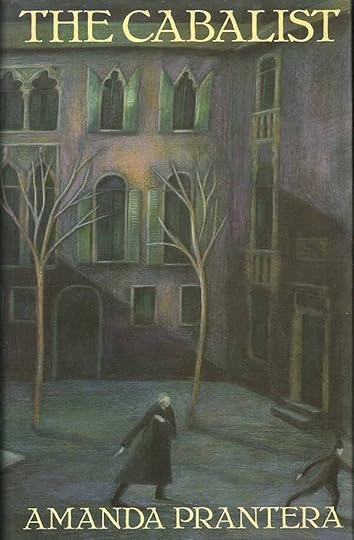
Che in pieno XX secolo, a Venezia, un uomo esperto di matematica e scienze ebraiche pretenda di convincere una platea di scienziati che è possibile ridurre una cavia all'obbedienza usando un sistema magico tratto dalla Cabala, a molti potrà sembrare assurdo. Ma per Joseph Kestler non c'è niente di più assurdo che negare qualcosa a priori: ed ecco perchè, davanti a uno scettico consesso di professori a Ca' Foscari, Kestler non esita a dare inizio alla sua incredibile dimostrazione. Ma qualcosa di oscuro è nell'aria e il diavolo, è il caso di dirlo, ci mette la coda. Da questo momento in poi, per il dottor Kestler comincia una lotta senza quartiere con forze oscure e imponderabili, con un enigma da cui dipende molto di più della sua stessa vita. Ricchissimo e con un finale sorprendente, questo romanzo sulfureo è la rivelazione di Amanda Prantera, una delle più inquietanti e convincenti scrittrici inglesi contemporanee.
I really wasn’t sure about this at first – it actually took me a couple of tries to get into it – but once I got what it was doing I was sold. First published in 1985 (my edition is from 2000), this is a modern gothic novel set in Venice, where we’re introduced to the ‘cabalist’ of the title. Joseph Kestler believes himself to be a kind of magician or wizard, able to manipulate ancient sacred texts to control animals, the weather, maybe even people. But in the first scene of the book, he receives a diagnosis of terminal lung cancer, and his attention turns to four priorities: finish his research; write a testament conveying ‘his secret, his message to the world’; give it to someone who will keep it safe; and defeat his enemy, ‘the Catcher’, a boy who tortures animals.
There are two ways you can read The Cabalist – one is to take Kestler’s account at face value: he is a mage, perhaps the last of the mages, and the Catcher is a demon. The other is to assume this is all a delusion, the Catcher just a naughty child. Kestler is an isolated man with no family and few friends; could something about his past be a clue to his present? Could the connection between him and the Catcher be more than it seems? It’s an enigmatic and haunting novel. There are a few chapters where the author (or, at least, an omniscient storyteller) interjects; these didn’t work quite as well for me, their joky tone jarring against the mysterious rest, although their intent, at least, fits well with the book’s concern with the nature of storytelling and creating reality through writing.
Strange and melancholic, but ultimately very absorbing once you get on its wavelength.
Amanda Prantera writes strange books. Strange and wonderful books. This is one. I can't say for sure what it was about, or what the ending signified, but in a weird way it will stay with me.
Interessante il tema della riscoperta della magia, un po' meno lo sviluppo. Il libro è molto lento, si perde spesso nelle elucubrazioni del protagonista, in almeno tre occasioni l'autrice cambia punto di vista in favore di inquadrature esterne che puzzano di avvenimenti off screen, insomma le è mancato il coraggio di scrivere in sintonia con le prime pagine. Il finale ambiguo non salva il tutto, anzi. EDIT Dopo una rilettura rapida credo di esserne venuto a capo. È tutta una questione di narratore inaffidabile: Joseph è un malato terminale che non si sta curando. Credo che la chiave di lettura sia questa, quindi non sappiamo esattamente quanto di quello che ci viene raccontato dal suo punto di vista avviene realmente. Ci sono dei punti poco chiari, ma ritengo che il romanzo sia l'unione perfetta tra un'ottima idea e un autore pigro.
SPOILER Credo che Joseph sia un nome falso e che in realtà il ghermitore non esista. Joseph è il ghermitore, o meglio, è l'adulto che è diventato, è una lotta interiore con un pezzo del suo passato, un ragazzo ossessionato dalla magia perché il padre era a sua volta un mago. Non escludo che possa esserci qualcosa di più sulfureo: in un punto Joseph afferma di non essere stato posseduto... Che lui sappia, e il testamento ha un cattivo odore (del male secondo Joseph, della muffa secondo il bibliotecario - spiegazione che potrebbe essere utile a illuminare lo spettacolo dello sgabuzzino della casa maledetta dove sono morti i suoi genitori).
I love this novel. I've now read it three times, and each time find something new. Old Joseph Kestler, terminally ill is seeking to save his life's work as a cabalist. But will he be foiled by the malevolent child demon? I love the combination: old academic and cruel child who lives across the square from his apartment in Venice. A gothic duel, beautifully told.
Reading these icy pages, I remembered the hotel room - looking down at the dark water - I knew that I'd been followed - I remembered, too, the bad dreams I'd had in that narrow bed
Non so, forse meriterebbe qualcosina di più di tre stelle, non foss'altro perché in fondo al romanzo ci sono arrivato, e le descrizioni oscure di Venezia non sono male; certo che non è un romanzo d'azione, ma in qualche modo riesce a farsi leggere nonostante alcune lievi lungaggini. Sì, comunque meritevole