"Marvin Bell has the largest heart since Walt Whitman."—Harvard Review
"One of our finest and most acclaimed poets."—Booklist
"Charged with making the darkness visible, Bell's 'Dead Man' sometimes glows with an eerily illuminating light."—Publishers Weekly
Marvin Bell is one of America's great poets, and his legacy includes the invention of a startling poetic form called the "Dead Man" poems. The Dead Man is alive and dead at once: not a persona, but an overarching consciousness, embedded in poetics and philosophy. Vertigo is the latest from the Dead Man—a brilliant, enigmatic, wise, and wild book.
The dead man stands still, waiting for the boomerang to—you know. He hears the words of philosophers ricochet among chasms and disappear in the far away. His scent goes forth, his old skin, hair and nails, and he spits, too. He leans forward to look backward, and the ancient world reappears. It is the beginning, when mountains, canyons and seas were new, before the moon had eyes, before paper, before belief. Anything he says now are souvenirs of the future…
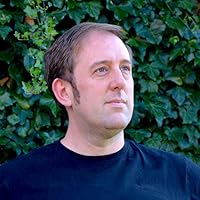
Marvin Bell has published seventeen books of poetry and has received numerous honors, including the Lamont Award and Senior Fulbright appointments to Yugoslavia and Australia. He taught for forty years at the Iowa Writers' Workshop, and was the first State Poet of Iowa. He lives in Iowa and Washington.
Marvin Bell was born in New York City on August 3, 1937, and grew up in Center Moriches, on the south shore of eastern Long Island. He holds a Bachelor of Arts from Alfred University, a Master of Arts from the University of Chicago, and a Master of Fine Arts from the University of Iowa.
Bell’s debut collection of poems, Things We Dreamt We Died For, was published in 1966 by the Stone Wall Press, following two years of service in the U.S. Army. His following two collections were A Probable Volume of Dreams (Atheneum, 1969), a Lamont Poetry Selection of the Academy of American Poets, and Stars Which See, Stars Which Do Not See (1977), which was a finalist for the National Book Award.
Since then, Bell has published numerous books of prose and poetry, most recently 7 Poets, 4 Days, 1 Book (Trinity University Press, 2009), a collaboration with six other poets, including Tomaz Salamun, Dean Young, and Christopher Merrill, and Mars Being Red (Copper Canyon Press, 2007) , which was a finalist for the Los Angeles Times Book Award.
Bell’s other collections include Rampant (2004); Nightworks: Poems, 1962-2000 (2000); Ardor: The Book of the Dead Man, Volume 2 (1997); A Marvin Bell Reader: Selected Poetry and Prose (Middlebury College Press, 1994); The Book of the Dead Man (Copper Canyon Press, 1994); Iris of Creation (1990); New and Selected Poems ( Atheneum, 1987);
He has also published Old Snow Just Melting: Essays and Interviews ( University of Michigan Press, 1983) , as well as Segues: A Correspondence in Poetry with William Stafford (Godine, 1983).
About his early work, the poet Anthony Hecht said, “Marvin Bell is wonderfully versatile, with a strange, dislocating inventiveness. Capable of an unflinching regard of the painful, the poignant and the tragic; but also given to hilarity, high-spirits and comic delight; and often enough wedding and blending these spiritual antipodes into a new world. It must be the sort of bifocal vision Socrates recommended to his drunken friends if they were to become true poets.”
Later in his career, Bell created the poetic form known as the “Dead Man poem," about which the critic Judith Kitchen has written: “Bell has redefined poetry as it is being practiced today.”
Beginning in 2000, he served two terms as Iowa’s first Poet Laureate. His other honors include awards from the American Academy of Arts and Letters, The American Poetry Review , fellowships from the Guggenheim and National Endowment for the Arts, and Senior Fulbright appointments to Yugoslavia and Australia.
Bell taught for forty years for the Iowa Writers’ Workshop, retiring in 2005 as Flannery O’Connor Professor of Letters. For five years, he designed and led an annual Urban Teachers Workshop for America SCORES. Currently he serves on the faculty of Pacific University’s low-residency MFA program. He has also taught at Goddard College, the University of Hawaii, the University of Washington and Portland State University.
Bell has influenced generations of poets, many of which were his students, including Michael Burkard, Marilyn Chin, Rita Dove, Norman Dubie, Albert Goldbarth. Robert Grenier, Joy Harjo, Juan Felipe Herrera, Mark Jarman, Denis Johnson, Larry Levis, David St. John, and James Tate.
Marvin Bell also frequently performs with the bassist, Glen Moore, of the jazz group, Oregon. He and his wife, Dorothy, live in Iowa City and Port Townsend, Washington.
All the poems in this collection contain the character of Living Dead Man. Bell imagines himself the modern-day Whitman, creating a new everyman, and this concept outshines the rest of the work. Sadly I don't know if he deserves such a comparison, not having read his other poetry, and I found the self-declared comparison to be a bit obnoxious. Once I stopped choking on that pretentious flight of grandeur, I found a few things to like.
The Book of the Dead Man (Borders) "...He may have traveled without shoes, with little food or water, but still he carried his story, his temperature, his elemental rhythms. Now the dead man feels a chill as the barricades rise...."
The Book of the Dead Man (The Box) "...The bad tidings encase his heart so that no single hurt can break through the tidal analgesic of the daily news...."
This is a decidedly American, cunningly political, and fiercely unnerving collection. Philosophy mixes easily with quantum physics, zen with zeitgeist, held together by deft syntax, archetypal images, and the musical underpinnings of natural speech. Spinning like a dervish to transcend the muck through art, these poems will leave you dizzy, make you think.
"Live as if you were already dead." The incantation written before every poem. Yes, I agree (with the Publisher's Weekly reviewer): this is a glorious "Son of 'Song of Myself'"-- it's feisty, unabashed, and sometimes quiet. He fist-pumps and breast-beats about what's wrong with now and America. All whilst understanding that when you're dead, this doesn't matter.
His celebrations of fungi hit it out of the park. And love this from "More About the Dead Man and the Roads":
"The dead man likes the high road for its rattling pace, its single-mindedness, its web of isolate sensibilities. The dead man likes the low road for its backtalk amidst acres of rubble, its uberworldly sass, its animal ooze.'