

What do you think?

Pantheon #1
The Age of Ra
The Ancient Egyptian gods have defeated all the other pantheons and claimed dominion over the earth, dividing it into warring factions. Lt. David Westwynter, a British soldier, stumbles into Freegypt, the only place to have remained independent of the gods’ influence. There, he encounters the followers of a humanist leader known as the Lightbringer, who has vowed to rid mankind of the shackles of divine oppression. As the world heads towards an apocalyptic battle, there is far more to this freedom fighter than it seems...
452 pages, Kindle Edition
First published July 28, 2009
About the author
James Lovegrove
175 books686 followersJames Lovegrove is the author of several acclaimed novels and books for children.
James was born on Christmas Eve 1965 and, having dabbled in writing at school, first took to it seriously while at university. A short story of his won a college competition. The prize was £15, and it had cost £18 to get the story professionally typed. This taught him a hard but necessary lesson in the harsh economic realities of a literary career.
Straight after graduating from Oxford with a degree in English Literature, James set himself the goal of getting a novel written and sold within two years. In the event, it took two months. The Hope was completed in six weeks and accepted by Macmillan a fortnight later. The seed for the idea for the novel — a world in microcosm on an ocean liner — was planted during a cross-Channel ferry journey.
James blew his modest advance for The Hope on a round-the-world trip which took him to, among other places, Thailand. His experiences there, particularly what he witnessed of the sex industry in Bangkok, provided much of the inspiration for The Foreigners.
Escardy Gap was co-written with Pete Crowther over a period of a year and a half, the two authors playing a game of creative tag, each completing a section in turn and leaving the other to carry the story on. The result has proved a cult favourite, and was voted by readers of SFX one of the top fifty SF/Fantasy novels of all time.
Days, a satire on consumerism, was shortlisted for the 1998 Arthur C. Clarke Award (losing to Mary Doria Russell’s The Sparrow). The book’s genesis most probably lies in the many visits James used to make as a child to the Oxford Street department store owned by his grandfather. It was written over a period of nine months while James was living in the north-west suburbs of Chicago.
Subsequent works have all been published to great acclaim. These include Untied Kingdom, Worldstorm, Provender Gleed, The Age Of Ra and the back-to-back double-novella Gig. James has also written for children. Wings, a short novel for reluctant readers, was short-listed for several awards, while his fantasy series for teens, The Clouded World, written under the pseudonym Jay Amory, has been translated into 7 other languages so far. A five-book series for reluctant readers, The 5 Lords Of Pain, is appearing at two-monthly intervals throughout 2010.
He also reviews fiction for the Financial Times, specialising in the Young Adult, children’s, science fiction, fantasy, horror and graphic novel genres.
Currently James resides in Eastbourne on the Sussex Coast, having moved there in August 2007 with his wife Lou, sons Monty and Theo, and cat Ozzy. He has a terrific view of the sea from his study window, which he doesn’t sit staring out at all day when he should be working. Honest.
James was born on Christmas Eve 1965 and, having dabbled in writing at school, first took to it seriously while at university. A short story of his won a college competition. The prize was £15, and it had cost £18 to get the story professionally typed. This taught him a hard but necessary lesson in the harsh economic realities of a literary career.
Straight after graduating from Oxford with a degree in English Literature, James set himself the goal of getting a novel written and sold within two years. In the event, it took two months. The Hope was completed in six weeks and accepted by Macmillan a fortnight later. The seed for the idea for the novel — a world in microcosm on an ocean liner — was planted during a cross-Channel ferry journey.
James blew his modest advance for The Hope on a round-the-world trip which took him to, among other places, Thailand. His experiences there, particularly what he witnessed of the sex industry in Bangkok, provided much of the inspiration for The Foreigners.
Escardy Gap was co-written with Pete Crowther over a period of a year and a half, the two authors playing a game of creative tag, each completing a section in turn and leaving the other to carry the story on. The result has proved a cult favourite, and was voted by readers of SFX one of the top fifty SF/Fantasy novels of all time.
Days, a satire on consumerism, was shortlisted for the 1998 Arthur C. Clarke Award (losing to Mary Doria Russell’s The Sparrow). The book’s genesis most probably lies in the many visits James used to make as a child to the Oxford Street department store owned by his grandfather. It was written over a period of nine months while James was living in the north-west suburbs of Chicago.
Subsequent works have all been published to great acclaim. These include Untied Kingdom, Worldstorm, Provender Gleed, The Age Of Ra and the back-to-back double-novella Gig. James has also written for children. Wings, a short novel for reluctant readers, was short-listed for several awards, while his fantasy series for teens, The Clouded World, written under the pseudonym Jay Amory, has been translated into 7 other languages so far. A five-book series for reluctant readers, The 5 Lords Of Pain, is appearing at two-monthly intervals throughout 2010.
He also reviews fiction for the Financial Times, specialising in the Young Adult, children’s, science fiction, fantasy, horror and graphic novel genres.
Currently James resides in Eastbourne on the Sussex Coast, having moved there in August 2007 with his wife Lou, sons Monty and Theo, and cat Ozzy. He has a terrific view of the sea from his study window, which he doesn’t sit staring out at all day when he should be working. Honest.
Ratings & Reviews
Friends & Following
Create a free account to discover what your friends think of this book!
Community Reviews
Displaying 1 - 30 of 205 reviews

November 9, 2013
See that cover? That is a kick ass cover. So the next time you're in a bookstore, stop and gaze upon its beauty--then return the book to the shelf and slowly back away because that moment, the moment where you gaze upon that glorious golden image of Ra and then wonder at the contradictory image of a modern day soldier in front of a battlefield and think WTF--that's as good as it's going to get, baby.
I have put off reviewing this for days because reviewing it seems cruel, like kicking a three legged puppy for not being able to run fast enough. I knew that I was in deep suck by page 20, so it's my fault that I kept reading. And I know, I know--there will be those who say, why did you keep reading if you hated the book so much? A) I bought it, so I felt a misguided need to get my money's worth, B) this is my busy time of year, so reading a crappy book almost ensured I would more readily turn my attention to grading semester finals, and C) I can't count the number of times I have despised a book right up until the very end and something clicked, the other shoe dropped, all was revealed and, hallelujah, it's a literary miracle--the book was amazing! There were no miracles this time. I clapped my hands and really believed, but Tinkerbell never came back to life. This sucker was DOA and should have come with a DNR. Damn, I kicked the three legged dog, didn't I?
Age of Ra has an interesting premise. The gods of old are real, they go to battle for dominion over man, the Pantheon of Egypt wins by destroying all other gods. This idea isn't entirely new, but usually these types of books focus on Greek and Roman mythology. The Egyptian slant seemed promising. But this type of book has been done better by Gaiman's American Gods or even Max Gladstone's created mythology in the Craft Sequence books Three Parts Dead and Two Serpents Rise. There are several issues:
1. All nations now worship Egyptian deities, but align themselves with different gods (some Asian countries worship Anubis, England worships Osiris, South America worships Horus--you get the idea). These countries now choose their allies and their enemies based upon which gods their chosen deity considers friends and enemies. The god also blesses his or her people with his divine power, or ba, as a power source to charge weapons and vehicles (but, don't worry, if your god forgets to send you some of his mojo, there's still gasoline). This sums up all the interaction the gods have with their people; much of the book consists of military battles that simply throw the gods' names around but really don't rely upon the gods at all. So all that amazing gods-among-men anticipation I had built up was a serious letdown.
2. The Egyptian gods defeated all other gods 100 years ago, yet the novel is set in what seems to be roughly the present day. Within a century and in the face of the knowledge that the gods are real, one would think the Egyptian culture and mindset would have radically changed society and redrawn the map. Nope. Apparently not. We still have Russia, Japan, China, and all the other countries and societies speaking and acting as they always have.
3. The integration of Egyptian culture into present day is unimaginative and lazy at best. We still have the United States, but its president is now known as the Pastor President. We still have Britain, but its head of state is now His Pharaonic Majesty. We still have Mercedes Benz, but it's now known as the Mercedes Lotus. We still have tanks, but they're known as Scarabs. The world-building is weak.
4. It's also laughable that, in a world that still has high tech weaponry and alternate fuel sources, our hero enters combat with a crook and flail. Or that mummies so clueless they make zombies look like the life of the party are sent into battle against tanks and artillery. Or that high priests use wooden birds to carry their consciousness for reconnaissance missions, but, if that fails, they send out the planes we would normally use for reconnaissance. Because a high priest in a trance forever is always preferable to the intel a plane could send back in a fraction of the time. The inclusion of modern technology in the book renders the Ancient Egyptian inspired tech moot and useless by comparison.
5. Cardboard, stereotyped characters so one-dimensional that they make the Kardashians seem human; an obligatory will-they-won't-they romance with less passion than a Liza Minnelli marriage; plot twists so obvious they practically nudge you ("You'll be so surprised! You'll never guess what's going to happen! Here it comes, here it comes! Did it get ya?").
6. The best part of the book? The gods. One can tell that Lovegrove really did his research here and he's smart enough to realize that the gods have to adapt and change somewhat to move the plot forward. Holding them to their archetypal roles would have added little interest whatsoever. As Ra begins to develop a consciousness outside of his divine role and manipulate the Pantheon to avert disaster, it's easy to think something might be salvaged. However, the god chapters are too few and far between (and ultimately anticlimactic) to add much to the narrative.
There was an idea here, somewhere beneath all the problems, but it never delivers on the promise presented by that beautiful cover.
Cross posted at This Insignificant Cinder
I have put off reviewing this for days because reviewing it seems cruel, like kicking a three legged puppy for not being able to run fast enough. I knew that I was in deep suck by page 20, so it's my fault that I kept reading. And I know, I know--there will be those who say, why did you keep reading if you hated the book so much? A) I bought it, so I felt a misguided need to get my money's worth, B) this is my busy time of year, so reading a crappy book almost ensured I would more readily turn my attention to grading semester finals, and C) I can't count the number of times I have despised a book right up until the very end and something clicked, the other shoe dropped, all was revealed and, hallelujah, it's a literary miracle--the book was amazing! There were no miracles this time. I clapped my hands and really believed, but Tinkerbell never came back to life. This sucker was DOA and should have come with a DNR. Damn, I kicked the three legged dog, didn't I?
Age of Ra has an interesting premise. The gods of old are real, they go to battle for dominion over man, the Pantheon of Egypt wins by destroying all other gods. This idea isn't entirely new, but usually these types of books focus on Greek and Roman mythology. The Egyptian slant seemed promising. But this type of book has been done better by Gaiman's American Gods or even Max Gladstone's created mythology in the Craft Sequence books Three Parts Dead and Two Serpents Rise. There are several issues:
1. All nations now worship Egyptian deities, but align themselves with different gods (some Asian countries worship Anubis, England worships Osiris, South America worships Horus--you get the idea). These countries now choose their allies and their enemies based upon which gods their chosen deity considers friends and enemies. The god also blesses his or her people with his divine power, or ba, as a power source to charge weapons and vehicles (but, don't worry, if your god forgets to send you some of his mojo, there's still gasoline). This sums up all the interaction the gods have with their people; much of the book consists of military battles that simply throw the gods' names around but really don't rely upon the gods at all. So all that amazing gods-among-men anticipation I had built up was a serious letdown.
2. The Egyptian gods defeated all other gods 100 years ago, yet the novel is set in what seems to be roughly the present day. Within a century and in the face of the knowledge that the gods are real, one would think the Egyptian culture and mindset would have radically changed society and redrawn the map. Nope. Apparently not. We still have Russia, Japan, China, and all the other countries and societies speaking and acting as they always have.
3. The integration of Egyptian culture into present day is unimaginative and lazy at best. We still have the United States, but its president is now known as the Pastor President. We still have Britain, but its head of state is now His Pharaonic Majesty. We still have Mercedes Benz, but it's now known as the Mercedes Lotus. We still have tanks, but they're known as Scarabs. The world-building is weak.
4. It's also laughable that, in a world that still has high tech weaponry and alternate fuel sources, our hero enters combat with a crook and flail. Or that mummies so clueless they make zombies look like the life of the party are sent into battle against tanks and artillery. Or that high priests use wooden birds to carry their consciousness for reconnaissance missions, but, if that fails, they send out the planes we would normally use for reconnaissance. Because a high priest in a trance forever is always preferable to the intel a plane could send back in a fraction of the time. The inclusion of modern technology in the book renders the Ancient Egyptian inspired tech moot and useless by comparison.
5. Cardboard, stereotyped characters so one-dimensional that they make the Kardashians seem human; an obligatory will-they-won't-they romance with less passion than a Liza Minnelli marriage; plot twists so obvious they practically nudge you ("You'll be so surprised! You'll never guess what's going to happen! Here it comes, here it comes! Did it get ya?").
6. The best part of the book? The gods. One can tell that Lovegrove really did his research here and he's smart enough to realize that the gods have to adapt and change somewhat to move the plot forward. Holding them to their archetypal roles would have added little interest whatsoever. As Ra begins to develop a consciousness outside of his divine role and manipulate the Pantheon to avert disaster, it's easy to think something might be salvaged. However, the god chapters are too few and far between (and ultimately anticlimactic) to add much to the narrative.
There was an idea here, somewhere beneath all the problems, but it never delivers on the promise presented by that beautiful cover.
Cross posted at This Insignificant Cinder

August 3, 2009
A hundred years ago the Egyptian gods defeated all other gods and now reign supreme over the earth. Dividing the land up amongst themselves, their feuds and squabbles and hatreds reflect on earth amongst the mortals. Thousands of men and women join their deities' armies and navies, their service and sacrifice the ultimate worship.
Lieutenant David Westwynter is a British soldier of Osiris. Having barely escaped with his life from a trap in Petra, Jordan, he knows his only hope is reaching Freegypt, what was once Egypt, ironically the only country in the world the gods haven't laid claim to. Once home to all, none of them want to fight over it, and it is the only independent, non-religious land left.
There David falls in with a beautiful aloof woman called Zafirah and her Liberators, freedom fighters who are part of a larger movement within Freegypt. Their leader is a masked man called the Lightbringer, who turns out to be more than he seems in more than one way.
As the Lightbringer's vision of freedom from the warring gods and a plan to fight back brings unity to Freegypt's people, so Ra, the sun god, seeks to unify his squabbling descendants on the godly plane. With so much history and hatred between them, he despairs of helping them change and forgive, and stop the wars among their human followers on earth. But as with Freegypt, the one person who can unify the gods against a common cause is the Lightbringer, and only David is in any position to speak reason to this revered human seeking to bring a new age to the world - and discover who he truly is.
At its heart, this is a simple story, simply told. The prose was refreshingly unpretentious (I confess, I do expect some pretension from sci-fi), without the superficial need to clutter its sentences with techno-gabble or other made-up words. I loved the ending too, the scene in England, which neatly summed up the "message", if you will, of the story.
Now, I decided not to spoil the first revelation, simply so I could discuss things more openly, but I will say this: the first revelation is very predictable, and you'll guess it early on because it's quite obvious. That's mostly because the story's so neatly laid out, and things that need to be prefaced, are. I don't hold that against it though. In a way, it read like one of those satisfying Hollywood movies, and indeed is structured much the same way, with the exception of the scenes amongst the gods, which added another, intriguing layer.
While David doesn't narrate, his is the only human perspective we get, and the style is noticeably different from how the Lightbringer talks to him in private - it's a nice display of inflection and syntax, showing skill and craftsmanship at work. There's more to Lovegrove than "meets the eye", so to speak. The simplicity of the prose and the neatness of the story work because the author is skilled, but it's like this iMac I'm typing on: the clean, smooth, almost featureless exterior hides a great deal of clockwork inside. (Not literal clockwork - you get me.)
I was intrigued by the premise, and I would have liked to understand how it works more. The gods are very very real, here. But how humans got caught up in obeying their dictates, doing their will, was never quite clear. And the world beyond the wars - that I would have liked to have seen. I guess it's no different than ours, really, aside from the different way countries are aligned.
At the end of the day, The Age of Ra is deceptively simple, and has a gentle yet poignant message about power and religion that is easily heard because it is not preachy or moralising. This isn't a story about religion, or who is right. I won't try to sum it up. I'm still pondering.
Lieutenant David Westwynter is a British soldier of Osiris. Having barely escaped with his life from a trap in Petra, Jordan, he knows his only hope is reaching Freegypt, what was once Egypt, ironically the only country in the world the gods haven't laid claim to. Once home to all, none of them want to fight over it, and it is the only independent, non-religious land left.
There David falls in with a beautiful aloof woman called Zafirah and her Liberators, freedom fighters who are part of a larger movement within Freegypt. Their leader is a masked man called the Lightbringer, who turns out to be more than he seems in more than one way.
As the Lightbringer's vision of freedom from the warring gods and a plan to fight back brings unity to Freegypt's people, so Ra, the sun god, seeks to unify his squabbling descendants on the godly plane. With so much history and hatred between them, he despairs of helping them change and forgive, and stop the wars among their human followers on earth. But as with Freegypt, the one person who can unify the gods against a common cause is the Lightbringer, and only David is in any position to speak reason to this revered human seeking to bring a new age to the world - and discover who he truly is.
At its heart, this is a simple story, simply told. The prose was refreshingly unpretentious (I confess, I do expect some pretension from sci-fi), without the superficial need to clutter its sentences with techno-gabble or other made-up words. I loved the ending too, the scene in England, which neatly summed up the "message", if you will, of the story.
Now, I decided not to spoil the first revelation, simply so I could discuss things more openly, but I will say this: the first revelation is very predictable, and you'll guess it early on because it's quite obvious. That's mostly because the story's so neatly laid out, and things that need to be prefaced, are. I don't hold that against it though. In a way, it read like one of those satisfying Hollywood movies, and indeed is structured much the same way, with the exception of the scenes amongst the gods, which added another, intriguing layer.
While David doesn't narrate, his is the only human perspective we get, and the style is noticeably different from how the Lightbringer talks to him in private - it's a nice display of inflection and syntax, showing skill and craftsmanship at work. There's more to Lovegrove than "meets the eye", so to speak. The simplicity of the prose and the neatness of the story work because the author is skilled, but it's like this iMac I'm typing on: the clean, smooth, almost featureless exterior hides a great deal of clockwork inside. (Not literal clockwork - you get me.)
I was intrigued by the premise, and I would have liked to understand how it works more. The gods are very very real, here. But how humans got caught up in obeying their dictates, doing their will, was never quite clear. And the world beyond the wars - that I would have liked to have seen. I guess it's no different than ours, really, aside from the different way countries are aligned.
At the end of the day, The Age of Ra is deceptively simple, and has a gentle yet poignant message about power and religion that is easily heard because it is not preachy or moralising. This isn't a story about religion, or who is right. I won't try to sum it up. I'm still pondering.

April 9, 2021
Ancient Egyptian gods have taken control over earth and some people fight back or something like that. Didn't enjoy it and quite frankly don't have anything good to say about it. So I won't. I'll keep my review short because I have nothing else to say about it other then I feel it was a waste of my time

July 8, 2012
I gave up on this book halfway through. Which really was a pity. I LOVED the idea. When I stumbled across the description of the book I thought there couldn’t go anything wrong with such a fun idea. But apparently a bad author can ruin even the best of ideas.
I am hard pressed on where to begin with all the faults in this book.
It has little to no plot. When you reach page 160 and STILL nothing has happened you know something is seriously wrong.
The mortal characters range from cardboard boring stereotypes to stupid asshole you DON’T want to read about.
The gods range from stupid stereotype to ridiculous.
The author seems to be seriously homophobic, featuring two gay rapists in the course of the book and repeatedly stating how his main characters would never do such horrible things.
He also shows some stereotypes that are bordering on racist in the way he presents them – including a Greek sailor who “is really, really not gay” and a Japanese suicide pilot.
He writes endless monologues to tell back story that go on and on and on and give the words monotone and boring new meanings.
His combat scenes are chaotic and he clearly can’t handle keeping track of several characters in an action scene.
The romantic sub plot seems like edited in as an after thought.
Basically the only thing he does right is that he did some research into Egyptian culture and neatly inserted bits and pieces into his modern world like the school’s senet club (instead of a chess club)
In short – the only really good thing about this book is the idea.
I wish someone more competent had written this. Would have loved to read that.
I am hard pressed on where to begin with all the faults in this book.
It has little to no plot. When you reach page 160 and STILL nothing has happened you know something is seriously wrong.
The mortal characters range from cardboard boring stereotypes to stupid asshole you DON’T want to read about.
The gods range from stupid stereotype to ridiculous.
The author seems to be seriously homophobic, featuring two gay rapists in the course of the book and repeatedly stating how his main characters would never do such horrible things.
He also shows some stereotypes that are bordering on racist in the way he presents them – including a Greek sailor who “is really, really not gay” and a Japanese suicide pilot.
He writes endless monologues to tell back story that go on and on and on and give the words monotone and boring new meanings.
His combat scenes are chaotic and he clearly can’t handle keeping track of several characters in an action scene.
The romantic sub plot seems like edited in as an after thought.
Basically the only thing he does right is that he did some research into Egyptian culture and neatly inserted bits and pieces into his modern world like the school’s senet club (instead of a chess club)
In short – the only really good thing about this book is the idea.
I wish someone more competent had written this. Would have loved to read that.

November 18, 2016
I don't often say it this bluntly, but this book is heartbreakingly stupid. What's that you say? Heartbreakingly isn't a real adverb? Well, that didn't stop James Lovegrove from employing them on such a routine basis that it actually made me laugh after a while.
The prose is hilarious, but that's actually the least of my problems here. The big, glaring problem here comes from the absolute waste of the premise.
Age of Ra is a world where the Egyptian pantheon killed off all the other gods 100 years ago. It really doesn't go much farther into that than I just did with my previous sentence. This suggests that around the time of World War 1 a burly brawl went down between two different religions. Which just goes back to that old chestnut of writing advice: "Is this the most interesting part of your story? If not, why are you starting here?"
The setup could be really fun in competent hands.
This is not in competent hands.
The thinly sketched out rules create some of the problem. They suggest that there's only two ways to really kill a god:
1. Convert all the god's followers.
2. Kill all the god's followers.
What little history we get suggests the second option. And if you're a fan of history (Lovegrove really doesn't seem like one) you might not that killing off a religion is kind of hard. Most religions die out to competing religions that prove more popular. Violent force often tends to entrench people in their beliefs. And several of the gods they supposedly kill are in some of the most widely published books on the planet. Ra would kill off Jesus, then the guy would pop back up a week later the moment someone found a copy of the New Testament. Both Jesus and Muhammad would keep appearing like Droopy the Dog in those old cartoons.
And the thing about this world is that the gods directly make themselves known to humans. They grant them gifts and powers. So it's less like how religion works, and more like having a supernatural president residing over your country.
Because the pantheon divided up the Earth. You'd think, since they did it about 100 years ago, that there would be a ton of changes, but no, they mostly left country names and cultures, everyone just has Egyptian themed military gear.
Beyond not understanding religion, he also apparently didn't work that hard on the world building or the gods themselves. These characters are thousands of years old, but the way they talk suggests that they haven't done anything new since Egypt was conquered by the Roman Empire. It leaves the impression that the author grabbed a children's book about Egypt and called it a day. There's no new stories, almost no real history of their interference on Earth or why the religion didn't die out, and apparently they just spend most of their time arguing on Ra's god boat.
But I could forgive most of this if the main story had some fun energy to it.
It does not.
It involves a special forces soldier named David. Davids screws up his mission in the Middle East and nearly dies when his unit gets caught. Through a whole lot of serendipity he ends up in Freegypt (sigh) and joins up with the Lightbringer, a man with a following who wants to kill off all the gods.
And if that plans seems stupid based on the rules outlined above, that's because it is. It's a very stupid plan and no one should have been convinced. If you want a comparison of how stupid this plan is, imagine either converting every American into atheist or killing them. Doesn't really sound manageable, does it? The Lightbringer's plan would require 20 times that effort.
There are two big twists in this story, and they're both on the big list of cliched twists that no one should use anymore.
The first is when a character is secretly related to another character. Shockingly (SHOCKINGLY!) the Lightbringer is actually Steven (all hail Steve the Lightbringer!), brother to David. (I'm not spoiler tagging this, because it's the conflict through the majority of the novel.) So yeah, in a country of mostly brown people, it turns out that the most of the action centers on two rich, white guys from England. It's a white man's burden story line worthy of Edgar Rice Burroughs.
This was the point where it all really started to fall apart for me, because it's the point where dialogue became more of a feature, and the dialogue in this novel is consistently atrocious. Steven in particular is so obnoxious that it became almost unbearable. I only have one requirement for dialogue in a novel: It should sound natural or be enjoyable. I don't require both, but I need one or the other, and this book suffers on both levels. Everyone sounds like a petulant child regardless of age, and even the gods sound like obnoxious teenagers.
Here's a direct quote from a god in this story:
Beyond that, there's a level of needless machismo to both the main characters that didn't help matters. Here's a smattering of awful quotes:
That last quote has nothing to do with my point, it was just too funny to leave out.
The other twist that really bothered me, because it's a feature in every AAA video game I play now, was the third act betrayal. In a crappy story, a trusted figure always betrays the protagonist in the third act. In games, it's an excuse for you to fight a different enemy. In books, it's mostly just lazy.
What's upsetting overall is the wasted premise. There's about a dozen different perspectives I'd rather have explored this world through. How about someone who actually has to deal with the worldwide politics of a pantheon controlled world? Or someone more integrated into a countries culture?
It's just so much more infuriating when the potential exists.
The prose is hilarious, but that's actually the least of my problems here. The big, glaring problem here comes from the absolute waste of the premise.
Age of Ra is a world where the Egyptian pantheon killed off all the other gods 100 years ago. It really doesn't go much farther into that than I just did with my previous sentence. This suggests that around the time of World War 1 a burly brawl went down between two different religions. Which just goes back to that old chestnut of writing advice: "Is this the most interesting part of your story? If not, why are you starting here?"
The setup could be really fun in competent hands.
This is not in competent hands.
The thinly sketched out rules create some of the problem. They suggest that there's only two ways to really kill a god:
1. Convert all the god's followers.
2. Kill all the god's followers.
What little history we get suggests the second option. And if you're a fan of history (Lovegrove really doesn't seem like one) you might not that killing off a religion is kind of hard. Most religions die out to competing religions that prove more popular. Violent force often tends to entrench people in their beliefs. And several of the gods they supposedly kill are in some of the most widely published books on the planet. Ra would kill off Jesus, then the guy would pop back up a week later the moment someone found a copy of the New Testament. Both Jesus and Muhammad would keep appearing like Droopy the Dog in those old cartoons.
And the thing about this world is that the gods directly make themselves known to humans. They grant them gifts and powers. So it's less like how religion works, and more like having a supernatural president residing over your country.
Because the pantheon divided up the Earth. You'd think, since they did it about 100 years ago, that there would be a ton of changes, but no, they mostly left country names and cultures, everyone just has Egyptian themed military gear.
Beyond not understanding religion, he also apparently didn't work that hard on the world building or the gods themselves. These characters are thousands of years old, but the way they talk suggests that they haven't done anything new since Egypt was conquered by the Roman Empire. It leaves the impression that the author grabbed a children's book about Egypt and called it a day. There's no new stories, almost no real history of their interference on Earth or why the religion didn't die out, and apparently they just spend most of their time arguing on Ra's god boat.
But I could forgive most of this if the main story had some fun energy to it.
It does not.
It involves a special forces soldier named David. Davids screws up his mission in the Middle East and nearly dies when his unit gets caught. Through a whole lot of serendipity he ends up in Freegypt (sigh) and joins up with the Lightbringer, a man with a following who wants to kill off all the gods.
And if that plans seems stupid based on the rules outlined above, that's because it is. It's a very stupid plan and no one should have been convinced. If you want a comparison of how stupid this plan is, imagine either converting every American into atheist or killing them. Doesn't really sound manageable, does it? The Lightbringer's plan would require 20 times that effort.
There are two big twists in this story, and they're both on the big list of cliched twists that no one should use anymore.
The first is when a character is secretly related to another character. Shockingly (SHOCKINGLY!) the Lightbringer is actually Steven (all hail Steve the Lightbringer!), brother to David. (I'm not spoiler tagging this, because it's the conflict through the majority of the novel.) So yeah, in a country of mostly brown people, it turns out that the most of the action centers on two rich, white guys from England. It's a white man's burden story line worthy of Edgar Rice Burroughs.
This was the point where it all really started to fall apart for me, because it's the point where dialogue became more of a feature, and the dialogue in this novel is consistently atrocious. Steven in particular is so obnoxious that it became almost unbearable. I only have one requirement for dialogue in a novel: It should sound natural or be enjoyable. I don't require both, but I need one or the other, and this book suffers on both levels. Everyone sounds like a petulant child regardless of age, and even the gods sound like obnoxious teenagers.
Here's a direct quote from a god in this story:
Horus glares back at him. There’s enough venom in his one eye to fill two. “Want me to rip those balls of yours off again? I’ll happily do it, you ginger freak. Come on.” He clenches his hand at crotch height, gripping an imaginary pair of testicles. “Just give me an excuse.”
Beyond that, there's a level of needless machismo to both the main characters that didn't help matters. Here's a smattering of awful quotes:
The two Liberators folded their arms. David reckoned he could take them down pretty easily. Though both were stockily well built, neither radiated the calm, ready-for-anything aura of an experienced fighter. Street muscle. They would go for obvious blows – face, chest, belly. He would jab at nerve clusters and soft spots – throat, eyes, genitals. No contest.
Nobody called David Westwynter a coward. Or even implied it.
We became firm pals, the two of us. And I know what you’re thinking. A Greek sailor, and lithe, well-muscled young me. Well, belay that foul thought, big brother. It wasn’t like that. None of that sort of thing went on, no hanky-panky belowdecks.
“How you’ve come round to the Lightbringer. How close the two of you have become. He’s always conferring with you.” David nearly blurted it all out then: That’s because he’s Steven, he’s my brother, my long-thought-lost little bro.
AND DAVID SLEPT. Profoundly.
That last quote has nothing to do with my point, it was just too funny to leave out.
The other twist that really bothered me, because it's a feature in every AAA video game I play now, was the third act betrayal. In a crappy story, a trusted figure always betrays the protagonist in the third act. In games, it's an excuse for you to fight a different enemy. In books, it's mostly just lazy.
What's upsetting overall is the wasted premise. There's about a dozen different perspectives I'd rather have explored this world through. How about someone who actually has to deal with the worldwide politics of a pantheon controlled world? Or someone more integrated into a countries culture?
It's just so much more infuriating when the potential exists.

March 19, 2024
3.25 ⭐
I'm gonna be completely and totally honest . . . I only read this book because it's one of my boyfriend's favorites 😭 this is definitely not the kind of book I would have ever read on my own, but I actually didn't hate it; i actually kinda liked it. It's most certainly a book aimed toward men but hey I like some testosterone fueled shit every once in a while too.
The characters were meh for the most part to me, the best human character was David but even that's a stretch, Ra was easily the most compelling character and the most well written character to me. The plot was pretty okay, nothing spectacular but still enjoyable.
Would I read the second one? Eh. If my boyfriend did than yes 🤣 but otherwise I think one of these books is plenty enough for me.
I'm gonna be completely and totally honest . . . I only read this book because it's one of my boyfriend's favorites 😭 this is definitely not the kind of book I would have ever read on my own, but I actually didn't hate it; i actually kinda liked it. It's most certainly a book aimed toward men but hey I like some testosterone fueled shit every once in a while too.
The characters were meh for the most part to me, the best human character was David but even that's a stretch, Ra was easily the most compelling character and the most well written character to me. The plot was pretty okay, nothing spectacular but still enjoyable.
Would I read the second one? Eh. If my boyfriend did than yes 🤣 but otherwise I think one of these books is plenty enough for me.

November 18, 2016
James Lovegrove’s Age of Ra is an unholy deuce.
One hundred years ago, the Egyptian gods killed all the other gods. Now, present day, different parts of the world follow different Egyptian deities, and a man called the Lightbringer has had enough of their abuse. Oddly enough, the one part of the world free from the grasp of the Egyptian gods is Egypt (wut) or, as they call it, “Freegypt” (ugh). Thus, after British Soldier Lt. David Westwynter’s crew is ambushed, he flees there and finds himself drawn into a bigger war against the gods.
When this novel was suggested for Book Club, I thought, all right, cool; kinda sounds like “Stargate”… but it’s not anywhere near that. Early on, I agreed to turn off my brain and treat it like an action movie. That kind of thing will happen when the author gleefully describes a man’s head lighting up and exploding during a fight sequence. My brain continued to stay off when David ran into mummies and he casually hated their apparent common presence the way Indiana Jones hates snakes. I also ignored the first two times David was saved from a tense situation by a random outside force. When it happened a third time (read: every time there was any conflict), I called it quits.
You know what you didn’t see in the above section? Egyptian gods or anyone fighting with them. You know, the entire reason you’d read a book like this. I mean, they do show up in rare, italicized chapters. Surely they do awesome, cool god things, right? Maybe they even smite non-believers into fountains of blood and bone? Nah, they sit around and chat like self-indulgent losers from JD Salinger novels. Again, Lovegrove supposes that all gods are real, that they somehow had a great Godzilla-like fight a hundred years ago, and instead we get this novel about an inept solider getting saved from every fight he loses. Was Lovegrove afraid of offending religious people? I mean, I guess he’d already be there if he’s saying Jesus and Buddha and L. Ron Hubbard’s clones are all dead and stuff. Then again, I don’t worry about the theology of sci-fi, especially not from a dude who thinks gods are somehow fueled by the worshipful attention of believers (psst, Simpsons did it).
In meeting with my Book Club, I lamented the crap storyline clichés that had already shown up and made a guess as to how the novel would conclude with those who finished. Surprise! I was right. Not because of my great analytical skills, but because it ain’t hard to follow tropes to their pre-set conclusions. I guess that will happen when the author acknowledges he was paid to write this book—the kind of motivation that births any great artistic endeavor. The best part? Apparently Lovegrove was paid to write six of these books, and all of them rehash the same story with different gods. Now even if one of the belief systems settings did sound interesting to you, I couldn’t recommend it from this guy. One star and, dear God, keep the other five away from me.
One hundred years ago, the Egyptian gods killed all the other gods. Now, present day, different parts of the world follow different Egyptian deities, and a man called the Lightbringer has had enough of their abuse. Oddly enough, the one part of the world free from the grasp of the Egyptian gods is Egypt (wut) or, as they call it, “Freegypt” (ugh). Thus, after British Soldier Lt. David Westwynter’s crew is ambushed, he flees there and finds himself drawn into a bigger war against the gods.
When this novel was suggested for Book Club, I thought, all right, cool; kinda sounds like “Stargate”… but it’s not anywhere near that. Early on, I agreed to turn off my brain and treat it like an action movie. That kind of thing will happen when the author gleefully describes a man’s head lighting up and exploding during a fight sequence. My brain continued to stay off when David ran into mummies and he casually hated their apparent common presence the way Indiana Jones hates snakes. I also ignored the first two times David was saved from a tense situation by a random outside force. When it happened a third time (read: every time there was any conflict), I called it quits.
You know what you didn’t see in the above section? Egyptian gods or anyone fighting with them. You know, the entire reason you’d read a book like this. I mean, they do show up in rare, italicized chapters. Surely they do awesome, cool god things, right? Maybe they even smite non-believers into fountains of blood and bone? Nah, they sit around and chat like self-indulgent losers from JD Salinger novels. Again, Lovegrove supposes that all gods are real, that they somehow had a great Godzilla-like fight a hundred years ago, and instead we get this novel about an inept solider getting saved from every fight he loses. Was Lovegrove afraid of offending religious people? I mean, I guess he’d already be there if he’s saying Jesus and Buddha and L. Ron Hubbard’s clones are all dead and stuff. Then again, I don’t worry about the theology of sci-fi, especially not from a dude who thinks gods are somehow fueled by the worshipful attention of believers (psst, Simpsons did it).
In meeting with my Book Club, I lamented the crap storyline clichés that had already shown up and made a guess as to how the novel would conclude with those who finished. Surprise! I was right. Not because of my great analytical skills, but because it ain’t hard to follow tropes to their pre-set conclusions. I guess that will happen when the author acknowledges he was paid to write this book—the kind of motivation that births any great artistic endeavor. The best part? Apparently Lovegrove was paid to write six of these books, and all of them rehash the same story with different gods. Now even if one of the belief systems settings did sound interesting to you, I couldn’t recommend it from this guy. One star and, dear God, keep the other five away from me.

May 21, 2010
It was good. For the first half I was reading at such a nice pace that I was reluctant to put it down; not an exciting page-turner, but a smooth read that held my attention. Other than skimming some of the military and battle descriptions it was an easy read with a nice flow. I like the parallels between the story of what's happening on Earth and what the gods are up to in their realm. It's an interesting new take on the traditional tale of free will versus divine intervention. It also included quite a bit of Egyptian mythology that was new to me and very interesting.
There really are only three major human characters. The woman, Zafirah, is barely sketched out; she is given a few points of depth but really is only there as a foil for the men. David, our hero, is relatable and interesting despite is British way of being disengaged, a manner which haunts his ability to relate throughout the book as well as our ability to relate to him. Overall he's a guy most readers will easily recognize but may have different takes on how he should have behaved. The final character, the Lightbringer, llluminates much, sometimes more than expected. The relationship between David and the Lightbringer is the heart of the human level of the novel, just as familial relationships are at the center of every interaction between the gods.
There are some nice ironic political and social parallels drawn to our current world as well, using which god has claimed which earthly territories and how those religious affiliations impact the political and social natures of the subject nations. It was also ironic to see this world's Egypt being a sort-of anti-Israel; it's the birthplace of the worldwide religion yet the one place on the planet that every nation has agreed to leave unreligious and exempt from external military pressures.
What kept tripping me up as it got near the end was that I knew it was the first in a trilogy and I couldn't see how the two books I've seen could fit together. I have The Age Of Zeus here and the are sounds parallel, not sequential. A bit more research revealed this quote from Lovegrove's website, "Together the three will form a kind of trilogy, although none is a sequel or prequel to any of the others. The links will be thematic rather than narrative." (http://www.jameslovegrove.com/news/40...)". So really it seems that the novels are not so much a trilogy as a collection, but either way there doesn't seem to be a need to read all 3 or read them in any particular order.
There really are only three major human characters. The woman, Zafirah, is barely sketched out; she is given a few points of depth but really is only there as a foil for the men. David, our hero, is relatable and interesting despite is British way of being disengaged, a manner which haunts his ability to relate throughout the book as well as our ability to relate to him. Overall he's a guy most readers will easily recognize but may have different takes on how he should have behaved. The final character, the Lightbringer, llluminates much, sometimes more than expected. The relationship between David and the Lightbringer is the heart of the human level of the novel, just as familial relationships are at the center of every interaction between the gods.
There are some nice ironic political and social parallels drawn to our current world as well, using which god has claimed which earthly territories and how those religious affiliations impact the political and social natures of the subject nations. It was also ironic to see this world's Egypt being a sort-of anti-Israel; it's the birthplace of the worldwide religion yet the one place on the planet that every nation has agreed to leave unreligious and exempt from external military pressures.
What kept tripping me up as it got near the end was that I knew it was the first in a trilogy and I couldn't see how the two books I've seen could fit together. I have The Age Of Zeus here and the are sounds parallel, not sequential. A bit more research revealed this quote from Lovegrove's website, "Together the three will form a kind of trilogy, although none is a sequel or prequel to any of the others. The links will be thematic rather than narrative." (http://www.jameslovegrove.com/news/40...)". So really it seems that the novels are not so much a trilogy as a collection, but either way there doesn't seem to be a need to read all 3 or read them in any particular order.
January 31, 2010
This was one of those books where I liked the idea moreso than the execution. The idea of a world in which the Egyptian gods have destroyed all other beief systems and essentially rule the world is a pretty clever idea. The main thrust of the story, a group of non-believers,led by the faceless 'Lightbringer', attempting to overthrow the gods themselves, is an interesting and engaging story. I foun the main character,David Westwinter, to be a pretty enjoyable, if unoriginal,character. He acts as the everyman in the story, and through him we learn most of the backstory to this world. With a worldwide theocracy, though of many competing factions, Lovegrove does take some time to address te idea of what our world would actually be like, and shows some nice parallels and divergences from our own world. My problem with this book mainly lies in the execution of the plot, particularly towards the climax of the story. I felt it was just too... uninspired. The buildup was pretty good, but the end itself jut fell short. There's a parallel story involving the gods themselves, and although much of that is also enjoyable, there's a critical question at the end that's never answered. Or perhaps it was, but with the rest of the plot turns spelled out in capital letters, this seemed an unnecessarily oblique 'answer'. I'd enjoy reading another book in this world, but this one just felt as though it didn't go far enough to distinguish itself.

April 19, 2010
I picked this up after reading a glowing review on a blog. I've since noticed that almost every review on said blog is a little too glowing...as in, I couldn't find a negative review. So I should have been more wary.
The Age of Ra takes place in a world where the Egyptian pantheon of gods has arisen again to dominance in the world, and with good reason--they are real, and they have defeated all other deities.
As it was, I think the idea behind the book has merit, but the execution was feeble. The character development never seems quite plausible, and the meshing between worlds--well, it left me unsatisfied. Perhaps I have read too much Percy Jackson or Harry Potter, but conventional armies with mere allegiance to opposing gods just doesn't measure up. I want to see the real influence of the gods in more than just a secondary way.
That aside, the book almost got three stars for originality, but I dropped it to two for a weak and dragging plot.
The Age of Ra takes place in a world where the Egyptian pantheon of gods has arisen again to dominance in the world, and with good reason--they are real, and they have defeated all other deities.
As it was, I think the idea behind the book has merit, but the execution was feeble. The character development never seems quite plausible, and the meshing between worlds--well, it left me unsatisfied. Perhaps I have read too much Percy Jackson or Harry Potter, but conventional armies with mere allegiance to opposing gods just doesn't measure up. I want to see the real influence of the gods in more than just a secondary way.
That aside, the book almost got three stars for originality, but I dropped it to two for a weak and dragging plot.

May 27, 2011
I'm someone who picks up books 50% on their covers, 25% on the back story and 25% on its reviews. And I have to say
The Age of Ra by James Lovegrove
was unique. Chose it partly 'cause of the cover and partly cause of the title; I'm a sucker for Mythology and anything related with mythology is good enough for me and then their was the added bonus of the story being of a sci-fi-military-utopia vs. dystopia centered story, my favourite genre. So read on....
Here is how the summary of the book goes like:
The Ancient Egyptian gods have defeated all the other pantheons and claimed dominion over the earth, dividing it into warring factions. Lt. David Westwynter, a British soldier, stumbles into Freegypt, the only place to have remained independent of the gods- influence. There, he encounters the followers of a humanist leader known as the Lightbringer, who has vowed to rid mankind of the shackles of divine oppression. As the world heads towards an apocalyptic battle, there is far more to this freedom fighter than it seems...
There is an ancient belief that pretty much explains the story of The Age Of Ra; "As above, so below" from the alchemical text, The Emerald Tablet. For the follower of ancient hermeticism this expression holds the key to all the mysteries of the universe. For the follower of ancient hermeticism this expression holds the key to all the mysteries of the universe. Hermes Trismegistus, the author of The Emerald Tablet, saw it as a key to open the magic inherent in the world. The ultimate meaning of the adage is that the macrocosmos is mirrored in the microcosmos and that God is the same as man.
Mr. Lovegrove clearly uses this idea in his tightly crafted novel where he creates two worlds. Earth far in the future, where the Egyptian Pantheon have defeated all other gods and divided the earth into warring factions, each aligned with a god from the pantheon; and the pantheon itself, with all its petty struggles and jealousies.
Primarily divided into the two level - the divine level and the Earth(the above and below). If it is to be differentiated more specifically then it tells four tales with four parallel arcs within this format. First, the story of the gods and their movement in the pantheon. Second, the personal tale of the godly struggle between Set, Osiris, Isis and Nephthys. Third, the war between the worldly factions and their struggle for dominance. And finally the personal struggle between Lieutenant David Westwynter, a British soldier, and his younger brother Steven.
It is ultimately all about theocracy, fratricide and sibling rivalry, both on earth and in heaven.
Well if you look closely at any mythology around the world it is present, the only difference between the various pantheons is that they named differently as according to the regions from where they originate from.
So after the Earth is divided among the Gods and Goddesses Europe belongs to Osiris and Isis, the US to their son Horus, Asia to Set, Africa to Nephthys and Japan to Anubis among the major gods. Ra abdicated responsibility a while ago and now wanders the Earth and the Heavens with his mythical companions, while the First Family is mired in pleasure after ensuring their supremacy so the grandchildren and their children "rule" the Earth. But as we know from mythology they do not form quite a happy family, with such matters like Seth killing Osiris and cutting him into small pieces, Osiris seducing (or being seduced) by Nephthys and in consequence Anubis' parentage being debated, so on Earth as in Heavens, Europe is allied with the US like parents and son, Asia is allied with Africa like husband and wife, but Set mistrusts Nephthys too, while Japan sort of stands aloof with its famous "death pilots" as befits followers of the underworld God. There is progress but there is continuous war too and Ra tiring of strife tries to engineer peace.
Meanwhile on Earth, David Westwynter is a special operation officer in His Pharaonic Majesty Service on a covert mission in Arabia that goes wrong. A golden boy and scion of the famous game manufacturing company founded by his grandfather to capitalise on the immense popularity of Senet once the Egyptian Pantheon won, David has always been the protector of his rebellious younger brother Steven while his rich parents washed their hands of him. When Steven enrolled in the Navy and died in an Aegean battle, David finally rebels too and joins the Army as a grunt, though he soon rises to be an officer.
Egypt as an "independent" country does not fare that well since there are warlords in the Upper Egypt while the government in Cairo has little more than nominal control outside its immediate environs. However in recent years a masked stranger called The Lightbringer who is rumored to have mysterious powers arrived in Upper Egypt and managed to unify the warlords in the name of "freedom". One of his main aides is Zafirah, a fierce woman of the desert whose father was a famous warlord who died in battle.
I confess the book at first felt a bit slow and confusing to me since i don't have much patience with military-centric novels but it started to get much more interesting as i leaved through the pages but was starting to see the bigger picture.
Lovegrove is a good writer and he immediately establishes the rules. The novel is told from the point of view of David Westwynter; it is a tightly-constructed narrative with a no-nonsense prose style. The British commandos are an elite fighting group and we are on solid military science ground here, following the team to the rendezvous point. However, Lovegrove quickly lets us know that he is not writing a standard military science fiction novel. Our first clue is that the men carry Ba weapons and the battle locations are ancient locations, re-animated to a future context. And by the end of the chapter, the mummies arrive. Even though Lovegrove clearly employs elements of myth, horror, and science fiction, the novel doesn't feel like a post-modernist junk with him hurling new words and terms at us.
There is mythology, "Englishness", philosophy, friendship and family and what are our duties to both as opposed to society's demands and how do we reconcile such when in conflict? While David starts as a sort of an enigma and he grows a lot on us, he remains a "quiet" main lead since The Lightbringer and his story steal the show from the moment we encounter him. Zafirah is more of a standard character - the young woman with a drive that becomes a warrior and leader of men - but she has some unexpected depth and her relationship with both the main leads is very well done too. And then of course there is the Heavenly thread and there the author just shines with larger than life and memorable characters in all the major Gods above and their doings. While there are some hints about their powers and reach, Mr. Lovegrove - wisely in my opinion - does not try to explain everything and bring the novel within pure rationalism with alien super-beings, so in that sense the book is partly a fantasy too. Not that it matters since however you label it, it is still great stuff.
To Lovegrove's credit, The Age of Ra offers a fast-paced, action-packed story which benefits from its setting in an alternate timeline in a number of ways. One is that its background is more conducive to this sort of adventure than the increasingly implausible scenarios on which more "realistic" writers in this vein have relied since the end of the Cold War. Another is that, compared with the diffuse storytelling that characterizes most of that genre, Lovegrove's greater freedom in setting up the situation enables him to keep the focus on his central figures.
It helps, too, that the material is spiced with exotic speculative touches, including the interweaving of the demented intrigues, vendettas, and powers of the Egyptian gods in with the terrestrial action. Additionally, even if Age of Ra is less ambitious than some of the works mentioned above, Lovegrove's book still touches on its fair share of Big Themes (not the least of them, the problem posed by a messianic figure playing freedom fighter) while presenting a good many twists in the obvious course of things, making it something other than a simple tale of heroic rebels confronting an intolerable tyranny against impossible odds.
Readers familiar with much ancient mythology can hardly object to the daytime talk-show trashiness of his gods as uncharacteristic of such beings (indeed, Lovegrove's bluntness about their comedic-like repugnance refreshingly reflects the myths as these must appear to objective modern eyes), but that still leaves a large part of the story hanging on the conflicts of a fairly shallow bunch.
Additionally, conducive as the broad premise is to this type of adventure, Lovegrove's world-building also struck me as surprisingly thin in places. Westwynter's desert adventures do not show much of the wider world, but his memories, and such details as the reader can gather from his present, give an impression of a slightly skewed modernity overlaid with ancient Egyptian images, symbols, and tropes rather than the more thoroughly transformed global culture one might expect to see. Westwynter's upper-class, public school upbringing, for instance, seems to be pretty much what it would have been in our world, except that the Anglican clergy who would have seen to the spiritual side of his education speak of Osiris instead of Christ. Even the geopolitics of this world echo our own in significant ways, as in the use of an Anglo-American covert action in the Middle East in the opening.
However, such similarities seem reasonable enough given the late date at which the world changed over to the worship of the Egyptian gods—and in any event, an alternate history does not have to be convincing as a historical counterfactual to be effective. In fact, the similarities are the point in many instances, Lovegrove emphasizing this by playing off of them in interesting ways, as in his presenting secularism's last bastion not in the West, but in the Arab Middle East, or the thinly veiled commentary that is his depiction of American "Pastor-President Wilkins."
Where the gods are concerned, Lovegrove's depiction of them in their element—Ra on his boat, Anubis in the underworld—has its poetic moments in its fusion of fantasy and science. However, the reader is given little sense of how they coexisted with other deities in a common cosmology, or what this means for their role in the creation of the universe that every mythical pantheon claims as entirely its own work. At the same time, there is virtually no explanation as to why this particular group of gods and goddesses, the weaknesses and disunity of which are all too apparent, managed not only to defeat all of their rivals, but to fully eradicate them from the cosmos after being marginalized for so long. After all, Lovegrove's tale makes quite clear what happens to deities who do not have the benefit of vast numbers of devoted worshippers.
I'm sure you all remember the strategy based game "Age of Mythology" - well this felt just the same but in a modern way.
This is a unique story in a unique setting. The characters are interesting and the novel reads fast and furious. However, I felt that the climax and ending of the book were a bit flat — too many things fit entirely too well for how things were worked out. I was also able to predict a good bit of the secrets revealed to the reader well in advance. I would not recommend this book for younger readers as there are a few sexually explicit scenes.
Here is how the summary of the book goes like:
The Ancient Egyptian gods have defeated all the other pantheons and claimed dominion over the earth, dividing it into warring factions. Lt. David Westwynter, a British soldier, stumbles into Freegypt, the only place to have remained independent of the gods- influence. There, he encounters the followers of a humanist leader known as the Lightbringer, who has vowed to rid mankind of the shackles of divine oppression. As the world heads towards an apocalyptic battle, there is far more to this freedom fighter than it seems...
There is an ancient belief that pretty much explains the story of The Age Of Ra; "As above, so below" from the alchemical text, The Emerald Tablet. For the follower of ancient hermeticism this expression holds the key to all the mysteries of the universe. For the follower of ancient hermeticism this expression holds the key to all the mysteries of the universe. Hermes Trismegistus, the author of The Emerald Tablet, saw it as a key to open the magic inherent in the world. The ultimate meaning of the adage is that the macrocosmos is mirrored in the microcosmos and that God is the same as man.
Mr. Lovegrove clearly uses this idea in his tightly crafted novel where he creates two worlds. Earth far in the future, where the Egyptian Pantheon have defeated all other gods and divided the earth into warring factions, each aligned with a god from the pantheon; and the pantheon itself, with all its petty struggles and jealousies.
Primarily divided into the two level - the divine level and the Earth(the above and below). If it is to be differentiated more specifically then it tells four tales with four parallel arcs within this format. First, the story of the gods and their movement in the pantheon. Second, the personal tale of the godly struggle between Set, Osiris, Isis and Nephthys. Third, the war between the worldly factions and their struggle for dominance. And finally the personal struggle between Lieutenant David Westwynter, a British soldier, and his younger brother Steven.
It is ultimately all about theocracy, fratricide and sibling rivalry, both on earth and in heaven.
Well if you look closely at any mythology around the world it is present, the only difference between the various pantheons is that they named differently as according to the regions from where they originate from.
So after the Earth is divided among the Gods and Goddesses Europe belongs to Osiris and Isis, the US to their son Horus, Asia to Set, Africa to Nephthys and Japan to Anubis among the major gods. Ra abdicated responsibility a while ago and now wanders the Earth and the Heavens with his mythical companions, while the First Family is mired in pleasure after ensuring their supremacy so the grandchildren and their children "rule" the Earth. But as we know from mythology they do not form quite a happy family, with such matters like Seth killing Osiris and cutting him into small pieces, Osiris seducing (or being seduced) by Nephthys and in consequence Anubis' parentage being debated, so on Earth as in Heavens, Europe is allied with the US like parents and son, Asia is allied with Africa like husband and wife, but Set mistrusts Nephthys too, while Japan sort of stands aloof with its famous "death pilots" as befits followers of the underworld God. There is progress but there is continuous war too and Ra tiring of strife tries to engineer peace.
Meanwhile on Earth, David Westwynter is a special operation officer in His Pharaonic Majesty Service on a covert mission in Arabia that goes wrong. A golden boy and scion of the famous game manufacturing company founded by his grandfather to capitalise on the immense popularity of Senet once the Egyptian Pantheon won, David has always been the protector of his rebellious younger brother Steven while his rich parents washed their hands of him. When Steven enrolled in the Navy and died in an Aegean battle, David finally rebels too and joins the Army as a grunt, though he soon rises to be an officer.
Egypt as an "independent" country does not fare that well since there are warlords in the Upper Egypt while the government in Cairo has little more than nominal control outside its immediate environs. However in recent years a masked stranger called The Lightbringer who is rumored to have mysterious powers arrived in Upper Egypt and managed to unify the warlords in the name of "freedom". One of his main aides is Zafirah, a fierce woman of the desert whose father was a famous warlord who died in battle.
I confess the book at first felt a bit slow and confusing to me since i don't have much patience with military-centric novels but it started to get much more interesting as i leaved through the pages but was starting to see the bigger picture.
Lovegrove is a good writer and he immediately establishes the rules. The novel is told from the point of view of David Westwynter; it is a tightly-constructed narrative with a no-nonsense prose style. The British commandos are an elite fighting group and we are on solid military science ground here, following the team to the rendezvous point. However, Lovegrove quickly lets us know that he is not writing a standard military science fiction novel. Our first clue is that the men carry Ba weapons and the battle locations are ancient locations, re-animated to a future context. And by the end of the chapter, the mummies arrive. Even though Lovegrove clearly employs elements of myth, horror, and science fiction, the novel doesn't feel like a post-modernist junk with him hurling new words and terms at us.
Text from wikipedia : The Ancient Egyptians believed that a human soul was made up of five parts: the Ren, the Ba, the Ka, the Sheut, and the Ib. In addition to these components of the soul there was the human body (called the ha, occasionally a plural haw, meaning approximately sum of bodily parts). The other souls were aakhu, khaibut, and khat.
The 'Ba' (b3) is in some regards the closest to the contemporary Western religious notion of a soul, but it also was everything that makes an individual unique, similar to the notion of 'personality'. (In this sense, inanimate objects could also have a 'Ba', a unique character, and indeed Old Kingdom pyramids often were called the 'Ba' of their owner). Like a soul, the 'Ba' is an aspect of a person that the Egyptians believed would live after the body died, and it is sometimes depicted as a human-headed bird flying out of the tomb to join with the 'Ka' in the afterlife.
There is mythology, "Englishness", philosophy, friendship and family and what are our duties to both as opposed to society's demands and how do we reconcile such when in conflict? While David starts as a sort of an enigma and he grows a lot on us, he remains a "quiet" main lead since The Lightbringer and his story steal the show from the moment we encounter him. Zafirah is more of a standard character - the young woman with a drive that becomes a warrior and leader of men - but she has some unexpected depth and her relationship with both the main leads is very well done too. And then of course there is the Heavenly thread and there the author just shines with larger than life and memorable characters in all the major Gods above and their doings. While there are some hints about their powers and reach, Mr. Lovegrove - wisely in my opinion - does not try to explain everything and bring the novel within pure rationalism with alien super-beings, so in that sense the book is partly a fantasy too. Not that it matters since however you label it, it is still great stuff.
To Lovegrove's credit, The Age of Ra offers a fast-paced, action-packed story which benefits from its setting in an alternate timeline in a number of ways. One is that its background is more conducive to this sort of adventure than the increasingly implausible scenarios on which more "realistic" writers in this vein have relied since the end of the Cold War. Another is that, compared with the diffuse storytelling that characterizes most of that genre, Lovegrove's greater freedom in setting up the situation enables him to keep the focus on his central figures.
It helps, too, that the material is spiced with exotic speculative touches, including the interweaving of the demented intrigues, vendettas, and powers of the Egyptian gods in with the terrestrial action. Additionally, even if Age of Ra is less ambitious than some of the works mentioned above, Lovegrove's book still touches on its fair share of Big Themes (not the least of them, the problem posed by a messianic figure playing freedom fighter) while presenting a good many twists in the obvious course of things, making it something other than a simple tale of heroic rebels confronting an intolerable tyranny against impossible odds.
Readers familiar with much ancient mythology can hardly object to the daytime talk-show trashiness of his gods as uncharacteristic of such beings (indeed, Lovegrove's bluntness about their comedic-like repugnance refreshingly reflects the myths as these must appear to objective modern eyes), but that still leaves a large part of the story hanging on the conflicts of a fairly shallow bunch.
Additionally, conducive as the broad premise is to this type of adventure, Lovegrove's world-building also struck me as surprisingly thin in places. Westwynter's desert adventures do not show much of the wider world, but his memories, and such details as the reader can gather from his present, give an impression of a slightly skewed modernity overlaid with ancient Egyptian images, symbols, and tropes rather than the more thoroughly transformed global culture one might expect to see. Westwynter's upper-class, public school upbringing, for instance, seems to be pretty much what it would have been in our world, except that the Anglican clergy who would have seen to the spiritual side of his education speak of Osiris instead of Christ. Even the geopolitics of this world echo our own in significant ways, as in the use of an Anglo-American covert action in the Middle East in the opening.
However, such similarities seem reasonable enough given the late date at which the world changed over to the worship of the Egyptian gods—and in any event, an alternate history does not have to be convincing as a historical counterfactual to be effective. In fact, the similarities are the point in many instances, Lovegrove emphasizing this by playing off of them in interesting ways, as in his presenting secularism's last bastion not in the West, but in the Arab Middle East, or the thinly veiled commentary that is his depiction of American "Pastor-President Wilkins."
Where the gods are concerned, Lovegrove's depiction of them in their element—Ra on his boat, Anubis in the underworld—has its poetic moments in its fusion of fantasy and science. However, the reader is given little sense of how they coexisted with other deities in a common cosmology, or what this means for their role in the creation of the universe that every mythical pantheon claims as entirely its own work. At the same time, there is virtually no explanation as to why this particular group of gods and goddesses, the weaknesses and disunity of which are all too apparent, managed not only to defeat all of their rivals, but to fully eradicate them from the cosmos after being marginalized for so long. After all, Lovegrove's tale makes quite clear what happens to deities who do not have the benefit of vast numbers of devoted worshippers.
I'm sure you all remember the strategy based game "Age of Mythology" - well this felt just the same but in a modern way.
This is a unique story in a unique setting. The characters are interesting and the novel reads fast and furious. However, I felt that the climax and ending of the book were a bit flat — too many things fit entirely too well for how things were worked out. I was also able to predict a good bit of the secrets revealed to the reader well in advance. I would not recommend this book for younger readers as there are a few sexually explicit scenes.

September 27, 2021
James Lovegrove’s The Age of Ra is the first part of what I am anticipating will be a very entertaining series. I have decided to make this last and not read the second part just yet. This will be too much fun to finish quickly. Basically this is an alternate history in which all the pantheons of gods you are familiar with are real. The Egyptian gods have triumphed over all others and rule the world; theirs is the one true world religion. (If your prayers were actually answered who would you worship?) Of course the Egyptian gods are involved in internecine warfare and humanity suffers as a result. There is a lot of action and the intrigue is nicely underpinned by Egyptian mythology. I will be hunting down the parts of this series I do not own ASAP.

August 29, 2026
Personalities of wet blankets and emptional depths of teaspoons. Most awkwardly written conversations I've ever read. Weirdly obsessive about brother dynamics.
December 5, 2024
Ehh...
Not terrible. Seems to borrow a bit from Stargate. Don't know how intentional though. My biggest issue was the exposition dumps. Something SG1 did a lot but differently.
The story did keep me engaged & wanting to keep going tho.
Not terrible. Seems to borrow a bit from Stargate. Don't know how intentional though. My biggest issue was the exposition dumps. Something SG1 did a lot but differently.
The story did keep me engaged & wanting to keep going tho.

April 11, 2013
The setting is an alternate modern-day world, in which the existence of ancient gods of is undisputed: their existence is a fact. The Gods have waged a war and those of the Egyptian pantheon were victorious and rule the heavens, fighting amongst themselves for dominion over the world of humankind. Cleric-politicians claiming direct communication with deities hold sway over international affairs; tensions boil over into military conflicts… everywhere except Egypt itself, which the gods have decreed a No God's Land, hence its moniker Freegypt. However, gods do not always keep their promises and a religious war comes to Freegypt, where enigmatic humanist leader The Lightbringer is challenging The Gods. Into this scenario is thrust soldier Lt. David Westwynter, through whose PoV the tale unfolds.
The inclination to worship The Gods or not provides the story with its fuel. This set up an intriguing premise which is not explored: what happened to other religions and their deities? Would their followers be destroyed too or would worship continue in underground cults/sects? Would there be a new modern-day pharaoh chosen by the Egyptian Gods? Lovegrove chooses not to engage in more philosophical issues, preferring to hold to the action.
The world is confidently depicted though it is sketched rather than painted in detail. The rousing opening with its 'Stargate-esque' feel pulled me in, and it was in the scenes of military engagement that Lovegrove excelled, injecting a page-turning urgency. But this lightness of touch in the action scenes did not serve as well when more emotional heft was required so the major relationships in the book lacked complexity. This also came through in the easy willingness of the Freegyptian people to follow into war (with The Gods!) a man in a mask…but perhaps expecting verité in such a rambunctious setting is missing the point.
Westwynter should carry the reader's skepticism toward events but at times he is a little underwritten – an archetypal 'thinking soldier' with no individual quirks: smart, but not too smart, (he should have guessed the 'twist' far sooner than he did); rigid in his rule-observance; conscious of his family's reputation, and willing to throw his life into a cause. That said, there is nothing intrinsically wrong with Westwynter: his motivations have logic even if they are telegraphed and he has as much character definition as most blockbuster lead characters have; after all, this is the territory we are in here.
The lead female character Zafirah was similarly underwhelming. Whilst I commend the author for eschewing 'hot-pants kick-ass' clichés, she strayed a little towards a different sort of cliché: hot-headed, passionate, exotic, tough-but-vulnerable. This made her romance with David -- particularly after her obligatory initial coolness towards him – less than compelling.
There are interludes from the PoV of the Egyptian god-father Ra, depicting the intrigues of the pantheon. This lent the book a more epic context whilst at the same time giving it the feel of a soap-opera amongst the not-so divine ... which I suspect was entirely the point. These sections have a folkloric feel: the narrative voice is effective in its simplicity, but the flip-side is that there is little nuance in the depiction of The Gods and their inter-relationships. Perhaps that is the point -- gods are one-dimensional beings, more symbolic of an aspect of humankind's singular traits than sharing our multi-trait complexity (eg. The god of war has a bad temper). That is fine, but if so, the 'gods are squabbling children' insight might not be enough to sustain interest in the other books by Lovegrove in this series ('Age of Aztec', 'Age of Zeus'.)
Whilst the scenes of The Gods were integral, they became intrusions more than enhancements as the climax of the main story built. The intrigues of both the divine and empirical worlds were over-simplistic but for the most part this was glossed over by the verve of the storytelling. The notion of 'real gods' is a compelling idea, so it is a shame that Lovegrove seems reluctant to explore it further, as if an attempt to do so would result in questions that couldn’t be answered…but perhaps therein lies a more enriching book.
For a quick and mostly engaging read, this serves well, though tends more to the bubblegum end of the fantasy spectrum, at its best when all guns are blazing but less comfortable in the quieter moments.
The inclination to worship The Gods or not provides the story with its fuel. This set up an intriguing premise which is not explored: what happened to other religions and their deities? Would their followers be destroyed too or would worship continue in underground cults/sects? Would there be a new modern-day pharaoh chosen by the Egyptian Gods? Lovegrove chooses not to engage in more philosophical issues, preferring to hold to the action.
The world is confidently depicted though it is sketched rather than painted in detail. The rousing opening with its 'Stargate-esque' feel pulled me in, and it was in the scenes of military engagement that Lovegrove excelled, injecting a page-turning urgency. But this lightness of touch in the action scenes did not serve as well when more emotional heft was required so the major relationships in the book lacked complexity. This also came through in the easy willingness of the Freegyptian people to follow into war (with The Gods!) a man in a mask…but perhaps expecting verité in such a rambunctious setting is missing the point.
Westwynter should carry the reader's skepticism toward events but at times he is a little underwritten – an archetypal 'thinking soldier' with no individual quirks: smart, but not too smart, (he should have guessed the 'twist' far sooner than he did); rigid in his rule-observance; conscious of his family's reputation, and willing to throw his life into a cause. That said, there is nothing intrinsically wrong with Westwynter: his motivations have logic even if they are telegraphed and he has as much character definition as most blockbuster lead characters have; after all, this is the territory we are in here.
The lead female character Zafirah was similarly underwhelming. Whilst I commend the author for eschewing 'hot-pants kick-ass' clichés, she strayed a little towards a different sort of cliché: hot-headed, passionate, exotic, tough-but-vulnerable. This made her romance with David -- particularly after her obligatory initial coolness towards him – less than compelling.
There are interludes from the PoV of the Egyptian god-father Ra, depicting the intrigues of the pantheon. This lent the book a more epic context whilst at the same time giving it the feel of a soap-opera amongst the not-so divine ... which I suspect was entirely the point. These sections have a folkloric feel: the narrative voice is effective in its simplicity, but the flip-side is that there is little nuance in the depiction of The Gods and their inter-relationships. Perhaps that is the point -- gods are one-dimensional beings, more symbolic of an aspect of humankind's singular traits than sharing our multi-trait complexity (eg. The god of war has a bad temper). That is fine, but if so, the 'gods are squabbling children' insight might not be enough to sustain interest in the other books by Lovegrove in this series ('Age of Aztec', 'Age of Zeus'.)
Whilst the scenes of The Gods were integral, they became intrusions more than enhancements as the climax of the main story built. The intrigues of both the divine and empirical worlds were over-simplistic but for the most part this was glossed over by the verve of the storytelling. The notion of 'real gods' is a compelling idea, so it is a shame that Lovegrove seems reluctant to explore it further, as if an attempt to do so would result in questions that couldn’t be answered…but perhaps therein lies a more enriching book.
For a quick and mostly engaging read, this serves well, though tends more to the bubblegum end of the fantasy spectrum, at its best when all guns are blazing but less comfortable in the quieter moments.

June 16, 2013
I found this book in a secondhand bookstore's science fiction section. The cover made me pick it up and the synopsis was interesting enough to warrant a read. While the author does create an interesting universe in which the fate of nations is determined by Egyptian gods, many of which have absolutely no concern for morals, the story ultimately falls flat.
Flat is really the best way I can describe this novel. The characters are flat, static, and uninteresting leaving the reader detached from the human conflict in the story. Also, it doesn't help that only about half the story is dedicated to the human conflict with a large chunk of the novel switching between the main human character and his struggles on Earth and a rivalry between gods in their divine habitat at each new chapter. The relationship between the main character and his love interest/military ally is unfulfilling and left me wanting to know more after the novel's conclusion. The gods' conflicts amongst themselves quickly becomes a sibling rivalry of sorts and is boring and tiring to read.
There is a lot of action in this novel. The author generally does a good job illustrating the futuristic armies and weapons and he keeps the action interesting. Or perhaps, the action is all the keeps the story interesting. This the novelized science fantasy equivalent of a cheap B action movie. This novel is hard to recommend to anybody, even those with an interest in Egyptian mythology.
Flat is really the best way I can describe this novel. The characters are flat, static, and uninteresting leaving the reader detached from the human conflict in the story. Also, it doesn't help that only about half the story is dedicated to the human conflict with a large chunk of the novel switching between the main human character and his struggles on Earth and a rivalry between gods in their divine habitat at each new chapter. The relationship between the main character and his love interest/military ally is unfulfilling and left me wanting to know more after the novel's conclusion. The gods' conflicts amongst themselves quickly becomes a sibling rivalry of sorts and is boring and tiring to read.
There is a lot of action in this novel. The author generally does a good job illustrating the futuristic armies and weapons and he keeps the action interesting. Or perhaps, the action is all the keeps the story interesting. This the novelized science fantasy equivalent of a cheap B action movie. This novel is hard to recommend to anybody, even those with an interest in Egyptian mythology.
August 8, 2010
The Age of Ra is a novel writtrn by the british writer James Lovegroove. It provides an interesting view of what the world would look like if the Egyptian Gods still existed. The answer is world war. The story divides in two threads: the Human Thread, which follows Liutenant David Westwynter, a British soldier who serves Osiris and Isis, Europe's guardians, when he rebels against the control of the gods and allies himself with the mysterious Lightbringer, a freedom fighter whith a dark past. The other thread, perhaps even more interesting, is the Divine Thread, which tells the story of Ra, the supreme god of the "One True Pantheon", as he tries to bring peace to his family, and such, end the war in the human world. But his plans are disrupted, as the Lightbringer goes on open-conflict against the gods.
The book carries good descriptions of both peacefull and tense moments, and tells an interesting story. It deserves a place in your bookshelve.
The book carries good descriptions of both peacefull and tense moments, and tells an interesting story. It deserves a place in your bookshelve.

February 12, 2012
Basically the novel equivalent of a summer action movie: a light, scifi tinged militaristic romp. If you aren't looking for anything too serious or groundbreaking, but just a quick read I don't think you will be too disappointed.
Lovegrove is able to build his world in a clever way where details are slipped right into your knowledge of the real world, which makes me wish he had done more of it. As it stands, I can't really believe or understand how the Gods have so much control over the human governments. This could have easily been forgiven if his characters were more interesting. Instead, they are superficial, you can see how they will interact from a mile away. The same way in which the plot trajectory can be seen a mile away. To me, this is the reason why I can't rate this book very highly. It is disappointing on so many fronts. However, I think that Ra was an exception to this. His thoughts and actions were the only thing that I truly enjoyed reading.
Lovegrove is able to build his world in a clever way where details are slipped right into your knowledge of the real world, which makes me wish he had done more of it. As it stands, I can't really believe or understand how the Gods have so much control over the human governments. This could have easily been forgiven if his characters were more interesting. Instead, they are superficial, you can see how they will interact from a mile away. The same way in which the plot trajectory can be seen a mile away. To me, this is the reason why I can't rate this book very highly. It is disappointing on so many fronts. However, I think that Ra was an exception to this. His thoughts and actions were the only thing that I truly enjoyed reading.

October 3, 2015
Meh and blek. I was quite surprised to read the author bio at the end and discover this was not a debut. After 20 some books you'd think appealingness and personality and, I don't know, maturity as a writer would be present. this felt so much like a 20-something year old's first novel, wherein he tried too hard - sincerely tried - to write a very important work filled with angst and deep meaning but really only delivered a juvenile tale filled with clichéd tropes and a teenager's futile diatribe. I finished this book (even after discovering its ultimate lack of originality) only because I want to read books 2 and 3 in this series and thought I needed to. I'll start #2, but if it continues with more of the same, I'm outta here.

May 21, 2009
Age of Ra turned out to be very good, much better than what I expected based on the blurb which is so misleading, true but way misleading...
Because Age of Ra is not exactly mil-sf - it definitely has armies, an officer as main character but much, much more: mythology, "Englishness", philosophy, very good prose
Mr. Lovegrove is one of the best writers out there as style and he could write literary stuff easily and maybe that's why his genre novels are quirky and not that well known
Excellent novel and while I have to mull it a little bit more, do a re-read of selected parts at least, if not the whole book, Age of Ra is a big positive surprise for 09.
Because Age of Ra is not exactly mil-sf - it definitely has armies, an officer as main character but much, much more: mythology, "Englishness", philosophy, very good prose
Mr. Lovegrove is one of the best writers out there as style and he could write literary stuff easily and maybe that's why his genre novels are quirky and not that well known
Excellent novel and while I have to mull it a little bit more, do a re-read of selected parts at least, if not the whole book, Age of Ra is a big positive surprise for 09.

February 27, 2011
OK where shall I start with this, its military its SF its Egyptian gods, yep i think that covers it. Ok i wont go in to the storyline you can find that out easily enough. it as however an interesting read, i did have a storyline and not just a simple one where everybody is happy and safe at the end of it. However there are two more "age of..." and i am interested in seeing how these all fit together if at all. read the description of the book its really the only way to see if this is for you or not however i would mention its a great new publishing house and i would read it just to support them in their development.
January 14, 2013
This book is a bootlegged American Gods. Poor execution and why are Egyptian gods using British slang? I understand that we don't really know what sort of colloquialisms that people were using in ancient Egypt but to just use your own slang is straight sloppy as hell. Lazy writing, just read Neil Gaiman's book because it's actually good.
I see this dude has more books in the series. I'll add those to my "Avoid at all costs" list. The guy didn't even bother to pick a God for the latest one just a culture. "Age of Aztecs" indeed piffle...
I see this dude has more books in the series. I'll add those to my "Avoid at all costs" list. The guy didn't even bother to pick a God for the latest one just a culture. "Age of Aztecs" indeed piffle...
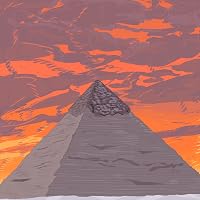
Want to Read
December 27, 201312 September 2015: $0.99 on Kindle

January 10, 2015
Entertaining.
August 20, 2024
A Mythic Military Saga You Can’t Put Down
The Age of Ra by James Lovegrove is a remarkable blend of military science fiction and ancient mythology, set in a world where the Egyptian gods rule over humanity. This novel stands out for its imaginative world-building, intense action scenes, and a plot that keeps you hooked from the very first page. As a fan of both speculative fiction and mythology, I found The Age of Ra to be an exhilarating experience that masterfully balances both genres.
The premise of the novel is as unique as it is intriguing: in this alternate reality, the Egyptian pantheon has divided the world into territories, each controlled by different gods. The gods use humanity as pawns in their eternal struggle for dominance, resulting in a world perpetually at war. The story follows Lieutenant David Westwynter, a British soldier who becomes disillusioned with the gods’ constant interference in human affairs. After a near-death experience, Westwynter finds himself in Freegypt, a land free from divine rule, where he joins forces with a mysterious leader known as the Lightbringer.
Lovegrove’s world-building is one of the novel’s strongest aspects. The author has created a vivid and believable alternate history where ancient deities influence modern warfare. The gods are not distant figures but active participants in the world, and their presence is felt in every aspect of society. This setting provides a fresh backdrop for the story, and it’s fascinating to see how the author weaves together the old and the new, from the gods’ divine powers to the gritty, realistic portrayal of military life.
The characters in The Age of Ra are well-drawn and compelling. Lieutenant Westwynter is a relatable protagonist, whose struggle against the gods’ tyranny is both personal and universal. His journey from a loyal soldier to a rebellious fighter is handled with depth and nuance, making him a character you can root for. The Lightbringer, on the other hand, is an enigmatic figure whose charisma and vision for a world free from divine rule make him a compelling leader. The interactions between these two characters drive much of the novel’s tension and provide some of its most memorable moments.
The novel’s pacing is another highlight. Lovegrove expertly balances action with moments of reflection, creating a narrative that is both fast-paced and thought-provoking. The battle scenes are intense and vividly described, immersing the reader in the chaos of war. At the same time, the book explores deeper themes, such as the nature of power, the role of religion in society, and the cost of freedom.
What truly sets The Age of Ra apart, however, is its originality. The concept of gods walking among us, shaping the world in their image, is not new, but Lovegrove’s execution is fresh and imaginative. He takes the familiar tropes of military fiction and mythology and breathes new life into them, resulting in a novel that feels both timeless and contemporary.
In conclusion, The Age of Ra is a must-read for fans of military fiction, mythology, and speculative fiction. James Lovegrove has crafted a story that is as entertaining as it is thought-provoking, with a rich world, compelling characters, and a plot that keeps you turning the pages. Whether you’re a longtime fan of Lovegrove’s work or a newcomer, The Age of Ra is a book that will leave you eagerly anticipating the next installment in the Pantheon series.
The Age of Ra by James Lovegrove is a remarkable blend of military science fiction and ancient mythology, set in a world where the Egyptian gods rule over humanity. This novel stands out for its imaginative world-building, intense action scenes, and a plot that keeps you hooked from the very first page. As a fan of both speculative fiction and mythology, I found The Age of Ra to be an exhilarating experience that masterfully balances both genres.
The premise of the novel is as unique as it is intriguing: in this alternate reality, the Egyptian pantheon has divided the world into territories, each controlled by different gods. The gods use humanity as pawns in their eternal struggle for dominance, resulting in a world perpetually at war. The story follows Lieutenant David Westwynter, a British soldier who becomes disillusioned with the gods’ constant interference in human affairs. After a near-death experience, Westwynter finds himself in Freegypt, a land free from divine rule, where he joins forces with a mysterious leader known as the Lightbringer.
Lovegrove’s world-building is one of the novel’s strongest aspects. The author has created a vivid and believable alternate history where ancient deities influence modern warfare. The gods are not distant figures but active participants in the world, and their presence is felt in every aspect of society. This setting provides a fresh backdrop for the story, and it’s fascinating to see how the author weaves together the old and the new, from the gods’ divine powers to the gritty, realistic portrayal of military life.
The characters in The Age of Ra are well-drawn and compelling. Lieutenant Westwynter is a relatable protagonist, whose struggle against the gods’ tyranny is both personal and universal. His journey from a loyal soldier to a rebellious fighter is handled with depth and nuance, making him a character you can root for. The Lightbringer, on the other hand, is an enigmatic figure whose charisma and vision for a world free from divine rule make him a compelling leader. The interactions between these two characters drive much of the novel’s tension and provide some of its most memorable moments.
The novel’s pacing is another highlight. Lovegrove expertly balances action with moments of reflection, creating a narrative that is both fast-paced and thought-provoking. The battle scenes are intense and vividly described, immersing the reader in the chaos of war. At the same time, the book explores deeper themes, such as the nature of power, the role of religion in society, and the cost of freedom.
What truly sets The Age of Ra apart, however, is its originality. The concept of gods walking among us, shaping the world in their image, is not new, but Lovegrove’s execution is fresh and imaginative. He takes the familiar tropes of military fiction and mythology and breathes new life into them, resulting in a novel that feels both timeless and contemporary.
In conclusion, The Age of Ra is a must-read for fans of military fiction, mythology, and speculative fiction. James Lovegrove has crafted a story that is as entertaining as it is thought-provoking, with a rich world, compelling characters, and a plot that keeps you turning the pages. Whether you’re a longtime fan of Lovegrove’s work or a newcomer, The Age of Ra is a book that will leave you eagerly anticipating the next installment in the Pantheon series.
June 13, 2023
Age of Ra is a contemporary science-fiction story of a world where the Egyptian pantheon reigned supreme over Earth after having defeated all of the other gods. Each god has their country of followers wage war with one another in order to air out their own grievances in their godly world above. The story follows the POV of David, a paratrooper left the last survivor of his stick, and of Ra, the God of the Sun and King of Gods.
Conceptually, the story is strong. The world-building stands on it’s own two legs and whilst at times it’s uninspired, it manages to remain compelling and interesting enough from it’s petty politicking to the grander gestures of the gods. The author clearly has two areas of great interest and he writes them in brilliant detail- War and Gods. The characterization of the gods and everything to do with them is leagues beyond the rest of the story, and Ra comes across as a far more interesting character than David (who we’ll get onto soon). Likewise, his description of military tactics, warfare activities and the Lightbringer’s guerilla tactics as he wages war against the gods is captivating- I could read an entire series of a guerilla corp waging war against deities. For a brief moment, the story has a strong vibe of “Humans, fuck yeah!”, or to put it more poetically, it seems to go in the age-old direction of the indomitable human spirit against arrogant overlords. The classic underdog story that we all love, as we’re always depicted as the underdogs.
However, the story isn’t that. The themes are threadbare and the characterization is- Not great, to put it politely. The romance in the story is terrible, most of the characters are paper-thin and as deep as a puddle. The story develops intrigue only for it to choose the least exciting option, falling back on tropes rather than being willing to strike out and be bold in its narrative options.
Age of Ra is a story that limps along, only standing by its strong original concept. If you turn your brain off you might enjoy it- But its flaws are honestly so damning that they ruin the experience no matter what.
Conceptually, the story is strong. The world-building stands on it’s own two legs and whilst at times it’s uninspired, it manages to remain compelling and interesting enough from it’s petty politicking to the grander gestures of the gods. The author clearly has two areas of great interest and he writes them in brilliant detail- War and Gods. The characterization of the gods and everything to do with them is leagues beyond the rest of the story, and Ra comes across as a far more interesting character than David (who we’ll get onto soon). Likewise, his description of military tactics, warfare activities and the Lightbringer’s guerilla tactics as he wages war against the gods is captivating- I could read an entire series of a guerilla corp waging war against deities. For a brief moment, the story has a strong vibe of “Humans, fuck yeah!”, or to put it more poetically, it seems to go in the age-old direction of the indomitable human spirit against arrogant overlords. The classic underdog story that we all love, as we’re always depicted as the underdogs.
However, the story isn’t that. The themes are threadbare and the characterization is- Not great, to put it politely. The romance in the story is terrible, most of the characters are paper-thin and as deep as a puddle. The story develops intrigue only for it to choose the least exciting option, falling back on tropes rather than being willing to strike out and be bold in its narrative options.
Age of Ra is a story that limps along, only standing by its strong original concept. If you turn your brain off you might enjoy it- But its flaws are honestly so damning that they ruin the experience no matter what.
February 4, 2021
Sometimes you can tell from the opening sentence of a novel whether it's going to be an experience you look forward to picking up again or a bit of a hard slog.
The Age or Ra opens with...
"The sun went down like a tin duck at a shooting gallery."
...which struck me as a bit of a "hard slog warning sign".
It's just... I mean... a tin duck? At a shooting gallery? Isn't that really sudden? One moment it's sitting there being ducky and tinny and then suddenly, and with an audible noise, it's gone. Surely that's what happens at a shooting gallery and isn't that the opposite of the way the sun behaves with its silent and gradual descent beyond the horizon? Surely a better opening would be "The sun went down in a manner that in no way resembled a tin duck at a shooting gallery"?
I know I'm harping on a bit about this but it's the opening sentence. It's the reader's introduction to the book and rather than begging me to read further it stopped me in my tracks. My tracks got stopped a lot in this book, which is my point. The writer had some really weird turns of phrases and at times used words that made me have "I don't think that means what you think it means" moments.
Which is a shame because I really wanted to like this. The premise (technical war between forces backed by members of the Egyptian pantheon) was great. It's a shame the execution crashed like... well a bit like a tin duck in a shooting gallery.
The writing was clunky, the characters were dull and the romance was cringingly overwrought and skipworthy. The interaction between the God's didn't work (writing for deities is actually a lot harder than it might appear) and the battle scenes were few and far between and not really worth the wait.
I picked this up hoping for an engaging start to a new series but I dropped it like... well you know what I dropped it like.
The Age or Ra opens with...
"The sun went down like a tin duck at a shooting gallery."
...which struck me as a bit of a "hard slog warning sign".
It's just... I mean... a tin duck? At a shooting gallery? Isn't that really sudden? One moment it's sitting there being ducky and tinny and then suddenly, and with an audible noise, it's gone. Surely that's what happens at a shooting gallery and isn't that the opposite of the way the sun behaves with its silent and gradual descent beyond the horizon? Surely a better opening would be "The sun went down in a manner that in no way resembled a tin duck at a shooting gallery"?
I know I'm harping on a bit about this but it's the opening sentence. It's the reader's introduction to the book and rather than begging me to read further it stopped me in my tracks. My tracks got stopped a lot in this book, which is my point. The writer had some really weird turns of phrases and at times used words that made me have "I don't think that means what you think it means" moments.
Which is a shame because I really wanted to like this. The premise (technical war between forces backed by members of the Egyptian pantheon) was great. It's a shame the execution crashed like... well a bit like a tin duck in a shooting gallery.
The writing was clunky, the characters were dull and the romance was cringingly overwrought and skipworthy. The interaction between the God's didn't work (writing for deities is actually a lot harder than it might appear) and the battle scenes were few and far between and not really worth the wait.
I picked this up hoping for an engaging start to a new series but I dropped it like... well you know what I dropped it like.
January 10, 2023
Interesting idea here, looking at an earth where the Egyptian pantheon has defeated all the other gods and rules uncontested over the earth. That's intriguing, and Lovegrove is almost as interested in the relationships between the various gods as he is in the moves of humans on the earth, and the dichotomy is pretty interesting.
The earth-bound is focused around David Westwynter, a rich kid turned soldier who gets caught in an ambush and left for dead. Swept up into a revolution against the gods, he gets a bit of spiritual and intellectual awakening that makes him an interesting enough lead character to follow around, even if his agency is often a little bit limited.
For the divine, it's mostly focused around Ra, who rules the pantheon, but his control over the others seems limited at best, and he spends most of his time frustrated and disappointed in his fellow gods, who fight and scheme against each other, nursing every old grudge (taken directly from old Egyptian myths) and caring little for humanity and the fate of earth. For people interested in mythos, that's going to be pretty interesting.
There's a good mystery at the heart of the revolutionary organizing resistance against the gods and that helps propel the storyline, but there's a missed opportunity in not giving Zaffirya more screen time and making her more of a protagonist instead of love interest. It feels like a lame 80's movie part and Lovegrove should have done better there.
The concepts are interesting enough that I'm curious to see what else Lovegrove does with these ideas, but if he doesn't do better in terms of building out a broader and more interesting cast it's going to get flat fast.
The earth-bound is focused around David Westwynter, a rich kid turned soldier who gets caught in an ambush and left for dead. Swept up into a revolution against the gods, he gets a bit of spiritual and intellectual awakening that makes him an interesting enough lead character to follow around, even if his agency is often a little bit limited.
For the divine, it's mostly focused around Ra, who rules the pantheon, but his control over the others seems limited at best, and he spends most of his time frustrated and disappointed in his fellow gods, who fight and scheme against each other, nursing every old grudge (taken directly from old Egyptian myths) and caring little for humanity and the fate of earth. For people interested in mythos, that's going to be pretty interesting.
There's a good mystery at the heart of the revolutionary organizing resistance against the gods and that helps propel the storyline, but there's a missed opportunity in not giving Zaffirya more screen time and making her more of a protagonist instead of love interest. It feels like a lame 80's movie part and Lovegrove should have done better there.
The concepts are interesting enough that I'm curious to see what else Lovegrove does with these ideas, but if he doesn't do better in terms of building out a broader and more interesting cast it's going to get flat fast.

July 19, 2023
In an alternative timeline, the Egyptian Gods have killed every other God, and taken control of the entire world. Areas are split up between the various gods.. Osirisiacs, Setians, Horusians etc..
The only area not ruled by the Gods is the original land of Egypt, now known as Freegypt. To this land, a young British paratroop Lieutenant ends up travelling to after his unit gets ambushed by a rival Gods troops near Petra. In Luxor, the Valley of the Kings is being used as a base by the man known as "Lightbringer", someone intent on uniting the tribes, and fighting the Gods, to try and force the Gods to stop ruling humans.
As it turns out, Dave knows the man, his brother Stephen, who was supposedly killed in the Mediterranean a year or so before. Along with Zafirah, Stephen's right hand troop commander, Dave goes along with the plan. As it turns out, it's all a plan by one of the Gods, Set, to destroy his wife's forces, because she slept with one of his brothers, and had a child.
There is a sub-plot about Ra wanting to bring peace to the Gods, which is because they don't currently get along with each other, and his attempts to do so are both aided and hindered by the Lightbringer's plans.
It's an interesting concept, and the Author clearly knows his dieties, but it's a little too Stargate-y for me. I originally wanted to read the rest of the series thinking it was going to be more about the various Gods and Religions battling it out for power, but it looks like each book is a different character and God/Religion instead.
The only area not ruled by the Gods is the original land of Egypt, now known as Freegypt. To this land, a young British paratroop Lieutenant ends up travelling to after his unit gets ambushed by a rival Gods troops near Petra. In Luxor, the Valley of the Kings is being used as a base by the man known as "Lightbringer", someone intent on uniting the tribes, and fighting the Gods, to try and force the Gods to stop ruling humans.
As it turns out, Dave knows the man, his brother Stephen, who was supposedly killed in the Mediterranean a year or so before. Along with Zafirah, Stephen's right hand troop commander, Dave goes along with the plan. As it turns out, it's all a plan by one of the Gods, Set, to destroy his wife's forces, because she slept with one of his brothers, and had a child.
There is a sub-plot about Ra wanting to bring peace to the Gods, which is because they don't currently get along with each other, and his attempts to do so are both aided and hindered by the Lightbringer's plans.
It's an interesting concept, and the Author clearly knows his dieties, but it's a little too Stargate-y for me. I originally wanted to read the rest of the series thinking it was going to be more about the various Gods and Religions battling it out for power, but it looks like each book is a different character and God/Religion instead.

October 27, 2023
Once upon a time, Ra et al were someone's religion, beings that were real to ancient Egyptians. In this first in a series, Lovegrove runs with the idea that maybe they WERE real. And if so, what might the modern world do with that. He assumes that there's some sort of indisputable evidence that no one can ignore, and then runs with it. He follows a military man, fusing modern soldiering with his version of divine weaponry. I'm not at all sure he hadn't been watching "Stargate" at some point (And indeed, I kept hearing that echoey Goa'uld voice in all of the gods' dialogue.). Amid all the obligatory explosions, the author still gives us enough twists. And while not much has changed at the end, I feel that comes with the territory in a War Story. While on the one hand, I wanted to see more direct interaction between the gods and humans, on the other, Lovegrove's treatment of this is congruent with the views of many ancient peoples about their deities. While the author also apparently ignores the centuries-long development of ancient Egyptian religion, I think we can still give him credit for a solid understanding of what we might regard as the height of Egyptian pre-Christian and pre-Islamic religion, as well as a firm grasp of the geography of Egypt and vicinity.
Displaying 1 - 30 of 205 reviews