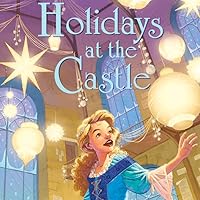
It’s Christmastime, and the precocious Flavia de Luce—an eleven-year-old sleuth with a passion for chemistry and a penchant for crime-solving—is tucked away in her laboratory, whipping up a concoction to ensnare Saint Nick. But she is soon distracted when a film crew arrives at Buckshaw, the de Luces’ decaying English estate, to shoot a movie starring the famed Phyllis Wyvern. Amid a raging blizzard, the entire village of Bishop’s Lacey gathers at Buckshaw to watch Wyvern perform, yet nobody is prepared for the evening’s shocking conclusion: a body found, past midnight, strangled to death with a length of film. But who among the assembled guests would stage such a chilling scene? As the storm worsens and the list of suspects grows, Flavia must use every ounce of sly wit at her disposal to ferret out a killer hidden in plain sight.
Librarian Note: There is more than one author in the Goodreads database with this name.
With an education in electronic engineering, Alan worked at numerous radio and television stations in Ontario, and at Ryerson Polytechnical Institute (now Ryerson University) in Toronto, before becoming Director of Television Engineering in the media centre at the University of Saskatchewan in Saskatoon, where he remained for 25 years before taking early retirement to write in 1994.
He became the first President of the Saskatoon Writers, and a founding member of the Saskatchewan Writers Guild. His children's stories were published in The Canadian Children's Annual, and his short story, Meet Miss Mullen, was the first recipient of the Saskatchewan Writers Guild Award for Children's Literature.
For a number of years, he regularly taught Script Writing and Television Production courses at the University of Saskatchewan (Extension Division) at both beginner and advanced levels.
His fiction has been published in literary journals and he has given many public readings in schools and galleries. His short stories have been broadcast by CBC Radio.
He was a founding member of The Casebook of Saskatoon, a society devoted to the study of Sherlock Holmes and Sherlockian writings. Here, he met the late Dr. William A.S. Sarjeant, with whom he collaborated on their classic book, Ms Holmes of Baker Street. This work put forth the startling theory that the Great Detective was a woman, and was greeted upon publication with what has been described as "a firestorm of controversy".
The release of Ms. Holmes resulted in national media coverage, with the authors embarking upon an extensive series of interviews, radio and television appearances, and a public debate at Toronto's Harbourfront. His lifestyle and humorous pieces have appeared in The Globe and Mail and The National Post.
His book The Shoebox Bible (McClelland and Stewart, 2006) has been compared with Tuesdays With Morrie and Mr. God, This is Anna.
In July of 2007 he won the Debut Dagger Award of the (British) Crimewriter's Association for his novel The Sweetness at the Bottom of the Pie, the first of a series featuring eleven year old Flavia de Luce, which has since won the 2009 Agatha Award for Best First Novel,the 2010 Dilys Award,the Spotted Owl Award, and the 2010 Arthur Ellis Award for Best First Novel.
The Sweetness at the Bottom of the Pie has also been nominated for the Macavity, the Barry, and the Arthur Awards.
Alan Bradley lives in Malta with his wife Shirley and two calculating cats.
”IN MY ELEVEN YEARS of life I’ve seen a number of corpses. Each of them was interesting in a different way, and this one was no exception.”
Flavia de Luce always seems to be in the wrong place at the wrong right time. She doesn’t have to leave her small town of Bishop’s Lacey to find a steady supply of bodies recently discarded by their souls. Due to precarious pecuniary circumstances Flavia’s father has recently rented out the ancestral home of Buckshaw to a film crew. Flavia has been busy in her long departed Uncle Tar’s laboratory on the upper floors of the home. She is whipping up a batch of chemical substances that will help her catch St. Nicholas once and for all.
St. Nick has no idea what is waiting for him on the roof of the de Luce house.
”Scribbled in the margin of one of Uncle Tar’s notebooks, I had found a quotation from Sir Francis Bacon: ‘We must not then add wings, but rather lead and ballast to the understanding, to prevent its jumping or flying.’ Precisely what I had in mind for Saint Nicholas! A dose of the old tanglefoot! Later, in bed, my head filled with visions of reindeer stuck fast to the chimney pots like giant bluebottles to flypaper, I realized I was grinning madly in the dark.”
With the film crew is the famous actress Phyllis Wyvern who is a mixture of niceties and temperamental outbursts. She does make an astute comment about Flavia’s interactions with her older sisters Ophelia (Feely) and Daphne (Daffy).
”Older sisters are much alike the world over: half a cup of love and half one of contempt.”
As Flavia observes Wyvern in action she also discovers most of her secrets and is soon on the trail of others. Flavia is naturally nosy once she gets a whiff of something she doesn’t understand.
”I realized at once that a great actress can never be greater than when she’s starring in her own life.”
Besides an interest in dead bodies.
”I noticed at once the way the illuminated cine screen was reflected in her eyeballs, giving the illusion for a moment that she was alive, her eyes sparkling. But even though the eyes had not yet begun to cloud over--she’s not been dead for long, I thought--something had already begun to soften her features, as if her face were being sanded down for repainting.”
She is also overly fascinated by poisons and fantasizes regularly about implementing them on those that annoy her.
”In my mind, Larshaw was already writhing on the floor, his face engorged, his eyes bulging from their sockets, hanging on with both hands to his gut, begging for the antidote to cyanide poisoning.”
Wahaha, it does keep one sane just indulging in a bit of imaginary homicidal revenge, and you can even wish them a Merry Christmas through gritted teeth at the same time.
Her oldest sister Feely is popular with the local boys, a source of constant irritation to Flavia.
”Feely had more swains than Ulysses’s wife, Penelope, had suitors--I like ‘swains’ better than ‘suitors’ because it sounds like ‘swine’--all of whom, through some strange quirk of fate, had now turned up at Buckshaw at the same time.”
Her other sister Daffy can rarely be found without a book in her hand. She’s the sister I would be chasing after, for a chat about books, but would probably find that she has little time for me because conversation is just another thing that keeps her from reading another dozen pages in Bleak House or The Way We Live Now.
”Books are like oxygen to a deep-sea diver, “ she had once said. “Take them away and you might as well begin counting the bubbles.”
Flavia is busier than any three eleven year old girls put together. She is investigating a murder; trying to avoid the police who are never too happy with her meddling; concocting her chemical trap for Saint Nicholas; and trying to learn as much as she can about the magic of movies. As she puts the pieces together and begins to understand the why and the who she becomes the next target for a very Christmas Murder. This is the fourth in a surprisingly charming and entertaining series.
It was pleasure to dive back in Alan Brsdley’s world and to solve another crime tgether with young prodigy Flavia De Luce. I do not read these books so much for the mystery as I read them for the joy to return to 1950’s Buckshaw, the de Luces' decaying English estate. Flavia is an amateur chemist, passionate about poison and this time she has to use her wit and knowledge to uncover a killer who struck right in their house. In order to gain a bit of money and to be able to keep the house, Flavia’s father decides to allow a film crew to shoot inside the estate. As secondary plot, since Christmas Eve is near, the young girl is devising a plan to catch Father Christmas and prove once and for all his existence.
If you are looking for a fast pace thriller, this series is not it. Nobody dies until 51% in the novel. If you are looking for a cosy and funny mystery set in the English Countryside, with interesting and familiar characters then look no further. This particular novel is a tribute to Agatha Christie since all the possible suspects are stuck in the same house (due to a snow storm) until the perpetrator is caught. The famous author is even mentioned in the book.
It was the first time I listened to tis series and the narrator was wonderful. I think I will continue with the next novel on audio as well.
Probability and reality are not reasons to read a Flavia de Luce book, and that is as true for I Am Half-Sick of Shadows as any of them. I am not looking for a well crafted mystery when I read these books, I am looking to romp around with the characters (especially Flavia) that populate the strange little world of Bishops Lacey. A romp (with a good dash of firework chemistry) is what this book delivers. This book takes place solely in Buckshaw (where pretty much the entire town of BL happens to be as well), so you get a lot more of Buckshaw and less of Flavia and Gladys touring the countryside. In particular, you get to know Dogger better (Dogger!) and he is a treat of a character and a mystery in and of himself. A great addition to the series (will she catch Father Christmas? And if so will the German Father Christmas have to deliver all of England's presents?), but if you're new to Flavia just start at the beginning.
I think this might be my favourite of Alan Bradley's Flavia de Luce series yet. She still gets herself into scrapes (and just wait until you see what she is cooking up for Santa Claus in her chemistry lab) but she seems to be growing up and is less an annoying child and more an insightful, but nosy (and still precocious) pre-adolescent.
In the week before Christmas, Flavia's impoverished father, Colonel Haviland de Luce has rented out the use of their stately home, Buckshaw House, to a film company. Flavia always welcomes interesting company while her annoying older teenage sisters Daphne and Ophelia are excited that a pair of well known leading actors will be staying and acting under their roof. After a charity performance by the lead actors, organised by the vicar to raise money for the church roof, the guests from the village become trapped at Buckshaw for the night when they discover they are snowed in and it is later that night that Flavia discovers the murder. Flavia has certainly seen more dead bodies that any eleven year old has a right to and is now well known to the local police who try their best to thwart her efforts to investigate. Of course they are not successful and Flavia manages to use her wits to sleuth unnoticed, putting herself at risk of notice by the murderer.
This is an engaging series with a very eccentric English family that I've become quite fond of and plan to visit again soon.
short review for busy readers: a weak Flavia. Would have worked much better as a shortish story. Still entertaining, however, and a nice, quick holiday read. The mystery gets a 2 on the Berengaria Ease of Solving Scale®, so pretty easy to finger the guilty party.
In detail: What's Christmas like at Buckshaw?
We don't know because a film crew had hired it out as a filming location starting the week of Christmas (unlikely) and just when a huge snowstorm blankets the entire countryside in a few feet of the white stuff. The phone is out, Buckshaw and residents are cut off from the outside world, and then the star is found strangled to death with a length of celluloid from one of her past films!!! (Agatha Christie anyone?)
Unfortunately, this 4th installment of the Flavia de Luce series is rather toothless in comparison to the previous 3. Flavia and Inspector Hewitt face off again, but it lacks the typical oomph. As does the plot, perhaps due to the unlikeliness of it all.
Also, I'm fairly sure they'd have said "Happy Christmas" in southern England in the 1950s, and not "Merry Christmas," although Flavia's Merry Weihnachten wish to Dieter was still utterly charming.
Here's to hoping the 5th installment sees Flavia back up to her normal standard!
4.5 stars. Really enjoyed this one! We get some hints about Dogger and Aunt Felicity’s past and Flavia attempts to prove the existence of Father Christmas by scientific means. This one has a slightly Agatha Christie vibe to it. Loved the ice rink at the beginning of the book!
The Book Report: Flavia de Luce does Christmas. Buckshaw, Bishop's Lacey, is now the scene of Ilium Films's new Phyllis Wyvern extravaganza, The Cry of the Raven. The film company has paid the desperately strapped-for-cash Colonel Haviland de Luce a sizable sum to use Buckshaw as the backdrop for this bound-to-be-mega hit, which means Christmas will be spent with an entire film crew up the family's collective backside. Flavia meets the famous Miss Wyvern as she enters the house, charming as cheesecake on a plate of strawberries, even winning the adulation of the normally suspicious Flavia by demonstrating her apparently genuine interest in matters of murder: She quotes from the dreadful gossip sheet Illustrated London News about a recent scandalous killing. Well then!
Not long after the lady's arrival, the cast and crew and director make their various appearances, as doe the Vicar, with a modest proposal: He'd like famous movie star Wyvern to appear as Juliet, her star-making role, in a village fete in aid of the church roof's repair. To absolutely universal astonishment, Miss Wyvern agrees, and the plot begins to spin faster and faster. Since the hairpins have begun to fall, and Miss Wyvern's true meanness is revealed, the fact that she's murdered by someone present at Buckshaw after the fete...which includes just about the whole village, since a blizzard's blown in, sealing all the audience in Buckshaw's foyer...comes as no surprise whatever.
Even though the bloom has gone off the rose of Flavia's admiration for the lady, a murder under her own roof is simply too much to resist meddling in! And meddle she does, searching the victim's room and even standing in at the post-mortem examination of the body. Flavia, though, is callously shut out by Inspector Hewitt of the Hinley P.D., as is his wont. He has, thinks Flavia, personal animus against her now, as Flavia made a terrible break at tea taken in the Hewitt home.
But in the end, Flavia solves the horrible, tawdry crime, and fails to become the next murder victim herself by dint of one of her chemistry experiments designed to trap Santa Claus on his way to the chimney, thereby disproving her horrible, heartless sisters's claims that there is no Santa. And, at the very tippy-end of the book, Buckshaw's future at the hands of the tax receivers is probably averted thanks to the very play that caused the Christmas crisis to begin with...a lovely, deft scene that wrapped up an end I was really ticked about having loose.
Merry Christmas indeed, Flavia.
My Review: Every series needs a Christmas book. This is it. If you liked the others, this one will please you; but it has the standard plot-hole and plausibility flaws. If they didn't tick you off before, they won't now, either. Happy Holidays!
Flavia de Luce is an 11 year old alchemist and super sleuth. She actually has her own laboratory in the de Luce country estate, thanks to her deceased Uncle Tar. She is quite precocious. She is brilliant and not afraid of anything and is very observant and nosy, which gets her in a lot of trouble. She does get herself back out of trouble because she is able to figure out and manipulate how. I know, I’m describing an 11 year old girl and those characteristics just don’t seem normal for an 11 year old girl. But she’s lost her mother early on, lives with two sisters who are mean to her, a father who still mourns for his deceased wife and is always trying to chase away the financial troubles affecting his family and the east wing which is his part of the family estate. He really does not spend much time with her and they really don’t talk much. And that’s why Flavia is “on the loose.” She’s had to fend for herself most of her life with hardly any bit of supervision other than the female cook and house attendant, and her fathers’ friend from the war. He oversees the home and its maintenance. His name is Dogger and he appears to be kindredspirits with Flavia; shows up/knows when he’s needed (as if by magic or a second sense). He supports her, protects her, never scolds her.
In order to raise money to save the estate, Flavia’s father contracts with a movie producer to come out with the crew to film a movie at their estate. Soon the place is overrun with strangers, wires and cables, cinema equipment, stage sets, cast and crew. The village folk come down in a snowstorm for an impromptu pre-performance and before you know it, everyone is snowed in and there’s a dead body post-show in the Blue Room! Before the police are called, Miss Flavia does a little detective work of her own!
Flavia has helped the police solve previous crimes (in the other Flavia books) and thus has a reputation about herself. At first the inspector doubts her and tries to brush her off, after all, she’s only eleven years old! However, when she notices clues that the police have missed, they treat her as a colleague with admiration. She’s a kid who is confident, really has her wits about herself and can read people, their body language and has the ability to think ahead. If someone annoys her, she starts thinking of different sorts of poisons/potions she might use on them. She never does, but I think we may need to keep an eye on this girl as she gets older so her thoughts do not turn into actions!
I enjoyed this quick, little book. I liked the cavorting skeleton on the front cover wearing a Santa hat. Flavia was trying to concoct some sort of sticky resin/chemical formula to trap Santa at the chimney when he came to visit on Christmas Eve and I believe that was the intention of the book cover. Good grief, Flavia! 🙀
There were some unusual words I’ve never heard of before. This is highly irregular for me! The words are: pantechnician, Malay yellow, antimony, caravanserai, dekko and mustard police. Excuse me, while I consult a dictionary...
There is plenty to love in this installment of Flavia de Luce's adventures, especially if you are her existing fan. I Am Half-Sick of Shadows is a Christmas story, with a great infusion of some new blood, which is a must for any series focusing on such a tiny place as Bishop's Lacey. Flavia's father is forced to rent out Buckshaw to a movie company to film its new feature. When the star of the movie is found murdered, Flavia is on full alert. Now she has two Christmas cases on her hands - the murder and her project to confirm the existence of Santa. Whatever you liked about the previous books in the series, is all there - the humor, the charm, the interesting characters, the mischief.
However, I feel that in their zeal to deliver I Am Half-Sick of Shadows just in time for Christmas, Bradley and his gang of editors and agents forgot to pay attention to the quality of this novel. To put it bluntly, it is half-baked. Besides the wonky motives of the killer, far-fetching backstories of some characters, multiple pointless cameo appearances of characters from previous books and half-hearted at best red herrings, this book lacks simple continuity. The part that especially stood out for me (unless, of course, I misunderstood it) was when a certain character in one chapter is sent out in a snowstorm to fetch a couple of people, in the next chapter is sitting in the Buckshaw's living room chatting and in the next is just coming from outside with the couple (if you are curious, I am talking about Sergeant Graves in chapters 13-15). How is it possible that an editor of this book didn't notice this discrepancy, if even I, a person absolutely unobservant, did? As usual in such cases, I am pretty sure nobody had read this manuscript before rushing it into print.
In spite of its many obvious flaws, the book was still entertaining and funny. I just hope the next one is edited and constructed better.
Not much of a mystery, but fun enough if you like the cast of characters and are interested in the larger story arc about Bishop's Lacy, its inhabitants, and their pasts. Flavia is as long-nosed and incorrigible as ever. Homemade fireworks are involved.
At this point, I've elected not to take these books seriously at all, and just enjoy them for what they are without picking nits. After all, at least it features a curious, resourceful young girl who is interested in chemistry and forensics, who solves murders in a delightfully Blyton-esque way by getting herself all tangled up in them. Of course there're problems with this... fetishisation of an old British country house and ~British spirit~*, etc, Flavia tampering with crime scenes, the nigh-on abusive behaviour of Flavia's sisters (although that does seem to be developing, slowly, book by book, and might perhaps become more understandable later on).
No, nitpicking aside, I Am Half-Sick of Shadows is fun. How very like Flavia to try and prove the existence of Father Christmas by attempting to more or less glue him to the chimney pots. And there's a touch more about her Aunt Felicity, and Dogger, which makes both of them more interesting characters. Well, I already found Dogger interesting, but I wasn't sure what the point of Aunt Felicity was. Now... I think she and Flavia have more in common than we've yet seen.
The mystery itself is fairly perfunctory -- the murder isn't discovered until pretty much half-way through! I barely had time to get my head around the suspects before Flavia was getting attacked. It's really less of a mystery series and more of a quirky detective series, mysteries to some extent optional.
Still, as I say, it's fun -- when I don't take it seriously.
*British my foot. The De Luces of this series are very, very English, and that's what Alan Bradley meant them to be. British is unnecessarily inclusive of the Welsh, Scots and Irish. There's not a trace of any of those nationalities here.
“Impertinent children ought to be given six coats of shellac and set up in public places as a warning to others.”
Although the title is borrowed from a famous lyrical poem by Alfred Tennyson, the young lady of Buckshaw Manor bears little resemblance to the helpless Lady of Shalott. Eleven years old Flavia de Luce could give Dennis the Menace lessons in how to exasperate adults and about how to rely on your wits and on your chemistry knowledge in order to escape from any sticky situation. In fact, Flavia will probably cause the ‘sticky’ situation in the first place:
He would be coming again in less than a week and, in order to settle the question for once and for all, I had long ago laid plans to trap him. Scientifically.
It is Christmas time at Buckshaw, the place is quite isolated, cold and haunted by two aggravating older sisters, Daffy and Feely. Flavia decides to make up her own amusement by starting another private investigation: is Father Christmas real or not?
>>><<<>>><<<
I have myself decided to save these books as a special treat to myself for the Winter Holidays season. This year [2022], the new de Luce adventure is particularly well chosen, because the plot mirrors my purpose :
Although it is pleasant to think about poison at any season, there is something special about Christmas, and I found myself grinning.
Picture me with a Big Grin on my face as I embark on another visit to cosy village life, about to be turned into screwball murder investigation by an underage detective.
It seemed bizarre, the way in which these old atrocities seemed to be coming home to roost in peaceful Bishop’s Lacey.
This time the visitors are not ghosts from the past, thieves of rare stamps or wandering puppeteers, but a film crew who rented the place for its haunted look. A reluctant Colonel de Luce has no choice but to open his house to strangers in order to get some sorely needed money for upkeep.
The house, generally so cold and silent, had suddenly become a beehive. Carpenters hammered, painters painted, and various people looked at various parts of the foyer through makeshift frames formed by touching thumbs and extending their fingers.
Flavia is under everybody’s feet, briefly distracted from her plans to capture Old Saint Nick in flagrante by the undercurrents of tension between crew members. At age eleven, Flavia has little patience for romance, although the whole village of Bishop’s Lacey braves a blizzard to come to the manor and watch in the foyer a performance by the main stars of the film project:
The rest of the performance was just a lot of that moon-June-balloon stuff – a load of old mulch, really – and I found myself wishing they had chosen a more exciting scene from the play, one of those involving toxicology, for instance, which are the only really decent parts of ‘Romeo and Juliet’.
Behind all the hijinks and the screwball moments, these books carry a heavy burden of personal tragedy, including the still burning pain of the missing mother for the de Luce girls, or the haunting terrors of Flavia’s friend Dogger. A corpse on the premises is nothing new for fans of the series, and of course it will the restless, hyperactive Flavia who discovers the body. With the Buckshaw house isolated by the winter storm, the local police try to keep every suspect in place, while hoping in vain to block the young self-appointed detective from interfering with the crime scene. Good luck with that! Flavia is irrepressible when she scents trouble. The adults, in particular the criminals, have better keep out of her way and clear of her chemical compounds!
The basic idea was this: less sulfur and lots more gunpowder.
>>><<<>>><<<
Children detectives can quickly become annoying under a less talented pen, so I sometimes wonder how does Alan Bradley manage to make Flavia so endearing. I believe the answer is somewhere in the combination of keen intelligence, vulnerability, determination and self-awareness. Flavia is decidedly not a Dennis the Menace clone, interested in creating havoc simply for entertainment. She is trying hard to make sense of a crumbling world, to deal with the heavy loss of a parent and with bullying adults by reinventing herself as a fighter. She knows her limitations yet refuses to give up, and the reader cannot help but cheer her on her quest to grow up without giving up on her dreams.
“Why do you do it, Flavia?” “Do what?” I couldn’t help myself. “Lie,” he said. “Why do you fabricate these outlandish stories?” I had often thought about this myself, and although I had a ready answer, I did not feel obliged to give it to him. “Well,” I wanted to say, “there are those of us who create because all around us, things visible and invisible are crumbling. We are like the stonemasons of Babylon, forever working, as it says in Jeremiah, to shore up the city walls.”
Her sisters are often introduced as bullies and self-absorbed but even here the author has found a way to redeem them and to show us their true colours, like in this short passage from Daphne, who will always be discovered with a book in her hands:
“Books are like oxygen to a deep-sea diver,” she had once said. “Take them away and you might begin counting the bubbles.”
Goodbye for now, and Happy Holidays, Flavia. I’m counting the bubbles until we meet again.
I really don't care that much about the mysteries in this series. I read these books to spend time with the inimitable Flavia de Luce. She's often hilarious as she goes about her home and Bishop's Lacey while commenting on everything and everyone, and while plotting new ways to respond to Feely's and Daffy's taunts and put-downs. Though she doesn't spend much time on it, Flavia shows us how her sisters' behaviour hurts her deeply. This installment, Flavia wants to find proof of Father Christmas after his visit, and while she's avidly preparing for the fellow's appearance, there are other events happening around her: a film crew using her home for a shoot, old resentments, murder, and a snowstorm. Flavia, of course, shows up the police and their shoddy methods through her careful observation, frequent snooping and her prodigious intelligence. On to the next book!
Having read all four Flavia de Luce novels in the last couple of weeks, I'm all Flavia'd out for the time being. She certainly is unique -- who else would try to capture Father Christmas by coating the roof and chimneys in birdlime? -- but perhaps is best taken in small doses. I don't think I can take much more of her tampering with crime scenes. (Does this bother anybody else? I could understand her looking around, but she disturbs the body, moves things around, and steals evidence for her own investigations! The Inspector has the patience of a saint.) I also disliked the implications in this book that Ophelia and Daphne have a ~special reason~ for hatin' on Flavia so much. They're older sisters: they don't need an excuse to be bitches.
P.S. Who else noticed the continuity error midway through the book? Sergeant Graves is sent out into the blizzard to fetch back the vicar and his wife. He then conducts interviews and takes statements from everyone at Buckshaw... before arriving back with the vicar and his wife a few pages later.
5/9/2021 reread: listened to the audiobook this time, the narrator is terrific, really captures Flavia’s youthful exuberance! The Christmas setting at a snowed-in Buckshaw was interesting after the last few books where our heroine rode her bike all over her rural English village, chasing adventure and clues. I’m also enjoying rereading these books to reacquaint myself with a fascinating young heroine, and her very complex relationships with her widowed father, two elder sisters, and the elusive Dogger, her father’s general factotum.
2011: One of my favorite characters in a long time, Flavia de Luce is back just in time for Christmas in Alan Bradley's latest entry in this wonderful series. This book went on my wish list as soon as I heard it was in the works, so I was delighted to have it offered through the Amazon Vine program. Bradley has done it again - Flavia is feisty, smart, funny and utterly ruthless in her quest to uncover the truth, whether it's the identity of a murderer or the reality of Father Christmas.
In this outing, a movie crew has descended on Buckshaw, the crumbling ancestral pile of the de Luces; Colonel de Luce, Flavia's father, has agreed to allow them to use the estate for a film in a last-ditch effort to stave off the Inland Revenue and keep the property in the family. Flavia is delighted with all the activity and drama surrounding legendary actress Phyllis Wyvern and crew, and she's also planning a grand experiment to catch Father Christmas in the act and prove once and for all to her snotty older sisters that the jolly old elf is real. Sounds like a full plate for Christmas for our heroine, but things really heat up when a blizzard traps half the village of Bishop's Lacy at Buckshaw - and Phyllis Wyvern turns up dead . . .
I love this series; like Flavia, it's funny and dry, yet sweet and touching at the same time. Bradley does a superb job with the old variation on the locked-room mystery - a snowed-in country estate with passions and tempers flaring and suspects abounding. The author has made a cast of wonderful recurring characters - we still don't know what's eating at Flavia's nasty older sisters Daffy and Feely, but we get a little glimpse of the humanity, hopes and dreams behind their witchiness and that's encouraging. Dogger, Colonel de Luce's batman in the war and a former POW who now serves as general factotum (and Flavia's dear friend and confidant), is really coming into his own and I look forward to learning more about him in future books, along with cranky Aunt Felicity, Daffy, Feely and the other residents of Bishop's Lacy.
Colonel de Luce, unfortunately, is almost absent in this book until the very end; he is obviously still very much in love with his dead wife, Helen, and her absence hangs like a pall over the whole family and estate. That leads me to what I feel is the most amazing accomplishment of the character and series Bradley has created: Flavia's situation is so sad, a young girl who never knew her mother, growing up running wild on an ancient, vast estate, puttering with her poisons in her chemistry lab unhindered - but rather than being maudlin or sentimental, she is a wonderfully cheeky, spunky girl having grand adventures. In all of the books in the series, however, Flavia has had confrontations with her sisters, or her father, which allow Bradley to give the reader a heart-stopping glimpse of the depth of her loneliness and longing - again, without unnecessary pathos. Flavia's wonderful independence and spirit reasserts itself, she reminds herself of what the Colonel has drummed into his daughters, "only foreigners cry", and she carries on to her next adventure . . . I look forward to each installment in this delightful, original series!
I am half-sick of Flavia de Luce. Yes, in this series she's been a precocious narrator of her own brilliant, amateur sleuthing as well as infatuation with chemistry, especially concerning poisons. There's been a good amount of good humor, as well as violent denouements which don't fit the overall setting. The setting, a large, old estate in a small town, must have been begging for the full blown "cozy" treatment, because this one delivers that, in your face, to the point that in the end, the Inspector (who actually has shown more competence this time around, not being so ridiculously shown up by a pre-teen amateur) has to point out that it's "rather like an Agatha Christie" mystery. No sh**, Sherlock. But, I found the plot way too "staged," and the characters too stock and much less interesting than in prior books (I can't say if that would be true to a new reader), the humor thinner, and the violent penultimate scene too unreal (as in prior books). It dragged so much that I sort of "sped read" my way through. I won't be in such a hurry to read the next one. Maybe the entire book was supposed to be tongue in cheek??, but that could have been done in a much smaller manner (or manor). And an afterthought: One element of the plot is Flavia's serious attempt to catch or trap Father Christmas on the rooftop where he must obviously go to drop down the chimney. Seriously. And it's not until the end that this brilliant student of science figures out that maybe the Santa Claus scenario has some logical flaws?? Maybe I'm the dummy, assuming this book was aimed at those smarter than a 5th grader.
***I won this book from Goodreads as a First Reads giveaway***
I am Half-Sick of Shadows by Alan Bradley
I very much enjoyed reading this novel. It is the fourth installment in a series of books about Flavia de Luce. Eleven year old Flavia lives with her sisters Daphne and Ophelia and her father, Colonel Haviland De Luce, in a rambling old mansion in the English countryside. The story is set around Christmas sometime during 1940’s-1950's era.
Flavia is quite a character, someone straight out of the fictional St.Trinian’s School for Girls series of British movies. She is smart, tormented by her older sisters, has a passion for chemistry, poisons and solving murders. Author Alan Bradley is Canadian, but when reading this novel, you get the feeling that the story was written by a British author with a very wry, witty sense of humour. I loved the writing!!
In this story the colonel agrees to rent out part of the house to a film studio for a movie shoot as his funds are desperately dwindling. The crew and actors move in during the Christmas season. After a particularly painful production of Romeo and Juliet held for the local townspeople at the mansion, a terrible snowstorm leaves everyone present at the house stranded overnight. A sleepless Flavia discovers Phyllis Wyvern, leading actress and major pain in the neck, murdered by strangulation. There are plenty of suspects and Flavia’s sleuthing skills are geared up for action.
This novel would make an excellent Disney movie – overall very entertaining and a fun story!
With the family finances in their usual perilous position, Flavia's father has given over Buckshaw to a film crew at Christmas. Previously wrapped up in plans to trap Father Christmas, Flavia turns her attention to the newcomers and befriends the famous actress, Phyllis Wyvern.
The vicar managed to convince Phyllis to give a performance of "Romeo and Juliet," for the benefit of the Church roof and, later that night, Flavia discovers the actresses dead body and, of course, sets out to discover the murderer with virtually the entire local population snowed in under the family battlements.
It was odd to have all of the story under the roof of Buckshaw and not have Flavia, astride her trusty bicycle, heading out all over the countryside. Like many such series books, the fun in this one is in the characters. Although I am not usually a fan of mysteries with precocious children, I do like Flavia, her constant preoccupation with chemistry and her independent spirit. Odd to read a Christmas mystery in summer, so this may be one I wish to revisit at a more appropriate time of year.
These are fun, easy, light, reads. For me, the Flavia de Luce series by Alan Bradley is just for fun. I enjoy Flavia and her adventures. I always say that she never sounds like a little girl, but this one was the closest of her being and acting her own age. I really liked that and it made me smile. I also like her family dynamic. It is her anchor and she knows that, even with the tension with her sisters.
This review was originally posted on my book blog.
I listened to the audiobook version of I Am Half-Sick of Shadows, narrated by Sophie Aldred.
I picked up this audiobook from the library because it was the only title in the mp3 range which appealed to me. I didn’t have a clue that it’s number 4 in a series, and I’m very happy to report it made very little difference to my enjoyment of the story.
I LOVED this. It took a while to get used to Flavia’s incredibly idiosyncratic voice and turn of phrase, but once I did, it was the best thing about the book. It reminded me of how the Famous Five spoke to each other, but smarter! If I’d started the series at book 1, I’m sure I would have already been at home with her voice and not needed this “adjustment time”. That said, this book worked as a stand-alone, I fell in love with Flavia and by the end was incredibly sorry it was all over.
The mystery element of the story was good, if nothing new (all the suspects trapped in a big house because of unexpected heavy snow… we’ve never seen that before!). The setting was excellent and the set up interesting. The film crew and actors brought some old Hollywood glamour to the story. But the star of the show is Flavia, her love of chemistry and her rather “inventive” experiments. These include an attempt to prove the existence of Father Christmas by covering the chimney stacks in bird lime in the hope of trapping him there! Brilliant!
Oh, the sweet pure pleasure of reading a Flavia de Luce mystery, the witty and wise 11yo chemist with a propensity for poisons. Book 4 in the series is as fresh and original as book 1 and, I think at this point, my favourite in the series. Making a great Christmas gift as our action takes place on Christmas Eve this is sure to please fans and newcomers alike. Fans will be pleased to see familiar faces but newcomers won't miss a thing just jumping in with this series. A great character study and return to the traditional British mystery, Bradley has the Christie flair down to a "T". The book entices us with two mysteries actually as the murder does not take place until 2/3s of the way into the book. While the reader is kept guessing as to who will be murdered for the larger part of the book they are then rewarded with a splendid crime that has members of Flavia's own family on her list of suspects and her own life in danger at the climax. Bradley has outdone himself! If you have mystery lovers on your Christmas list, consider them taken care of!
A witty homage to the Golden Age of detective fiction and its dame Agatha Christie, though, honestly, having read four books of the series, I'm so in love with Flavia, that I would not mind this book being just a story of de Luce family with bits of a decent detective. Flavia is Conan Doyle-ish sort of a detective, and yet she's a very touching 11 year old girl, who hunts down not only murderers but Father Christmas too. I'd love to conclude this mess of a review with a quote that nearly made me sob in the train:
My father is not a hugger, but I wanted to hug him. I wanted to run after him and throw my arms around him and hug him until the jam run out. But of course, I didn't. We de Luces do not gush. And yet, perhaps, when they come to write the final history of this island race, there will be a chapter on all those glorious scenes that were played out only in British minds, rather than in the flesh, and if they do, Father and I will be there, if not hand in hand, them marching, at least, in the same parade.
Christmas at Buckshaw brings a film crew, snowed in and stranded villagers, and a murder for Flavia and the de Luce family. While determining the existence of Father Christmas with one of her chemical experiments, Flavia also hunts down a killer into the exciting past of an aged cinema star.
This pint-sized and precocious detective's adventurous cases have fast become favorites. I love the setting of 1050's English country house and village environs, colorful local characters including Flavia's own slightly eccentric family, and the clever murder mysteries that Flavia stumbles across in her active pursuits. Flavia's love is chemistry and particularly poisons. She sees things and deduces amazingly well for an eleven-year old, but struggles at times with what goes on in the minds of adults around her.
I love how sharp and intelligent she is juxtaposed beside her loneliness and longing for a normal family instead of the odd and broken one she is part of. Her mother died on a distant adventure and her father has never gotten over it. He retreated into his study and stamp collecting leaving Flavia and her two sisters with stern rules and instruction, but little of the other that a child could expect from a parent.
This latest mystery has Flavia exploring the cinema world, a secretive war-time past, and trying to outwit the local police who do not desire her efforts to work out the murder. But, Flavia being Flavia, she amasses her facts and clues and lands herself in an exciting misadventure. It was not a difficult one to figure out, but it was entertaining nonetheless.
Jayne Entwistle is fabulous as the narrator who captures Flavia to perfection and voices all the other characters superbly. She grasps the historical setting in her tone and paces out the story nicely. I am thrilled each time to click on the story and listen to her tell it.
All in all, I would safely say I'm addicted. I know not everyone wants a young girl detective, but I'm pretty sure adults are the target audience. I can definitely recommend them to historical mystery lovers.
There is but one word that appositely describes this book and its predecessors, "delightful." The plot, the setting, and the wonderful character of Flavia de Luce take the word "delightful" and fill it out to its bursting seams. I want to read these stories as fast as I can, and, yet, I want them to never end. I highly recommend this book and the others to anyone who needs a smile, a tug of the heart, a warm fuzzy feeling of comfort and joy. In this latest tale, Flavia's beloved Buckshaw, decaying ancestral home, has been rented out to a film company in order to help with the de Luce's always dwindling financial state. It happens to take place at Christmas, and before the requisite murder occurs, Flavia is using her skills in chemistry and deduction to lay a trap for Father Christmas. When a body is discovered with a knot of film around the neck, it is in a house full of Bishop's Lacey's residents who are snowbound after a charity performance at Buckshaw. Flavia turns to her usual cunning bag of tricks and wit to unmask a killer in the crowd. Thank you, Alan Bradley, for a most entertaining Christmas present.
I’m really enjoying this series. It’s unique. Flavia de Luce is a precocious English child who is brilliant at solving crimes. She lives in a tumbling down mansion with her bereaved father and her sisters, who torment her.
In this book, we glimpse a Christmas at Buckshaw, the ancient De Luce family mansion in England.
This volume is sweet. It’s a mawkish but touching salute to love and kindness, among both family and others.
There is a murder, and as usual, the brilliant and precocious eleven year Flavia solves it, though, this time, so does the local police detective, Inspector Hewitt, although he arrives at his conclusion via a different route than that Flavia takes.
And we are reminded that that Flavia, gifted chemist and crime solver though she might be, is still an eleven year old child. For example, she mentions that two suspects are having an affair, which sounds pretty sophisticated for a child, although Flavia admits she has no idea exactly what this means.
And Flavia, underneath it all, craves love and attention, like any child. And we see that she loves many people, although she doesn’t show it, and that they love her too. Even her sister “Feely” (Ophelia), who is often quite horrid to her, is shown to love Flavia, when push comes to shove.
And there is a very moving scene in which Colonel de Luce, Flavia’s father, recites a verse from Romeo and Juliet in memory of his deceased wife, Harriet, whom Flavia has never known but whom she longs for.
There are some touching and humorous Christmas scenes, as when Alf, the clueless husband of the De Luce’s cook, asks Flavia if she got a nice dolly for Christmas. Flavia is too polite to reply to this oafish question, but she seethes inwardly, as she requested equipment for her chemistry lab for Christmas, not a nice dolly.
Anyway, here’s a quick plot summary. Flavia’s father, who’s having serious financial difficulties, decides to rent Buckshaw to a film crew over Christmas. They will be filming a movie and will stay at Buckshaw.
The leading lady, world famous actress Phyllis Wyvern and her leading man, agree to give a short performance to help raise funds to repair the local church’s roof. The locals turn out in droves to see them.
Then everyone is snowed in, and a murder occurs on the premises.
The book’s title, as usual, derived from a literary quote, this time from Tennyson’s poem, “The Lady of Shalott.
As wih previous volumes, actress Jane Entwistle narrates the audio. I think her narration has improved since the first book of the series, and in this one Entwistle is pitch perfect.
It's almost Christmas, at Flavia's family estate in England where she is experimenting in her chemical lab, a way to ensnare Father Christmas. A film crew has takes over the house to shoot a movie staring Phyllis Wyverns, a successful film star. When a blizzard comes to town all of Buckshaw comes to the estate to watch Ms. Wyvern perform . Just before the program starts Ms. Wyverns if found dead in her dressing room with a length of film wrapped around her neck, which strangled her.
Flavia, the sleuth must find the killer that is in plain sight.
I want to thank Bantam Books for sending me a finished copy to read.