

What do you think?

Marble Skin: A Novel
English (translation)Original French, Serbo-Croation
192 pages, Paperback
First published January 1, 1989
About the author
Slavenka Drakulić
40 books726 followersSlavenka Drakulić (1949–2026) was a Croatian journalist, novelist and essayist whose works on feminism, communism and post-communism have been translated into many languages.
In her fiction Drakulić has touched on a variety of topics, such as dealing with illness and fear of death in Holograms of fear; the destructive power of sexual desire in Marble skin; an unconventional relationship in The taste of a man; cruelty of war and rape victims in S. A Novel About the Balkans (made into a feature film As If I Am Not There, directed by Juanita Wilson); a fictionalized life of Frida Kahlo in Frida's bed. In her novel Optužena (English translation forthcoming), Drakulić writes about the not often addressed topic of child abuse by her own mother. In her novel Dora i Minotaur Drakulic writes about Dora Maar and her turbulent relationship to Pablo Picasso, and how it affected Dora's intellectual identity. In her last novel Mileva Einstein, teorija tuge she writes about Einstein's wife Mileva Maric. The novel is written from Mileva's point of view, especially describing how motherhood and financial and emotional dependence on Einstein took her away from science and professional life.
Drakulić has also published eight non-fiction books. Her main interests in non-fiction include the political and ideological situation in post-communist countries, war crimes, nationalism, feminist issues, illness, and the female body. In How We Survived Communism; Balkan Express; Café Europa she deals with everyday life in communist and post-communist countries. In 2021, Drakulic wrote a sequel to Café Europa, Café Europa Revisited: How to Survive Post-Communism. Drakulic wrote the history of communism through the perspective of animals in A Guided Tour Through the Museum of Communism. She explores evil in ordinary people and choices they make in They Would Never Hurt a Fly War Criminals On Trial In The Hague, about the people who committed crimes during the Croatian Homeland war. On the other side, in Flesh of her flesh (available in English only as an e-book) Drakulić writes about the ultimate good – people who decide to donate their own kidney to a person they have never met. Her first book, Deadly sins of feminism (1984) is available in Croatian only: Smrtni grijesi feminizma.
Drakulić was a contributing editor in The Nation (USA) and a freelance author whose essays have appeared in The New Republic, The New York Times Magazine and The New York Review Of Books. She contributed to Süddeutsche Zeitung (Germany), Internazionale (Italy), Dagens Nyheter (Sweden), The Guardian (UK), Eurozine and other newspapers and magazines.
Slavenka Drakulić is the recipient of the 2004 Leipzig Book-fair ”Award for European Understanding.” At the Gathering of International Writers in Prague in 2010 she was proclaimed as one of the most influential European writers of our time.
In her fiction Drakulić has touched on a variety of topics, such as dealing with illness and fear of death in Holograms of fear; the destructive power of sexual desire in Marble skin; an unconventional relationship in The taste of a man; cruelty of war and rape victims in S. A Novel About the Balkans (made into a feature film As If I Am Not There, directed by Juanita Wilson); a fictionalized life of Frida Kahlo in Frida's bed. In her novel Optužena (English translation forthcoming), Drakulić writes about the not often addressed topic of child abuse by her own mother. In her novel Dora i Minotaur Drakulic writes about Dora Maar and her turbulent relationship to Pablo Picasso, and how it affected Dora's intellectual identity. In her last novel Mileva Einstein, teorija tuge she writes about Einstein's wife Mileva Maric. The novel is written from Mileva's point of view, especially describing how motherhood and financial and emotional dependence on Einstein took her away from science and professional life.
Drakulić has also published eight non-fiction books. Her main interests in non-fiction include the political and ideological situation in post-communist countries, war crimes, nationalism, feminist issues, illness, and the female body. In How We Survived Communism; Balkan Express; Café Europa she deals with everyday life in communist and post-communist countries. In 2021, Drakulic wrote a sequel to Café Europa, Café Europa Revisited: How to Survive Post-Communism. Drakulic wrote the history of communism through the perspective of animals in A Guided Tour Through the Museum of Communism. She explores evil in ordinary people and choices they make in They Would Never Hurt a Fly War Criminals On Trial In The Hague, about the people who committed crimes during the Croatian Homeland war. On the other side, in Flesh of her flesh (available in English only as an e-book) Drakulić writes about the ultimate good – people who decide to donate their own kidney to a person they have never met. Her first book, Deadly sins of feminism (1984) is available in Croatian only: Smrtni grijesi feminizma.
Drakulić was a contributing editor in The Nation (USA) and a freelance author whose essays have appeared in The New Republic, The New York Times Magazine and The New York Review Of Books. She contributed to Süddeutsche Zeitung (Germany), Internazionale (Italy), Dagens Nyheter (Sweden), The Guardian (UK), Eurozine and other newspapers and magazines.
Slavenka Drakulić is the recipient of the 2004 Leipzig Book-fair ”Award for European Understanding.” At the Gathering of International Writers in Prague in 2010 she was proclaimed as one of the most influential European writers of our time.
Ratings & Reviews
Friends & Following
Create a free account to discover what your friends think of this book!
Community Reviews
Displaying 1 - 26 of 26 reviews

September 21, 2012
I CINQUE SENSI DEL DOLORE
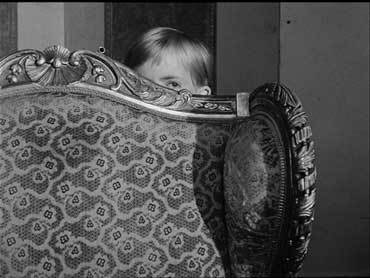
Il silenzio, di Ingmar Bergman, 1963
La madre, la figlia, l’uomo che potrebbe essere compagno, e padre.
Ma nessuno dei tre riesce a rispettare l’archetipo, a essere all’altezza del suo ruolo.
La famiglia diventa un triangolo: lei, ancora lei, e lui; per poi diventare lei, lui e l’altra - ma anche madre, figlia, l’altro.
A turno, c’è uno di troppo: ma poi si capisce, che ciascuno è di eccesso alla vita dell’altro/a.
Romanzo che esalta i cinque sensi: la vista attraverso la bellezza delle sculture e dei corpi, la sensualità delle curve - attraverso le porte semiaperte o semichiuse, attraverso le crepe dei muri, attraverso sguardi fissi, insistiti; il tatto attraverso il materiale delle sculture, legno, marmo, pietra - gesso e calce che si sgretolano - le mani che sfiorano, toccano, stringono; il gusto attraverso il sapore del sangue, della pelle, del sudore; l’udito attraverso il silenzio che esalta il fragore dei pensieri e del sangue che pulsa; e l’olfatto, perché l’odore della pelle, del sesso, del sangue, i profumi dei fiori, dei saponi, delle creme attraversano tutta l’opera.

Il silenzio, di Ingmar Bergman, 1963
Drakulić racconta una storia semplice e lineare, e al contempo molto complessa. Sembra prendere ispirazione dalla tragedia greca e riesce a essere perfettamente attuale.
Il passato attraverso i flash back è concatenato al presente, sembra assente il filtro della memoria. Drakulić ci porta oltre: oltre i corpi, oltre le porte, attraverso gli specchi.
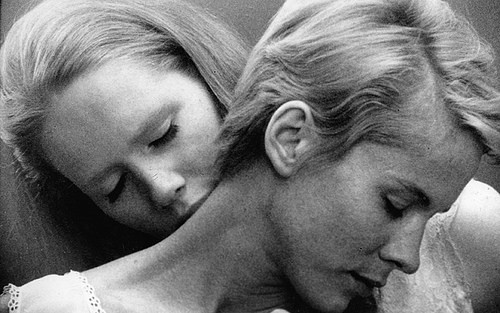
Persona, di Ingmar Bergman, 1966
Romanzo che esplora il rapporto madre-figlia in chiave erotica, romanzo molto bergmaniano, come si fa notare giustamentente nella prefazione, di bisbigli e gemiti, più che sussurri e grida, un dialogo a base di silenzio, basato sull’incomunicabilità
Romanzo molto femminile che mi ha profondamente emozionato.
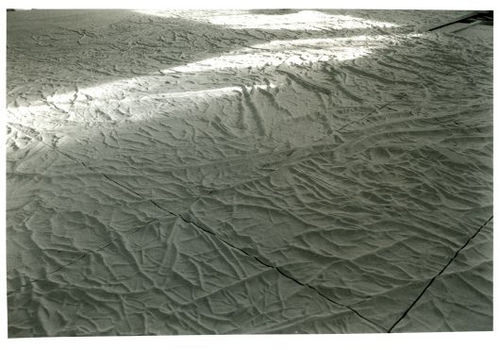
Giuseppe Penone: PM 13- Pelle di marmo-cervello, 2007
PS
Il romanzo si suppone sia stato scritto in croato, o serbo; ma questa traduzione viene dal francese. Tutti quelli che dicono che non si può giudicare una traduzione se non dopo aver letto l'originale, (e mi chiedo se abbiano mai tradotto veramente), mi raccomando, vadano prima a leggerselo in croato, o serbo.
Il silenzio, di Ingmar Bergman, 1963
La madre, la figlia, l’uomo che potrebbe essere compagno, e padre.
Ma nessuno dei tre riesce a rispettare l’archetipo, a essere all’altezza del suo ruolo.
La famiglia diventa un triangolo: lei, ancora lei, e lui; per poi diventare lei, lui e l’altra - ma anche madre, figlia, l’altro.
A turno, c’è uno di troppo: ma poi si capisce, che ciascuno è di eccesso alla vita dell’altro/a.
Romanzo che esalta i cinque sensi: la vista attraverso la bellezza delle sculture e dei corpi, la sensualità delle curve - attraverso le porte semiaperte o semichiuse, attraverso le crepe dei muri, attraverso sguardi fissi, insistiti; il tatto attraverso il materiale delle sculture, legno, marmo, pietra - gesso e calce che si sgretolano - le mani che sfiorano, toccano, stringono; il gusto attraverso il sapore del sangue, della pelle, del sudore; l’udito attraverso il silenzio che esalta il fragore dei pensieri e del sangue che pulsa; e l’olfatto, perché l’odore della pelle, del sesso, del sangue, i profumi dei fiori, dei saponi, delle creme attraversano tutta l’opera.
Il silenzio, di Ingmar Bergman, 1963
Drakulić racconta una storia semplice e lineare, e al contempo molto complessa. Sembra prendere ispirazione dalla tragedia greca e riesce a essere perfettamente attuale.
Il passato attraverso i flash back è concatenato al presente, sembra assente il filtro della memoria. Drakulić ci porta oltre: oltre i corpi, oltre le porte, attraverso gli specchi.
Persona, di Ingmar Bergman, 1966
Romanzo che esplora il rapporto madre-figlia in chiave erotica, romanzo molto bergmaniano, come si fa notare giustamentente nella prefazione, di bisbigli e gemiti, più che sussurri e grida, un dialogo a base di silenzio, basato sull’incomunicabilità
Romanzo molto femminile che mi ha profondamente emozionato.
Giuseppe Penone: PM 13- Pelle di marmo-cervello, 2007
PS
Il romanzo si suppone sia stato scritto in croato, o serbo; ma questa traduzione viene dal francese. Tutti quelli che dicono che non si può giudicare una traduzione se non dopo aver letto l'originale, (e mi chiedo se abbiano mai tradotto veramente), mi raccomando, vadano prima a leggerselo in croato, o serbo.

October 30, 2018
This is very much a women’s novel. It is structured as a memoir of a woman’s very flawed relationship with her mother who never seems to have accepted her daughter as a woman. All their lives they only have functional conversation -- the mother never actually talks with her. The mother is obsessed with cleanliness and stains, so the girl’s first period was traumatic. Her daughter’s first bra is another trauma; the mother didn’t bother to get her one until men started making remarks to her daughter in the street.
There are more traumas yet to come. The husband/father died when the girl was three, so she hardly remembers him. The mother has men over to the house and eventually a live-in friend who becomes the girl’s stepfather. Both the mother (at age 36) and daughter (at age 14) are beautiful and look alike. In addition their personalities are a lot alike so the daughter’s love-hate relationship with her mother is a kind of love-hate relationship with herself.
Mother and daughter talk only a few times a year by phone – always about functional things like health or money. Perhaps the saddest scene, of many, occurs when the mother comes for a surprise visits to her daughter’s art studio – they have not seen each other in person for eight years. Just before boarding the train to go back, she asks her daughter “Tell me something about your life.”
So the stage is set for a non-existent adult relationship between the two women. The daughter moves away and becomes a sculptor. (We learn a bit about the art process in the story.) The title comes from a marble statue the daughter made of her mother. When the mother sees a photo of it in a magazine (they have almost no contact) she feels that it is so revealing she attempts to kill herself. After this event the daughter comes home to help take care of her frail mother and to try again to have conversation.
There is good writing. Snippets I liked.
“Anxiety makes me shrink.”
“She is going to wake up, I thought, and feel me looking at her, like a wet poultice on her face.”
[The sweets] “tasted of the words flooding her mouth but which she would never speak.”
“How easy it is to hate.”
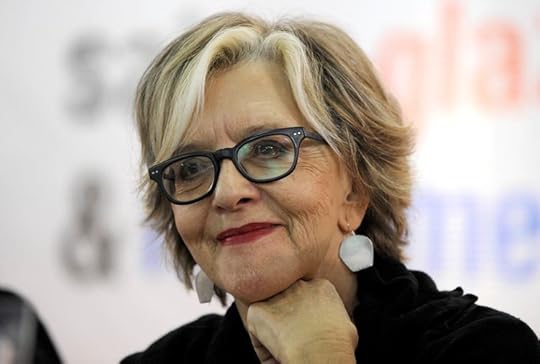
The author (b. 1949) is a Croatian writer, although this book is translated from the French. She is known as a feminist writer and a chronicler of life under communism. Perhaps the best-known of her half-dozen novels is Holograms of Fear. She lives in Croatia and Sweden.
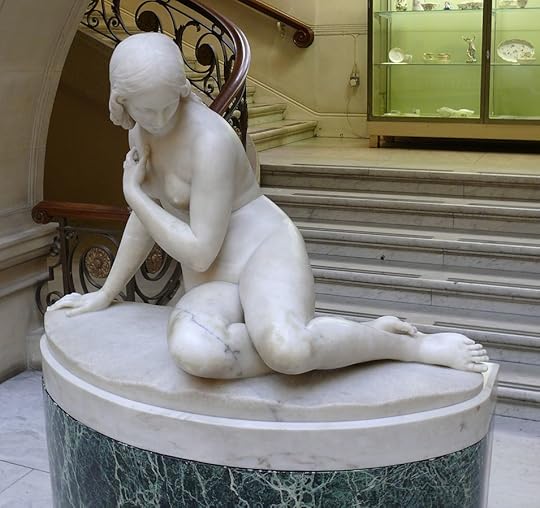
Photo of Reclining Female Nude in the Bristol City Museum by Ad Merskens from Wikipedia Commons.
Photo of the author from alchetron.com
There are more traumas yet to come. The husband/father died when the girl was three, so she hardly remembers him. The mother has men over to the house and eventually a live-in friend who becomes the girl’s stepfather. Both the mother (at age 36) and daughter (at age 14) are beautiful and look alike. In addition their personalities are a lot alike so the daughter’s love-hate relationship with her mother is a kind of love-hate relationship with herself.
Mother and daughter talk only a few times a year by phone – always about functional things like health or money. Perhaps the saddest scene, of many, occurs when the mother comes for a surprise visits to her daughter’s art studio – they have not seen each other in person for eight years. Just before boarding the train to go back, she asks her daughter “Tell me something about your life.”
So the stage is set for a non-existent adult relationship between the two women. The daughter moves away and becomes a sculptor. (We learn a bit about the art process in the story.) The title comes from a marble statue the daughter made of her mother. When the mother sees a photo of it in a magazine (they have almost no contact) she feels that it is so revealing she attempts to kill herself. After this event the daughter comes home to help take care of her frail mother and to try again to have conversation.
There is good writing. Snippets I liked.
“Anxiety makes me shrink.”
“She is going to wake up, I thought, and feel me looking at her, like a wet poultice on her face.”
[The sweets] “tasted of the words flooding her mouth but which she would never speak.”
“How easy it is to hate.”
The author (b. 1949) is a Croatian writer, although this book is translated from the French. She is known as a feminist writer and a chronicler of life under communism. Perhaps the best-known of her half-dozen novels is Holograms of Fear. She lives in Croatia and Sweden.
Photo of Reclining Female Nude in the Bristol City Museum by Ad Merskens from Wikipedia Commons.
Photo of the author from alchetron.com

August 29, 2016
Sometimes I come home from work tense and worried, pick up a book, start reading, and it fills me with calm, joy, relaxation - escape.
Sometimes, I sit down on a Saturday morning and start reading calmly and happily, only to be catapulted into an emotional storm that makes my heart pound and my hands shake while I keep reading on frenetically, compulsively, just to get over the dramatic feeling. "Marble skin", needless to say, is of the second category. To have a cathartic climax, I must write this book out of my head now, while it is still actively working on my mind. I might change my mind about it later.
Like so many other books, I picked this one in a thrift store. And like others, it has left traces, or stains, of other readers. Just like when I read Sexing the Cherry, I share the copy of the novel with another, unknown person. But this one has not left annoying, distracting notes in the margins. This previous reader has put a fragile, old newspaper article with information on the author into the book, carefully attached with a paper clip. The yellowed page with a young Slavenka Drakulic on the cover dates from 5th September 1995 - it was a Tuesday!
The book was a birthday gift from Pär for Kerstin - it was her 80th birthday. She will now be 101 years old, if she is still alive. The thought that an old man (the handwriting of the dedication tells me!) gave a female friend, turning 80, THIS novel, this intense, passionate, under-the-marble-skin-going story makes me shiver! That I can trace this book to a birthday 21 years ago - to a time when I still lived with my parents, but was about leave, to embark on adulthood - is thrilling and scary.
For the book is all about travelling back in time, remembering the complex feelings between parent and child, mother and daughter, when the relationship slowly changes to become one between two grown-ups, who awkwardly remember the time when everything was still natural.
This is one of the few books I actually read in my MOTHER tongue, as opposed to the English I use for work, or the German that has dominated in my everyday life since childhood. Out of all books I could choose to read in Swedish, I picked this one, fittingly concerned with questions of how mothers and daughters act towards each other. Reading in my mother tongue moves it closer to myself and my old memories!
The main character is a sculptress, and she creates a cold marble sculpture of her estranged mother. This causes the mother to attempt suicide after seeing a newspaper article with a picture of the daughter's artwork (another reason why the newspaper clip inside my copy touched me!). Following this event, the ancient history between mother and daughter unfolds in flashbacks, revealing the pain of growing up with a mother who tries to clean herself and her daughter from the stain she considers womanhood to be. In an environment of guilt, pain, and shame, the daughter is sexually abused by her stepfather, and her mother refuses to acknowledge it. At one point, the detergent in a bucket is described in a hyper-realistic, yet symbolic way: the stains and traces of womanhood must be erased.
But they stay, and are transformed into cold, hard stone: marble skin. In one scene, the daughter sees her mother's face, surrounded by snakes: this is a silent reference to Medusa, and the solution is clear: the Medusa-Mother figure has to look into a mirror (her lookalike daughter), to be banned into harmless stone!
While turning the pages faster and faster, to get through the emotional reading experience, I thought of Jeanette Winterson's Written on the Body, which describes a similar idea of passion leaving traces on the body. It also closely relates to The Passion by the same author, describing passion as a place between fear and sex.
When I reviewed As If I Am Not There, I thought I would not be able to feel more pain reading another of Drakulic' books, and calmly expected something between the horrifying war experience and the irony of Communist rule as experienced in A Guided Tour Through the Museum of Communism. To read a private story, of a mother and her daughter, and to fall so deeply into inner turmoil and pain, was beyond my imagination.
Maybe it was partly because of the visual, tactile elements of the story, touching me because of my background in art history? Or because nobody is completely detached from childhood memories and the confusing ideas they conjure? Or because I was complacent and thought I could not be surprised, because I EXPECTED to be?
In any case, this is a marble rock of a short novel, hard and polished, shiny and sharp. And I am happy to have been able to write it out of my body before dinner.
A dark, red wine is called for, one that leaves stains on a white table cloth!
Sometimes, I sit down on a Saturday morning and start reading calmly and happily, only to be catapulted into an emotional storm that makes my heart pound and my hands shake while I keep reading on frenetically, compulsively, just to get over the dramatic feeling. "Marble skin", needless to say, is of the second category. To have a cathartic climax, I must write this book out of my head now, while it is still actively working on my mind. I might change my mind about it later.
Like so many other books, I picked this one in a thrift store. And like others, it has left traces, or stains, of other readers. Just like when I read Sexing the Cherry, I share the copy of the novel with another, unknown person. But this one has not left annoying, distracting notes in the margins. This previous reader has put a fragile, old newspaper article with information on the author into the book, carefully attached with a paper clip. The yellowed page with a young Slavenka Drakulic on the cover dates from 5th September 1995 - it was a Tuesday!
The book was a birthday gift from Pär for Kerstin - it was her 80th birthday. She will now be 101 years old, if she is still alive. The thought that an old man (the handwriting of the dedication tells me!) gave a female friend, turning 80, THIS novel, this intense, passionate, under-the-marble-skin-going story makes me shiver! That I can trace this book to a birthday 21 years ago - to a time when I still lived with my parents, but was about leave, to embark on adulthood - is thrilling and scary.
For the book is all about travelling back in time, remembering the complex feelings between parent and child, mother and daughter, when the relationship slowly changes to become one between two grown-ups, who awkwardly remember the time when everything was still natural.
This is one of the few books I actually read in my MOTHER tongue, as opposed to the English I use for work, or the German that has dominated in my everyday life since childhood. Out of all books I could choose to read in Swedish, I picked this one, fittingly concerned with questions of how mothers and daughters act towards each other. Reading in my mother tongue moves it closer to myself and my old memories!
The main character is a sculptress, and she creates a cold marble sculpture of her estranged mother. This causes the mother to attempt suicide after seeing a newspaper article with a picture of the daughter's artwork (another reason why the newspaper clip inside my copy touched me!). Following this event, the ancient history between mother and daughter unfolds in flashbacks, revealing the pain of growing up with a mother who tries to clean herself and her daughter from the stain she considers womanhood to be. In an environment of guilt, pain, and shame, the daughter is sexually abused by her stepfather, and her mother refuses to acknowledge it. At one point, the detergent in a bucket is described in a hyper-realistic, yet symbolic way: the stains and traces of womanhood must be erased.
But they stay, and are transformed into cold, hard stone: marble skin. In one scene, the daughter sees her mother's face, surrounded by snakes: this is a silent reference to Medusa, and the solution is clear: the Medusa-Mother figure has to look into a mirror (her lookalike daughter), to be banned into harmless stone!
While turning the pages faster and faster, to get through the emotional reading experience, I thought of Jeanette Winterson's Written on the Body, which describes a similar idea of passion leaving traces on the body. It also closely relates to The Passion by the same author, describing passion as a place between fear and sex.
When I reviewed As If I Am Not There, I thought I would not be able to feel more pain reading another of Drakulic' books, and calmly expected something between the horrifying war experience and the irony of Communist rule as experienced in A Guided Tour Through the Museum of Communism. To read a private story, of a mother and her daughter, and to fall so deeply into inner turmoil and pain, was beyond my imagination.
Maybe it was partly because of the visual, tactile elements of the story, touching me because of my background in art history? Or because nobody is completely detached from childhood memories and the confusing ideas they conjure? Or because I was complacent and thought I could not be surprised, because I EXPECTED to be?
In any case, this is a marble rock of a short novel, hard and polished, shiny and sharp. And I am happy to have been able to write it out of my body before dinner.
A dark, red wine is called for, one that leaves stains on a white table cloth!

November 13, 2017
To može samo Slavenka... iskazati emociju koja te preplavi i ne pušta... a tek ono što ne kaže - jednostavno savršeno!

September 5, 2015
Stil pisanja mi je bio zamoran te mi je "ubilo" samu pricu. Zato niska ocjena. Tema je neiscrpna i dalo bi se o ovoj knjizi lijepo "posvadjati"! ;)

February 4, 2024
Odrasla ćerka pripoveda o svom vrlo prisnom odnosu prema majci u prošlosti. Neposredan povod (u sadašnjosti) je majčin pokušaj samoubistva. Ćerkina vizura je izrazito fokusirana na majčin ljubavni život. Emocionalno težište priče je vezano za doba ćerkinog ranog puberteta, kada je majka počela da živi sa novim mužem. Osećanja prema majci su predominantno agresivna. Ni infantilno-erotska (kožni i oralni erotizam) ni ljubavna osećanja nisu bez primese agresije.
Roman kamerne atmosfere. Zgusnut. Ćerkina snažna ambivalentna osećanja u sklopu trougla majka, ćerka i očuh imaju antropološku težinu. Emocionalni intenzitet je postignut kada je reč o ćerkinim vlastitim doživljajima, a tek delimično pri domaštavanju majčinih misli i osećanja tj. poistovećivanju sa majkom, budući da ono biva povremeno narušavano učitavanjem interpretacija odnosno iznošenjem interpretativnih tvrdnji kao da su činjenice.
Roman kamerne atmosfere. Zgusnut. Ćerkina snažna ambivalentna osećanja u sklopu trougla majka, ćerka i očuh imaju antropološku težinu. Emocionalni intenzitet je postignut kada je reč o ćerkinim vlastitim doživljajima, a tek delimično pri domaštavanju majčinih misli i osećanja tj. poistovećivanju sa majkom, budući da ono biva povremeno narušavano učitavanjem interpretacija odnosno iznošenjem interpretativnih tvrdnji kao da su činjenice.

November 8, 2024
Läst för längesen, minns som mycket bra!
July 23, 2010
This is not a book, it's a stream of consciousness that envelops you, even after you've put it down it haunts you, and it should because it's a haunting, beautiful, terrible tale, told not so much in words but images that bleed together, there is no obvious structure, no square frame to keep the story in place, to keep you in place, in the story, there's just you and the pages and these two women, and they're not characters for you to observe, they're flesh and blood (under the marble skin) and you are one with both of them and they are one, and there's also the man somewhere in your peripheral, just a by-stander, this is not about the man although he plays an important part, he's just someone to see and touch and thus bring out the body, your body, so that you can understand it, and then he's gone, he's served his purpose, and all that's left is you, and the silence and the memories, and whatever comes next.

April 3, 2010
Abused at the tender age of 14, by her stepfather the raconteur escapes her childhood home only to return when compelled by her mother’s attempted suicide over a marble statute; carved by the narrator herself.
"Suddenly it happened. I thought I had already forgiven my mother for everything. I was at a private view when a woman friend asked me why all my sculptures of the female body seemed eaten away inside. Although the hollowness can't be seen, you feel it, somewhere, just beneath the marble skin. Yes, that's what she called it, the 'marble skin'."
A compelling claustrophobic, uncanny tale of a young woman resisting her inner vulnerabilities while coming in terms with her abused past, sexuality and a deteriorated mother-daughter relationship. Drakulic’s extreme psychodrama weaves a web of sexual jealousy and complicated domestic relationships induced by incest.
"Suddenly it happened. I thought I had already forgiven my mother for everything. I was at a private view when a woman friend asked me why all my sculptures of the female body seemed eaten away inside. Although the hollowness can't be seen, you feel it, somewhere, just beneath the marble skin. Yes, that's what she called it, the 'marble skin'."
A compelling claustrophobic, uncanny tale of a young woman resisting her inner vulnerabilities while coming in terms with her abused past, sexuality and a deteriorated mother-daughter relationship. Drakulic’s extreme psychodrama weaves a web of sexual jealousy and complicated domestic relationships induced by incest.
May 5, 2017
Pain seeps into every page of this wrenching story of childhood sexual abuse and a mother's blind self involvement.
July 16, 2024
3,8 haha pga hade lite svårt att hänga med i tidshoppen fram och tillbaka i tiden under hela bokens gång. Men viktig och aktuell! Läs❤️

Did Not Finish
June 28, 2023una noia mortale

August 14, 2021
A particularly hard book to review. Marble Skin is a succession of travesties in the relationship between a mother and her daughter.
The narrative opens with the narrator telling the reader how she has tried to deal with the difficult relationship with her mother by creating a hollow sculpture called Marble Skin. Her mother sees a newspaper report of this and evidently it arouses such strong feelings in her that she attempts to commit suicide for the second time. The rest of the novel revolves around the daughter relaying events in her life through an overly chaotic jumble of reminiscences from her point of view interspersed with scenes from her now caring for her mother following her suicide attempt.
I find that the narrator is one of the most unreliable in literature I have ever come across. She cherrypicks events within her life that support the narrative she is aiming for. Undoubtedly she has an incredibly complex relationship to her mother and her mother is rightly shown to have created a toxic environment for her daughter growing up in the way that she herself (and subsequently her daughter) internalise guilt, shame and disgust. The mother is depicted accurately as contributing to some of the worst experiences of the daughter in this narrative.
What I found most disturbing, not withstanding the events in the book, is the daughter’s total obsession with her mother from the outset. It becomes evident early on that she blames her mother for her father’s suicide (trusting in what a gossiping neighbour tells her rather than ever asking her mother directly, even when viewing a photo album years later) and as such has a convoluted relationship with her mother on whom she is entirely dependent. As events unfold and it becomes clear her mother is far from blameless, however the narrator rides roughshod over the obviously significant psychological and emotional trauma her mother has experienced and which she clearly sees in her early childhood. We are told for example that her mother tried to commit suicide when her daughter was younger and has issues with her appearance, youth and accepting her womanhood.
The narrator alternatively fetishises her mother, sexualises her, is disgusted by her, craves her attention, begs for her approbation, fantasises about murdering her, fantasise about colluding in murder with her, wants to feel superior to her, hero worships her, blames her, pities her and constantly wants to feel her touch. To my mind it seemed as if the daughter was only truly happy at the end when she feels her mother will soon die and thus she will gain full possession of her. This was the menacing undertone throughout the entire novel.
Undoubtedly others will disagree with my interpretation however I found this novel very difficult to view in a different light once I had grasped what it was that unsettled me about it so much.
The narrative opens with the narrator telling the reader how she has tried to deal with the difficult relationship with her mother by creating a hollow sculpture called Marble Skin. Her mother sees a newspaper report of this and evidently it arouses such strong feelings in her that she attempts to commit suicide for the second time. The rest of the novel revolves around the daughter relaying events in her life through an overly chaotic jumble of reminiscences from her point of view interspersed with scenes from her now caring for her mother following her suicide attempt.
I find that the narrator is one of the most unreliable in literature I have ever come across. She cherrypicks events within her life that support the narrative she is aiming for. Undoubtedly she has an incredibly complex relationship to her mother and her mother is rightly shown to have created a toxic environment for her daughter growing up in the way that she herself (and subsequently her daughter) internalise guilt, shame and disgust. The mother is depicted accurately as contributing to some of the worst experiences of the daughter in this narrative.
What I found most disturbing, not withstanding the events in the book, is the daughter’s total obsession with her mother from the outset. It becomes evident early on that she blames her mother for her father’s suicide (trusting in what a gossiping neighbour tells her rather than ever asking her mother directly, even when viewing a photo album years later) and as such has a convoluted relationship with her mother on whom she is entirely dependent. As events unfold and it becomes clear her mother is far from blameless, however the narrator rides roughshod over the obviously significant psychological and emotional trauma her mother has experienced and which she clearly sees in her early childhood. We are told for example that her mother tried to commit suicide when her daughter was younger and has issues with her appearance, youth and accepting her womanhood.
The narrator alternatively fetishises her mother, sexualises her, is disgusted by her, craves her attention, begs for her approbation, fantasises about murdering her, fantasise about colluding in murder with her, wants to feel superior to her, hero worships her, blames her, pities her and constantly wants to feel her touch. To my mind it seemed as if the daughter was only truly happy at the end when she feels her mother will soon die and thus she will gain full possession of her. This was the menacing undertone throughout the entire novel.
Undoubtedly others will disagree with my interpretation however I found this novel very difficult to view in a different light once I had grasped what it was that unsettled me about it so much.
August 1, 2022
This is a pretty sad book. Not sad as in pathetic or pitiful. But something that's very sad. The narrator is obsessed with her mother in many ways, some of which are disturbing. Her mother is clearly not in a good place either.
You can tell that the daughter will never find peace with the issues related to her, her mother, their past, until either (or both of them) die. This is most obvious when she refers to her mother's body as her own, she basically views her mother and herself as one person. I don't know what to make of it. This is a sign of deeply embedded trauma and only continues throughout the narration. You can literally feel the sense of shame, anger, blame. I don't think I ever got a sense of happiness or joy in this book. Not that you need such emotions in a book, but I'm saying this so you know how depressing it can end up.
Reading this would've been easier if the translator translated directly from source language to English, because the narrative is disjointed. It was translated from a translation.
I didn't finish it, only read the first half and then skimmed the rest. I couldn't stomach reading some of the later content. Even if I read transgressive fiction, it was just hard to get through with the disjointed narrative. I don't know how others did it. I picked this up along with another book of hers (Holograms of Fear)
But even with this issue, the language made it clear that this is a book about a woman who is profoundly hurt by her mother's inability to protect her from things that hurt both of them
You can tell that the daughter will never find peace with the issues related to her, her mother, their past, until either (or both of them) die. This is most obvious when she refers to her mother's body as her own, she basically views her mother and herself as one person. I don't know what to make of it. This is a sign of deeply embedded trauma and only continues throughout the narration. You can literally feel the sense of shame, anger, blame. I don't think I ever got a sense of happiness or joy in this book. Not that you need such emotions in a book, but I'm saying this so you know how depressing it can end up.
Reading this would've been easier if the translator translated directly from source language to English, because the narrative is disjointed. It was translated from a translation.
I didn't finish it, only read the first half and then skimmed the rest. I couldn't stomach reading some of the later content. Even if I read transgressive fiction, it was just hard to get through with the disjointed narrative. I don't know how others did it. I picked this up along with another book of hers (Holograms of Fear)
But even with this issue, the language made it clear that this is a book about a woman who is profoundly hurt by her mother's inability to protect her from things that hurt both of them

August 14, 2017
In questo breve ma intenso romanzo viene sviscerato il difficile rapporto di una figlia con la propria madre, donna bellissima e dalla sensualità dirompente. Dall’infanzia trascorsa a sbirciare nella vita della madre senza mai riuscire a stabilire un vero contatto, orfana di padre, la protagonista del racconto percorre la vita cercando il mezzo per riuscire a toccare la pelle di marmo, l’impossibile confronto nell’assenza totale di dialogo. Nell’intreccio a tratti morboso la figura del compagno apparentemente conteso è in realtà funzionale alla presa di coscienza della propria individualità da contrapporre ad una figura ingombrante, che scatena sentimenti contrastanti. Un racconto di donne, di incomunicabilità, di amore malato.

March 18, 2024
Nije mi baš sjela, možda zbog stila kojim je pisana, dosta me umorila. Pokušala sam ju pročitati i prije jedno 5 godina, ostavila sam ju nakon desetak stranica. Ovaj put sam ju dovršila, ali me umorila.
Napeta sam od tolike usmjerenosti na majku i njeno tijelo. S druge strane zaista oštra promišljanja o ženskom tijelu.
"Sada je u meni, u mojoj koži. Ulazi unutra i prepoznaje me kao drugu sebe, malu žensku životinjicu koja će odrasti, koja će patiti. Vidi udarce koji me čekaju. Vidi muške ruke na meni. Ne mogu joj pomoći - misli - kako je tužan ovaj dan. Zapamtila sam tugu toga dana i kako me dugo prala dok su joj ruke na mojim ramenima postojale sve teže i teže."
Napeta sam od tolike usmjerenosti na majku i njeno tijelo. S druge strane zaista oštra promišljanja o ženskom tijelu.
"Sada je u meni, u mojoj koži. Ulazi unutra i prepoznaje me kao drugu sebe, malu žensku životinjicu koja će odrasti, koja će patiti. Vidi udarce koji me čekaju. Vidi muške ruke na meni. Ne mogu joj pomoći - misli - kako je tužan ovaj dan. Zapamtila sam tugu toga dana i kako me dugo prala dok su joj ruke na mojim ramenima postojale sve teže i teže."
September 22, 2023
A powerful story of a mother-daughter relationship, seen through the lens of the narrator's illness. A meditation about life while experiencing a brush with death, and the final triumph of returning to life, now richer, especially in the ability to question. A feminist text, if ever I've seen one...
Read
January 11, 2026I mean, I have no idea how many stars to rate this.
Compulsively and engagingly written, certainly, and incredibly touching in a myriad of different ways, excruciatingly personal
“Venice, of course.”
Compulsively and engagingly written, certainly, and incredibly touching in a myriad of different ways, excruciatingly personal
“Venice, of course.”

September 23, 2026
i finished this book in a coffee shop and it was rainy out and they were playing Deathconcoiusness and the last 20 pages had someone’s blood on them. This book was a really specific engrossing experience
Read
April 15, 2021It is inevitable, while learning about your femininity, to also learn about envy and physical weakness

January 2, 2026
Zanimljiva, puna lijepih citata.
August 11, 2013
A sculptor carves a statue out of ice-cold, marble calling it "My Mother's Body." Her mother tries to commit suicide after seeing it. The daughter / mother brought together due to this - of course daughter remembers childhood w/ beautiful, distance mom - the man who raped the daughter / mom refusing to listen and choosing him over the daughter.
A lot of sexual references to the daughter and mom - ok read. The book caused a big uproar when written in former Yugoslavia (Author from).
A lot of sexual references to the daughter and mom - ok read. The book caused a big uproar when written in former Yugoslavia (Author from).

October 6, 2008
i loved this book...it's very oddly written and sometimes hard to keep in order when reading but i really liked the story and perspective
January 22, 2013
creepy.....

September 19, 2014
"uzbuđenje nije u gledanju, nego u odluci: kao da donijevši odluku, počinjem povezivati niti nekog novog, još nepoznatog života materije..."
April 7, 2009
How do you rate a book that you can't remember?
Displaying 1 - 26 of 26 reviews