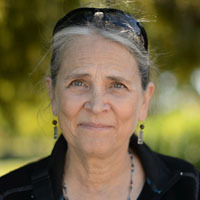
Combining both hands-on practicality and garden philosophy, Diana Beresford-Kroeger, a self-described "renegade scientist," appeals to the hearts and minds of gardeners everywhere. Arboretum America 's goal is both lofty and down to earth: the salvation of the planet---through the planting of trees. There are many books on both of these subjects. Some warn, some inform, while others meditate on the disappearance of the forests or the meaning of trees. Few books, though, touch on so many aspects of trees, including ways to use them in garden design, as Arboretum America does. Beresford-Kroeger's remedy is what she calls the Bioplan. The plan consists of how each of twenty different tree groups relates to its natural environment and how these specific trees can be used to promote health or to counteract the effects of pollution and global warming. The plan also reveals the fascinating history of these trees in Native American culture, including their medicinal uses. Finally, the Bioplan offers practical design ideas and tips---where to plant these trees, what season they look best in, what native plants complement them---as well as organic care and how to grow them. Beresford-Kroeger captures the magic spell that trees cast over us. Yet her holistic approach urges us to think big while acting locally, so that we may someday restore the forest primeval. Diana Beresford-Kroeger is a botanist, medical and agricultural researcher, lecturer, and self-defined "renegade scientist" in the fields of classical botany, medical biochemistry, organic chemistry, and nuclear chemistry. She lives in Ontario, Canada.
DIANA BERESFORD-KROEGER, a botanist, medical biochemist and self-defined "renegade scientist," brings together ethnobotany, horticulture, spirituality and alternative medicine to reveal a path toward better stewardship of the natural world. Diana's latest book is called The Sweetness of a Simple Life. A precise and poetic writer steeped in Gaelic storytelling traditions gathered from her childhood in Ireland, her previous books include The Global Forest, Arboretum Borealis: A Lifeline of the Planet, Arboretum America: A Philosophy of the Forest, A Garden for Life and a collection of stories, Time Will Tell. In 2010, Diana was inducted as a Wings Worldquest Fellow. The Utne Reader named her one of their Visionaries for 2011. She lives in Ontario, Canada, with her husband, surrounded by her research garden filled with rare and endangered species.
Like some others, I found this a beautiful and fascinating book, more to read on and off than straight through, but after reading a number of the author's unreferenced and absolute statements began to wonder how credible it was. For example, she says of black walnuts that "A single tree planted now will pay for the university education of one's grandchild." (Having lived with well-established black walnuts, and consulted an arborist about their potential value, I can only say I wish that were true!) And she states flatly that because of a chemical found around schools "due to heavy traffic and because it is directly tied in with leukemia in children, planting black walnut trees in school yards should be part of a bioplan for the health protection of al schoolchildren." If it's true that just breathing the chemicals trees emit really can have such health benefits, I'd love to know a lot more than she tells us here.
Interesting. Her background allows her to speak rather knowledgeably about the potential curatives to be found in various species. I found it frustrating, though, that the pictures were more often of plants that grow well nearby, or what the fruit looks like, rather than what the tree itself looks like. Also, she focuses pretty tightly on trees that grow near her in Canada.
I found myself wondering who her target audience is; she seems to have tried to strike a balance between writing to several different audiences, and falling a bit short for each as a result.
A beautiful read and a book with amazing pictures. Very informative, inspiring, and very helpful for deepening my knowledge about these amazing beings, THE TREES.
This book is about, among other things, the medicinal uses of trees. I read it as a skeptic who wanted to be convinced that this is more than just new-age wishful thinking. I was glad to see E.O. Wilson write the introduction, as he lends a bit of credibility. Sadly, I was left thinking that there is a lot less science in this book than I had wish for (perhaps she calls herself a "renegade" scientist for a reason).
I love trees, and I found her general descriptions and "ecofunctions" sections a really interesting read. I was less excited about the "Organic Care" and "Designs," but I can see their use. The "Medicine" section was interesting, although it seemed to be less about science and more about Native American history (I get the sense that her logic was, "The Native American's used it to treat ____, so that is enough evidence that it works."
My biggest complaint is about a single paragraph. This paragraph comes from the section on the black walnut tree on page 84:
"Black walnut has also been used by the Seneca for rainmaking. Bark that had been hit by lightning was placed in a cup of water for a few minutes. Rain ensued in two days. The bark was saved and dried for future use. The rainmaking practice should not be discounted out of hand because the electron power and voltage in an electric strike is beyond the capacity of man. The resulting fusion could very well produce some interesting chemical products of polymerization."
This was too much for me. Is she really claiming that, when the satellites and radars do not detect any chance of rain in two days, placing the bark in water would make the clouds appear within 48 hours? This seems like it is a scientific claim, in that it could be disproved (it seems like it would be easy).
Still, I enjoyed the descriptions of how the trees grow and how they relate to the rest of the forest, and I support her idea of preserving the forests by purposefully planting trees in useful areas (a "BioPlan"). I just don't trust her enough to believe anything more than that.
This is a pretty spectacular book chock full of scientific, medical, and historical knowledge of plants. Beresford-Kroeger, tells her "Bioplan" which promotes health for the planet with an antidote for environmental ills being - - planting trees. There are innate chemical qualities embodied in trees that influence the environment as we live and dream that we can use to our benefit. Fascinating, I first heard her interviewed on a Canadian late night broadcast and said, FAR OUT, got to read this book.
Diana Beresford-Kroeger is a botanist, medical and agricultural researcher, lecturer, and self-defined "renegade scientist" in the fields of classical botany, medical biochemistry, organic chemistry, and nuclear chemistry. She lives in Ontario, Canada.
I've taken this one out of the library about 5 times--it is a gem. Not only the incredibly beautiful photos of various native trees (and other wildflowers) but also the cultural importance of the tree, its medicinal and other uses, and its function in the ecosystem and relationship to other plants and animals. It's a more wholistic view of the web of nature than I've ever seen elsewhere.