

What do you think?

Håvard Gjermundsson Viland #2
Trollringen
Hoels siste roman er en fortsettelse av romanen Arvestålet. Den skildrer en avsidesliggende Østlandsbygd i 1820-årene. Dit kommer Håvard Gjermundsen Viland fra Telemark. Han gifter seg til en gård og forsøker umiddelbart å få igang moderniseringer og forbedringer. Han møter motstand, og bukker til slutt under for fordommer og fornedrelse, skyldfølelse, og fortiden som ikke vil slippe taket i ham.
- GenresHistorical Fiction
336 pages, Hardcover
First published January 1, 1958
About the author
Sigurd Hoel
41 books15 followersSigurd Hoel was a Norwegian author and publishing consultant.
His literary career began with the short story «Idioten» («the Idiot») from 1918, when he won a writing contest. The same year he became an employee of «Socialdemokraten» («The Social Democrat», a newspaper) as a literature and theater critic.
In 1924 he traveled to Berlin to study socialism, and there he wrote his first novel, «Syvstjernen» (The Seven Star), before moving to Paris for a short time.
During the war Hoel and his wife went back to Odalen. He participated in the Resistance, and wrote articles for the Resistance press. In 1943 he was forced to flee to Sweden.
Hoel had a short connection to the landsmål movement, but later played an active part in the riksmål campaign. He was among the founders of the Author's Association of 1952 and was the chairman of the Riksmålsforbundet from 1956 to 1959.
As the main consultant for Norwegian and translated literature for Gyldendal publishing, Hoel made an impression on a whole generation of Norwegian literature. From 1929-1959 Hoel was the editor of the publisher's «Gold Series», where he introduced a number of foreign authors, often with an astounding foresight for which works would remain. The series comprised 101 books—among others, works from authors such as Ernest Hemingway, F. Scott Fitzgerald and Franz Kafka. Hoel wrote prefaces for all of the books.
His literary career began with the short story «Idioten» («the Idiot») from 1918, when he won a writing contest. The same year he became an employee of «Socialdemokraten» («The Social Democrat», a newspaper) as a literature and theater critic.
In 1924 he traveled to Berlin to study socialism, and there he wrote his first novel, «Syvstjernen» (The Seven Star), before moving to Paris for a short time.
During the war Hoel and his wife went back to Odalen. He participated in the Resistance, and wrote articles for the Resistance press. In 1943 he was forced to flee to Sweden.
Hoel had a short connection to the landsmål movement, but later played an active part in the riksmål campaign. He was among the founders of the Author's Association of 1952 and was the chairman of the Riksmålsforbundet from 1956 to 1959.
As the main consultant for Norwegian and translated literature for Gyldendal publishing, Hoel made an impression on a whole generation of Norwegian literature. From 1929-1959 Hoel was the editor of the publisher's «Gold Series», where he introduced a number of foreign authors, often with an astounding foresight for which works would remain. The series comprised 101 books—among others, works from authors such as Ernest Hemingway, F. Scott Fitzgerald and Franz Kafka. Hoel wrote prefaces for all of the books.
Ratings & Reviews
Friends & Following
Create a free account to discover what your friends think of this book!
Community Reviews
Displaying 1 - 7 of 7 reviews

September 6, 2014
[Revised 3/8/23 - pictures, shelves added]
A Norwegian story – a tragedy really – set in the mid-1800s. A man flees his home village after his girlfriend commits suicide (because of him). He starts a new life by marrying a widow in a distant village. The village is far enough away that he will never see his family again.

The widow is a relatively wealthy landowner, so he has an opportunity to practice his school learning about improving crop yields through fertilization, crop rotation, selective livestock breeding and swamp drainage.
The problem is that the hired hands, the resident cottagers (peasants), and the village folks are generally bound by tradition and superstition. Not only do they not have an interest in modern farming, but they actively conspire to defeat his plans.
Then his wife dies. In an 1850-ish version of a witch hunt, the village gossips speculate that he was having an affair with his teen-aged step-daughter and that he was responsible for his wife’s death. Was he?
The book has a lot of local color of rural Norway in its era. We learn about class differences at the time – peasants vs. landlords and timber owners, religious movements, and mid-nineteenth-century agricultural improvements. This is a good companion book to Dina’s Book by Herbjorg Wassmo, also set in rural Norway at about the same time. I read and reviewed that one. Both are translated from Norwegian.
The Troll Circle is a Norwegian classic published in 1958. A little slow, and nothing outstanding in a literary sense, but a good read. (3.5 rounded up)
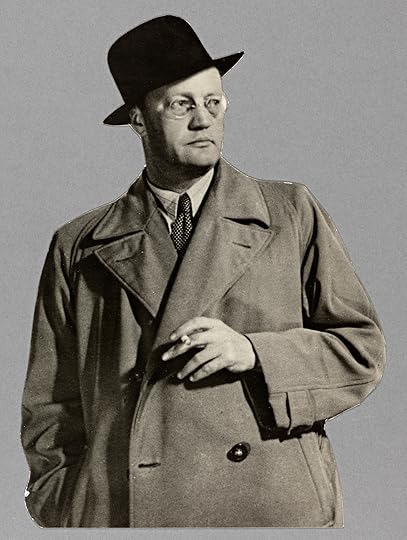
The Norwegian author (1890-1960) wrote about 15 novels and a similar number of collections of short stories and essays. However, he’s relatively unknown to English readers. Only 4 or so of his novels have been translated into English. He’s best known in English for his novel, Meeting at the Milestone, about the Nazi occupation of Norway.
Top photo of Norwegian farm from nationsencyclopedia.com
The author from Wikimedia commons
A Norwegian story – a tragedy really – set in the mid-1800s. A man flees his home village after his girlfriend commits suicide (because of him). He starts a new life by marrying a widow in a distant village. The village is far enough away that he will never see his family again.
The widow is a relatively wealthy landowner, so he has an opportunity to practice his school learning about improving crop yields through fertilization, crop rotation, selective livestock breeding and swamp drainage.
The problem is that the hired hands, the resident cottagers (peasants), and the village folks are generally bound by tradition and superstition. Not only do they not have an interest in modern farming, but they actively conspire to defeat his plans.
Then his wife dies. In an 1850-ish version of a witch hunt, the village gossips speculate that he was having an affair with his teen-aged step-daughter and that he was responsible for his wife’s death. Was he?
The book has a lot of local color of rural Norway in its era. We learn about class differences at the time – peasants vs. landlords and timber owners, religious movements, and mid-nineteenth-century agricultural improvements. This is a good companion book to Dina’s Book by Herbjorg Wassmo, also set in rural Norway at about the same time. I read and reviewed that one. Both are translated from Norwegian.
The Troll Circle is a Norwegian classic published in 1958. A little slow, and nothing outstanding in a literary sense, but a good read. (3.5 rounded up)
The Norwegian author (1890-1960) wrote about 15 novels and a similar number of collections of short stories and essays. However, he’s relatively unknown to English readers. Only 4 or so of his novels have been translated into English. He’s best known in English for his novel, Meeting at the Milestone, about the Nazi occupation of Norway.
Top photo of Norwegian farm from nationsencyclopedia.com
The author from Wikimedia commons
November 25, 2025
Et mesterverk! "Trollringen" (1958) er andre bok i sagaen om bondesønnen Håvard Gjermundsen, men kan fint leses som en frittstående roman - selv om jeg jo anbefaler å lese "Arvestålet" (1941) først. Handlingen begynner der forrige bok sluttet, og utvikler seg til en bygdetragedie med intriger på nivå med Game of Thrones. Det er en grunn til at dette regnes som en av de store klassikerene i norsk litteratur!
February 25, 2009
As with Nabokov's Lolita, I found this to be a good read but not terribly brilliant until the last 50 pages, which absolutely made it worth the wait. Likewise, while I would always recommend Pale Fire ahead of Lolita, I would recommend The Road to the World's End ahead of The Troll Circle. If you've already read some Hoel and want to tackle something a little on the heavy side, have at it. Otherwise, I'd say start out with The Road to the World's End. I can't imagine not loving that one. I can imagine not loving this one.

October 1, 2020
A tragedy with lots of portents, not like in a novel by (one of my favorites) Thomas Hardy, but a wonderful Romantic novel as defined by the Merriam-Webster dictionary. " a literary, artistic, and philosophical movement originating in the 18th century, characterized chiefly by a reaction against neoclassicism and an emphasis on the imagination and emotions, and marked especially in English literature by sensibility and the use of autobiographical material, an exaltation of the primitive and the common man, an appreciation of external nature, an interest in the remote, a predilection for melancholy, and the use in poetry of older verse forms"
Much of that definition fits but certainly not "an exaltation of the primitive and the common man."
Hoel's hero is the modern man, a scientific man, an idealist whose goal is to improve the lives of the cotters who live in the parish by teaching them modern farming. These efforts are not only scorned but openly savaged. The good will Havard tries to extend to them is not reciprocated and he is judged "the outsider." The common man and woman in this book are petty, spiteful, ignorant and evil. Havard won my heart by his kind treatment of animals, his inability to watch the slaughter of the farm stock and his deep love of nature.
I wonder if there is a comparison of The Troll Circle and The Growth of the Soil (which I recently read) by Knut Hamsum. Hamsum's hero is a supermensch who toils and wins and expands his conquest over the rough land alone with his wife. Hamsum was a racist and a Nazi sympathizer. I see his book The Growth of the Soil as an expression of this....but maybe I am being too critical. Hamsum died in 1952 and Hoel died in 1960 so they were contemporaries. Hamsum won the Nobel Prize but was called "a ghost that wouldn't stay in his grave." I prefer The Troll Circle to Growth of the Soil, but that's just me.
Much of that definition fits but certainly not "an exaltation of the primitive and the common man."
Hoel's hero is the modern man, a scientific man, an idealist whose goal is to improve the lives of the cotters who live in the parish by teaching them modern farming. These efforts are not only scorned but openly savaged. The good will Havard tries to extend to them is not reciprocated and he is judged "the outsider." The common man and woman in this book are petty, spiteful, ignorant and evil. Havard won my heart by his kind treatment of animals, his inability to watch the slaughter of the farm stock and his deep love of nature.
I wonder if there is a comparison of The Troll Circle and The Growth of the Soil (which I recently read) by Knut Hamsum. Hamsum's hero is a supermensch who toils and wins and expands his conquest over the rough land alone with his wife. Hamsum was a racist and a Nazi sympathizer. I see his book The Growth of the Soil as an expression of this....but maybe I am being too critical. Hamsum died in 1952 and Hoel died in 1960 so they were contemporaries. Hamsum won the Nobel Prize but was called "a ghost that wouldn't stay in his grave." I prefer The Troll Circle to Growth of the Soil, but that's just me.
June 5, 2024
Litt som Hamsuns Markens grøde kombinert med Ken Folletts serie om Kingsbridge. Bare her satt i en enkel bygd og mindre maktkamp i det store bildet, men enda mer lokalt.
Litt treig i starten, men bygger en god historie hvor det kom mange overraskelser!
Og bare helt umulig å ikke fortsette å lese på slutten. Boka sitter i etter å ha lest den ferdig.
Litt treig i starten, men bygger en god historie hvor det kom mange overraskelser!
Og bare helt umulig å ikke fortsette å lese på slutten. Boka sitter i etter å ha lest den ferdig.

March 23, 2026
Labai tamsi, niūri knyga

September 24, 2015
Короче, все умерли.
Displaying 1 - 7 of 7 reviews