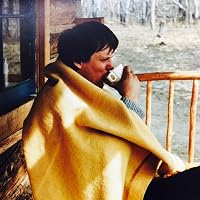
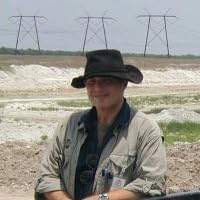
This author is the the British-Canadian writer of Yukon poetry. For the British historian of modern Russia, see Robert Service.
Robert William Service was born into a Scottish family while they were living in Preston, England. He was schooled in Scotland, attending Hillhead High School in Glasgow. He moved to Canada at the age of 21 when he gave up his job working in a Glasgow bank, and traveled to Vancouver Island, British Columbia with his Buffalo Bill outfit and dreams of becoming a cowboy.
He drifted around western North America, taking and quitting a series of jobs. Hired by the Canadian Bank of Commerce, he worked in a number of its branches before being posted to the branch in Whitehorse (not Dawson) in the Yukon Territory in 1904, six years after the Klondike Gold Rush. Inspired by the vast beauty of the Yukon wilderness, Service began writing poetry about the things he saw.
Conversations with locals led him to write about things he hadn't seen, many of which hadn't actually happened, as well. He did not set foot in Dawson City until 1908, arriving in the Klondike ten years after the Gold Rush, but his renown as a writer was already established.
Great frontier poetry from a bygone era. Here’s one example:
The Spell of the Yukon BY ROBERT W. SERVICE
I wanted the gold, and I sought it; I scrabbled and mucked like a slave. Was it famine or scurvy—I fought it; I hurled my youth into a grave. I wanted the gold, and I got it— Came out with a fortune last fall,— Yet somehow life’s not what I thought it, And somehow the gold isn’t all.
No! There’s the land. (Have you seen it?) It’s the cussedest land that I know, From the big, dizzy mountains that screen it To the deep, deathlike valleys below. Some say God was tired when He made it; Some say it’s a fine land to shun; Maybe; but there’s some as would trade it For no land on earth—and I’m one.
You come to get rich (damned good reason); You feel like an exile at first; You hate it like hell for a season, And then you are worse than the worst. It grips you like some kinds of sinning; It twists you from foe to a friend; It seems it’s been since the beginning; It seems it will be to the end.
I’ve stood in some mighty-mouthed hollow That’s plumb-full of hush to the brim; I’ve watched the big, husky sun wallow In crimson and gold, and grow dim, Till the moon set the pearly peaks gleaming, And the stars tumbled out, neck and crop; And I’ve thought that I surely was dreaming, With the peace o’ the world piled on top.
The summer—no sweeter was ever; The sunshiny woods all athrill; The grayling aleap in the river, The bighorn asleep on the hill. The strong life that never knows harness; The wilds where the caribou call; The freshness, the freedom, the farness— O God! how I’m stuck on it all.
The winter! the brightness that blinds you, The white land locked tight as a drum, The cold fear that follows and finds you, The silence that bludgeons you dumb. The snows that are older than history, The woods where the weird shadows slant; The stillness, the moonlight, the mystery, I’ve bade ’em good-by—but I can’t.
There’s a land where the mountains are nameless, And the rivers all run God knows where; There are lives that are erring and aimless, And deaths that just hang by a hair; There are hardships that nobody reckons; There are valleys unpeopled and still; There’s a land—oh, it beckons and beckons, And I want to go back—and I will.
They’re making my money diminish; I’m sick of the taste of champagne. Thank God! when I’m skinned to a finish I’ll pike to the Yukon again. I’ll fight—and you bet it’s no sham-fight; It’s hell!—but I’ve been there before; And it’s better than this by a damsite— So me for the Yukon once more.
There’s gold, and it’s haunting and haunting; It’s luring me on as of old; Yet it isn’t the gold that I’m wanting So much as just finding the gold. It’s the great, big, broad land ’way up yonder, It’s the forests where silence has lease; It’s the beauty that thrills me with wonder, It’s the stillness that fills me with peace.
Robert Service is a poet that I recommend to people who have trouble relating to poetry. I first read these poems as a young teen and it is hard for me to separate questions of technical merit from my deep rooted nostalgia and fondness for the poems.
As a poet, Service tells stories, communicates ideas, presents heartfelt emotion in direct and entertaining ways. He has deep insight into human nature and deep appreciation for the wild places he visited and wrote about.
The collection of poetry is very, very dear to my heart. My father owned this book, and despite its weight, carried it with him any time he went rock climbing or back packing. Later, when we were children sitting at the campfire Dad would recite the longer poems to us- Cremation of Sam McGee, Spell of the Yukon, and the Shooting of Dan McGrew- all from memory. They were good times.
I eventually found the exact same copy type that my dad had carried with him all those years at a library sale. Now it sits proudly in my library.
Poetry is not normally for me, but Robert W. Service was an amazing man. His poetry is evocative and beautiful, but it’s never snobbish or confusing. It’s very straight forward. He was nick-named the People’s Poet, and I truly believe that anyone can enjoy his works. He panned for gold in the Yukon, he lived carefree in France as a Bohemian, and he served in the first World War as an ambulance man- the pain, love, action, and heroism of his life are all present in his poems.
I do enjoy some of his other collections, but Spell of the Yukon will always be one of the most important books in my life.
This book is offered for free as an eBook by Project Gutenberg, and is offered as an audiobook by Librivox.
This is the Law of the Yukon, that only the Strong shall thrive; That surely the Weak shall perish, and only the Fit survive. The Law of the Yukon
In the twentieth century’s first decade the reading public was mad for tales of the Klondike Gold Rush (1896-1899). Jack London, himself an unsuccessful Klondike prospector, struck publishing gold and built his fame off of tales of the Klondike (To Build a Fire, The Call of the Wild, White Fang). O. Henry used the stock character of a rustic but rich Klondike prospector come back south to the city in several of his short stories. And Robert W. Service found both fame and fortune turning stories he heard from rugged old prospectors into wildly popular verse.
Service was a young bank clerk working in the Yukon. He absorbed the tales of the old sourdoughs (the moniker hung on the oldest veterans of that region) and turned them into fascinating story poems, most famously The Shooting of Dan McGrew, and The Cremation of Sam McGee. He was mocked by critics, who called his verse doggerel, and called him the “Canadian Kipling” (not intended as a complement). But Service was wildly popular with the public. He was the most commercially successful poet of the century, with Songs of a Sourdough earning him in excess of $100,000 (about $3.3 million today). He said of his work, “Verse, not poetry, is what I was after ... something the man in the street would take notice of and the sweet old lady would paste in her album; something the schoolboy would spout and the fellow in the pub would quote. I belonged to the simple folks whom I liked to please."
Reading through this, his most famous volume, it’s easy to see why the critics scoffed. Many of these poems have a sing song rhythm with unsophisticated rhymes and maudlin themes. Yet he sometimes had a knack for truly brilliant description despite these flaws, as in these lines from The Shooting of Dan McGrew:
Were you ever out in the Great Alone, when the moon was awful clear, And the icy mountains hemmed you in with a silence you most could hear; With only the howl of a timber wolf, and you camped there in the cold, A half-dead thing in a stark, dead world, clean mad for the muck called gold; While high overhead, green, yellow, and red, the Northern Lights swept in bars — Then you’ve a hunch what the music meant…hunger and night and stars.
Service achieved an almost cinematic quality with his greatest story poems. The Shooting of Dan McGrew paints us the classic frontier barroom showdown, with bad man gambler, a fallen lady, and a jealous confrontation, complete with piano player who stops the music. In The Cremation of Sam McGee Service creates a far less conventional scene, with a prospector mushing through the icy wilds with the corpse of his buddy strapped to his dogsled, attempting to fulfill the man’s dying request to be cremated. His vivid descriptions of bitter cold and wind leave you nearly understanding the horror the dead man felt at the idea of his bones forever resting in that blighted landscape. Both tale are captivating, mesmerizing even, and in each Service balanced his grim subjects with sly humor. Sure, these poems aren’t Byron, but they’re damn good storytelling.
Struggling young authors are often advised to write about the world they know best - a good rule, but one that needs to be broken now and again. The Anglo-Scottish writer Robert Service gave us some of the classic poems of the Canadian gold rush, when his knowledge of mining was precisely nil.
He was a humble bank clerk who kept disappearing to wander the American west, ending up in the Yukon branch of his bank. Here he picked up a few odd impressions of the goldmining life, overheard from prospectors chatting in a local bar, and turned them into a narrative verse, The Shooting of Dan McGrew. This proved notably popular, and he quickly wrote the rest of the present volume, which earned him a fortune.
Much of it was clearly styled after Kipling, and sometimes dismissed as ‘doggerel’ in the same patronising spirit, which never bothered him, however. In ‘The Little Old Log Cabin’, he tries to switch into rough street-talk, as Kipling often did (causing critics to grumble “Why can’t he write in English?”), and the experiment is not a success. Some of the longer pieces also suffer from periodic ‘shoe horning’ of words to fit a rhythm or a rhyme, which Poet Laureate John Masefield sometimes felt obliged to do.
None of this detracts from the splendid muscularity of the verse, starting right away in the first poem ‘The Law of the Yukon’:
This is the law of the Yukon, and ever she makes it plain: "Send not your foolish and feeble; send me your strong and your sane.”
That sets the tone for the brisk, masculine quick-march through life, which tends to characterise the collection as a whole. Attempts at sentimental effects do not really come off, except in one poem, the immortal ‘My Madonna’, just sixteen lines, and shining masterpiece of the book.
Two of the titles leave me unsure who copied whom. I had always thought the phrase ‘wage slave’ was coined by Kipling. And Jack London’s novel ‘The Call of the Wild’ appeared in the same year (1903) as this poem of the same name. But we know that ‘sourdough’ was the name for an experienced Yukon miner (accustomed to the bitter-tasting leavener that stopped the bread freezing), who needed to be distinguished from the rabble in the 1896 gold rush.
This was my latest read-a-poem-a-day book. There were some good ones, but after a while the Victorian morality and sentimentality get you down and you've had enough of drunkards and fallen women ( and silent pines, raging waters and burning suns). The influence of Kipling is clear, in the hard rhymes and harder moral judgements but Service doesn't have Kipling's range or skill. The poems get repetitive and while I like raw Nature just fine ( when you can still find it) Service's over the top romanticism and sneers at civilization are dated, silly and quickly boring. Still this does include The Cremation of Sam McGee and The Shooting of Dan McGrew, two of his best and always fun.
Fate has written a tragedy; its name is 'the human heart.'
---
I am the land that listens, I am the land that broods; Steeped in eternal beauty, crystalline waters and woods. Long have I waited lonely, shunned as a thing accurst, Monstrous, moody, pathetic, the last of the lands and the first; Visioning camp-fires at twilight, sad with a longing forlorn, Feeling my womb o'er-pregnant with the seed of cities unborn.
---
Were you ever out in the Great Alone, when the moon was awful clear, And the icy mountains hemmed you in with a silence you most could hear; With only the howl of a timber wolf, and you camped there in the cold, A half-dead thing in a stark, dead world, clean mad for the muck called gold; While high overhead, green, yellow, and red, the North Lights swept in bars— Then you've a haunch what the music meant ... hunger and night and the stars.
I find reviewing poetry really difficult, so I don't have anything particularly brilliant to say. I loved this book a lot. It's authentic Canadian pioneer days, gold rush stuff, and it's got the meter of Scottish drinking songs. I read quite a lot of it out loud -- couldn't help it, it begs to be sung if at all possible.
Parts are paeans to how awesome men (sic) who are strong and adventurous enough to survive life in the Yukon are and how they don't want any weaklings or cripples. Other parts are about how the Yukon will kill you, no matter how awesome you think you are. Other parts are about kissing your sweetheart goodbye and going off into the mountains for the rest of your life and all the grief you feel over causing them pain, but you're just that kind of misfit guy.
All the women are harlots or mothers...except there are like two mentions of actual wives, who are left. And there are several mentions of the ideal life with a wife and home. And there are several depictions of the Yukon itself as feminine, almost like an earth goddess -- wife and mother and lover all together.
The other thing I noticed was the poem about living in a city of Men, except they all had a Siwash girl, who was (according to the white male speaker) wracked with guilt over betraying her people by whoring herself out in such a way. Makes me very, very curious about that bit of women's history and how long ago it was taking place, what with the Yukon gold rush being way more recent than the Spanish colonial gold rush of the 16th-18th centuries.
Anyway, good poems, great window on history and culture, possibly great drinking songs for western Canadians. It probably helps to have been there, which I have, so I have no trouble imagining the scenery he's describing. It's truly awe-inspiring, and I love that he goes to the sublime, God-loving place with it so often. The land is stunning and deadly, and I can only imagine it before roads and dynamite, wandering with only a sled team and a campfire.
It reminds me of my History of the American West course. I wish there'd been more Canada in it.
"Fate has written a tragedy; its name is 'the human heart'."
I've admired Service's work since I was a teenager. Back then his poems ("This is the tale that was told to me by the man with the crystal eye") spoke to me of all the excitement and adventure that I hoped to one day have in the faraway places of my imagination. Now, having traveled a few of those paths, the words that touch me deepest are those of the regrets, the loneliness, the hardships and the futility that experience has brought me. Quiet a few of his poems remind me of my times in Wyoming and North Dakota..."the silent spaces"... "the sage brush desolation"... "the deserts little ways"... "the mesas"... "the sunsets"... "the stars"... "the call of the wild". Though written long ago, his words seem to pierce to the core of the wanderer's darkest fears, to the heart of the men, and the man, who just don't fit in..."And each forgets that his youth has fled/Forgets that his prime has past/Till he stands one day with a hope that's dead/ In the glare of the truth at last."
This is good stuff, vivid mental pictures painted with words that rhyme and flow. And many a turn of phrase that lingers in one's thoughts, perhaps for a lifetime.
This collection is a favorite of my husband's and I can see why. I've found a new favorite poet to dive into. We have an even larger collection of his work that I now want to dive into. The rhythmic lyrical style of his writing, the melancholy and morbid humor themes. I enjoyed a lot of these that it was hard for me to pick some favorites.
A wonderful collection of verse. They sometimes are overly sentimental, sappy, or dramatic, but there are a few real gems in there. Aside from favorites such as "Sam McGee" and "Dan McGrew" I really liked "The Three Voices".
My first introduction to Robert Service's poetry was from a tape recording of my great-grandfather reading one of his poems, which he said he'd memorized as a boy ("The Cremation of Sam McGee"). It struck a chord and many years later I looked Service up. I'm glad I did.
I had actually heard many of these poems before I read them as my father recited them in lieu of bedtime stories. We struggled to stay awake for the final verse of The Cremation of Sam McGee so that we could recite it with him. Grin is another favorite.
My parents’ evangelical church is doing a year-long study of the book of Acts, which I think is really neat, because that book has (in my view) some of the most explicitly communist passages in the Christian testament. Even conservative readings of that book are fairly demanding on one’s ethics. Hopefully I will finally finish something by Badiou in the process of this excursion through Luke’s sequel text to his Gospel. One thing I did encounter in the Harper Collins Study Bible this past Sunday, working through a story in Acts 8 about Philip and an Ethiopian eunuch, was an ‘interesting’ little tidbit of commentary. So the second half of Acts 8 is the weird story of Philip being teleported to some other place after baptizing the eunuch. But before that, the eunuch is sitting in his chariot with a scroll of Isaiah 53 (one of those saturated sites of Christian eisegesis in the Hebrew Bible). The commentary on this passage in Acts simply says that “reading was a customary activity during travel”. Sometimes I laugh at how banal biblical commentary can be, yet weirdly interesting at the same time (to only me, maybe).
All this to say, that I really identify with that eunuch, because travel-reading is a thing for me, only to be outdone by pre-travel reading. I have a friend who’s been working in the Yukon for the past year, and a mutual friend convinced me to join him on a trip to go see this old Yukon-dwelling pal. So I obliged. Now that I’ve shelled out savings to secure a round-trip of unwarranted greenhouse gas emissions, I had to find some decent reading in preparation. Robert Service seems to be the literary name that surfaces the most every time I go digging for some Yukon-related literature — he was often referred to as the Bard of the Yukon.
Robert Service was a bank clerk for the Canadian Bank of Commerce in the Gold Rush-era Yukon. That seems to be the tagline for most summaries of Service’s life, and if I didn’t happen to dig a little harder, I would have thought he was one of those rich white dudes, who could afford to fart around and write mediocre poetry about the Great North of Turtle Island, while living in some comfortable bubble, so as to become memorialized as ‘the Bard of the Yukon’ in some online Canadian encyclopedia. Yet I'm a sucker for this sort of plot twist: I came across a plaque memorializing Service back in his hometown of Preston, Lancashire, reading: “Poet of the Yukon and socialist”. It took me quite a while to corroborate this with other sources, mostly because Robert Service is also the name of the famous Oxford historian of communism, and biographer of Lenin, Trotsky, and Stalin.
Anyway, Robert W. Service, the Yukon bard, was described by Edward J. Cowan in this way:
“He was a socialist who felt guilty about his investments. He protested that he had no great interest in poetry but that he wanted to write verse which would appeal to people at large…
After leaving school he apprenticed as a bank clerk in Glasgow. During this period, according to himself, he fell under the twin spells of Socialism and music hall. He devoured Robert Blanchford's Merrie England (1893), saturating himself in socialist literature, to learn all that there was to know on the subject, but sensing disappointment on discovering that the workers were suspicious of him. His attachment to the cause was qualified: "Socialism would be charming . . . if one could eliminate the socialist." He was bored by "the dictature of the proletariat . . . though I was very much part of them." Towards the end of his life he described himself as a carpet-slipper socialist whose reasoning mind accepted the logic of socialism while his selfish human nature prevented him from furthering it (Ploughman, p. 112). He was, as usual, whether at the age of sixteen or seventy, unduly hard on himself. It is certain that Rhymes of a Red Cross Man demonstrated his true and apparently unrepentant commitment to socialism.
Robert Service had been a socialist in his youth. At seventy he described himself as a radical with socialist sympathies.”
Even without this commentary you get a sense of Service's politics from his poetry titles (e.g. “The Song of the Wage-Slave”).
I realize one has to be fairly cautious about the term wage-slave. I think it’s a vexed term because there is a risk of conflating slavery (particularly the brutal African American slavery of the Americas) with wage labour more broadly. Both involve exploitation, but they are on different magnitudes, and I can see why it would be offensive to appropriate the language of slavery for articulating how capitalism oppresses wage labourers (see Amaryah Armstrong). I’m very fond of biblical narrative, so the Exodus is a central reference point for me when I think of liberation and anti-oppressive futures, but it’s very easy for me to fall into this trap. This is a little summary by Roediger in his book “The Wages of Whiteness” that goes into the history of comparing chattel slavery with wage slavery:
“Other instances of comparison between wage labor and chattel slavery between 1830 and 1860 were likewise both insistent and embarrassed... Chattel slavery stood as the ultimate expression of the denial of liberty...Racism, slavery and republicanism thus combined to require comparisons of hirelings and slaves, but the combination also required white workers to distance themselves from Blacks even as the comparisons were being made.
Chattel slavery provided white workers with a touchstone against which to weigh their fears and a yardstick to measure their reassurance. An understanding of both the stunning process by which some white workers came to call themselves slaves and the tendency for metaphors concerning white slavery to collapse thus takes us to the heart of the process by which the white worker was made. It also furnishes us with an excellent vantage point from which to view the vexed relations between the labor movement and movement to abolish slavery.”
So I’ll just leave a number of examples showing how this notion of wage-slavery is prevalent throughout a lot of leftist literature. This is from Kropotkin:
“The coming Revolution can render no greater service to humanity than to make the wage system, in all its forms, an impossibility, and to render Communism, which is the negation of wage-slavery, the only possible solution.”
Emma Goldman in a speech called her audience slaves:
“Fellow slaves, I think you will all be indignant because I call you slaves... I admit that you are not slaves in the sense that you are sold upon a block, but you are slaves nevertheless. The only difference is that you are hired slaves instead of block slaves. You have to dread the idea of being unemployed and of being compelled to support your masters.”
Mother Jones makes a similar statement:
“I learned that in 1865, after the close of the Civil War, a group of men met in Louisville, Kentucky. They came from the North and from the South; they were the "blues" and the "greys" who a year or two before had been fighting each other over the question of chattel slavery. They decided that the time had come to formulate a program to fight another brutal form of slavery – industrial slavery. Out of this decision had come the Knights of Labor.”
The general notion that slavery is in some way related to circumstances of wage labour is actually fairly old, going back at least to Cicero. Marx wrote about it in this way:
“Whilst the cotton industry introduced child-slavery in England, it gave in the United States a stimulus to the transformation of the earlier, more or less patriarchal slavery, into a system of commercial exploitation. In fact, the veiled slavery of the wage workers in Europe needed, for its pedestal, slavery pure and simple in the new world.”
Whatever you might think of this term wage-slavery, I do think Robert Service’s poem gets at a lot of the the proletariat struggles of Yukon's gold rush years:
“I was just like a child with money: I flung it away with a curse, Feasting a fawning parasite, or glutting a harlot's purse, Then back to the woods repentant, back to the mill or the mine, I, the worker of workers, everything in my line. Everything hard but headwork (I'd no more brains than a kid), A brute with brute strength to labour, doing as I was bid;”
I was discussing this with a friend over a late evening sipping on winter melon punch. He lamented over how his girlfriend’s small-town working class family spent so much money on gifts for everyone over Christmas, and how they usually blew their money on alcohol every weekend, and that if only they could be like his family and learn how to save and organize their finances, they could leave a nice inheritance for their children in the future. I mentioned to him this passage by Engels I came across in “The Conditions of the Working Class in England”:
“The slave is assured of a bare livelihood by the self-interest of his master, the serf has at least a scrap of land on which to live; each has at worst a guarantee for life itself. But the proletarian must depend upon himself alone, and is yet prevented from so applying his abilities as to be able to rely upon them. Everything that the proletarian can do to improve his position is but a drop in the ocean compared with the floods of varying chances to which he is exposed, over which he has not the slightest control…
To save is unavailing, for at the utmost he cannot save more than suffices to sustain life for a short time, while if he falls out of work, it is for no brief period. To accumulate lasting property for himself is impossible; and if it were not, he would only cease to be a working-man and another would take his place. What better thing can he do, then, when he gets high wages, than live well upon them? The English bourgeoisie is violently scandalised at the extravagant living of the workers when wages are high; yet it is not only very natural but very sensible of them to enjoy life when they can, instead of laying up treasures which are of no lasting use to them, and which in the end moth and rust (i.e., the bourgeoisie) get possession of. Yet such a life is demoralising beyond all others.”
Robert Service goes on to describe the despairing conditions of gold-rush-era Yukon in his “Song of the Wage-Slave”:
“Living in camps with men-folk, a lonely and loveless life; Never knew kiss of sweetheart, never caress of wife. …Yet how I'd ha' treasured a woman, and the sweet, warm kiss of a child.”
How often do these landscapes of austere alienation take form under the aegis of a hyper-extractive economy (such as the mining of a commodity like gold). Exploitative sex work, and the tearing apart of families, are but symptoms of capitalist extraction more generally — and most fittingly the extraction of a relatively useless commodity, especially in the 19th century.
In the opening poem “Law of the Yukon” Service expresses this deep yearning of the land to overcome alienation and become wedded to a people who really loved the land, instead of a soulless economy that merely pillages it:
“Dreaming alone of a people, dreaming alone of a day, When men shall not rape my riches, and curse me and go away; Making a bawd of my bounty, fouling the hand that gave— Till I rise in my wrath and I sweep on their path and I stamp them into a grave. Dreaming of men who will bless me, of women esteeming me good, Of children born in my borders, of radiant motherhood; Of cities leaping to stature, of fame like a flag unfurled, As I pour the tide of my riches in the eager lap of the world.”
It is this eschatological beauty that I appreciate so much in Service’s poetry, especially his poem “The Cremation of Sam McGee” where cremation becomes a charmingly humorous site of resurrection. I will ashamedly confess that Ronald Reagan (ew) was a big fan of Robert Service (a SOCIALIST poet, did I mention that?) and recited “The Cremation of Sam McGee to himself sometimes at night as a child to help fall asleep, as well as “The Shooting of Dan McGrew” which Reagan claims to have recited to Trudeau and the Queen Mother at a state dinner. An evangelical favourite reciting poetry by an atheist, albeit an interesting one. A nice verse for demonstration:
“When the long, long day is over, and the Big Boss gives me my pay, I hope that it won't be hell-fire, as some of the parsons say. And I hope that it won't be heaven, with some of the parsons I've met— All I want is just quiet, just to rest and forget.”
This is the way Edward J. Cowan describes Robert Service:
“He was a man who loved the good life yet who subjected himself to long periods of near ascetic self-denial and discomfort, a Calvinist atheist who detested religion but who enjoyed attending church.”
This verse was one of my favourite Service verses, because it’s so like the majestic but anthropomorphic God of Genesis who is tired and rests on the seventh day:
“No! There's the land. (Have you seen it?) It's the cussedest land that I know, From the big, dizzy mountains that screen it, To the deep, deathlike valleys below. Some say God was tired when He made it; Some say it's a fine land to shun; Maybe: but there's some as would trade it For no land on earth—and I'm one.”
Finally I will end with a short but beautiful poem of Service’s called “My Madonna”. There are some chauvinistic lines in there, but the overall arch is beautiful:
“I haled me a woman from the street, Shameless, but, oh, so fair! I bade her sit in the model's seat, And I painted her sitting there. I hid all trace of her heart unclean; I painted a babe at her breast; I painted her as she might have been If the Worst had been the Best. She laughed at my picture, and went away. Then came, with a knowing nod, A connoisseur, and I heard him say: "'Tis Mary, the Mother of God." So I painted a halo round her hair, And I sold her, and took my fee, And she hangs in the church of Saint Hilaire, Where you and all may see.”
Rarely is there a book I'd read again... and again. Rarely is there a book I would purchase in hardcopy, just to have on my bookshelf as a treasure - I'm a library book and online audiobook reader.
I usually struggle with poetry; it's not my favourite style of writing or go-to choice for reading. But these ballads and poems, lyrical and flowing, are more like music in their tempo. Simply beautiful!
Let's keep in mind, these aren't modern day poems written wistfully about a past era while lounging by a roaring fire. These poems were written during the actual Gold Rush, while living in the Yukon and other remote areas.
My favourites are The Law of the Yukon, The Cremation of Sam McGee, The Shooting of Dan McGrew and The Men That don't Fit In.
Robert Service wrote his first poem in 1880, at the age of 6. In his youth, he worked in a shipping office and a bank, and briefly studied literature at the University of Glasgow. Inspired by Rudyard Kipling and Robert Louis Stevenson, Service sailed to western Canada in 1894 to become a cowboy in the Yukon Wilderness. He worked on a ranch and as a bank teller in Vancouver Island six years after the Gold Rush, gleaning material that would inform his poetry for years to come and earn him his reputation as “Bard of the Yukon.” https://www.poetryfoundation.org/poets/robert-w-service
I really liked this poem collection. Robert Service is definitely no Shakespeare, but there is a pleasing flow to many of his poems that I quite enjoy. He had a real knack for capturing very stark, interesting imagery that I'm sure will stick with me for a good while.
My favourites, roughly split into categories:
PROSPECTOR BLUES— “The Spell of the Yukon” - 4.75 stars “The Law of the Yukon” - 4.5 stars “The Parson’s Son” - 4.5 stars “The Lone Trail” - 4.25 “The Cremation of Sam McGee” - 5 stars
THE (Boer) WAR— “The Younger Son” - 4.5 “The March of the Dead” - 4.75 “Fighting Mac” - 4.25
WOMEN— “My Madonna” - 4.5 “The Woman and the Angel” - 4.25 “The Harpy” - 4.5
Check it out, some poetry that I really like! What?! It probably helped that this poet was actually the inspiration behind The Great Alone, and this set of poems, while not all of them were about Alaska or the Yukon, always evoked so much imagery and just really appealed to my vagabond heart.
The Spell of the Yukon I wanted the gold, and I sought it; I scrabbled and mucked like a slave. Was it famine or scurvy—I fought it; I hurled my youth into a grave. I wanted the gold, and I got it— Came out with a fortune last fall,— Yet somehow life’s not what I thought it, And somehow the gold isn’t all.
No! There’s the land. (Have you seen it?) It’s the cussedest land that I know, From the big, dizzy mountains that screen it To the deep, deathlike valleys below. Some say God was tired when He made it; Some say it’s a fine land to shun; Maybe; but there’s some as would trade it For no land on earth—and I’m one.
You come to get rich (damned good reason); You feel like an exile at first; You hate it like hell for a season, And then you are worse than the worst. It grips you like some kinds of sinning; It twists you from foe to a friend; It seems it’s been since the beginning; It seems it will be to the end.
I’ve stood in some mighty-mouthed hollow That’s plumb-full of hush to the brim; I’ve watched the big, husky sun wallow In crimson and gold, and grow dim, Till the moon set the pearly peaks gleaming, And the stars tumbled out, neck and crop; And I’ve thought that I surely was dreaming, With the peace o’ the world piled on top.
The summer—no sweeter was ever; The sunshiny woods all athrill; The grayling aleap in the river, The bighorn asleep on the hill. The strong life that never knows harness; The wilds where the caribou call; The freshness, the freedom, the farness— O God! how I’m stuck on it all.
The winter! the brightness that blinds you, The white land locked tight as a drum, The cold fear that follows and finds you, The silence that bludgeons you dumb. The snows that are older than history, The woods where the weird shadows slant; The stillness, the moonlight, the mystery, I’ve bade ’em good-by—but I can’t.
There’s a land where the mountains are nameless, And the rivers all run God knows where; There are lives that are erring and aimless, And deaths that just hang by a hair; There are hardships that nobody reckons; There are valleys unpeopled and still; There’s a land—oh, it beckons and beckons, And I want to go back—and I will.
They’re making my money diminish; I’m sick of the taste of champagne. Thank God! when I’m skinned to a finish I’ll pike to the Yukon again. I’ll fight—and you bet it’s no sham-fight; It’s hell!—but I’ve been there before; And it’s better than this by a damsite— So me for the Yukon once more.
There’s gold, and it’s haunting and haunting; It’s luring me on as of old; Yet it isn’t the gold that I’m wanting So much as just finding the gold. It’s the great, big, broad land ’way up yonder, It’s the forests where silence has lease; It’s the beauty that thrills me with wonder, It’s the stillness that fills me with peace.
The Heart of the Sourdough There where the mighty mountains bare their fangs unto the moon, There where the sullen sun-dogs glare in the snow-bright, bitter noon, And the glacier-glutted streams sweep down at the clarion call of June.
There where the livid tundras keep their tryst with the tranquil snows; There where the silences are spawned, and the light of hell-fire flows Into the bowl of the midnight sky, violet, amber and rose.
There where the rapids churn and roar, and the ice-floes bellowing run; Where the tortured, twisted rivers of blood rush to the setting sun -- I've packed my kit and I'm going, boys, ere another day is done.
* * * * *
I knew it would call, or soon or late, as it calls the whirring wings; It's the olden lure, it's the golden lure, it's the lure of the timeless things, And to-night, oh, God of the trails untrod, how it whines in my heart-strings!
I'm sick to death of your well-groomed gods, your make believe and your show; I long for a whiff of bacon and beans, a snug shakedown in the snow; A trail to break, and a life at stake, and another bout with the foe.
With the raw-ribbed Wild that abhors all life, the Wild that would crush and rend, I have clinched and closed with the naked North, I have learned to defy and defend; Shoulder to shoulder we have fought it out -- yet the Wild must win in the end.
I have flouted the Wild. I have followed its lure, fearless, familiar, alone; By all that the battle means and makes I claim that land for mine own; Yet the Wild must win, and a day will come when I shall be overthrown.
Then when as wolf-dogs fight we've fought, the lean wolf-land and I; Fought and bled till the snows are red under the reeling sky; Even as lean wolf-dog goes down will I go down and die.
The Three Voices The waves have a story to tell me, As I lie on the lonely beach; Chanting aloft in the pine-tops, The wind has a lesson to teach; But the stars sing an anthem of glory I cannot put into speech.
The waves tell of ocean spaces, Of hearts that are wild and brave, Of populous city places, Of desolate shores they lave, Of men who sally in quest of gold To sink in an ocean grave.
The wind is a mighty roamer; He bids me keep me free, Clean from the taint of the gold-lust, Hardy and pure as he; Cling with my love to nature, As a child to the mother-knee.
But the stars throng out in their glory, And they sing of the God in man; They sing of the Mighty Master, Of the loom his fingers span, Where a star or a soul is a part of the whole, And weft in the wondrous plan.
Here by the camp-fire’s flicker, Deep in my blanket curled, I long for the peace of the pine-gloom, When the scroll of the Lord is unfurled, And the wind and the waves are silent, And world is singing to world.
The Lure of Little Voices There's a cry from out the loneliness -- oh, listen, Honey, listen! Do you hear it, do you fear it, you're a-holding of me so? You're a-sobbing in your sleep, dear, and your lashes, how they glisten -- Do you hear the Little Voices all a-begging me to go?
All a-begging me to leave you. Day and night they're pleading, praying, On the North-wind, on the West-wind, from the peak and from the plain; Night and day they never leave me -- do you know what they are saying? "He was ours before you got him, and we want him once again."
Yes, they're wanting me, they're haunting me, the awful lonely places; They're whining and they're whimpering as if each had a soul; They're calling from the wilderness, the vast and God-like spaces, The stark and sullen solitudes that sentinel the Pole.
They miss my little camp-fires, ever brightly, bravely gleaming In the womb of desolation, where was never man before; As comradeless I sought them, lion-hearted, loving, dreaming, And they hailed me as a comrade, and they loved me evermore.
And now they're all a-crying, and it's no use me denying; The spell of them is on me and I'm helpless as a child; My heart is aching, aching, but I hear them, sleeping, waking; It's the Lure of Little Voices, it's the mandate of the Wild.
I'm afraid to tell you, Honey, I can take no bitter leaving; But softly in the sleep-time from your love I'll steal away. Oh, it's cruel, dearie, cruel, and it's God knows how I'm grieving; But His loneliness is calling, and He knows I must obey.
Quatrains One said: Thy life is thine to make or mar,
To flicker feebly, or to soar, a star;
It lies with thee -- the choice is thine, is thine,
To hit the ties or drive thy auto-car.
I answered Her: The choice is mine -- ah, no!
We all were made or marred long, long ago.
The parts are written; hear the super wail:
"Who is stage-managing this cosmic show?"
Blind fools of fate and slaves of circumstance,
Life is a fiddler, and we all must dance.
From gloom where mocks that will-o'-wisp, Free-will
I heard a voice cry: "Say, give us a chance."
Chance! Oh, there is no chance! The scene is set,
Up with the curtain! Man, the marionette,
Resumes his part. The gods will work the wires.
They've got it all down fine, you bet, you bet!
It's all decreed -- the mighty earthquake crash,
The countless constellations' wheel and flash;
The rise and fall of empires, war's red tide;
The composition of your dinner hash.
There's no haphazard in this world of ours.
Cause and effect are grim, relentless powers.
They rule the world. (A king was shot last night;
Last night I held the joker and both bowers.)
From out the mesh of fate our heads we thrust.
We can't do what we would, but what we must.
Heredity has got us in a cinch --
(Consoling thought when you've been on a "bust".)
Hark to the song where spheral voices blend:
"There's no beginning, never will be end."
It makes us nutty; hang the astral chimes!
The tables spread; come, let us dine, my friend.
The Men that Don’t Fit In There's a race of men that don't fit in, A race that can't stay still; So they break the hearts of kith and kin, And they roam the world at will. They range the field and they rove the flood, And they climb the mountain's crest; Theirs is the curse of the gypsy blood, And they don't know how to rest.
If they just went straight they might go far; They are strong and brave and true; But they're always tired of the things that are, And they want the strange and new. They say: "Could I find my proper groove, What a deep mark I would make!" So they chop and change, and each fresh move Is only a fresh mistake.
And each forgets, as he strips and runs With a brilliant, fitful pace, It's the steady, quiet, plodding ones Who win in the lifelong race. And each forgets that his youth has fled, Forgets that his prime is past, Till he stands one day, with a hope that's dead, In the glare of the truth at last.
He has failed, he has failed; he has missed his chance; He has just done things by half. Life's been a jolly good joke on him, And now is the time to laugh. Ha, ha! He is one of the Legion Lost; He was never meant to win; He's a rolling stone, and it's bred in the bone; He's a man who won't fit in.
The Rhyme of the Remittance Man There's a four-pronged buck a-swinging in the shadow of my cabin,
And it roamed the velvet valley till to-day;
But I tracked it by the river, and I trailed it in the cover,
And I killed it on the mountain miles away.
Now I've had my lazy supper, and the level sun is gleaming
On the water where the silver salmon play;
And I light my little corn-cob, and I linger, softly dreaming,
In the twilight, of a land that's far away.
Far away, so faint and far, is flaming London, fevered Paris,
That I fancy I have gained another star;
Far away the din and hurry, far away the sin and worry,
Far away -- God knows they cannot be too far.
Gilded galley-slaves of Mammon --
how my purse-proud brothers taunt me!
I might have been as well-to-do as they
Had I clutched like them my chances,
learned their wisdom, crushed my fancies,
Starved my soul and gone to business every day.
Well, the cherry bends with blossom and the vivid grass is springing,
And the star-like lily nestles in the green;
And the frogs their joys are singing, and my heart in tune is ringing,
And it doesn't matter what I might have been.
While above the scented pine-gloom, piling heights of golden glory,
The sun-god paints his canvas in the west,
I can couch me deep in clover, I can listen to the story
Of the lazy, lapping water -- it is best.
While the trout leaps in the river,
and the blue grouse thrills the cover,
And the frozen snow betrays the panther's track,
And the robin greets the dayspring with the rapture of a lover,
I am happy, and I'll nevermore go back.
For I know I'd just be longing for the little old log cabin,
With the morning-glory clinging to the door,
Till I loathed the city places, cursed the care on all the faces,
Turned my back on lazar London evermore.
So send me far from Lombard Street, and write me down a failure;
Put a little in my purse and leave me free.
Say: "He turned from Fortune's offering to follow up a pale lure,
He is one of us no longer -- let him be."
I am one of you no longer; by the trails my feet have broken,
The dizzy peaks I've scaled, the camp-fire's glow;
By the lonely seas I've sailed in -- yea, the final word is spoken,
And there sat Sam, looking cool and calm, in the heart of the furnace roar; And he wore a smile you could see a mile, and he said: "Please close that door. It's fine in here, but I greatly fear you'll let in the cold and storm— Since I left Plumtree, down in Tennessee, it's the first time I've been warm."
Here Robert Service paints beautiful and hard songs of the Yukon gold rush. The gold, the glory, and the guts spilled. Takes you right into the action.
Just read this book for the second time and I'm upping my rating from 4 to 5 stars because I'm actually in love with Robert Service's poetry!
------------------------------------
There's a land where the mountains are nameless, And the rivers all run God knows where; There are lives that are erring and aimless; And deaths that just hang by a hair; There are hardships that nobody reckons; There are valleys unpeopled and still; There's a land - oh, it beckons and beckons, And I want to go back - and I will. - The Spell of the Yukon
Loved this! I was inspired to pick up this anthology after reading The Great Alone. It's a mix of poetry by Robert Service about the Yukon and Alaska. It's so wonderfully written and captures so beautifully what life in the North was like at the turn of the century. Similar to when I was reading The Great Alone, I could just picture the beautiful and barren landscape the whole time I was reading this. Robert Service has such a love and appreciation of the untamed wilderness - how rewarding and unforgiving the land can be to those who choose to make their living there. We must respect the land and the wilderness, because we are ultimately at it's mercy.
As someone who loves to hike and camp and spend time in the great outdoors, I loved how vivid this writing was. Here's a few of my favourite passages:
"There's a race of men that don't fit in, A race that can't stay still; So they break the hearts of kith and kin, And they roam the world at will. They range the field and they rove the flood, And they climb the mountain's crest; Theirs is the curse of the gipsy blood, And they don't know how to rest." - The Men That Don't Fit In
"Dreaming alone of a people, dreaming alone of a day, When men shall not rape my riches, and curse me and go away; Making a bawd of my bounty, fouling the hand that gave - Till I rise in my wrath and I sweep on their path and I stamp them into a grave. Dreaming of men who will bless me, of women esteeming me good, Of children born in my borders, or radiant motherhood; Of cities leaping to stature, of fame like a flag unfurled, As I pour the tide of my riches in the eager lap of the world." - The Law of the Yukon
There are strange things done in the midnight sun By the men who moil for gold; The Arctic trails have their secret tales That would make your blood run cold; The Northern Lights have seen queer sights But the queerest they ever did see Was that night on the marge of Lake Labarge I cremated Sam McGee.
I found this book on a bookshelf at my parents’ house on a recent visit, having forgotten I gave it to my mother a long, long time ago. Robert Service is one of her favourite poets, and on the strength of The Cremation of Sam McGee alone, he’s one of mine.
But there are other poems in this volume, too, 32 more of them, and if I enjoyed some of them and didn’t enjoy others, I don’t know why that should surprise me. I can’t think of a single author or poet whom I’ve read a significant portion of their body of work that I’ve liked everything.
Service tends to strike an odd balance between a taste for freedom and adventure and a look back at regrets and loneliness. He experiments with a variety of strange rhyme schemes, some of which flow very well, and some of which make me stumble repeatedly trying to get the cadence right (I frequently read poetry aloud when I’m reading a volume or selection because I firmly believe poetry should be a spoken art).
There’s also a tendency for him to think about the wide open spaces of an available frontier and finding his own place in it without having to worry about what anyone else might think, an issue “back home” and one he addresses in more than one poem.
Overall rating: 4 stars. Sam McGee could make up for a lot of other things in my mind, though it couldn’t quite carry even this slim volume on its own. There are other good poems here, so it doesn’t have to, and the snapshot of his perception of a space and time in history is worth looking at.
Do yourself a favour, though: try reading some of them out loud. Do yourself another, and stretch out your reading of this collection. Do a poem or two at a time and let it rest in between.
At the start of this collection I was thinking “All of these are 5* poems why the hell did I rate this collection so averagely”. I adored the soaring way that Robert Service captures the feeling of existing deep in nature and the sense of freedom that it elicits; getting away from the buzz of everyday life and just releasing it all. He does this without ignoring the dangers of the natural world in such an epic way.
I want to read these poems from the top of a mountain one day.
Highlights were: “The Heart of the Sourdough”, “The Call of the Wild”, “The Pines”, “The Cremation of Sam McGee” and “Premonition”.
But then I reached the second half of the collection that has more of a focus on religion and his relationships and views of women. Then I realised why my rating had been so low. There are still amazing poems in this second collection but oh boy are there some stinkers in here.
Low points include: “The Reckoning”, “The Woman and the Angel” and “The Harpy”.
I’m still going to increase my rating from before because the highs were SO high, but this wasn’t as perfect a reading experience as the opening pages promised.
I maintain that “I’m sick to death of your well-groomed gods” is a fucking banger of a line.
——
ORIGINAL READ JAN 2022
“I’m sick to death of your well-groomed gods”
The level of skill in the meter and density of rhymes here is undeniable. As a study in form this collection is perfect.
Overall, I’d say that more of the poems didn’t elicit an emotion in me than did. However, the ones that did I’m going to come back to.
It was very easy to read this book. But i almost never did because... it's poetry.
Luckily a friend's ability to recite parts of The Cremation of Sam Magee spurred my interest to read the rest of the poem. Doing so brought me to this book.
I believe that Service's work, using only meter and rhyme, can provoke emotional response quite as strongly as music.
His topics are likely not universally appealing and to those for whom he misses the mark, I'm sorry -- come back in a few years. His superpower is his ability to put the unspeakable into words. The unspeakable beauty to be found in a forest or a tree or the night sky or a woman's sweet voice. The unspeakable irony and sadness of a man who has run his race only to find that he ran it alone, or in the wrong way, or to the wrong place or for the wrong prize. The unspeakable sadness of loneliness or death or maybe both. The unspeakable sadness when hope turns to false hope then to no hope.
The Delta is the home of the Blues. Maybe, maybe not. Certainly, its cradle exists everywhere.
Another attraction of the book... it's Canadiana or maybe, North-iana.
Bonus: his books have passed to the public domain and can thus be found e.g. at Project Gutenberg.
Do you have any problematic faves in books? Authors, books or charcters in books.
I am currently rereading a problematic fave of my, the poems from his life in the wilds of Yukon, "Songs of a Sourdough" by Robert W. Service. Though he clearly hates nature reserve plundering white men(they often die gruesome deaths in his works), his work clearly has racist elements, one being the land depicted as something "for the right (white) man's taking".
And yet ... I love the macabre ghost stories of many of these poems.
I highly recommend "The Cremation of Sam McGee", which is a wild tale of a friend promising his dying buddy to not let his corpse get left behind in the freezing nature around them, leaving him only the option of cremating his friend's body ... but how when all that surrounds them is ice and snow?
I discovered this little book in a bookstore in Whitehorse. That was back in 1996, 100 years after the Klondike gold rush. I hauled it, together with a bunch of other books, over the Chilkoot Pass. I read it in during the long nights lit by the midnight sun. It was with me in the canoe while paddling the Yukon River. Robert Services poems never left me since. I'm glad I found the Kindle version now. If you love wilderness, adventure, and a piece of history of the North, you will love this book.
“The Spell of the Yukon” […] I wanted the gold and I sought it; I scrabbled and mucked like a slave. Was it famine or scurvy—I fought it; I hurled my youth into a grave. I wanted the gold, and I got it— Came out with a fortune last fall,— Yet somehow life’s not what I thought it, And somehow the gold isn’t all […] It’s the great big broad land ‘way up yonder, It’s the forests where silence has lease; It’s the beauty that thrills me with wonder, It’s the stillness that fills me with peace.
The most popular book of poetry in the twentieth century? Perhaps. These poems take me right back to being a kid just as surely as they transport me to the Klondike of the 1900s. My copy of this book (a gift from my parents) is a 1910 printing, which greatly increased the material experience of the book and surely improved my experience of the text as well.
I wanted to read some of Service's works while I was in Yukon, having read a few of the famous poems in the past. My parents were big fans of Robert Service, as was my Scottish, paternal grandfather. It was fun to see the cabins of the fictional Sam McGee in Whitehorse and Robert Service's cabin in Dawson City. Service's love of the Yukon comes through in his poetry.
A poet of such power and simplicity deserves better than the long-winded analysis elsewhere. Service is funny, earthy, and a great writer. "The cremation of Dan McGee" is one of the best poems ever.."The Northern Lights have seen queer sights, but the queerest they ever did see..."