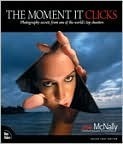
THE FIRST BOOK WITH ONE FOOT ON THE COFFEE TABLE, AND ONE FOOT IN THE CLASSROOM Joe McNally, one of the world’s top pro digital photographers, whose celebrated work has graced the pages of Sports Illustrated, Time, and National Geographic (to name a few), breaks new ground by doing something no photography book has ever done—blending the rich, stunning images and elegant layout of a coffee-table book with the invaluable training, no-nonsense insights, and photography secrets usually found only in those rare, best-of-breed educational books. When Joe’s not on assignment for the biggest-name magazines and Fortune 500 clients, he’s in the classroom teaching location lighting, environmental portraiture, and how to “get the shot” at workshops around the world. These on-location workshops are usually reserved for a handful of photographers each year, but now you can learn the same techniques that Joe shares in his seminars and lectures in a book that brings Joe’s sessions to life. What makes the book so unique is the “triangle of learning” where (1) Joe distills the concept down to one brief sentence. It usually starts with something like, “An editor at National Geographic once told me…” and then he shares one of those hard-earned tricks of the trade that you only get from spending a lifetime behind the lens. Then, (2) on the facing page is one of Joe’s brilliant images that perfectly illustrates the technique (you’ll recognize many of his photos from magazine covers). And (3) you get the inside story of how that shot was taken, including which equipment he used (lens, f/stop, lighting, accessories, etc.), along with the challenges that type of project brings, and how to set up a shot like that of your own. This book also gives you something more. It inspires. It challenges. It informs. But perhaps most importantly, it will help you understand photography and the art of making great photos at a level you never thought possible. This book is packed with those “Ah ha!” moments—those clever insights that make it all come together for you. It brings you that wonderful moment when it suddenly all makes sense—that “moment it clicks.”
An accomplished and widely-respected photographer, Joe McNally got his start as a newspaper photographer in New York, eventually becoming a staff photographer for Time magazine and a frequent contributor to National Geographic, Sports Illustrated, and numerous other publications.
Particularly noted for his portraits, McNally teaches numerous workshops throughout the year.
Let's start with the form. I hated the familiar language the author used to address the reader, the jokes were not funny, and just generally a lot of the spiel was hollow and necessary. It made it such a difficult read. At about halfway through the book, I decided to only read the quotes in bold and stop when the photos were really interesting which meant exactly 3 times. Out of the 253 pages, I got only 2 pieces of useful advice. Finally, receiving tips from a guy who really only takes vintage matteo photos isn't all that interesting or legitimate. The information he gives are really specific to that kind of photography. In fact, a lot of the photos are not even that good imho. The technical talk he brags about is also 1) annoying 2) not useful. Many great photographers used natural light, and the feeling I got closing the book—although the author does leave one or two pages dedicated to the strict minimum, gear wise— was that I needed to get an assistant, buy x many soft boxes lighting combs and whatnot. Bullshit, photography isn't about that.
Fantastic and powerful read. Page after page of approachable information about great photos and how they were gotten -- which turns out to be (duh!) as much philosophy and personal skills as lighting and ISO. It transformed the way I look at my camera and the opportunities I will create behind and in front of it.
Interesting photo book. The photos were really fun to look at, and I enjoyed reading about the authors experiences while shooting them. As a learning book, a lot of what he talked about is not possible for me to do right now, due to lacking the equipment he suggests. Also, towards the end of the book he randomly started throwing in some unneccessary foul language that kind of caught me off guard.
Learning the stories behind the photographs always makes me enjoy the image more. The book takes you there...also it give great advice to photographers (new and old....some of us forget and need reminders!)
Joe McNally reminds you photography is hard work but a lot of fun too!
Tales of the roving photojournalist from one of the most entertaining speakers out there on the subject. I could read this guy's work stories for ages. Was written at the tail end of the Bush administration, so it hasn't exactly aged perfectly (the guy was a photog in NYC in the '80s, so there's more than a few photos of the Trumps), but it's a worthwhile experience nonetheless. Like having a drink with him and leaving with valuable advice and stories that will never leave your head.
I Loved This Book. I read it slowly but one could read it easily in an hour or two. I just finished it and am pretty sure I should flip to the beginning and start all over again. Super fun stories, incredible photos, inspiring and intimidating.
This is a great how-to book as well as a beautiful selection of random photographs from a well-known photographer. Joe McNally has been producing photographs for the likes of "Sports Illustrated" and "National Geographic" for some time. Like many professionals, he no doubt is often asked to share his expertise with others, and he responds here with his descriptions of the background of photo projects, while clearly showing the technical and creative processes of getting publishable pictures. He constantly provides his expertise to participants in workshops and viewers of photo tutorials. "The Moment it Clicks" was his first attempt to put his personable style into book form, and it succeeds admirably.
An aspect of the book which appeals to me is being able to enjoy the photos and Joe's accompanying dialog as you would experience in having a casual conversation with him, while being able to slow down and digest the technical aspects that I want to learn more about. Beyond the descriptions of lighting and camera settings, however, is the constant reminder of what a photographer does. As McNally explains early in the book (p. xv) good photographs come from a photographer who enjoys actually shooting pictures, getting repeated feedback from the sound of the shutter that there is a process happening in which "the shot" is the goal. When that process works properly, a picture extracted from a frozen moment in a changing world results in something of value which contains an element that will be otherwise gone forever.
McNally's appeal is his ability to boil down the picture shooting process to obtaining the result of the photographer's desire. It doesn't matter what the motive is for taking the picture, whether for commerce or for emotional attachment to the subject of the photo. In the end, everyone using a camera to capture a moment important to them knows the happy feeling of knowing they got what they wanted through the lens. No serious attempt to capture images is accidental in McNally's world. He shows how being a photographer is a problem-solving process, in which a photographer's knowledge and competence with the equipment used for a photo shoot are constantly adapted as situations change.
Lighting of course is at the foundation of all picture shooting, and McNally's reputation is built on his ability to improve any photo location shoot with lighting technique. He is a master of all kinds photographic lighting, especially strobes. "The Moment it Clicks" contains examples of photographs taken with some very extensive lighting equipment, but the bulk of the examples offer inspiration through the use of speed lights. McNally has a long working history with Nikon equipment and he uses the Nikon line of lights, but his lessons are transferable to any brand of electronic lighting.
Joe McNally wisely gets the theoretical photographic basis out of the way early in the book to let the reader bask in depth, page after page, in outstanding images. If this book leaves you wanting more of the same, there is the follow-up "The Hot Shoe Diaries", New Riders press, 2009, in which the author answers readers of "The Moment it Clicks" who asked for more detailed information on how and where the lighting was set up for each photograph. There's even an invaluable illustrated tutorial at the end of that book in which McNally, wearing a gorilla suit, !, demonstrates the workings of Nikon speed lights.
Who knows what Joe McNally will publish next, but I'll join a long line of expectant readers whenever that occurs.
I recommend The Moment It Clicks to serious amateur photographers and to professional shooters. It is an excellent first effort for Joe McNally. Nevertheless, it does have several flaws.
Scott Kelby is listed as the Editor of this book, and his fingerprints are all over it. If you are familiar with Kelby's books on Adobe® Photoshop®, you will instantly recognize his influence on the layout of this book.
The Moment It Clicks is divided into four chapters, but these chapter divisions are mostly irrelevant. The book is really organized around two-page topical presentations which, in my opinion, for adult learners, are superior to traditional chapter divisions. An typical two-page "mini-chapter" is entitled Put The Light In An Unusual Place, wherein McNally briefly describes his experience while shooting Larry Tisch in Tisch's limo, includes the photo, and concludes with a summary of how he lighted the photo.
This organizational structure is Kelby's biggest contribution to this book. McNally's ideas, suggestions, and reminiscences are well-expressed in this structure, making The Moment It Clicks a worthwhile addition to a photographic library.
However, I detect Scott Kelby's bizarre sense of humor and sloppy editing in this book. I'm sure I'll be accused of nit-picking; after all, Kelby's books are best-sellers, so who am I to criticize his writing?
Near the front of the book is a page titled "Da Premise." I'm sorry, but I don't get the joke. Nothing else on the page is written in pseudo-ebonics, so why is the title expressed this way? This type of humor is vintage Kelby.
There are several editing oversights. For instance, in the mini-chapter on Ken Kesey, McNally refers to a "tai stick." The correct term is "Thai stick," so called because it was developed in Thailand. McNally overworks the phrase "I kid you not" by including it at least three times in the text, finishing with "I shit you not." Finally, in a book aimed at an adult audience, is it really necessary to spell minor obscenities using punctuation marks, such as @$$ for ass?
It's simple - Joe McNally is a perfectionist about his photographs. I'm a perfectionist about writing. If McNally is a typical photographer, he can't spell "cat" if you spot him the 'k' and the 'a'. That's what editors are for.
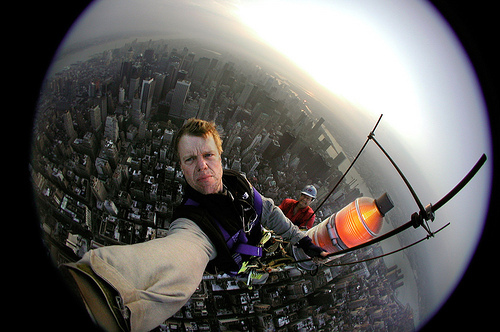
Joe McNally is one of my favorite photographers. He’s shot covers for National Geographic, Newsweek, Time and Life Magazine. Though you may not recognize the name, I’m sure you’ve seen some of his photographs. He famously took the world’s largest polaroid camera to Ground Zero and took photographs of many people involved in 9/11(Click on Special Projects). One of my favorites is the picture he took of a lightbulb being changed at the top of the Empire State Building.
The Moment It Clicks is described as a book that shows you how Joe McNally created some of the amazing shot. So I thought I was getting diagrams and lists of equipment used and way I could try to re-create the techniques he used. I was dissapointed to find that it’s nothing like that. The book is great, but I guess my expectations were a little too high.
moment.jpg
Instead the book takes a small idea that seems simple, and runs with it. In seminars, McNally is know for throwing things out like “be a pest”, “bring a chainsaw” and ‘put the light in an unusual place”. So he took all these and made them into chapters. He talk about a tree not looking right for a shot, so he made adjustment to it with a chainsaw. Each small story is accompanies by the photo so you can get an idea why something was difficult, and what he had to do to accomplish it.
Some of the stories are pretty amazing, he’ll do almost anything to get a good photograph. Each problem that he’s confronted with is shown, along with the solution that he was eventually able to come up with. Each one involves ways to use light, how to get into difficult position and how to help the person you’re photographing do what you want them to. Some of the solutions are so simple that you would easily be able to add them to photographs you take every day (like hanging a white bedsheet over a window that has sunlight pouring in to create a huge lightbox)
He seems to know how to do everything, it’s very inspirational as someone that’s trying to become a better photographer. So even though the book wasn’t what I was expecting, it’s a great book to learn from and get inspired by.
This book became one of my favorite all time photography books from the moment I picked it up!
Joe McNally is truly a legend. This book showcases some of his greatest work, and on the page opposite each photo he tells a story to go with it. He also gives the most basic description of the technical side of the lighting.
If you are looking for highly technical step by step detailed instructions on how to reproduce each photo,this book is not for you. You have to have a firm grasp on the technical side of photography, especially lighting, before you can appreciate this book. But if you are already lighting like a pro, this book can help you see how a "superstar" pro would have taken the shot. More than step by step instructions, this book gives you insight into Joe McNally's career and how he achieves the photos that are truly a step above the rest of us.
The biggest thing I got from this book is inspiration to think outside the box and go for the real wow photo instead of being satisfied with good. I loved the funny stories revealing how he talked subjects into letting him get the shot he wanted as well as the stories on solving technical problems on the fly with less than conventional methods.
And the pictures are amazing. I have flipped through this book over and over, studying the technical aspects and soaking up the inspiration.
I highly recommend this book for any professional wanting inspiration and a little guidance on how to step up their work a bit!
I could sum this review up in three words. Seriously cool book!!!! Joe McNally's The Moment It Clicks is the best photography book I have ever read. A must-read for any aspiring photographers, especially anyone who is interested in taking amazing portraits, the book features tons of incredible pictures, many of which you will recognize from magazines. For each shot, McNally shares the story behind it and the lesson he learned from it. You get to see the creative process behind his work, both the times when inspiration and circumstance aligned to produce an amazing photo and the times when he was left scrambling and improvising. McNally also shares the technical elements of each shot… how he lit it, what he used to shoot it, and why. These details alone makes the book worth it and believe me, I will be absorbing that wealth of information for quite a while.
But even if you have no interest in the technical aspects of photography, this book is fascinating. With it portraits of interesting people, both in front of and behind the camera and it insights into the challenges, sacrifices, joys and frustrations of being a professional photographer, The Moment It Clicks is simply an amazing read.
I could sum this review up in three words. Seriously cool book!!!! Joe McNally's The Moment It Clicks is the best photography book I have ever read and is one of the best books on any subject that I have ever read.
The book features tons of incredible pictures, many of which you will recognize from magazines. For each shot, McNally shares the story behind it and the lesson he learned from it. You get to see the creative process behind his work, both the times when inspiration and circumstance aligned to produce an amazing photo and the times when he was left scrambling and improvising. McNally also shares the technical elements of each shot… how he lit it, what he used to shoot it, and why. These details alone makes the book worth it and believe me, I will be absorbing that wealth of information for quite a while.
But even if you have no interest in the technical aspects of photography, this book is fascinating. With it portraits of interesting people, both in front of and behind the camera and it insights into the challenges, sacrifices, joys and frustrations of being a professional photographer, The Moment It Clicks is simply an amazing read.
Popped over to my local library's website to reserve this title and discovered it was available as an e-book. Excellent: I read this on my laptop with my camera beside me, fiddling with the settings and taking test shots as I read.
Though intended for the more advanced photographer, I still found this an entertaining and informative read. I have a point-and-shoot, albeit a very adjustable one, but am only an advanced beginner. McNally's specialty is lighting portraits in subtle and innovative ways and it shows in the abundant examples in this book. I found myself wishing for a DSLR and lighting accessories several times, but nevertheless picked up quite a few pointers on how to make the most of the equipment I already have.
Even for the most beginning photographer, there's a wealth of advice on composition, taking advantage of the moment, and being willing to experiment with your models and props. McNally's work is inspiring as hell, and his conversational way of teaching is very enjoyable.
Joe McNally makes great photography accessible to aspiring professional photographers (or serious amateurs).
Every page is filled with great anecdotes of a successful career, as well as a paragraph or two of "how I did it" to accompany the photographs. For all of the times I've looked at a great image and figured it was far too complicated for me to imitate (armed with just my camera and, when I'm lucky, an external flash unit), McNally shows that it can be done AND that it can be done without necessarily emptying the bank account.
McNally's kind of folksy, casual writing may be somewhat off-putting to grammar pedants out there, but he comes at this as if he's sitting across the table from you, sharing his favorite "war stories" and giving his best advice.
Although this book bills itself as being part coffee table book, part training course, the scope of its training is fairly narrow. McNally's emphasis is clearly on lighting setups, and most of the special terminology and gear that he mentions are related to lighting gear. While the stories behind the photos are entertaining, and occasionally inspiring, they are not highly instructional. The photos used to exemplify the tips are far out of reach of most photographers--famous people, historical moments, and locations requiring special access. For this enthusiast, I can appreciate McNally's work, but find little that I can personally take on board.
Not a bad read, but I was hoping for a little more based on the recommendation it had been given.
Similar to Gregory Heisler's 50 Portraits Joe McNally's The Moment It Clicks is a hybrid of coffee table book, photography how-to, and autobiography. This book was incredibly influential on me in my high school years as I started to desire to pursue photography professionally. McNally explains the stories and techniques behind the photographs he has taken for publications like Life and National Geographic. The technical jargon is geared towards those with a decent understanding of photography but even those without an understanding of photography fundamentals with appreciated his witty humor. Some of his language is crass and there are definitely statements he makes about subjects outside of photography I disagree with but this still remains on of the best photography books I have read.
This was a cool book! The premise of the book came from the author's continuously informative and entertaining photography workshops that he had been teaching through the years. Each photograph in the book was accompanied by little nuggets of wisdom, great stories about how he came to photograph the subject and of course technical information on lighting and shooting the subject. If nothing else, it was fascinating to see these famous photos and hear about how and why he had chosen to shoot them. One of my favorite stories was about James Brown. A few weeks after he took his portrait, the legend rocker died.
It's a fun book from a professional photographer about the things he's learned over years of freelance work.
There are some practical tips, lots of anecdotes and stories accompanying cool shots (and he explains how he got them) and often explanations on how he lit the shots. The latter part, while irrelevant to me as I don't plan to get studio equipment and softboxes and so on, didn't detract from an overall enjoyable read.
The most interesting aspect of it is the "look at one more shot and read a story about the shoot" aspect. It just keeps you coming for more.
This is a book for for people who can invest a lot of money on photography. I am giving three stars as this book does not describe many techniques which involve very few or less expensive accessories. Also, I am interested more in street photography/candid photography. There weren't as many techniques related to that!
But the photographs and techniques listed in the book are stunning! An excellent book if you are considering photography as a profession or if you have too much money to buy accessories to try out the techniques :)
This is first book of Joe's but last one I've read. You can feel that from the style and language. Lot of photos shown in this book are also described in another two. And truly I like theme there more because their descriptions are more detailed with some technical stuff included. But still, for sure, this title is worth reading. Funny, easy and fast to read but also easy to understand and remember. I like the style of this book. Motto, some story and maybe some info about photo - not so detailed but still worth attention and if you are focused you may learn a lot.
I got this for Christmas from my husband and read the entire thing that day. Joe McNally is a master and this book is one of my favorite photography books so far. I know that I'll read this over and over again, picking different sections to focus on, etc. I really appreciate that Joe provides a story behind some of his most famous photographs. I also love that he tells us how the photos were made focusing on specific lighting techniques.
I'm torn about this book - the photos are good and the descriptions of the thought process behind the works can be enlightening however there is a certain shallowness to the descriptions that leaves me wanting more than just the few tips sandwiched between the stories.
If you already know to look round, take in the details and know that the small stuff matters this book is a good review. If you don't know to do that, this book will help reinforce the message
This book was a little more for the professional photographer than the amateur. The book is mostly about lighting and how to create light that looks natural with artificial light. I use mostly available light (I'm a total amateur and just can't afford softboxes, umbrellas and the like). I did enjoy reading about how he created the looks and the photos are lovely to look at, but because of the focus on lighting with artificial lighting, it's not the best photography book for me.
I had mixed feelings about this book. If you're looking for tips on how to take better photos (as the title seemed to imply it would be), you'll like be sorely disappointed. (The "secrets" are things like "Then I climbed to the top of the Empire State Building, used a magenta filter and a strobe flash!") However, if you're looking for a coffee table book of some great photos with a bit of commentary on each, you will likely be pleasantly surprised.
The cover picture for this is probably my least favorite one from the collection. But there are some amazing pics in here, and some great anecdotal stories to go with them. Like the pic taken of the photographer's daughter after she got a black eye coming up from the bottom of a pool and the one of "the Napalm girl" with her newborn in her arms.
I was a little disappointed in this book. I had expected it to be more instructive. It is a collection of wonderful photos and anecdotes that are very entertaining. If you approach the book as that it is very successful, but I believe there are other more instructive books on various techniques in photography.
This is not the book to read to learn about off-camera lighting techniques. This is the book to read when your pictures start looking like everything else you see on the street and you want them to, for what of a better phrase, pop out. Joe McNally's style of explaining, his pictures and his humour make it all seem so easy but the true details emerge only in the explanations.
Kept feeling like I was reading a book written in the 1980s. The early 1980s. Yes he has photographed a ton of famous people and yes he is obviously talented, but the ego that oozes from the pages (he includes footnotes for us dummies) turned me off. As for the photos, some are great and some are just average.