Anthropology is a disciplined inquiry into the conditions and potentials of human life. Generations of theorists, however, have expunged life from their accounts, treating it as the mere output of patterns, codes, structures or systems variously defined as genetic or cultural, natural or social. Building on his classic work The Perception of the Environment, Tim Ingold sets out to restore life to where it should belong, at the heart of anthropological concern.
Being Alive ranges over such themes as the vitality of materials, what it means to make things, the perception and formation of the ground, the mingling of earth and sky in the weather-world, the experiences of light, sound and feeling, the role of storytelling in the integration of knowledge, and the potential of drawing to unite observation and description.
Our humanity, Ingold argues, does not come ready-made but is continually fashioned in our movements along ways of life. Starting from the idea of life as a process of wayfaring, Ingold presents a radically new understanding of movement, knowledge and description as dimensions not just of being in the world, but of being alive to what is going on there.
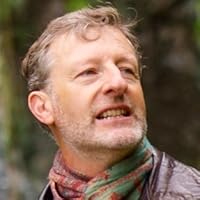
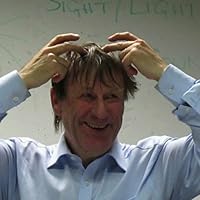
Tim Ingold (born 1948) is a British social anthropologist, currently Chair of Social Anthropology at the University of Aberdeen. He was educated at Leighton Park School and Cambridge University. He is a fellow of the British Academy and of the Royal Society of Edinburgh. His bibliography includes The Perception of the Environment: Essays in Livelihood, Dwelling and Skill, Routledge, 2000, which is a collection of essays, some of which had been published earlier.
Ingold is a meticulous and systematic writer, even a little, dare I say it, analytical, which is rather surprising given that he’s very much in the school of flow pulsing from Lucretius to Bergson to Guattari and Deleuze. His project though is multifaceted here, aiming to give anthropology a new lease on life by pointing it in the direction of philosophy in a space where ethnography has come to dominate. But it’s more by far than this, taking many lines into ways of being and knowing from earth and weather, to wayfaring, naming and storying, to stitching, drawing and writing.
He begins in materials and follows the lines of materiality to force and flow rather than objects and things. For someone who is carrying forward a distinctly non-western ontology, he however finds himself in many dichotomies, such as the one above. Flow vs thing, line vs representation, drawing vs painting, line vs point, textility vs taxonomy and prior design, inner vs outer. This is not to say that the project is unsuccessful, for we enter into these combustibilities quite completely and can often in fact find how things are in fact lines, or how innerness is what we don’t know rather than what drives life, how life is not an “inner generative force” so much as a special example of material processes.
He argues we don’t move across an already laid out world "but through a world in perpetual formation”. In which every name is a condensed story. And I would add, every thing a name and each name a thing extending its line outward. There is in fact much here for writers, from the moment of kairos to the importance of learning as wayfaring and hence to “mind-faring”. He sets wayfaring over against both transport and transmission since the latter two are focused on points of arrival or predetermined content. Rather things happen as we move. So we should be "following the materials” not a taxonomy which is the colonial project par excellence. Nor even a network which for him is focused too closely on the points or persons lines connect. Rather “meshwork”.
In his chapter Drawing Making Writing he invites us to the threshold of concrete poetry, but which it seems he hasn’t yet discovered. He should. I’d like to see what he makes of it.
A bit repetitive at times, but interesting. Better if you have already read a good portion of the modern materiality literature and ANT theory stuff. A good critique of these things, but I think Ingold draws so much on Martin Heidegger, you might as well just read his works and learn the same things (and I haven't read Heidegger's work, it's just Ingold cites him on almost every page).
Tim Ingold's Being Alive was a thought-provoking yet frustrating read. Ingold is an anthropologist, and the book is an attack on the way anthropologists approach their subject, and in a larger sense, on how westerners think, and interact with the world. It's extremely low-level, challenging the reader on how they think about objects and motion and walking. Most of a chapter is spent discussing the action of sawing a piece of wood, and what that means.
Fundamentally, he argues that we think about the world around us as being comprised of objects. We mentally model the world as being a collection of "things" that have "properties", and have relationships. It's a world that can be represented as a set of connected points. He then argues in many ways and from many points of view, that we should be thinking of ourselves as lines (or bundles of lines) rather than as points, and that the lines interact with each other in many ways. He refers to a number of cultures that think about the world like this, and explains how our western way of thinking about the world blinds us to a real understanding of how these cultures work. Animism, the beliefs of many hunter-gatherer societies around the world, is in this picture not a world view where everything is imbued with a spirit, but is rather a world view where animals, people, rocks, and everything in the world are parts of stories, and there is no rigid separation between "living things" and "non-living things". That distinction isn't needed because they don't see the world as being comprised of objects, and so they don't need to imbue certain objects with the property of "living" in order to explain their ability to act in the world.
I don't think I've read anything that is quite such a fundamental attack on the way the western world thinks, and it left me intellectually reeling in a number of places. I hadn't even considered the possibility of not thinking of the world in this way.
On the other hand, there is a lot about the book that frustrated me. There were an awful lot of straw men used to support his arguments - stating that people generally think of things in a certain way, which was clearly (to me) a blatant simplification of how actual people think. Plenty of unsupported arguments. And the most fundamental problem was that he never really explained what his alternative world-view was. He explained some of the properties of this world view, but never what the "lines" really actually represented - what they meant. So while I often agreed with his position that there are other ways of thinking about the world, I couldn't bring myself to embrace his position, because it wasn't ever stated. And lastly, as a mathematician by training, I found his statements about things "not being points, but rather, being lines" seemed rather trivial - there are plenty of things that can be represented as lines or points depending on how you want to view them - it's a simple transformation, not a fundamentally different thing.
I think Being Alive will give different things to different people. I can understand how it would appeal to humanities folks much more than it did to me. In many ways, the most important thing it contains is the questions it asks - many of which I've never heard asked before - rather than the answers it attempts to give.
Ingold's overarching purpose in this book and much of his work in general is to bring 'life' back to anthropology. So, away with the myth of absolute objectivity and grasping truths and separating the world into compartments and units! Conventional Western academic thinking uses what Ingold calls 'the logic of inversion' in order to keep the world still enough in order for to understand it. However, according to Ingold's thesis it is precisely the flux and 'mess' of the world that is its life and if you do away with it (an impossible task in any case) you end up examining a fiction.
Life is an ongoing, unfolding process and, rather than objects existing in it, things occur. A thing is only a discreet element depending on how we look at it. It is a knot of the lifelines spun, etched and drawn in the world by the workings of the beings that dwell in it. The derivation of the word 'thing' as a 'gathering' fits nicely with Ingold's vision as opposed to the hard edged and graspable '-ject' of ‘object'. The Icelandic parliament is called the ‘thing’, meaning ‘gathering’.
So if the world is more of a flux than we are led to believe by received academic wisdom and practice, how are we to behave? We don't act on the world we participate in it and maintain an openness and vulnerability in our engagement with it. We are swept-up and involved in it because there is simply no vantage point available that is not also part of the world. Feelings of wonder and astonishment infuse us as we witness the minutiae of life in each moment and the simple fact that the world exists at all. As we proceed we become wiser in the ways of the world and how we treat it.
In common with contemporary neuroscience Ingold re-unites the capacities of perception, movement and cognition into a single phenomenon seen from different angles. Tim Ingold prioritises movement as the key element in this process. Mind infuses the body as we direct our attention but, in a leaky world, it also spills out into the world we inhabit. The world of the imagination (myth, dreaming etc) and the physical world mingle.
The traces left behind by living in the world are the stories of those things that have left the traces. We are the meshwork of lines we leave behind and are enmeshed in. The artefacts we create and tools we use are also replete with stories. In fact they are their stories and the experience of these stories, however told, will give a much fuller, clearer and accurate account of these things than a cataloguing of material, form, attribute and structure.
Traces are gestural. If one knows how to read footprints, handwriting, an unmade bed or an archeological site the traces speak of the gestures made and from there we can feel the implied state of those who made those marks. Tools also have an implied gesture in the way they invite you to hold and treat them and well-used tools will have the marks of their use (and misuse) clearly etched and rubbed into them.
Tools and their use imply tasks and in his example of sawing a piece of wood Ingold sees this simple task as having a preparatory phase and then an irrevocable setting out into the task itself with the first cut that cannot be undone. This is also true of drawing, an art form that incorporates many of its 'mistakes' into the final item. The intention of the worker is not on the finished product, although there usually is a clear product in mind, but in the work of creating it, in each gesture of the process of its creation.
I have an immediate response of recognition and agreement with Ingold's position. Both in life and work I can see how being immersed in the world and its unfolding and interacting with it and others in an embodied and integrated way is both an accurate description of how the world is and an effective and useful way of operating in it.
However I am left vague as how to employ this knowledge in the pursuit of my research into storytelling. We are clearly enmeshed in the world but 'enmeshed' immediately conjures images and feelings of disorientation and confusion which are inimical to the discovery and transmission of knowledge. In order to write these words I have used a digital copy of a printed book and rendered that into notes and diagrams in the search for patterns that I find illuminating, interesting and useful for the research that I intend to undertake – or am in the process of undertaking. How much like a saw is my iPad and how much a machine for categorising excerpts of text? Am I still in an unfolding heuristic hands-on mode or have I retreated into an ivory tower of category and abstraction?
Ingold puts experience and practice at the centre of knowledge and its transmission and sees an essential unity in the different orders of experience. While conventional academic study 'others' its material he invites us to study 'with' and to 'together' it. Drawing is central to observational practice and description, however what is it I am meant to draw and how metaphorically can I take the word 'drawing'?
There is one element of the mark and trace view of the world that Ingold does not touch on and it is the rubbing-out of traces of production. Once a job is done around the house we're meant to clear up. We can infer that the work has been completed because the shelves are up, however the black powdery mortar that littered the floor is no longer there so the story of our struggle with the soggy interior of the inside wall of an Edwardian terraced house has been silenced. And a good thing too. The kitchen is clean and no trace of the near disaster remains and no-one need know. The audience have no need to know about the shenanigans that went on during rehearsals and will be none the richer for hearing about it.
Leaving aside the obvious sinister possibilities of this dynamic it is a normal part of being in the enmeshed world that we edit what we say and let people into a tidied up version of our own reality by engaging in tasks that erase traces, leaving only the clean floor or the tidy kitchen that gives us the story that erasure has happened. This connects with Lewis Hyde's discussion on dirt. Dirt never really goes away – it just ends up on the cloth and gets rinsed away down the drain and eventually into the sea. The food on my plate is a valued source of nourishment and pleasure until I've finished and then its just washing-up. Maybe this is an important part in many people’s strongly negative reaction to leaving a lot of food on the plate. We've turned food into dirt but it still looks like food. It is a crack in the way we organise the world and we don't like it.
This book is stimulating, erudite and direct. The practical, everyday examples really help pin down what he is trying to get over. Although he is an academic and the book is stuffed with references his approach is clear and understandable. And revolutionary!
Tim Ingold is a road “less travelled” kind of anthropologist, by nature, not by design. Throughout his work he continually finds himself forced to “leave the mainstream” to seek answers to the questions he forms about the environment and human perception. People, he writes in Part I of this carefully curated collection, “merely skim the surface of a world that has been previously mapped and constructed for them to occupy”. The implication is that culture at the very least, mediates, if it does not actually diminish, our engagement with phenomena and the world. Ingold chooses the word “occupy”, and specifically uses it throughout his work as a counterpoint to his preferred, “inhabit”. To occupy, he says, is to “exhabit”. Occupation and inhabitation are therefore opposites, the former referring to cultural immanence, and the latter to a natural proclivity to interact. It is an idea for which he provides a curious footnote in Part IV of the book, where he debunks the “genealogical model” of culture, or learning. The model maintains that “knowledge… passed down the line” equates with “the bestowal of [genetic] attributes from ancestors”. A model which Ingold rejects as “inadequate and unrealistic” for its implication that “to function in the world, you have first to know what you are dealing with”, i.e., use a map, or follow established pathways. The model presents a “project of classification”, whereby “things are identified on the basis of [their] specifications” – they are known only by the sum of their parts, in so far as those parts have been isolated and categorised by us, by our nature. “Knowledge”, writes Ingold, “is not classificatory. It is rather storied.” The author is notably at odds with reductionism. Ingold is disappointed by the tendency of science to atomise, to analyse organisms in various slices and to “know” them by virtue of their individual, disparate parts. An atom or a particle is, after all, known only by its relationships with other atoms and particles, and not in isolation. Genes too are only effective by collaboration. Considering bits of an organism in isolation will eventually result in a misrepresentation of the whole, at best, or even a complete misunderstanding. Therefore, Ingold theorises, an organism’s experience of the environment is likewise a whole-body interaction with the whole world, a participation with “a world we live in, and not a world we look at”. As the neuroscientist Steven Rose writes elsewhere, “The organism is both the weaver and the pattern it weaves”, for Ingold, too, “the things of this world are their stories, identified not by fixed attributes but by their paths of movement in an unfolding field of relations”. Expanding on ideas which have been previously explored by the likes of James Gibson and Jakob von Uexküll, Ingold experiences nature as a polyphony, where “the fiddler and the violin are conjoined in a passionate embrace”, and invokes Gregory Bateson when he writes, “in the movement of becoming – the growth of the organism [is as] the unfolding of the melody...”. The metaphors are boundless (as is our place in the world) – the weaver, the tapestry and the meshwork are all introduced, replacing older ideas of builder, maker, and network – concepts which imply space, planning, and logic – all of which the author is out to reject. Ingold suggests that nothing is able to exist independently, unrelated. Ignoring this vital interrelationship will inevitably lead to a lack of thorough knowledge regarding nature, of which we are most certainly a part, and humanity’s role within the environment. “All science depends on observation, and observation depends on participation.” Ingold is keen to inspire engagement with materials, which form our direct contact with the world. Early in the book he asks the reader to fetch a stone from outside, wet it, and place it on the table. We are called upon to attend to the stone, occasionally, as we read through the chapter. Later on, it is suggested that the reader go out for a walk (preferably barefoot) before progressing any further with the book; or go outside and saw some wood (there are photos and details for the reader, instructions – so we know how to engage with the wood and the saw). Ingold knows full well that the process of reading, of engaging with his ideas, is likely to be an occupation which takes place indoors and sitting down. In fact, sitting and reading are antithetical to his purpose. To be alive, to be sentient, to be perceptive and productive, an engagement with the world is an absolute requirement. Thought is good, as are ideas and reading; even classification has its place; but all activity, or interaction, must begin and end with phenomenological engagement with our environment or it’s all for nothing. Ingold is determined for us to explore beyond the surface of anything, for no material is merely a surface – there is always something going on underneath, or within. The sky, once perceived as a revolving disc, which is still sometimes mistaken for a surface (a thing against which action occurs, rather than within), is of course an atmosphere, an environment which is teeming with life. For Ingold, nothing is immaterial. He is even “against the notion of space” for its suggestion of emptiness, nothingness, an impression that he finds hard to shake off. He devotes a chapter to wrestling with this particular linguistic dissonance. Perception is about movement, says James Gibson; we attend to what is relevant in the environment – there can be no space, therefore, no silence. Sound, light, weather – each of these is to be entered into, and not merely perceived as something other. They are not barriers or objects of the imagination. The properties of a material, we are persuaded, are “out there”, “objective and measurable”, whereas the qualities of a thing are the ideas, formed “in here”, that we refer to as we employ the material for our conscious purpose. Non-human animals engage with environments just as we do. No organism materialises to fill a vacancy, there is rather a continuous meshwork of organisms and environment, emerging, improvising “contributing to their – and our – ongoing formation”. Ingold wilfully opens channels of philosophical enquiry, pressing them for their empirical worth. He creates an imaginary dialogue between “dead philosophers” and contemporary school children (where the perceptions of sky and space, in terms of the discrepancies between what we experience and what science teaches us, are examined), as well as further dialogue between dead philosophers and other dead philosophers. He is tough on science which he finds to be “more intent on establishing the authority of its own particular view of the environment… than enhancing awareness”. He would like to see greater engagement with a form of “experimental anthropology”, rather than research based upon previous research. He has a view of the environment which is not in fact a “view”, but a conscious physical experience. Ingold resents being told how he must perceive the world, in isolated slices of sight, sound, scent, taste and touch – as a system of individual surfaces, classified and compartmentalised – preferring the idea of absolute engagement. We are, he says, immersed, perceiving IN the environment, not perceiving THE environment. As an expression of this, he theorises that we perceive IN light, and this makes perfect sense – we do not SEE light as such, but light enables our vision. That we do not HEAR sound, however, but rather we hear IN sound, is a little harder to contemplate, but it becomes clear when we realise that we do not perceive sky and weather, as such, but instead perceive IN sky and IN weather. For Ingold we are OF the earth, not ON the earth, perfectly fit for its conditions. We are not visitors. We are not made for the earth, but we are made by the same forces which made the earth. Perception tells us that we are part of the same world as that which we perceive. As Maurice Merleau-Ponty has written: “Our perception of the world is no more, and no less, than the world’s perception of itself”. The planet is supportive, in every sense of the word – it bears our weight and provides us with the means to exist. A gradual disengagement with nature, which has been replaced by a pathological reverence for culture, may be linked to the bias of intellect over bodily action which seems to have evolved in human beings. It’s a problem for Ingold; intellectualising about experimental anthropology and phenomenology is not too far from Isadora Duncan's statement, “if I could tell you what it meant there would be no point in dancing it”. Ingold wants to dance with clarity, and he addresses the issue almost immediately in ‘Being Alive'. The philosophical idea of a “mind-body split”, the attempt at proving a separation between the mental and physical realms, is symptomatic of this hierarchical development. Ingold presents this as the “head over heels” theory – that the limbs, for example, “answer to the call of reason”, as determined by the mind. The hands obediently deliver objects into the world (or turn the pages of a book), as they have been instructed to, from plans drawn up by the superior mind. And further down the body we discover there is even less creative potential – that the legs are merely a means of transportation, and that the feet have been imprisoned in shoes which were created by the “two liberated limbs”, in compliance with an idea supplied by the brain. The very notion enslaves the body and raises the status of the intellect to that of Master. Ingold elaborates on the shoes, feet, hands, brain relationship, beginning with a recollection from ‘The Descent of Man’. Darwin (and others) believed that differences in foot shape between the “unshod savage” and the civilised European person – with the former having a broader footprint and greater spread of the toes – meant that the “savage” represented some intermediate link between antiquity and civilisation. Darwin did not expand upon this hypothesis, which had been mooted for centuries, but Ingold attacks it to elucidate the difference between a culture which lost interest in walking, creating footwear and transportation as a means of protecting the body and therefore the big brain for which it is nothing more than a suit of armour; and another culture which, conversely, never forgot how to interact with the earth, where the feet are just as inventive and sensitive as the hands themselves – a culture who never imagined that the mind and the body could possibly be separate entities. The whole story is a metaphor for Ingold's concept of experimental anthropology. And likewise, a warning that if we don’t use it, we’ll lose it.
Well, Ingold is Ingolding as much as ever. He makes some useful clarifications of theoretical points he's articulated earlier in his career, composes a somewhat helpful (if silly) conversation between a SPIDER (skilled practice involves developmentally embodied responsiveness) and an ANT (actor-network theory), and generally proposes ideas that make you sit up and really think about why you agree/disagree.
Tim Ingold parte de A percepção do ambiente para propor a colocação da vida no centro da antropologia no livro Estar vivo... A vida é interpretada e postulada como processo de peregrinação. Esse ponto já é suficiente para mostrar o acerto no título do livro, no qual os termos movimento, conhecimento e descrição têm destaque. Não se trata apenas de estar no mundo, mas de estar vivo para o que nele acontece.
Ingold mobiliza uma gama significativa de autores, com destaque para Bersgon, Deleuze e Guattari, marcando a diferença de seu pensamento frente ao Bruno Latour, e sinalizando para a importância de se pensar em termos de fluxos, feixes, narrativas. Algumas noções são alvo de crítica e de questionamentos, como agência e conexão, mostrando o modo como Ingold valoriza a ideia de devir naquilo que cabe para falar do vivo. Certamente uma leitura que nos convida ao sonho e à ação, escrita para muitos outros que não apenas antropólogos e etnógrafos.
Extratos:
Como é que, na produção de suas vidas, os seres humanos criam a história?
Cheguei inicialmente à questão da produção através de uma reflexão sobre como os modos de trabalho dos seres humanos diferem daqueles dos animais não humanos.
Concebido como o movimento atentivo de um ser consciente, inclinado sobre as tarefas da vida, o processo produtivo não está confinado nas finalidades de qualquer projeto particular. Produtores, tanto humanos quanto não humanos, não tanto transformam o mundo, imprimindo seus projetos preconcebidos sobre o substrato material da natureza, quanto fazem a sua parte desde dentro na transformação de si mesmo do mundo.
Temos, perpétua e infinitamente, que estar nos fazendo a nós mesmos. Isso é o que a vida é, o que a história é, e o que significa produzir. Mas as formas de organismos não são compêndios de diferença, mas os resultados sempre emergentes de processos de crescimento. Ser, eu diria agora, não é estar em um lugar, mas estar ao longo de caminhos. O caminho, e não o lugar, é a condição primordial do ser, ou melhor, do tornar-se.
Cada ser tem, por conseguinte, que ser imaginado como a linha do seu próprio movimento ou – mais realisticamente – como um feixe de linhas.
eu sou o que estou fazendo. Eu não sou um agente, mas um ramo de atividade.
Estamos, obviamente, mais acostumados a pensar em ferramentas como tendo certas funções. Meu ponto, no entanto, é que as funções das coisas não são atributos, mas narrativas. Elas são as histórias que contamos sobre elas.
nada que projetemos é sempre verdadeiramente apto para o propósito. Como pode a ideia de que cada ferramenta tem uma função apropriada ser conciliada com o fato de que, na prática, nada nunca funciona exceto como um componente de um sistema constituído no momento presente?.
O paralelo entre o uso de ferramenta e o contar estórias sugere uma resposta. Funcionalidade e narratividade são dois lados da mesma moeda.
Em um mundo em devir, no entanto, até mesmo o comum, o mundano ou o intuitivo causam espanto – o tipo de espanto que advém da valorização de cada momento, como se, naquele momento, estivéssemos encontrando o mundo pela primeira vez, sentindo seu pulso, maravilhando-nos com a sua beleza e nos perguntando como um mundo assim é possível
A mesma pedra, por exemplo, pode funcionar como abrigo para o caranguejo que se esconde debaixo dela, como uma bigorna para o tordo que a usa para abrir conchas de caracol, e como um projétil para um ser humano com raiva atirar em um adversário. Nos termos de Gibson, abrigo, bigorna e projétil são todos propriedades da pedra que estão disponíveis para serem assumidas.
Nossa conclusão, ao contrário, é que o aberto pode ser habitado precisamente porque, onde quer que a vida esteja acontecendo, a divisão de terra e céu dá ensejo a fluxos e contrafluxos de materiais.
Em suma, perceber o ambiente não é reconstituir as coisas a serem encontradas nele, ou discernir suas formas e disposições congeladas, mas juntar-se a elas nos fluxos e movimentos materiais que contribuem para a sua – e nossa – contínua formação.
traçar as linhas de atividade é descrever uma vasta rede, na qual qualquer indivíduo aparece apenas como um nó particular.
Meu argumento, portanto, afirma que a ação não é o resultado de uma agência que seja disseminada pela rede, mas sim que emerge da interação de forças que são conduzidas ao longo das linhas da malha.
Trata-se simplesmente de reconhecer que para que as coisas interajam elas devem estar imersas em uma espécie de campo de força criado pelas correntes do meio que as cerca.
Sentir o ar e andar no chão não é fazer contato tátil externo com o nosso entorno, mas se misturar a ele.
o significado da “rede” mudou. Estamos agora mais inclinados a pensarmos nela como um complexo de pontos interconectados do que de linhas entrelaçadas.
E é na ligação de linhas, não na conexão de pontos, que a malha é constituída.
Este desdobramento é o processo complexo ao qual a metáfora se refere. Aqui, “processar” é entendido em um sentido intransitivo. Como a própria vida, não começa aqui ou termina ali, mas está acontecendo continuamente. É equivalente ao próprio movimento – o processamento – da pessoa inteira, indivisivelmente corpo e mente, através do mundo da vida.
Contar, em suma, não é representar o mundo, mas traçar um caminho através dele que outros possam seguir.
Pois, como regra, histórias não vêm com seus significados já anexados, tampouco significam a mesma coisa para pessoas diferentes.
O que elas querem dizer é, antes, algo que os ouvintes têm que descobrir por si mesmos, colocando-se no contexto de suas próprias histórias de vida.
Observar não é tanto ver o que está “aí” quanto observar o que está acontecendo. Seu objetivo, portanto, não é representar o observado, mas participar com ele do mesmo movimento generativo.
Uma coisa é observar o que está acontecendo; no entanto, outra bem diferente é descrevê-lo. qualquer ato de descrição implica um movimento de interpretação.
Tal como acontece com a própria vida, o importante é que prossiga.
One of the most interesting post Deleuzian writers to take up the arguments and apply them. Ingold is an anthropologist, but his arguments are much broader and indeed apply to a wide swather of scientific inquiry. Also, he draws on all of the main post-Cartesian thinkers - Heidegger, James, Whitehead, Merleau-Ponty, Deleuze and Guattari, and still others. This book is a particularly well thought out treatise on looking at science in new, embodied ways. The only criticism I have is that his argument in favor of story-telling as the only approach to rethinking approaches to theory is too heavy handed, but it is one difficulty among a multitude of strong points.
I admire Ingold's work and his writing and have read some of his other books. Which is why I found this one quite tedious: it recycles a number of ideas Ingold has explained so well in his books on lines, to say nothing of the unnecessary bulk of referential contexts with which he floods this particular text. By the end, I lost the thread of reasoning as well as the point of the book.
"Life is a movement of opening, not of closure" Membaca dari halaman ke halaman buku ini penuh dengan kejutan. Menyenangkan. Dalam pandangan saya Tim Ingold membuat sebuah gugatan dengan begitu halus pada model yang digunakan Barat dalam memandang kehidupan(sebagai kajian antropologi). Otokritik yang disampaikan Tim Ingold dari kosep ANT-nya Bruno Latour sangat mengena bagi saya. Penting bagi saya ketka dalam beberapa waktu saya membaca buku-buku bertemakan politik ekologi (yang dalam pembacaan saya untuk "aksi" didalam lingkungan) membuat frustasi dan penuh rasa pesimistis, Tim Ingold menggugah semangat untuk "being alive". Argumen yang disampaikan Tim Ingold dalam "melihat" lingkungan membawa saya benar-benar pada "ruang" terbuka dimana seperti essay sebelumnya The Perception of Environment bermain pada ranah berpikir dan kini pembaca benar-benar seperti diajak "keluar" untuk lebih "melihat" dari dekat. 5 star!
ini kumpulan esai. saya membacanya stelah membaca buku dia yang lain Lines A Brief History yang sungguh keren. buku ini pun sama kerennya dengan buku tadi. bagi saya yang belajar arsitektur, pemikiran tim ingold memadukan ketiga ranah pengetahuan: seni, arsitektur dan antropologi. urutan ini benar, menurut tahun terbitnya. buku ini lebih baru [2011] katimbang "the lines" itu, dan merupakan campuran berbagai perkembangan pemikirannya tentang "garis" tadi. garis yang lewat anyaman dan jalinan menjadi bidang. suatu perhatian pada proses produksi, bukan pada produknya. bagaimana gerak, kalimat, nada, ruang...dsb. ditata, dianyam satu dengan yang lain menjadi tarian, susastra, musik, maupun arsitektur.. okelah, nanti diteruskan :-)
"Temos, perpétua e infinitamente, que estar nos fazendo a nós mesmos. Isso é o que a vida é, o que a história é, e o que significa produzir".
"Ser, eu diria agora, não é estar em um lugar, mas estar ao longo de caminhos. O caminho, e não o lugar, é a condição primordial do ser, ou melhor, do tornar-se".
"Deleuze, juntamente com seu colaborador, o psicanalista Félix Guattari, já nos anos de 1980, em seu livro Mil platôs. “Indivíduos ou grupos”, eles escrevem, “somos compostos de linhas ... ou melhor, feixes de linhas”.