

What do you think?

Street Without Joy
This classic account of the French War in Vietnam, Laos, and Cambodia is back in hardcover. Includes an introduction by George C. Herring.
408 pages, Hardcover
First published January 1, 1961
About the author
Bernard B. Fall
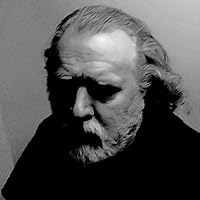
28 books58 followersBernard B. Fall was a prominent war correspondent, historian, political scientist, and expert on Indochina during the 1950s and 1960s. Born in Austria, he moved with his family to France as a child after Germany's annexation, where he started fighting with the French Resistance at age 16, and later the French Army during World War II.
In 1950 he first came to the United States for graduate studies at Syracuse University and Johns Hopkins University, returning and making his residence there. He taught at Howard University for most of his career and made regular trips to Southeast Asia to learn about changes and the societies. He predicted the failures of France and the United States in the wars in Vietnam because of their tactics and lack of understanding of the societies.
On 21 February 1967, while accompanying a company of the 1st Battalion 9th Marines on Operation Chinook II in the Street Without Joy , Thua Thien Province, Fall stepped on a Bouncing Betty land mine and was killed. He was dictating notes into a tape recorder, which captured his last words: "We've reached one of our phase lines after the fire fight and it smells bad- meaning it's a little bit suspicious... Could be an amb--".
Fall was survived by his wife and three daughters.
In 1950 he first came to the United States for graduate studies at Syracuse University and Johns Hopkins University, returning and making his residence there. He taught at Howard University for most of his career and made regular trips to Southeast Asia to learn about changes and the societies. He predicted the failures of France and the United States in the wars in Vietnam because of their tactics and lack of understanding of the societies.
On 21 February 1967, while accompanying a company of the 1st Battalion 9th Marines on Operation Chinook II in the Street Without Joy , Thua Thien Province, Fall stepped on a Bouncing Betty land mine and was killed. He was dictating notes into a tape recorder, which captured his last words: "We've reached one of our phase lines after the fire fight and it smells bad- meaning it's a little bit suspicious... Could be an amb--".
Fall was survived by his wife and three daughters.
Ratings & Reviews
Friends & Following
Create a free account to discover what your friends think of this book!
Community Reviews
Displaying 1 - 30 of 182 reviews

March 31, 2015
If you have in interest in the Vietnam war, or in strategy, insurgencies and counter-insurgent techniques this book should be on your reading list. Street Without Joy tells the fascinating story of the post WW2 French in Indochina, their failures to understand or counter Vietnamese Communist forces and the eventual continuance of the same errors by the United States.
Essentially, Fall posits that French (and later US) forces failed to understand the nature of the Vietnamese Communists' revolutionary war, their support among the local population and their ability to use neighboring countries (and eventually North Vietnam) as refuges. Western forces tried to counter these advantages with technology- fast strike mobile helicopter and armor groups, more and better surveillance, agent orange, etc. but this was a losing battle and they lacked the foresight to see it as such.
Beyond the incisive and illuminating discussion of strategies and tactics, this is a story of heartbreaking death and suffering on a grand scale over a protracted time period. Time and again French soldiers were told to hold posts to the last man against advancing Viet Minh forces. Time and again they were slaughtered, with maybe a handful escaping into the jungle to trek for days or weeks back to the French lines, their adversaries in pursuit. When they eventually reached safety their ordeals had broken them to the point that to their rescuers they resembled 'Christ on the cross'. When Dien Bien Phu fell captured French soldiers, wounded or not, were cruelly forced marched five and even six hundred kilometers through the jungle, dying where they fell from exhaustion.
Neither brave sacrifices nor horrific suffering were not restricted to the French military.
Indochinese Soldiers and civilians suffered terribly, with the former making near-superhuman efforts to defeat their foreign enemies. Viet Minh and VC soldiers carried heavy weapons hundreds of kilometers through the mountains on their bleeding backs, living only on handfuls of rice and dying in droves under French artillery attacks with only primitive medical care available to them. The French also committed war crimes of their own, and Fall details how a Vietnamese village and its residents were napalmed by French aircraft for no reason other than to make a point.
Fall writes well, and tells a compelling story of savagery and screw-ups, arrogance and last-stand bravery. I've heard this book is studied at defense academies around the world, and I can see why. Street Without Joy is one of the best books I've read on counterinsurgency and the mistakes a large high-tech army can make when fighting less sophisticated guerrilla forces.
I finished this book with a heavy heart. So much wasted life and, judging by the US entry into Vietnam (and later Afghanistan and Iraq), so many lessons unlearned.
On a final sad note, no one in this story escapes the horrors of this war, not even Fall himself. Six years after this book's publication Fall was on patrol in Vietnam with a group of U.S soldiers when he stepped on a landmine and was fatally hurt.
Essentially, Fall posits that French (and later US) forces failed to understand the nature of the Vietnamese Communists' revolutionary war, their support among the local population and their ability to use neighboring countries (and eventually North Vietnam) as refuges. Western forces tried to counter these advantages with technology- fast strike mobile helicopter and armor groups, more and better surveillance, agent orange, etc. but this was a losing battle and they lacked the foresight to see it as such.
Beyond the incisive and illuminating discussion of strategies and tactics, this is a story of heartbreaking death and suffering on a grand scale over a protracted time period. Time and again French soldiers were told to hold posts to the last man against advancing Viet Minh forces. Time and again they were slaughtered, with maybe a handful escaping into the jungle to trek for days or weeks back to the French lines, their adversaries in pursuit. When they eventually reached safety their ordeals had broken them to the point that to their rescuers they resembled 'Christ on the cross'. When Dien Bien Phu fell captured French soldiers, wounded or not, were cruelly forced marched five and even six hundred kilometers through the jungle, dying where they fell from exhaustion.
Neither brave sacrifices nor horrific suffering were not restricted to the French military.
Indochinese Soldiers and civilians suffered terribly, with the former making near-superhuman efforts to defeat their foreign enemies. Viet Minh and VC soldiers carried heavy weapons hundreds of kilometers through the mountains on their bleeding backs, living only on handfuls of rice and dying in droves under French artillery attacks with only primitive medical care available to them. The French also committed war crimes of their own, and Fall details how a Vietnamese village and its residents were napalmed by French aircraft for no reason other than to make a point.
Fall writes well, and tells a compelling story of savagery and screw-ups, arrogance and last-stand bravery. I've heard this book is studied at defense academies around the world, and I can see why. Street Without Joy is one of the best books I've read on counterinsurgency and the mistakes a large high-tech army can make when fighting less sophisticated guerrilla forces.
I finished this book with a heavy heart. So much wasted life and, judging by the US entry into Vietnam (and later Afghanistan and Iraq), so many lessons unlearned.
On a final sad note, no one in this story escapes the horrors of this war, not even Fall himself. Six years after this book's publication Fall was on patrol in Vietnam with a group of U.S soldiers when he stepped on a landmine and was fatally hurt.
April 8, 2022
"Road 1 was the main north-south artery of transportation along the coast. The stretch of heavily-fortified villages, a line of sand dunes, and salt marshes stretching from Hué to Quang-Tri. Losses had been heavy, one ambush after another...inspired the French soldiers to call it la rue sans joie or in English, 'Street Without Joy.'" pg 144

Bernard B. Fall put tremendous time and energy as a war correspondent about the failed political and military objectives in French Indochina. The book gave a brief set-up to the French Indochina War starting after World War 2 but focused mainly from 1950 onward when Chinese and American intervention enlarged and internationalization of the conflict. The author gave detailed accounts of the heavy combat action in chronological order that played out of the next four years. Alongside that he gave insider accounts of the social aspects of French Indochina, daily life inside the expeditionary military forces and capabilities, the roles of women in the French colonial society (families, nurses, legal prostitutes, etc.), detailed information on the make-up of the armed forces (mainland French, Foreign Legion, North African, Vietnamese, Laotian, Cambodian and mountain tribe volunteers, etc.), and details from inside outposts, forts, and combat deep behind enemy lines.
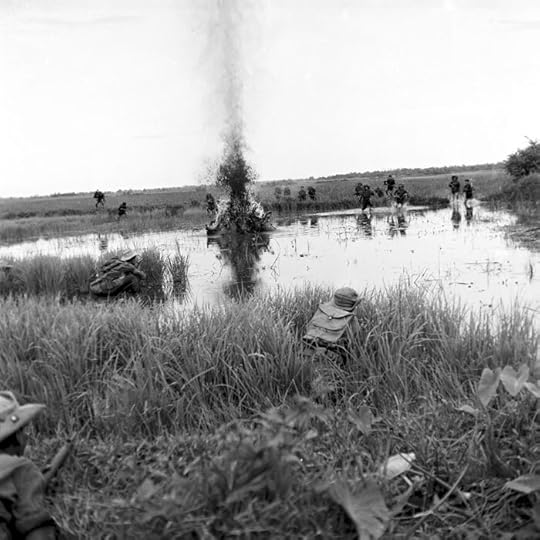
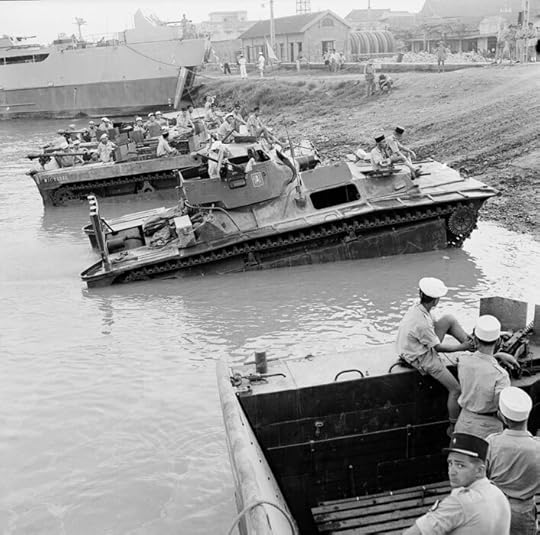
The war was a failed attempt to produce effective counterinsurgency (COIN) operations against the successful jungle warfare tactics employed by the communist forces, the Viet Minh. Constant uncertainty gained the upper hand and started psychological rifts among the ranks. Jungle warfare gave fears of where shadows, fog, and foliage hide the enemy because "once more, the dreaded pattern of grigontage, the slow gnawing away man by man, platoon by platoon, was setting in regardless of static defense" (pg 191). Communications, mobility, resupply, timely medical EVAC, ambushes and boobytraps, and fighting an unseen enemy provided many obstacles of Western concept of traditional warfare the French had fought most of their existence. The Viet Minh constantly had the advantage of clandestine maneuvering compared to the French:
The evolution of combat had developed Special Warfare and honed the concept of a self-sustaining Special Forces operator.
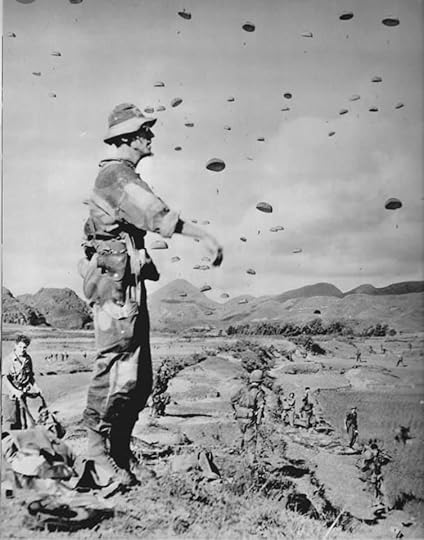
May 1954 was the military failure at Dien Bien Phu. This was the French High Command's last ditch effort to stop Viet Minh maneuvering throughout the northern region. The operation was an attempt to stop Communist supply movement into neighboring Laos and draw out the enemy in the open to inflict as much damage as possible to the Viet Minh. French forces were quickly overrun with overwhelming Communist forces both in manpower and artillery barrage. The first 24-hours sealed the Viet Minh victory and led to ceasefire. Similar to the Korean War, POWs existed on both sides but the unique indoctrination in the Communist camps posed internal conflict. Brainwashing, reeducation, and cases of soldiers turning on each other for compensation during imprisonment.
I learned a lot while reading and enjoyed the narrative. The last part was a chronological bullet-format list of events that led to the gradual total-involvement of US Forces, who up to 1964 has acted as military advisors for the Vietnamese Army. I would recommend this book to anyone interested in the preluding events of Americas combat involvement in Vietnam. Thanks!
Bernard B. Fall put tremendous time and energy as a war correspondent about the failed political and military objectives in French Indochina. The book gave a brief set-up to the French Indochina War starting after World War 2 but focused mainly from 1950 onward when Chinese and American intervention enlarged and internationalization of the conflict. The author gave detailed accounts of the heavy combat action in chronological order that played out of the next four years. Alongside that he gave insider accounts of the social aspects of French Indochina, daily life inside the expeditionary military forces and capabilities, the roles of women in the French colonial society (families, nurses, legal prostitutes, etc.), detailed information on the make-up of the armed forces (mainland French, Foreign Legion, North African, Vietnamese, Laotian, Cambodian and mountain tribe volunteers, etc.), and details from inside outposts, forts, and combat deep behind enemy lines.
The war was a failed attempt to produce effective counterinsurgency (COIN) operations against the successful jungle warfare tactics employed by the communist forces, the Viet Minh. Constant uncertainty gained the upper hand and started psychological rifts among the ranks. Jungle warfare gave fears of where shadows, fog, and foliage hide the enemy because "once more, the dreaded pattern of grigontage, the slow gnawing away man by man, platoon by platoon, was setting in regardless of static defense" (pg 191). Communications, mobility, resupply, timely medical EVAC, ambushes and boobytraps, and fighting an unseen enemy provided many obstacles of Western concept of traditional warfare the French had fought most of their existence. The Viet Minh constantly had the advantage of clandestine maneuvering compared to the French:
the positioning of large units required the prior arrival of reconnaissance detachments and liaison officers whose presence rarely remained undetected. Thus, the tactical surprise, was non-existent and the terrain itself precluded the use of high speed as a compensating factor. pg 172
The evolution of combat had developed Special Warfare and honed the concept of a self-sustaining Special Forces operator.
To train a man for guerrilla warfare was long and tedious. If he managed to stay alive for more than a year in his assignment, he usually had learned at least one, or even several, mountain dialects perfectly and had physically adapted to the murderous climate and the food and to the way of life in the jungle. The man had become irreplaceable because of his specialized knowledge. pg 271
May 1954 was the military failure at Dien Bien Phu. This was the French High Command's last ditch effort to stop Viet Minh maneuvering throughout the northern region. The operation was an attempt to stop Communist supply movement into neighboring Laos and draw out the enemy in the open to inflict as much damage as possible to the Viet Minh. French forces were quickly overrun with overwhelming Communist forces both in manpower and artillery barrage. The first 24-hours sealed the Viet Minh victory and led to ceasefire. Similar to the Korean War, POWs existed on both sides but the unique indoctrination in the Communist camps posed internal conflict. Brainwashing, reeducation, and cases of soldiers turning on each other for compensation during imprisonment.
I learned a lot while reading and enjoyed the narrative. The last part was a chronological bullet-format list of events that led to the gradual total-involvement of US Forces, who up to 1964 has acted as military advisors for the Vietnamese Army. I would recommend this book to anyone interested in the preluding events of Americas combat involvement in Vietnam. Thanks!

January 27, 2022
Here we go again.
STREET WITHOUT JOY is considered a classic, and Bernard Fall a sage on the subject of French military involvement in Vietnam. Of course, when, in the 1950s and 1960s, the books about the Vietnam conflict could hardly fill a single shelf, his might have been the best – which is also questionable. Now, though, if we take into account the amount of new scholarship published, it is surprising that Fall is still seen as an authority on the subject.
As an eyewitness of the fighting during the First Indochina War, he does a great job describing the battles with the gore, the tension, and the suffering. He is also versed in military strategy, and he explains the tactics and the mistakes of both the French and the Viet Minh quite graspably. Generally, the French, with their conventional armed forces, sought to engage in direct combat, while Giap's men tried to avoid large-scale battles as much as possible and instead get the French troops lost in the jungle. So far so good. STREET WITHOUT JOY would have been a good military history if Fall had focused on the military side of the war. His goal was, in his own words, to become "the foremost military writer of my generation," after all. Unlike the majority of the French and Americans, he understood that the Vietnam conflict was a revolutionary war, and American efforts to battle ideology with technology would end up in vain. He was perceptive.
At the same time, however, Fall is amazingly short-sighted when it comes to policy-making. He criticizes the American government for abandoning the French in 1954. As someone who claims to have a profound understanding of Vietnam and its struggle for independence, Fall should have known better. Even if the Eisenhower administration had bombed the Viet Minh into submission, the universally despised French colonialists still would not have managed to maintain control over the country. What the Vietnamese were truly fighting for was freedom from almost century-long colonial oppression. A US intervention in 1954 would have been exactly the strategy Fall fervently criticizes: trying to crush an ideology with technological superiority.
Fall also refused to recognize that Ho Chi Minh and his men were actually nationalists. Although he gives an impression of being a fan of Ho, he must have had only a superficial understanding of the man and his cause, considering him a pawn of Moscow. Ho Chi Minh was a Communist, but he was first and foremost a nationalist ready to prioritize his country's interests over any ideology. This is evident in the specifics of Vietnamese Communism, which was harsh in some aspects, but nevertheless sought to adapt to the needs of Vietnam and its people. Therefore, Fall's portrait of Ho is not well-rounded.
Most disconcerting, when it comes to the Diem regime, Bernard Fall is in David Halberstam's school of thought. He sees in Ngo Dinh Diem only a cruel reactionary who stubbornly refused to enact the economic and political reforms, which according to Fall were necessary, just because he could. This is a narrow and misleading view of South Vietnam's Prime Minister.
Most reforms American advisers suggested to Diem were aimed at the liberalization of South Vietnam and the transformation of the ARVN into a conventional army like the American one. They believed that making South Vietnam liberal would make it more attractive for the people. But it was not about attractiveness anymore. The Communist guerrillas were harassing the rural population incessantly, forcing them to convert to Communism to survive.
Diem understood that the country needed stability and a strong security apparatus before everything else, and the American-suggested reforms were inconsistent with these goals. By the same token, the ARVN needed to be transformed into a specialized force that could wade through the jungle and fight a guerrilla war. Generally, it had to be a complete opposite of the US Army. The overthrow and assassination of Diem was a huge mistake, which aggravated the already not sunny situation. Like many others, though, Fall short-sightedly clung to the idea that all South Vietnam's problems were the Ngo family's blame.
Fall was killed in 1967, which alas deprived him of the possibility to see and analyze events in retrospect. STREET WITHOUT JOY lacks historical perspective, which makes it an even less reliable source. It can be treated as one of the better firsthand accounts of the events in Vietnam, but not as an objective, insightful study. For anyone interested in the military aspect of the Franco-Vietnamese and American-Vietnamese conflicts, this book will prove to be an entertaining read. Otherwise, I do not recommend it.
STREET WITHOUT JOY is considered a classic, and Bernard Fall a sage on the subject of French military involvement in Vietnam. Of course, when, in the 1950s and 1960s, the books about the Vietnam conflict could hardly fill a single shelf, his might have been the best – which is also questionable. Now, though, if we take into account the amount of new scholarship published, it is surprising that Fall is still seen as an authority on the subject.
As an eyewitness of the fighting during the First Indochina War, he does a great job describing the battles with the gore, the tension, and the suffering. He is also versed in military strategy, and he explains the tactics and the mistakes of both the French and the Viet Minh quite graspably. Generally, the French, with their conventional armed forces, sought to engage in direct combat, while Giap's men tried to avoid large-scale battles as much as possible and instead get the French troops lost in the jungle. So far so good. STREET WITHOUT JOY would have been a good military history if Fall had focused on the military side of the war. His goal was, in his own words, to become "the foremost military writer of my generation," after all. Unlike the majority of the French and Americans, he understood that the Vietnam conflict was a revolutionary war, and American efforts to battle ideology with technology would end up in vain. He was perceptive.
At the same time, however, Fall is amazingly short-sighted when it comes to policy-making. He criticizes the American government for abandoning the French in 1954. As someone who claims to have a profound understanding of Vietnam and its struggle for independence, Fall should have known better. Even if the Eisenhower administration had bombed the Viet Minh into submission, the universally despised French colonialists still would not have managed to maintain control over the country. What the Vietnamese were truly fighting for was freedom from almost century-long colonial oppression. A US intervention in 1954 would have been exactly the strategy Fall fervently criticizes: trying to crush an ideology with technological superiority.
Fall also refused to recognize that Ho Chi Minh and his men were actually nationalists. Although he gives an impression of being a fan of Ho, he must have had only a superficial understanding of the man and his cause, considering him a pawn of Moscow. Ho Chi Minh was a Communist, but he was first and foremost a nationalist ready to prioritize his country's interests over any ideology. This is evident in the specifics of Vietnamese Communism, which was harsh in some aspects, but nevertheless sought to adapt to the needs of Vietnam and its people. Therefore, Fall's portrait of Ho is not well-rounded.
Most disconcerting, when it comes to the Diem regime, Bernard Fall is in David Halberstam's school of thought. He sees in Ngo Dinh Diem only a cruel reactionary who stubbornly refused to enact the economic and political reforms, which according to Fall were necessary, just because he could. This is a narrow and misleading view of South Vietnam's Prime Minister.
Most reforms American advisers suggested to Diem were aimed at the liberalization of South Vietnam and the transformation of the ARVN into a conventional army like the American one. They believed that making South Vietnam liberal would make it more attractive for the people. But it was not about attractiveness anymore. The Communist guerrillas were harassing the rural population incessantly, forcing them to convert to Communism to survive.
Diem understood that the country needed stability and a strong security apparatus before everything else, and the American-suggested reforms were inconsistent with these goals. By the same token, the ARVN needed to be transformed into a specialized force that could wade through the jungle and fight a guerrilla war. Generally, it had to be a complete opposite of the US Army. The overthrow and assassination of Diem was a huge mistake, which aggravated the already not sunny situation. Like many others, though, Fall short-sightedly clung to the idea that all South Vietnam's problems were the Ngo family's blame.
Fall was killed in 1967, which alas deprived him of the possibility to see and analyze events in retrospect. STREET WITHOUT JOY lacks historical perspective, which makes it an even less reliable source. It can be treated as one of the better firsthand accounts of the events in Vietnam, but not as an objective, insightful study. For anyone interested in the military aspect of the Franco-Vietnamese and American-Vietnamese conflicts, this book will prove to be an entertaining read. Otherwise, I do not recommend it.

April 16, 2012
Street Without Joy is a must for the library of anyone interested in the 20th Century's Indo-China wars. Bernard Fall explored the French disaster brilliantly -- exposing the foolishness of the French military and political leaders while honoring the valor and dedication of the fighting men. Fall was a Frenchman who immigrated to America and accompanied French Union forces for graduate research at a U.S. university. His writing brought to light the hidebound French military leadership's failure to grasp the realities of counter-insurgency warfare. The French knew mobility was the key to thwart the Viet Minh, but they applied European concepts of mobile warfare that depended too heavily on roads and vehicular transport. The cruel fate of Mobile Group 1 in central Annam unveiled the limitations of French military vision more completely than the renowned fiasco at Dien Bien Phu.
The French bungled and miscalculated everywhere. They failed at tactical intelligence gathering, routinely neglected to conduct adequate reconnaissance, mismanaged the propaganda war, underestimated the capabilities and tenacity of their enemy and squandered troops and scarce material resources in defense of worthless fixed installations. In virtually every respect, French leadership ceded the initiative to General Giap and Ho Chi Minh - and you don't win by simply reacting to your enemy. One of war's oldest maxims is: Carry the war to the enemy. The French did not. The Viet Minh carried it to them - again, and again, and again!
Street Without Joy drew lessons from the French debacle applicable to America's growing involvement in Indo-China; unfortunately Fall was a prophet without honor in his adopted country. While a few forward-looking American officers appreciated the value of effective counter-insurgency warfare, conventional forces generals held sway in Saigon, Hawaii and Washington. Some of our greatest successes in Vietnam resulted from effective operations by Special Forces, Combined Action Platoons and indigenous guerrillas, but most of our vast resources went into conventional operations. Bernard Fall told us what to expect in the jungles of Southeast Asia, but too few of our generals and politicians heeded the admonition.
The French bungled and miscalculated everywhere. They failed at tactical intelligence gathering, routinely neglected to conduct adequate reconnaissance, mismanaged the propaganda war, underestimated the capabilities and tenacity of their enemy and squandered troops and scarce material resources in defense of worthless fixed installations. In virtually every respect, French leadership ceded the initiative to General Giap and Ho Chi Minh - and you don't win by simply reacting to your enemy. One of war's oldest maxims is: Carry the war to the enemy. The French did not. The Viet Minh carried it to them - again, and again, and again!
Street Without Joy drew lessons from the French debacle applicable to America's growing involvement in Indo-China; unfortunately Fall was a prophet without honor in his adopted country. While a few forward-looking American officers appreciated the value of effective counter-insurgency warfare, conventional forces generals held sway in Saigon, Hawaii and Washington. Some of our greatest successes in Vietnam resulted from effective operations by Special Forces, Combined Action Platoons and indigenous guerrillas, but most of our vast resources went into conventional operations. Bernard Fall told us what to expect in the jungles of Southeast Asia, but too few of our generals and politicians heeded the admonition.

February 26, 2017
'Street without joy'
Explicit detailed account.
Very informative but very dry. I keep on pushing myself,
Read Ammara Read.
Irrespective of the fact, it's hard for me but undoubtedly it's a brilliant book on French war.
Explicit detailed account.
Very informative but very dry. I keep on pushing myself,
Read Ammara Read.
Irrespective of the fact, it's hard for me but undoubtedly it's a brilliant book on French war.

November 25, 2012
This book and "The True Believer," were required reading when I went through the Special Forces Officer's Course at Ft. Bragg. When I went to Vietnam, I saw much of what Dr. Fall was describing.
I just reread "Street Without Joy" and realize that he was not only a brilliant historian, he was prescient in his understanding of the nature of insurgencies in the modern world.
He spoke of the folly of the French when he said that they were trying to fight ideology with technology.
We, the Americans, tried the same thing. McNamara attempted to fight the NVA infiltration with electronic sensors. Didn't work.
The parts of the American effort that was successful was often suppressed or ignored by Washington. This was particularly true of some of the better psychological warfare efforts.
Are we making the same mistakes now in the Middle East?
I just reread "Street Without Joy" and realize that he was not only a brilliant historian, he was prescient in his understanding of the nature of insurgencies in the modern world.
He spoke of the folly of the French when he said that they were trying to fight ideology with technology.
We, the Americans, tried the same thing. McNamara attempted to fight the NVA infiltration with electronic sensors. Didn't work.
The parts of the American effort that was successful was often suppressed or ignored by Washington. This was particularly true of some of the better psychological warfare efforts.
Are we making the same mistakes now in the Middle East?

December 5, 2007
Not difficult to understand how a small colonial possession rises up to throw off the occupier.
Reread:
Rereading a classic after many years, some things stand out that I don’t recall or probably didn’t note the first time. It seems like certain bloodlines or family trees show up in the middle of combat in various ages. Here is a connection to an earlier age and family:
The author goes on an airdrop mission. As they pull off the drop zone, his airplane is hit and a couple of French fighters roll in to strike the enemy AAA. Except they really can’t see where the fire came from—the VietMinh were fantastic at camouflage. So the fighters roll in and bomb a “likely” target, a village. If it wasn’t sympathetic to the communists before, it is now:
Women on the front lines, courage in abundance:
One tough cookie, a reporter who jumps into combat with the guys:
https://coffeeordie.com/brigitte-friang
One tragic story (there were more):
This remains a classic account of arrogance, courage, intelligence failures, tactical and strategic errors –all which will be repeated by the Americans. For the military and intelligence professional, this is a must have for the permanent shelf. It is dated and Fall had his biases/prejudices. Read Stefania’s excellent review for another perspective https://www.goodreads.com/review/show... She knows her stuff. I approach the book with a military mind. The use of airpower, special forces, multinational forces, generals fighting a war different from the one needed, lessons for the ages.
Reread:
Rereading a classic after many years, some things stand out that I don’t recall or probably didn’t note the first time. It seems like certain bloodlines or family trees show up in the middle of combat in various ages. Here is a connection to an earlier age and family:
The author goes on an airdrop mission. As they pull off the drop zone, his airplane is hit and a couple of French fighters roll in to strike the enemy AAA. Except they really can’t see where the fire came from—the VietMinh were fantastic at camouflage. So the fighters roll in and bomb a “likely” target, a village. If it wasn’t sympathetic to the communists before, it is now:
Women on the front lines, courage in abundance:
One tough cookie, a reporter who jumps into combat with the guys:
https://coffeeordie.com/brigitte-friang
One tragic story (there were more):
This remains a classic account of arrogance, courage, intelligence failures, tactical and strategic errors –all which will be repeated by the Americans. For the military and intelligence professional, this is a must have for the permanent shelf. It is dated and Fall had his biases/prejudices. Read Stefania’s excellent review for another perspective https://www.goodreads.com/review/show... She knows her stuff. I approach the book with a military mind. The use of airpower, special forces, multinational forces, generals fighting a war different from the one needed, lessons for the ages.

January 16, 2012
Simply a great book. It deserves your undivided attention.
As far as I can tell, this book can be bought in old-fashioned paper form in the USA only from by Stackpole Books, based in Mechanicsburg, Pennsylvania and in business since 1930. In addition to the inherent virtue of supporting a publishing institution of long-standing dignity and of location far removed from the traditional centers of power, I also think that this book is best experienced this way, because of the great pictures and maps in the book. It’s impossible to say that there isn’t an electronic format somewhere that will display this book adequately, but my Kindle ebook reader certainly will not do justice, especially, to the excellent maps in this book, apparently drawn by the author himself.
The clarity and accuracy of these maps must constitute some kind of gold standard against which other military historians may measure themselves. Each complex and chaotic battle described in the book (and there are many) appears not more than three pages away from a crisp and beautiful map which clarifies the text considerably. Every place name or geographical feature referred to in the narrative appears on the nearby map. My only complaint is that the book should be sold as a set with a good magnifying glass, as a special offer to middle-aged history buffs who are too cheap to regularly update the prescription on their reading glasses. To put it another way, squinting at a book held two inches from nose is not consistent with the self-image I hold of my dignity.
All this praise of the maps shouldn’t lead you to conclude that the rest of the book suffers by comparison. The research was clearly phenomenal. Given the author’s clear and easy style, it’s also hard to believe that the author was born in Austria and his first language was French.
All this praise of the maps, pictures, research, and style shouldn’t lead you to conclude that the book doesn’t carry a clear and worthwhile message today about the effective use of military might. For example, from page 266: “...In a form of warfare in which political considerations regularly outweigh the military, air attacks against ’suspected enemy groups’ are all too likely to be self-defeating. The loss of support brought brought on by each innocent man or woman killed is likely to far outweigh the possible gain of hard-core rebels.” (This is actually a quotation by Fall from another book, but it’s to the author’s credit that he found and included it.)
For casual readers (meaning, if you’re reading this for pleasure born from knowing things, but not studying it for a class), I especially recommend the chapters (4, 6, 8, and 10) labelled “Diary”, which are adapted from the letters Fall wrote home to his American wife while doing research in Southeast Asia. They offer a fascinating glimpse into the day-to-day details of a time and place that is quickly receding from living memory. Some of it is even laugh-out-loud funny, like the anecdote on page 274 about the unexpected popularity with certain hill tribes of Vietnam of a US-government produced short documentary film about a volunteer fire department in Illinois.
In fact, if you are fortunate to live in a place where you can grab this book off the shelf of a library or bookstore, run down (right now would be good) and read these chapters while standing in the aisle. It will be the most enjoyable act that you will do today.
If you are not fortunate enough to be in a situation where you can study it with an expert, at least try to find a quiet moment in your life when you can read it with mindfulness. I think a beach vacation would be perfect for this purpose. In fact, I read it on a beach vacation. However, my understanding, based on observation of people who appear to fit the description of “normal”, is that many people inexplicably desire lighter fare during beach vacation. Why? Books like this one are far superior, and you will only have the time and energy to give this book the attention it deserves at a time when you are away from the thousand distractions of a normal life. Plus, you will be a better person for having read this book. Just go ahead and read it already.
As far as I can tell, this book can be bought in old-fashioned paper form in the USA only from by Stackpole Books, based in Mechanicsburg, Pennsylvania and in business since 1930. In addition to the inherent virtue of supporting a publishing institution of long-standing dignity and of location far removed from the traditional centers of power, I also think that this book is best experienced this way, because of the great pictures and maps in the book. It’s impossible to say that there isn’t an electronic format somewhere that will display this book adequately, but my Kindle ebook reader certainly will not do justice, especially, to the excellent maps in this book, apparently drawn by the author himself.
The clarity and accuracy of these maps must constitute some kind of gold standard against which other military historians may measure themselves. Each complex and chaotic battle described in the book (and there are many) appears not more than three pages away from a crisp and beautiful map which clarifies the text considerably. Every place name or geographical feature referred to in the narrative appears on the nearby map. My only complaint is that the book should be sold as a set with a good magnifying glass, as a special offer to middle-aged history buffs who are too cheap to regularly update the prescription on their reading glasses. To put it another way, squinting at a book held two inches from nose is not consistent with the self-image I hold of my dignity.
All this praise of the maps shouldn’t lead you to conclude that the rest of the book suffers by comparison. The research was clearly phenomenal. Given the author’s clear and easy style, it’s also hard to believe that the author was born in Austria and his first language was French.
All this praise of the maps, pictures, research, and style shouldn’t lead you to conclude that the book doesn’t carry a clear and worthwhile message today about the effective use of military might. For example, from page 266: “...In a form of warfare in which political considerations regularly outweigh the military, air attacks against ’suspected enemy groups’ are all too likely to be self-defeating. The loss of support brought brought on by each innocent man or woman killed is likely to far outweigh the possible gain of hard-core rebels.” (This is actually a quotation by Fall from another book, but it’s to the author’s credit that he found and included it.)
For casual readers (meaning, if you’re reading this for pleasure born from knowing things, but not studying it for a class), I especially recommend the chapters (4, 6, 8, and 10) labelled “Diary”, which are adapted from the letters Fall wrote home to his American wife while doing research in Southeast Asia. They offer a fascinating glimpse into the day-to-day details of a time and place that is quickly receding from living memory. Some of it is even laugh-out-loud funny, like the anecdote on page 274 about the unexpected popularity with certain hill tribes of Vietnam of a US-government produced short documentary film about a volunteer fire department in Illinois.
In fact, if you are fortunate to live in a place where you can grab this book off the shelf of a library or bookstore, run down (right now would be good) and read these chapters while standing in the aisle. It will be the most enjoyable act that you will do today.
If you are not fortunate enough to be in a situation where you can study it with an expert, at least try to find a quiet moment in your life when you can read it with mindfulness. I think a beach vacation would be perfect for this purpose. In fact, I read it on a beach vacation. However, my understanding, based on observation of people who appear to fit the description of “normal”, is that many people inexplicably desire lighter fare during beach vacation. Why? Books like this one are far superior, and you will only have the time and energy to give this book the attention it deserves at a time when you are away from the thousand distractions of a normal life. Plus, you will be a better person for having read this book. Just go ahead and read it already.

November 24, 2016
This is not a book. It was an opportunity. A chance. A vision of the future that was missed. Who missed that vision? We did.
Street Without Joy was written about the French miseries fighting the Viet Minh. How they struggled. How they lost. It was also written real time. It was published in 1961. Many years before we fully committed ground troops to what was to become a quagmire. But they were French. Why should we pay attention to someone who lost? We are Americans. We don't pay attention to anyone else because we know better don't we. We could have read and learned from these men. We lost an opportunity because of our arrogance.
Starting at World War II the Viet Minh filled the power vacuum once the Japanese folded. This was their strategy. They were solidly in power when the French made their return to Indochina. Trying desperately to reclaim their empire they ran into something much more powerful...nationalism. The Japanese had shown that European colonial powers could be defeated. Thus they could lose again. The Viet Minh were supported by the populace like no French puppet could.
The French fielded the largest army since the World War. The army was a road bound behemoth that tried to pin down an elusive enemy. Battles were fought. Some won. Some lost. Meanwhile battles across the world were being lost to the communists. China. Korea. Many more. The sanctuaries developed allowing the Viet Minh to hide and lick their wounds and frustrate their French antagonists. Experienced Chinese and Russian advisors came to assist the Vietnamese in their struggles.
The French were losing...and they knew it. They rolled the dice at Dien Bien Phu and got snake eyes. Their colonial venture was lost. The biggest loser was us though. We paid no attention to their lessons. Our arrogance cost us dearly. We have a habit of not listening or attending to those who have gone before us. Maybe next time we will.
Street Without Joy was written about the French miseries fighting the Viet Minh. How they struggled. How they lost. It was also written real time. It was published in 1961. Many years before we fully committed ground troops to what was to become a quagmire. But they were French. Why should we pay attention to someone who lost? We are Americans. We don't pay attention to anyone else because we know better don't we. We could have read and learned from these men. We lost an opportunity because of our arrogance.
Starting at World War II the Viet Minh filled the power vacuum once the Japanese folded. This was their strategy. They were solidly in power when the French made their return to Indochina. Trying desperately to reclaim their empire they ran into something much more powerful...nationalism. The Japanese had shown that European colonial powers could be defeated. Thus they could lose again. The Viet Minh were supported by the populace like no French puppet could.
The French fielded the largest army since the World War. The army was a road bound behemoth that tried to pin down an elusive enemy. Battles were fought. Some won. Some lost. Meanwhile battles across the world were being lost to the communists. China. Korea. Many more. The sanctuaries developed allowing the Viet Minh to hide and lick their wounds and frustrate their French antagonists. Experienced Chinese and Russian advisors came to assist the Vietnamese in their struggles.
The French were losing...and they knew it. They rolled the dice at Dien Bien Phu and got snake eyes. Their colonial venture was lost. The biggest loser was us though. We paid no attention to their lessons. Our arrogance cost us dearly. We have a habit of not listening or attending to those who have gone before us. Maybe next time we will.

January 16, 2016
I now see where many of the secondary sources I've been reading got their insights. What's neat, though, is how Fall weaves his personal observations through the analysis of what went wrong at Dien Bien Phu. Fascinating characters emerge, and stories like this one:
Perhaps one of the most touching cases of devotion was that of Madame S. White-haired and close to sixty years old, she belonged to one of the grand bourgeois families of France. When her son, a lieutenant in the infantry, was transferred to Indochina, she enlisted in the PFAT to be near him and was assigned to Hanoi as director of the maternity hospital for army girls who’d gotten ‘into trouble.’ There weren’t too many of them, but in any case, the French Army had taken the realistic attitude that a girl, pregnant or not, still made a good radio operator or secretary-typist. Thus, in the case of pregnancy, the girls were not discharged but merely sent on sick leave within the theater itself, to return to active duty after confinement.What a treasure trove of period detail!
Petite and dignified in the immaculate white uniform of the PFAT, Mme. S. could be seen zooming through the streets of Hanoi on her white motor scooter, going briskly about her business while awaiting the next leave period of her son. Her son, while no doubt touched by this extreme demonstration of maternal solicitude, felt that his mother was definitely cramping the style of his leave periods, and, in turn, sought any sort of assignment that would get hi as far as possible from Hanoi, but to little avail. When last seen, Lieutenant S. Was in Haiphong, hiding behind dark glasses and asking all his friends please not to tell mama that he was taking his vacation elsewhere.

November 12, 2017
Bernard Fall's classic account of the First Indochina War (1946-1954). The book was originally published in 1961 (in English) and quickly became a standard reference for American military personnel as well as anyone else wanting to gain some insight into Southeast Asia at the time. "Street Without Joy" (French translation: La Rue Sans Joie) was the name given by troops of the French Far East Expeditionary Corps to the stretch of Route 1 from Huế City (yes that Hue from "Full Metal Jacket") to Quảng Trị during the First Indochina War. Strangely enough (historical irony?), Bernard Fall was killed by a landmine ,on that same stretch of road, in 1967 when he was accompanying United States Marines on a mission.
The book is not a comprehensive chronological recounting of the war. Street Without Joy is actually a series of essays that examine specific battles/campaigns that occurred between 1950 - 1954. Between the chapters ,examining the war, Fall inserts four chapters that are his personal observations and are titled "Diary:". The main centerpiece of the book is the chapter examining the destruction of Groupement Mobile No. 100 ("Mobile Group 100" or G.M. 100). It's a long chapter and very engrossing. The entire book is very involving. Episodic and written in the style of the time (frequent reference to "Reds" and "Communists") it is evident that Fall did not access to full U.S. government documents when he wrote the book. The other thing that will stand out is most of the writing is from the perspective of the French with the Viet-Minh serving more as a faceless opponent. The book is an angry book, but there is the unmistakable feeling that Fall wrote the book as a way to educate the Western world about the formidable opponent that if faced in the East. It's an angry book because Fall is recounting where the French went wrong in their fight against the Viet-Minh, but Fall did not write an anti-war scree; it has definite political biases (anti-communist) and is intended to show how the Communists fight. I would expect nothing less from a book written at the height of the Cold War.
Despite these weak spots the book is thoughtful and stays away from simplistic jingoisms. It isn't a blast of anti-communist propaganda, but rather a book intended to educate. Fall is clear that the Communists are very competent and are very capable at taking advantage of the Western World's mistakes and shortcomings. In the end the book is most successful at giving the reader a look at the Human element of the war. He shows the people of Vietnam ,and their culture, while also conveying what the French soldiers went through with a clear and vivid writing style. Fall's book is considered to be a modern military history classic because it brings the French era of the Vietnam War to life. It isn't the facts or conclusions that Fall presents (some of which are still eerily prescient i.e. what the U.S. was looking at ), but the ability to make that war still seem accessible almost sixty-five years since it ended. It's an excellent account and I recommend it.
The book is not a comprehensive chronological recounting of the war. Street Without Joy is actually a series of essays that examine specific battles/campaigns that occurred between 1950 - 1954. Between the chapters ,examining the war, Fall inserts four chapters that are his personal observations and are titled "Diary:". The main centerpiece of the book is the chapter examining the destruction of Groupement Mobile No. 100 ("Mobile Group 100" or G.M. 100). It's a long chapter and very engrossing. The entire book is very involving. Episodic and written in the style of the time (frequent reference to "Reds" and "Communists") it is evident that Fall did not access to full U.S. government documents when he wrote the book. The other thing that will stand out is most of the writing is from the perspective of the French with the Viet-Minh serving more as a faceless opponent. The book is an angry book, but there is the unmistakable feeling that Fall wrote the book as a way to educate the Western world about the formidable opponent that if faced in the East. It's an angry book because Fall is recounting where the French went wrong in their fight against the Viet-Minh, but Fall did not write an anti-war scree; it has definite political biases (anti-communist) and is intended to show how the Communists fight. I would expect nothing less from a book written at the height of the Cold War.
Despite these weak spots the book is thoughtful and stays away from simplistic jingoisms. It isn't a blast of anti-communist propaganda, but rather a book intended to educate. Fall is clear that the Communists are very competent and are very capable at taking advantage of the Western World's mistakes and shortcomings. In the end the book is most successful at giving the reader a look at the Human element of the war. He shows the people of Vietnam ,and their culture, while also conveying what the French soldiers went through with a clear and vivid writing style. Fall's book is considered to be a modern military history classic because it brings the French era of the Vietnam War to life. It isn't the facts or conclusions that Fall presents (some of which are still eerily prescient i.e. what the U.S. was looking at ), but the ability to make that war still seem accessible almost sixty-five years since it ended. It's an excellent account and I recommend it.

February 20, 2008
Bernard Fall's heartbreaking history of war in Vietnam - heartbreaking for at least three reasons: because of the failure of the French to honor the aspirations of the Vietnamese or to learn from their own mistakes; the failure of the U.S. government to learn from the experiences of the French; and the staggering amount of death, suffering and devastation visited on the Vietnamese people as a result.
One story can stand in for a lot of this book's message. An American unit was ambushed by the NVA on a highway that the French had nicknamed the Street Without Joy, because of the bloodshed there. When a larger U.S. unit came to the rescue, they in turn found themselves caught in a much larger ambush - the NVA had been using the first American unit as bait to draw a larger unit in.
After the battle, in which both U.S. units took terrible losses, one American soldier wandering along the side of the road noticed a sign, a historical marker, commemorating a battle in which exactly the same thing had happened to the French army in exactly the same place. So much for learning from the experiences of others.
One story can stand in for a lot of this book's message. An American unit was ambushed by the NVA on a highway that the French had nicknamed the Street Without Joy, because of the bloodshed there. When a larger U.S. unit came to the rescue, they in turn found themselves caught in a much larger ambush - the NVA had been using the first American unit as bait to draw a larger unit in.
After the battle, in which both U.S. units took terrible losses, one American soldier wandering along the side of the road noticed a sign, a historical marker, commemorating a battle in which exactly the same thing had happened to the French army in exactly the same place. So much for learning from the experiences of others.
October 22, 2021
Excellent. Superb! Everything I had heard about it. If you're a student of, or even just interested in, the French debacle in trying to recolonize Indochina, as well as subsequently the failure of the US, particularly in my opinion, by apparently never conducting any Lessons Learned sessions and thus repeating the very same damn fool mistakes that cost the French everything and allowed the Viet Minh to win before teaching the US a lesson in UW. BTW, most people don't realize this, but third world, underfunded, no-weapons-to-speak-of (initially) "North Vietnam," under the various names given to and used by those led by Ho and Giap, is the only such country I can recall at the moment, and certainly in more modern times, to defeat THREE (3) major, massive, far more advanced global powers (or at least drive the 3 from Vietnam) AND did so in a 30 year time frame. Doubt me? 1) Japan, World War 2. 2) France. 3) United States. I'm sorry, but even as an American and thus a citizen who grew up during the draft, taught to hate and despise the "evil" (North) Vietnamese, over the years with much reading, study and research, I've learned much about the history of the region, dynamics, propaganda, geopolitical implications, proxies, and especially have remained interested in the entire E/SE Asian question of A) Marxism or B) Nationalism (first and foremost), because it's still a matter of great debate, although I formed a pretty firm opinion some decades ago and stand by it. That issue, of course, applies to many other states in the region, from China to Cambodia and more.
Regardless, the author of this book gives an amazing detailed account of the horrors experienced by the French (and their opponents) during a specific period of that conflict, and while the author never would have known or expected it would serve as a history text of sorts and a book that should have been required reading at West Point pre-1960ish, that's the least of what he accomplished in writing this. Of course, even though the US didn't learn from the French debacle -- which was funded by the US -- and got its ass whipped to great mass global humiliation, let alone at the cost of tens of thousands of US lives, tragically, as well as literally millions of Vietnamese lives, apparently some people at the Pentagon finally DID decide doing a few Lessons Learned sessions might be of some value, thus resulting in some UW doctrine, later to split into IW/AW doctrine, the irony being that the DoD is shutting down its AW unit literally as I write this and likely when we need it the most. Bozos! "We'll farm those responsibilities out to other units." Yeah. Worked real well in Nam, didn't it? And Iraq and Afghanistan too. Definitely still need doctrine and committed, structured units dedicated to IW but I fail to understand AT ALL how the same doesn't apply to AW. And since official US military focus is shifting to the Baltics (to justify the massive defense budget, and to guarantee only seriously pissing Putin off more, which will have the opposite of the stated effect and goals in sending SOF units into each of those states and countries). I have so many friends, colleagues and connections at every level and in every type of unit within the US Department of Defense (as well as hundreds of defense contractors), that I kind of feel guilty for what I've written and what I could write, but at the risk of offending some people I value, I've just got to say this is total bullshit, beyond stupid geopolitically and militarily, and in a manner of speaking, I would contend it's another case of the DoD NOT having read Fall's book and others like it, and thus likely to make or repeat predictable, avoidable and potentially devastating mistakes.
I'm sure you didn't expect to get more out of a review of a book from the 1950s, but it still applies directly to current political/military goals, strategies, tactics, doctrine, particularly that of the US. Which I think is tragic. The book? I can't recommend it enough. Very recommended.
Regardless, the author of this book gives an amazing detailed account of the horrors experienced by the French (and their opponents) during a specific period of that conflict, and while the author never would have known or expected it would serve as a history text of sorts and a book that should have been required reading at West Point pre-1960ish, that's the least of what he accomplished in writing this. Of course, even though the US didn't learn from the French debacle -- which was funded by the US -- and got its ass whipped to great mass global humiliation, let alone at the cost of tens of thousands of US lives, tragically, as well as literally millions of Vietnamese lives, apparently some people at the Pentagon finally DID decide doing a few Lessons Learned sessions might be of some value, thus resulting in some UW doctrine, later to split into IW/AW doctrine, the irony being that the DoD is shutting down its AW unit literally as I write this and likely when we need it the most. Bozos! "We'll farm those responsibilities out to other units." Yeah. Worked real well in Nam, didn't it? And Iraq and Afghanistan too. Definitely still need doctrine and committed, structured units dedicated to IW but I fail to understand AT ALL how the same doesn't apply to AW. And since official US military focus is shifting to the Baltics (to justify the massive defense budget, and to guarantee only seriously pissing Putin off more, which will have the opposite of the stated effect and goals in sending SOF units into each of those states and countries). I have so many friends, colleagues and connections at every level and in every type of unit within the US Department of Defense (as well as hundreds of defense contractors), that I kind of feel guilty for what I've written and what I could write, but at the risk of offending some people I value, I've just got to say this is total bullshit, beyond stupid geopolitically and militarily, and in a manner of speaking, I would contend it's another case of the DoD NOT having read Fall's book and others like it, and thus likely to make or repeat predictable, avoidable and potentially devastating mistakes.
I'm sure you didn't expect to get more out of a review of a book from the 1950s, but it still applies directly to current political/military goals, strategies, tactics, doctrine, particularly that of the US. Which I think is tragic. The book? I can't recommend it enough. Very recommended.

January 25, 2022
Reading this it is hard not to recognise that one's forgetting history can only lead to pain and suffering, for it is clear that the American leaders responsible for the pursuit of the war in Vietnam did not read, or of they did, di not understand what Fall was saying. They went on to repeat the same mistakes the French had made, and failed learn any of the lessons the had learned. Completly missing the point of Revolutionary War they failed to capture the hearts and minds of the people they were supposed to be defending.
That being said this makes hard reading as the French soldiers stumber from disaster to disaster in their conflict with the VietMinh. What was distressing were the accounts of the way in which the POWs were treated by the VietMinh. One wonders if this was official policy? Compassion for a defeated enemy is surely a sign of an honourable leader? Did the French behave in the same way?
That being said this makes hard reading as the French soldiers stumber from disaster to disaster in their conflict with the VietMinh. What was distressing were the accounts of the way in which the POWs were treated by the VietMinh. One wonders if this was official policy? Compassion for a defeated enemy is surely a sign of an honourable leader? Did the French behave in the same way?

June 25, 2010
Many of this country's most respected political figures have noted Fall's absolute precision of the Vietnam War. In Colin Powell's 1995 Autobiography, My American Journey, he wrote: "I recently reread Bernard Fall's book on Vietnam, Street Without Joy. Fall makes painfully clear that we had almost no understanding of what we had gotten ourselves into. I cannot help thinking that if President Kennedy or President Johnson had spent a quiet weekend at Camp David reading that perceptive book, they would have returned to the White House Monday morning and immediately started to figure out a way to extricate ourselves from the quicksand of Vietnam."
Having read this book so many years ago - I fear it speaks volumes to the American adventure in Afghanistan and its neighbor, Pakistan. Readers who appreciate contemporary history hazard a void in understanding if this book is not part of their library.
As stated succinctly before, "The Americans knew they didn't know, and proceeded as if it didn't matter. It was called, "Vincible Ignorance." Read this book.
Having read this book so many years ago - I fear it speaks volumes to the American adventure in Afghanistan and its neighbor, Pakistan. Readers who appreciate contemporary history hazard a void in understanding if this book is not part of their library.
As stated succinctly before, "The Americans knew they didn't know, and proceeded as if it didn't matter. It was called, "Vincible Ignorance." Read this book.
May 6, 2025
This book is a classic in Military Literature. Bernard Fall does an excellent job describing the French actions in Vietnam outside of the disaster of Den Bien Phu. French attitudes and the assistance provided by colonial and Foreign Legion troops are well discussed. The French were soundly defeated. This book describes why this occurred.
The author also discusses the similarities and mistakes made by early US involvement. The review of US actions is a bit dated based on new information that has come to light. Nonetheless this book retains its well-deserved status as a military history classic. This is a great book to read if you are interested in the Vietnam War.
The author also discusses the similarities and mistakes made by early US involvement. The review of US actions is a bit dated based on new information that has come to light. Nonetheless this book retains its well-deserved status as a military history classic. This is a great book to read if you are interested in the Vietnam War.
November 30, 2019
Despite Fall’s assertion that he is an academic and not a journalist, his book reads in the casual conversational style of the archetypical 20th century war correspondent. Each chapter stands alone as a study of some particular French Army unit, minority group or ill-fated operation. The individuals are vividly rendered but rarely lingered upon, usually sketched out by only by a couple of sentences before moving on to the next vignette. It is sometimes scattershot and its organisation is mostly thematic rather than coming to an overarching point but Fall’s writing had sufficient momentum to keep me moving.
Fall is clearly irritated by a reductive vision of this war as arrogant white professional soldiers confounded by near-magical jungle spirits in black pyjamas. The French Union forces he describes are an desperately under-supported army mostly comprised of colonial subjects (Moroccans, Algerians, Senegalese as well as more locally raised Viets and Laotians) fighting a startlingly conventional war against regiments of well armed Viet Minh regulars. I appreciated this clarification, even if it was mostly directed at the then contemporary class of American advisors being dispatched to South Vietnam. It does not change anything about the overarching context of the war but plays a big part in Fall’s focus on the strategic successes of the Viet Minh.
I thought his final chapter on revolutionary war (a term he prefers to guerrilla war) convincing, even more so in hindsight of the Second Indochina War where he would be killed a few years after writing this book. For all that, there is plenty of mid twentieth century racism, mostly in the condescending colonial thinking that was so inherent to the French Union and those serving it. Fall’s eyes are focused squarely on the French Union troops. The Viet Minh are ants more than people, a seething mass of limbs and weapons pouring over the parapets or swarming over French armour. The rest of the population are mostly defined by their suffering, at the hands of the communists or the French, and even that mostly happens in absentia.
A good book, if you are interested in the French failures on a strategic level and Viet Minh successes and also on the operation of the French Union forces on a more personal level. It does not delve beyond that though.
Fall is clearly irritated by a reductive vision of this war as arrogant white professional soldiers confounded by near-magical jungle spirits in black pyjamas. The French Union forces he describes are an desperately under-supported army mostly comprised of colonial subjects (Moroccans, Algerians, Senegalese as well as more locally raised Viets and Laotians) fighting a startlingly conventional war against regiments of well armed Viet Minh regulars. I appreciated this clarification, even if it was mostly directed at the then contemporary class of American advisors being dispatched to South Vietnam. It does not change anything about the overarching context of the war but plays a big part in Fall’s focus on the strategic successes of the Viet Minh.
I thought his final chapter on revolutionary war (a term he prefers to guerrilla war) convincing, even more so in hindsight of the Second Indochina War where he would be killed a few years after writing this book. For all that, there is plenty of mid twentieth century racism, mostly in the condescending colonial thinking that was so inherent to the French Union and those serving it. Fall’s eyes are focused squarely on the French Union troops. The Viet Minh are ants more than people, a seething mass of limbs and weapons pouring over the parapets or swarming over French armour. The rest of the population are mostly defined by their suffering, at the hands of the communists or the French, and even that mostly happens in absentia.
A good book, if you are interested in the French failures on a strategic level and Viet Minh successes and also on the operation of the French Union forces on a more personal level. It does not delve beyond that though.

December 14, 2015
The first third of the book was quite boring and old-fashioned - description of French army actions in Indochina with old diagrams reminded me of weird military dictionary. If I didn´t happen to be patient reader, I would have probably closed the book after this part. Now I'm glad I did not. The middle part started to be finally interesting; I recommend especially all chapters entitled as "Diary". In this first-hand account, Fall proved to be a great and thoughtful observer. Many of his conclusions are remarkably accurate, especially when one considers the limited access to information beyond the French ones. The last chapters of the book clearly shows why the "Street Without Joy" is timeless work and why it´s still re-readed by generations of political experts. Author’s analysis of unconventional warfare surprisingly fits to numerous today's conflicts.

July 2, 2012
Picking up the book knowing full well that I am going to counter military history at its best (the first Indochina War for you), I did not expect the level of historical analysis offered by the author. Having been raised in Vietnam and now reading the book from the enemy's perspective, I found the whole episode vindictive of my firm belief in the inevitable roles of the whole Vietnamese Communist movement in 1945, as well as educational about tragedies that textbooks always fail to mention. I also wonder how the political mood of the time changed because of such a warning: just like the French, the Americans were going to fail, miserably, in the Vietnam War. Deliberately detailed and incredibly thoughtful, this book is a must-read, even in 2012, or for many years later.

September 5, 2024
Based on the experience of a famous journalist (Bernard Fall) with deep access to French military positions and personnel during the first Vietnam War (1946-1954), this book is regarded as one of the great works on counter-insurgency and a significant critique of the Vietnam War. Written in 1961, but with important forecasts and warnings about American involvement in Vietnam added in its 1964 edition, which I used.
I do not understand why this book is recommended in defense academies, or as highly regarded as it is. The book is a strange mishmash of romantic anecdotes about the Foreign Legion (and French colonial military) a la Beau Geste (1939), analyses of specific campaigns which are described extensively seemingly only to prove how pointless and poorly managed the French occupation was, diary entries showing the 'interior life' of the French forces, and very brief but high quality political/economic/ideological perspectives on the conflict. The best parts of the books are the diary entry sections which give a great insight into the French occupation, and the brief section at the end of the book detailing the political and ideological dimensions of the conflict. Frustratingly, the authors thesis is only really touched on right at the end of the book, and in short.
The basic thesis about 'Revolutionary War', that is a war who's mechanism is using popular support and the active participation of the population to replace a regime with another, is interesting but seems fundamentally different from what he chooses to spend time on in the book. His argument is that in this type of war, there must be an ideological alternative to the Communists, or else victory will be strictly impossible. No doubt this section of the book has a strong relevance to American involvement in the Middle East, where identical mistakes to Vietnam (by both the French and Americans) were made, with lessons learned only very late into the occupation when goodwill was exhausted and the military situation immensely complex.
He seems to be deeply aware that the South Vietnamese state had no compelling ideology, the West was focused entirely on military and mechanical approaches to both wars, and that the Communists seem to be deeply popular throughout the country. Nevertheless, he is so anti-communist by nature that the book ends with phrases like 'the French occupation for a brief time let some 20 million people live free', and is committed to the idea that the Communist ideology was only popular through brainwashing and coercion. He cannot see the Viet Minh as genuine nationalists, yet they are literally the only organized ideology present in the anti-colonial and nationalist camp. At the same time, he excoriates the occupation as being strategically and tactically misguided from the get-go, and based on an empty ideology of colonial extraction and privilege. It's a bizarre combination, where you can tell he understands from a logical standpoint why the North was bound to be successful in villages and to win the war, but is unable to really deal with those facts at a personal level or see their outcome.
There are parts of the book which seem so anti-communist and pro-colonial that it is almost hard to get through them, and parts of the book which have a profound and advanced understanding of the exact reasons why the French lost the war, and why the Americans were bound to lose. Though the author was killed in 1967 from a mine while a journalist on patrol in the exact section of coast this book is named after (The street without joy , you can tell he understood how doomed a strictly military struggle against an ideology is when you have no alternative to offer.
In general, I'd recommend the book to anyone who wants to know intricate details about the French occupation, and for it's sections at the end describing what he thinks is likely to happen to the Americans there, but it's not a very good operational or strategic history of the war, and the authors powerful sympathy for the French occupiers is an albatross around the neck of what could otherwise be a great work analyzing counter insurgency. 2.5-3 stars.
I think he has good insights though. I particularly enjoyed a colorful anecdote about a native Vietnamese officer who had a Croix de Guerre and many other medals from a long service in the French Army. The man wants to get some papers signed for his reassignment to a different unit, but the base officers who have to sign off are busy playing tennis and drinking in the afternoon. They make the officer wait for them, squatting next to the court, and are annoyed that he interrupted them. A bugle begins playing in the distance, for a lowering of the flag ceremony. Here, the native Vietnamese officer in the French Colonial army stands up and salutes in the distance, without being able to see the French flag, as is regulation. Meanwhile, the officers (and their wives) barely look up. Here, even the barest of ideologies provided by the French Colonial Empire, which people were readily willing to buy into, was only passively provided and not truly 'believed' in by the occupiers who were meant to be the standard bearers.
I do not understand why this book is recommended in defense academies, or as highly regarded as it is. The book is a strange mishmash of romantic anecdotes about the Foreign Legion (and French colonial military) a la Beau Geste (1939), analyses of specific campaigns which are described extensively seemingly only to prove how pointless and poorly managed the French occupation was, diary entries showing the 'interior life' of the French forces, and very brief but high quality political/economic/ideological perspectives on the conflict. The best parts of the books are the diary entry sections which give a great insight into the French occupation, and the brief section at the end of the book detailing the political and ideological dimensions of the conflict. Frustratingly, the authors thesis is only really touched on right at the end of the book, and in short.
The basic thesis about 'Revolutionary War', that is a war who's mechanism is using popular support and the active participation of the population to replace a regime with another, is interesting but seems fundamentally different from what he chooses to spend time on in the book. His argument is that in this type of war, there must be an ideological alternative to the Communists, or else victory will be strictly impossible. No doubt this section of the book has a strong relevance to American involvement in the Middle East, where identical mistakes to Vietnam (by both the French and Americans) were made, with lessons learned only very late into the occupation when goodwill was exhausted and the military situation immensely complex.
He seems to be deeply aware that the South Vietnamese state had no compelling ideology, the West was focused entirely on military and mechanical approaches to both wars, and that the Communists seem to be deeply popular throughout the country. Nevertheless, he is so anti-communist by nature that the book ends with phrases like 'the French occupation for a brief time let some 20 million people live free', and is committed to the idea that the Communist ideology was only popular through brainwashing and coercion. He cannot see the Viet Minh as genuine nationalists, yet they are literally the only organized ideology present in the anti-colonial and nationalist camp. At the same time, he excoriates the occupation as being strategically and tactically misguided from the get-go, and based on an empty ideology of colonial extraction and privilege. It's a bizarre combination, where you can tell he understands from a logical standpoint why the North was bound to be successful in villages and to win the war, but is unable to really deal with those facts at a personal level or see their outcome.
There are parts of the book which seem so anti-communist and pro-colonial that it is almost hard to get through them, and parts of the book which have a profound and advanced understanding of the exact reasons why the French lost the war, and why the Americans were bound to lose. Though the author was killed in 1967 from a mine while a journalist on patrol in the exact section of coast this book is named after (The street without joy , you can tell he understood how doomed a strictly military struggle against an ideology is when you have no alternative to offer.
In general, I'd recommend the book to anyone who wants to know intricate details about the French occupation, and for it's sections at the end describing what he thinks is likely to happen to the Americans there, but it's not a very good operational or strategic history of the war, and the authors powerful sympathy for the French occupiers is an albatross around the neck of what could otherwise be a great work analyzing counter insurgency. 2.5-3 stars.
I think he has good insights though. I particularly enjoyed a colorful anecdote about a native Vietnamese officer who had a Croix de Guerre and many other medals from a long service in the French Army. The man wants to get some papers signed for his reassignment to a different unit, but the base officers who have to sign off are busy playing tennis and drinking in the afternoon. They make the officer wait for them, squatting next to the court, and are annoyed that he interrupted them. A bugle begins playing in the distance, for a lowering of the flag ceremony. Here, the native Vietnamese officer in the French Colonial army stands up and salutes in the distance, without being able to see the French flag, as is regulation. Meanwhile, the officers (and their wives) barely look up. Here, even the barest of ideologies provided by the French Colonial Empire, which people were readily willing to buy into, was only passively provided and not truly 'believed' in by the occupiers who were meant to be the standard bearers.

April 10, 2018
Fall traveled extensively thru Indochina reporting on the French war. He was killed during the Americanization of the Vietnam War as he continued to document the region.
Why I started this book: I had a long flight so I downloaded several audio options.
Why I finished it: Long flight back. I struggled with this title, mostly because I haven't studied the Vietnam War in detail to appreciate what a prophet Fall turned out to be.
Why I started this book: I had a long flight so I downloaded several audio options.
Why I finished it: Long flight back. I struggled with this title, mostly because I haven't studied the Vietnam War in detail to appreciate what a prophet Fall turned out to be.

April 28, 2016
Street Without Joy is the definitively account of the first Indo-China War, as France attempted to hold on to it's East Asian colony. Bernard draws on first hand experience and documentary research in Paris to describe the slow defeat of France in the "vast empty spaces" of Vietnam's jungle and highlands to the light infantry of the Viet Minh.
Fall describes the complete failure of heavy mechanized units in guerrilla warfare. Tied to the scanty road network, the Groupes Mobile were juggernauts, but ones that could be avoided and lured into ambush by the Viet Minh. The epic destruction of G.M 100 at the same time as Dien Bien Phu is the climax of the book, an account of outnumbered professionals calmly laying down their lives after the war is lost. Heavy units imply substantial logistics needs, and the second battle was the battle of the forts, as France distributed its forces in penny packets along the de Lattre line and strategic roads. These forts were ineffective at preventing mass Viet Minh infiltration, served as supply depots for the enemy when overrun individually and looted, and cost on average 3 to 4 men per 100 km of road per day. Multiply it out, and it comes to thousands of casualties just to hold static positions without any pacification effort. The part of the war that Fall thinks worked were the command groups, alliances of French specialists and Montagnard guerrillas to attack Viet Minh supply lines, but this force was inherently limited and difficult to scale.
Fall's book has the flaws of its strengths. The wonderful portraits of the men and women who fought are a romanticized version of the French empire. (about 30% of the soldiers were French, with the rest split between Foreign Legion, Colonial units from Africa, and local levies) Communist tactics come down to 'screaming human wave attacks' a few too many times, without much insight into the actual weakness of light infantry forces. Bernard gets the problem of what he calls Revolutionary Warfare right, and the ways in which a motivated local force fighting for its own values will beat foreign occupiers, but doesn't extend the critique to the anti-communist project broadly speaking, or how Western democracies could defeat communism without becoming a mirror image of the enemy.
Ultimately, Fall was right, but there's little satisfaction in being a Cassandra, as the American military fought the same war as the French, but faster and louder.
Fall describes the complete failure of heavy mechanized units in guerrilla warfare. Tied to the scanty road network, the Groupes Mobile were juggernauts, but ones that could be avoided and lured into ambush by the Viet Minh. The epic destruction of G.M 100 at the same time as Dien Bien Phu is the climax of the book, an account of outnumbered professionals calmly laying down their lives after the war is lost. Heavy units imply substantial logistics needs, and the second battle was the battle of the forts, as France distributed its forces in penny packets along the de Lattre line and strategic roads. These forts were ineffective at preventing mass Viet Minh infiltration, served as supply depots for the enemy when overrun individually and looted, and cost on average 3 to 4 men per 100 km of road per day. Multiply it out, and it comes to thousands of casualties just to hold static positions without any pacification effort. The part of the war that Fall thinks worked were the command groups, alliances of French specialists and Montagnard guerrillas to attack Viet Minh supply lines, but this force was inherently limited and difficult to scale.
Fall's book has the flaws of its strengths. The wonderful portraits of the men and women who fought are a romanticized version of the French empire. (about 30% of the soldiers were French, with the rest split between Foreign Legion, Colonial units from Africa, and local levies) Communist tactics come down to 'screaming human wave attacks' a few too many times, without much insight into the actual weakness of light infantry forces. Bernard gets the problem of what he calls Revolutionary Warfare right, and the ways in which a motivated local force fighting for its own values will beat foreign occupiers, but doesn't extend the critique to the anti-communist project broadly speaking, or how Western democracies could defeat communism without becoming a mirror image of the enemy.
Ultimately, Fall was right, but there's little satisfaction in being a Cassandra, as the American military fought the same war as the French, but faster and louder.

April 9, 2011
Fall's book on the First Indochina War (France vs. the Viet Minh) is a must read, not only for those seeking to understand the conflicts in Southeast Asia but for understanding guerrilla and revolutionary war. Indeed, Fall's distinction between those two terms is extremely important. Technology cannot defeat ideology without going to extremes the Western World is unwilling to go to. Revolutionary wars must have popular support; mere acts of violence are not sufficient. If you cannot read the entire book, at the very least read the last chapter (all of 12 pages).
This book certainly has implications for our current conflicts in Iraq and Afghanistan, though I believe some reviewers have not put enough thought into the matter. Afghanistan is a nightmare; those people have little faith in the Kabul administration, no particular desire to become Westernized, and a history of beating superpowers. Really, that area is among the worst for us to be fighting. Iraq, having a different history and society, not to mention geography, was better suited to our efforts of beating Al Qaeda. Late in 2006, the United States was effectively losing that conflict and large sections of Iraq were under AQ in Iraq's control. Iraqis long used to Western lifestyles found out the hard way what life would be like under strict Islamist rule. This, combined with the credible commitment in the Surge by the United States, helped lead to the Sunni Awakening. Without popular support, AQ withered. Unfortunately, that victory has not been declared throughout the Muslim world, largely due to political considerations back home.
The tactical considerations may be of less use for us civilians, but Fall's book should have been better studied prior to our involvement in Vietnam.
This is a rich treasure. I highly recommend it, both for the narrative, the theory, and the questions it will prompt about our current foreign affairs.
This book certainly has implications for our current conflicts in Iraq and Afghanistan, though I believe some reviewers have not put enough thought into the matter. Afghanistan is a nightmare; those people have little faith in the Kabul administration, no particular desire to become Westernized, and a history of beating superpowers. Really, that area is among the worst for us to be fighting. Iraq, having a different history and society, not to mention geography, was better suited to our efforts of beating Al Qaeda. Late in 2006, the United States was effectively losing that conflict and large sections of Iraq were under AQ in Iraq's control. Iraqis long used to Western lifestyles found out the hard way what life would be like under strict Islamist rule. This, combined with the credible commitment in the Surge by the United States, helped lead to the Sunni Awakening. Without popular support, AQ withered. Unfortunately, that victory has not been declared throughout the Muslim world, largely due to political considerations back home.
The tactical considerations may be of less use for us civilians, but Fall's book should have been better studied prior to our involvement in Vietnam.
This is a rich treasure. I highly recommend it, both for the narrative, the theory, and the questions it will prompt about our current foreign affairs.

December 21, 2018
Overall, this is a good book that takes the reader back to a time when Johnson still had not completely sunk into the morass. However, I struggled with what the book's narrative focus was. It is not on the French Debacle as a whole (the narrative breezes past Dien Bien Phu and then discusses it more at the end). Instead, it is a series of highly focused snapshots on particular event. Some of them are literally diary entries from Fall's journal. Another is a long list of attacks in 1963. Another is a report from the Viet Min's side of a particular battle. It was just jarring to read this book. I could not figure out where I was sometimes, or where I was heading as a reader.
What is great about this book is Fall's perspicacity. He seems to predict the quagmire of not only Vietnam, but he also echoes America's troubles in Iraq.
Necessary reading for those wanting to think about America's wars in other peoples' yards, though the book could be better structured.
What is great about this book is Fall's perspicacity. He seems to predict the quagmire of not only Vietnam, but he also echoes America's troubles in Iraq.
Necessary reading for those wanting to think about America's wars in other peoples' yards, though the book could be better structured.
February 16, 2021
This book lived up to its billing, which is saying something. It holds up remarkably well for being so old, and its insights - though mostly ignored - are striking. Much is made (deservedly) of how prescient Fall was about American involvement in Vietnam, but the last chapter of the 1964 edition anticipates - even suggests! - American policy in Afghanistan in the 1980s. Unfortunately, he could not see the future clearly enough to guess the implications of that role reversal.

March 28, 2018
I give this book 5 stars not because I enjoyed it, but because it did exactly as it said it would. It was supposed to be a classic on how the French got bogged down in Vietnam, and it certainly achieved that mission. It wasn’t written for me, though, but actual military planners and war tacticians. Crazy amount of details, but I suppose I should have known that and would prefer it to fluff.

May 17, 2019
Lots of snippets that don’t really go together but taken as a whole present an overall look into both the uniqueness of the French Indochina War and also show that it is yet again another aspect of the same war we humans have been fighting since our first days. Set out a solid warning to the USA as it was taking its steps into the conflict but sadly it was one that was ignored. Well worth your time.

May 14, 2021
Difficult book in some ways. Lots of trying to follow guerilla movements and French countermoves from the French around Vietnamese and Laotian geography. Having a really good map would have been great. The maps in the book were pretty hard to read. Best part of the book was the author's analysis of the Vietnamese tactics and strategy which was really really good. While many individuals read the book prior to going to Vietnam in the early 60s, leadership apparently did not apply any of the lessons. Author died in 67, but our effort hit the same obstacles that the French did and applied nothing. Worthwhile read. Famous book.

June 5, 2018
Only slightly dated, Fall's account of the French war in Indochina remains informative and perceptive.
June 7, 2025
It’s such a great narrative history - and so damn depressing
Displaying 1 - 30 of 182 reviews