Dvanaest muškaraca u generacijskom nizu predstavljaju glavne junake ove veličanstvene obiteljske sage koja zahvaća posljednjih tristo godina mađarske povijesti. Očevi prenose na sinove neobičnu sposobnost viđenja prošlosti i budućnosti, ali i knjigu u kojoj su pohranjene njihove bilješke(Knjiga očeva). Čitatelj je uvučen u uzbudljivu priču koja prati sudbinu nezaboravnih likova. Neki su sretni, uspješni i dugovječni, dok neki životare, oženjeni su za pogrešne žene i umiru mladi.
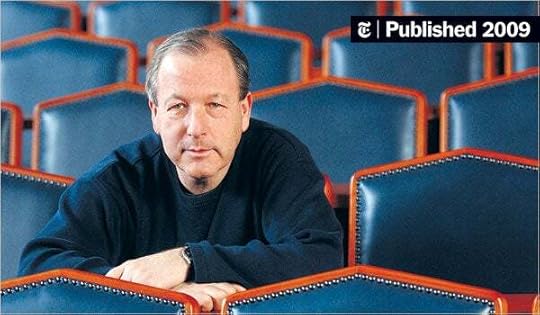
Miklós Vámos originally Tibor Vámos, (born 29 January 1950 in Budapest) is a Hungarian writer, novelist, screenwriter, translator and talkshow host, who has published 33 books.
This Hungarian Jewish author has invented a genealogy, complete with a genealogical chart, going back 12 generations to the early 1700s. He focuses on the first-born males who have, to varying degrees, an ability to vaguely foretell the future. But predicting the future doesn’t mean you can do anything about it if you don’t like what is going to turn up. So a very well-off Jewish gentleman in the 1920s is baffled by a recurring vision that he will die from starvation. Of course we know, as he could not, what fate awaited the Jews in most of Europe.
Much of European history that affected and afflicted these ancestors revolved around famines, diseases, pogroms, starvation, wars. The air of the novel is heavy with the smell of smoke from burning villages. We learn a lot about European history and culture through the ages. People in this family drop in and out of both Jewish and Christian heritage as the mood or need for a marriage partner requires or as circumstances demand.
In the end there were survivors who engendered a first-born male in 1996, so the cycle continues. What does the future hold? We will have to ask him. This is a fairly long work (almost 500 pages) and is slow-going in places but I found it enlightening and it kept my attention.
Miklós Vámos originally Tibor Vámos, (b. 1950) is a Hungarian writer, novelist, screenwriter, translator and talk show host, who has published 33 books. However only one other appears to have been translated into English -- A New York Budapest Metro.
Top photo from polishjews.yivoarchives.com The author from newyorktimes.com
I don't read much translated contemporary literature, but this was a treat. I'm not sure what I was expecting, perhaps some kind of science fiction-like story line where the ability of the first-born in the family line is able to use their unusual gift to pull off amazing and unexplanable feats...? Anyway, what I got was an extremely interesting guided tour through the family history of a mostly unremarkable clan.
The ebb and flow of the writing was refreshing and not at all Hollywoodized, especially after reading a series of religio-action adventure novels. It's apparently not the goal of this author to sell the movie rights.
While reading this book I could actually breathe, and the characters were interesting and had much more depth than characters in many of the other books I've been reading recently. I was particularly intruiged by the continuous string of references to Hungarian history (something I know woefully little about). If you are like me you will be intruiged by references to ethnic fighting in the early 1700s, the influx of German language and culture and the suppression of Hungarian language and culture during time of Austria-Hungarian Empire, hten comes WWI as well as the plight of Hungarian Jews throughout the entire narrative. Next you are on to WWII, Communist rule, and the fall of Communism, and the book wraps up around 1999. Don't get me wrong, this is not a history book, but it is engaging historical fiction.
If you read this book you will find yourself constantly flipping to the front of the book where a chart of the family lineage of the main characters is provided. I found that when I had set the book aside for a couple of days that I was able to readily refresh my memory with a quick glance at that chart and pick up where I left off.
Also, if you choose to read this book I HIGHLY recommend that before you start the first chapter that you flip to the back of the book and read the author's notes and brief history of Hungary the author has put togther. I didn't do this until after I had read the book...more's the pity.
All in all this was an enjoyable read. Four solid stars, and worth my time.
I'm glad I own a copy of this book, for this is a novel that is worth a reread if there ever was one. The only reason why I didn't give it five stars is because I didn't feel like I have established a deeper connection with this author. That happens sometimes, even when you truly enjoy the book you're reading and I believe me I immensely enjoyed reading this novel. It is an interesting, thought provoking, and brilliantly written family saga. I didn't feel it was one of those life changing books, but that doesn't mean I don't think highly of it. Honestly, the novel itself is quite spectacular. The writing is simply brilliant.
I remember my first reading experience of this book quite clearly. For some reason I was sure that I was going to like this novel, even before I know what it was about. The cover attracted me as much as the time. When I've read the opening lines I was positive that I'd enjoy this one. I was right. The book dragged me in and took me for quite a ride.
This is a well rounded epic story, spending over centuries, following lives of one Hungarian family. Perhaps the most fascinating premise is the one about the ability to look into the past. A magical sort of ability in a way. However, the author makes it seem so credible. The idea is this- men from this family can look into the past of their ancestors. Isn't that something we'd all love to do? The firstborn sons ( at some time in their life) receive the books of Fathers, but they inherit something even more unusual than centuries old diary. The firstborn sons develop the ability to see into the past of their predecessors and sometimes also to get a glimpse of future. This leads to all kind of adventures, as you might imagine.
What does this remind me of? I'd have to say Dune, yes the brilliant SF saga. Taken that I absolutely love Dune that is an obvious plus in my book. I always felt like Dune covered the theme of prescience so well. The issue of prescience is masterfully tackled here as well. Can we escape the future if we can see it? What can the knowledge of history bring to us? What dangers and what benefits? What else to say but this is a wonderful, wonderful, wonderful historical novel! Did I mention that I love history? When people ask me whether I like historical fiction, I'm not sure what to answer. It depends on the book, really. I've read both historical fiction that I liked and disliked. Some others are better than others at recreating that feeling of history. This author is simply brilliant at it. Vamos takes us into past with his writing, he really does. In addition, he does it so effortless. That's what impressed me the most, the ease with which he writes and connects all of his numerous first born protagonists.
It is fascinating how well the story develops, managing to connect past times with present. The challenges of life in general remain very similar, as do those of family life and fatherhood but times are very different and these changes manifest as the story develops. Some thins change while others don't. Vamos has a great eye for detail and he captures it well. The writer is very successful in recreating past times. He has a sense for history and realizes that different times bring different customs, philosophy, way of thinking. Unlike some writers whose historical novels have nothing to do with history. That's the kind of historical writing I don't like, the kind where you basically have the present day mentality, like you've gathered a group of people and put them into historical costumes and called it history. Vamos is too good of an author to fall into that trap. I know I only read one of his novels, but in this novel he really does a great job of tackling historical writing.
What else to say? The only down side is that some people might find it confusing, with the changes of protagonists. Personally, I quite liked that. That's actually one of my favourite things about this novel, all the different points of view. However, you'll need to pay attention while you're reading, so that you don't get yourself lost in different POV. Yes, concentration is indeed needed while reading because sometimes things change quite rapidly. Moreover, there are so many things happening, sometimes at the same time, so many trains of thoughts and action to follow.
You never know what to expect with this one, as unexpected events, tragedies and strokes of luck always seem to be behind the corner. History is always an eventful place, isn't? This writer keeps its reader on its toes, and sometimes so much is happening that you risk to lose track of what person's life you're following at the moment. I say almost because all the family members described are very unique and that makes following their history easier. Often it is the case that the son is completely unlike his father in character, appearance and spirit. Often the apple does fall far away from the three. Yet, there is something that links all the man of this family but it is not easy to define what exactly it is. Personally, I loved how unique all the characters are.
To conclude, I do recommend this novel. If you like dynamic novels with a changing POV, this is the perfect novel of you. As for those of you who are particularly interested in European or Hungarian history, well you might enjoy it even more. It is an original and intelligent family saga, that manged to be both imaginative and convincing. Highly recommended!
I would usually rate something like this higher. Historical fiction is a great way to learn history, and a long-term family saga like this can cover a lot of ground, which this did. However, I felt that this novel failed to make use of its scope for any larger purpose.
From a family saga, I'd like to see: * Long-term consequences of choices * Characters from different generations faced with recurring issues or similar choices * Historical trends made manifest in people's lives.
The book was nice. It was ok. The book was inoffensive, which is a strange thing to say about a book that deals with the topics included in it.
The Book of Fathers tells the stories of twelve generations of sons in a Hungarian family. The scope of the book is about four hundred years. The book itself is 460 pages. Some math tells me that the average number of pages for each sons' story is 38.33. Not very long.
The book is infused with a magical element, that is maybe out of Marquez (I don't know because I'm a petulant asshole who refuses to read Marquez (I have no good reason for this)), or maybe it is just Marquez-esque. The first born son is gifted with the paranormal gift of being able to see the past and sometimes the future through the eyes of other first born sons in the family. This magical quality is an interesting plot device that once established allows the author to zip through the stories without having to account for how certain things could have happened or been known to a character.
The collective story begins to collapse towards the end of the novel, interestingly enough (for me at least) at a time when the Hungarian part of my own ancestors seemed to have developed a bit of amnesia about its own past. This forgetting happens in a time when theoretically it is becoming markedly easier for things to be remembered, in a technological and institutional manner. This might not be make much sense to you, the reader of this review, but that's ok because I'm sort of writing this paragraph as a note to myself. I was going to skip this idea in the review, but I don't want to forget these rough thoughts as they were inspired by the book (add note about the further use of technology in memory here. Gotcha, it's done). Besides being a quirk where my family, the narrative family, and the authors family sort of all collide with forgetfulness, what does this necessarily mean in a bigger picture, is it something widespread about this time. The coming of High Modernism? But what would that mean to people who aren't like that? Collective loss?
Anyway, you can rejoin the review now. If you are so inclined and I haven't disgusted you with that last paragraph. This book is nice, as I said above. The problem with it is that it ends up being a collection of short stories that keeps starting and stopping. It's the literary equivalent of driving with someone as they learn to use a clutch. There is feeling in the book that it's trying to be BIG, but the themes, or at least the treatment of them isn't grand enough for a Big book. But the book is big enough that it would possibly turn off readers who find big books to be unappealing (Big books here I mean the big books, the hefty tomes that people wrestle with, not just long books but big in their page count and ideas). So what I think I'm trying to say here is that the book is a bit too ambitious but at the same time not ambitious enough, and it makes the book a pleasant book to read, but not really too much more than that.
I was disappointed that I struggled so much with this book. Following twelve generations through three centuries is no easy feat, especially when dealing with Hungarian vernacular. While it was a well-rendered story, I found my lack of sympathy for the characters led to confusion when referencing prior patriarchs, though the family tree provided some guidance in keeping the first born sons straight. There seemed to me to be a disconnect between generations, typically because the fathers were not extraordinary in any sense other than their “gift” and they came to depressingly untimely and often premature demises. Basically, not one of the Csillag/Stern clan garnered much emotion or compassion in me to be likeable or memorable. However, I did find the premise of their ability to see into their past and future quite intriguing, bringing into question the influence of destiny and predetermination. I would recommend reading the author’s note prior to finishing as it lends some perspective to Vamos’ motives and to Hungarian history. It was an effective family saga, but I was never engaged enough to appreciate this novel.
I received a complimentary copy of this book via the Amazon Vine Program.
Knjiga očeva, svedok prošlosti, zadužbina prenošena sa oca na prvorođenog sina, nasleđe u vidu sata i sposobnost gledanja unazad, u ono što je bilo generacijama pre i mutni obrisi onoga što će doći. Sveta, požutela, spašena iz zaborava i zauvek izgubljena. Prelepa porodična saga jedne mađarske porodice, počevši od 1705. godine pa do okvirno 1999. godine. 12 generacija, 12 prvorođenih sinova i njihovih usuda. Vamoš me je opčinio svojim setnim magičnim realizmom, bajkovitošću i zagonetnošću, potpirujući moj iovako već odviše živ plamen ljubavi prema porodičnoj istoriji, svemu što je staro , nasleđeno i izgubljeno a opet nevidljivim nitima prepleteno sa našim životima i sudbinom. Volela sam ’ Majka je samo jedna’ ali ’ Knjiga očeva ’ je podigla moju sklonost ka Vamošu na posve drugi nivo.
For some reason I was sure that I was going to like this novel, even before I know what it was about. When I've read the opening lines I was positive that I'd enjoy this one. I was right.
This is a well rounded epic story, spending over centuries, following lives of one Hungarian family. The firstborn sons at some time in their life receive the books of Fathers...but they inherit something even more unusual than centuries old diary. The firstborn sons develop the ability to see into the past of their predecessors and sometimes also to get a glimpse of future.
What does this remind me of? I have to say Dune...and absolutely loving Dune that is a plus in my book. The issue of prescience is masterfully tackled here as well. Can we escape the future if we can see it? What can the knowledge of history bring to us? What dangers and what benefits? Wonderful, wonderful, wonderful novel...
It is fascinating how well the story develops, managing to connect past times with present. The challenges of life in general remain very similar, as do those of family life and fatherhood but times are very different and these changes manifest as the story develops. The writer is very successful in recreating past times. He has a sense for history and realizes that different times bring different customs, philosophy, way of thinking....Unlike some writers whose historical novels have nothing to do with history.
There is some concentration needed while reading because sometimes things change quite rapidly and there are so many things happening...unexpected events, tragedies and strokes of luck are always behind the corner....making it almost easy to lose track of what person's destiny you're following at the moment. I say almost because all the family members described are very unique and that makes following their history easier. Often it is the case that the son is completely unlike his father in character, appearance and spirit. Often the apple does fall far away from the three. Yet, there is something that links all the man of this family but it is not easy to define.
I moved to teach English in Hungary a few months ago and found this book in the very slim English section at the local bookstore. I waited a few months to read it, and I'm glad I did. I had a chance to travel and enjoy the sites and the villages around Hungary, which just made this book so much richer. I would highly recommend this to anyone who wants to learn a little history of the area along the way.
I can't quite put into words exactly why I liked this book as much as I did. There are those who might be bored with this book, and I understand. It's not some huge action thriller, but rather 12 vignettes each with their own ups and downs. I found the characters believable and complex, and the writing never missed a beat. Just, solid writing. It's a book of quiet moments, despite the grandiosity of telling a nearly 400 year story.
I think I still need time to process it, but I can definitely say it thoroughly enriched my time here in Hungary, and what more can I ask of a book then one which not only kept me amused in the characters and stories, but also added value to my daily life and brought new insights into the world around me.
Drugi put pročitana, nakon gotovo deset godina. Ovaj put, ako je to moguće, još bolja, još bliskija i dublja. Izvanredna. Kornél, Bálint, István, Richard, Otto, Szilárd, Mendel, Sándor, Nándor, Balász, Vilmós i Henryk. I novi krug od drugih dvanaest, koji započinje Konrád. Svima preporučujem. Posebno onima koji osjećaju snažnu povezanost (ili manje snažnu, ali stalno znaju da je tu) sa svojim precima, očevima ili majkama. Nevjerojatna knjiga. Uz savršen prijevod s mađarskog Xenije Detoni.
Utóbbi időben úgy tűnt elszoktam az olvasástól, nehezecskén vettem rá magam, egyéb elfoglaltságok akadtak, lassan vonszoltam keresztűl magam egy-egy könyvön. Aztán tegnapelőtt kezembe vettem az Apák könyve vaskosnak tűnő kötetét ... és az éjjel letettem, kiolvasva.
A vége felé ütött meg a felismerés, hogy ilyen vagy olyan módon utóbbi 3-4 könyvem amit olvastam mind családregények voltak, bár egyik sem hasonlít egy fikarcnyit sem a másikra.
Vámos Miklós könyvének tizenkét generációjában valahol, többé vagy kevésbé talán minden fiú megtalálhatja maga és apja vagy maga és fia viszonyát, ha van ilyen. Kicsit úgy is olvastam mint szórakoztató kalandregény, kicsit fantasy, vagy csak egyszerűen mágikus meseelem a narráció vékony gerince, a közös emlékezés, a ködös előrelátás.
A könyvet Édesapám vette meg nekem, évekkel ezelőtt, talán utoljára voltunk akkor együtt könyvesboltban. Eddig nem jutottam oda, hogy elolvassam, Édesapám pedig szinte egy éve nincs már közöttünk. Szóval nekem nagyon sok szálon volt ez Apák könyve és ha nem is erre számítottam (nem tudom mire számítottam, de valami egyébre) bizony nagyon jó volt olvasni ezt. Bizony olykor fájó volt olvasni ezt. Bizony sokszor mosolygós volt olvasni ezt. Bizony néha szívszorító volt olvasni ezt.
A családregény műfaja igen izgalmas. Annyi lehetőség, perspektíva, nézőpont és változás áll rendelkezésre, ami egyszerűen lehetetlenné teszi, hogy ne egy magával ragadó regény(folyam) kerüljön ki belőle. Ugyanakkor ott vannak a veszélyek is: elveszni a részletekben, vagy éppen túlzottan felületesnek lenni, mind-mind gyorsan megtörténhet és egy pillanat alatt oda a rengeteg kutatás és alkotás. Szerencsére rossz családregényt még nem olvastam, bár meg kell hagyni, nem merülök túl gyakran el ebben a műfajban. Egy percre sem bántam meg a Száz év magány olvasását, még ha nem is lettem akkora megszállottja, mint amennyire tartják, viszont Kepes Tövispusztája nagy kedvencem, talán életem legtöbbször újraolvasott könyve. Az Apák könyve pedig valami egészen zsigeri módon hatott rám. Ez az 1700-as évek elején kezdődő regény a Csillag/Stern/Sternovszky család történetét meséli el tizenkét generáción keresztül, egészen 1999-ig. Tizenkét generáció, tizenkét elsőszülött fiú, különleges adottsággal: képesek a családjuk múltjába, és esetenként a jövőjébe is látni. Láthatják hogyan élt (és halt) sosem ismert édesapjuk, vagy még csak családi történetekben sem felbukkanó szépapjuk. Tudnak olyanokat, amiket ők személyesen sosem tanultak (pl. franciául), ám az idő előrehaladtával és az apa-fiú kapcsolatok lazulásával ezek az adottságok is egyre gyengébbek. Ezen a téren a regény egyértelműen a Száz év magányra hajaz: a mágikus realizmus mellett a család szükségszerű széthullása, az utódok elsatnyulása is meghatározó eleme. Éppúgy tudnám hasonlítani viszont a Tövispusztához is: annyi változást, olyan sorsfordulatokat élnek meg a szereplői, amelyek teljesen reálisan hatnak, segítenek megérteni egy-egy kor egy-egy tipikus figurájának miértjeit és mindemellett izgalmasak is. Bár tény, hogy Vámos csak egy családdal foglalkozik és sokkal nagyobb időtávban, így sosem ér el akkora mélységeket, mint Kepes. Viszont tagadhatatlan erénye az Apák könyvének, hogy nyelvezete igyekszik a korabelihez hasonlatossá válni, ám a modern olvasó számára is élvezhetőnek maradni. Eszméletlen munka rejtőzik a regény mögött, a korabeli kifejezések és a történelmi háttér annyira autentikus, hogy egy pillanatra sem érződik tudálékosnak, a modernebb szövegbe tökéletesen illenek a régies kifejezések, és a történelmi események hol jobban, hol kevésbé befolyásolják hőseink életét, de sosem veszik el a hangsúlyt róluk. Miközben Vámos szövegei nem váltják meg a világot (sem nem posztmodern a szerkezete, mint Esterházynál, se nem annyira helyezi előtérbe a történelmet, mint Ken Follett), mégis magával ragadnak a szereplők és koruk, az elképesztő különbségek, amik két generáció között húzódnak és az a mély empátia, amitől még jobban együtt létezünk ezekkel a férfiakkal. Ráadásul köszönhetően az ügyesen eltalált egyensúlynak, a látszólag felületesség mégis ad annyi támaszkodót, hogy az üresen maradt részeket az olvasó fejben egészítse ki. A regény tavaly volt húsz éves, én pedig sajnálom, hogy csak most olvastam el. Miközben sosem voltam nagy Vámos rajongó, ettől a regénytől annyit kaptam, amitől komoly esélye van a személyes "Az év olvasmánya" címre.
I enjoyed this 460-page, 400-year family saga quite a lot, but in the end its point escapes me. The device of the Book of Fathers was, I think, wasted, even though the last generation in effect digitizes his contributions to the book. An interesting way to learn a little something about Hungary . . .
Il libro dei padri è un omaggio alla memoria; un racconto ciclico che passa per 12 generazioni, come i mesi dell'anno, e intercorre tra due eclissi solari dai primi del '700 al 1999. Tramite la vita dei primogeniti di questa famiglia, Vámos ripercorre la storia dell'Ungheria. In questo viaggio nel tempo si percepisce un forte senso della tragedia. I protagonisti hanno la facoltà di guardare al passato rimanendo in comunione con i loro avi. Ma talvolta riescono anche a predire il futuro e questa caratteristica che può sembrare un vantaggio diventa invece una maledizione nel momento in cui si rendono conto di essere legati indissolubilmente al loro destino. La guerra, la violenza, le persecuzioni, tutte le terribili vicissitudini che questi uomini devono affrontare, sono però controbilanciate dalla speranza, perché sanno che la loro storia continuerà attraverso i figli e ciò che possono lasciare. Solo l'Olocausto, con tutti i traumi e la distruzione che semina, rischia di cancellare parte della memoria; ma in realtà niente può spezzare definitivamente quei legami che intrecciano la nostra vita a quelle di coloro che ci hanno preceduto e di chi è ancora di là da venire. Anche stilisticamente il libro è molto interessante perché riesce ad andare avanti nella narrazione seguendo l'evolversi della lingua; riesce inoltre, nonostante le tante storie che racchiude, a non essere dispersivo e rimanere coinvolgente per tutto l'arco temporale.
This Hungarian family saga, which starts around the end of the seventeenth century, tells the unlikely story, both personally and politically, through the nightmare of Hungarian history of a sort of Jewish family. The events recorded, rape, pillaging, fire, execution, kicking to death, abandonment, maiming, suicide, wasting away, are so hideous that survival, even to the age of 45 or so, is a grotesquely funny accomplishment. In fact, the guggle to zatch quality of the saga reminds me of Thurber's improbably funny short novel The 13 Clocks.
Even if they end up fed to the ducks, the family, through several name changes, leaves a record. Ten terrible tales of "The Book of Fathers," written by ten fathers of the twelve included, are doled out in a rich and not always chronological framework. Their stories are distinctive and memorable, paradoxically, because of strong family resemblances. The story of the twelve fathers continues even when a World War II survivor burns these horrifying treasures, refuses to acknowledge the past to his own son, and consigns to the latrine a little time piece that had followed his fathers for generations.
If the War is a great cleavage that made history impossible for that generation, nevertheless, those of us following do not know who we are if we cannot reclaim our history. So as if by transmigration of souls who recycle every 150 years, the story continues, through generations, and by careful archival work.
This is a beautifully constructed work, and even in translation one can see that the author tried to use contemporary expressions throughout. I can't tell if I would put it up there with Tolstoy and Dostoyevsky. Only time will tell.
I love generational sagas because no matter how bad things are you get to see things passing, changing. The longterm view is comforting.
Things certainly get bad for the family in the Book of Fathers. Massacre, imprisonment, neglectful parents, rebellious sons, death camps, family estrangement, marital strife.
The concept is a book that is passed from father to first-born son down through 12 generations. However since not every one is a faithful writer, it is the mystical watch that gives each generation insight into their ancestors. It also gives some knowledge of the future, which does not tend to be helpful.
As for the women in this book (the author had previously written a novel about his mother) there is a recurring pattern of intense attraction which steadily declines following marriage.
The book feels like 12 connected short stories. Some of the characters are more vivid than others and certainly some are more likeable. I definitely needed the family tree at the front of the book to keep things in order (although I had to try not to see the name of the wife and dates of children as that would give too much away).
I did not know much about Hungarian history, so it was interesting to become more acquainted with it. But the book is focused more on personality and relationship so in a sense it felt like the story could be transplanted easily to other European countries.
Rather difficult to follow especially as there are abrupt endings to some fathers stories. It seems that there are many loose ends which the author could have managed to follow up .Only in the very last part of the book is there a story with which you can identify and wish to follow maybe this is because it is nearer our own time . The book is about a Hungarian clan following 12 fathers through time with the first born son having the gift of looking into the past and the future . But again it seems that this gift got lost along the way. I did not like the way stories were cut short abruptly. Of note worthy is the editors appendix regarding the historical setting of the novel whilst the story of the purchase of the hat in New York seems to be the mood of the Hungarians.
Pg 445.... two weeks off and went on holiday to Malta
Pg 362 on communism
We've all been conned, he thought just as they've conned each other .....and everyone else . The whole thing's a fraud , drivel :the crap about the peace front ,the just fight , equality ,brotherhood. . It's nothing but a ruthless struggle for power with the strongest always crushing the weak . there is nothing new under the sun .
After a urgent press to finish I found myself oddly unsettled. This had been the thick summer read I'd wanted and satisfied me in so many ways. There's a realism that supersedes the magic realism of mystically-powered paternity. Towards the end it becomes evident that there will be no deus ex machina; just the opposite. Something like a dissolution occurs, instead. And after repeatedly becoming attached to characters only to lose them, my view of Vamos's Hungary was dire, but not dire enough to prepare me for what occurs up until the return of the second-to-last oldest son. Read with a grain of salt but DO read it. It's done just right, I think. Though I'd rather turn away from this view of the world it seems authentic. It's written well. Well enough to alter one's view. It stays with you in a not altogether unpleasant way. I won't give away the ending except to say that the author's notes make it all the more compelling.
This book, which spans twelve generations of first born sons in Hungary, took a while for me to get into. Because it goes through so many generations so quickly, those looking for in-depth character development will be disappointed. However, when I got to the end I almost started right over.
I would recommend reading the epilogue before the book. It might spoil a couple small things, but it tells of how Miklos Vamos came to write the book, how it connects to his life, and how he structured it, and it really helped hold the whole story together – a story that is about Hungarian fathers in general, and also about history, memory and loss. Highly recommended.
This was such a beautiful and clever way to tell Hungary's history, through generation after generation of fathers passing down their stories and their wisdom. The way the author wove the stories backwards and forwards through time was clever, sometimes heartbreaking, and sometimes tender. Having struggled to piece together my own family history from Ancestry dot com because I never asked and my relatives never told their histories to me, I really felt this book deeply in my heart.
Mooi boek. Over 12 generaties. De vaders maken vreselijke dingen mee maar het wordt met afstand beschreven en daardoor blijft het " luchtig" en toch is het heel boeiend
I bought this book during my holiday in Budapest in 2014. When abroad, I usually try to look for a book about either the city, region or country I was in. When reading the blurb, I found it quite interesting, so I decided to buy the book.
As my Hungarian is close to non-existent, except for some basic words, I had to read a translation, in this case the English one. And I can tell you: the writing style is superb, poetic, beautifully worded. The style isn't always my main focus, but here you just cannot overlook or deny its splendour.
Style is one thing, story another. It begins with a boy / man who has the gift of foresight (or hindsight, rather). He can look into the past of his ancestors and a little bit into his own future. He records his experiences in what is called 'The Book of Fathers'. He also has a timepiece which is fixed on a certain date and time. This is another means to collect visions from the past. Of course, he has it restored, so it can continue to function as a little clockwork. When he gets married, his (first) son inherits this gift of "sight" and the book in which to write down his experiences and desires. Each chapter is about the next first son. Each chapter also ends with the death of the central character.
Of course, not all first sons, when they become fathers, only have one son. Some have several children, including daughters, all with their own traits. Miklós Vámos doesn't really focus on the other children much, as there is a red line to follow. Each first son obviously faces struggles and happy moments in their lives, they get married once or more, and so on. Family ties are vital in every chapter.
All this starts in the 17th century, although the real take-off is set in the 18th century. As each character, all of which are in fact Jews (which is demonstrated by their names and professions and how civilization treats them) in this Hungarian family saga lives his life, you'll notice how the setting changes and progresses into the future (17th century --> 18th century --> 19th century --> 20th century). Political and economic aspects are of key importance to properly tell the story, to show how life was back in the day and that it wasn't (always) easy for the Jews or others when this or that person was in power, when the World Wars were being fought, when new political systems were installed (socialism, for example).
At some point, one of the first sons has had it with taking the past into account, with the recurring thoughts and dreams, that he decides to get rid of it all. Obviously, it's not as easy as it seems. But then the chain is broken. Luckily a later son, when in search of his (parents') past, decides to write down whatever he finds out about them, so his future son can continue this project.
While it's far from my cup of tea or usual reads, I find that The Book Of Fathers is a recommended story, not only because of the scale (following a family over the course of a good 300 years in a varying historical context), but also because of the beautiful wording. It's also a fairly easy read (depending on your English knowledge), although the structure - the chapters look a little like novellas - can be a bit unpleasant, in my humble opinion, because each chapter introduces a new central character. Sometimes, though, Vámos did not start from scratch to focus on the new first son; he then used a rest of the previous storyline to have the next one start and flow more smoothly.
It's, when you look at it from a different perspective, also a story about mankind, about one's ancestry, about one's history: Who are you? Where do you come from? Who were your parents, grandparents, ...? If you can't answer any of those questions, do you then exist? Are you then real? In a way, this could be compared to Nineteen Eighty-Four, where the past is rewritten (though for different reasons) and history thus erased, nothing to link back to anymore.
Added value: historical note by the author. Always a nice addition to historical fiction books.
It took me a long time make it through this book. Partly because of the subject matter (see next paragraph), partly because there was so much food for thought I couldn't just plow through everything, I needed some time off after each chapter or so just to let things sink in.
History and me go together like oil and water: this is a result of lessons in school that were nothing more than exercises in memorization of dates and events. It is only through some form of historical fiction (Edward Rutherfurd's London, for example) that I can stomach and appreciate the past. Coming from South-East Asia, school provided almost no knowledge about Eastern Europe either.
So while I enjoyed The Book of Fathers, I think those who have even an inkling of Hungary's (and that region) past would appreciate this work even more.
Even if you don't read it for the peek into history, The Book of Fathers also provides a great perspective on the benefits or drawbacks to having visions of the future (and/or of the past), and how successive generations of this one family dealt with this gift/curse.
It was stunning for me to realise that we were following a Jewish family - it finally hit me on the head a few chapters in! (Made me wonder about how the book made it to Malaysian bookshelves - I assume there's a blackout on all things Jewish). Clues about the surname used (in whatever permutation, they all meant "star") were lost on those who didn't know the languages involved! Most enlightening, however, was the Author's Note at the end; he himself didn't know he was Jewish until his early teens.
4.5 An interesting and touchingly human novel about the serendipitous nature of life. It is described in the blurb as Kornel Csillig’s fortunes on inheriting a timepiece and his descendants fortunes, being able to predict various future events. You would think this would make it tale of success and familial happiness, it is, in fact, a depressing story of catastrophic marriages, death and disaster. The two most gratifying aspects you come away with, having read this, are, firstly, what an incredibly tough history Hungary has had, especially the peasants and the jewish community, and secondly how wonderfully precious and indeed, equal our ancestry is. My own children’s blood is a melting pot of at least four nationalities, not to mention around six vastly divided areas of England, and that’s only four generations worth. It is luxuriously written, superbly translated or, most likely, both My only criticism, and this could be attributed to my poor concentration levels , is that it can sometimes be a little confusing each time the baton is passed on.
Book started great and I liked the concept but execution was only fair. I like reading historical fiction novels which span generations and keep the same family as central characters... a la one of my favorite authors, Mr. Edward Rutherfurd. Miklos Vamos book is just not in the same league.
The first half of the book was entertaining - each first born son had unique abilities to see into the past, led an interesting life, and passed on the Book of Fathers to his son. Then suddenly things change, the book of Fathers loses its value, and the characters become sob stories. A rather depressing turn in each characters outcome.
I was hoping for something in the end to pull things together but only found an author's note explaining his original intent when writing the story - which did not satisfy me. This novel was a hit in Europe and it is written (translated) well but just fell short of excellence.
Picked this book almost at random off the shelves of the local library. The mixture of history and family saga appealed. I wasn't disappointed.
This is a book infused with magical realism which seems to diminish the closer we get to the modern day and our loss of faith and spirituality. It all but disappears after the horrors of the second world war and the sterile world of post-war communist Hungary. it returns in horoscopes and late 20th century mysticism but magic lacks power as the modern world encroaches.
It is an ambitious novel. Its very language evolves as the Hungarian nation develops. Images and symbols from Hungarian culture begin each chapter. Lacking the knowledge to write his father's history, Vamos writes the history of 12 generations of fathers and their place in the history of the Hungarian nation. Birth, death, love and hate, success and failure, tragedy and comedy. All human life is here.
A book that deserves to leave the library shelves many times.
A really epic book, one of those family-history saga, telling the story of a Hungarian family and their Book of Fathers, which bestows the eldest son in each successive generation with the knowledge of everything his fathers did and of what was to come. Reminded me of the sweeping family-history magic realist novels of Latin America, though, like those, sometimes the transportation through the ages left me feeling dizzy and wanting to hold to one character for a while. (Though perhaps this is was a factor of my reading of the book, which was too frequently interrupted.)
I was a little disappointed with the end, where I would have liked some of the ideas and themes here more fully flushed out. But a really enjoyable book, well written (or translated), filled with really intriguing episodes in the history of Hungary and Europe.
I am interested in reading authors from other countries and this is a translation from a Hungarian author who appears to be quite admired in his country. Read a review several years ago and found the book by chance at the library. It is an intriguing "imagination" of the life of the author's forefathers and by that I do mean fathers, from the 1700s to the present who all live magical if short lives. Despite my ignorance of Hungarian history the book somehow provides enough details of European history to help the reader place each character in his historical context. I loved the use of the family "book" revered by the forefathers in which their stories are recorded only to have it destroyed so that the author must now recreate these stories as an author. An homage to the written word.
I tried to start this book a few times and never really got into it. However, when I finally did, I could hardly put it down. I loved it. It was neat to read so much about Hungary and its history, about which I knew almost nothing (it's not really a history book, but a family saga that takes you through many years; still there's lots of history in the background). It also made me think so much about the nature of time, genes, memory, family, and love. although it was mostly directly about memory & family. Anyway so good! Apparently it was this author's 20th book, so I'll have to look up more. Also, the afterword was interesting, especially reading about what the author tried to do with language throughout the book (words & style), since of course I read it in English and so had noticed none of that.