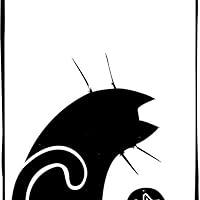
Amid the rubble of San Francisco's 1906 earthquake, Max Kosegarten, the narrator of this lyrical first novel, becomes the inseparable boyhood friend of Duncan Taqdir, son of a Persian sculptor and an English archaeologist. Set mainly in 1914-1916 and told in diary-like entries interspersed with 36 brooding illustrations by the author, the story follows the boys as they become lovers, ultimately separated by college and a tragic accident. Together they explore California's woods, beaches and mountains, and search for evidence of the earthquake that brought them together. Their excavations as well as Max's reading of Ruskin and Cicero, point to this sensitive novel's motif: how memory accretes into character and shapes perception.
Parts of this review have been previously posted because it has taken me a long time to write and I feared losing it if I didn't. I apologise to those this may have annoyed.
This is one of the first novels I have finished which I really can't say anything worthwhile about. It is incredible and though there are only ten other reviews on GR almost all of them praise this novel in the most glowing terms. On its publication in 1991 it was nominated for Stonewall and LAMBDA awards (GR erroneously claims the LAMBDA nomination was for 1990). That the novel didn't win in either category, but then neither did Bo Houston, Michael Cunningham, John Gilgun or Allan Barnet, says less about Stadler or any of the other non-winners then it does about awards, even those for debut literature to spot talent. The LAMBDA debut fiction award went to Dancing on Tisha B'av by Lev Raphael and compared to most of those who didn't win one can't help asking what has Lev Raphael written since?
Instead of telling you what I think the book is about I am going to quote what was said on the jacket of the 1990 hardback edition of the book But I will follow it up with a few more remarks:
"'9 August 1944
"'We took the ferry from the foot of Market and hitched rides across Marin, finally getting one long ride from San Rafael all the way to Bourne's Gulch on the east side of the lagoon. There we stood, the water stretching out west, shimmering in the noon sun, with Bolinas on the other shore. It was August and hot like it sometimes gets. I was dark as Duncan then (he's Persian, Duncan Peivand Taqdir, and brown like an Indian) because we'd spent so much time that summer tramping in the hills and birding with my father. The sun was on us and I could feel my stomach go giddy when a breeze would blow in off the water and across my bare skin. Neither of us knew where to go so I made something up.'
"'Landscape: Memory' marks the debut of a gifted young writer. In this lyrical, vibrant narrative, Matthew Stadler takes us back to the summer of 1914. Maxwell Field Kosegarten, the sixteen year old son of an eccentric San Francisco ornithologist and his his suffragist wife, pens the first entry in his memory book, a daily diary given to him by his mother. 'The mind is a template, pumpkin.' she has told him, 'a template made of gold - brilliant and malleble. The written word is fixed.' So begins the record of Max's struggle with memory, his own and the collective attempts of a culture he lives in to remember.
'Around him San Francisco is preparing for the World's Fair, the Panama Pacific International Exhibition, as the triumphant crowning act of recovery from the still-lingering devastations of the 1906 earthquake. Max is both fascinated and troubled by the fair. Visiting the grounds with his friend Duncan, late in the one year of the fair's brief life, he recalls the first glimpses they shared of the construction of this Jewel City. 'The brittle wooden frames had stretched up to the mists. The ground was a sea of mud. The iron tracks were littered with giant anamolous heads, and feet, cast in fake marble. It was all put together in an instant, looking now like it was part of the city if not an extension of the very land. I remembered this wasn't even land two years ago and felt the impossible thinness of the brittle domes stretch suddenly outward to encompass everything. What was here two years ago? What was here a thousand years ago? Every moment then and since was gone. I bumped up into Duncan and felt him all solid and flesh. His moist breath clouded, moist against my ear.'
"In this unsettling, fractured world Max finds refuge in the habits of his days. In his memory book he finds room to consider the shape and character of his experiences. He is also painting, a landscape, seen throughout the book at each stage in its development. The woods and weather of San Francisco and the bay nourish him by their constancy and power. And in his friendship with Duncan a bound is formed, a continuity and link which dazzle Max and confound his every attempt to capture and hold it in words.
"Throughout, the memory book is haunted by the war in Europe. Max's uncle, a British medical student, sends him letters from the front. Stationed in Belgium, he is charged with the unforgiving task of cutting and sewing the broken bodies the war churns out. His descent into the horror of his work and the unprecedented nature and scope of the war mark a brutal parallel to the unravelling of Max's own life and intellect.
"'Landscape and Memory' is the record of a rare mind finding its place in the terrors of a new century, coming to terms with the simultaniety of memory and loss, a loss which Max comes to experience with tragic immediacy in the course of his remarkable life." From the jacket of the 1990 hardback edition from Charles Scribner.
All of the above is perceptive and true but in away it is all but a prelude to what Max says near the very end of the book:
"I loved him,"...It's all I had really wanted to say for such a long time, and I could just barely mumble it through my slobber and spit and tears...My crying was a way my body had of freeing me from the burden of speech."
But do not expect resolution or conclusion by the novel's end. We enter Max's life and walk with him and his family and friends for barely a year and then we leave him. What happens next is anyone's guess. But it is an immersion in one person's life and times and in the question of memory. It is a extraordinary, unique novel and one I will never forget.
One of the most beautifully written books I've ever read. This compelling novel tells the story of two boys in 1915 San Francisco, soon after the earthquake and subsequent Pan Pacific exposition. At the same time as it describes this very beautiful friendship, it also unveils the unstuffy, quirky, eccentric side of west coast life in the early part of the last century and shows a slice of San Francisco history, while folding in musings on nature, memory, perception, and overall an aching sense of loss of multiple levels.
An excellent debut work that, through the lens of a homoerotic teen's diary or sketchbook, brilliantly portrays the atmosphere of San Francisco in the year 1915. With Maxwell, the narrator, his totally modern parents, and the allure of San Francisco during its second flowering—the glimmering years between the disaster of 1906 and the sobering effects of World War I—Stadler succeeds in a magnificent way. When Max visits the Pacific Exposition with his best friend Duncan, the son of a Persian sculptor, the prose is flavored with historical detail and childlike joy. Yet tragedy strikes early when Max's father crosses the Bay to Bolinas to continue his bird-watching hobby.
Memory and dreams seem to fill this novel with a unique atmosphere. It seems like there is always something that is just beyond the horizon, a fleeting suggestion of the unknown. The combination of dramatic adult changes in circumstances contrasts with the growing young love between the two boys. The beautiful prose style and the effective narrative reminded me of William Maxwell's The Folded Leaf or John Knowles' A Separate Peace. This was an engrossing novel that deserves to be saluted for both the complexity of its themes and the author's lyricism.
A story of two teenagers as they finish high school in San Francisco in 1915 and enter Berkeley, told from the point of view of Max, the more maladjusted of the pair. Their boyhood bonding eventually becomes physical. Lurking in the background is World War 1, threatening to disrupt their seemingly idyllic world. Also dashing in and out of plot are the boys' quirky parents, who either do not notice the affair, or, in the case of Max's mother, give tacit approval. The book reads and feels like an extended daydream, with wordy descriptions of beaches and forests on the outskirts of the city. I found it hard to follow the character development or figure out what was really going on beneath the surface. Max's Persian buddy Duncan is sketched only lightly. We don't know what really is on his mind. That makes the sudden, tragic climax in the final pages difficult to decipher
Disguised as a gay coming-of-age novel, Landscape:Memory is actually way more substantive, poetic, and affecting than anything in that genre. My favorite novel.
Max is obsessed with understanding memory, and to help him he is encouraged to keep a record of his daily life as he sees it. Max is sixteen years old, the date he starts his record is August 1914, and the place is San Francisco. It is just a few years after the devastating earthquake, and construction of the 1915 San Francisco World's Fair is under way. Max lives with his very modern mother and father, but spends most of his time with Duncan his friend, a fine Persian boy he first met just after the earthquake.
As Max keeps up his frequent entries central to his thoughts is the landscape drawing he is constructing along with his mother's help, a landscape drawn from memory, a recent summer spent near Bolinas, and much of his pontifications about memory relate directly to his drawing, but he also develops is thoughts on memory in other connections, sometimes at length. But Duncan features very much in Max's accounts too, the two boys appear devoted to each other, and during the course of the coming year their relationship becomes physical. Max's descriptions of their intimacies are beautifully recorded, all the more so for their complete innocence, it seems the two boys accept their deep friendship and where it leads unquestioningly and absolutely naturally.
The account takes us from 1914 through to the beginning of 1916, and during that time the two boys begin their studies at Berkeley. We are reminded of the war raging in Europe by regular letters from Max's uncle who is serving with the British army. We also get a brief flash back to the earthquake as Max describes how he came through. The book is also illustrated with regular updates on the progress of Max's landscape.
I loved this book, it is unusual in its construction, a series of diary entries and while it took a little while to warm to this I suddenly found myself entirely drawn into the story. The two boys are delightful, intelligent but unassuming, fit and lithe, they enjoy numerous adventure in and around San Francisco, sometimes getting up to good-natured mischief, and their friendship is nothing short of perfection. However, there is tragedy to come, yet the book manages to leave one with positive feelings.
This book is not satisfying, and it’s not meant to be. It’s really about loss, but you don’t know that until the very end. Somehow extremely relatable and also so distant; his complex narrative of memory is sometimes a scapegoat for confusing writing but usually a rich trap. The kind of book I will need to reread multiple times to read at all.
This book is certainly one of my favorites. I found myself aligning with Max's character so much so it felt like I was reading a book of my own thoughts at times.