Jump to ratings and reviews
Rate this book

Der Geisterseher

Rate this book
Schiller’s only novel, The Ghost–seer is an experimental, deliberately fragmentary work. Thrillingly held together by its dramatic plot and lavish, operatic setting, it is a multi–layered fiction of deceptive simplicity. Foreword by Martin Jarvis.

For a rich young prince and his loyal companion, Venice promises nothing but unfettered pleasure—until they encounter a mysterious masked Armenian who delivers them a strange prophecy. And when his words prove true, this enigmatic figure develops a deeply sinister influence over them, drawing them into darker forms of “magic.” As the narrative progresses, it become increasingly unclear whether the apparitions the prince sees are the manifestations of a troubled spirit world or simply an elaborate hoax. Friedrich von Schiller (1759–1805) is one of the leading figures of 18th–century German literature, most famous for his dramatic works The Robbers, Mary Stuart, and William Tell.

Perfect Paperback

First published January 1, 1787

43 people are currently reading
1199 people want to read

About the author

Friedrich Schiller

5,410 books860 followers
People best know long didactic poems and historical plays, such as Don Carlos (1787) and William Tell (1804), of leading romanticist German poet, dramatist, and historian Johann Christoph Friedrich von Schiller.

This philosopher and dramatist struck up a productive if complicated friendship with already famous and influential Johann Wolfgang von Goethe during the last eighteen years of his life and encouraged Goethe to finish works that he left merely as sketches; they greatly discussed issues concerning aesthetics and thus gave way to a period, now referred to as classicism of Weimar. They also worked together on Die Xenien ( The Xenies ), a collection of short but harsh satires that verbally attacked perceived enemies of their aesthetic agenda.

https://en.wikipedia.org/wiki/Friedri...

Ratings & Reviews

What do you think?
Rate this book

Friends & Following

Create a free account to discover what your friends think of this book!

Community Reviews

5 stars
95 (12%)
4 stars
216 (28%)
3 stars
294 (38%)
2 stars
133 (17%)
1 star
32 (4%)
Displaying 1 - 30 of 90 reviews
Profile Image for K.J. Charles.
Author 65 books12.1k followers
Read
February 23, 2024
I'm so disappointed this is unfinished, it was great. Basically detailing what looks like a massive scam on a prince run by a set of con artists with occult trappings. I wish we'd had the whole story so I could see if my theories were correct.
Profile Image for Ends of the Word.
543 reviews144 followers
February 10, 2022
The rise of Gothic fiction in the second half of the 18th Century, also referred to as “first wave Gothic”, is generally portrayed as a peculiarly English phenomenon. This is hardly surprising, considering that the novel widely (if not uncontroversially) considered to be the first Gothic novel is Horace Walpole’s The Castle of Otranto (1764). It set the blueprint for a dark literary genre, obsessed with terror, death and the otherworldly, and was soon followed by works in the same vein by other English authors such Ann Radcliffe, William Beckford and Matthew “Monk” Lewis.

It would be a mistake, however, to consider this movement in ‘splendid isolation’ from what was happening in the rest of Europe. Indeed, some of the defining elements of the Gothic are shared with Continental literature of the period, shaped by the ideals of Early Romanticism and the proto-Romantic Sturm und Drang movement. German readers, in particular, had a particular appetite for horror novels, some of which were translated into English or adapted by English authors. In writing “The Monk”, Lewis drew upon homegrown Gothic, but also upon German ‘horrid novels’.

One of the seminal works in the Continental canon is Der Geisterseher – Aus den Papieren des Grafen von O** (generally rendered in English as “The Ghost-Seer” or “The Apparitionist”), a strange novel by the poet, dramatist, novelist and philosopher Friedrich Schiller (1759-1805). It first appeared in instalments in the journal Thalia between 1787 and 1789, only to be abandoned and left unfinished by Schiller who, apparently, developed a great antipathy to his own creation. It has just been published on the Alma Classics imprint, in a translation by Andrew Brown who also provides an introduction, placing the novel in the philosophical and cultural context of its period.

The protagonist of the novel is the Prince of ------------------ who, we are given understand, is the third in line to the throne of Protestant state. On a sojourn in Venice, the Prince becomes involved in a secret society known as the “Bucentauro”, a group of debauched members of high society, amongst whom count several influential prelates. He also falls in love with a mysterious “Greek” woman. All of this, however, could well be a front for an even shadowier Catholic group intent on converting the Prince to “the only Church outside of which there is no salvation”, fleecing him of his family’s riches in the process. The Prince is, in fact, being stalked by an elusive figure he refers to as “the Armenian” who is, according to some accounts, a protean spy for the Inquisition and, according to others, a Faust or Melmoth-like figure who has achieved immortality through devilish means.

It all sounds very convoluted, and it is. On his part, Schiller purposely adds to the confusion through the narrative devices he opts for. The first part of the story is recounted in the first person by the Count of O***, a friend and companion of the Prince. After the Count leaves Venice to attend to personal business, the story continues in epistolary form, through letters sent by Baron von F_________ , a member of the Prince’s retinue, to the Count, updating him on the latest developments in connection with the Prince. Both chroniclers are, by their own admission, unreliable narrators, who do not always understand the strange goings-on in which they find themselves in. The narrators cannot trust their senses – we, as readers, cannot take them at their word. This is truly a novel where, to quote the Bard, “nothing is, but what is not”. The work’s fragmentary nature is compounded by the fact that it was left unfinished. Reaching the last page of book feels like stepping out of a dream or hallucination, whose details and meaning lie tantalisingly out of reach.

The philosophy behind “The Ghost-Seer” is also curiously ambivalent. It is often held up as an example of Schiller’s Enlightenment ideals – to me, this is not that obvious. Take the author’s approach towards the supernatural. On the one hand, much of the novel’s atmosphere (and its title) is drawn from the otherworldly aspects of the plot, with one of its key scenes a seance-like occult ceremony presided by a shady character based on the Count of Cagliostro. Subsequently, Radcliffe-like, Schiller has his Prince unravel the supernatural elements, revealing them to be mere smoke and mirrors. Yet, the explanation is so complicated, that like the Count, we are almost tempted to reject it in favour of a belief that something otherworldly must have been going on. The same could be said of Schiller’s attitude towards religion. Unsurprisingly for a Gothic novel, Catholics get quite a lot of bad press. But Schiller also seems equally critical both of the drearier, stricter strains of Protestantism and of, at the other extreme, ‘freethinking’ unbelief.

For an unfinished, slim novel(la), The Ghost-Seer has proven surprisingly influential, possibly because of the questions it poses only to leave unanswered. It gave rise to a particular sub-genre of the Gothic – the “secret society novel”, variously referred to in German as the Bundesroman or the Geheimbundroman. It is also one of the first works to exploit Venice as a backdrop for dark and/or supernatural fiction, a tradition which continued with E.T.A. Hoffmann, Heinrich Zschokke and in the 20th century, Thomas Mann and Daphne du Maurier. La Serenissima it may be called, but its alleys and canals, decaying palaces and hidden campielli whisper strange secrets, if only one were to listen...

For the complete review, including illustrations and suggestions for Schiller-related music, head to http://endsoftheword.blogspot.com/201...
Profile Image for Armin.
1,195 reviews35 followers
April 11, 2024
Schillers Romanexperiment als Wendepunkt und Weichenstellung

Schillers als Fragment ausgeführter Schauerroman ist immer noch für enttäuschte Reaktionen gut, dabei zeigt das aus monetären Motiven begonnene Sensationsstück mit aufklärerischem Anspruch geradezu ideal die Stärken und Schwächen des dramatischen Genies und Balladenkönigs in anderen Gattungen auf. Viel Reflexion, wenig visuelle Anhaltspunkte.
Der Roman besteht aus drei Teilen, der Ankündigung des Throns durch einen mysteriösen Armenier an den dritten in der Erbfolge, während dessen (anonymen) Aufenthalt in Venedig.
Beim sogenannten Armenier handelt es sich um eine Art Cagliostro, der, im weiteren Verlauf auch die Machenschaften eines magischen Schwindlers durchkreuzt. Dieser wiederum wird vom Prinzen verhört, der Delinquent gesteht nicht nur sämtliche Tricks des Gewerbes des Geisterseherei, der Häftling gibt auch die Legende des ewig lebenden Widersachers preis, der nun in Diensten der Venezianischen Geheimpolizei steht und jeden in die gefürchteten Bleikammern bringen kann. Der Prinz ahnt sogar einen größeren Schwindel, dessen Opfer er werden soll.
Mit dieser Ahnung und der Einführung des Prinzen in eine legendäre Freimauerer-Loge endet der erste Teil, der Erzähler und engste Freund des Prinzen wird durch eine Intrige entfernt.

Der zweite Teil besteht aus einem fragmentarischen Briefwechsel mit einem nicht ganz so schlauen Gefolgsmann des Prinzen, der auch das philosophische Gespräch bestreitet, in dem F*** die konventionelle Moral vertritt, während der von allerlei freimaurerischen Sophismen angekränkelte Prinz die Nutz- und Moralästhetik der Alltagsmenschen in Frage stellt. Die Briefe des zweiten Teils bedeuten einen Wechsel der Erzählspektive, der gleichbedeutend mit dem Verlust der Unmittelbarkeit einher geht, zumal der Chronist eben nicht so kompetent erscheint wie der Haupterzähler, der sich in allerlei Anmerkungen von den Ausführungen des Briefpartners distanziert. Auf jeden Fall wird deutlich, dass sich der Prinz, mehr und mehr ruiniert, - erst recht, als eine mysteriöse Schöne seine Wege kreuzt, die irgendwie mit dem »Armenier« zusammen hängt.
Gewisse Grenzen bei der Entwicklung einer überzeugenden Liebeshandlung gehen aber nicht auf das Konto des engstirnigen Chronisten, sondern gehören zu Schillers Defiziten. Die weitere Ausführung dieses Zweigs der Handlung verlegt der Autor denn auch in abgefangene Briefe, erst das bittere Ende kommt wieder zum Vorschein. Ich will da nicht zu viel spoilern, das Vorwort zu dieser Ausgabe ließ bei mir keinen Zweifel daran, dass die moralische Korrumpierung eines Prinzen, dem über Nacht glänzende Aussichten in den Schoß gefallen sind, das Hauptthema darstellen.
Bei meinem Hauptinteressensschwerpunkt fürs Wiederlesen war schnell Schluss, die Cagliostro-Gestalt zieht im zweiten Teil allenfalls im Hintergrund die Fäden, insofern war ich wieder enttäuscht, auch wenn ich Schillers Verfahren so einigermaßen entschlüsseln konnte.
Das philosophische Gespräch macht auf jeden Fall plausibel, warum der Dramatiker für längere Zeit die Theaterproduktion einstellte, um sich in die Philosophenbude zurück zu ziehen, um ein paar ganz grundlegende Fragen zu stellen.
Der Umschlag verspricht sämtliche Erzählungen, das stimmt so nicht, die Diderot-Bearbeitung »Merkwürdiges Beispiel einer weiblichen Rache« fehlt, die beigefügten historischen Stückchen runden aber das gesellschaftliche Bild durch sämtliche Schichten bis zum Räuberhauptmann ab. Insbesondere das abschließende »Spiel des Schicksals« ist ein Meisterwerk in Sachen Favoritenwirtschaft und höfische Intrigen, das für allerlei Lücken im »Geisterseher« reichlich Entschädigung bietet.
Profile Image for Nancy Oakes.
2,019 reviews918 followers
March 10, 2016
Obviously, I'm way behind in everything in life, including posting about the books I've read within the last few weeks.

there is more about this book at my online reading journal, here, if anyone is interested. If not, read on.

Despite its title, The Man Who Sees Ghosts isn't actually a novel of the supernatural. There are a number of supernatural elements in this unfinished story, but they're all there for a specific purpose having to do with the main character, the Prince von **. These asterisks, by the way, are not a signal to read something at the end of this post -- Schiller just doesn't hand out full names to his characters. There are many reasons why any serious fan of dark fiction should read this little gem, but one of the biggest is that according to several sources, it is the book that gave rise to a particular subset of popular gothic literature, at least in Germany, "works intended to expose the machinations of secret societies," (from Ziolkowski's Lure of the Arcane: the Literature of Cult and Conspiracy) known familiarly as lodge novels. In fact, since The Man Who Sees Ghosts was left unfinished, a number of people used it as a basis to write their own completed gothic versions, starting as early as 1796.

Schiller sets his novel in Venice, which at the time was a political powerhouse. The book revolves around the unnamed, asterisked Prince, who hails from a German state but is currently in Venice, waiting for money from home so he can return. There he lives a very unambitious and quiet life, going around incognito, avoiding all forms of extravagance. His life takes a major turn when one day, he notices he is being followed by a man in the mask of an Armenian, who eventually sits down with him in the Piazza San Marco and delivers a cryptic and ultimately prophetic message. The Prince shakes it off, but when the situation in the Prince's family come to a crisis, he is forced to take stock of this strange, masked character. One night while in a gaming establishment, the Prince gets into it with an unknown-to-him very powerful man, which sparks a visit to the State Inquisition, where he watches the same man quite literally lose his head. The Prince is still sort of stuck in Venice and can't leave, so he and his retinue take a trip where they become involved in a bizarre seance with an odd man known as "The Sicilian", who, according to several accounts I've read, was modeled after the furtive true-life alchemist and occultist Caliogostro, (aka Joseph Balsamo). When fate steps in and the Prince is allowed to question this strange man, what he discovers will turn his world on its head, and the consequences will ultimately have tremendous implications for the Prince, his closest advisors, and had the story continued, most likely for the balance of power in Europe.

This novel should not be missed by anyone who is into Gothic literature, literature involving secret societies, and stories of political intrigue. There is also much in this short book about religion and mysticism during the Enlightenment. I loved it.

definitely recommended.

Profile Image for Simay Yildiz.
730 reviews184 followers
January 2, 2016
Bu yazı, canlabirsene'de yayınlandı.

Hayaletgören, Friedrich Schiller'in tamamlayamadığı bir roman. Spoiler dersiniz belki ama bunu baştan söylemek istedim çünkü benim gibi bilmeden okuduğunuz zaman sonunda "şaka mı ya?" diye kalabiliyorsunuz. 1787-1789 tarihleri arasında parça parça yayınlanan Hayaletgören, zamanında okuyanlardan da büyük ilgi görmüş. İçinde de Schiller'in toplum eleştirileri, dini ve tarihi felsefesi ve idealleri var.

Gotik romanların o Poe-vari havası var Hayaletgören'de de. İki bölümden oluşan kitapta ilk bölüm gerçekten Sherlock Holmes'u hatırlatıyor. Aynı onların getirdiği merak ve heyecanla okunuyor. Schiller gerçekten atmosfer yaratmakta, okurun merakını uyandırmakta oldukça başarılı bir yazar. Gerçek ve doğaüstü arasındaki ince çizgide gidip gelirken tüyleriniz ürperiyor, "daha fazla okumayayım" diyorsunuz ama merakınıza yeniliyorsunuz.

İkinci bölümün ise ne yazık ki aynı heyecanı taşıdığını söyleyemeyeceğim... Anlatıcının değişmesiyle birlikte bir çok mektubu peşi sıra okuduğumuz bir bölüm ancak her nedense olayların da, mektupların da birbirleriyle pek alakası yokmuş gibi geliyor. Sherlock Holmes ve Karındeşen Jack karışımı bir kitaptan hoşlanacağını düşünenler Hayaletgören'i okusun bence; zaten minnacık bir kitap, şıp diye okunuyor.

Bu kitapla ne içilir: Bloody Mary
Bu kitapla ne dinlenir: The Band Perry - If I Die Young
Profile Image for Rosanna .
486 reviews30 followers
April 26, 2021
Sconcertata dall'incompiutezza del racconto orfano di almeno un paio di capitoli, affascinata dalla scrittura che mi ha messa non poche volte in difficoltà, ho comunque potuto godere delle atmosfere di un tempo e di un luogo e restarne irretita. Venezia, che non ho mai visitato, mi rimanderà sempre a questo autore e al suo Principe disgraziato.
Profile Image for Cheryl.
1,145 reviews
November 8, 2015
Starts off interesting, then it lost my interest. Abandoned at half-way mark.
Profile Image for Chris.
946 reviews115 followers
October 22, 2021
“I am like a messenger who is carrying a sealed letter to the place of its destination. What it contains might well be matter of indifference to the messenger — he is simply out to earn payment for delivery.”

Venice, La Serenissima, is the setting for this curious novel by the poet Schiller, but in this work its serene surface conceals a cauldron seething with plots and intrigues, secrets and lies, subterfuge and mysteries. The protagonist is a German prinz who has no prospect of advancing to secular power and so is enjoying a sojourn on the Adriatic, away from his Baltic homeland with its chill climate and cold Protestant theology.

He is accompanied by a Count, the Graf von O***, who narrates the first half of the story, and then Baron von F***, who a year later writes letters to the now absent Count to appraise him of how matters stand with the Prince. The pair attempt to advise and support the lord as the sojourn proves to be anything but convivial and relaxed.

Beginning during the Venetian carnival the trajectory followed by the initially incognito Prince over a year or so proceeds in unexpected ways, only to be resolved abruptly when, as commenters suggest, the author grew bored with this particular narrative. It’s those unexpected twists and turns that ultimately sustain our interest in Schiller’s novel until the final denouement leaves us with quite a few unanswered questions.

Published in instalments in Schiller’s own periodical Thalia, this novel (the subtitle sometimes given in English as ‘The Apparitionist’) initially concerns apparently supernatural goings-on. As part of the Prince’s entourage the Count, who had served in the army with the Prince, is present when a mysterious masked ‘Armenian’ demonstrates clairvoyance: the stranger reports the death of the Prince’s cousin back in Germany, which is only officially confirmed much later. Matters are then compounded by the Germans having to witness a summary judicial murder; and then another stranger, a Sicilian who claims to be a magician, offers to call up ghosts for the Germans as proof that such entities exist.

Here then is full-blown Gothick writing, with Venice as an international hotbed of conspiracies, heretical thoughts and the constant threat of violence. When the Prince and his companions attend the Sicilian’s séance visions indeed result following the rituals, but there is a sudden interruption from the Armenian, followed by another from the authorities who promptly arrest the Sicilian. The Prince, now in full rationalist mode, proceeds to explain how he thinks the imposter magician managed his apparitions and how the Prince’s party have been hoaxed to believe in other ‘supernatural’ occurrences. Sherlock Holmes himself could not have been a more thorough sleuth; and yet we the readers are left with thinking the hoax far too elaborate for its own credibility and that ghostly occurrences would have been a more satisfying explanation.

Unfortunately the Prince still believes that the existence of the supernatural is a possibility, and that a true magician “who has higher powers at his beck and call will not need any deception, or will hold it in contempt.” Thus in Book Two, set a year later, we discover that the Prince has been tempted away from his Protestant beliefs towards investigating occultism tinged with Catholic mysticism: he
‘had entered this labyrinth as an enthusiast with a deep faith, and he left it a sceptic and, eventually, as an out-and-out freethinker.’

The second half of the novel takes us in a very different direction. The Prince gets involved with a secret society, the Bucentauro (named after the ceremonial Venetian vessel) and starts to become unmoored from reasoned thought. The Count’s narrative is replaced by the Baron’s, and new acquaintances enter the picture, among them the Marchese di Civitella whose life the Prince saves. In pursuing ‘metaphysical daydreams’ the Prince wonders whether he ought to gain happiness in whatever way he can:
“When everything ahead of me and behind me sinks to nothing and the past lies behind me in dreary monotony like a kingdom turned to stone; when the future has nothing to offer me and when I see the entire circle of my existence enclosed in the narrow confines of the present — who then can blame me if I take this meagre gift of time, the present moment, ardently and insatiably into my arms, like a friend I am seeing for the last time?”

“My lord, you must still surely believe in a more permanent good—"
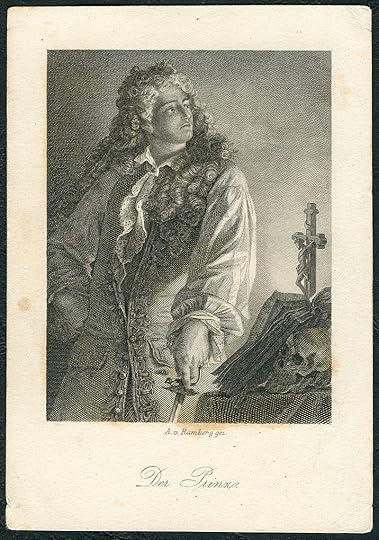
The Prince’s ennui has led him to seek a somewhat lukewarm hedonism, but his funds are running out: robbed of his anonymity by the notoriety of the séance he borrows money to entertain lavishly and then to gamble recklessly. And now he has a new focus, a mysterious beauty he observes in the Church of Il Redentore on Giudecca and who has induced in him — in anticipation of a form of Stendhal syndrome — an ‘excitable state of mind’: infatuated by his vision of the woman he must found out as much about her as he can.

Book One seemed to indicate that there was a conspiracy to somehow set up the Prince with the fake séance and other supernatural incidents, perhaps with the intention of gaining political leverage through him back in his home state. When in Book Two he is seen to show interest in occultism we are tempted to see his encounter with the mystery woman in the church as another set-up — but for what purpose? Will we ever know? Did Schiller himself ever decide? For the end is sudden and shocking: we fear that the initial meeting in the Church of the Most Holy Redeemer may not eventually end in any kind of redemption.

I don’t know if Schiller ever visited the city but he may have heard much about it from his friend Goethe who’d returned from a two-year Grand Tour in 1788. As with Venice itself and its association with masks, with cloak and dagger and with smoke and mirrors The Ghost-Seer dissembles to deceive. It plays with the conflict between Protestant piety and Catholic mysticism and with all the attendant political overtones; it indicates the dangers an entitled but weak-willed individual can get themselves into unwittingly; and it reveals how Venice is forever a city of dreams for the creative mind.

As a Gothick novel The Ghost-Seer is frustrating in its episodic and convoluted nature, however atmospheric it undeniably is. Here’s what I take from it, however. In Schiller’s Prince, as described by those who pay court to him, I see a representative of the idle rich. Unlike ordinary individuals he gained privilege from his princely status and his assumed wealth; he was able to claim credit from friends and usurers on the basis of promissory notes, leaving him free to indulge himself in entertaining, gambling and other dilettante pursuits. It’s possible Schiller’s republican sympathies led him to see such entitled but ultimately vacuous men as a drain on society and good governance if, like the Prince, they saw themselves as merely bearers of sealed letters, there for the reward of self-indulgence and not for the message the letters contained.

Andrew Brown’s translation and introduction try to render Schiller’s philosophical fiction in a comprehensible form, but I get the impression that the original German text isn’t always easy to convey unambiguously. He does however get to the nub of what what the reader can draw from the narrative: ‘Repeatedly, Schiller’s story shows how something apparently real turns out to be “just” an image — a picture, copy or counterfeit; and yet he sets his story in a country, and a city, which contains some of the most powerful images ever made.’ In such images, Brown suggests, we may effectually be granted intimations of another dimension.
Profile Image for Gertrude & Victoria.
152 reviews34 followers
April 17, 2009
In this work, The Ghost-seer, by Friedrich von Schiller, exists an incredible force, almost supernatural, that impels the reader into a sinister world of appearances, where the senses only fail and are even complicit, acting to deceive.

The plot surges effortlessly forward to its natural and decisive end. The hero, a young prince, and his group chance upon a mysterious man of vague origin, who somehow holds them in his domination by his omniscient and omnipotence manner. He is like a dark angel with an equal capacity to do good or evil, for reasons which lie outside man's comprehension. The conclusion is as surprising as each and every episode in the whole story.

Schiller's prose is, like his fellow Romatics, alluring and powerful, a work of sheer beauty. The imagery he creates through setting and plot is nothing short of astonishing. It casts a spell which can not be broken until the very end when the mystery is known to all.
Profile Image for Janez.
93 reviews9 followers
April 2, 2017
Schiller's only novel is masterfully written. Although left unfinished (or perhaps that was also one of Schiller's devices to stimulate the reader and/or leave to each reader to form his/her own interpretation of the events) and combining the first person narrator and epistolary form, one is led to believe that there is really something peculiar going on. On the other hand, given the logical explanation in the novel, there can be none mystery whatsoever. Set in the luxuriant and decadent Venice of the 18th century (one of the biggest brothels and casinos in Europe at the time), political and religious elements, intermingling inevitably, are present, although they are not in the plain sight. Schiller's Ghost-seer, with all its intricacies, strongly reminds me of Henry James' The turn of the Screw. If one has enjoyed the latter, one is sure to enjoy the former too.
Profile Image for Betty.
116 reviews11 followers
March 11, 2018
Schillers's penchant for the manifestations of evil and man's urge to seek meaning out of nothing surface superbly in his fiction works, and puts him on level with the other lesser known early gothics such as Horace Walpole, Matthew Lewis, Ann Radcliffe & Wilkie Collins.
Profile Image for Lis.
5 reviews
December 16, 2023
Schade, dass es ein Fragment geblieben ist.
Profile Image for Brenda.
1,516 reviews67 followers
May 3, 2018
This was super boring after the first third. Essentially we already know who is stalking our prince so it eliminated most of the mystery. Plus, I had no idea it was unfinished when I started to read it.

I could have done without reading this book.
Profile Image for Beril Heral.
192 reviews80 followers
October 30, 2024
Şu ana kadar okuduğunuz tüm kötü sonları unutun…

Bir kitabı bu şekilde sonlandırmak bir suç sayılmalı ya ben bunu kabul etmiyorum gerçekten sayın Friedrich Schiller hesap verin???

“Hayaletgören” ismini okuduğumuzda bir de kitabın açıklamasına göz attığımızda anlıyoruz ki gotik bir masalla karşı karşıyayız. Tamam, güzel biz de tam bunu istiyorduk diye okumaya başlıyoruz. Fakat birinci bölüm ne kadar isminin hakkını veriyorsa ikinci bölüm de ortak karakter haricinde bir o kadar alakasız bir o kadar manasız kalıyor… sanki bambaşka bir kitapmış da yanlışlıkla bununla birleştirilip basılmış gibi…

Bir de sonuna geldiğimizde utanmadan Herr Schiller’in kitabı bitirmeye tenezzül etmediğini öğreniyoruz. Aklına güzel güzel fikri heba etmiş kendileri maalesef. Ne gözetlenen ve mektubunu kaybettiğini zanneden hanımefendinin mektubunda ne yazdığını öğreniyoruz, ne bir anda ölen Yunanlı zannedilen ama olmayan güzel kadına ne olduğunu öğreniyoruz ne de kitabın baş karakteri gibi duran Prens’e ne olduğunu…

Hayalkırıklığı kitabıydı benim için.
Profile Image for Özer Öz.
145 reviews11 followers
September 17, 2022
Harika başlayan kitap malesef tam planına ulaşamamış. Keşke William Tell'i alsaydık.
Profile Image for Helmut.
1,056 reviews66 followers
March 1, 2013
Geheimnisvoll, geheimnisvoll...

Geheimgesellschaften, Hypnotiseure, Gespenster und ein detektivisches Rätsel - der erste Teil des "Geistersehers" liest sich wie eine Geschichte von E.A. Poe: Sehr eindringlich, geheimnisvoll und atmosphärisch. Der zweite Teil besteht aus Briefen, und hier merkt man schon, wie Schiller die Lust an dem Werk verloren hat. Es geht nun nur noch um die kippende Gefühlswelt des Prinzen, und nicht mehr um die angedeuteten Geheimgesellschaften, Betrüger und Spuke der ersten Hälfte, und erst gegen Ende ahnt man, wo das ganze hinführen soll. Das "Philosophische Gespräch" schließlich macht den Roman für einen Leser, dem der erste Teil gefallen hat, völlig uninteressant. Natürlich mag man argumentieren, dass hierin das wahre Interesse Schillers an dem Stoff deutlich wird - doch dann hat er den Leser im ersten Teil mit falschen Versprechungen den Mund wässrig gemacht, um ihn schließlich zu enttäuschen; die Zielgruppe des Werks ist unklar. Wem der erste Teil gefällt, wundert sich über die atmosphäre-zerstörende Wendung zum Philosophischen; wem mehr an dieser Analyse menschlicher Selbsterkenntnis und Wahrheitswahrnehmung liegt, empfindet den ersten Teil wohl eher als schmierenkomödiantischen Ballast. Die Entstehungsgeschichte deutet auch darauf hin, dass Schiller sich selbst unklar war, wohin das ganze führen soll.

Man merkt den Fragmentstatus an diesem Werk an allen Ecken und Enden; er ist völlig disjunkt und hätte eine Überarbeitung dringend gebraucht, doch Schiller hat das Interesse am Stoff verloren und es selbst nicht unbedingt der Mühe wert erachtet. Dem kann ich mich anschließen - der erste Teil ist aber durchaus interessant und lesenswert, besonders für Freunde der frühen "gothic novel".

Die Reclam-Ausgabe präsentiert den Stoff in gewohntem Format, ein typisch deutsches trockenes Nachwort erklärt die Entstehungsgeschichte und den historischen Hintergrund. Verschiedene Lesarten werden ebenso in einem Anhang angeboten wie einige sehr knappe Anmerkungen.
Profile Image for Sam.
500 reviews48 followers
October 24, 2013
Wer hätte gedacht, dass es mich so nerven würde, dass die Geschichte keine Auflösung hat und einfach mittendrin aufhört?!
Diese Story hat alles, was zu ihrer Entstehungszeit hip war: Geisterbechwörungen, Italien, philosophische Diskussionen, anonyme Prinzen mit dunklen Geheimnissen, Geheimgesellschaften. Auch der thematische Dauerbrenner Love Interest fehlt nicht.

Der Prinz von *** gerät in Venedig scheinbar in ein groß angelegtes Komplott gegen ihn. (Der Untertitel rührt von der damals scheinbar obligatorischen Rahmenstory her.) Erst gaukelt man ihm ein Treffen mit einem toten Verwandten vor, und obwohl dieser Spuk schnell aufgelöst werden kann (durch phantastisch aufklärerische Diskussionen, wie die Betrüger nun genau vorgegangen seien) bleibt doch immer der Eindruck, im Hintergrund arbeite etwas gegen den Prinzen.
Dieser einzige Roman - dummerweise unvollendete - von Schiller ist eine Lektüre wirklich wert. Eine Prise Grusel wechselt da ab mit Suspense, Schmacht und sprachlichem Raffinement. Wer kein Problem mit veraltetem Deutsch hat, kann hier getrost zugreifen.
Profile Image for Wreade1872.
813 reviews229 followers
November 25, 2015
Mystery story, a little bit like a Columbo episode in that you know who the victim is and the villain its just about finding out the how and why. actually its also about finding out the what as the villains plan is one of those incredibly convoluted ones who's ultimate aim is vague at best.
The victim the Prince is a minor royal and comes across a bit like a Kardashian, only known for his name and his social actions. There's some nice critique of celebrity culture.
Ultimately though it is unfinished so i've deducted a star for that as unlike Kafka's 'The Castle' it does suffer from its unfinished state.
709 reviews3 followers
February 15, 2016
An intensely capturing story that keeps you gripping both your seat and your book.
Being a big Schiller devotee but not having read any of his works other than revisiting already known ones, I find it wonderful to see the master at his work again. A special mention goes to the philosophical discussion that is added after the main events. A very beautifully written mono- dialogue.
Profile Image for Hache Jones.
5 reviews
September 3, 2013
I loved this book. Schiller's writing style is super smooth and stylish and I found myself hanging on every word.
Profile Image for Carolyn.
71 reviews1 follower
September 12, 2013
Beautifully written and thoroughly intriguing. Reminiscent in style of the novels of Ann Radcliffe, but with much less sentimentality. A great pity it was never finished.
Profile Image for Laura.
Author 8 books159 followers
April 22, 2018
What a read. Breathtaking.

The Marquis de Sade believed that Gothic fiction was ‘the inevitable outcome of the revolutionary upheavals experienced throughout the whole of Europe’. Others believed that the Gothic reflected an increased interest in the occult, the necessary shadow side of an Age of Reason.

Writings in the Gothic, as much as they depicted the irrational and the unknown, echoed the fear and paranoia that set across Europe, notably in Britain, when Revolution struck France.
In Germany, this terror found expression in the depiction of secret societies in literature.
It was believed that secret societies had fomented the rise of the French Revolution.

Here is one gem written in this period and which would influence future writers well into the 19th century. Published in 1789, the year of the French Revolution, Friedrich Schiller’s the Ghost Seer or The Armenian, is an utterly mesmerising novel told in first person prose. An unfinished story, it nevertheless made a strong impact on me. I was drawn both by the suspenseful supernatural tone and the elegant writing style. I read it in one sitting and could not put it down as I found the writing captivating.

In short, a Protestant German prince undergoes utter moral and financial downfall through the machinations of a secret society. Their conspiracy - to bring about his conversion to Catholicism for political reasons - bears fruit, as the downtrodden prince is driven to seek protection from the Catholic Church.

Shadowing this tale is a mysterious Armenian figure with the ability to bring forth apparitions and predict the future.

The story unravels in the casino like playground of 18th century Venice, an oriental backdrop at the time of writing, a setting ripe for intrigue and mystery.
Profile Image for Gözde Türker.
348 reviews58 followers
October 14, 2020
Aslında kitaba, yazarı, ismi ve kapağı (bu kapak değil beyaz kapak) dolayısıyla büyük bir beklentiyle başlamıştım. İlginç de başlamıştı, yarısına kadar oldukça merak uyandıran şeyler olmuştu. İkinci yarıda ise sanki konu değişti, başka bir kitap okuyor hissine kapıldım ki ilk yarıda işlenen gizem de havada kalmıştı yani. Sonunda ise kitabın yarım kaldığı notunu düşmüş yayıncı. Ne tepki versem, ne hissetsem bilemedim. Sevgili yayıncı keşke bunu arka kapakta, künye sayfasında ya da kitaba başlamadan görebileceğimiz bir yerde belirtme lütfunda bulunsaymış! Bitmemiş bir hikâye olduğu bilsem hiç okumazdım, açık söyleyeyim. Çünkü zaten elde olan hikayede de bir bağlam bütünlüğü yoktu. Yazarın neden kitabı tamamlandığını bilmiyorum ama hikâyeyi toparlayamamış olması da bir ihtimal bence. En azından yarım kalmış halinden yaptığım çıkarım bu. Bir de üstüne cümleler arasında zaman kiplerinin aniden değişmesi (ki bu çeviriyle ilgili bir problem olabilir) okumayı katlanılmaz hale getirdi yer yer. Kısacası güzel başlamış olsa da memnun kaldığım bir okuma deneyimi sunmadı bana Hayaletgören. Okumayı düşünenleri de uyarmış olayım, yazar hikâyeyi yarım bırakmış, haberiniz olsun.
Profile Image for Ruth.
251 reviews18 followers
November 7, 2021
Auch wenn hinter dem Ganzen ein spannender zeitgenössischer (und dennoch auch aktueller) Diskurs steht, der über das Fiktive abgebildet werden soll, so hätte sich mir dieser nicht ohne das Nachwort erschlossen und selbst eben das hinterlässt bei mir ob seiner Kürze das Bedürfnis, mehr über die Hintergründe herauszufinden. Das Fragment an sich war von der Machart her interessant, stellenweise aber doch etwas langatmig und gegen Ende so rasant, dass es etwas Unfrieden hinterlässt.
Profile Image for Shozan.
5 reviews
June 27, 2025
Kitabın yarım kalmış olması çok üzücü, ortasından sonra yani büyük bir çoğunluğunun devamı gelmiyor o nedenle e ben neden okudum ki bunu şimdi diyorsunuz...
This entire review has been hidden because of spoilers.
October 19, 2017
Eneagram
Zagreb, 2009.
Prevela Izida Pavić
Ovaj naslov je jedino Schillerovo prozno djelo. Radi se o nedovršenom romanu.
Roman je tipično romantičarski fragmentiran. Velik dio romana iznosi homodijegetički pripovjedač koji se predstavlja kao prijatelj glavnog lika, homodijegetički pripovjedač iznosi svoj dio romana kao subjektivno pripovijedanje u prvom licu. Određen dio naracije, međutim, iznosi hipodijegetički pripovjedač na način da homodijegetički pripovjedač navodi dnevnik svog prijatelja te taj dnevnik drugog lika postaje glas hipodijegetičkog pripovjedača. Dakle, radi se o klasičnom obilježju gotskog romana, pripovijedanju unutar pripovijedanja. To je ta spona manirizma i romantizma. S time da u ovom Schillerovom romanu nailazimo na jednostavnu verziju manirističke tehnike priče unutar priče, zato jer u većini gotskih romana nailazimo i na četvrtu priču unutar treće priče, koje su u konačnici unutar prvotne priče.
Za razliku od gotskih romana, a i općenite poetike romantizma, ovaj roman posjeduje jedan fragment koji je sastavljen od sokratovskog dijaloga u kojem se izlaže problematika čovjekova odnosa prema ontologiji i, time, vlastitom smislu. Navedeno uistinu podsjeća na sokratovske dijaloge koje nailazimo u Platona.
Konstrukcija djela je očito eklektička, ostvarena je poput nekog kolaža od raznih fragmenata te je u tom smislu dokaziva paralela s postmodernizmom. Romantizam je u vidu načina tkanja teksta, a da ne govorimo o sadržaju, jebeno, u biti jebački, tako suvremen da je svevremen. Ova književnoteorijska razmišljanja potkrijepljuju šire semantičko polje manirizma, u vidu toga da je manirizam univerzalna stilska poetika koja se javlja kroz različite književnoumjetničke epohe. Postmodernizam i romantizam su produkti manirizma.
Jezik je ispod najviših dosega proze poetike romantizma, Nervala-https://www.goodreads.com/review/show... , Chateaubrianda, Novalisa te Hoffmanna, no bez obzira na navedeno jezik treba cijeniti u vidu toga da se radi o žanrovskoj utemeljenosti jezika. Navedni autori su pisali larpurlartističko-refleksivna djela u kojima su najavili Prousta i Joycea koristeći tehnike asocijacija, unutarnjeg monologa, razbijanju fabule i linearne naracije okrenutošću unutarnjem svijetu lika, lirske proze i drugih najava dvadesetog stoljeća, dok Schillerov jedini roman pripada žanru detektivskog i gotskog romana. Imajući u vidu žanr jasno je da je djelo pisano u stilu gotskih romana "The Castle of Otranto", "Vathek"-https://www.goodreads.com/review/show..., "Rukopis pronađen u Zaragozi" i mnogobronjih drugih.
Kada već žanrovski razvrstavamo ovaj roman treba napomenuti da bi treće žanrovsko određenje pripadalo onome romanu o tajnim društvima. Navedeno u pogovoru navodi Izida Pavić. Tematskim fokusom na tajna društva bačena je spona s "Rukopisom pronađenim u Zaragozi" Jana Potockog te Goetheova "Wilhelma Meistera". Pogovor Izide Pavić je vrlo kvalitetan, objašnjava povijesno-društveni kontekst, zeitgeist, vremena nastanka "Vidioca duhova". Iluminati su u Schillerovo vrijeme bili suprostavljeni isusovcima. Iako je isusovački red ukinut 1773., protestanska kultura uvijek je živjela u strahu od isusovaca, njima su isusovci bili ono što su nama svemirci ili reptili iz druge dimenzije. Pavić navodi da su iluminati uistinu postojali, što nadam se da čitatelji ovog osvrta znaju, te su iluminati bili liberalno-racionalistički raspoloženi. No kakve ovo ima veze s romanom?
Neću puno o vezi tajnih društava i ovog romana, ta pročitajte Schillerova "Vidioca duhova", no napomenut ću da središnjeg lika princa proganjaju dva tajnovita društva. Jednome od tih dvaju društava se sam princ pridruži.
Psihološka karakterizacija i nije na nekoj razini, ta radi se o gotskom, detektivskom i tajnodruštvenom romanu. Princ je u početku romana pobožni protestant kojeg katolička Venecija navede mediteranštinom na faćkanje ženskih i organiziranju pijanki. Od toga princa odvraćaju i lik homodijegetičkog pripovjedača i lik hipodijegetičkog pripovjedača.
U romanu se javlja topos vječne lutalice, vječnog Žida, u biti lutalice Židova. U Schillerovom "Vidiocu duhova" lutajući Žid se realizira kao okultistički mag, svojevrsni čarobnjak, koji može biti Armenac ili svećenik, kao karizmatična manipulativna osoba. Taj lik unosi element čudesnog, u vidu toga da znanostt ne može objasniti ono što se dogodilo. U biti tipizirani lik lutajućeg Židova simbolizira sotonu, što u ovom romanu nije toliko očito jer je nedovršen, no očigledno je u drugim gotskim romanima.Tipizirani lik lutajućeg Židova se javlja i u "Rukopisu pronađenom u Zaragozi" te u Hoffmannovom "Đavolji eliksiri".Navedni lik je, uz lik pohotog redovnika, temeljni tipizirani lik gotskog romana. U Schillerovom "Vidiocu duhova" nažalost ne nailazimo na lik pohotnog redovnika.
Odmak od gotskoj romana je i nepostojanje erotskih scena, nema perverznih misli i radnji, za razliku od "Rukopisa", "Eliksira" te "Dvorca Otranto".
Sadržajno govoreći roman je počeo kao gotski roman, da bi prešao u tabor detektivskog romana, pa filozofskog romana. Naracija svojim protokom samo usložnjava sadržajno roman.
Sokratovski dijalog o čovjekovom smislu je sjajan filozofsko-esejistički element romana.
Jebačko djelo. Nije dobilo peticu zato jer sam očekivao više elemenata gotskog romana.
Kao post scriptum mogu reći da guglajte izdavača "Eneagram", filozofske knjige i romane koji oni izdaju nikada neće, ni liberali ni kršćani, staviti u svoje kurikulume. "Eneagram" izdaje opasne knjige, koje ovo femifašističko društvo crkvenjaka i transrodnjaka nije u stanju progutati.
Guglajte i sam pojam eneagram. Vjerujem da ćete ustanoviti da niste nikada susreli taj pojam. Ne da vjerujem što taj pojam predstavlja, ali je zanimljivo...
U svakom slučaju valja pročitati ovo Schillerovo štivo koje je izvorno objavljeno te 1789. koja je najavila toliko toga.
Profile Image for Eseula.
117 reviews46 followers
February 7, 2015
kitap iki ana bölüme ayrılmış. ilk bölümde poe öykülerindekine benzer bir atmosferde sherlock ve watson ile olayların peşinden sürükleniyoruz, gayet akıcı ve güzel yazılmış. ama ikinci bölümde watson'la özdeşleştirebileceğimiz anlatıcımız, kendisine gönderilen mektupların içeriği ile bize olayları aktarmaya başlıyor ve bu ikinci yarıda olan hiçbir şeyin ilk yarıdakilerle alakası kalmıyor. kitabın bu ikinci bölümünde tamamen, düzgün ve ahlaklı bir hayat yaşamakta olan bir prensin yanlış ilişkiler ve arkadaşlıklarla yolundan çıkmasını, gittikçe felakete sürüklenmesini okuyoruz. kitap yarısına kadar gotik-romantik temasına uymuşsa da diğer yarısı ile bundan tamamen uzaklaşıyor. schiller'in bu ikinci yarıdaki yazımı evet iyi, ama kitaptan bekleneni vermiyor ve ilk yarıdaki heyecanı gerilimi arayan okuyucu için bunaltıcı olmaktan ileri gitmiyor.
Displaying 1 - 30 of 90 reviews

Can't find what you're looking for?

Get help and learn more about the design.