At the center of winter, in Motley, Minnesota, Arnold Schiller gives in to the oppressive season that reigns outside and also to his own inner demons -- he commits suicide, leaving a devastated family in his wake. Claire Schiller, wife and mother, takes shelter from the emotional storm with her husband's parents but must ultimately emerge from her grief and help her two young children to recover. Esau, her oldest, is haunted by the same darkness that plagued his father. At twelve years old, he has already been in and out of state psychiatric hospitals, and now, with the help of his mother and sister, he must overcome the forces that drive him deep into himself. But as the youngest, perhaps it is Katie who carries the heaviest burden. A precocious six-year-old who desperately wants to help her mother hold the family together, she will have to come to terms with the memory of her father, who was at once loving and cruel. Narrated alternately by Claire, Katie, and Esau, this powerful and passionate novel explores the ways in which both children and adults experience tragic events, discover solace and hope in one another, and survive. The Center of Winter finds humor in unlikely places and evokes the north -- its people and landscape -- with warmth, sensitivity, and insight. The story of three people who, against all odds, find their way out of the center of winter, Marya Hornbacher's debut novel will leave you breathless, tearful, and ultimately inspired.
Marya Hornbacher published her first book, Wasted: A Memoir of Anorexia and Bulimia (HarperCollins Publishers, Inc.), in 1998, when she was twenty-three. What started as a crazy idea suggested by a writer friend became the classic book that has been published in fourteen languages, is taught in universities and writing programs all over the world, and has, according to the thousands of letters Marya has received over the years, changed lives.
Her second book, the acclaimed novel The Center of Winter (HarperCollins, 2005) has been called "masterful," "gorgeous writing," "a stunning achievement of storytelling," "delicious," and "compulsive reading." Told in three voices, by six-year-old Kate, her mentally ill brother Esau, and their mother Claire, The Center of Winter is the story of a family recovering from a father's suicide in the spare, wintry Minnesota north, a story of struggle, transformation, and hope.
Marya's new memoir Madness: A Life (Houghton Mifflin) is an intense, beautifully written book about the difficulties, and promise, of living with mental illness. It is already being called "the most visceral, important book on mental illness to be published in years." It will be published in April of 2008.
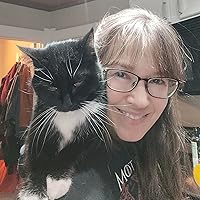
The recipient of a host of awards for journalism and a Pulitzer Prize nominee, Marya has lectured at universities around the country, taught writing and literature, and published in academic and literary journals since 1992. She lives in Minneapolis with her husband Jeff, their cats Shakespeare and T.S. Eliot, and their miniature dachshunds Milton and Dante.
The Center of Winter is the story of a father's suicide and the way it reverberates through his family for the next year. Told from the perspective of all the ones left behind (his wife, son, and young daughter), the novel is by turns excruciatingly sad, dull, painful, and joyful. It's the story of a family coming back to life after the unthinkable has happened, and not just surviving but eventually thriving.
I found myself falling in love with every character in the book, even the man who did the unthinkable to his family and friends by leaving them behind. Sandwiched between her two breathtaking memoirs ('Wasted' and 'Madness'), she has called this novel her 'Love song to the North.' And that is exactly how Center of Winter reads -- like a love song, filled with characters whose hearts beat too big and loudly and painfully to do anything but move forward after life changes.
This read both warms you and breaks your heart. Davey and Kate are six yrs old and the best of friends. Esau is Kate's twelve yr old brother who seems to have Bipolar Disorder. He has his "darks" and is hospitalized, institutionalized and eventually brought home and stabilizes. His mother says he has the "sick-sads" that he quite possibly inherited from his father who eventually kills himself. Kate and Davey are inseparable-there is not one without the other. Kate loves her brother more than she'd like to admit. Their sweet unspoken understandings of one another will make you smile with tears. This is the saddest and sweetest book I have ever read. In this book, "The Center For Winter" you will find yourself wanting so much to wrap the people in your arms and hold them. You will want so much to save them, to tell them you know. Marya Hornbacher is not alien to these sorts of feelings. She will take you there. Last night while reading I forgot where I was. I know that I will not want to leave this book and will place it lovingly on a shelf where I will remember and return to it years later.
Generally really enjoyed it. I read this because I think Wasted was amazing. Plot-wise it definitely got heavier than I normally read (for fiction). But it also covers topics I actively seek out a lot: motherhood, childhood, girlhood, domestic violence, aging, parenting
Quick shoutout - Part of this book had classic romance (rom-com even!), even more than romance (I was blushing!) vibe that literally left me GIGGLING like a girl kicking her feet up lol. And I have never read a book like that (I don’t read romance novels - probably will not) and it was so fun lol
This is definitely an underrated piece of Art. It was an amazing ride! Reading my annotated notes prior to this review made me realize how much ground the story covers.
On the writing specifically: Great writing that was definitely trying to be Good and Well-Thought Writing. And 85-90% of the time it really stuck the landing. But there were a few Ick misses, which I think makes sense given that it seems like every single word was chosen intentionally. But on the whole Hornbacher’s prestigious writing education and background we’re really on display here. If Goodreads let us do half stars, the real rating would be 4.5. I’d like to read more fiction from her
I'm not sure how much I really liked this book. I couldn't put it down, but I ended it feeling ambivalent. I think my expectations may have been unrealistically high since I liked Hornbacher's memoir so much. This book was interesting, and sometimes it was incredible, but it was also uncomfortably bleak at some points, and the writing was sometimes awkward and thick (there's no need for someone to shriek on every page) and a few of the characters got on my nerves. Despite those complaints, still a worthwhile read, definitely.
SO well written. loved this novel from start to finish, couldn't put it down. "All the seasons here in the north move toward their own end, except winter, which moves towards its centre and sits there to see how long you can take it. Spring twitches impatiently in its seat like a child wanting to go outside, straining toward summer,and summer, all lush and showy, tumbles headlong toward the decay of fall. Fall comes and goes so fast it takes the breath away, arriving in brocades of red and gold and whipping them off in only a few weeks, leaving a landscape ascetic, and stunned with loss." "Night tripped over the telephone wires and fell into the streets as we laughed."
This was truely a beautiful story. There are sad times with this family, but brighter times as well. The author's description and comparison of winter and life is so on! Since it takes place in northern minnesota, you really feel the cold in the winter and heat in the summer. I loved how the mom, son and daughter narrated the story in different sections. It really told you from their point of view what was going on. I felt each section was in good length and I'm sure it was a hard thing to do for the author. Great read!
Damn. This is such a well written novel and engaging story. It centers around a father's suicide-but thorugh her writing talent, Hornbacher makes the novel incredibly wonderful and not at all depressing. The story is told from 3 different viewpoints--the spunky 6-year-old daughter's, the mentally ill 12-year-old son's, and the widow's. The construction of the narratives moves the story along and makes you feel like you are a part of their family. It's the best novel I've read in a REALLY long time. After I finished it last night, I fell asleep cuddling it. So there you go.
Having read Hornbacher's intimate memoir about her battle with Bulimia and mental illness, Wasted, some years ago, I've been meaning to pick up some of her fiction ever since. Her debut novel, Centre Of Winter, came highly recommended to me by a friend and it didn't disappoint.
Narrated by three members of the same family, it takes in their different perspectives of coming to terms with the suicide of their patriarch, Arnold, and how his death has affected them individually and as a whole. The youngest daughter Kate wants to constantly be at her mother's side whilst questioning why her father did what he did, and her brother, Esau, is deeply troubled because he can see how the same demons of his own mental illness took the life of his father's, and he wonders if it's inevitable that he will suffer the same fate. The last narrative is written by Claire, the wife and mother, and hers is the most heart-breaking to read, yet she manages to see the light at the end of a very dark tunnel.
Despite the harrowing and depressing nature of the subject, Hornbacher has been able to tell a tale of family grief with love, hope and humour, yet never loses sight of the real issues that she wants her characters to explore and discuss. A beautifully written, original and thought-provoking story.
Now that I have read two books by Marya Hornbacher, I can officially say that she is one of my favourite authors. Not that I didn't know it already from the moment I started reading her memoir "Wasted".. I would kill to write as well as she does, and now I know for sure that she can also build believable, endearing characters to perfection. I absolutely fell in love with every one of them, especially Esau who has the kindest heart. I just wanted to hold them all close and tell them that everything was going to be alright.
"The center of winter" is a heartbreaking story about a family stricken by mental illness and their recovery from the loss and pain it has given rise to. It's very much about grief and acceptance of the past. It's one of these stories that you can't really describe properly because it isn't so much in the plot as in the feeling it gives you. Although very melancolic I somehow found it heartwarming and even funny in places. I think if it tends to anything it has to be hopefulness. I didn't quite give it the five stars because the book lost intensity towards the very last chapters. Almost as if the author decided to wrap it all a bit too quickly. But despite this minor "flaw" it remains an engaging and dramatic family tale. It's definitely one of those books that I want to keep forever and re-read on occasion.
If you read Marya Horbacher, don't expect it to be all sunshine and roses. I adore her writing. She's a person who has experienced a lot of pain in her life through her battles with eating disorders, addiction, and mental illness. When she writes about these subjects, it comes from a place of true personal understanding and that brings so much more reality to her words. The other two books of hers I have read are Wasted and Madness. Both are excellent memoirs. This is her first venture into fiction and I do hope she writes more. The book is written from three different viewpoints. Kate, the youngest daughter narrates the story of her past from her adult perspective. Esau, her brother who suffers from mental illness narrates it from his childhood perspective. I enjoyed the Esau parts the best. Marya writes mental illness so well. The final character is Claire, their mother and widow after her husband commits suicide. Her part of the story is about moving on and finding new love. This book touches on a lot of sad subjects: suicide, grief, alcoholism, mental illness, infidelity, death and loss. It is hauntingly beautiful and ends on a positive note. I was sad to see it end. It will get a re-read from me in the future.
I've read two of Hornbacher's non-fiction books and enjoyed both, so I've been looking forward to this fiction debut for awhile - I was not at all disappointed. Hornbacher sticks with what she knows and does well - mental illness and dysfunctional families (Hornbacher's two non-fiction books are about her struggles with eating disorders and mental health), and while I wasn't surprised at how well she captured the experiences of Esau, I loved that she did equally well in the sections narrated by Claire and Kate. In fact, she does precocious children incredibly vividly and I fell in love with Esau, Kate and Davey. I also appreciated that, though the lead up seemed that it might take the reader to some over-the-top melodrama, Hornbacher deftly avoids that, and readers are treated to an ending that feels right and believable.
I haven't read "Wasted." I am glad. This was my first MH book.
I was ill-prepared for what the book centers around [death.] But once I started reading .... I put the other books I was reading away and focused on "The Center of Winter."
I cried. And cried. Cried.
Loved it. Was mad that I finished it so quickly. Because it was good. But I wasn't ready for it to endddd.
Thank god the ending didn't make me cry more. Couldn't have dealt with it.
Wow. What this author did was take grief, PTSD, mental illness, love, children, alcholism, endings and beginnings, family and friendship and put everything together in a poignant and humorous novel that I absolutely did not want to put down. There were times while reading this book that I wanted to cry, and then laugh, and then laugh some more, amidst the family chaos, grief and what it is really like inside the mind of a child.
I didn't love the end because it seemed like it went a little too fast and I actually had to read the last few pages twice in order to "get" everything, but that doesn't take away from this wonderful, well-written book. I wasn't sure if I'd like Marya's novel, since I LOVED her nonfiction book, Wasted. But she showed me that she can do both very, very well!
Rarely do I give a book 5 stars but Marya Hornbacher deserves it for all that she put into this story of mental illness, pain, love, and hope. This is a beautifully written book that hooks you from the start and takes you on a emotion filled journey with each character. It is heartfelt and real in the midst of a fictional world. I can only hope that Ms. Hornbacher will write more fiction.
Marya Hornbacher has broken away from non-fiction and created a world that completely draws you in from the very first sentence. This book is heartbreaking, but leaves you sad to finish it as well. I highly recommend it.
I was most impressed by the author's ability to make me really know these characters on a very in depth level. Wonderful character development, moved me to tears on a few occasions, and explored mental illness in a very honest manner. I really enjoyed reading this!
god i hated this book. it is so bad that it took me more than 100 pages to realize i'd already read it and hated it. unfortunate, since "wasted" is one of my favorite books.
A small town in rural Minnesota. A family struggling with a history of alcoholism, mental illness and suicide. And snow – lots and lots of it.
The Center of Winter is Marya Hornbacher’s first novel, but she is no stranger to writing on sensitive topics: her first book was much acclaimed Wasted: A Memoir of Anorexia and Bulimia. What comes out in her writing here is nuance, attention to detail and profound compassion: each of the central characters in the novel is given a distinct voice and provided ample space to articulate the whole complexity of their feelings and emotions.
In spite of the tragic circumstances the novel describes, those are more of a starting point that take Claire and her children Kate and Esau on a path of recovery after the death of Arnold, Claire’s husband and the kids’ father. How the three survivors go on to rebuild their lives, dealing not only with their grief, but also with everything else from the small-town gossip to their own sense of guilt and inadequacy, sounds both realistic and inspirational. The novel begins as a family tragedy, but let’s just say that’s not how it ends.
Solid 3.5 stars. Topic is somewhat depressing, but the story demonstrates the challenges of carrying on and recovering from multiple tragedies. Well-written - i thought the POV narrative really worked.
This was a touching window into a sweet family experiencing mental illness, trauma, tragedy, adaptation... It made me think and feel and reflect upon my own experiences - and on, really, how lucky I am.
This book was hard to read because it captured grief so completely. Consequently, it took me more time to get through than a typical book, and it's taken me longer to getting around to this review. It's a heavy book. It's really, really good, but it's heavy.
When the patriarch of a family commits suicide in his small, cold, Minnesota town, it naturally effects the lives of his wife, 12-year-old son, and 6-year-old daughter. We get to read each of their perspectives.
Claire, the widow, feels responsible for her husband's suicide. He had an alcohol problem and was frequently sad. Claire was fed up with him - and told him as much the night he shot himself. Her chapters are the saddest, but also the most ultimately positive, as she comes to terms with how much she disliked her husband (both before and after his death) and learns how to move on with her life.
12-year-old Esau has periods of "dark" and periods of mania that have plagued him for years. He is medicated, though sometimes he wants desperately not to be. He is smart and artistic and sensitive, and he is lost, because of his illness and the toll it takes on him and the seminal childhood experiences it takes away by relegating him to a hospital for months at a time.
Marya Hornbacher writes about mental illness very well.
6-year-old Kate tells the story from her adult perspective, looking back at that time in her life. Her sections reminded me so much of the experience of losing someone at that age. They were very accurate. I lost my grandpa when I was barely 7, and though I had a little more warning than Kate (my grandpa died of cancer, not a bullet to the head), and though I sort of knew what the finality of death felt like (my dog Sherman had died a couple years earlier), there was a lot of Kate's experience that I could relate to. I was very close to my grandpa, but I was perhaps not as close at the time of his death because I took some pains to distance myself. I was crabby, I frowned in pictures, I bickered with him. When you're 6 or 7 and you're faced with the death of someone you love, the process is much more about anger and fear than physical grief. I did not cry when he died. I did not cry about it until years later, when life and movies and books (like this one) brought it out and continue to do so.
I did not cry while reading it because there was not a specific scene that triggered my tears, but that does not mean I didn't nurse a general, underlying current of despondency throughout. It also does not mean I didn't cry when I got to the end of it, because I did. I read the last page, I set the book down, I tried to fall asleep, I stayed awake for another hour or so, and I ended up sobbing into my pillow because I could not stop thinking about it and it eventually all caught up to me.
5 stars because it was beautiful, but I don't know if I could read it again...
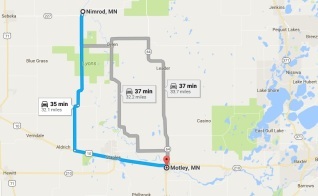
This is the space in which The Center of Winter takes place. Such a small geographic area, such large stories to be told.
I honestly cannot write a review that does this book justice. It is beautifully written, profoundly sweet, and achingly dark. It felt a little slow to start, but once the flame caught it spread like wildfire until the very last word.
Motley, Minnesota, has a population of just over 500, it is 1969 and all the men spend their days in the only bar in town or their own basements while the women go to work. The children are left mostly to raise themselves. It's a story about unspeakable violence and loss. It's a triumphant, scary, honest look at what it means to be a family. The pure acceptance of Esau's mental illness, with unconditional love, reminded me of the simple fact that none of us are "normal" and that's what makes us so. Even the most absurd of scenes were so honest and funny.
I crave more of this story. I want to know more about Kate, Esau, Claire, Donna, Oma and Opa. I want to feel the sticky frigidity of melting snow on my face when it's completely dark out, save for the stars, and there is a sadness so deep in my bones it's all I can do to survive.
This book is one of my all-time favorites and I just want to sob because it's over. Hornbacher is so eloquent and talented. I need there to be another part to this tale, or another novel altogether to dive in to.
Not quite a 4 but definitely better than a 3. I liked the book but found it to be a bit too dark for my taste. For the most part, I liked the way it was written. There was a richness to way she describes mood with silence having a shape and absence filling a space. She forces you to feel the effect environment has on memories and behavior. Her descriptions of weather were also very good. You felt the warmth of a house when you walked in or the uncomfortable heat of the summer. However, I had some issues with Kate's viewpoint. The 6-7 year old children thought and acted much older than their ages (in my opinion) and in the earlier part of the book it seemed as if she were writing all of the characters with the same voice, sharing similar vocabulary. (For example, they all used the word"shriek" far too often.) However, I was truly impressed with the writing from Esau's voice while he was experiencing a manic episode sometime later. The author realistically and compassionately portrays affective disorders. I wouldn't recommend it to anyone currently experiencing depression as at times it feels like she is trying to pull you into a dark place. Overall though, it is a good exploration of how individuals and families move forward after experiencing a family suicide.
This is not the book to read if you’re looking for a happy story. Which isn’t to say that it doesn’t end well, but it’s not going to leave you feeling uplifted and light.
Set in small town Minnesota, this is the story of a family. A mother who never quite wanted to be, a father who can’t quite get it right, and isn’t happy enough with what he has, a son who gets lost inside himself, and a daughter just trying to keep up. The story is told from ever side, each looking a little different.
Claire speaks to trying to cope first with a drunk, depressed husband, and then to life without him. Esau speaks to his time in the hospital, and to trying to cope with life outside of it. Kate speaks to all of it. Her missing brother, her lost father, her mother, lost in a different way. Trying to fit the pieces together.
The book is beautifully written, and seeing the story unfold through three sets of very separate eyes is…for sudden lack of a better term, eye-opening, to say the least. Fans of Hornbacher’s memoir will likely enjoy her foray into ficiton, as will anyone who appreciates a good book.
This is a story about how one family copes with death and grief within the family. Told from the mother, the daughter, and the sons' point of view.
I thought it was a little boring at times...
Quote:
"When you're six, you don't know about what happens at the end. Because the world revolves around you when you're six, you assume the end must be catastrophic, because it would be catastrophic to you. The end would be dramatic and loud. But what really happens at the end is that you sit down and have coffee without looking at each other. There is a sort of strange relief: The thing that was hanging in the air like a gas leak, invisible and toxic, has happened. It's out. It's a relief. It is a solid, tangible. When you're six, you can't possibly imagine that your parents---who are blowing carefully on their coffee---are only being peaceful because they know what you don't: that there is no stopping whatever comes next, and so they might as well have coffee while they wait."
"The thousands of lakes sprawling and sparkling a brilliant blue, the dense foliage and subtropical wet heat of summer, the wildflowers of the prairie, the long wide ribbons of road that amble through fields of corn — and the winters, the thick sheaves of snow that slip from the roofs of farmhouses and city homes, sifting to the ground, where they slide into the slopes of snow that lean against the house, the bitter hard cold that presses against your chest and takes your breath, and the red brick and cobblestone heritage of an old river city, the small towns and diners, the thick accent, the hallowed tradition of coffee and pie, and the rich history of a hard immigrant life . . . " This is from the author's explanation of why she loves Minnesota. The book itself shines a light on a suicide and the characters who circle the event, how they deal with it, how they face it and themselves, how they go on. The story rotates between three distinct voices; we learn so much from their telling of it.
Before I read this book, I saw a review stating that this book was a huge disappointment when compared to Hornbacher's first book, Wasted. The reviewer went so far as to say that she couldn't even get through this book. So based on that, my expectations weren't too high. And maybe because of that, I enjoyed this book and thought it was a quick read. But I do have to warn anyone reading this book that it's pretty heavy at times - it's about how the remaining members of a family deal with the father's suicide. It's told from three different perspectives: the mother, the son, and the daughter. It's not like Faulkner's work, where you have to read all of the perspectives in order to grasp the whole story. There isn't a lot of "plot overlap" between the sections. Overall, I liked this book because it was raw and realistic.